
What Is Virtual Interlining and Why Does Kiwi.com Use It?
In the dynamic world of air travel, where every dollar counts and efficiency is key, travelers are constantly seeking smarter ways to reach their destinations without breaking the bank. One revolutionary concept that has reshaped how many people book complex itineraries is virtual interlining. This innovative approach to flight connections, pioneered and popularized by online travel agencies (OTAs) like Kiwi.com, allows passengers to combine flights from airlines that do not typically cooperate, often leading to significantly lower prices and access to routes previously unavailable. It is a game-changer for budget-conscious explorers and those seeking unconventional travel paths, but it also introduces a unique set of considerations that savvy travelers must understand.
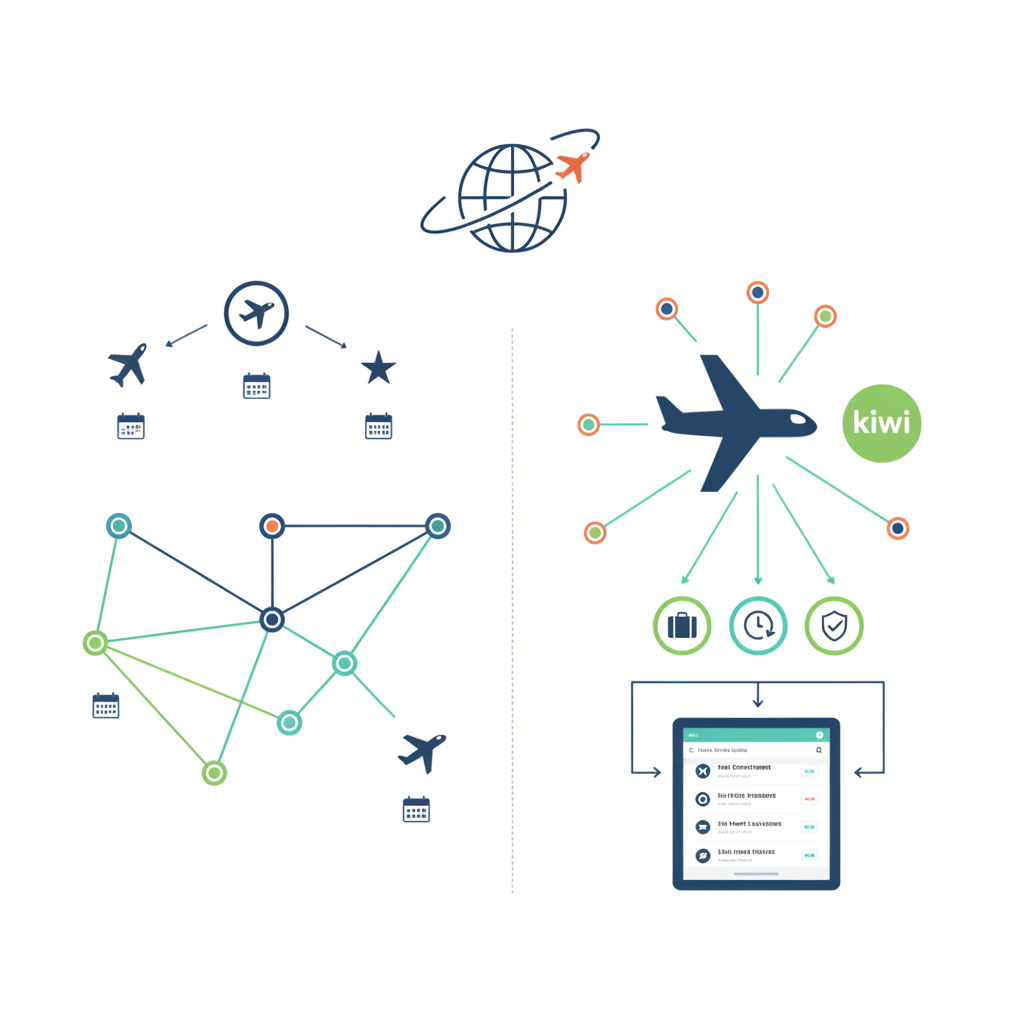
Virtual interlining, at its core, is the art of stitching together separate flight segments from different, unaffiliated airlines into a single itinerary. Unlike traditional interlining, where airlines have formal agreements to transfer passengers and baggage, virtual interining relies on the traveler (or the OTA) acting as the coordinator between these independent bookings. This strategy opens up a vast universe of potential flight combinations, bypassing the limitations of airline alliances and traditional hub-and-spoke models. For platforms like Kiwi.com, mastering virtual interlining is not just a feature; it is fundamental to their business model, enabling them to offer unique, often cheaper, and more flexible routes than traditional booking engines.
This comprehensive guide will delve deep into the intricacies of virtual interlining, demystifying its mechanics, benefits, and inherent risks. We will explore why Kiwi.com has embraced this technology so wholeheartedly, examining how their proprietary algorithms and innovative guarantees help mitigate the challenges associated with self-transfer flights. By the end of this article, you will have a robust understanding of what virtual interlining entails, whether it is the right choice for your next adventure, and how to navigate its complexities to unlock a world of affordable and flexible travel opportunities. We will equip you with the knowledge to make informed decisions, ensuring your journeys are not only cost-effective but also as smooth and stress-free as possible in 2026 and beyond.
What Exactly is Virtual Interlining?
Virtual interlining is a travel booking concept where an online travel agency (OTA) or a traveler combines separate flights from different, unaffiliated airlines into a single itinerary, even though those airlines do not have formal codeshare or interline agreements. Essentially, it is about creating a connection where no official connection exists, by purchasing individual tickets for each leg of a journey.
Imagine you need to travel from City A to City C. A traditional airline alliance might offer a direct flight or a connection through City B on a partner airline. With virtual interlining, an OTA might find a cheap flight from City A to City B on a low-cost carrier (LCC) and a separate, affordable flight from City B to City C on another LCC or a different full-service airline. These two flights are booked as entirely separate tickets, and the passenger is responsible for managing the transfer between them.
A real-world example might involve flying from London to Bangkok. Instead of booking a single ticket with British Airways or Thai Airways, a virtual interlining platform might suggest a flight from London to Dubai with Wizz Air, followed by a separate flight from Dubai to Bangkok with Flydubai. Neither Wizz Air nor Flydubai have interline agreements, meaning baggage would need to be rechecked, and potential delays on the first leg could impact the second. The platform's algorithm identifies these cost-saving combinations, presenting them as a viable, albeit independently managed, itinerary.
The primary takeaway here is that virtual interlining is about leveraging the vast, fragmented inventory of global flight routes to construct novel connections. It is a technological solution to the limitations of traditional airline partnerships, offering travelers more options and often significantly lower prices by tapping into non-traditional routes and carriers. However, this flexibility comes with the caveat of increased traveler responsibility for managing the connection process, including baggage, re-check-in procedures, and potential visa requirements for layover countries.
This method of booking requires a different mindset from the traveler, one that prioritizes potential savings and unique route access over the seamless, integrated experience of a single-ticket booking. It is particularly appealing to adventurous travelers, digital nomads, and those with flexible schedules who are willing to manage the individual components of their journey for a greater overall benefit in terms of cost or destination reach.
How Does Virtual Interlining Differ from Traditional Interlining?
The core distinction between virtual interlining and traditional interlining lies in the underlying agreements and responsibilities. Traditional interlining occurs when airlines have formal commercial agreements, known as interline agreements, allowing them to issue tickets for flights operated by other carriers. This means that if you book a multi-leg journey with an interline agreement, your baggage is typically checked through to your final destination, and the operating airlines are responsible for assisting you in case of delays or missed connections.
In contrast, virtual interlining lacks these formal agreements. Each flight segment is booked as a completely separate, independent ticket. This fundamental difference shifts the responsibility for the connection from the airlines to the traveler or, in the case of services like Kiwi.com, to the booking platform's guarantee. When you purchase a traditional interline ticket, it is a single contract of carriage, meaning the airline is obligated to get you to your final destination, even if it means rebooking you on another flight at no extra cost due to a delay on an earlier leg. With virtual interlining, each ticket is a separate contract, and if your first flight is delayed and you miss your second, the second airline has no obligation to rebook you or offer compensation.
Consider a flight from Berlin to New York with a layover in Dublin. With a traditional interline booking on, say, Lufthansa and Aer Lingus, your bags would be tagged for New York, and if the Berlin-Dublin flight was late, Aer Lingus would typically rebook you on the next available flight to New York. With a virtual interlining itinerary, you might fly from Berlin to Dublin on Ryanair and then from Dublin to New York on JetBlue. If Ryanair is delayed, JetBlue has no contractual obligation to you for your missed flight, and you would likely need to purchase a new ticket at your own expense. This highlights the increased risk but also the potential for significant savings that virtual interlining offers by bypassing the premium associated with interline agreements.
The table below summarizes the key differences:
| Feature | Traditional Interlining | Virtual Interlining |
|---|---|---|
| Airline Agreements | Formal partnerships (codeshare, interline) | No formal partnerships between operating airlines |
| Tickets Issued | Single ticket (one contract of carriage) | Multiple separate tickets (multiple contracts of carriage) |
| Baggage Handling | Checked through to final destination | Must be collected and re-checked at each transfer point |
| Missed Connection Responsibility | Airline is responsible for rebooking | Traveler (or OTA guarantee) is responsible |
| Visa Requirements | Generally not needed for transit if staying airside | May require transit or entry visa if leaving transit area |
| Price Point | Often higher due to convenience & guarantees | Potentially much lower due to optimized combinations |
| Route Availability | Limited to alliance/partner networks | Vast, combines any airline, opens new routes |
| Flexibility | Less flexible in terms of carrier choice | Highly flexible, combines diverse carriers |
The actionable insight here is that while traditional interlining offers peace of mind and convenience, virtual interlining demands a more active and informed role from the traveler. Understanding these differences is paramount to setting appropriate expectations and preparing for potential contingencies, especially when aiming for the cost benefits offered by platforms like Kiwi.com.
Why Do Online Travel Agencies Like Kiwi.com Embrace Virtual Interlining?
Online travel agencies (OTAs) like Kiwi.com have enthusiastically embraced virtual interlining because it provides a powerful competitive edge, allowing them to offer unique value propositions to a specific segment of travelers. The primary driver is the ability to unlock a significantly larger inventory of flight combinations, which translates into lower prices and more diverse routes that traditional booking systems cannot match. By combining flights from low-cost carriers (LCCs) and full-service airlines that do not typically cooperate, OTAs can construct itineraries that are often hundreds of dollars cheaper than conventional options.
This business model thrives on identifying pricing inefficiencies and connectivity gaps in the global aviation network. Traditional airline alliances offer a curated, but often more expensive, selection of routes. Virtual interlining allows OTAs to bypass these established networks and tap into a vast pool of point-to-point flights, creating connections that were previously only accessible to highly experienced, manual self-connectors. For example, a traveler looking for a flight from a smaller regional airport in Europe to a less common destination in Southeast Asia might find that traditional airlines offer limited, expensive options. Kiwi.com's algorithms, powered by virtual interlining, could piece together a series of LCC flights and one-off long-haul routes to create a much more affordable and direct-feeling itinerary.
Furthermore, virtual interlining enables OTAs to cater to a broader range of traveler needs, including those seeking unusual multi-city trips or complex itineraries that would be incredibly difficult and time-consuming to book manually. This technological prowess allows them to serve niche markets and offer unparalleled flexibility in route planning. They become the go-to platform for travelers who prioritize exploration and budget over the traditional, often rigid, structures of legacy airlines.
The value proposition for the OTA is clear: by offering routes and prices that competitors cannot, they attract a loyal customer base. Their advanced search algorithms are designed to scan millions of flight combinations across thousands of airlines, identify the cheapest permutations, and present them in a user-friendly format. This data-driven approach is what makes virtual interlining scalable and profitable for these platforms. While the inherent risks of self-transfer flights exist, companies like Kiwi.com invest heavily in technology and customer support mechanisms, such as their Kiwi.com Guarantee, to mitigate these risks and build traveler confidence, effectively turning a potential drawback into a managed service.
In essence, virtual interlining is more than just a booking method for these OTAs; it is a core technological capability that defines their market position. It allows them to democratize air travel by making complex, global itineraries accessible and affordable to a wider audience, fostering a new era of independent and flexible travel. This strategy is particularly powerful in a post-pandemic world where travelers are increasingly seeking value and customisation, and airlines are constantly adjusting their routes and pricing.
What are the Primary Benefits of Choosing Virtual Interlining?
Choosing virtual interlining can unlock a multitude of benefits, primarily revolving around cost savings, expanded route options, and enhanced flexibility for travelers. For many, the most compelling advantage is the potential for significantly lower airfares. By combining budget flights from various airlines, virtual interlining platforms can often construct itineraries that are hundreds, if not thousands, of dollars cheaper than traditional bookings. This is particularly true for routes involving low-cost carriers or less common city pairs, where legacy airlines might charge a premium for direct connections or alliance-based transfers.
Beyond price, virtual interlining dramatically expands the universe of available routes. Traditional interlining is limited by formal airline partnerships and codeshare agreements, meaning many potential connections simply do not appear in conventional search engines. Virtual interlining breaks these barriers, allowing travelers to connect virtually any two airports served by any two airlines. This opens up new possibilities for reaching niche destinations, flying from smaller regional airports, or designing multi-stop itineraries that perfectly match a traveler's unique plans. For instance, you might find a route that reduces your total travel time by avoiding a major hub, or one that includes a layover in a city you wish to explore for a few hours or even a day, turning a transit stop into a mini-adventure.
The flexibility offered by virtual interlining is another significant draw. Travelers are not bound by the rigid structures of airline alliances, which can often dictate specific layover cities or limited flight times. With virtual interlining, you can choose the precise departure and arrival times for each leg, select different airlines based on their individual offerings (e.g., one for baggage allowance, another for in-flight comfort), and even build in extended layovers to explore a transit city. This level of customization is invaluable for those who value autonomy in their travel planning, allowing for more personalized and efficient journeys.
Consider a scenario where a family wants to travel from a secondary city in the US to an island in Greece. A traditional booking might involve multiple long-haul flights with a major airline, often at a high cost. A virtual interlining platform could piece together a budget flight to a major European hub, followed by a low-cost flight to a regional Greek airport, saving substantial money that can then be spent on the vacation itself. The benefits extend to business travelers too, who might need to visit multiple cities across different continents, optimizing their schedule and budget by leveraging diverse carriers.
The actionable insight is that virtual interlining empowers travelers to become architects of their own journeys, offering a bespoke travel experience that is both cost-effective and uniquely tailored. While it requires careful consideration of the associated risks, the advantages in terms of affordability and choice make it an increasingly attractive option for a wide range of global explorers in 2026.
What are the Inherent Risks and Challenges of Virtual Interlining?
While virtual interlining offers compelling benefits, it also comes with inherent risks and challenges that travelers must be acutely aware of before booking. The primary concern revolves around missed connections. Since each flight segment is booked on a separate ticket, a delay or cancellation of the first flight means the subsequent flights are not protected. Unlike traditional interlining where the airline is responsible for rebooking you, with virtual interlining, you are generally on your own to purchase new tickets if you miss a connection, potentially incurring significant additional costs and delaying your journey considerably.
Another significant challenge is baggage handling. With separate tickets, airlines typically do not transfer baggage automatically between unaffiliated carriers. This means at each layover point, you will need to collect your checked luggage, pass through customs and immigration (if applicable), re-check your bags with the next airline, and go through security again. This process is not only time-consuming but also adds stress and the risk of baggage being lost or delayed. Travelers must factor in sufficient layover time - often several hours - to complete these steps, especially at large or busy airports, or when changing terminals.
Visa requirements also become a more complex consideration. For traditional interline connections, many countries offer airside transit without a visa, meaning you do not need to formally enter the country during your layover. With virtual interlining, if you need to collect and re-check baggage, you will almost certainly have to pass through immigration and formally enter the transit country. This necessitates obtaining the appropriate transit or entry visa, even for a short layover, which can be an unexpected cost, time investment, and potential barrier to travel if not planned for in advance. A traveler flying from India to Canada via London, for example, would typically need a UK transit visa if they had to leave the airside area to recheck bags.
Furthermore, the lack of direct airline responsibility means that in the event of a disruption, you cannot rely on the operating airlines to assist with rebooking or accommodation. Each airline is only responsible for the segment you booked with them. This decentralization of responsibility can lead to stressful situations, especially for inexperienced travelers or those facing language barriers in foreign airports. The onus is on the traveler to manage these unforeseen circumstances, which can include navigating airline customer service, finding alternative flights, and arranging overnight stays.
The actionable takeaway is that the allure of cheaper fares through virtual interlining must be balanced against these increased risks. Travelers should carefully assess their comfort level with potential disruptions, budget for contingencies, and thoroughly research baggage rules and visa requirements for every layover country. While OTAs like Kiwi.com offer guarantees to mitigate some of these risks, understanding the baseline challenges of self-transfer is crucial for a smooth journey.
How Does Kiwi.com Address Virtual Interlining Risks with its Guarantee?
Recognizing the inherent risks associated with virtual interlining, particularly missed connections, Kiwi.com has implemented its unique Kiwi.com Guarantee to provide a layer of protection and peace of mind for travelers. This guarantee is a crucial differentiating factor that elevates Kiwi.com's virtual interlining offering above simply booking separate tickets manually. It essentially acts as an insurance policy, promising to assist travelers and cover costs if they miss a connection due to delays or cancellations of previous flights booked through Kiwi.com, even if those flights are with unaffiliated airlines.
The Kiwi.com Guarantee comes into play when a flight delay or cancellation causes a traveler to miss a subsequent flight in a virtual interlining itinerary. In such scenarios, Kiwi.com commits to finding and arranging an alternative flight to the final destination, or offering a refund for the unused portion of the itinerary. They may also cover accommodation costs for overnight stays and provide meal vouchers or contributions if the delay requires it. This intervention significantly reduces the financial and logistical burden on the traveler, transforming a high-risk scenario into a managed problem with a dedicated support team.
For example, if a traveler books a virtual interlining itinerary from Lisbon to Athens via Rome, and the Lisbon-Rome flight with TAP Air Portugal is delayed, causing them to miss their Rome-Athens flight with Ryanair, the Kiwi.com Guarantee would activate. Instead of the traveler being stranded and having to buy a new, expensive last-minute ticket to Athens, Kiwi.com would step in. They would find the next available flight, potentially with a different airline, and cover the cost, as well as any necessary overnight accommodation in Rome. This is a stark contrast to booking these flights independently, where the traveler would bear the full financial brunt of the missed connection.
Comparison with standard travel insurance is also important. While travel insurance can cover trip interruptions and cancellations, the Kiwi.com Guarantee is specifically designed to address the unique complexities of virtual interlining within the itinerary booked through their platform. It offers a direct and proactive solution for missed connections, often with immediate rebooking assistance, whereas a travel insurance claim might involve lengthy paperwork and reimbursement processes after the fact. However, it is crucial to understand the Guarantee's terms and conditions, as it applies to delays outside of the traveler's control and within the parameters of their booking.
The actionable insight is that the Kiwi.com Guarantee transforms the risk profile of virtual interlining. It allows travelers to access the cost savings and route diversity without the paralyzing fear of being stranded. While it doesn't eliminate all potential inconveniences, it provides a robust safety net, making complex self-transfer itineraries a much more viable and attractive option for a broader range of travelers. This commitment to customer support and disruption handling is a key reason why many choose Kiwi.com for their virtual interlining needs.

When is Virtual Interlining the Right Choice for Your Travel Plans?
Virtual interlining, despite its complexities, is an excellent choice for specific traveler profiles and travel scenarios where its unique advantages outweigh the associated risks. It is particularly well-suited for budget-conscious travelers who prioritize cost savings above all else. If you are willing to invest a little extra time in managing connections and are comfortable with a less seamless experience, the financial benefits can be substantial, making dream trips more accessible. This applies to students, backpackers, and families looking to stretch their travel budget further.
Secondly, virtual interlining is ideal for those seeking unique or less common routes that are not served by traditional airline alliances. If you are flying from a secondary city to a niche destination, or if you want to craft a multi-city itinerary that deviates from major airline hubs, virtual interlining can open up options that simply do not exist elsewhere. This empowers adventurous travelers to explore more off-the-beaten-path locations or design highly personalized journeys without being restricted by conventional flight paths. For instance, connecting a regional airport in Portugal to a small island in Croatia might only be feasible and affordable through a virtual interlining combination.
Flexible travelers with ample layover time are also prime candidates. If you are not in a rush and can afford to build in several hours, or even an overnight stay, between flights, the risks of missed connections diminish significantly. This flexibility allows for buffer time to navigate baggage re-checks, immigration, and potential delays without panic. Some travelers even intentionally plan long layovers to explore a new city for a day, turning a necessary transit into an added travel experience.
Moreover, individuals who are experienced travelers and comfortable navigating airports, understanding visa requirements, and handling potential travel disruptions will find virtual interlining more manageable. These travelers are often adept at using travel apps, researching airport layouts, and quickly adapting to unforeseen changes, making them well-equipped to handle the self-transfer process. Conversely, first-time international travelers or those with strict schedules (e.g., for a crucial business meeting or a connecting cruise) might find the added complexity too stressful.
The actionable insight is to assess your personal travel style and priorities. If budget is paramount, flexibility is a luxury, and a sense of adventure guides your planning, then virtual interlining, especially with the added protection of the Kiwi.com Guarantee, can be an incredibly powerful tool. It transforms travel from a rigid, expensive endeavor into a customizable, affordable, and often more exciting exploration of the world's interconnected routes. However, for those who value absolute predictability and seamless transfers above all else, traditional direct bookings might still be the preferred, albeit potentially more expensive, option.
Practical Tips for Successfully Navigating Virtual Interlining Connections
Successfully navigating virtual interlining connections requires careful planning and a proactive approach to minimize risks and ensure a smooth journey. The most crucial tip is to always build in generous layover time. Since you're dealing with separate tickets and potential re-checking of baggage and security, a minimum of 3-4 hours for domestic-to-domestic transfers, and 4-6 hours for international connections (especially if you need to clear immigration and customs), is highly recommended. Skimping on layover time is the quickest way to invite stress and missed connections.
Secondly, research visa requirements meticulously for every layover country. As discussed, virtual interlining often necessitates leaving the airside transit area to collect and re-check baggage, which means you may need a transit or entry visa even for short stops. Check the official government websites of your transit countries well in advance, as visa applications can take weeks. Failure to secure the necessary visas can result in being denied boarding for your first flight, or worse, being stranded in a transit country.
Thirdly, consider traveling with carry-on luggage only if feasible. Eliminating checked baggage removes the most significant logistical hurdle of virtual interlining. If you can avoid collecting and re-checking bags, your transfer process becomes much simpler, faster, and less prone to delays or loss. This might require packing light, but the convenience gained is often well worth the effort. If checked baggage is unavoidable, ensure you are aware of each airline's baggage allowance and fees, as these can vary wildly and add unexpected costs.
Fourth, check-in online for all segments of your journey in advance. Many low-cost carriers charge hefty fees for airport check-in. Having your boarding passes ready on your mobile device or printed out will save you time and money. Additionally, stay updated on the status of all your flights using airline apps or flight tracking websites. Real-time information can help you react quickly to delays or gate changes. Kiwi.com's app, for instance, is designed to provide real-time updates and support for its guaranteed connections.
Finally, understand your chosen OTA's guarantee (e.g., Kiwi.com Guarantee) thoroughly. Know what it covers, what steps you need to take to activate it, and how to contact their support in case of a disruption. While it provides a safety net, it's not a magical solution, and being informed will help you utilize it effectively. Have all your booking references, contact numbers, and relevant documents easily accessible. Being prepared is your best defense against the inherent complexities of virtual interlining.
By following these practical tips, travelers can confidently leverage the benefits of virtual interlining. The key is to approach it with a mindset of personal responsibility and thorough preparation, transforming a potentially daunting travel method into a highly efficient and cost-effective way to explore the world.
Virtual Interlining and the Future of Air Travel: What's Next?
Virtual interlining is not just a passing trend; it represents a significant evolutionary step in how air travel is consumed and managed, pointing towards a future of increased personalization, accessibility, and dynamic pricing. As technology continues to advance, the capabilities of virtual interlining platforms are only set to grow, further blurring the lines between traditional and unconventional flight connections. We can expect even more sophisticated algorithms, enhanced predictive analytics, and seamless integration of ground transportation options to create truly multimodal itineraries.
One major development will likely be the continued refinement of AI-powered search engines. These systems will become even more adept at identifying optimal routes, predicting potential delays, and proactively suggesting alternative solutions before issues even arise. Imagine a scenario where, based on real-time weather patterns and historical airline performance, a virtual interlining platform automatically alerts you to a high-risk connection and offers a rebooking option hours before your first flight even departs, all covered by an enhanced guarantee. This proactive problem-solving will significantly reduce traveler anxiety and improve the overall reliability of complex itineraries.
Furthermore, the integration of ground transportation (trains, buses, ride-shares) into virtual interlining itineraries is a logical next step. While some platforms already offer this to a limited extent, future systems will likely provide comprehensive door-to-door travel solutions, combining flights with the most efficient local transport options at each connection point. This would be particularly beneficial for travelers reaching remote areas or navigating sprawling urban centers, offering a single, optimized booking for their entire journey. For example, a trip from a rural town in Germany to a coastal village in Italy could seamlessly combine a bus ride to a regional airport, two virtual interlining flights, and a final train segment, all managed within one platform.
The role of OTAs like Kiwi.com will continue to evolve from mere booking agents to comprehensive travel managers and risk mitigators. Their guarantees will likely become more robust and transparent, further solidifying traveler trust in these complex booking methods. As more airlines, including full-service carriers, adopt unbundled fares and embrace greater flexibility in their offerings, the pool of potential virtual interlining combinations will only expand, making this booking method even more prevalent.
The actionable insight is that virtual interlining is a testament to the power of technology to disrupt established industries and offer consumers greater choice and value. Its future promises even more intelligent, integrated, and reliable travel experiences, making complex global journeys more accessible and manageable for a wider demographic. Travelers should remain open to these innovations, as they are poised to redefine the landscape of affordable and flexible travel for years to come.

Is Virtual Interlining Safe and Trustworthy for Your Money and Itinerary?
The question of whether virtual interlining is safe and trustworthy for your money and itinerary is multifaceted, depending heavily on the platform you use and your own preparedness. In principle, virtual interlining itself is a legitimate and increasingly common method of booking travel. However, its safety and trustworthiness are directly tied to the reliability of the booking platform and the robustness of any protections it offers, such as the Kiwi.com Guarantee.
When assessing trustworthiness, consider the brand's reputation and market presence. Kiwi.com, for instance, is a well-established global OTA with millions of bookings processed annually. Its business model is built around virtual interlining, and it has invested significantly in the technology and support infrastructure to manage its complexities. This institutional backing provides a level of trust that simply booking separate tickets on your own might lack, as you would then be solely responsible for all contingencies.
Regarding the safety of your money, the primary financial risk with virtual interlining (without a guarantee) is the cost of rebooking if a connection is missed. However, with platforms like Kiwi.com, their guarantee explicitly addresses this by offering rebooking or refunds, thereby safeguarding your financial investment in the event of a covered disruption. This shifts a significant portion of the financial risk away from the traveler and onto the platform, making the overall proposition more secure.
For your itinerary, the main concerns are logistical rather than safety in a physical sense. Delays, missed connections, and baggage issues can certainly disrupt your plans and cause inconvenience. But these are mitigated by careful planning (generous layovers, carry-on only) and the support provided by the OTA's guarantee. The goal of the guarantee is to ensure you reach your final destination, even if the original itinerary changes, thus protecting the integrity of your overall trip plan, albeit with potential adjustments.
Based on official policies, available platform information, and third-party review patterns, the safest conclusion is that virtual interlining, when booked through a reputable platform offering a robust guarantee like Kiwi.com's, can be a trustworthy option for many travelers. It allows access to cost-effective and diverse itineraries that would otherwise be unavailable. However, travelers must still engage with a high degree of awareness and preparation, understanding the specific terms of the guarantee and their own responsibilities regarding visas, baggage, and airport navigation. It's about making an informed trade-off: accepting some inherent complexity for significant potential savings and unique travel opportunities, with a safety net provided by the booking platform.
Understanding the Legal & Contractual Nuances of Virtual Interlining Bookings
Delving deeper into virtual interlining necessitates an understanding of its legal and contractual underpinnings, which fundamentally differ from traditional airline bookings. When you book a traditional flight, especially a multi-leg journey with a single airline or alliance partners, you are entering into a single 'contract of carriage.' This contract obligates the airline (or lead airline in an alliance) to transport you to your final destination, even if disruptions occur on an earlier leg. This means they are legally bound to rebook you, provide accommodation, or offer compensation according to international regulations like EC 261/2004 in Europe, or their own terms and conditions.
With virtual interlining, however, each flight segment is a separate, independent contract of carriage. This means you have individual agreements with each operating airline for each specific flight. From a legal standpoint, if your first flight is delayed and causes you to miss your second, the second airline has no contractual obligation to you. They have fulfilled their contract by operating the flight you booked, and your no-show is considered your responsibility. This is the core legal vulnerability of self-transfer flights if booked without any intermediary protection.
This is precisely where platforms like Kiwi.com introduce their 'Guarantee.' The Kiwi.com Guarantee is not an airline's contract of carriage; it is a separate, distinct service contract between you and Kiwi.com. Under this contract, Kiwi.com assumes a portion of the risk that the individual airlines do not. They promise to assist with rebooking, refunds, and potentially accommodation, subject to their specific terms. This means you are essentially buying a fragmented itinerary from multiple airlines, and a separate risk management service from Kiwi.com. It is crucial to understand that your legal recourse for a missed connection would be with Kiwi.com under their Guarantee's terms, not directly with the airline that operated the second, missed flight.
The implications for traveler rights are significant. While you still have rights against the individual airline for the specific flight you booked with them (e.g., compensation for a delayed flight under EC 261 if applicable), these rights do not extend to subsequent, separate flights in your virtual interlining itinerary. For example, if your first flight (booked with Airline A) is delayed by 3 hours, you might be eligible for compensation from Airline A. However, if that delay causes you to miss your second flight (booked with Airline B), Airline B owes you nothing for the missed connection, and any assistance would come from Kiwi.com under their Guarantee.
The actionable insight is that when engaging with virtual interlining, you are entering a more complex legal landscape. It is imperative to read and understand the terms and conditions of both your individual airline tickets and any guarantee offered by the OTA. This clarity ensures you know exactly where your protections lie and what steps to take in the event of a disruption, allowing you to leverage the benefits of virtual interlining with informed confidence.
The Role of Technology & Algorithms in Powering Virtual Interlining
The very existence and success of virtual interlining, particularly on platforms like Kiwi.com, are deeply rooted in advanced technology and sophisticated algorithms. It is not a human endeavor to manually sift through millions of flight combinations; rather, it is the triumph of computational power over the complexities of global air travel data. These algorithms are the unsung heroes, constantly working behind the scenes to identify, analyze, and present the most optimal and cost-effective flight paths.
At the heart of virtual interlining technology is the ability to aggregate vast amounts of flight data from thousands of airlines, including both full-service carriers and low-cost operators, across every corner of the globe. Traditional Global Distribution Systems (GDS) primarily focus on airlines with interline agreements. Virtual interlining platforms, however, pull data from direct airline websites, various APIs, and other public sources, creating an unparalleled database of potential flight segments. This comprehensive data collection is the first critical step in unlocking the full potential of fragmented travel.
Once the data is collected, powerful algorithms get to work. These algorithms are designed to perform complex combinatorial optimization. They consider an enormous number of variables simultaneously: departure and arrival airports, dates, times, airline prices, baggage policies, historical delay patterns, layover durations, and even potential visa implications. Their goal is to find the cheapest and most efficient sequence of flights that connects an origin to a destination, regardless of whether the operating airlines have a formal relationship.
For example, a traditional search might find 50 possible routes for a given journey. A virtual interlining algorithm, however, might analyze 500,000 potential combinations by factoring in every possible connection point and every available carrier, including those that would never appear in a conventional search. This massive scale of analysis allows them to discover truly unique and often significantly cheaper itineraries that are simply invisible to standard booking tools. This is particularly evident in multi-city or complex international routes where a blend of carriers can yield substantial savings.
Furthermore, these algorithms are continuously learning and adapting. They track real-time pricing fluctuations, identify emerging route patterns, and even incorporate user feedback to refine their suggestions. This dynamic capability ensures that the platform remains competitive and relevant in a rapidly changing travel landscape. The ability to quickly process and present these complex options in a user-friendly interface is also a testament to the sophisticated user experience design that complements the backend technology.
The actionable insight here is that virtual interlining is fundamentally a technological innovation. Its effectiveness relies on the continuous development and refinement of algorithms that can intelligently navigate the immense complexity of global air travel. For travelers, this means trusting in the computational power of these platforms to discover routes that would be impossible to find manually, while remaining aware of the unique operational aspects that distinguish these bookings.
Kiwi.com's Unique Position in the Virtual Interlining Landscape
Kiwi.com holds a particularly unique and prominent position within the virtual interlining landscape, largely because it has made this complex booking method its core competitive advantage. While other OTAs might offer some forms of self-transfer or separate-ticket combinations, Kiwi.com has designed its entire search engine and business model around perfecting the art of virtual interlining. This specialization has allowed them to develop proprietary technology and customer support systems that are specifically tailored to the nuances of connecting unaffiliated flights.
What sets Kiwi.com apart is the sheer scale and sophistication of its algorithm, known as the 'Virtual Interlining' technology. This algorithm doesn't just combine flights; it actively searches for the most obscure, cheapest, and often previously unconceivable flight combinations from over 800 airlines globally. It's designed to find routes that might involve multiple layovers, different airports within the same city, or a blend of full-service and low-cost carriers, all optimized for price. This unparalleled breadth of search results means Kiwi.com often presents itineraries that no other search engine can find, creating a true market differentiator.
The cornerstone of Kiwi.com's unique offering is, as discussed, the Kiwi.com Guarantee. This guarantee is not merely an add-on; it's an integral part of their virtual interlining product. By offering protection against missed connections, flight changes, and cancellations, even across unaffiliated airlines, Kiwi.com directly addresses the biggest pain point and risk associated with self-transfer flights. This transforms a potentially high-risk booking into a managed risk, giving travelers the confidence to embrace the cost savings and flexibility that virtual interlining provides. Without such a guarantee, many travelers would understandably shy away from such complex itineraries.
Furthermore, Kiwi.com's commitment extends to its customer support, which is specifically trained to handle the complexities of virtual interlining disruptions. Their support teams are equipped to assist with rebooking, accommodation, and alternative travel arrangements when the Guarantee is activated, providing a crucial human element to manage the technological intricacies. This dedicated support system differentiates them from platforms that might list virtual interlining routes but offer minimal assistance if things go wrong.
The actionable insight is that Kiwi.com is not just a platform that uses virtual interlining; it is a platform that champions and specializes in it. Their deep investment in technology, coupled with their robust Guarantee and specialized customer support, positions them as a leading authority and preferred choice for travelers who want to leverage the benefits of virtual interlining with a significant layer of protection. For anyone considering a complex, budget-friendly, or unique itinerary, Kiwi.com's tailored approach makes it a compelling option in 2026.
Conclusion: Navigating the Future of Flexible and Affordable Travel with Virtual Interlining
Virtual interlining has undeniably reshaped the landscape of air travel, offering a powerful solution for travelers seeking greater affordability and unparalleled flexibility in their journeys. As we've explored, this innovative booking method - pioneered and perfected by online travel agencies like Kiwi.com - allows for the creation of unique itineraries by stitching together flights from otherwise unconnected airlines. This capability unlocks a vast array of routes and often provides significant cost savings, making previously inaccessible destinations and complex multi-city trips a reality for a broader spectrum of travelers.
The core distinction between virtual and traditional interlining lies in the contractual agreements and, consequently, the allocation of risk and responsibility. While traditional interlining offers a seamless, single-contract journey with airline-backed protection, virtual interlining presents separate contracts for each flight segment, placing the onus of connection management on the traveler. However, platforms like Kiwi.com have strategically mitigated these inherent risks through robust guarantees, transforming a potentially daunting proposition into a manageable and attractive option. The Kiwi.com Guarantee, in particular, acts as a vital safety net, promising assistance with rebooking, refunds, and even accommodation in the event of covered delays or cancellations.
For the savvy traveler, virtual interlining is a game-changer. It is the ideal choice for budget-conscious adventurers, those seeking unique routes, and individuals with flexible schedules who are willing to invest a little extra planning in exchange for substantial savings and greater autonomy. By building in generous layover times, diligently researching visa requirements, considering carry-on luggage, and understanding the nuances of the platform's guarantee, travelers can confidently navigate the complexities of self-transfer flights.
Looking ahead, the future of virtual interlining is bright, with continued advancements in AI and algorithmic power promising even more intelligent, proactive, and integrated travel solutions. OTAs are evolving into comprehensive travel managers, leveraging technology to make global exploration more accessible and less intimidating. The decision to embrace virtual interlining ultimately rests on your personal travel style, priorities, and comfort level with managed risk.
Should you book through Kiwi.com or directly with the airline? If your priority is maximum control, loyalty benefits, or absolute simplicity for a straightforward route, booking direct remains a strong option. However, if you are seeking the cheapest possible fare for a complex itinerary, exploring unique route combinations, or benefiting from the added layer of protection offered by a comprehensive guarantee, then platforms like Kiwi.com, with their expertise in virtual interlining, offer compelling value. By understanding its mechanics, benefits, and safeguards, you can harness the power of virtual interlining to unlock a world of flexible and affordable travel in 2026.
Frequently Asked Questions
Yes, virtual interlining can be safe for international travel, especially when booked through reputable platforms like Kiwi.com that offer guarantees against missed connections. However, it requires careful planning. You must meticulously research and secure any necessary transit or entry visas for your layover countries, as you may need to pass through immigration to re-check baggage. Additionally, allow significantly more layover time than with traditional connections, typically 4-6 hours for international transfers, to account for customs, immigration, baggage collection, and re-check-in processes. Being prepared with all documents and understanding the guarantee terms minimizes risks.
In most cases, yes, virtual interlining requires you to collect your checked baggage at each layover airport and re-check it with the next operating airline. This is because the airlines in a virtual interlining itinerary do not have formal agreements to transfer baggage between them. If you have checked luggage, you will need to go through immigration (if it's an international transfer), collect your bags, pass through customs, proceed to the check-in counter for your next flight, re-check your bags, and then go through security again. Traveling with only carry-on luggage can significantly simplify this process.
The Kiwi.com Guarantee is designed to protect travelers against missed connections due to flight delays or cancellations on virtual interlining itineraries booked through their platform. If a previous flight causes you to miss a subsequent connection, Kiwi.com commits to finding and arranging an alternative flight to your final destination, covering the cost. They may also provide accommodation for overnight stays and meal contributions if required by the delay. It's crucial to contact Kiwi.com's support immediately upon realizing a disruption to activate the Guarantee and follow their instructions to ensure coverage.
Absolutely, virtual interlining is exceptionally well-suited for multi-city trips, and it's one of its strongest advantages. By combining flights from various airlines, you can construct highly customized itineraries that connect multiple destinations without being limited by traditional airline routes or alliance networks. This allows for unparalleled flexibility in planning complex journeys, visiting several cities, or even making extended stopovers in transit locations. Virtual interlining platforms excel at finding the most cost-effective combinations for intricate multi-leg travel plans that would be difficult or impossible to book through conventional means.
Visa considerations are critical for virtual interlining layovers. Since you often need to collect and re-check baggage, you will typically have to pass through immigration and formally enter the country of your layover. This means you may require a transit visa or even a full entry visa, depending on your nationality and the country's regulations. Unlike traditional interlining where airside transit might be possible without a visa, virtual interlining almost always requires a visa for international layovers involving baggage re-check. Always research each layover country's visa requirements well in advance to avoid being denied boarding or stranded.
Virtual interlining often presents significantly cheaper fares compared to direct booking, especially for complex routes, those involving low-cost carriers, or less common city pairs. By piecing together individual flight segments from different airlines, platforms like Kiwi.com can bypass the higher prices sometimes associated with traditional airline alliances and single-carrier itineraries. However, it's not always guaranteed to be cheaper. Factors like baggage fees, potential visa costs, and the value of a platform's guarantee should be factored into the total cost comparison. Always compare the final price, including all potential add-ons, before making a decision.
If your virtual interlining flight is delayed, the first and most crucial step is to immediately contact the customer support of the online travel agency (OTA) you booked with, especially if they offer a guarantee like Kiwi.com's. Do not wait until you miss your next flight. Provide them with your booking details and the updated status of your delayed flight. They will advise you on the next steps, which may include rebooking you on an alternative flight, offering a refund, or arranging accommodation, depending on the terms of their guarantee. Having their contact information readily available is essential for quick action.