Understanding the Agoda Refund Policy: How It Works and How Long It Takes
Planning a trip often involves meticulous bookings, but sometimes, even the best-laid plans go awry. Whether it's a sudden change in travel dates, an unexpected emergency, or a booking error, understanding how refunds work is crucial for any traveler. When booking accommodation through a major online travel agency (OTA) like Agoda, understanding the Agoda refund policy can seem daunting, riddled with terms and conditions that vary based on your booking type, the property's policy, and even your payment method.
This comprehensive guide aims to demystify Agoda's refund mechanisms, providing clear, actionable insights into how their refund system operates and, critically, how long you can expect to wait for your money to be returned. We'll delve into the nuances of different cancellation policies, walk you through the refund request process, explore scenarios for non-refundable bookings, and detail what to do if the property or Agoda itself initiates a cancellation. By the end of this article, you will have a complete understanding of Agoda's refund landscape in 2026, equipping you with the knowledge to navigate any cancellation situation with confidence and clarity.
From understanding the initial eligibility criteria to tracking your refund status and engaging with customer support, we cover every aspect to ensure you are well-informed. Our goal is to empower you to make the best decisions, whether you're considering a flexible booking for peace of mind or need to resolve a complex refund dispute. Let's explore the ins and outs of Agoda refunds, ensuring your travel planning - and unforeseen changes - are as stress-free as possible.
What is Agoda's General Refund Policy and How Does it Work?
Agoda's general refund policy operates under a crucial principle: it largely mirrors the cancellation policy set by the individual accommodation provider, whether that's a hotel, resort, hostel, or vacation rental. Understanding this core aspect of the Agoda refund policy is essential. This means there isn't a single, universal Agoda refund rule that applies to all bookings. Instead, your eligibility for a refund, and the amount you receive, is primarily determined by the specific terms you agreed to at the time of booking for that particular property.
When you make a reservation on Agoda, you'll encounter various rate types, each with its own cancellation rules. The most common categories include "Free Cancellation," "Partially Refundable," and "Non-Refundable." A "Free Cancellation" booking typically allows you to cancel without penalty up to a certain date or time before check-in, often resulting in a full refund. A "Partially Refundable" booking might offer a refund of a percentage of the booking cost, or a full refund minus a cancellation fee, again, within a specified timeframe. "Non-Refundable" bookings, as the name suggests, generally do not offer any refund if you cancel, though exceptions can sometimes apply under extenuating circumstances.
For example, imagine you booked a hotel in Paris with a "Free Cancellation up to 72 hours before check-in" policy. If you cancel four days prior to your arrival, you would typically be eligible for a full refund. However, if you cancel within the 72-hour window, the hotel's policy might dictate a one-night penalty or even the full cost of the stay. Agoda acts as the intermediary, facilitating the booking and processing any eligible refunds in accordance with these pre-established terms. They do not typically impose additional fees for processing standard cancellations that fall within the property's free cancellation window, but their own terms of service also outline conditions under which they may retain service fees.
It's crucial for travelers to carefully review these specific cancellation terms, which are prominently displayed on the booking page before confirmation and reiterated in your booking confirmation email. Ignoring these details can lead to disappointment if you assume all Agoda bookings offer the same flexibility. Always check the fine print for the exact cut-off times, potential fees, and the specific refund percentage, especially when comparing different rates for the same property, as a slightly cheaper rate might come with significantly stricter cancellation rules.
How Do Refund Timelines Vary for Different Agoda Booking Types?
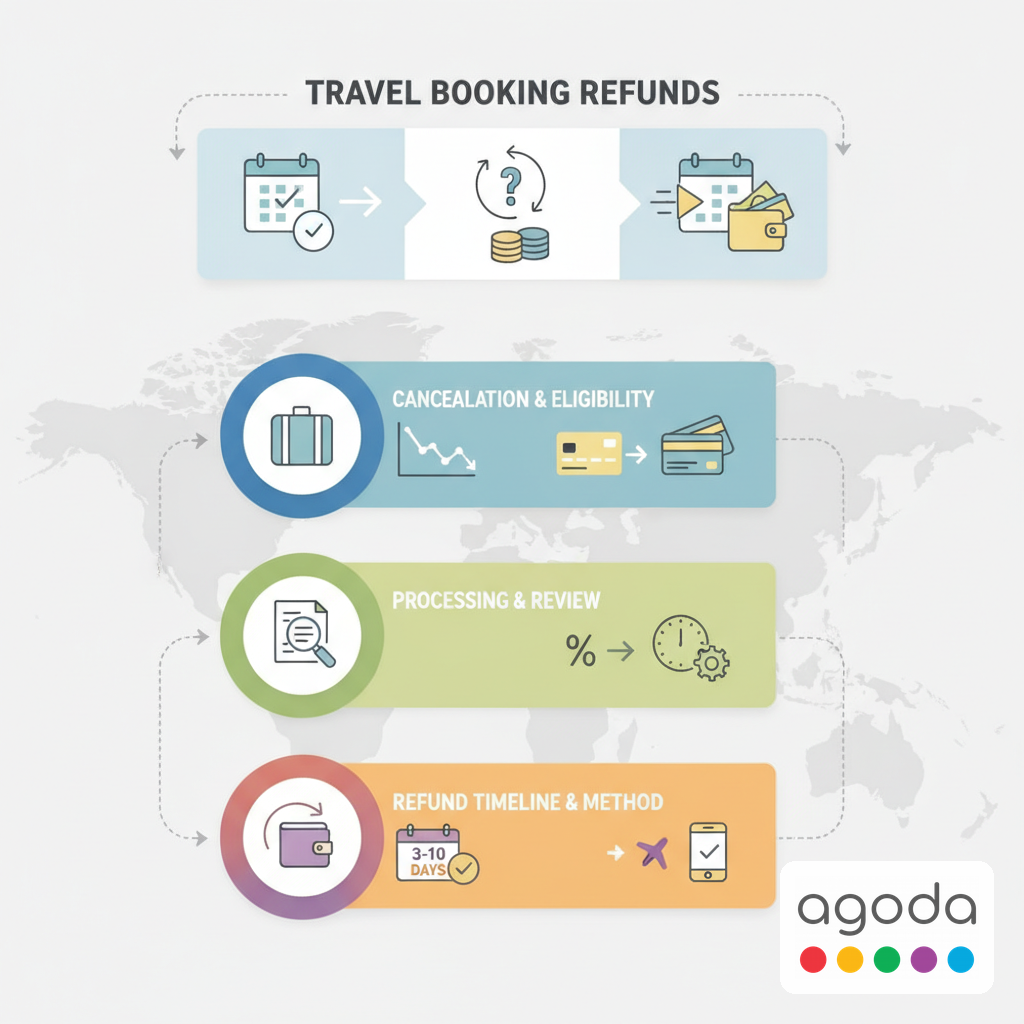
The duration it takes to receive an Agoda refund is not uniform; it heavily depends on a few critical factors, primarily the type of booking made and the original payment method. Generally, Agoda states that once a refund is approved and processed on their end, it can take anywhere from 7 to 45 business days for the funds to reflect in your account. This broad range accounts for the varying processing times of banks and payment providers, which are often outside Agoda's direct control.
For bookings with a "Free Cancellation" policy, where the cancellation occurs within the eligible window, the refund process tends to be the most straightforward and potentially quicker. Once you cancel via the Agoda platform, the system flags it for a full refund. Agoda typically initiates this process within a few business days. The subsequent delay is usually on the side of your bank or credit card company. For instance, a booking paid via credit card might see the refund posted within 5-15 business days after Agoda's initiation, whereas a debit card refund could take slightly longer, perhaps 7-20 business days.
Partially Refundable or Non-Refundable bookings with exceptions (e.g., due to extenuating circumstances) often involve a more complex assessment by Agoda and the property. This review period can extend the initial processing time before Agoda even initiates the refund. Once approved, the actual transfer time to your account remains subject to bank processing times, similar to free cancellation bookings. Additionally, if the refund is issued as AgodaCash or a travel credit, it's typically available almost instantly in your Agoda account, bypassing bank transfer delays, though these credits often come with their own terms of use and expiry dates.
Consider a traveler who booked a hotel and paid with a PayPal account. If they cancel within a free cancellation window, Agoda might process the refund back to PayPal within 3-5 business days. PayPal then typically processes this back to the linked bank account or credit card within another 3-7 business days. This multi-step process illustrates why the total time can accumulate. It is paramount to note that public holidays and weekends can further prolong these timelines, as financial institutions only process transactions on business days. Always factor in these external variables when estimating your refund's arrival.
What is the Agoda Cancellation Process and How Do You Request a Refund?
The Agoda cancellation process is designed to be relatively straightforward, primarily managed through your online account or the Agoda mobile app. Initiating a cancellation and, consequently, a refund request, follows a clear set of steps, making it accessible for most travelers. The first and most important step is to log into your Agoda account and locate the booking you wish to cancel under the "My Bookings" or "Manage My Booking" section.
Once you've found the relevant booking, you will see an option to "Cancel Booking." Before proceeding, it is absolutely critical to review the cancellation policy displayed for that specific reservation. This section will clearly state whether your booking is eligible for a full, partial, or no refund, along with any applicable deadlines. Agoda will typically ask you to confirm your understanding of these terms before finalizing the cancellation. After reviewing and confirming, you can proceed to cancel. Agoda then sends a cancellation confirmation email, which is vital to keep as proof.
For bookings that are eligible for a refund (i.e., "Free Cancellation" within the policy window), the refund request is automatically initiated upon successful cancellation. You generally do not need to submit a separate refund form. Agoda's system processes the refund back to the original payment method. However, for more complex situations, such as partially refundable bookings where a specific amount needs to be calculated, or non-refundable bookings under extenuating circumstances, the process might involve further communication with Agoda's customer support. In these cases, you might be asked to provide documentation or further details to support your refund claim.
Consider a scenario where a traveler needs to cancel a hotel booking made three months ago. They log into their Agoda account, navigate to "My Bookings," and find the reservation. The cancellation policy states "Free cancellation up to 48 hours before check-in." Since their check-in is still a month away, they click "Cancel Booking," confirm the terms, and receive an instant cancellation confirmation. Agoda then processes the full refund automatically. The key takeaway is to always initiate the cancellation through the official Agoda platform to ensure it is properly recorded and processed according to the terms.
Can You Get a Refund for an Agoda Non-Refundable Booking?
Securing a refund for an Agoda "non-refundable" booking is generally challenging, as these rates are offered at a discount precisely because they come with strict cancellation terms. However, "challenging" does not always mean "impossible." There are specific scenarios and strategies that might allow you to recover some, or even all, of your money, though success is never guaranteed and often requires persistence.
The primary avenue for a non-refundable booking refund is through extenuating circumstances. Agoda, like many OTAs, has a policy for situations beyond a traveler's control, such as documented serious illness, death in the immediate family, natural disasters, or government travel restrictions. In such cases, you would need to contact Agoda's customer support and provide official documentation (e.g., medical certificates, death certificates, government advisories). Agoda will then liaise with the property on your behalf to see if an exception can be made. This process can be lengthy and requires patience, as the final decision often rests with the property management.
Another potential approach, though less common, is to contact the property directly. Sometimes, hotels have more flexibility than their published online policies suggest, especially for loyal customers or if they can rebook the room easily. While Agoda is your primary point of contact, a polite and well-reasoned direct appeal to the hotel, explaining your situation, might occasionally yield a positive outcome, especially if you offer to reschedule instead of outright cancel. Always remember to inform Agoda if you pursue this route and receive a positive response from the property.
For example, imagine a traveler booked a non-refundable hotel in Bali, only for a major earthquake to strike the region a week before their trip, rendering the area unsafe and prompting travel advisories. They would contact Agoda, explain the situation, and provide links to official news reports or government warnings. Agoda would then reach out to the hotel to request an exception based on the unforeseen circumstances. While the hotel is not obligated to provide a refund under the original non-refundable terms, such events often lead to waivers or future credits due to humanitarian considerations or broader industry policies regarding force majeure events. Always exhaust the official channels and provide comprehensive documentation.

How Do Agoda's "Pay at Property" Bookings Affect Refunds?
Agoda's "Pay at Property" option, while offering significant flexibility upfront, has distinct implications for refunds, primarily because the financial transaction doesn't occur directly through Agoda at the time of booking. With this option, your credit card details are typically held to guarantee the reservation, but the actual payment is made to the accommodation provider upon check-in or check-out. This fundamental difference alters the refund landscape compared to prepaid bookings.
For a "Pay at Property" booking, if you cancel within the free cancellation window, there's usually no refund to process because no money has actually changed hands. Your card was merely authorized, not charged. The cancellation simply releases the hold on your reservation and ensures you won't be charged by the property. This makes it arguably the lowest-risk booking type in terms of financial commitment, provided you cancel before the penalty period begins. The main actionable insight here is that for "Pay at Property" bookings, the "refund" is effectively a non-charge, not a return of funds.
The complications arise if you fail to cancel a "Pay at Property" booking within the specified free cancellation period and subsequently do not show up (a "no-show"). In such cases, the property is typically authorized to charge your guaranteed credit card for a penalty, which often amounts to the cost of one night's stay or, in some cases, the full booking amount, as per their policy. If such a charge occurs, and you believe it was made in error or under extenuating circumstances that should warrant a waiver, you would then need to dispute this charge. This dispute process would primarily be between you, the property, and potentially your credit card issuer, with Agoda acting as a facilitator rather than the direct refund issuer.
Consider a traveler who booked a "Pay at Property" hotel for three nights in Bangkok with a 24-hour free cancellation policy. If they cancel 48 hours before check-in, no charge is made to their card, and thus no refund is needed. However, if they forget to cancel and are a "no-show," the hotel might charge their card for the first night. In this scenario, getting a "refund" for that charge would involve contacting the hotel directly to plead their case, or initiating a chargeback with their bank if they believe the charge was illegitimate based on the booking terms. Agoda's role here is more limited, as they did not handle the initial payment. This highlights the importance of timely cancellation for "Pay at Property" reservations, even if no money has left your account yet.
What Happens if Agoda or the Property Cancels Your Booking?
While most refund inquiries stem from a traveler's need to cancel, there are instances where the cancellation is initiated by Agoda or, more commonly, by the accommodation property itself. Understanding these scenarios is crucial, as they typically offer a stronger entitlement to a refund or alternative arrangements compared to traveler-initiated cancellations.
If a property cancels your booking, perhaps due to overbooking, unexpected maintenance, or closure, you are generally entitled to a full refund. In many cases, Agoda will proactively contact you to inform you of the cancellation and initiate the refund process. Their role here is to ensure you are not left without accommodation or out of pocket. Depending on their policy and the severity of the disruption, Agoda might also offer assistance in finding alternative accommodation of similar standard and price, sometimes covering the difference if the new booking is more expensive. This is part of their commitment to customer protection when a supplier fails to honor a reservation. The refund timeline will still follow the standard processing period once Agoda has confirmed the property's cancellation and initiated the payout.
Cancellations initiated by Agoda itself are rarer and usually occur under specific circumstances, such as a technical glitch, a suspected fraudulent booking, or if a payment issue cannot be resolved. In such cases, Agoda would notify you directly, explain the reason for the cancellation, and immediately process a full refund. Because Agoda is the one initiating the action, these refunds often proceed smoothly and efficiently on their end, though the bank processing times still apply. Agoda also typically takes extra steps to mitigate inconvenience in these situations.
For instance, imagine you booked a boutique hotel through Agoda. A week before your trip, you receive an email from Agoda stating that the hotel has unexpectedly closed due to unforeseen circumstances and your booking has been canceled. Agoda's email confirms a full refund has been processed and provides links to search for alternative accommodations. They might even offer a goodwill discount code for your next booking. In this scenario, your primary action is to acknowledge the cancellation, verify the refund initiation, and then focus on rebooking. It is wise to monitor your bank statement to ensure the refund arrives within the stipulated timeframe, and contact Agoda support if there are any delays beyond their stated period.
How Can You Check Your Agoda Refund Status and Expedite the Process?
Once you've cancelled a booking and are awaiting a refund from Agoda, knowing how to track its status and, if possible, expedite it, can alleviate anxiety. Agoda provides a few reliable channels to monitor your refund's progress, though direct acceleration is often challenging due to external banking processes.
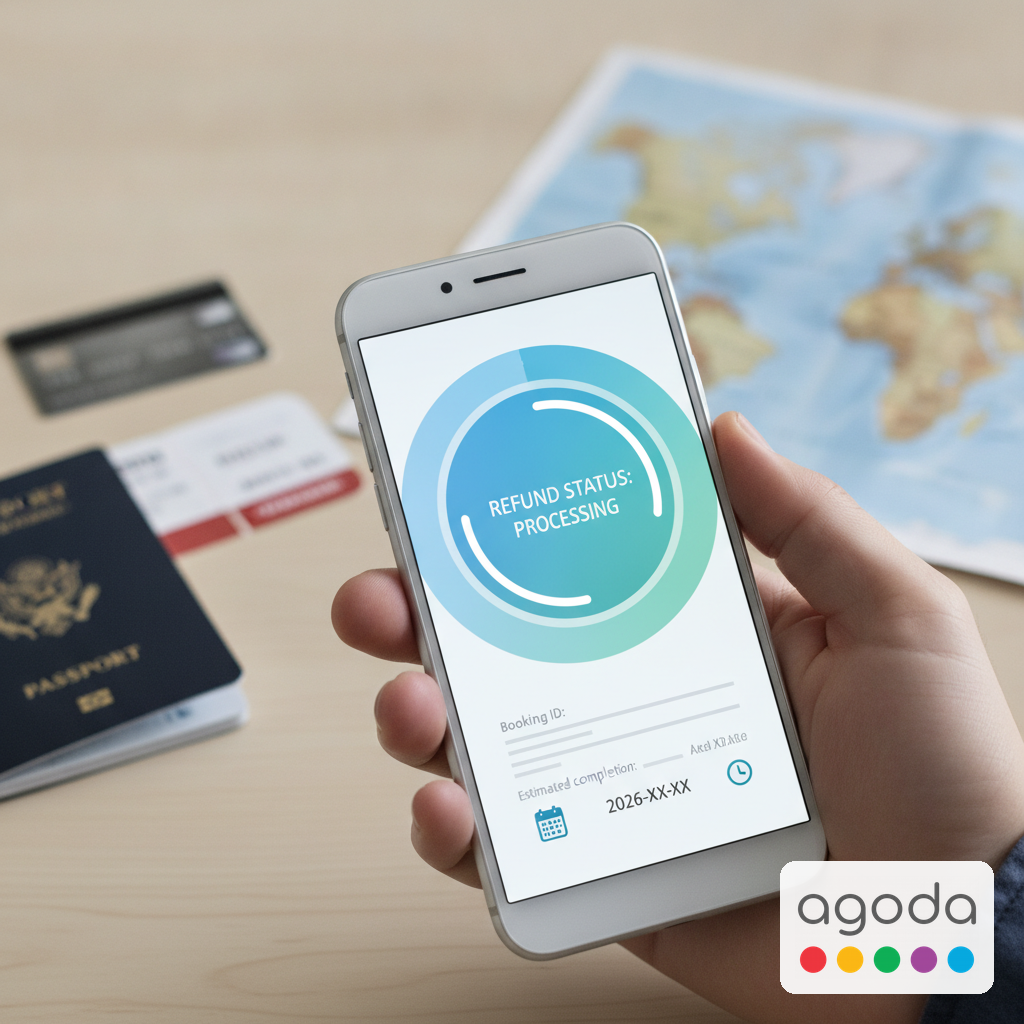
The primary way to check your refund status is through your Agoda account online or via the mobile app. Navigate to the "My Bookings" section, locate the canceled reservation, and click on it. The booking details page often includes a "Refund Status" or similar section that indicates whether the refund has been processed by Agoda, the amount, and sometimes an estimated timeline. Agoda also typically sends email notifications when a refund is initiated and when it's completed on their end. Always check your inbox, including spam folders, for these updates.
If the stated processing time has passed and you still haven't received your refund, the next step is to contact Agoda customer service. Provide them with your booking ID and the date of cancellation. They can confirm the exact date Agoda initiated the refund and provide the Transaction ID or Authorization Code. This code is crucial because it acts as proof for your bank that a refund was indeed sent. With this information, you can then contact your bank or credit card company directly. Providing your bank with Agoda's Transaction ID can help them trace the funds more efficiently within their own system, potentially speeding up the final credit to your account, or at least clarifying where the delay lies.
For example, a traveler cancels an Agoda booking, and after 15 business days, the refund hasn't appeared. They check their Agoda account, which shows the refund was "Processed" 10 days ago. They then contact Agoda support via live chat, obtain the refund Transaction ID, and immediately call their bank. The bank's representative uses the ID to locate the incoming refund and confirms it will post within the next 2-3 business days. While Agoda cannot directly control your bank's processing speed, having the right information from them is the best way to prompt your bank to act. Patience is key, but proactive follow-up with the right information can be effective.
What Role Does Agoda Customer Service Play in Refund Disputes?
Agoda's customer service plays a pivotal and often critical role when travelers encounter refund disputes or require assistance beyond standard cancellation procedures. While the self-service option for simple cancellations is effective, more complex scenarios - such as non-refundable bookings under extenuating circumstances, incorrect refund amounts, or significant delays - necessitate direct interaction with Agoda's support team. Their primary function in these disputes is to act as an intermediary, advocate, and troubleshooter.
When a refund dispute arises, the customer service team's first task is to investigate the specifics of your booking and the property's Agoda refund policy. They will review the cancellation terms you agreed to, the timing of your cancellation, and any documentation you provide for exceptional cases. For non-refundable bookings or situations where the property has charged a penalty, Agoda support will often liaise directly with the hotel or host on your behalf. They can present your case, share your supporting documents, and attempt to negotiate a partial or full refund, or a travel credit, depending on the circumstances and the property's willingness to cooperate. This advocacy is particularly valuable as Agoda, with its established relationship with properties, often has more leverage than an individual traveler.
Furthermore, Agoda customer service is responsible for resolving technical issues related to refunds. If a refund was initiated but not properly credited, or if there's a discrepancy in the refund amount, they can investigate internal processing errors. They are also your go-to resource for obtaining transaction IDs and detailed refund initiation dates, which are essential when you need to follow up with your bank. Their support channels typically include live chat, email, and phone, with varying response times. Live chat is often the quickest for immediate inquiries, while email might be better for submitting detailed documentation.
Consider a traveler who was charged for a "Pay at Property" booking despite cancelling within the free window. They contact Agoda customer service, explaining the discrepancy and providing their cancellation confirmation email. Agoda's team would then contact the property to verify the cancellation date and request a reversal of the charge. If the property acknowledges the error, Agoda would facilitate the refund. If the property disputes it, Agoda might mediate or advise the traveler on next steps, such as initiating a chargeback with their bank, supported by Agoda's internal records. This collaborative approach highlights their central role in navigating and resolving refund complexities.
Are There Any Hidden Fees or Deductions in Agoda Refunds?
The concept of "hidden fees" in Agoda refunds is a common concern for travelers, but it's more accurate to describe them as clearly stated deductions or service charges that might be overlooked during the initial booking or cancellation process. Agoda strives for price transparency, but the specifics can sometimes be complex, especially when third-party policies are involved. Generally, Agoda itself does not impose additional "hidden" fees for processing a standard eligible refund, but certain charges might be deducted based on the original booking terms or external factors.
The most common deductions come from the accommodation provider's cancellation policy. If your booking is "partially refundable" or if you cancel a "free cancellation" booking outside the eligible window, the property's policy might stipulate a cancellation fee (e.g., the cost of the first night) or a percentage of the total booking. These are not Agoda's fees but rather penalties imposed by the hotel, which Agoda facilitates on their behalf. It is crucial to read these terms carefully before confirming any cancellation, as they are explicitly detailed in your booking confirmation and on the cancellation page.
Another potential deduction could arise from currency conversion fees. If you paid for your booking in a currency different from your card's base currency, your bank or credit card issuer might apply foreign transaction fees or unfavorable exchange rates. When a refund is processed, the money is typically returned in the original booking currency. Your bank will then convert it back to your local currency, and in this process, you might incur conversion losses or fees that make the final refund amount slightly less than what you initially paid, even for a full refund. This is an external bank charge, not an Agoda deduction.
For example, a traveler books a hotel in euros using a US dollar credit card. If they cancel and receive a full refund, the euros are returned to their card. However, due to fluctuations in the exchange rate between the booking and refund dates, or their bank's foreign transaction fee, the final dollar amount credited to their statement might be a few dollars less than the original dollar charge. While frustrating, this is a standard banking practice for international transactions. The actionable takeaway is to always be mindful of the cancellation policy's exact wording and to be aware of potential currency conversion impacts, especially for international travel, as these are typically not "hidden" by Agoda but rather external variables in the financial ecosystem.
Agoda Refunds vs. Booking Directly: Which Offers More Protection?
When considering the intricacies of refunds, a fundamental question arises: is it safer to book through an Online Travel Agency (OTA) like Agoda or directly with the accommodation provider (hotel, resort, etc.)? Both approaches have distinct advantages and disadvantages regarding refund protection and overall flexibility, and the "better" option often depends on a traveler's priorities and risk tolerance when navigating the Agoda refund policy.
Booking directly with a hotel or property often provides the most straightforward refund process, assuming you adhere to their cancellation policy. When you book directly, there's a single point of contact for all inquiries, including cancellations and refunds. There's no intermediary (like Agoda) to liaise with, which can sometimes simplify communication and potentially expedite refund processing, as funds don't need to pass through multiple systems. Direct bookings also typically allow you to leverage loyalty programs and may offer greater flexibility in negotiating terms or receiving goodwill gestures during disputes, as you are a direct customer of their brand.
On the other hand, Agoda offers certain protections and conveniences that direct bookings may lack. OTAs often provide a wider array of options and price comparisons, and their customer service can act as an advocate for you if a property becomes unresponsive or uncooperative. For instance, if a hotel refuses a legitimate refund for a prepaid booking, Agoda's support team can intervene on your behalf, leveraging their contractual relationship with the property. This intermediary role can be a double-edged sword: it adds a layer of complexity for straightforward cancellations but offers a layer of protection when disputes arise with a difficult property.
Consider a traveler who values direct communication and loyalty points. They might prefer booking directly with their favorite hotel chain, knowing their refund process will be handled by the hotel's own reservations team. Conversely, a budget-conscious traveler who found a significantly cheaper deal on Agoda might accept the slightly more complex refund process in exchange for savings, relying on Agoda's support if issues arise. The key actionable insight is that for maximum control and direct engagement, booking directly is often superior. However, for comparative shopping, competitive pricing, and a potential intermediary in disputes, Agoda can offer a valuable service. Always compare the specific cancellation policies for both direct and Agoda bookings before making your final decision, as these are the true determinants of your refund protection.
Conclusion
Navigating the world of Agoda refunds, while initially appearing complex, becomes far more manageable once you understand the underlying principles and processes. The most critical takeaway is that Agoda's refund policy is predominantly dictated by the individual accommodation provider's specific cancellation terms, which are clearly outlined at the time of booking and in your confirmation email. Whether you receive a full, partial, or no refund, and how long it takes, hinges on these terms, your booking type (e.g., free cancellation, non-refundable, pay at property), and your adherence to the cancellation deadlines.
We've clarified that for eligible cancellations, Agoda typically initiates the refund process within a few business days, but the actual time for funds to appear in your account can range from 7 to 45 business days, largely due to external banking and payment provider processing times. For non-refundable bookings, refunds are rare but possible under documented extenuating circumstances, requiring proactive engagement with Agoda customer service and supporting documentation. The "Pay at Property" option offers flexibility by deferring payment, meaning "refunds" are often non-charges, but timely cancellation is still vital to avoid penalty fees.
In cases where Agoda or the property cancels your booking, you are generally entitled to a full refund, with Agoda often providing assistance for rebooking. Monitoring your refund status via your Agoda account and contacting customer service with your booking ID and transaction details are the best ways to track and potentially expedite the process. While Agoda does not levy "hidden" fees for refunds, be aware of property-specific cancellation penalties and potential currency conversion charges from your bank. Ultimately, the choice between booking via Agoda or directly depends on your preference for comprehensive comparison and intermediary support versus direct control and loyalty benefits.
By internalizing these insights, travelers can approach Agoda bookings with greater confidence, prepared for any unforeseen changes. Always read the cancellation policy carefully, cancel promptly if plans change, and don't hesitate to leverage Agoda's customer service for complex issues. Armed with this knowledge, you are well-equipped to manage your Agoda bookings and refunds effectively in 2026, ensuring a smoother travel experience even when plans shift, thanks to a clear understanding of the Agoda refund policy.
Frequently Asked Questions
Yes, Agoda is a legitimate and widely recognized online travel agency for booking accommodations globally. While the refund process can sometimes be complex and dependent on individual property policies, Agoda does process legitimate refunds according to the terms agreed upon at booking. They act as an intermediary, facilitating transactions and communications between travelers and accommodation providers. It is crucial to read the specific cancellation policy for each booking to understand your refund eligibility and avoid misunderstandings. For complex issues, their customer service is available to assist and mediate disputes, affirming their commitment to service.
Agoda refunds can take time due to a combination of factors, including Agoda's internal processing, the specific cancellation policy of the property, and most significantly, the processing times of banks and credit card companies. After Agoda initiates a refund, it can take 7 to 45 business days for the funds to appear in your account. International transactions, currency conversions, and public holidays can further extend these timelines. If your refund is delayed beyond the estimated period, contacting Agoda customer service for a transaction ID can help you trace the funds more efficiently with your bank.
In some circumstances, particularly for certain types of cancellations or as a goodwill gesture for non-refundable bookings under specific conditions, Agoda might offer AgodaCash or a travel credit as an alternative to a monetary refund. AgodaCash is typically credited to your account instantly and can be used for future bookings on the platform, often providing immediate access to your funds, albeit with specific terms and expiry dates. Whether this option is available or preferable depends on your situation and future travel plans. Always confirm the specific terms of any AgodaCash offer before accepting.
If your Agoda booking status clearly shows 'canceled' but you haven't received your refund, it typically means Agoda has processed the cancellation on their end, and the refund is now in transit through the banking system. This transit period can take several business days, as detailed in the article. First, check your Agoda account for the refund status and any email notifications. If the estimated timeframe has passed, contact Agoda customer service to obtain the refund's transaction ID. With this ID, you can then directly follow up with your bank or credit card provider to trace the funds.
If you believe your Agoda refund amount is incorrect, the first step is to carefully review the specific cancellation policy for your booking, which outlines any potential fees or partial refund conditions. Compare this with the amount received. If you still find a discrepancy, gather all relevant documentation, including your booking confirmation, cancellation confirmation, and any communication with Agoda or the property. Then, contact Agoda customer service with this information, clearly explaining why you believe the refund amount is incorrect. They will investigate and mediate with the property if necessary to resolve the dispute.
For a smooth Agoda refund process, always prioritize reading the cancellation policy before booking and again before canceling. Opt for "Free Cancellation" rates when possible for maximum flexibility. If you need to cancel, do so within the eligible window and through your Agoda account to ensure proper record-keeping. Keep all confirmation emails. For non-refundable bookings, gather strong documentation for extenuating circumstances. If delays occur, use your Agoda account to check the status, and then contact customer service for a transaction ID to provide to your bank, which helps trace the funds efficiently.