How Does Agoda Cancellation Policy Work for Hotels?
Planning a trip often comes with a degree of uncertainty, making a clear understanding of cancellation policies crucial. When booking hotels through online travel agencies (OTAs) like Agoda, navigating the specific rules and conditions for changes and cancellations can be complex. Understanding the Agoda cancellation policy is crucial for a smooth travel experience. Agoda, a prominent player in the global travel market, connects millions of travelers with accommodation options worldwide, from budget hostels to luxury resorts. While offering competitive prices and a vast inventory, its cancellation policy, particularly for hotels, is nuanced and depends heavily on the specific rate, property, and timing of your request.
In essence, Agoda's hotel cancellation policy is a multifaceted system designed to balance traveler flexibility with hotel revenue protection. It is not a one-size-fits-all approach; rather, it varies significantly based on factors like the booking type (e.g., free cancellation vs. non-refundable), the hotel's individual policies, and the lead time before your check-in date. Understanding these intricacies is paramount for travelers looking to secure their plans while maintaining peace of mind, knowing what their options are if circumstances change. This article aims to demystify Agoda's hotel cancellation policy, providing a comprehensive guide to its various facets, from understanding different rate types to navigating refund processes and dealing with unexpected disruptions.
By the end of this in-depth exploration, you will gain actionable insights into how Agoda's cancellation policy works for hotels. We will cover the distinctions between refundable and non-refundable bookings, the process for modifications, what to do if the hotel or Agoda cancels, and how to effectively communicate with customer support. Our goal is to equip you with the knowledge needed to make informed booking decisions, mitigate risks, and confidently manage your hotel reservations on Agoda, ensuring your travel plans remain as flexible or as firm as you need them to be in 2026.
How Does Agoda's General Hotel Cancellation Policy Work?
Agoda's general hotel cancellation policy functions as an intermediary framework, enforcing the specific cancellation rules set by individual hotels or accommodation providers listed on its platform. It is not a universal Agoda rule that applies to all bookings, but rather a system that presents and facilitates the policies determined by the property you choose. This means that when you book a hotel on Agoda, you are primarily agreeing to the cancellation terms established by that particular hotel, as displayed prominently during the booking process and in your confirmation. Familiarizing yourself with the specific Agoda cancellation policy for your chosen property is always recommended.
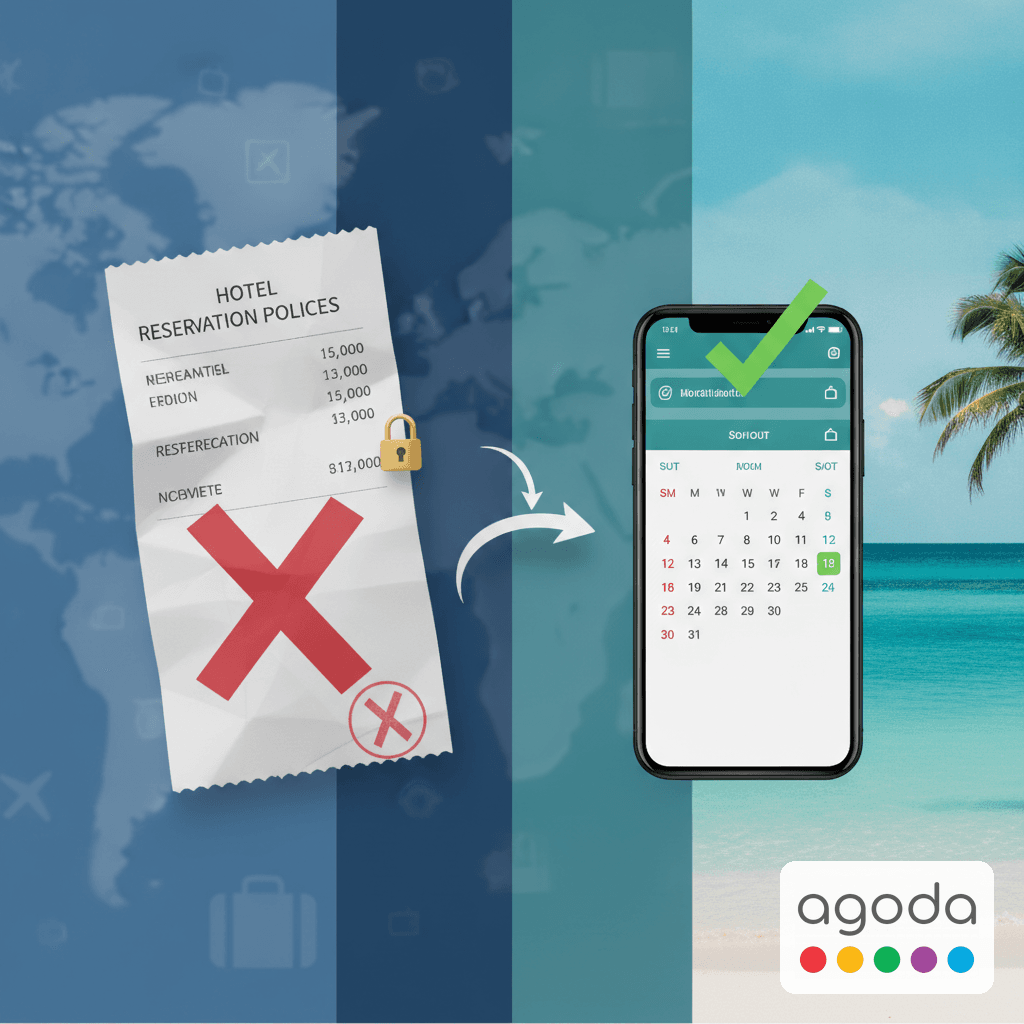
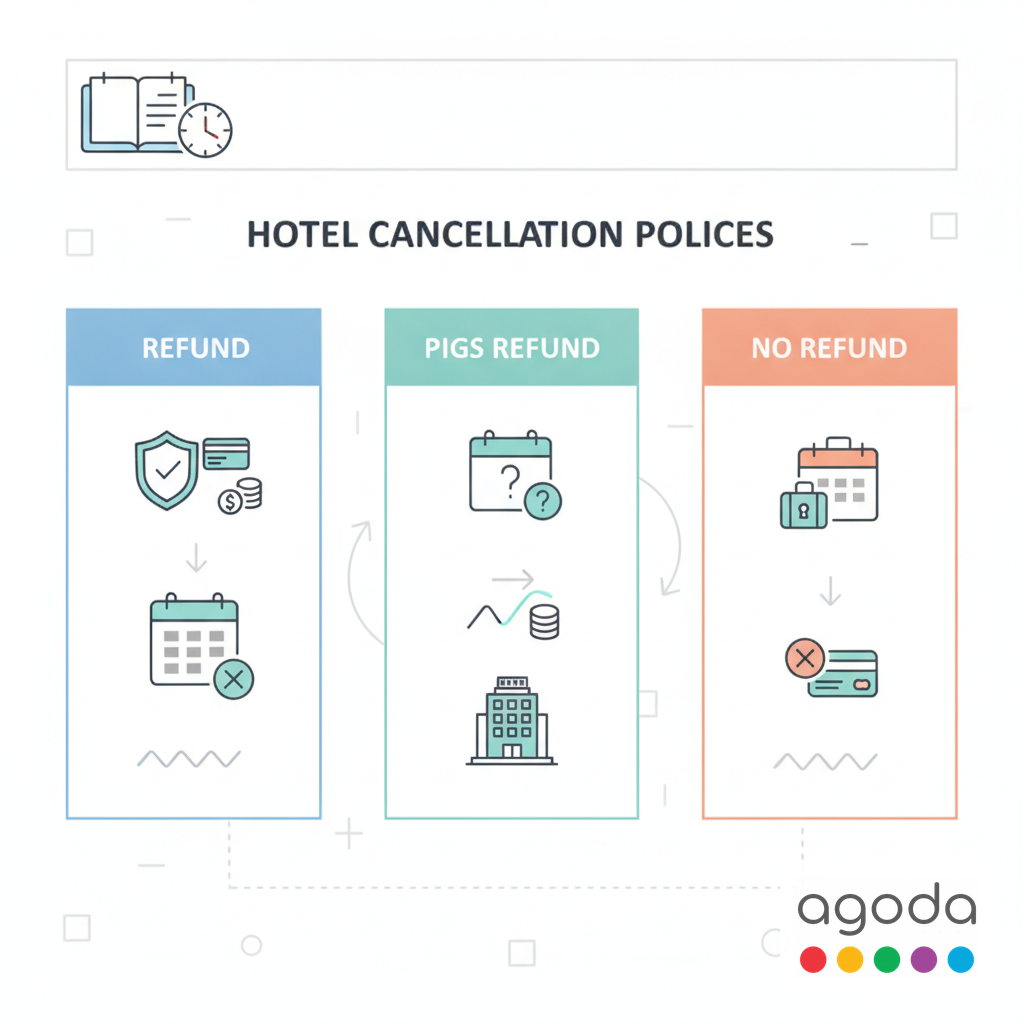
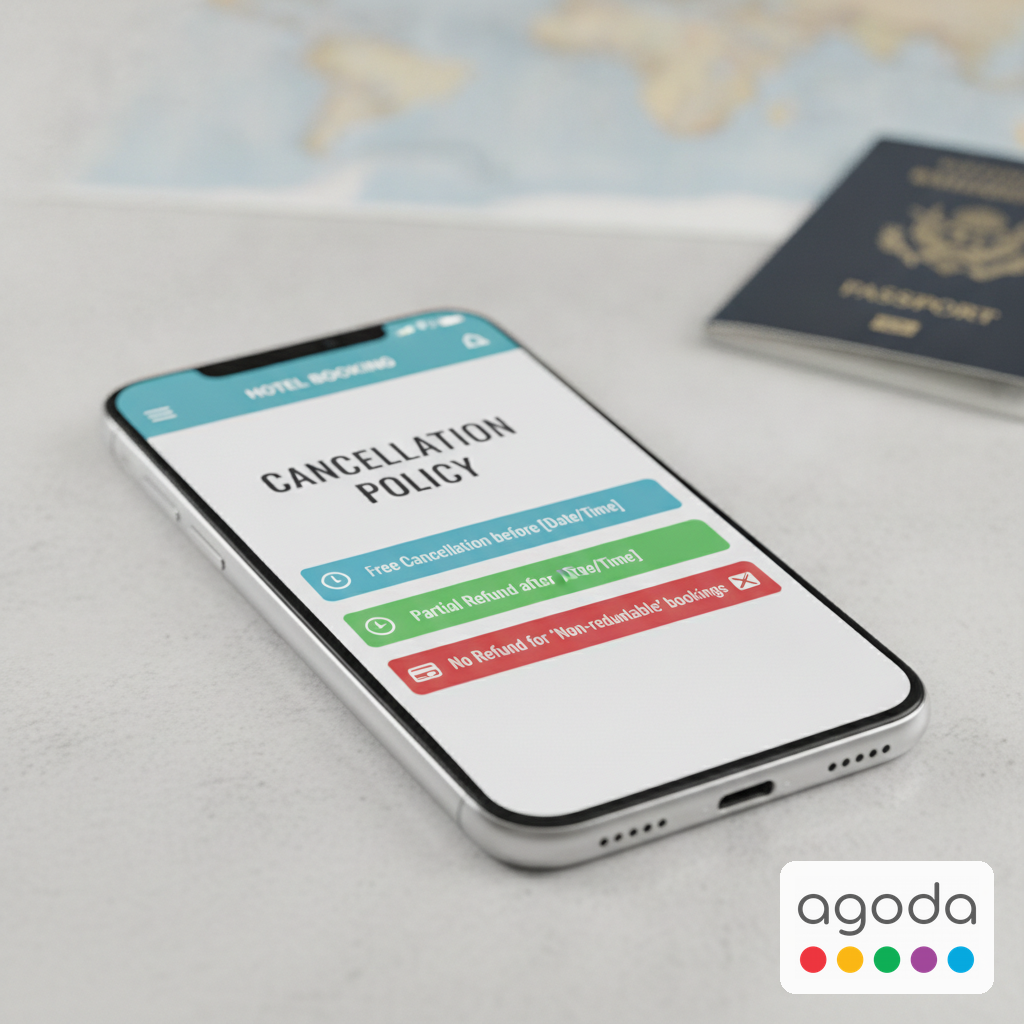
At its core, the policy revolves around two main categories: "Free Cancellation" and "Non-Refundable" bookings. For "Free Cancellation" options, a specific deadline is provided - typically 24 to 72 hours before check-in - by which you can cancel your reservation without incurring any charges. If you cancel within this window, Agoda usually processes the cancellation and initiates a full refund. Conversely, "Non-Refundable" bookings, as the name suggests, generally do not permit cancellations or modifications without losing the full amount paid, regardless of when you attempt to cancel. These non-refundable rates are often cheaper, presenting a trade-off between cost savings and flexibility.
However, the general policy can also include nuances such as partial refunds, cancellation fees, or credit options, depending on the hotel's specific terms. For instance, some hotels might allow cancellation beyond the free cancellation window but charge a one-night penalty. It is crucial for travelers to meticulously review the specific cancellation conditions for each room rate and property before finalizing their booking. These details are typically highlighted in the rate description, the booking summary page, and the confirmation email, often under sections like "Cancellation Policy" or "Booking Conditions." Failure to read these terms thoroughly can lead to unexpected charges or the forfeiture of your payment if plans change.
For example, imagine a traveler, Sarah, books a hotel in Kyoto for a trip planned six months out. She sees two options: a "Free Cancellation until 3 days before check-in" rate and a "Non-Refundable" rate that is 15% cheaper. If Sarah chooses the free cancellation option and later finds a better deal or has to reschedule her trip, she can cancel her booking through the Agoda website or app within the stipulated timeframe without losing any money. However, if she opted for the cheaper non-refundable rate, even if she cancels six months in advance, she would generally not be entitled to a refund, as per the agreed-upon terms. This illustrates the fundamental difference and the importance of selecting a rate that aligns with your travel certainty and budget.
Furthermore, Agoda acts as the facilitating platform. While they display the policies, process the payments, and handle the communication, the ultimate decision on refunds and waivers often rests with the hotel, especially outside of standard "free cancellation" windows. Agoda's role is to ensure transparency and streamline the process as much as possible, providing a clear interface for travelers to manage their bookings according to the terms they accepted. This system underscores the need for proactive engagement from the traveler's side - carefully reading the fine print is your primary defense against unforeseen issues.
What Are the Key Differences Between "Free Cancellation" and "Non-Refundable" Bookings on Agoda?
The core distinction between "Free Cancellation" and "Non-Refundable" bookings on Agoda lies in their flexibility and pricing. "Free Cancellation" rates offer travelers the ability to cancel their reservation without any financial penalty, provided they do so within a specified timeframe, typically ranging from 24 hours to several days prior to the check-in date. This option provides immense peace of mind, especially for those whose travel plans might be uncertain or subject to change. In contrast, "Non-Refundable" bookings generally mean that once confirmed, the booking cannot be cancelled for a refund, and any payment made will be forfeited, regardless of when the cancellation attempt occurs.
From a pricing perspective, "Non-Refundable" rates are almost always cheaper than their "Free Cancellation" counterparts. Hotels offer these rates at a discount because they guarantee revenue, reducing the risk of last-minute vacancies. This makes them attractive to travelers who are absolutely certain about their travel dates and itinerary. However, this cost saving comes with a significant trade-off in flexibility. If an unforeseen event - such as a medical emergency, flight cancellation, or a sudden change in personal circumstances - prevents the traveler from making the trip, the financial loss for a non-refundable booking can be substantial, often the entire booking amount.
For example, consider a family booking a beach resort for a summer vacation. They find a "Free Cancellation" rate for $200 per night and a "Non-Refundable" rate for $170 per night. If they are certain about their travel, choosing the non-refundable rate saves them $30 per night, which can add up significantly over a week-long stay. However, if one of the children falls ill a week before the trip, necessitating a cancellation, the family with the non-refundable booking would lose their entire payment, whereas the family with the free cancellation option could cancel without charge, assuming they are within the allowed window. This scenario clearly demonstrates the financial risk associated with non-refundable rates.
Beyond the direct refund implication, "Free Cancellation" bookings often come with more lenient modification policies. While not always explicitly stated as "free modification," the ability to cancel and rebook without penalty indirectly allows for greater flexibility to change dates or even the entire property. Non-refundable bookings, conversely, are typically much harder to modify, even for minor changes like adjusting check-in times or guest names, without potential fees or the need for a new booking at current rates. The terms for each booking will clearly outline the specific cut-off times for free cancellation, making it essential to note these deadlines upon booking.
Comparison Table: Agoda Free Cancellation vs. Non-Refundable Bookings
| Feature | Free Cancellation Booking | Non-Refundable Booking |
|---|---|---|
| Cost | Higher (premium for flexibility) | Lower (discount for commitment) |
| Refund Eligibility | Full refund if cancelled within specified window | Generally no refund upon cancellation |
| Flexibility | High; easy to change or cancel without penalty | Very low; difficult to change or cancel |
| Cancellation Deadline | Specific date/time before check-in (e.g., 72 hours) | N/A (no free cancellation option) |
| Risk for Traveler | Low (financial protection if plans change) | High (loss of entire payment if plans change) |
| Ideal For | Uncertain travel plans, early bookings, spontaneous changes | Fixed travel plans, budget-conscious travelers, last-minute confirmed trips |
Understanding these fundamental differences is critical for making an informed decision when booking a hotel on Agoda. Travelers must weigh their certainty about their travel plans against the potential cost savings. While non-refundable rates offer a tempting discount, the peace of mind offered by free cancellation can be invaluable if unforeseen circumstances disrupt your journey. Always double-check the exact terms and conditions during the booking process, as policies can vary even within the same hotel for different room types or promotional offers.
How Can You Modify or Change an Agoda Hotel Booking?
Modifying or changing an Agoda hotel booking typically depends on the specific policy of your reservation, primarily whether it is a "Free Cancellation" or "Non-Refundable" rate. For "Free Cancellation" bookings, minor changes such as adjusting check-in/check-out dates, altering guest names, or requesting specific room preferences are often possible without a fee, provided the changes are made within the designated free cancellation period and the hotel can accommodate them. However, for "Non-Refundable" bookings, making any changes can be significantly more challenging, often incurring fees or even requiring a complete rebooking at current prices, leading to the forfeiture of the original payment.
The most straightforward way to attempt a modification is through the "My Bookings" section on the Agoda website or mobile app. After logging in, locate your reservation and look for options like "Change Dates," "Modify Booking," or "Contact Agoda." For simple changes like guest names (e.g., correcting a typo), this can sometimes be handled directly online. For more substantial alterations, such as changing dates or room types, the system will often guide you through the process, indicating any potential charges or whether the change requires direct communication with Agoda's customer support or the hotel itself. It is crucial to remember that any change is subject to the hotel's availability and pricing at the time of the modification request.
Consider a scenario where a business traveler, John, booked a hotel for a conference using a "Free Cancellation" rate. A week before his trip, the conference dates are shifted by two days. John can log into his Agoda account, navigate to his booking, and select the "Change Dates" option. If the hotel has availability for the new dates and the free cancellation window is still open, Agoda's system will typically allow him to adjust the dates without a penalty, though the price might vary if the new dates fall into a different season or demand period. If the price increases, he would need to pay the difference. If the price decreases, he might receive a partial refund or credit, depending on Agoda's and the hotel's policies.
Conversely, if John had booked a "Non-Refundable" rate and needed to change his dates, the situation would be much more complicated. Generally, non-refundable bookings cannot be changed. Agoda's system might not even present a "Change Dates" option, or if it does, it would likely indicate that the original payment is non-refundable and any changes would be treated as a new booking. In such cases, John would typically lose the money paid for the original booking and have to pay full price for the new dates. This is why the initial choice between free cancellation and non-refundable rates is so critical, as it dictates the level of flexibility available for future modifications.
If direct online modification is not available or if you encounter issues, contacting Agoda's customer support is the next step. They can act as an intermediary, reaching out to the hotel on your behalf to inquire about the possibility of changes, especially in extenuating circumstances. While Agoda endeavors to assist, they are bound by the hotel's policies, and success is not guaranteed, particularly for non-refundable reservations. Always initiate change requests as early as possible to maximize your chances, and document all communication, including dates, times, and agent names, for your records.
What Happens When a Hotel or Agoda Cancels Your Booking?
When a hotel or Agoda cancels your confirmed booking, the situation shifts significantly in your favor compared to when you initiate the cancellation. In most cases, if the cancellation is initiated by the hotel or Agoda, you are typically entitled to a full refund. Understanding the Agoda cancellation policy for such scenarios ensures you know your rights and the support available. This scenario often arises due to unforeseen circumstances on the hotel's end, such as overbooking, unforeseen maintenance issues, property closure, or, in rare instances, a pricing error that the hotel cannot honor. Agoda, as the booking platform, is responsible for facilitating this refund and often for assisting you in finding alternative accommodation.
Upon a hotel-initiated cancellation, Agoda's protocol is usually to notify you promptly via email or through the app. The primary outcome for the traveler should be a full refund of the amount paid. Agoda will process this refund back to the original payment method. The timeline for receiving the refund can vary, typically taking 5-10 business days depending on your bank's processing times. It is crucial to monitor your bank statements to ensure the refund is successfully processed. If you do not see the refund within the expected timeframe, contacting Agoda customer support is the next step.
For example, imagine a traveler, Maria, booked a boutique hotel in Paris months in advance for a romantic getaway. Two weeks before her trip, she receives an email from Agoda stating that the hotel has unexpectedly closed for renovations and her booking has been cancelled. In this instance, Maria is entitled to a full refund. Agoda's customer support team would typically offer to help Maria find a comparable alternative hotel for her dates, sometimes even offering special discounts or covering price differences up to a certain limit as a gesture of goodwill. This is where Agoda's role as an intermediary becomes highly beneficial, as they have the resources and relationships to assist in such disruptions.
In cases of overbooking, which can occasionally happen due to administrative errors or simultaneous bookings across multiple platforms, hotels are legally or ethically obligated to find you comparable accommodation. Agoda usually steps in to ensure this obligation is met, mediating between you and the hotel to secure an alternative stay of equal or greater standard, ideally at no additional cost to you. If no suitable alternative is found or acceptable, then the full refund remains the baseline resolution. This protection is a key benefit of booking through a reputable OTA like Agoda, as it provides a layer of mediation and support that might be harder to achieve if booking directly with an uncooperative independent hotel.
While a full refund is the standard, in some regions or under certain consumer protection laws, travelers might also be entitled to additional compensation for damages incurred due to the cancellation, such as non-refundable flight tickets or other pre-paid arrangements. However, Agoda's liability is generally limited to the value of the hotel booking itself. Therefore, while Agoda will work to secure your refund and potentially assist with rebooking, travelers are always advised to consider comprehensive travel insurance to cover broader financial losses resulting from unforeseen cancellations, regardless of who initiated them. Always keep records of all communications and documentation related to the cancellation and any proposed resolutions.
What Is Agoda's Refund Process for Hotel Cancellations?
Agoda's refund process for hotel cancellations is initiated once a valid cancellation request is approved, typically for "Free Cancellation" bookings or cancellations initiated by the hotel. The process begins with you formally cancelling your booking through the "My Bookings" section on the Agoda platform. Once the cancellation is confirmed by Agoda and the hotel, Agoda then processes the refund back to the original payment method used for the booking. This often means the credit card, debit card, or PayPal account from which the payment was initially made.
The timeline for receiving a refund can vary, and it is a common point of inquiry for travelers. Generally, Agoda advises that refunds are processed within 5-10 business days from the date of cancellation. However, the actual appearance of funds in your account depends heavily on your bank or credit card provider's processing times. Some banks might credit the amount sooner, while others could take longer, occasionally up to 15-30 business days, especially for international transactions or specific financial institutions. Agoda will usually send a confirmation email once the refund has been processed on their end, serving as proof that the transaction has been initiated.
For instance, if a traveler, David, cancelled a "Free Cancellation" hotel booking on a Monday, he might receive an email confirmation from Agoda by Tuesday or Wednesday indicating the refund has been processed. He would then typically expect the funds to appear in his bank account sometime between the following Monday and the end of the next week. If, after 10-15 business days, David still hasn't received the refund, his first step should be to check his bank statements thoroughly for the transaction, sometimes it can appear with a different merchant name than Agoda. If it's still missing, he should then contact Agoda's customer support with the refund confirmation details provided in the email.
It's important to understand that while Agoda facilitates the refund, they are transferring funds that were originally paid to the hotel. For "Pay at Property" bookings, if you have a free cancellation policy and cancel within the window, no actual transaction occurred, so there is no refund to process. The booking is simply voided. For "Pay Now" bookings, where Agoda collects payment on behalf of the hotel, Agoda is responsible for returning those funds to you as per the agreed terms. In some cases, if you have paid the hotel directly (e.g., for a "Pay at Property" rate where the hotel processed an advance charge), the refund process might be handled directly by the hotel, with Agoda acting as a communication channel. This specific scenario is less common for Agoda's standard "Pay Now" options but is worth noting.
In situations involving "Non-Refundable" bookings where a refund might be considered (e.g., due to extenuating circumstances or a rare hotel goodwill gesture), the refund process could be more complex and potentially involve Agoda issuing booking credits rather than a direct cash refund. Agoda may also levy administrative fees in certain non-standard refund cases. Always retain all documentation related to your booking and cancellation, including confirmation numbers, emails, and screenshots, as this information will be vital if you need to follow up on your refund. Prompt action and clear communication with Agoda support are key to a smooth refund experience.
Can You Cancel a Non-Refundable Agoda Booking and Get a Refund?
Generally, cancelling a "Non-Refundable" Agoda booking does not entitle you to a refund. By definition, these rates are offered at a discount precisely because the traveler commits to the booking and forgoes the option of a refund if plans change. This strict policy is clearly communicated during the booking process, and accepting a non-refundable rate means accepting this condition. However, there are a few exceptional circumstances where a refund, or at least some form of compensation, might be possible, although these are never guaranteed and typically require significant effort and negotiation.
One of the primary avenues for seeking a refund on a non-refundable booking is through extenuating circumstances. These usually involve severe and unavoidable situations such as documented medical emergencies (illness or death in the immediate family), natural disasters impacting the travel destination, or government-issued travel restrictions. In such cases, you would need to contact Agoda's customer support and provide official documentation (e.g., doctor's notes, death certificates, official travel advisories). Agoda would then act as an intermediary, presenting your case to the hotel. The hotel's decision, however, remains final, and they are not legally obligated to provide a refund under their non-refundable terms, though they may offer goodwill gestures like a partial refund, a future credit, or a date change.
For example, imagine a traveler, Emily, books a non-refundable room in Florida for a solo trip. A week before her departure, a Category 4 hurricane is projected to make landfall directly in her destination, prompting official evacuation orders and airport closures. In this scenario, Emily should immediately contact Agoda with the official travel advisories. The hotel, due to the natural disaster making the stay impossible or unsafe, would likely be amenable to offering a full refund or a travel credit, even for a non-refundable booking. This is because the circumstances are entirely beyond Emily's control and directly affect the hotel's ability to host guests.
Another potential, albeit rare, instance could be a pricing error on the hotel's part that resulted in the non-refundable booking. If the hotel realizes it significantly underpriced a room due to a system glitch, they might sometimes cancel the booking themselves and issue a refund. In such cases, Agoda would facilitate the refund, and you would not be held responsible for the error. However, this is distinct from you initiating the cancellation.
Travel insurance is perhaps the most reliable safeguard against losing money on non-refundable bookings. If you purchased a comprehensive travel insurance policy that covers trip cancellation for specified reasons (e.g., illness, job loss, severe weather), you could file a claim with your insurance provider. The insurance would then reimburse you for the non-refundable costs, subject to your policy's terms and deductible. This is why many travel experts strongly recommend travel insurance, especially for expensive or non-refundable travel components, as it shifts the risk from the traveler to the insurer.
Finally, some travelers have reported success in contacting the hotel directly (after attempting with Agoda) and explaining their situation politely. While the hotel is not obliged to help, a direct appeal, especially if made well in advance, can sometimes result in a partial refund or a credit for a future stay, particularly if they can rebook the room. However, this relies entirely on the hotel's discretion and goodwill. It reinforces the idea that while non-refundable means non-refundable by policy, exceptional situations and proactive measures can occasionally lead to a different outcome.
How Does Agoda's Customer Support Assist with Cancellations and Modifications?
Agoda's customer support plays a critical role in assisting travelers with cancellations and modifications, especially when self-service options are insufficient or when dealing with complex situations. While Agoda encourages travelers to manage their bookings through the "My Bookings" section on their website or app for standard requests, their support team acts as an essential intermediary between the traveler and the hotel for more intricate issues, extenuating circumstances, or when direct hotel contact is needed.
For routine "Free Cancellation" bookings, customer support might primarily confirm the cancellation and refund status if you encounter any technical glitches during the online process. However, for "Non-Refundable" bookings or situations requiring special consideration (like medical emergencies, natural disasters, or requests for changes outside of policy), Agoda's support agents become your main point of contact. They are equipped to liaise with the hotel on your behalf, presenting your case and attempting to negotiate a waiver, a partial refund, or a modification that might otherwise be impossible. This mediation can be invaluable, as individual travelers often have less leverage directly with hotels than a major OTA does.
For example, if a traveler, Sarah, booked a non-refundable hotel and then had a sudden family bereavement, she would contact Agoda's customer support. She would explain her situation, provide relevant documentation (e.g., a death certificate), and request assistance in cancelling her booking for a refund or credit. The Agoda agent would then reach out to the hotel, explain the extenuating circumstances, and request an exception to the non-refundable policy. While the hotel's decision is not guaranteed, having Agoda's backing and established communication channels can significantly improve the chances of a favorable outcome compared to Sarah trying to negotiate alone.
Agoda offers multiple channels for customer support, including a help center with FAQs, a live chat feature, and phone support. For urgent matters, particularly those involving immediate travel disruptions or strict cancellation deadlines, phone support or live chat is generally recommended for quicker response times. Email support is also available for less time-sensitive inquiries, though responses may take longer. It's advisable to have your booking ID, personal details, and a clear explanation of your request ready when contacting support to expedite the process.
It's important to set realistic expectations when engaging with Agoda's customer support regarding non-standard requests. While they strive to assist, their ability to override a hotel's strict non-refundable policy is limited. The success of such requests often hinges on the hotel's discretion, the severity of the extenuating circumstances, and the documentation provided. Travelers should be prepared for the possibility that a full refund for a non-refundable booking may not be achievable. However, even if a full refund is not possible, Agoda's support may be able to secure a credit for future travel or a partial refund, which is better than losing the entire payment. Always document all interactions with customer support, including agent names, dates, times, and summaries of conversations, as this record can be crucial for any follow-up or dispute resolution.
What Factors Influence Your Agoda Hotel Cancellation Eligibility and Refund Amount?
Several critical factors collectively determine your eligibility for cancellation and the potential refund amount when dealing with an Agoda hotel booking. Understanding these influences is paramount for making informed decisions and managing expectations if your travel plans change. These influences are key to understanding the overall Agoda cancellation policy. The interplay of these elements dictates the flexibility you have and the financial implications of cancelling a reservation.
The foremost factor is the "Rate Type" you selected at the time of booking. This is the most significant differentiator: "Free Cancellation" rates offer full refunds if cancelled within the specified window, while "Non-Refundable" rates typically result in forfeiture of the full payment. There may also be "Partially Refundable" rates which allow cancellation but incur a fee, or "Flexible" rates with varying degrees of conditions. Always double-check this core term before finalizing any reservation.
Secondly, the "Cancellation Deadline" is crucial for "Free Cancellation" bookings. Each free cancellation rate comes with a specific cut-off date and time (e.g., cancel by 3:00 PM local time, 3 days before check-in). If you cancel before this deadline, a full refund is generally issued. If you miss the deadline by even a few minutes, the booking may convert to a non-refundable status or incur a penalty, such as the cost of one night's stay. Adherence to this timeline is critical for avoiding charges.
Thirdly, the "Individual Hotel's Policy" often supersedes general Agoda guidelines, especially for non-standard situations. Hotels set their own terms regarding what constitutes an extenuating circumstance, what documentation they require, and whether they are willing to make exceptions to non-refundable policies. Agoda acts as the facilitator but ultimately defers to the hotel's decision in many cases beyond the standard free cancellation window. This means a hotel's willingness to be flexible can significantly impact your refund eligibility.
Fourth, "Extenuating Circumstances" can influence refund outcomes for non-refundable bookings. While not guaranteed, situations like serious illness, death in the family, natural disasters, or government-imposed travel bans might compel a hotel to offer a refund or credit out of goodwill, especially when supported by official documentation. Without such verifiable circumstances, appealing a non-refundable policy is exceedingly difficult.
Finally, "Payment Method and Currency" can affect the refund process and final amount. Refunds are typically processed back to the original payment method. If you paid in a different currency than your refund is issued, currency exchange rate fluctuations could result in a slight difference in the final amount received, either slightly more or slightly less than the original payment in your local currency. Additionally, some payment providers might have their own processing fees for refunds, though these are usually minimal.
Consider a traveler, Lisa, who booked a hotel in Thailand with a "Free Cancellation until 7 days before arrival" policy. Five days before her trip, she realizes she double-booked. If she cancels, she'll likely be charged, as she missed the deadline. However, if she had bought travel insurance that covered double-booking (unlikely for basic policies but possible with "cancel for any reason" options), her insurance might cover the loss. This highlights how various factors, from booking type to external safeguards like insurance, play a role in the ultimate financial outcome of a cancellation. Always review all conditions carefully before clicking "confirm booking."
Agoda vs. Direct Booking: Which Offers Better Cancellation Flexibility?
The question of whether to book through Agoda or directly with a hotel for better cancellation flexibility is not always straightforward and depends on several nuances, including your specific travel needs, the hotel's policies, and the type of rate you select. While both options offer flexibility, the mechanisms and support structures behind them can differ significantly, impacting your experience if plans change.
Booking directly with a hotel often provides the most transparent and direct line of communication regarding cancellation and modification policies. If you have an issue, you are dealing with the decision-maker directly, potentially leading to quicker resolutions or more personalized exceptions in extenuating circumstances. Many hotels offer "Best Rate Guarantees" and competitive flexible rates on their own websites, often matching or even beating OTA prices for similar refundable options. Furthermore, direct bookings are typically how travelers accrue loyalty points and receive status benefits, which can sometimes include more lenient cancellation terms or easier upgrades.
For example, a frequent business traveler, Mark, consistently books directly with a major hotel chain. His loyalty status often grants him an extended free cancellation window - perhaps up to 24 hours before check-in, even on slightly discounted rates, whereas Agoda might only show a 72-hour window for the same room. If he needs to make a last-minute change, a quick call to the hotel's front desk or reservations team might resolve it directly and efficiently, without the need for an intermediary. This direct relationship can be invaluable for personalized service and flexibility.
However, Agoda, as a major OTA, can sometimes offer unique advantages in flexibility, particularly for complex itineraries or price-sensitive travelers. Agoda's platform often aggregates a wider variety of rate types from different hotels, making it easier to compare "Free Cancellation" options across multiple properties. They also occasionally run promotions that include more flexible terms or offer their own "AgodaCash" or credit for certain cancellations, which might not be available directly from the hotel. Furthermore, for situations where a hotel is unresponsive or uncooperative, Agoda's customer support can act as a powerful intermediary, leveraging their relationships to advocate for the traveler.
The key difference often boils down to the "chain of command." With a direct booking, you are beholden to the hotel's policy, but you have direct access to them. With Agoda, you are beholden to the hotel's policy as facilitated by Agoda's platform. While Agoda tries to enforce transparent policies, any deviation or exception needs to pass through them, which can sometimes add a layer of bureaucracy or time. For "Non-Refundable" bookings, neither option typically offers significant flexibility, though a direct appeal to a hotel might, on rare occasions, yield a credit more easily than through an OTA.
Ultimately, the best approach for optimal cancellation flexibility depends on the specific booking. For high-value, long-term, or loyalty-driven stays, direct booking often provides superior flexibility and support. For comparing a wide range of hotels, finding specific "Free Cancellation" deals, or booking simpler, shorter stays where Agoda's search tools are beneficial, Agoda can be an excellent choice. Always compare the specific cancellation terms for the exact rate on both the Agoda platform and the hotel's official website before making your final decision. Don't assume one is always more flexible than the other without checking the fine print for your desired booking.
Understanding Agoda's Payment Policies and Their Impact on Refunds
Agoda's payment policies are diverse, ranging from "Pay Now" options to "Pay at Property," and each has a distinct impact on how refunds are handled in the event of a cancellation. Understanding these payment nuances is crucial, as they directly influence when and how your funds are processed, especially for bookings with free cancellation or those subject to extenuating circumstances.
The most common payment type is "Pay Now," where you provide your credit card or other payment details at the time of booking, and Agoda immediately charges your account. For "Free Cancellation" bookings under this model, if you cancel within the allowed period, Agoda will initiate a full refund. The amount is returned to the original payment method, and the timeline for this varies by bank, typically 5-10 business days. If you cancel a "Non-Refundable" booking with "Pay Now" terms, the payment is generally forfeited, as the funds have already been collected.
Another increasingly popular option is "Pay at Property," where Agoda secures your reservation using your payment details, but the actual payment is made directly to the hotel upon check-in or check-out. For "Free Cancellation" bookings with "Pay at Property" terms, if you cancel within the specified window, no money has typically changed hands, so there is no refund to process. The booking is simply voided, and no charge will appear on your statement. This offers the ultimate flexibility, as there's no waiting period for a refund. However, if you fail to cancel and are a "no-show," the hotel might still charge your card for a no-show fee or the first night's stay, depending on their specific policy, which Agoda would facilitate.
Consider a traveler, Priya, who booked a hotel using the "Pay at Property" option with free cancellation. Her plans unexpectedly change, and she cancels the booking two days before check-in, well within the free cancellation window. Since she hadn't paid anything yet, she simply receives a cancellation confirmation, and no charges are made to her card. This is the simplest and quickest form of cancellation outcome. Conversely, if she had chosen "Pay Now" for the same flexible rate, she would have to wait for the refund to process back to her account.
Some bookings might also involve "partial payment" or a "deposit required" scenario, where a portion of the total is paid upfront, and the remainder is settled later. For these, the refund eligibility for the deposit would depend entirely on the specific terms associated with that partial payment. If the deposit was for a "Free Cancellation" rate, it should be refunded. If it was for a "Non-Refundable" rate, it would likely be forfeited. Agoda also supports various payment methods, including credit cards, debit cards, PayPal, and sometimes local payment options, which can affect the exact refund processing time due to differences in banking infrastructure and international transfer protocols.
It's also important to be aware of any currency conversion fees. If you pay in one currency and receive a refund in another, your bank may apply a foreign exchange rate that differs from the original, potentially resulting in a slight discrepancy in the amount received. This is generally a minor factor but worth noting for international travelers. Always meticulously review the payment details and associated cancellation terms on the Agoda platform before finalizing any booking, as these details directly dictate your financial liability and refund potential.
Strategies to Mitigate Risks with Agoda Hotel Bookings and Cancellations
Mitigating the risks associated with Agoda hotel bookings and their cancellation policies requires a proactive and informed approach. Given the varying terms and conditions, travelers can employ several strategies to protect their financial investment and maintain flexibility, regardless of whether their plans are firm or uncertain. These strategies extend beyond simply reading the fine print and involve making deliberate choices at every stage of the booking process.
The most fundamental strategy is to always choose "Free Cancellation" rates whenever there is any doubt about your travel plans. While these rates may be slightly more expensive than non-refundable options, the premium pays for unparalleled peace of mind and flexibility. If your plans are even remotely subject to change due to work, family, or personal reasons, opting for free cancellation allows you to adapt without financial penalty, provided you adhere to the deadline. This is especially critical for bookings made far in advance, as unforeseen events are more likely to occur over longer periods.
Secondly, carefully review all terms and conditions before confirming your booking. Do not just skim the headlines. Pay close attention to the specific cancellation deadline, any potential fees, and the exact refund process. Screenshotting the policy at the time of booking can also serve as valuable documentation if a dispute arises later. Understanding whether it's a "Pay Now" or "Pay at Property" booking also impacts your financial exposure and refund waiting times, so consider which is most convenient for your cash flow.
Thirdly, for non-refundable bookings, consider purchasing comprehensive travel insurance. Travel insurance is the most robust safety net for non-refundable expenses. A good policy will cover trip cancellation for a range of reasons, including medical emergencies, severe weather, and sometimes even "cancel for any reason" (CFAR) options, which offer the broadest coverage, albeit at a higher premium. While Agoda itself doesn't offer direct insurance, many third-party providers do, and it's a worthwhile investment for significant non-refundable costs.
Fourth, leverage Agoda's customer support and documentation for extenuating circumstances. If you face a situation that forces you to cancel a non-refundable booking - such as a family emergency or natural disaster - gather all relevant official documentation (e.g., medical certificates, government advisories). Present your case clearly and politely to Agoda's customer support. While a refund is not guaranteed, a well-documented request, facilitated by Agoda, increases your chances of a goodwill gesture from the hotel, such as a partial refund or future credit. Do not give up after the first "no" if your circumstances are genuinely severe and verifiable.
Finally, for those who are highly flexible, explore Agoda's "Pay at Property" options. This payment method, often available with free cancellation, means no money leaves your account until you arrive at the hotel. This eliminates the need to wait for a refund to process if you cancel, offering immediate financial peace of mind. While not always available for all properties or rates, it's an excellent option for maximizing flexibility without tying up your funds. By strategically combining these approaches, travelers can navigate Agoda's cancellation policies with greater confidence and significantly reduce potential financial risks.
Navigating Special Circumstances: Group Bookings, Promotions, and Peak Seasons
Agoda's cancellation policy can become even more intricate when dealing with special circumstances such as group bookings, promotional rates, or reservations made during peak seasons. These scenarios often introduce additional layers of restrictions or specific terms that deviate from standard individual bookings, demanding even greater scrutiny from travelers. Understanding these nuances is crucial to avoid unexpected penalties or forfeitures.
Group bookings, for instance, frequently come with much stricter cancellation policies than individual reservations. Hotels typically require significant lead time for group cancellations (e.g., 30-60 days or more) and may charge hefty penalties, sometimes the full amount, if a group cancels close to the check-in date. This is because blocking multiple rooms for a group represents a substantial commitment of inventory for the hotel, and last-minute cancellations can result in significant lost revenue. Agoda will present these specific group terms during the booking process, and they must be reviewed thoroughly. It's not uncommon for group leaders to be required to pay a non-refundable deposit upfront, regardless of the overall cancellation policy, to secure the block of rooms.
Promotional or discounted rates, while attractive, are almost always non-refundable or come with highly restrictive cancellation terms. "Flash sales," "early bird discounts," or "member-only deals" are often designed to secure guaranteed revenue for hotels, and their low price reflects the complete lack of flexibility. Attempting to cancel these bookings typically results in the forfeiture of the entire payment. Even minor changes might be impossible without rebooking at a much higher, current rate. Travelers should view these rates as a firm commitment: only book them if your plans are absolutely unchangeable.
Booking during peak seasons, major holidays, or special events (e.g., New Year's Eve, Olympics, large festivals) also frequently leads to stricter cancellation policies, even for seemingly flexible rates. Hotels in high-demand periods want to minimize vacancies, so they shorten free cancellation windows, increase penalty fees, or may only offer non-refundable rates. For example, a hotel that normally offers free cancellation up to 24 hours prior might switch to a 7-day or even 14-day non-refundable policy during a city-wide convention. Agoda will reflect these heightened restrictions from the hotel during the booking process, making it essential to read the policy carefully, as what's "normal" for a property can change drastically during high-demand times.
Consider a scenario where a couple books a hotel in Rio de Janeiro for Carnival, taking advantage of a "Carnival Special" promotional rate via Agoda. This rate is heavily discounted but explicitly stated as non-refundable. If their flights are unexpectedly cancelled due to an airline strike, their hotel booking, despite the force majeure with their flights, would still be subject to its non-refundable terms. Without comprehensive travel insurance that covers such disruptions, they would likely lose the entire cost of the hotel stay. This highlights the importance of understanding how these special circumstances interact with standard policies and the critical role of external protections like insurance.
Conclusion: Making Informed Decisions with Agoda's Hotel Cancellation Policy
Navigating Agoda's hotel cancellation policy for hotels requires a comprehensive understanding of its various facets, from the fundamental distinction between "Free Cancellation" and "Non-Refundable" rates to the intricacies of modifications, refunds, and extenuating circumstances. As an intermediary, Agoda facilitates the policies set by individual hotels, meaning there is no single, overarching rule that applies to every booking. The power to manage your reservation effectively lies in your hands, through diligent review of terms and strategic decision-making.
The most crucial takeaway is the importance of reading the fine print for every single booking. Always scrutinize the specific cancellation deadline, any potential fees, and the exact refund process associated with your chosen rate. If there is any uncertainty about your travel plans, prioritize "Free Cancellation" options, even if they come at a slightly higher price. This premium for flexibility offers invaluable peace of mind and financial protection against unforeseen changes. For bookings with non-negotiable dates, non-refundable rates offer cost savings, but these should always be weighed against the significant risk of losing your entire payment if circumstances dictate a change.
In situations where a hotel or Agoda initiates a cancellation, you are generally entitled to a full refund, and Agoda's customer support will assist in facilitating this and potentially finding alternative accommodations. For self-initiated cancellations of non-refundable bookings, success in obtaining a refund is rare and typically requires documented extenuating circumstances and the hotel's discretion, often mediated by Agoda. Comprehensive travel insurance emerges as the most reliable safeguard against financial loss for non-refundable expenses, covering a broader range of unexpected events that Agoda's policies might not.
Ultimately, making an informed decision with Agoda's hotel cancellation policy boils down to aligning your booking choice with your personal risk tolerance and travel certainty. Do not assume universal flexibility; instead, understand that each booking is a contract with specific terms. By being proactive, leveraging Agoda's tools, and considering external protections like travel insurance, you can confidently manage your hotel reservations, ensuring that your travel experiences remain smooth and enjoyable, even when the unexpected arises in 2026. A clear grasp of the Agoda cancellation policy empowers you to travel with greater peace of mind.
Frequently Asked Questions
Yes, Agoda's "Free Cancellation" policy is genuinely free if you cancel your hotel booking within the specified timeframe. This means you will not incur any charges or penalties for cancelling, and a full refund will be processed to your original payment method. The key is to adhere strictly to the cancellation deadline provided in your booking confirmation. Missing this deadline, even by a few minutes, may result in charges, such as a one-night penalty or forfeiture of the entire booking, depending on the hotel's specific terms. Always double-check the exact cut-off time when you book.
Generally, cancelling a non-refundable hotel booking on Agoda does not qualify you for a refund, as these rates are offered at a discount in exchange for commitment. However, exceptions can be made for documented extenuating circumstances like severe medical emergencies, death in the family, or natural disasters affecting the destination. In such cases, you must contact Agoda customer support with official documentation, and they will mediate with the hotel. Success is not guaranteed, but hotels may offer a partial refund or future credit out of goodwill. Travel insurance is the most reliable way to recover non-refundable costs.
Once Agoda processes a valid cancellation and initiates a refund, it typically takes 5-10 business days for the funds to appear in your account. This timeline can vary depending on your bank or credit card provider's processing speeds, with some international transactions potentially taking up to 15-30 business days. Agoda will usually send a confirmation email once the refund is processed on their end, providing a reference. If you haven't received your refund within the expected window, it's advisable to first check your bank statements thoroughly and then contact Agoda's customer support for assistance.
If a hotel or Agoda cancels your confirmed booking, you are generally entitled to a full refund to your original payment method. This usually occurs due to unforeseen circumstances on the hotel's part, such as overbooking, maintenance issues, or property closure. Agoda will typically notify you promptly and assist in processing the refund. In many cases, Agoda's customer support will also offer to help you find alternative accommodation of a similar standard, sometimes covering price differences, especially for major disruptions. Always ensure you receive a refund confirmation and monitor your bank statements.
The ability to change your Agoda hotel booking, such as dates or guest names, depends heavily on the type of rate you booked. For "Free Cancellation" bookings, minor changes are often possible without a fee if made within the specified cancellation window and subject to hotel availability. You can usually attempt this through the "My Bookings" section. For "Non-Refundable" bookings, changes are much more difficult and often incur fees or require a new booking, potentially forfeiting your original payment. Always contact Agoda customer support if online modification options are unavailable or for complex requests.
The better option for flexibility - direct booking or Agoda - depends on the specific hotel and your travel profile. Direct booking often offers a more direct line of communication for changes and may provide loyalty benefits or extended cancellation windows for repeat customers. Agoda, however, provides a broader comparison of free cancellation rates across many properties and can act as an intermediary for support. Always compare the specific cancellation terms for your desired rate on both Agoda and the hotel's official website. For high-value or loyalty-driven stays, direct booking might be preferable, while Agoda excels for broad comparisons and specific deals.