How Do <strong>Self Transfer Flights</strong> Work on Kiwi.com?
In the evolving landscape of travel, finding the most affordable and efficient routes often means looking beyond traditional airline alliances. This is where self transfer flights, particularly those offered by platforms like Kiwi.com, come into play. Self transfer flights represent a revolutionary approach to air travel, piecing together itineraries from different airlines that typically do not cooperate, often leading to significant cost savings and access to unique routes. However, this flexibility comes with its own set of responsibilities and potential complexities that every traveler must understand.
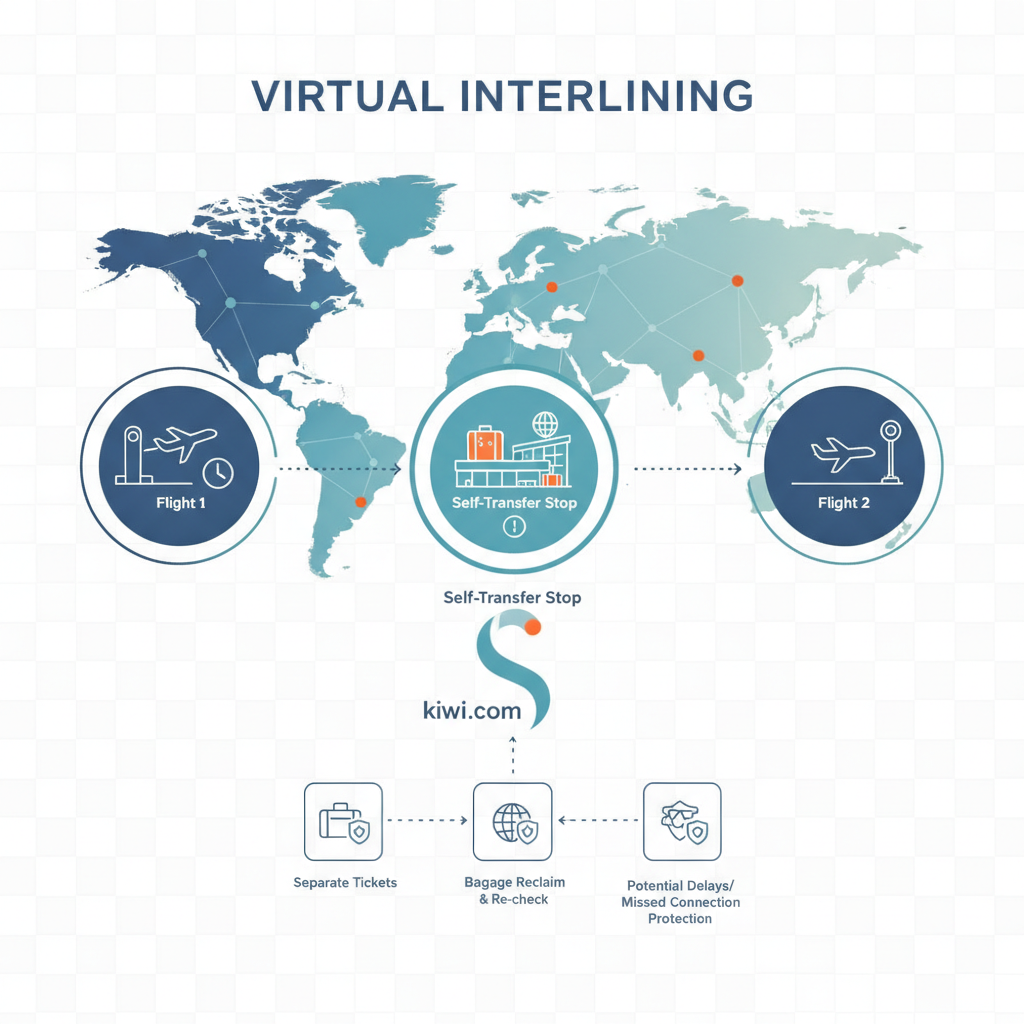
Kiwi.com has emerged as a prominent player in this space, popularizing the concept of "virtual interlining." Unlike conventional connecting flights where your luggage is checked through and your airline is responsible for delays, self-transfer flights involve booking two or more entirely separate tickets. While this can unlock incredible deals and itineraries that no single airline offers, it also shifts the burden of managing potential disruptions - such as missed connections, baggage reclaims, and visa requirements - directly onto the traveler. To mitigate these inherent risks, Kiwi.com offers its unique Kiwi.com Guarantee, a protection mechanism designed to provide a safety net for unexpected travel hiccups.
This comprehensive guide will demystify how self transfer flights work on Kiwi.com. We will delve into the intricacies of virtual interlining, explain the critical role of the Kiwi.com Guarantee, and equip you with the knowledge to navigate common challenges like baggage recheck, transit visas, and optimal layover times. By the end of this article, you will be empowered to make informed decisions, weigh the benefits against the risks, and confidently book self transfer flights that align with your travel style and budget, ensuring a smoother journey in 2026 and beyond.
What Exactly Are Self Transfer Flights on Kiwi.com?
Self transfer flights on Kiwi.com refer to itineraries where a traveler books multiple, distinct flights from different airlines to reach their final destination, often combining carriers that do not have interline agreements. Essentially, Kiwi.com's powerful algorithm acts as a "virtual interliner," stitching together these separate tickets into a single proposed itinerary that often costs less or offers more convenient routing than traditional options. This differs fundamentally from a standard connecting flight, where all segments are on one ticket, usually with the same airline or partner airlines, and luggage is typically checked through to the final destination.
The core concept behind self-transfer is the aggregation of independent flight segments. Imagine a journey from London to Bangkok that a traditional airline might offer as a single ticket with a stop in Dubai. A self-transfer itinerary on Kiwi.com might suggest a flight from London to Istanbul with one airline, and then a separate flight from Istanbul to Bangkok with an entirely different airline. While this offers unparalleled flexibility and often significant price reductions by leveraging low-cost carriers or unique route combinations, it means that each flight segment is treated as an individual journey. Consequently, the airlines involved do not recognize the subsequent legs of your trip, and you, the traveler, become responsible for managing the transition between flights.
For instance, if you book a self-transfer from Paris to Berlin, and then Berlin to Rome, each flight is an independent contract. If your Paris-Berlin flight is delayed, the airline operating the Berlin-Rome flight has no obligation to assist you, as they view your Berlin-Rome ticket as a standalone booking. This is where the savings come with increased personal responsibility. The allure of self-transfer lies in its ability to bypass the often higher costs associated with traditional airline partnerships and direct bookings, opening up a world of combinatorial travel possibilities. However, it requires a heightened awareness of the logistical demands, such as needing to collect and recheck luggage, potentially passing through immigration, and understanding the implications of separate booking references for each flight segment.
The beauty of Kiwi.com's approach is its ability to uncover these hidden route gems. Their search engine doesn't limit itself to airline alliances; it considers virtually every available flight option, creating connections that traditional booking systems simply wouldn't find. This innovative use of technology allows travelers to access a wider array of destinations and price points, making once-unthinkable itineraries both accessible and affordable. However, this convenience is balanced by the necessity for travelers to be proactive in understanding and managing the inherent risks, which we will explore in detail throughout this guide.
How Does Kiwi.com's Virtual Interlining Technology Work?
Kiwi.com's virtual interlining technology is the sophisticated engine that powers its self-transfer flight offerings, enabling it to combine flights from airlines that do not have official partnership agreements. At its heart, this technology employs advanced algorithms that continuously scan and analyze billions of flight connections from hundreds of airlines worldwide, including both full-service carriers and budget airlines. Instead of relying on traditional Global Distribution Systems (GDS) that primarily show interline agreements, Kiwi.com's system independently identifies the most efficient and cost-effective combinations of separate tickets, creating unique itineraries that are often unavailable elsewhere.
The process begins when a user inputs their desired departure and arrival points. Kiwi.com's algorithm then goes to work, sifting through an immense database of flight schedules, prices, and availability from a vast network of carriers. It doesn't just look for direct flights or pre-approved connections; it actively seeks out indirect routes that involve multiple segments, even if those segments are operated by completely unrelated airlines. For example, if you want to fly from Vancouver to Lisbon, the system might identify a cheap flight from Vancouver to Dublin with a low-cost carrier, and then another affordable flight from Dublin to Lisbon with a different budget airline. These two separate tickets are then presented as a single, combined itinerary.
A key aspect of this technology is its ability to factor in crucial elements like minimum connection times, though it's important to note that these are Kiwi.com's recommended times, not those mandated by individual airlines for interline transfers. The algorithm attempts to build in sufficient buffer time between flights to account for typical delays, baggage recheck, and navigating airports. However, the ultimate responsibility for ensuring adequate time still rests with the traveler, especially when considering personal factors like mobility, airport familiarity, or potential visa requirements. The system is constantly updating prices and availability, which means the combinations it presents are dynamic and can change rapidly.
The benefit of this approach is clear: access to a wider range of flight options and often significantly lower prices. Travelers gain the ability to create highly customized routes, reach obscure destinations, or simply save money on popular routes by avoiding the premium charged for traditional interline connections. Without virtual interlining, travelers would have to manually search for and book each segment individually, a time-consuming and often confusing process. Kiwi.com streamlines this by presenting a unified itinerary and handling the booking of each separate ticket on behalf of the user, making complex multi-carrier journeys more accessible to the average traveler. However, it's this very independence of tickets that necessitates robust protection like the Kiwi.com Guarantee, which we'll explore next, to manage the risks inherent in such non-traditional connections.
What is the Kiwi.com Guarantee and How Does It Protect Self-Transfer Bookings?
The Kiwi.com Guarantee is a crucial protection mechanism offered by Kiwi.com designed to safeguard travelers on self-transfer itineraries against common disruptions like flight delays, cancellations, or schedule changes that lead to a missed connection. Since airlines on self-transfer routes operate independently and are not obligated to assist with subsequent flights, the Guarantee steps in to provide a safety net. It's not standard travel insurance, but rather a proprietary service offered by Kiwi.com to manage the unique risks of virtual interlining, aiming to rebook travelers or compensate them in certain situations.
When you book a self-transfer flight through Kiwi.com, you typically have the option to include the Kiwi.com Guarantee, often available in tiers like Basic, Premium, or Premium Plus, each offering varying levels of coverage and support. If a disruption occurs - for example, your first flight is delayed and you miss your second flight - the Guarantee kicks into action. Kiwi.com's support team will endeavor to find you an alternative flight to your destination, covering the cost of the new ticket. Depending on the tier and the duration of the delay, it may also cover reasonable expenses for accommodation, meals, and even airport transfers, ensuring you're not left stranded or significantly out of pocket.
For instance, imagine you have a self-transfer from Berlin to Rome via Munich. If your Berlin-Munich flight is cancelled, the airline operating that leg is only responsible for your ticket to Munich. However, with the Kiwi.com Guarantee, you would contact Kiwi.com directly. Their team would then work to rebook you on the next available flight from Munich to Rome, or an alternative route if necessary. If the delay necessitates an overnight stay, and your Guarantee tier includes it, Kiwi.com would arrange and cover the cost of a hotel. This significantly contrasts with a scenario without the Guarantee, where you would be solely responsible for purchasing a new, potentially expensive, last-minute ticket to Rome and arranging your own overnight stay.
It's vital to understand the scope and limitations of the Guarantee. It primarily covers disruptions caused by the airlines themselves, such as delays, cancellations, or schedule changes. It typically does not cover issues arising from your own actions, such as missing a flight due to personal delays, being denied boarding due to incorrect documentation, or failing to allow enough time for baggage recheck and immigration. The terms and conditions of the Guarantee are specific, outlining claim procedures, response times, and maximum compensation limits. Travelers must adhere to these terms, such as notifying Kiwi.com as soon as a disruption occurs and following their instructions, to ensure eligibility. While it provides invaluable peace of mind for the adventurous traveler, it is not a substitute for comprehensive travel insurance, which covers a broader range of personal emergencies and medical issues.
What Are the Key Risks and Challenges of Self-Transfer Flights?
While self transfer flights through platforms like Kiwi.com offer undeniable advantages in terms of cost and route flexibility, they come with a distinct set of risks and challenges that demand careful consideration from travelers. Understanding these potential pitfalls is paramount to ensuring a smooth journey and avoiding unexpected complications. The primary difference from traditional connections lies in the independent nature of each flight segment, which means a lack of coordination between airlines and a shift of responsibility to the passenger.
One of the most significant challenges is baggage recheck. On a self-transfer itinerary, your luggage is almost never checked through to your final destination. This means you must collect your bags at each layover airport, pass through immigration (if it's an international transfer), go through customs, and then proceed to the check-in counter for your next flight to recheck your luggage. This process is time-consuming and can be stressful, especially in large, unfamiliar airports or with tight connection times. Failure to complete this process in time can result in missed flights and additional costs.
Another critical risk involves visa requirements. Many countries require a transit visa even if you are only passing through, especially if your self-transfer necessitates leaving the international transit area to recheck baggage, change terminals, or stay overnight. Unlike traditional connections where you might remain airside, a self-transfer often forces you to officially enter the country of your layover. Misunderstanding or overlooking these visa requirements can lead to being denied boarding at your initial departure airport or being stuck at a layover destination, incurring significant penalties and disrupting your entire trip. This is a common pitfall for inexperienced self-transfer travelers.
Tight layover times are also a major concern. While Kiwi.com's algorithm factors in recommended connection times, these are often minimums and may not account for real-world scenarios like extensive flight delays, long immigration queues, slow baggage handling, or unexpected terminal changes. A traditional interline connection typically has a built-in safety margin and airline responsibility for rebooking. With a self-transfer, if your first flight is significantly delayed, the second airline has no obligation to hold your flight, and your second ticket may become void without refund, unless you have the Kiwi.com Guarantee or robust travel insurance.
Finally, the issue of airline responsibility is crucial. Since each flight is a separate contract, individual airlines are only accountable for the specific segment they operate. They are not responsible for ensuring you make your subsequent self-transfer connection. This means that if something goes wrong on your first flight - a cancellation, a significant delay, or a diversion - the airline will typically only offer solutions for that specific flight (e.g., rebooking on their next available flight or a refund for that segment). They will not assist with your onward journey, leaving you to manage and bear the costs of any missed connections for your subsequent, separately booked flights. This highlights why the Kiwi.com Guarantee is so essential for mitigating these inherent risks, though it also has its own specific terms and conditions that must be understood.
How Do Baggage and Luggage Recheck Work on Kiwi.com Self-Transfers?
The process of handling your baggage on a Kiwi.com self-transfer flight is one of the most critical aspects to understand, as it differs significantly from traditional connecting flights. Unlike single-ticket itineraries where luggage is typically checked through to your final destination, self-transfer flights require you, the traveler, to take full responsibility for your baggage at each layover point. This means you will almost always need to collect your checked bags, clear customs (if applicable), and then recheck them for your subsequent flight.
Let's break down the typical sequence of events for baggage recheck during a self-transfer. Upon arrival at your layover airport, your first step will be to deplane and proceed to immigration if you are entering a new country or leaving the international transit area. After clearing immigration, you must head to the baggage claim carousel for your flight and collect your checked luggage. This can often involve waiting for bags, which can add substantial time to your connection. Once you have your bags, you will then proceed through customs, where your luggage may be inspected.
Following customs clearance, you must then make your way to the departure terminal for your next flight. This might involve navigating a large airport, taking an internal shuttle, or even transferring between different airports entirely. Upon reaching the correct terminal, you will need to locate the check-in counter for your next airline, present your new boarding pass (from your separate booking), and recheck your luggage. This often means waiting in another queue, potentially paying new baggage fees if the airlines have different policies or if you're exceeding allowances, and then proceeding through security screening again before heading to your departure gate.
Consider a real-world scenario: you book a self-transfer flight from London to Sydney via Singapore. Your London-Singapore flight is with Airline A, and your Singapore-Sydney flight is with Airline B. When you land in Singapore, you must first clear immigration, then collect your bags from the carousel. After passing through customs, you would then need to go to Airline B's check-in desk, recheck your bags, and go through security before boarding your flight to Sydney. If you have a tight layover, any delay in baggage delivery, a long immigration queue, or a distant terminal transfer could easily cause you to miss your onward flight.
Given this multi-step process, planning ample layover time is not just a recommendation but a necessity for self transfer flights with checked luggage. Kiwi.com's proposed connection times are often minimums, and while the Kiwi.com Guarantee offers protection if you miss a connection due to airline-related issues, it doesn't speed up immigration or baggage claim. Travelers should ideally factor in at least 3-4 hours for domestic self-transfers and 4-6 hours for international self-transfers, especially if changing terminals or airports. Opting for carry-on only luggage can significantly reduce the complexity and risk associated with baggage recheck, making self-transfer a more streamlined experience for those who pack light.
Do I Need a Transit Visa for Self-Transfer Flights Booked via Kiwi.com?
A frequently overlooked yet critically important aspect of self transfer flights booked through Kiwi.com is the potential requirement for a transit visa. The direct answer is often "yes," especially if your self-transfer itinerary necessitates leaving the international transit area of an airport. Unlike traditional connecting flights where you might remain airside without formally entering the country, self-transfers often require you to clear immigration, pass through customs, and re-enter the country of your layover to manage your baggage or change terminals. This act of physically entering the country generally triggers visa requirements.
The need for a transit visa depends on several factors: your nationality, the country of your layover, and whether you need to exit the international transit zone. For instance, if you are a non-EU citizen flying from London to New York with a self-transfer stop in a Schengen Area country (like Germany or France), and you need to collect and recheck your baggage, you would technically be entering the Schengen Area. In such a scenario, you would typically require a Schengen transit visa or a short-stay Schengen visa, even if your final destination is outside the Schengen zone. Many travelers mistakenly assume that because they are simply "transiting," no visa is needed, leading to significant problems at check-in or upon arrival at the layover airport.
Let's consider a practical example: an Indian citizen flying from Dubai to Toronto with a self-transfer in London Heathrow. If both flights are on separate tickets, the traveler would land at Heathrow, proceed through UK Border Control to collect their luggage, pass customs, and then check in for their Toronto flight. For this process, a Direct Airside Transit Visa (DATV) might not be sufficient; a full Visitor in Transit visa would likely be required, as they are technically entering the UK. Without the correct visa, the airline for the first leg of the journey could deny boarding, as they are responsible for ensuring passengers have the necessary documentation for all transit points where they will leave the transit area.
It's crucial to understand that Kiwi.com, while facilitating these connections, does not handle visa applications or verify individual visa eligibility. While they may provide general warnings, the ultimate responsibility for researching and obtaining all necessary visas for every country you will enter or transit through rests solely with the traveler. This includes both the destination country and any layover countries where you might need to leave the transit area. It is highly recommended to check the official government websites of all layover countries well in advance of your travel date, as visa rules can be complex and change frequently. Failure to secure the appropriate transit visa is a common and costly mistake for self-transfer passengers, often resulting in missed flights, forfeiture of tickets, and significant financial loss.

Planning Your Self-Transfer: Layover Times, Airport Changes, and Check-in
Effective planning is the cornerstone of a successful self-transfer journey, particularly when it comes to managing layover times, navigating airport changes, and understanding check-in procedures. These elements, often taken for granted in traditional bookings, become critical decision points for travelers utilising Kiwi.com's virtual interlining. The goal is to build in enough buffer against the unpredictable nature of travel, transforming potential stress into a smooth transition.
Layover Times: When Kiwi.com suggests a self-transfer itinerary, it will provide a connection time. However, these are often minimums, calculated purely on theoretical efficiency. For a self-transfer with checked luggage, a more realistic and safer approach is to allocate generous layover times. For domestic self-transfers, a minimum of 3-4 hours is advisable, allowing for deplaning, baggage claim, recheck, security, and potential terminal transfers. For international self-transfers, particularly those involving immigration and customs, 4-6 hours should be considered the bare minimum, and even longer for very large or complex airports like London Heathrow (LHR), Frankfurt (FRA), or New York JFK (JFK). Remember, these times are to manage the process yourself; no airline is responsible for your connection.
Airport Changes: In some self-transfer itineraries, Kiwi.com might suggest flights arriving at one airport and departing from another within the same city (e.g., arriving at Paris Orly and departing from Paris CDG). This adds another layer of complexity. You will need to account for ground transportation time between airports, which can vary significantly due to traffic, public transport schedules, and distance. This journey is entirely your responsibility and could range from 30 minutes to over 2 hours, not including waiting times. Always research the specific transfer options, costs, and estimated travel times between airports well in advance. Factor this into your overall layover time, adding an extra 2-3 hours on top of your standard airport-to-airport connection estimates.
Check-in Procedures: Each flight segment in a self-transfer is a separate booking with a different airline. This means you will need to check in for each flight individually. While online check-in is generally available 24-48 hours before departure, some low-cost carriers might impose fees for airport check-in or require you to print your boarding pass beforehand. It's crucial to be aware of each airline's specific check-in policy, baggage allowance, and any associated fees. Completing online check-in for all segments as soon as it becomes available can save time and potential costs at the airport, especially if you only have carry-on luggage. If you have checked luggage, you will still need to visit the check-in counter for each segment to drop off your bags, even if you've checked in online.
A common pitfall is underestimating the time required for these steps. A traveler with a 2-hour self-transfer layover in a major international hub, who also needs to recheck a bag and pass through immigration, is setting themselves up for a high-stress, high-risk situation. Even if the first flight arrives on time, a slight delay at immigration or a long walk to a distant terminal can easily cause a missed connection. Prioritizing ample layover time and thoroughly researching airport layouts and ground transport options are non-negotiable for a successful self-transfer experience.
When Should You Consider a Kiwi.com Self-Transfer Flight?
Deciding whether a Kiwi.com self-transfer flight is the right choice for your journey involves a careful evaluation of your travel priorities, budget, and tolerance for potential complexities. While not suitable for every traveler or every trip, self transfer flights offer distinct advantages that can be incredibly appealing in specific scenarios. Understanding these use cases will help you determine if the benefits outweigh the added responsibilities.
You should primarily consider a Kiwi.com self-transfer flight when significant cost savings are your top priority. Kiwi.com's virtual interlining excels at uncovering routes that combine low-cost carriers or otherwise disparate airlines, often resulting in fares hundreds of dollars cheaper than traditional single-ticket bookings. If you are a budget-conscious traveler, a student, a backpacker, or simply looking to stretch your travel budget further, these savings can be substantial, allowing you to allocate more funds to experiences at your destination rather than airfare.
Another compelling reason is when you are seeking to reach unique or less-served destinations. Traditional airline alliances often dictate specific hubs and routes, limiting options for travelers venturing off the beaten path. Kiwi.com's technology can piece together routes to smaller airports or connect cities that don't have direct or easy traditional connections, opening up a broader world of travel possibilities. For adventurous travelers or those with very specific itinerary needs, self-transfer can be the key to unlocking these routes.
Flexible travelers who are comfortable with managing their own connections and are prepared for potential disruptions are also ideal candidates. If you're someone who enjoys the challenge of navigating airports, researching visa requirements, and is generally adaptable to changing plans, the self-transfer model can be very rewarding. The Kiwi.com Guarantee provides a safety net, but a proactive and resourceful mindset is still highly beneficial. This is particularly true for experienced travelers who understand the intricacies of airport logistics and customs.
Furthermore, self transfer flights can be advantageous for one-way or multi-city itineraries where flexibility in routes and carriers is paramount. When building complex journeys with multiple stops, booking each segment separately through Kiwi.com can offer more control over individual flight times and carriers, allowing for a truly customized travel experience that might be impossible or prohibitively expensive through traditional booking methods. For example, a digital nomad planning a multi-month trip through Southeast Asia might find self-transfers the most efficient way to hop between various countries.
However, it's equally important to know when to avoid self-transfers. They are generally not recommended for first-time international travelers, those with very tight schedules (e.g., business trips with critical meetings), travelers with mobility issues, or families with young children and lots of luggage. In these cases, the added complexity and potential stress might outweigh any cost savings. The decision ultimately boils down to a personal risk assessment: are the potential savings and unique route options worth the increased personal responsibility and the need for meticulous planning?
What Are the Alternatives to Kiwi.com Self-Transfer Flights?
While Kiwi.com's self-transfer flights offer a unique value proposition, they are certainly not the only way to book air travel. Understanding the alternatives is crucial for making an informed decision that best suits your travel style, budget, and risk tolerance. Each booking method comes with its own set of advantages and disadvantages, particularly concerning price, flexibility, and support during disruptions.
1. Booking Directly with Airlines: This is often considered the safest and most straightforward option. When you book directly with an airline, you typically receive a single ticket for your entire journey, even if it involves connecting flights. This means your luggage is usually checked through to your final destination, and the airline is fully responsible for ensuring you reach your destination, including rebooking you on alternative flights, providing compensation, or offering accommodation in case of delays or cancellations. Direct bookings are ideal for travelers who prioritize peace of mind, strong customer support, loyalty program benefits, and simplicity. While prices might sometimes be higher than self-transfer options, the reduced risk and enhanced support often justify the cost, especially for complex international itineraries or those with critical time constraints.
2. Traditional Online Travel Agencies (OTAs): Platforms like Expedia, Booking.com, or Trip.com often function similarly to booking directly with airlines for standard connections. They aggregate flights from various airlines and present them as single-ticket itineraries. While they might offer competitive prices and a convenient booking experience, their ability to "virtually interline" between non-partner airlines is generally more limited than Kiwi.com's. For traditional OTAs, if you book a connecting flight on a single ticket, the OTA or the operating airline is typically responsible for rebooking in case of disruption. However, if they present separate tickets (which is rarer for standard connections), the risks become similar to Kiwi.com's self-transfer, though often without the same level of dedicated guarantee.
3. Metasearch Engines: Websites like Google Flights, Skyscanner, and KAYAK are not booking platforms themselves but rather search aggregators. They scan prices across numerous airlines and OTAs (including Kiwi.com) and then redirect you to the chosen provider to complete your booking. Metasearch engines are excellent tools for price comparison and discovering potential routes, including those that might involve self-transfers. They provide a broad overview of options, allowing you to identify the cheapest or most convenient flights before deciding where to book. However, they don't offer any direct protection or customer support; their role is purely informational. After finding a suitable flight, you would then need to consider whether to book it directly with an airline, through a traditional OTA, or via a platform like Kiwi.com, weighing the trade-offs of each.
Choosing the right booking method depends heavily on your individual travel needs. For maximum simplicity and support, direct airline booking or a traditional OTA with a single ticket is preferable. For research and price comparison, metasearch engines are invaluable. But for unlocking unique, budget-friendly, and often complex itineraries by combining otherwise unrelated flights, Kiwi.com's self-transfer with its accompanying Guarantee remains a distinct and powerful alternative.

Navigating Delays and Cancellations on Self-Transfer Flights
Delays and cancellations are an unfortunate reality of air travel, and their impact on self-transfer flights can be significantly more complex than on traditional single-ticket itineraries. Understanding how to navigate these disruptions is crucial for minimizing stress and financial loss. The key distinction lies in who bears the responsibility when things go awry: with self-transfers, that responsibility largely falls on you, the traveler, or the specific protection you've opted for, such as the Kiwi.com Guarantee.
If your first flight on a self-transfer itinerary is delayed or cancelled, the airline operating that flight is only accountable for that specific segment. They might offer to rebook you on their next available flight or provide a refund for that leg. However, they are not obligated to assist with your subsequent, separately booked flights. This means if you miss your onward connection due to their delay, you could lose the value of your second ticket and be responsible for booking an entirely new flight to your final destination. This is where the financial risk of self-transfer becomes most apparent.
This is precisely the scenario where the Kiwi.com Guarantee proves invaluable. If you have purchased the Guarantee, your first step in case of a delay or cancellation impacting your connection is to immediately contact Kiwi.com's customer support. Do not attempt to rebook yourself or deal directly with the individual airlines for your onward journey, as this might invalidate your Guarantee claim. Kiwi.com's team will then work to find you an alternative flight to your destination. Depending on the terms of your Guarantee tier and the length of the delay, they may also cover essential expenses like accommodation, meals, and airport transfers, providing a critical safety net against unexpected costs.
Without the Kiwi.com Guarantee, or if your situation falls outside its terms, you are on your own. Your options would typically include: 1) Purchasing a new, often expensive, last-minute ticket for your onward journey. 2) Trying to negotiate with the second airline, though they have no obligation to help. 3) Relying on your personal travel insurance, if it covers missed connections due to airline delays (always check your policy details thoroughly). This underscores why the Guarantee, or robust independent travel insurance, is almost a necessity for self-transfer travelers.
Proactive measures can also help. Always monitor your flight status regularly, both before departure and during your layover. Download the apps for each airline you're flying with, as well as the Kiwi.com app, for real-time updates. Keep all your booking references and contact numbers handy. If a delay is announced, assess its impact on your connection immediately and be prepared to act quickly. While self-transfers offer incredible flexibility and savings, they demand a higher level of vigilance and preparedness for potential disruptions. The peace of mind afforded by a clear understanding of your protection options and quick action can make all the difference in turning a potential travel nightmare into a manageable inconvenience.
Understanding Hidden Costs and Fees in Self-Transfer Bookings
One of the primary attractions of self transfer flights through platforms like Kiwi.com is the promise of significant cost savings. However, it's crucial for travelers to look beyond the headline price and understand the potential "hidden" costs and fees that can accumulate, transforming a seemingly cheap fare into a more expensive overall journey. These costs often arise from the independent nature of each flight segment and the differing policies of various airlines involved in a self-transfer itinerary.
The most common hidden cost is baggage fees. While Kiwi.com will typically show you the baggage allowance for each segment during the booking process, these allowances can vary drastically between airlines. For example, your first low-cost carrier might charge for all checked bags, while your second full-service airline might include one free checked bag. If you've paid for a bag on the first flight, you'll likely have to pay again for the second flight if it's with a different carrier, especially if you need to recheck it. These fees can quickly add up, sometimes negating a substantial portion of your initial savings. Always check the specific baggage policy for each airline on your itinerary and factor these costs into your total budget.
Seat selection fees are another common add-on. Many budget airlines and even some full-service carriers now charge for advanced seat selection. If you want to ensure you sit with your travel companions or secure a preferred window/aisle seat, these costs will apply to each individual flight segment. While optional, these small fees across multiple flights can contribute to the overall expense.
Beyond airline-specific fees, other potential "hidden" costs associated with self-transfers include visa application fees. As discussed, a transit visa might be required for your layover country if you need to leave the international transit area. These visas can range from a nominal fee to over a hundred dollars, depending on the country and your nationality. Researching and budgeting for these well in advance is essential.
Furthermore, if you opt not to purchase the Kiwi.com Guarantee, or if a disruption falls outside its terms, you could face significant rebooking costs. A missed connection could mean purchasing an entirely new, last-minute ticket to your destination, which can be exceptionally expensive. Similarly, unexpected overnight stays due to delays or cancellations could incur costs for accommodation and meals, which are typically only covered if you have the Kiwi.com Guarantee (depending on your tier) or specific travel insurance.
Lastly, airport transfer costs can become a factor if your self-transfer involves changing airports within the same city. The cost of a taxi, bus, or train between airports needs to be factored into your budget. While the initial search results on Kiwi.com highlight the base fare, a truly transparent cost assessment requires you to meticulously calculate all these potential add-ons and unforeseen expenses. Smart self-transfer travelers always perform this comprehensive cost analysis before hitting the "book" button, ensuring the perceived savings are indeed real after all potential fees are considered.
Is the Kiwi.com Guarantee Worth the Extra Cost for Self-Transfer Flights?
The question of whether the Kiwi.com Guarantee is "worth it" is central to the self-transfer booking experience, as it directly addresses the inherent risks associated with combining separate flight tickets. For many travelers, especially those new to self-transfers or embarking on complex international itineraries, the Guarantee provides a crucial layer of protection that can turn a potentially disastrous missed connection into a manageable inconvenience. The value of this peace of mind often outweighs its additional cost, particularly when considering the high stakes of international travel.
Without the Kiwi.com Guarantee, a missed connection due to an airline delay or cancellation means you are entirely on your own. The first airline is not responsible for your subsequent flight, and the second airline has no obligation to honor your missed booking. This could leave you stranded, forcing you to purchase a new, often very expensive, last-minute ticket to your destination. This unexpected cost could easily surpass any initial savings achieved through self-transfer, turning a budget-friendly trip into a financial burden. For example, a missed transatlantic connection could result in a new ticket costing upwards of $1,000, dwarfing the typical Guarantee premium of $20-100.
The Guarantee's value proposition is clear: it acts as a safety net against these specific airline-induced disruptions. Depending on the tier purchased (Basic, Premium, or Premium Plus), it typically covers rebooking on an alternative flight, and in higher tiers, may also include reasonable costs for accommodation, meals, and airport transfers during extended delays. This means that instead of navigating frantic rebooking and unexpected expenses by yourself, you have Kiwi.com's support team working on your behalf to get you to your destination. This is particularly beneficial for travelers who might not have extensive experience dealing with airline customer service in foreign countries or under stressful conditions.
However, it's important to weigh the cost against your personal risk tolerance and the specifics of your trip. If you are an experienced, adaptable traveler with minimal luggage, an exceptionally long layover (e.g., 8+ hours), and a flexible schedule, you might decide the risk is low enough to forgo the Guarantee. Similarly, if you have comprehensive independent travel insurance that explicitly covers missed connections due to airline fault, that might offer sufficient protection. Always review the terms and conditions of both the Kiwi.com Guarantee and any personal travel insurance to avoid overlapping coverage or gaps.
In most cases, especially for international self-transfers with multiple legs, the Kiwi.com Guarantee is a highly recommended investment. It mitigates the most significant financial risks associated with self-transfer, providing a level of security that is otherwise absent from these independent ticket bookings. For a relatively small additional fee, it can prevent a minor flight disruption from escalating into a costly and emotionally draining travel nightmare, making your budget-friendly self-transfer genuinely sustainable.
Comparison: Kiwi.com Self-Transfer vs. Direct Airline Booking vs. Traditional OTA
When planning a flight, travelers face a fundamental choice between different booking methods, each offering a distinct balance of price, convenience, flexibility, and risk. Understanding how Kiwi.com's self-transfer model compares to booking directly with an airline or through a traditional Online Travel Agency (OTA) is crucial for making the best decision for your specific travel needs.
| Feature | Kiwi.com Self-Transfer | Direct Airline Booking | Traditional OTA (e.g., Expedia) |
|---|---|---|---|
| Itinerary Creation | Combines separate tickets from non-partner airlines (virtual interlining). | Single ticket, usually with one airline or partner airlines. | Single ticket, usually with one airline or partner airlines. |
| Price Competitiveness | Often the cheapest, especially for complex or unique routes. | Can be competitive, especially for direct routes or package deals. | Competitive, but less likely to find "virtual interlining" deals. |
| Baggage Handling | Requires recheck at each layover (collect, clear customs, recheck). | Checked through to final destination. | Checked through to final destination. |
| Visa Requirements | High risk of needing transit visas if leaving transit area for recheck. | Lower risk, often stay airside (check specific country rules). | Lower risk, often stay airside (check specific country rules). |
| Disruption Handling | Kiwi.com Guarantee provides rebooking/compensation (if purchased). Without it, traveler is responsible. | Airline is responsible for rebooking, compensation, and care. | Airline or OTA is responsible for rebooking, compensation, and care. |
| Customer Support | Kiwi.com support for Guarantee claims. Direct airline support for individual segments. | Direct airline support, typically efficient for their flights. | OTA support, which then liaises with airline. Can be slower. |
| Flexibility (Changes/Cancellations) | Complex due to separate tickets; often subject to individual airline policies + Kiwi.com terms. | Clear, direct policy with airline; may incur fees. | Subject to OTA and airline policies; can be complex. |
| Hidden Cost Risk | High (baggage recheck fees, visa fees, rebooking without Guarantee). | Low (all fees usually clear upfront). | Medium (some OTAs have service fees, but flight-related costs are usually clear). |
| Best For | Budget travelers, unique routes, experienced travelers, complex itineraries. | Peace of mind, simple itineraries, loyalty benefits, families, first-time travelers. | Convenience, price comparison for standard routes, less risk than self-transfer. |
| Where to Buy | View Deal |
As the table illustrates, Kiwi.com's self-transfer model excels in offering the lowest prices and the widest array of route combinations, making it a powerful tool for budget-conscious and adventurous travelers. However, this comes at the cost of increased personal responsibility for logistics like baggage and visa compliance, and a higher reliance on the Kiwi.com Guarantee for disruption protection.
Direct airline bookings provide the highest level of security and simplicity, with the airline taking full responsibility for your journey. This is the preferred option for travelers who prioritize convenience, direct communication, and robust support in case of delays or cancellations, even if it means paying a slightly higher fare. Traditional OTAs sit somewhere in the middle, offering a convenient booking experience for standard connections, often with competitive prices, and generally more protection than a barebones self-transfer but potentially less direct control than booking with the airline itself. The choice ultimately depends on your individual travel profile and what you value most in your journey.
Conclusion
Self transfer flights on Kiwi.com, underpinned by their innovative virtual interlining technology, have undeniably revolutionized the way many travelers approach air travel. By intelligently combining separate flight tickets from otherwise unrelated airlines, Kiwi.com unlocks an expansive world of unique routes and often unparalleled cost savings that traditional booking methods simply cannot match. This model empowers budget-conscious adventurers and those seeking to reach less-traveled destinations, offering a level of flexibility and choice that was once unimaginable.
However, the allure of these savings must be tempered with a thorough understanding of the inherent complexities and increased traveler responsibility. The core difference lies in the independent nature of each flight segment: your luggage will likely need to be rechecked at each layover, you may require transit visas for countries you technically "enter" to manage your connection, and the airlines themselves bear no responsibility for your onward journey if a disruption occurs. These factors necessitate meticulous planning, generous layover times, and a proactive approach to understanding airport logistics and visa regulations.
Crucially, the Kiwi.com Guarantee emerges as the essential safety net for self-transfer bookings. While not a substitute for comprehensive travel insurance, it provides a vital layer of protection against missed connections due to airline delays or cancellations, offering rebooking assistance and, in higher tiers, covering essential expenses. For many, the peace of mind afforded by the Guarantee makes the self-transfer model a viable and attractive option, effectively mitigating the most significant financial risks.
Ultimately, deciding whether to opt for a Kiwi.com self-transfer flight requires a careful personal assessment. If you are an experienced, adaptable traveler prioritizing significant savings and unique itineraries, and you are willing to invest the time in thorough planning and understanding the terms of the Kiwi.com Guarantee, then self transfer flights can be an incredibly rewarding choice. However, for those who prioritize simplicity, maximum airline responsibility, or have tight schedules, families with young children, or complex visa situations, booking directly with an airline or via a traditional OTA for single-ticket connections might be a more suitable and less stressful alternative. By weighing these factors, you can confidently navigate the world of self transfer flights and make the best decision for your next journey in 2026.
Frequently Asked Questions
Kiwi.com self-transfer can be safe if you understand the risks and utilize the Kiwi.com Guarantee. The platform itself is legitimate, but the safety of the journey depends on your preparedness for baggage recheck, visa requirements, and potential disruptions. The Guarantee offers rebooking and compensation for airline-caused issues, mitigating significant financial risk. However, it's crucial to thoroughly review all terms and conditions, allocate ample layover time, and secure any necessary transit visas to ensure a smooth and secure travel experience.
If your flight is delayed or cancelled on a Kiwi.com self-transfer and you have the Kiwi.com Guarantee, you should immediately contact Kiwi.com support. They will work to find you an alternative flight to your destination and, depending on your Guarantee tier, may cover costs for accommodation, meals, or transfers during the delay. Without the Guarantee, the airline for the delayed flight is only responsible for that specific segment, leaving you responsible for rebooking and covering costs for any missed onward connections and associated expenses.
No, Kiwi.com's self-transfer flights almost never include baggage checked through to your final destination. You are responsible for collecting your checked luggage at each layover airport, passing through immigration and customs (if applicable), and then rechecking it for your subsequent flight. This process requires significant time and attention, and you may incur new baggage fees if the airlines on your itinerary have different policies or if you exceed their allowances. Always plan for this manual recheck process.
Yes, you often need a transit visa for a self-transfer layover, especially if your itinerary requires you to leave the international transit area. This is typically necessary if you need to collect and recheck baggage, change terminals, or stay overnight in the layover country. Your nationality and the specific visa rules of the transit country determine the requirement. Always research and secure any necessary transit visas well in advance of your trip, as failure to do so can result in denied boarding or being stranded.
Kiwi.com can often be significantly cheaper than booking directly with a single airline, especially for complex itineraries or routes involving multiple carriers that don't have interline agreements. Its virtual interlining technology finds unique combinations of flights that might not be available elsewhere, leveraging low-cost carriers for substantial savings. However, it's crucial to factor in potential additional costs like baggage recheck fees, visa fees, and the optional Kiwi.com Guarantee to calculate the true total cost, as direct bookings often include these aspects upfront.
For a self-transfer flight, it is highly recommended to allow generous layover times, much more than the minimums often suggested by booking platforms. For domestic self-transfers, aim for at least 3-4 hours. For international self-transfers, particularly if you have checked luggage, need to clear immigration and customs, or change terminals, a minimum of 4-6 hours is advisable. For very large or complex airports, or if changing between different airports in the same city, even longer layovers of 6-8+ hours can prevent stress and missed connections.
Yes, using only carry-on luggage can significantly simplify self-transfer flights booked through Kiwi.com. By avoiding checked baggage, you eliminate the need for baggage claim, customs recheck, and waiting at check-in counters for your subsequent flights. This allows for much faster transfers and reduces the risk of missed connections due to baggage delays. However, you still need to be mindful of immigration requirements and potential terminal changes, and ensure your carry-on adheres to the size and weight restrictions of all airlines on your itinerary.