
What Kiwi.com Fees Should You Check Before Booking?
Booking travel online promises convenience and often, the allure of the cheapest possible fare. Platforms like Kiwi.com excel at finding unique, often complex, flight combinations that traditional airlines or other online travel agencies (OTAs) might miss. This innovative approach, however, comes with its own set of potential Kiwi.com fees and policy nuances that every traveler must understand before clicking 'confirm'. From service charges to baggage rules, and especially the intricacies of self-transfer itineraries, the total cost and flexibility of your trip can be significantly impacted by these details. Navigating these complexities is crucial to ensure a smooth journey and to avoid unexpected expenses or frustrations.
This comprehensive guide will meticulously break down all the potential Kiwi.com fees you should scrutinize before making a booking in 2026. We'll delve into the various charges, explain how they work, provide real-world examples, and offer actionable advice on how to anticipate and, in some cases, mitigate these costs. Our aim is to empower you with the knowledge to make informed decisions, comparing the potential savings of Kiwi.com's unique itineraries against the trade-offs in flexibility, support, and potential hidden charges. By the end of this article, you will have a clear understanding of what to look for, what questions to ask, and whether Kiwi.com is the right booking platform for your specific travel needs.
What is the Kiwi.com Service Fee and How Does It Affect My Booking?
The Kiwi.com service fee is a charge applied by the platform for its unique flight search and booking aggregation services, which can impact your final ticket price and overall value proposition. This fee is how Kiwi.com monetizes its technology, which specializes in finding uncommon route combinations, including 'virtual interlining' or self-transfer itineraries that connect flights from different, often unaffiliated, airlines.
When you use Kiwi.com, you're not just buying a flight ticket; you're paying for the convenience of their advanced search engine and the logistical orchestration of potentially complex routes. The service fee typically covers the cost of this technology, the customer support infrastructure, and the platform's ability to offer a broader range of options than many competitors. It's usually a percentage of the total fare or a flat rate, and while it might seem like an extra cost, it's the price for accessing their unique inventory and potential savings on combined routes. However, it's essential to compare this final price, including the service fee, against booking directly with airlines or other OTAs to assess true cost-effectiveness.
Consider a scenario where you're flying from London to Bangkok. A traditional airline might offer a direct flight or a single-airline connection for $800. Kiwi.com, through its virtual interlining, might combine a low-cost carrier from London to Dubai and then another airline from Dubai to Bangkok, presenting a total fare of $700. This $700 would include Kiwi.com's service fee. While the initial saving of $100 looks attractive, you must weigh this against the potential risks and responsibilities of a self-transfer, which we will discuss in detail later. The service fee is essentially the cost of this complex routing solution.
Compared to booking directly, where you typically only pay the airline's fare and taxes, Kiwi.com's service fee is an additional layer. Other OTAs might also have booking fees, but Kiwi.com's fee is often tied to its specific value proposition of combining carriers. For the budget-conscious traveler willing to manage the complexities of self-transfer, this fee can still result in overall savings. However, for those prioritizing simplicity, direct airline support, and seamless connections, the service fee might make direct booking a more appealing, albeit potentially more expensive, option.
The actionable insight here is always to view the total price at checkout, not just the initial advertised fare. Ensure the service fee is clearly itemized and understand what it covers. If the combined price, including this fee, still offers significant savings compared to simpler itineraries, and you are comfortable with the associated risks of a multi-carrier booking, then it might be a worthwhile trade-off. However, if the savings are minimal, or if the complexity outweighs the benefit, booking directly or via a simpler OTA might be preferable to avoid paying for a service you don't fully utilize or value.
How Do Kiwi.com's Baggage Fees Work and Can They Be Avoided?
Kiwi.com's baggage fees are determined by the individual airlines operating your flights and can vary significantly, often leading to unexpected costs if not carefully checked. Because Kiwi.com frequently combines flights from multiple carriers, you must understand the baggage policy for each individual leg of your journey, as policies can differ even between different airlines within the same booking.
Many budget airlines, which Kiwi.com often utilizes, charge separately for checked luggage, and sometimes even for larger carry-on bags. Unlike traditional full-service carriers where a checked bag might be included in the ticket price, low-cost options typically have a 'basic' fare that only includes a small personal item. Adding luggage later, especially at the airport, is almost always more expensive than purchasing it during the initial booking process. This is a critical point of confusion and frustration for many travelers who assume a standard baggage allowance will apply across their entire itinerary.
For example, imagine a Kiwi.com itinerary from Berlin to Rome via Vienna, with one leg on Ryanair and the second on Wizz Air. Ryanair might allow a small personal item (40x25x20cm) for free, with a fee for a standard carry-on (55x40x20cm) and a separate fee for checked luggage. Wizz Air might have a slightly different free personal item size and different pricing for carry-on and checked bags. If you assume a single policy, you could arrive at the second airport only to find you owe an additional fee for your bag. Kiwi.com will typically offer to add baggage during the booking flow, but it's vital to confirm these details for each flight segment.
To avoid unexpected baggage fees, the most actionable advice is to proactively check the baggage allowance for every flight segment listed in your Kiwi.com itinerary. During the booking process, Kiwi.com usually provides options to add baggage for each leg, and it's almost always cheaper to do this upfront. If you've already booked, visit the individual airline's website using your airline booking reference (PNR) and add luggage there. Be wary of third-party baggage services; it's safest to deal directly with the airlines.
Compared to booking directly with a single airline or a traditional OTA that offers multi-leg flights on partner airlines, Kiwi.com's multi-carrier itineraries demand a higher level of vigilance regarding baggage. When booking directly, baggage policies are usually consistent across the entire journey or clearly stated if a codeshare is involved. With Kiwi.com's virtual interlining, you are essentially managing separate bookings disguised as one itinerary, making baggage policies a patchwork. Understanding this distinction is key to managing your costs.
Ultimately, the way to 'avoid' these fees isn't by magically bypassing them, but by factoring them into your total cost from the outset. If adding all necessary baggage for each leg makes the Kiwi.com itinerary more expensive than a simpler, direct booking with a single airline that includes baggage, then the 'savings' are illusory. Always compare the total, all-inclusive price, including all baggage fees, before deciding if a Kiwi.com deal is truly the best value for your trip.
What Are the Risks and Fees Associated with Kiwi.com's Self-Transfer Itineraries?
Kiwi.com's self-transfer itineraries, also known as 'virtual interlining', involve booking separate tickets with different airlines to create a single journey, which carries inherent risks and potential fees not present in traditional bookings. These are important aspects of understanding overall Kiwi.com fees.
The primary risk is a missed connection. If your first flight is delayed, causing you to miss your second, separately booked flight, the second airline has no obligation to rebook you or offer compensation. You would be considered a 'no-show' and would likely have to purchase a new ticket at your own expense. This is where the potential for significant unexpected costs arises. Furthermore, you must factor in the time needed to disembark, clear immigration (if crossing borders), collect your checked baggage, re-check it for your next flight, go through security again, and potentially transfer between different terminals or even airports.
Consider a traveler booking a self-transfer itinerary from New York to Paris via Dublin. The first flight is with Aer Lingus to Dublin, and the second is with Air France from Dublin to Paris. Both are separate tickets. If the Aer Lingus flight is delayed by three hours, and you only had a two-hour layover, you will miss your Air France flight. Air France will not rebook you for free because you bought separate tickets. You would then need to purchase a new, often expensive, last-minute ticket to Paris, turning a budget-friendly trip into a costly nightmare. This scenario is a common pitfall of self-transfer bookings.
Kiwi.com offers a 'Kiwi.com Guarantee' or 'Nomad Care' which aims to mitigate some of these risks. This guarantee promises to rebook you or offer a refund if you miss a connection due to a flight delay, cancellation, or schedule change by the airline. However, it's crucial to understand the terms and conditions of this guarantee. It typically requires you to notify Kiwi.com immediately, and their rebooking options might not be ideal (e.g., the next available flight could be days later, or with a very long layover). While better than nothing, it's not the same as the comprehensive protection offered by a single-ticket booking.
Compared to a traditional single-ticket booking, where the airline manages all connections and assumes responsibility for delays, Kiwi.com's self-transfer options demand a higher level of traveler vigilance and risk tolerance. The fees associated with self-transfer aren't direct charges, but rather the potential costs of rebooking, overnight accommodation, or lost portions of your trip if something goes wrong. Actionable insight: always ensure you have ample layover time (at least 3-4 hours for international self-transfers), understand the Kiwi.com Guarantee's limitations, and consider travel insurance that specifically covers missed connections on separate tickets. For those less experienced with international travel or with tight budgets, the savings might not be worth the heightened risk and stress.
How Do Kiwi.com's Change and Cancellation Fees Compare to Direct Bookings?
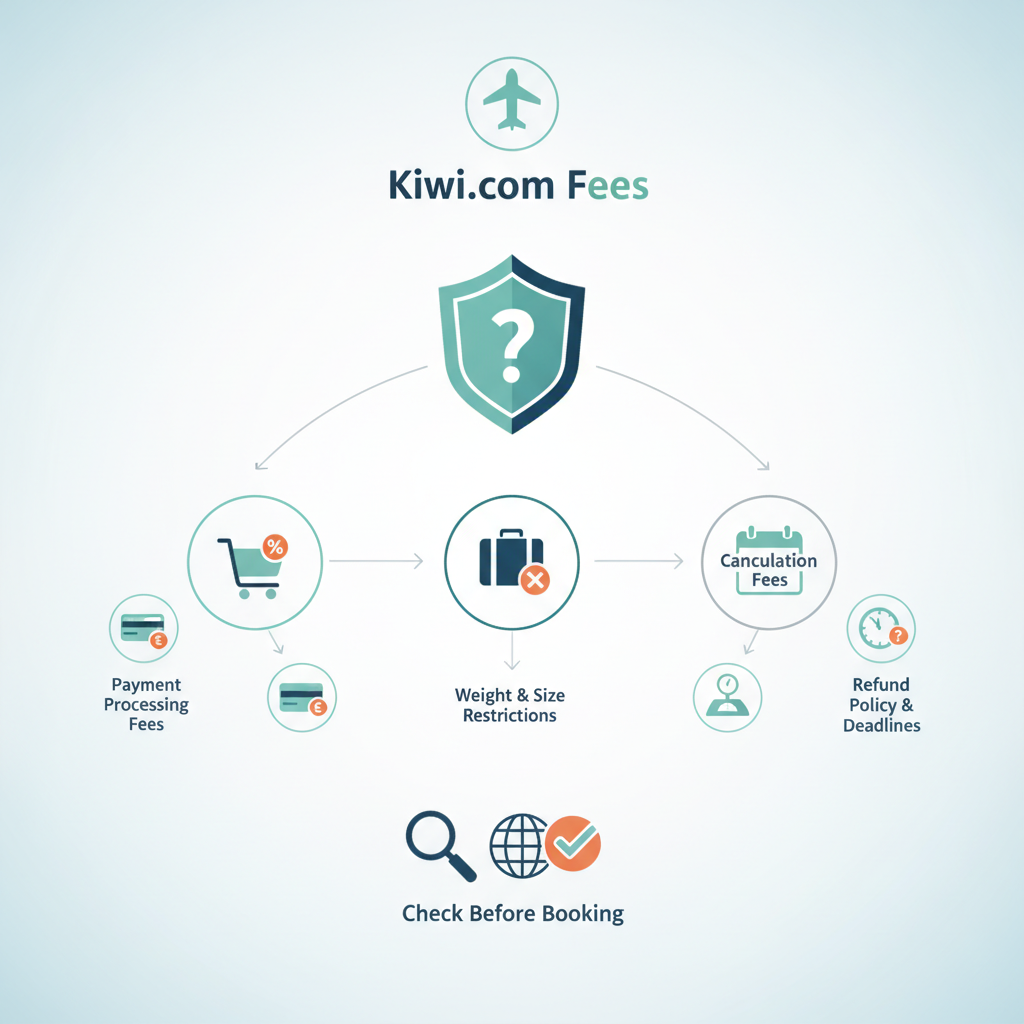
Kiwi.com's change and cancellation fees are generally more complex and potentially higher than those encountered when booking directly with an airline, primarily because Kiwi.com acts as an intermediary for multiple carriers. When you book through Kiwi.com, you are subject not only to the individual airline's policies but also to Kiwi.com's own service fees for facilitating any changes or cancellations.
If you need to change your flight dates or cancel your trip, you'll typically face a two-tiered fee structure: first, the change or cancellation fee imposed by the airline(s) themselves, and second, an administrative processing fee charged by Kiwi.com for handling the request. This can quickly add up, especially for multi-leg itineraries involving several different airlines, each with their own distinct change policies and charges. The process often involves Kiwi.com communicating with each airline on your behalf, which can lead to longer processing times and less direct control over the outcome.
For example, if you book a flight from Madrid to Rome with a layover in Barcelona, flying two different budget airlines via Kiwi.com. If you need to change your departure date, you would first incur a change fee from the Madrid-Barcelona airline, then a separate change fee from the Barcelona-Rome airline. On top of these two airline-specific fees, Kiwi.com would then charge its own administrative fee for processing these changes across both carriers. This can easily make a seemingly inexpensive flight change become quite costly, sometimes exceeding the price of a new ticket.
When comparing this to a direct booking, the difference is stark. If you book directly with a single airline, you only deal with that airline's change or cancellation policy and their associated fees. While airlines certainly charge for changes, there's no additional intermediary fee. Furthermore, some full-service airlines offer more flexible fare types that allow changes with no fee or only a fare difference, which is rarely an option for the budget-focused, multi-carrier itineraries found on Kiwi.com.
Actionable insight: before booking any flight with Kiwi.com, thoroughly review their change and cancellation policy, in addition to the policies of each individual airline in your itinerary. If your travel plans are uncertain, consider purchasing a flexible ticket option (if available and affordable) or robust travel insurance that specifically covers changes and cancellations for multi-carrier bookings. Be aware that the cheapest tickets are almost always the least flexible and will incur the highest fees for any modifications. For maximum flexibility and straightforward fee structures, booking directly with an airline or a traditional OTA offering single-carrier itineraries is often a safer bet, even if the upfront cost is slightly higher.
What Happens to My Refund if I Cancel a Kiwi.com Booking?
Obtaining a refund for a cancelled Kiwi.com booking can be a complex and often lengthy process, as the eligibility and speed of your refund are heavily dependent on the individual airline's policies and the specific type of ticket purchased. Kiwi.com acts as an intermediary, meaning they process refunds based on what the underlying airlines allow, subject to their own administrative procedures.
If you initiate a cancellation, Kiwi.com will first assess the cancellation policies of each airline involved in your itinerary. Many of the budget fares found on Kiwi.com are non-refundable, meaning you might only be eligible for a refund of airport taxes, if anything at all. If your ticket is partially or fully refundable according to the airline's terms, Kiwi.com will then process that refund, often deducting its own administrative fee for the service. The timeline for receiving the refund can vary significantly, often taking weeks or even months, as Kiwi.com must first receive the funds from the airline before disbursing them to you.
Consider a scenario where you booked a multi-leg international flight through Kiwi.com, and due to unforeseen circumstances, you need to cancel. Let's say one leg is with a strict budget airline that offers no refunds for voluntary cancellations, while another leg is with a more flexible carrier that allows a partial refund for the fare, minus a cancellation fee. In this case, Kiwi.com would only be able to refund you the eligible portion from the second airline, potentially after deducting their own processing fee. You would receive nothing for the first leg, except perhaps airport taxes if the airline's policy permits. This fragmented approach to refunds can be frustrating and lead to receiving much less than anticipated.
Compared to booking directly with a single airline, where the refund process is usually more straightforward and adheres to a single, clear policy, Kiwi.com's system adds layers of complexity. When booking direct, if your ticket is refundable, the airline will process the refund directly back to your original payment method, often within a stipulated timeframe. With Kiwi.com, you are reliant on their communication with multiple carriers and their own internal processing times, which can extend the wait considerably.
Actionable insight: before cancelling any Kiwi.com booking, meticulously review the cancellation policies of each airline in your itinerary and Kiwi.com's own refund terms. Understand that the cheapest fares typically offer the least refund flexibility. If you anticipate a need for cancellation flexibility, consider purchasing a more flexible fare type directly from an airline or investing in comprehensive travel insurance that specifically covers cancellations for multi-carrier bookings. Always document all communication with Kiwi.com regarding refunds, and be prepared for potential delays in receiving your funds. For peace of mind and quicker refund processing, direct booking often proves to be the less stressful option for those requiring flexibility.
Are There Additional Payment Processing Fees When Booking with Kiwi.com?
Yes, Kiwi.com may impose additional payment processing fees, depending on the payment method you choose and your geographic location. While many online platforms have moved away from explicitly charging for common payment methods like credit cards, some OTAs, including Kiwi.com, may still apply a small surcharge to cover their own transaction costs, especially for certain card types or currencies.
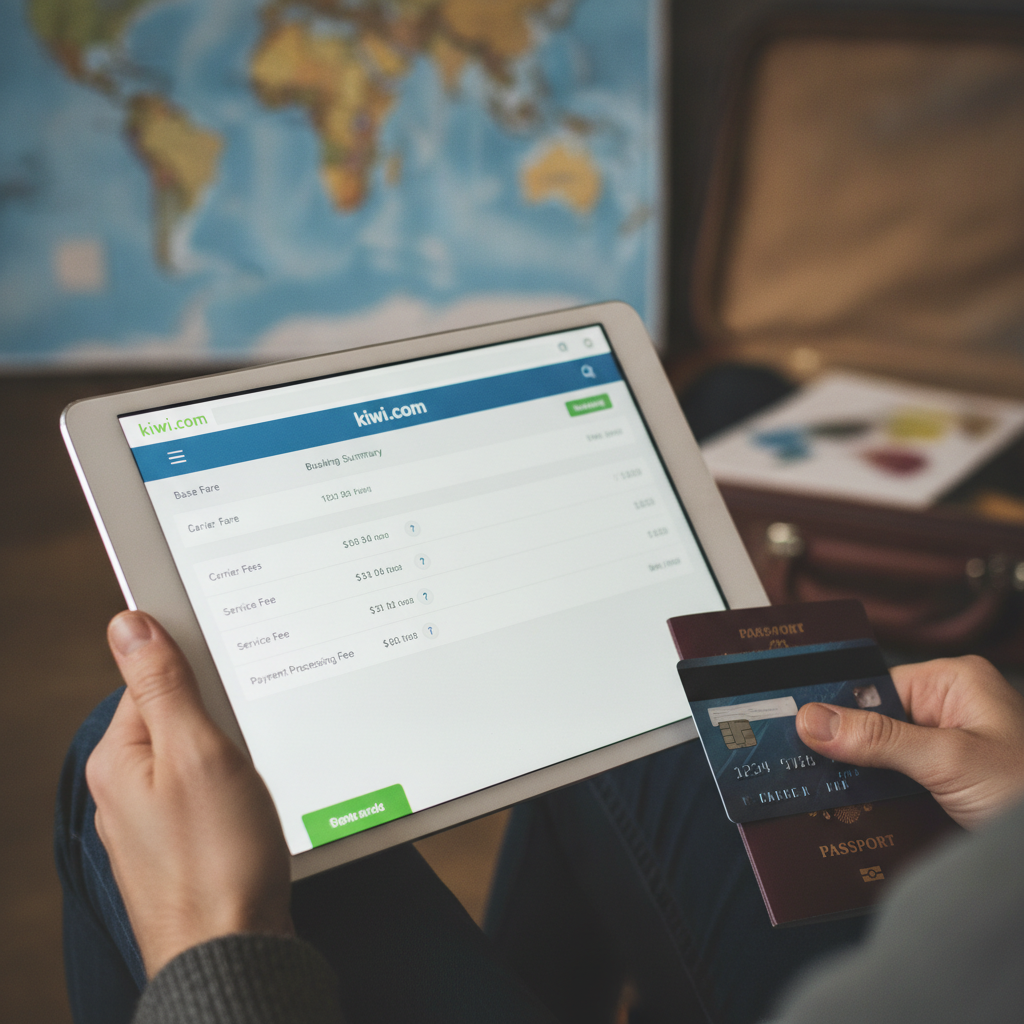
These fees are typically presented during the final stages of the booking process, just before you confirm payment. They might appear as a 'payment processing fee' or 'transaction fee' and can vary based on whether you're using a Visa, Mastercard, American Express, PayPal, or other local payment options. The amount is usually a small percentage of the total transaction or a flat fee, but it's an additional cost that contributes to the final price and can erode any perceived savings from the initial fare. It's crucial to review the 'total payable' amount very carefully on the payment page.
For instance, a traveler booking a $350 flight might see a $7 payment processing fee added when selecting a specific credit card. While $7 might seem minor, it's an unexpected addition to the advertised price. If the same flight is available for $355 directly from the airline with no payment fee, the initial 'cheaper' Kiwi.com price becomes less attractive once all charges are factored in. This is particularly relevant for budget-conscious travelers where every dollar counts towards their overall trip budget.
Compared to booking directly with most major airlines, payment processing fees are less common. Many airlines absorb these costs or offer a wide range of payment options without additional charges. Some other OTAs also offer fee-free payment options. The existence of these fees on Kiwi.com reinforces the need for diligent price comparison at the very final step of the booking process, ensuring you're comparing apples to apples in terms of total cost.
Actionable insight: always proceed to the final payment page on Kiwi.com to see the absolute total price before committing. Be prepared to try different payment methods if available, as some might incur lower or no fees. Using a debit card, for example, might sometimes bypass credit card surcharges, though this isn't universally true. If you're comparing prices across multiple platforms, ensure you go all the way to the payment confirmation screen on each to get the true final cost, including all processing fees. This diligent comparison is the best way to avoid payment-related surprises and ensure you're getting the best overall deal.

What Are the Optional Add-on Fees and Protection Plans Offered by Kiwi.com?
Kiwi.com offers various optional add-on fees and protection plans designed to enhance your travel experience or provide peace of mind, but understanding their true value and necessity is crucial. These extras range from priority boarding and seat selection to more comprehensive disruption protection, and they all contribute to your final booking cost.
Common add-ons include:
- Baggage: As discussed, this is almost always an add-on for budget carriers.
- Seat Selection: Choosing a specific seat for comfort or to sit with companions.
- Priority Boarding: Allows you to board earlier, typically to secure overhead bin space.
- Flexi Ticket: An upgrade that allows you to change your flight dates more easily, often for a fee or fare difference.
- Kiwi.com Guarantee/Nomad Care: Their proprietary protection against missed connections due to airline changes or delays on self-transfer itineraries.
- Travel Insurance: A third-party insurance policy offered during checkout.
Each of these comes with an additional cost and specific terms. For instance, the Kiwi.com Guarantee (or Nomad Care) is a key offering for self-transfer itineraries. While it provides a safety net if you miss a connection due to an airline issue, it's not a free service. You pay for it during booking, and its terms dictate what kind of alternative flights or refunds you're eligible for, which might not always align with your immediate needs or preferences. It's a risk mitigation tool, but one that comes at a price.
Consider a family traveling with young children. Adding seat selection might be essential to ensure they sit together, incurring an extra fee per seat, per flight. If they are on a self-transfer itinerary, the Kiwi.com Guarantee might seem like a wise investment for peace of mind. However, if they also add travel insurance, they need to ensure there's no overlap in coverage, or that the insurance provides broader protection than the guarantee alone. Each add-on decision should be a conscious one, weighing the cost against the perceived benefit and your personal risk tolerance.
Compared to booking directly, where airlines also offer similar add-ons (like seat selection or priority boarding), Kiwi.com's unique offerings like the Guarantee are specific to its virtual interlining model. Travel insurance, however, is a common offering across all booking platforms. The key difference lies in the complexity of managing these add-ons across multiple carriers when using Kiwi.com, and the need to understand how Kiwi.com's own guarantees interact with individual airline policies and third-party travel insurance.
Actionable insight: carefully evaluate each add-on before selecting it. For the Kiwi.com Guarantee, read its terms and conditions thoroughly to understand its coverage and limitations, especially regarding rebooking options and timelines. For travel insurance, compare the policy offered at checkout with independent travel insurance providers to ensure you get the best coverage for your specific needs, particularly for multi-carrier, self-transfer trips. Do not blindly accept all add-ons; only pay for those that genuinely provide value or necessary protection for your travel style and itinerary's inherent risks. Sometimes, the combined cost of add-ons can make a seemingly cheap Kiwi.com flight more expensive than a direct, full-service airline booking.
How Transparent Are Kiwi.com's Seat Selection and Ancillary Service Fees?
Kiwi.com's transparency regarding seat selection and other ancillary service fees can be a mixed bag, often requiring travelers to be proactive in identifying these costs during the booking process. While the platform generally presents these options, the true cost and necessity of each can sometimes be overlooked by less experienced users, leading to a higher final price than initially anticipated.
When you select your flights on Kiwi.com, you'll typically be guided through a series of steps where you can add extras. This is where options for seat selection, additional baggage beyond the basic allowance, and priority boarding are presented. The cost for each of these services is usually displayed clearly at this stage, and it will be added to your running total. However, the challenge arises from the fact that these are often charges imposed by the individual airlines, and Kiwi.com is simply facilitating their purchase. For multi-leg journeys, you'll need to consider these fees for each flight segment, with potentially different prices and policies per airline.
Consider a scenario where you're booking a short-haul flight with a budget airline through Kiwi.com. The base fare is incredibly low. As you proceed, you're prompted to select a seat, with prices ranging from $5 for a standard seat to $20 for an exit row. You also realize your carry-on bag is too large for the 'personal item' allowance, so you add a cabin bag for $30. Suddenly, your $50 base fare has become an $85 ticket. While these costs were displayed, the cumulative effect can be surprising if you weren't expecting them, especially if you're not accustomed to budget airline models.
Compared to booking directly with a full-service airline, where a seat might be included or a clear seat map with prices is presented, Kiwi.com's approach can feel less integrated. With budget airlines, whether booked direct or via Kiwi.com, these ancillary fees are standard. The key is that Kiwi.com's aggregation of multiple carriers means you're dealing with a patchwork of policies. The platform does a reasonable job of showing these options, but it's up to the traveler to understand that they are almost always extra and often essential for comfort or compliance.
Actionable insight: never assume anything is included beyond the most basic personal item allowance for carry-on luggage. Always review the ancillary service options presented by Kiwi.com during checkout and carefully consider which ones are truly necessary for your comfort and travel style. If traveling with companions, factor in seat selection costs. If you need to bring more than a small backpack, budget for baggage fees from the outset. By being proactive and scrutinizing these add-ons, you can avoid sticker shock at the final payment stage and accurately compare the total cost against alternatives. The transparency is there, but it requires the traveler to engage with it diligently.
How Does Kiwi.com's Customer Support Handle Fee Disputes and Trip Disruptions?
Kiwi.com's customer support for fee disputes and trip disruptions can be a point of contention for many travelers, often described as a multi-layered process that can be challenging to navigate, especially during urgent travel situations. Because Kiwi.com acts as an intermediary for multiple airlines, resolving issues often involves an additional step compared to dealing directly with an airline.
For fee disputes, such as an unexpected charge or a discrepancy in the final amount, you would typically initiate contact with Kiwi.com's customer service. They would then investigate the charge, potentially contacting the airline on your behalf. This process can take time, and clear documentation from your side - screenshots of the booking process, confirmation emails, and bank statements - is crucial. The resolution depends on whether the fee was genuinely an error or a legitimate charge disclosed in the terms and conditions that might have been overlooked.
When it comes to trip disruptions - such as flight delays, cancellations, or missed connections on self-transfer itineraries - the situation becomes more critical. If you purchased the Kiwi.com Guarantee or Nomad Care, you are expected to contact Kiwi.com immediately, usually through their app or designated phone line. They will then attempt to find alternative flights for you or process a refund according to the guarantee's terms. However, without this guarantee, you are entirely on your own for missed connections, and for other disruptions, you would typically need to deal directly with the affected airline for rebooking or compensation, even though you booked through Kiwi.com.
Consider a traveler with a missed connection on a self-transfer booking. If they have the Kiwi.com Guarantee, they call Kiwi.com, who might offer a flight the next day, requiring an overnight stay. If they don't have the guarantee, they're stranded. For a simple flight cancellation by the airline, without a guarantee, the traveler would contact the airline directly for rebooking or refund options, but the refund would still be processed via Kiwi.com, potentially adding delays. This two-step process can be frustrating when time is of the essence.
Compared to direct airline support, which typically offers immediate rebooking or resolution for their own flights, Kiwi.com's support model adds a layer of complexity. While Kiwi.com does offer various channels - phone, chat, email - user reviews often highlight long wait times and difficulties in reaching a human agent, especially during peak travel times or major disruptions. This contrasts with the more direct and often quicker resolution you might get by contacting the airline directly, particularly if your issue is solely with their flight.
Actionable insight: for critical issues like trip disruptions, always prioritize contacting Kiwi.com immediately if you have their guarantee, or the individual airline if you don't. Keep all booking references (both Kiwi.com's and the individual airline's PNRs) handy. For fee disputes, gather all evidence before contacting support. Understand that the support process can be lengthy, and for peace of mind, robust travel insurance (separate from Kiwi.com's offerings) that covers travel disruptions and provides direct assistance might be a worthwhile investment, especially for complex itineraries.
Is Booking Directly with Airlines a Better Alternative to Avoid Kiwi.com Fees?
Booking directly with airlines often presents a better alternative for travelers seeking to avoid intermediary fees, gain greater control over their booking, and ensure more straightforward customer support, especially for complex or high-value trips. While Kiwi.com excels at finding unique, low-cost flight combinations, these come with trade-offs that direct booking typically mitigates.
The primary advantage of direct booking is the elimination of Kiwi.com's service fees and any potential payment processing surcharges. When you book directly with an airline, the price you see is generally the price you pay (excluding optional add-ons like baggage or seat selection, which are clearly itemized by the airline itself). This transparency ensures that you are not paying for an additional layer of service that you may not need or value, particularly if your itinerary is simple and involves only one airline or its direct partners.
Furthermore, direct booking provides a single point of contact for all aspects of your journey. If you need to change your flight, cancel, request a refund, or deal with a disruption like a delay or cancellation, you interact directly with the airline responsible for your flight. This streamlines the process, often leading to quicker resolutions and clearer communication. Airlines are generally more empowered and incentivized to assist their direct customers, offering immediate rebooking options, compensation, or refunds according to their own policies, without the added complexity of an intermediary.
Consider a traveler who values peace of mind and straightforward customer service. Booking a round-trip flight from London to New York directly with British Airways means that if the flight is delayed or cancelled, British Airways is solely responsible for rebooking, accommodation, or compensation. There's no need to contact a third party to mediate. While the initial fare might be slightly higher than a complex multi-carrier itinerary found on Kiwi.com, the reduced risk, enhanced support, and absence of intermediary fees often make it a more cost-effective and less stressful choice in the long run, especially if unexpected issues arise.
Comparison Table: Kiwi.com vs. Direct Airline Booking
| Feature | Kiwi.com Booking | Direct Airline Booking |
|---|---|---|
| Base Price Potential | Often finds cheapest multi-carrier combos | Competitive, but less likely for complex combos |
| Service/Booking Fees | Kiwi.com service fee often applies | Generally no additional booking fees |
| Payment Processing Fees | May apply depending on payment method | Less common for standard payment methods |
| Baggage Fees | Varies by airline, often extra per leg | Clear airline policy, often included in higher fares |
| Change/Cancellation Fees | Airline fees + Kiwi.com admin fees | Only airline fees apply |
| Refund Process | Via Kiwi.com, dependent on airline, can be slow | Directly from airline, often faster |
| Disruption Handling | Kiwi.com Guarantee (paid) or self-reliant | Airline rebooking, compensation, support |
| Customer Support | Via Kiwi.com, intermediary role, potential delays | Direct from airline, single point of contact |
| Loyalty Programs | No direct earning for airline loyalty | Earn airline miles and status benefits |
| Overall Risk Profile | Medium to High (especially self-transfer) | Low to Medium |
| Where to Buy | View Deal |
Actionable insight: always compare the total, final price from Kiwi.com (including all fees, baggage, and optional guarantees) against the direct airline price for a similar itinerary. If the savings on Kiwi.com are marginal, or if your trip is critical, complex, or requires flexibility, booking directly with the airline is almost always the safer and more transparent option. The peace of mind, streamlined support, and absence of intermediary fees often outweigh minimal upfront price differences, making direct booking a superior choice for many travelers.
What is Kiwi.com's Policy on Currency Conversion Fees and Dynamic Pricing?
Kiwi.com's policy on currency conversion fees and dynamic pricing can impact the final cost of your booking, making it essential to understand how these mechanisms work. Currency conversion fees arise when you book a flight in a currency different from your payment method's default, while dynamic pricing means that flight prices can change rapidly based on demand and other factors.
When you view prices on Kiwi.com, they are often displayed in your local currency. However, the actual transaction might be processed in a different base currency, typically USD or EUR, depending on the airlines involved or Kiwi.com's internal processing. If your credit card or payment method is in a different currency, your bank may apply its own foreign transaction fees and use its own exchange rate, which might be less favorable than the interbank rate. Kiwi.com itself might also offer to process the payment in your local currency, but this often comes with a built-in markup on the exchange rate, essentially acting as their own conversion fee.
Dynamic pricing is a standard practice across the travel industry, and Kiwi.com is no exception. Flight prices on the platform are constantly fluctuating. What you see one minute might change the next, driven by factors such as demand, remaining seat availability, time until departure, and even the device or location from which you are searching. This means that if you find a good deal, it's advisable to book it quickly, but also to be aware that the price might change if you navigate away and return later.
For example, you might search for a flight from Prague to Lisbon and see a price of 200 EUR. If your credit card is linked to a US dollar account, and Kiwi.com processes the transaction in EUR, your bank might charge a 3% foreign transaction fee, adding $6-$7 to your total. Alternatively, Kiwi.com might offer to show you the price in USD, but their conversion rate might be slightly less favorable than your bank's, still adding a hidden cost. Furthermore, if you hesitate for an hour, that 200 EUR flight might jump to 220 EUR due to dynamic pricing, regardless of conversion fees.
Compared to booking directly with an airline, the currency conversion aspect can be similar if the airline processes in a foreign currency. However, with direct booking, you usually have more clarity on the base currency of the transaction. Dynamic pricing is universal, but the speed of changes can sometimes feel more pronounced on aggregators like Kiwi.com due to their complex routing algorithms constantly recalculating. The key takeaway is that the 'final' price can be influenced by both explicit and implicit currency charges and the real-time nature of pricing.
Actionable insight: to minimize currency conversion fees, always pay in the local currency of your credit card if given the option, and let your bank handle the conversion, as their rates are often more competitive than an OTA's markup. Alternatively, use a travel-friendly credit card that offers no foreign transaction fees. For dynamic pricing, if you find a deal that seems good, be prepared to book it swiftly. However, always double-check the final price on the payment page before confirming, as these fees and price changes can alter the overall value proposition of your Kiwi.com booking significantly.
What Happens If My Flight is Overbooked or Cancelled by the Airline When Booking Through Kiwi.com?
If your flight booked through Kiwi.com is overbooked or cancelled by the airline, the course of action and your rights largely depend on whether you purchased Kiwi.com's Guarantee/Nomad Care and the specific policies of the operating airline. Without the Kiwi.com Guarantee, your recourse is primarily with the airline, but with an added layer of complexity due to the intermediary booking.
When an airline overbooks a flight, they are typically obligated to offer compensation and rebooking to affected passengers, often following regulations like EU261 or DOT rules in the US. If you booked through Kiwi.com, you would generally need to contact the airline directly to assert these rights. Kiwi.com's role as an OTA means they are not the carrier, and thus the immediate responsibility for overbooking resolution lies with the airline. The challenge arises if you have a complex multi-leg itinerary, as resolving one segment's overbooking might impact subsequent, separately booked flights.
For airline cancellations, the situation is similar. The airline is responsible for offering rebooking or a refund. If you have the Kiwi.com Guarantee, you should contact Kiwi.com immediately. They will then work to find you an alternative flight or offer a refund for the affected segments, adhering to their guarantee's terms. However, if you did not purchase the guarantee, or if the cancellation only affects a single, direct leg of your journey, you'd typically contact the airline directly. Any refund due from the airline would then be processed back to Kiwi.com, who would then forward it to you, potentially incurring their own administrative fees and delays.
Consider a scenario where you've booked a flight from Dublin to London via Kiwi.com. The airline cancels the flight due to operational reasons. If you have the Kiwi.com Guarantee, you contact them, and they might rebook you on the next available flight, possibly with a different airline. If you don't have the guarantee, you contact the airline directly for rebooking or a refund. If you opt for a refund, the airline sends the money to Kiwi.com, who then processes it to you. This can add weeks to the refund timeline compared to a direct booking.
Compared to booking directly, where you have a direct relationship with the airline and their customer service for all resolutions, Kiwi.com's intermediary role adds potential friction. While the Kiwi.com Guarantee offers a valuable safety net for their unique self-transfer itineraries, it's not a substitute for direct airline communication when issues arise. For single-leg or simple round-trip flights, booking directly often provides a more straightforward path to resolution and refund if the airline initiates a cancellation or overbooking.
Actionable insight: always know your rights as a passenger under relevant regulations (e.g., EU261, US DOT rules). For all Kiwi.com bookings, especially self-transfers, seriously consider purchasing the Kiwi.com Guarantee or robust third-party travel insurance that specifically covers airline cancellations and overbooking. In case of disruption, prioritize contacting the party responsible for your rebooking or compensation - Kiwi.com if you have their guarantee, or the airline directly otherwise. Always keep all booking references and a record of communication to facilitate any claims or resolutions.
Conclusion: Navigating Kiwi.com Fees for Smarter Travel Booking
Navigating Kiwi.com's fee structure and policies is a critical step for any traveler looking to leverage the platform's unique ability to find innovative, often budget-friendly flight combinations. While the promise of significant savings is alluring, a thorough understanding of potential charges - from service fees and baggage costs to the complexities of self-transfer itineraries and refund processes - is essential to avoid unexpected expenses and frustrations. The key takeaway is that the 'cheapest' upfront price on Kiwi.com might not always translate to the lowest total cost or the most hassle-free travel experience, especially when flexibility and direct support are priorities.
We've explored the various layers of Kiwi.com fees, including the service fee for Kiwi.com's unique aggregation model, the often-variable baggage fees dictated by individual airlines, and the significant risks and potential costs associated with self-transfer bookings. We've also highlighted how change and cancellation fees can be compounded by both airline and Kiwi.com administrative charges, and how refund processes can be lengthier and more complex than direct bookings. Payment processing fees and optional add-ons, though seemingly minor, can further inflate the final price if not carefully scrutinized. Ultimately, the transparency of these fees exists, but it requires diligent attention from the traveler to identify and understand them.
For travelers who are highly budget-conscious, experienced with multi-carrier travel, and comfortable managing potential disruptions with the aid of the Kiwi.com Guarantee, the platform can indeed unlock significant savings. However, for those who prioritize simplicity, direct airline support, seamless connections, or maximum flexibility, booking directly with an airline or a traditional OTA for single-carrier itineraries often provides a more predictable and less stressful experience. The peace of mind that comes from a single point of contact and clearer policies can often outweigh marginal price differences.
Before confirming your next trip with Kiwi.com, empower yourself by meticulously reviewing every line item at checkout. Compare the total, all-inclusive price - factoring in baggage, seat selection, payment fees, and the cost of the Kiwi.com Guarantee - against direct airline bookings. Understand the specific policies of each airline in your itinerary and be prepared for the implications of self-transfer connections. By doing so, you can make an informed decision, ensuring that your Kiwi.com booking truly delivers value and aligns with your travel style and expectations, leading to a smarter, more predictable journey in 2026.
Frequently Asked Questions
Yes, Kiwi.com is a legitimate online travel agency that uses innovative technology to find unique flight itineraries, including those combining different airlines. While it is safe in terms of payment security, the 'safety' of your booking experience depends on your understanding of its complex policies, especially regarding self-transfer flights and customer support. Travelers should be aware of the potential for additional fees and the implications for changes, cancellations, and disruptions, which can be more intricate than direct airline bookings. Always read the terms carefully before booking to ensure it aligns with your risk tolerance.
Kiwi.com's fees aren't typically 'hidden' but require careful attention at various stages of booking. Common fees that might surprise travelers include the platform's own service fee, variable baggage fees for each flight segment (especially with budget airlines), payment processing surcharges for certain methods, and the cost of optional add-ons like seat selection or the Kiwi.com Guarantee. For self-transfer itineraries, the biggest 'hidden' cost can be the expense of rebooking due to a missed connection if you don't have adequate protection. Always proceed to the final payment page to see the total cost.
Kiwi.com's Guarantee (also known as Nomad Care) is an optional paid service designed to protect travelers on self-transfer itineraries from certain disruptions. If you miss a connection due to a delay, cancellation, or schedule change by one of the airlines, Kiwi.com promises to rebook you on the next available flight or offer a refund for the unused segments. However, specific terms and conditions apply, including the requirement to notify Kiwi.com immediately and adherence to their rebooking options, which might not always be the most convenient. It's a safety net, but understanding its limitations is key.
Kiwi.com can often find cheaper initial fares, especially for complex, multi-carrier itineraries that combine budget airlines. However, this initial saving can be eroded by Kiwi.com's service fees, additional baggage charges per flight segment, payment processing fees, and the cost of optional protection plans. When comparing, it's crucial to calculate the total, all-inclusive price, factoring in all these potential charges. For simple, direct routes or when prioritizing flexibility and direct customer support, booking directly with the airline is often more transparent and can be more cost-effective in the long run, despite a potentially higher upfront fare.
If your Kiwi.com flight is cancelled by the airline, your first step depends on whether you purchased the Kiwi.com Guarantee. If you have the guarantee, contact Kiwi.com immediately through their designated channels for rebooking or refund assistance. If you did not purchase the guarantee, you must contact the operating airline directly to understand your rebooking or refund options, as they are the carrier. Any refund from the airline would typically be processed back to Kiwi.com, who would then forward it to you, potentially incurring administrative fees and delays. Always keep both your Kiwi.com booking reference and the airline's PNR handy.
Yes, you can request to change your flight dates with Kiwi.com, but be prepared for potential fees. The total cost will typically include two components: the change fee(s) imposed by the individual airline(s) operating your flights, and an additional administrative processing fee charged by Kiwi.com for handling the modification. For multi-leg itineraries, these airline fees can apply to each segment. Many budget fares are highly restrictive, making changes expensive, sometimes even exceeding the cost of a new ticket. Always review the change policies of both Kiwi.com and the respective airlines before confirming your booking if flexibility is a concern.