
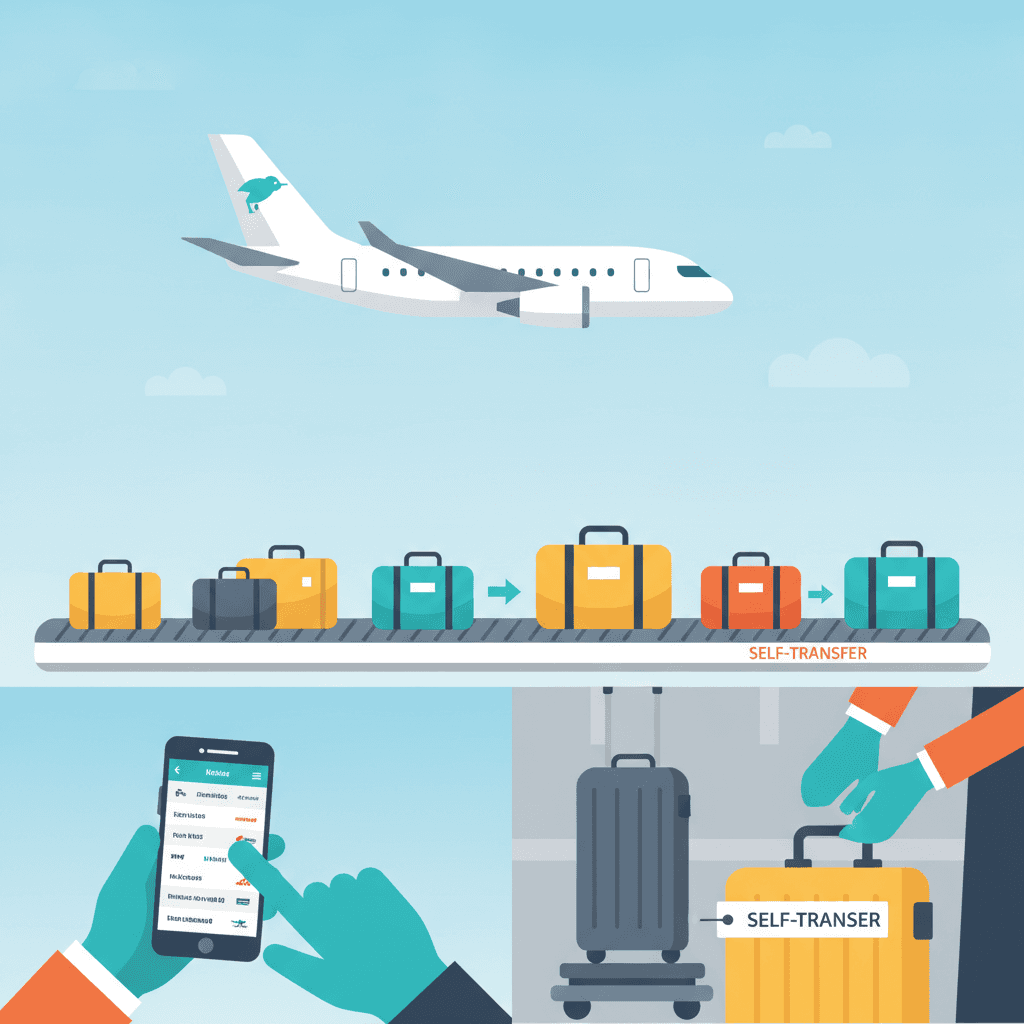
Kiwi.com Baggage: How Self-Transfer Flights Work
Navigating the complexities of air travel can be challenging, and when you add the unique dynamics of a self-transfer flight booked through platforms like Kiwi.com, understanding baggage rules becomes paramount. Unlike traditional connecting flights where your luggage is often checked through to your final destination, self-transfer itineraries - often facilitated by Kiwi.com's innovative virtual interlining technology - require a more hands-on approach to your belongings. This guide will demystify how Kiwi.com baggage works on these types of flights, illuminating the crucial steps, potential pitfalls, and essential preparations needed to ensure a smooth journey for both you and your luggage.
At its core, baggage on Kiwi.com self-transfer flights almost always means you will need to retrieve your checked bags, pass through immigration and customs, and recheck them for your subsequent flight. This process, while offering significant cost savings and access to a wider array of routes, introduces responsibilities that traditional direct connections typically absorb. We will delve into the intricacies of this process, from understanding what "self-transfer" truly entails for your bags to strategies for minimizing stress and maximizing efficiency. By the end of this comprehensive article, you will be equipped with the expert knowledge to confidently manage your Kiwi.com baggage on even the most intricate self-transfer itineraries, ensuring your travel plans remain on track and your belongings arrive with you.
What Exactly is a Self-Transfer Flight, and How Does it Affect My Baggage?
A self-transfer flight, particularly as offered by platforms like Kiwi.com, refers to an itinerary composed of two or more separate, unaffiliated flight segments that you, the traveler, are responsible for connecting. This means you are essentially booking multiple individual flights to reach your final destination, rather than a single ticket with an airline-guaranteed connection. The crucial implication for your Kiwi.com baggage is that it is almost never automatically transferred between these separate flights. Each flight segment is treated as an independent journey, requiring you to retrieve your checked luggage after the first flight and recheck it for the next.
Kiwi.com excels in creating these virtual interlining itineraries, piecing together flights from different airlines, including low-cost carriers that typically do not have interline agreements. This strategy often unlocks significantly cheaper fares and more diverse route options that wouldn't be available through traditional booking methods. However, this cost-saving comes with the responsibility of managing your own baggage during the layover. For example, if you book a flight from Paris to Rome with Ryanair and then a separate flight from Rome to Athens with Aegean Airlines, even if the layover is short, Ryanair will only check your bag to Rome. You must collect it in Rome, exit the secure area, and then recheck it with Aegean Airlines for your flight to Athens. This fundamental difference is the cornerstone of understanding baggage on Kiwi.com self-transfer flights and impacts everything from your layover duration to your visa requirements.
This contrasts sharply with a traditional connecting flight, where a single airline or airline alliance handles your bags, transferring them directly from one aircraft to another without you needing to intervene. The self-transfer model demands a higher degree of awareness and preparation. It means budgeting ample time between flights, understanding airport layouts, and being prepared for potential queues at immigration, baggage claim, and check-in counters. Without proper planning, a seemingly short layover can quickly turn into a frantic race against the clock, potentially leading to missed connections and lost luggage. The onus is entirely on the traveler to facilitate the transfer of their bags, making the self-transfer a unique logistical challenge and opportunity for the informed traveler.
Do I Always Need to Recheck My Luggage on Kiwi.com Self-Transfer Flights?
Yes, in the vast majority of cases, you will absolutely need to recheck your luggage on Kiwi.com self-transfer flights. This is the defining characteristic of a self-transfer itinerary and a critical point that many first-time users might overlook. Because Kiwi.com stitches together independent flight segments from different airlines, these airlines do not have an agreement to transfer your bags automatically. Each leg of your journey is considered a new departure, necessitating that your checked baggage be collected and re-submitted.
Consider a typical scenario: you book a flight from Dublin to Berlin with a layover in London, where the Dublin-London leg is with Aer Lingus and the London-Berlin leg is with easyJet. Upon arrival in London, Aer Lingus's responsibility for your bag ends. You must proceed to baggage claim, retrieve your suitcase, and then physically transport it to the easyJet check-in counter or bag drop area. This involves exiting the secure airside area of the airport, passing through any necessary immigration checks if you're entering a new country or zone (like leaving the Schengen Area), and then re-entering the secure area by going through security again for your next flight. There are virtually no exceptions to this rule for self-transfer bookings involving different airlines or different booking references, especially when low-cost carriers are involved.
Even if both flights are with the same airline but booked under separate reservations, the recheck requirement often still applies. Airlines typically only interline baggage when all segments are on a single ticket or within an alliance agreement. Kiwi.com's virtual interlining bypasses these traditional structures to find the cheapest or most efficient routes, making the traveler the de facto baggage handler during the layover. Therefore, always assume you will need to recheck your luggage and plan your layover time accordingly. Failing to account for this critical step is a common reason for missed connections and significant travel stress, highlighting the importance of understanding this fundamental aspect of Kiwi.com baggage and its self-transfer model.
What are the Key Steps for Rechecking Baggage During a Self-Transfer?
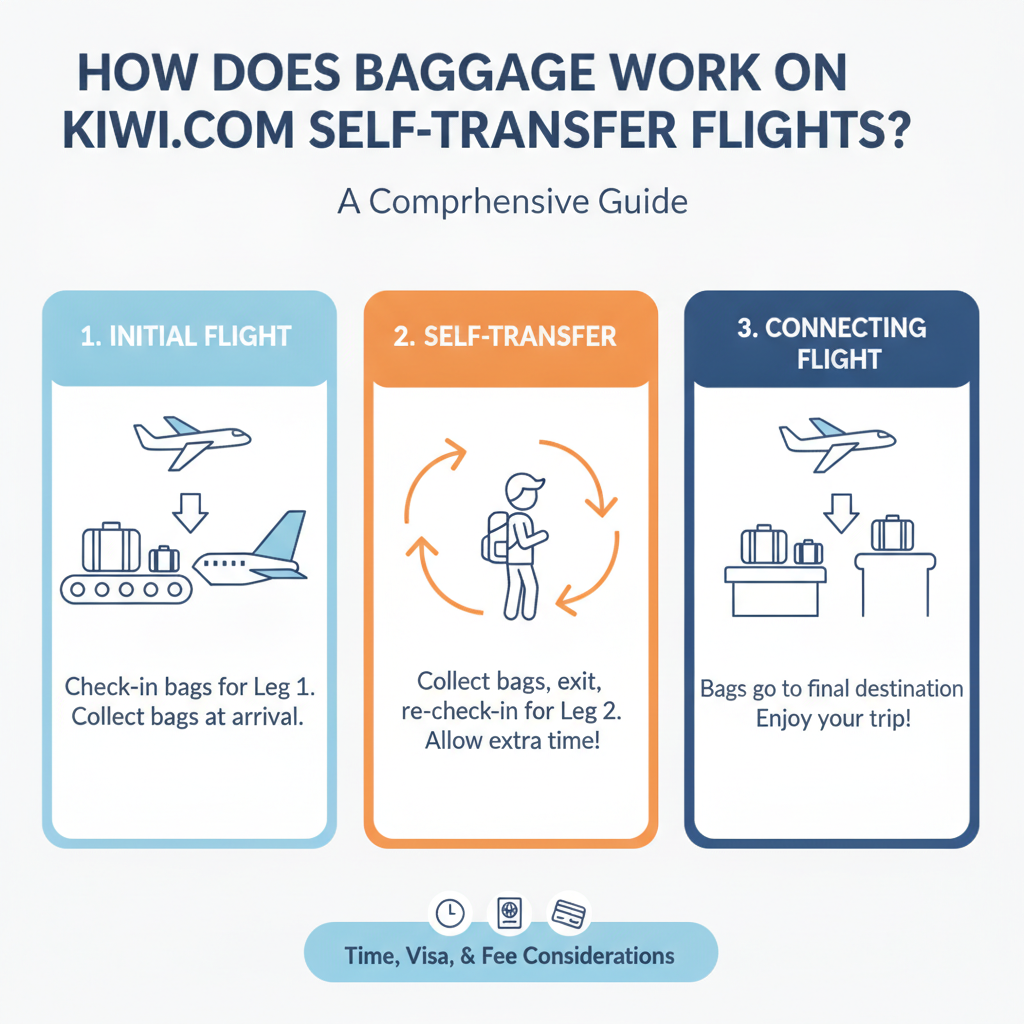
Rechecking baggage during a self-transfer involves a precise sequence of steps that travelers must follow meticulously. Firstly, upon landing at your transfer airport, your immediate priority after deplaning is to proceed directly to immigration (if entering a new country or zone) and then to the baggage claim area. You will need to wait for and collect your checked luggage from the carousel. This step can often be the most time-consuming, depending on the airport's efficiency and the volume of flights. It's crucial not to rush this process or assume your bag will appear instantly; patience is key here.
Once you have retrieved your baggage, the next critical step is to pass through customs. Even if you are simply transiting, if your bags have been checked only to that intermediate airport, they must clear customs in that country. This means you will physically walk through either the 'Declare' or 'Nothing to Declare' channel. After customs, you are effectively outside the secure area of the airport. Your subsequent action is to locate the check-in counter or self-service bag drop for your next flight's airline. This often involves navigating the airport's landside terminals, which can be large and require internal transfers via shuttle or train. You will then present your luggage, along with your boarding pass for the next flight, to the airline staff to have it checked in again, just as you did at your original departure airport.
Finally, after rechecking your bags, you must proceed through airport security once more to access the departure gates for your next flight. This means another round of security checks, including liquids, electronics, and body scans. This entire sequence - deplane, immigration, baggage claim, customs, navigate to new check-in, recheck bag, re-clear security, and finally reach your gate - underscores why ample layover time is not just recommended but absolutely essential for self-transfer flights with checked luggage. Each step carries its own potential for delays, from long queues to unexpected security issues, making preparedness and time management paramount for a successful connection.
How Much Layover Time Do I Need for a Self-Transfer with Checked Baggage?
Determining the appropriate layover time for a self-transfer with checked Kiwi.com baggage is perhaps the most critical decision a traveler faces when booking through platforms like Kiwi.com. Unlike airline-guaranteed connections which often have minimum connection times as short as 45-60 minutes, self-transfers demand significantly more buffer. A general rule of thumb for international self-transfers involving checked bags is to allow a minimum of 3-4 hours, and ideally 5-6 hours or more, especially if you are transiting through a large, busy airport or are subject to visa requirements for the transit country. This generous window accounts for unforeseen delays at every stage of the recheck process.
Consider the cumulative time required for each step: your first flight might be delayed, pushing back your arrival. Deplaning and reaching immigration can take 15-30 minutes. Immigration queues can range from 30 minutes to over an hour, particularly at major hubs during peak times. Waiting for checked bags at the carousel might add another 20-40 minutes. Passing through customs is usually quick unless you have something to declare. Then, navigating from arrival to departure terminals, which might be different, could take 15-45 minutes. Checking in for your next flight, including potential queues at the counter, can consume 30-60 minutes, especially if you miss the cut-off time for bag drop (which is often 60-90 minutes before departure). Finally, clearing security again can take another 20-60 minutes, followed by walking to your gate. A tight 2-hour layover, which might seem sufficient on paper, leaves virtually no room for any of these common delays.
For domestic self-transfers within the same country or customs union (like the Schengen Area), you might get away with slightly less time, perhaps 2.5-3 hours, as immigration and customs might be simpler or non-existent. However, the risk of delays from flight arrival, baggage claim, and re-screening remains. Always err on the side of caution. A longer layover offers peace of mind, allowing for relaxed navigation, a meal break, or even a quick refresh, turning a stressful transfer into a manageable part of your journey. Kiwi.com's own "Kiwi.com Guarantee" can provide some protection against missed connections, but it does not remove the stress or inconvenience of a tight connection, nor does it guarantee you won't lose precious vacation time.
What are the Customs and Visa Implications for Self-Transfer Baggage?
The requirement to recheck baggage on a self-transfer flight has significant customs and visa implications that travelers must understand. When you retrieve your checked bags at an intermediate airport, you are effectively entering the country where that airport is located, at least temporarily. This means you will pass through immigration and customs, just as if that were your final destination. Consequently, you must possess the necessary travel documents and adhere to the entry requirements of that specific country, even if you only intend to spend a few hours in the transit area.
For example, if you are flying from Sydney to New York via Vancouver, and your bags are checked only to Vancouver, you will need to clear Canadian immigration and customs to retrieve your bags. This implies that if your nationality typically requires a visa to enter Canada, you must obtain that visa in advance, even for a short layover. Similarly, transiting through the United States, even without rechecking bags, often requires an ESTA or visa, as all passengers must clear U.S. immigration. The rules vary wildly by country, and what might be a simple transit in one nation could require a full entry visa in another, simply because your bags force you to exit the international transit zone.
It is the traveler's sole responsibility to research and secure all necessary visas or transit permits for any country where they will retrieve and recheck their baggage. Kiwi.com, while facilitating the booking, explicitly states that travelers are responsible for their own visa and entry requirements. Failure to have the correct documentation will result in being denied entry into the country, which in turn means you cannot retrieve your bags or board your onward flight. This can lead to significant financial losses, missed flights, and potentially being stranded. Always check the visa requirements for every country your self-transfer itinerary touches, not just your final destination, well in advance of your travel date. This proactive approach is a non-negotiable aspect of successful self-transfer travel with checked luggage.
What are Kiwi.com's Specific Baggage Rules and How Do They Differ from Airlines?
Kiwi.com itself does not have a universal baggage policy in the same way an airline does. Instead, when you book a self-transfer flight through Kiwi.com, you are subject to the individual baggage policies of each airline operating each segment of your journey. This is a crucial distinction and a common source of confusion for travelers. Kiwi.com acts as an aggregator and booking platform, not an airline, meaning it compiles itineraries based on separate tickets, each governed by its respective carrier's rules.
During the booking process on Kiwi.com, you will typically be prompted to add baggage for each flight segment. It is imperative to pay close attention to these options. The cost and allowance for a checked bag can vary dramatically from one airline to another, even within the same itinerary. For instance, your first flight with a full-service carrier might include a free checked bag, while your second flight with a low-cost carrier might charge a significant fee for the same bag, and even have stricter weight or size limits. Failing to purchase baggage for a segment online in advance can lead to much higher fees if you try to add it at the airport check-in counter, sometimes doubling or tripling the cost.
Furthermore, Kiwi.com's platform will display the baggage allowance for each segment, but it's up to the traveler to ensure their luggage complies with the most restrictive policy across all flights, especially regarding dimensions and weight. If your bag meets the weight limit for one airline but exceeds it for another, you will incur excess baggage fees on the second flight. This requires careful planning, potentially necessitating a smaller or lighter bag, or even multiple smaller bags if you have diverse requirements across segments. Always review the detailed baggage rules for each individual airline listed in your Kiwi.com itinerary, paying close attention to both carry-on and checked bag allowances, as well as any associated fees. This diligent review is the only way to avoid unexpected costs and baggage-related issues during your self-transfer journey.

Can I Avoid Rechecking Luggage by Only Bringing Carry-On Bags?
Yes, opting for only carry-on bags is often the most effective strategy to simplify baggage handling and potentially mitigate the risks associated with self-transfer flights. If you can fit all your belongings into a single carry-on bag and a personal item that complies with the most restrictive airline's size and weight limits on your itinerary, you can largely bypass the entire rechecking process. This means you do not need to wait for luggage at the carousel, clear customs with bags, or queue at a check-in counter for your onward flight. You can simply proceed directly to security and then to your next departure gate, significantly reducing the required layover time and the overall stress of the transfer.
However, this strategy comes with its own set of challenges. Firstly, the size and weight restrictions for carry-on luggage vary considerably between airlines, especially between full-service and low-cost carriers. What might be acceptable as a carry-on on one flight (e.g., a 10kg bag) could be considered too large or heavy and require checking on another (e.g., a 7kg limit or a smaller dimension requirement). It is absolutely essential to check the precise carry-on policy for every single flight segment in your Kiwi.com itinerary and adhere to the strictest rule. Many low-cost airlines, for instance, only allow a small personal item to be carried for free, charging extra for a standard cabin bag that fits in the overhead locker.
Secondly, even with carry-on only, you still need to pass through security at the transfer airport before your next flight. This means adhering to liquid restrictions, removing electronics, and being prepared for standard security checks. While faster than rechecking bags, it still consumes time. Despite these considerations, traveling with only carry-on is highly recommended for self-transfer itineraries, particularly those with shorter layovers or multiple segments. It offers unparalleled flexibility and peace of mind, dramatically reducing the chances of missed connections due to baggage delays. For many experienced self-transfer travelers, mastering the art of packing light is the ultimate hack for seamless journeys.
What Happens If My Baggage is Delayed or Lost During a Self-Transfer?
The unfortunate reality of self-transfer flights is that if your baggage is delayed or lost, the responsibility for resolving the issue typically falls to the airline that operated the flight on which the bag went missing, and your recourse is often more complicated than with traditional connections. Unlike a single-ticket itinerary where the operating carrier for the final leg might assist, on a self-transfer, each flight is a separate contract. If your bag doesn't arrive on your first flight, you must file a report with that specific airline at the arrival airport before leaving the baggage claim area. Their liability is limited to that flight segment.
This situation becomes particularly problematic because the delayed bag cannot be automatically forwarded to your next flight. Since you are responsible for rechecking it, the bag will likely remain at the intermediate airport until it is located. This means you will proceed to your next flight without your luggage, and then you'll need to coordinate with the first airline to have it delivered to your final destination, often at your own expense or subject to their specific policies. If the bag is lost or significantly delayed, your claim for compensation will be against the airline that lost it, based on their terms and international conventions like the Montreal Convention.
Kiwi.com offers an optional "Kiwi.com Guarantee" which provides some protection against missed connections due to flight delays, including rebooking or refunds. However, the guarantee's coverage for baggage issues is more limited. It primarily focuses on getting you to your destination, not necessarily on the immediate recovery of your lost or delayed luggage. While they might assist in communication, the direct responsibility for locating and delivering your bag rests with the individual airline. This highlights a significant risk associated with checking bags on self-transfer flights. To mitigate this, consider travel insurance with robust baggage delay and loss coverage, carry essentials and valuables in your carry-on, and use luggage tracking tags if possible. Understanding this elevated risk is vital for making informed decisions about checking bags on complex self-transfer itineraries.
How Does the Kiwi.com Guarantee Impact Baggage Handling and Protection?
The Kiwi.com Guarantee is an optional service offered by Kiwi.com designed to provide a safety net for travelers on self-transfer itineraries, primarily covering missed connections due to delays or cancellations. While its main focus is on rebooking flights or offering refunds to get you to your destination, it also has indirect implications for baggage handling and protection, though it's important to understand its limitations. If a delay or cancellation on an initial flight causes you to miss a subsequent self-transfer flight, and you have the Kiwi.com Guarantee, Kiwi.com will typically rebook you on an alternative flight or offer a refund for the unused segments. In such scenarios, the issue of your checked baggage becomes critical.
If you miss your onward connection due to an issue covered by the Guarantee, and your bags were checked only to the intermediate airport, Kiwi.com's primary responsibility is to facilitate your onward travel. They will generally advise you to coordinate with the airline that was supposed to carry your bag on the first segment to locate and retrieve it. The Guarantee itself does not directly cover the cost of baggage delivery to your new final destination if your bag remains stranded at a transit airport. However, in some cases, if the rebooking involves a significant delay, they might offer limited compensation for essentials. It's crucial to read the specific terms and conditions of the Kiwi.com Guarantee you purchase, as its scope and limits can vary.
Essentially, while the Kiwi.com Guarantee mitigates the financial risk of missed flights, it doesn't entirely remove the logistical burden or potential costs associated with managing delayed or lost baggage on separate tickets. It's a valuable layer of protection for the flight segments but less comprehensive for direct baggage issues. Travelers should still consider independent travel insurance that specifically covers baggage delay, loss, and damage, to complement the Kiwi.com Guarantee. This dual approach provides a more robust safety net, addressing both flight disruption and the potential complications of luggage on complex, self-transfer journeys. Always remember that the Guarantee is not a substitute for due diligence regarding individual airline baggage policies and personal travel insurance.
What are the Best Practices for Managing Baggage on Kiwi.com Self-Transfers?
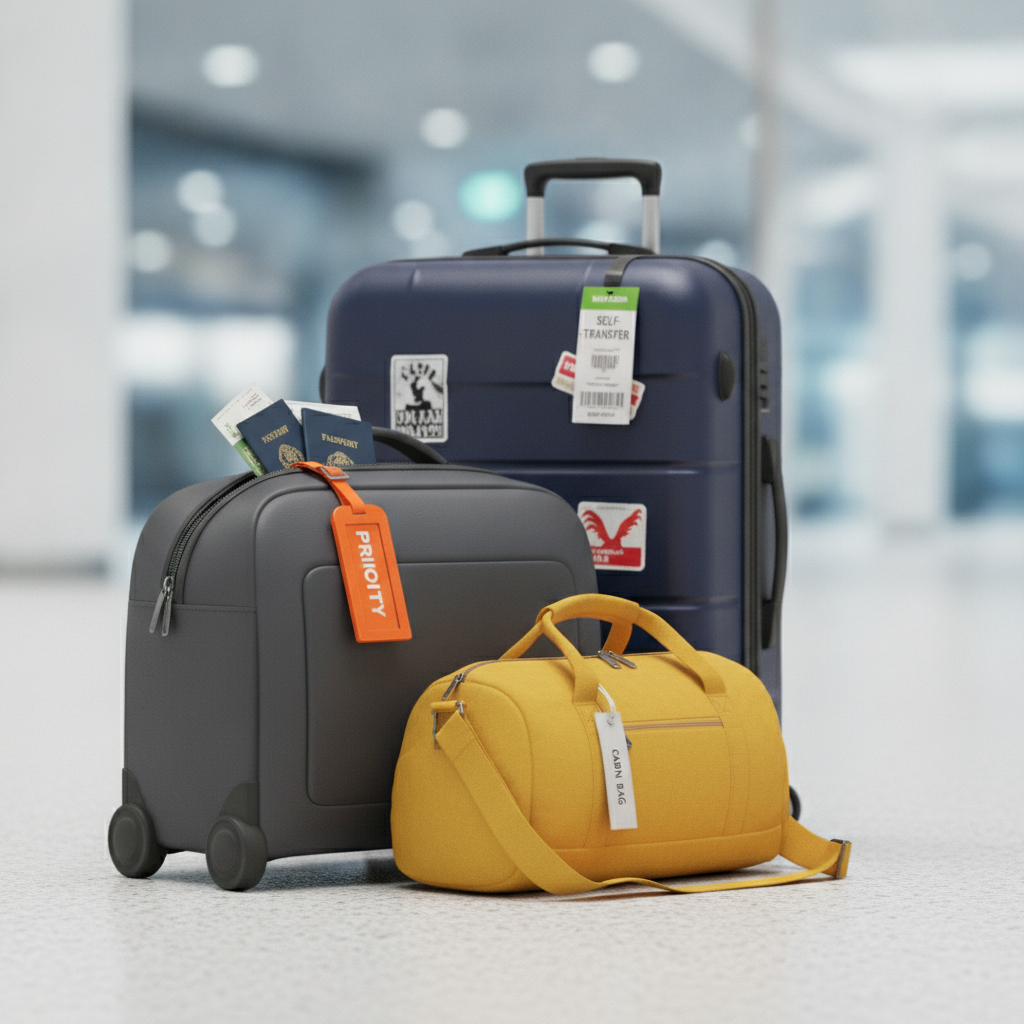
Successfully managing baggage on Kiwi.com self-transfer flights requires a combination of meticulous planning, strategic packing, and clear communication. The first and arguably most crucial best practice is to pack light and aim for carry-on only whenever feasible. This eliminates the entire recheck process, saving valuable time and reducing stress during layovers. If checked baggage is unavoidable, ensure your bag complies with the most restrictive size and weight limits of all airlines on your itinerary to avoid unexpected fees. Investing in a compact, lightweight suitcase can make a significant difference.
Secondly, always purchase checked baggage allowances online and in advance for every segment that requires it. Airport counter fees are consistently higher, often dramatically so, than pre-booked online rates. Double-check your booking confirmations to ensure baggage has been added to each individual flight segment. Furthermore, allow generous layover times, especially for international transfers. As discussed, 3-4 hours is a bare minimum, with 5-6 hours or more being ideal for peace of mind. This buffer accounts for flight delays, long immigration queues, slow baggage claim, and the time needed to navigate large airports.
Thirdly, research and confirm all visa and entry requirements for every country you will be transiting through, especially if your itinerary requires you to exit the international transit zone to recheck bags. A visa issue can derail your entire trip. Always keep essential items, valuables, medications, and a change of clothes in your carry-on bag, even if you are checking luggage. This precaution minimizes disruption if your checked bag is delayed. Finally, consider purchasing comprehensive travel insurance that covers baggage delay and loss, in addition to the Kiwi.com Guarantee if opted for. While the Guarantee protects your connection, dedicated travel insurance offers broader coverage for your belongings. By following these best practices, you can transform the potential challenges of self-transfer baggage into a smooth and manageable part of your adventure.
How Do Baggage Fees Work on Kiwi.com vs. Booking Direct with Airlines?
Understanding baggage fees on Kiwi.com self-transfer flights compared to booking directly with airlines is crucial for budget-conscious travelers. When you book directly with an airline, especially a full-service carrier, a checked bag might be included in the base fare, or it might be an optional add-on at a clearly stated price. For connecting flights on a single ticket, your baggage fee usually covers the entire journey, and your bag is transferred automatically. This simplifies cost calculation and logistics.
However, with Kiwi.com's self-transfer model, you are essentially purchasing separate tickets from different airlines. This means you will likely encounter separate baggage fees for each individual flight segment, and these fees can vary significantly. For example, a flight from London to Amsterdam with British Airways might include a checked bag, but your subsequent flight from Amsterdam to Prague with a low-cost carrier like Wizz Air will almost certainly charge an additional fee for the same bag. These fees are often dynamic, changing based on when you purchase them (online vs. airport), the route, and the season. Kiwi.com will display the option to add baggage for each segment during the booking process, and it's vital to select it for every leg where you intend to check a bag. Failing to do so for even one segment will mean paying much higher fees at the airport.
The key difference lies in the aggregation of costs. Booking direct often provides a consolidated price for baggage across a journey, potentially leading to fewer, more predictable fees. Kiwi.com, by combining different carriers, unbundles these costs, presenting individual fees for each leg. While this unbundling can lead to lower base fares, the cumulative baggage fees for a multi-segment self-transfer can sometimes negate the initial savings, especially if you have multiple large bags. Therefore, when comparing prices, always go through the entire booking process on both Kiwi.com and the individual airline websites, adding all necessary baggage for each leg, to determine the true total cost. This due diligence ensures you're making an informed decision about where to find the best value, considering not just the flight price but also the complete baggage expenditure.
What are the Risks of Not Understanding Kiwi.com's Baggage Process?
Failing to fully grasp how baggage works on Kiwi.com's self-transfer flights introduces several significant risks that can transform an exciting journey into a stressful ordeal. The primary risk is undoubtedly a missed connection. Underestimating the time required to deplane, navigate immigration and customs, retrieve bags, recheck them, and clear security again is a common pitfall. A short layover, combined with unforeseen delays like a late arriving flight or long queues, can easily lead to you missing your subsequent flight, leaving you stranded at an intermediate airport. While the Kiwi.com Guarantee offers some protection, it doesn't eliminate the inconvenience or potential loss of precious travel time.
Another major risk is unexpected and substantial baggage fees. If you assume your bag is included, or if you don't purchase baggage for every segment in advance, you will face exorbitant charges at the airport check-in counter. These last-minute fees can sometimes exceed the cost of the flight itself, significantly inflating your travel budget. Furthermore, there's the risk of denied boarding due to visa issues. Because you must exit the secure area to recheck bags, you are temporarily entering the transit country. If you haven't researched and obtained the necessary transit visas or entry permits for that country, you will be denied entry, making it impossible to retrieve your bags or board your next flight. This can lead to being stuck at the airport and facing the costly purchase of new, last-minute tickets.
Finally, the risk of lost or delayed baggage with complicated recovery is elevated. With multiple separate contracts, if your bag goes missing, the process of tracking and recovering it is often more convoluted. You must deal with the specific airline that lost it, and there's no guarantee it will be automatically forwarded to your final destination, requiring more effort and potentially additional costs on your part. These risks underscore why a thorough understanding of Kiwi.com's self-transfer baggage process is not merely helpful, but absolutely essential for a smooth, budget-friendly, and stress-free travel experience. Ignoring these complexities can lead to significant financial losses, itinerary disruptions, and immense frustration.
Conclusion: Navigating Kiwi.com Self-Transfer Baggage with Confidence
Understanding how baggage works on Kiwi.com self-transfer flights is not just about knowing a few rules; it's about adopting a proactive, informed approach to travel that prioritizes preparation and awareness. The fundamental takeaway is clear: for the vast majority of self-transfer itineraries booked through Kiwi.com's virtual interlining system, you will need to retrieve your checked luggage, pass through immigration and customs, and recheck it for your onward flight. This process, while offering incredible flexibility and often significant cost savings, places the logistical responsibility squarely on the traveler's shoulders.
We've explored the critical steps involved in rechecking baggage, the essential need for ample layover time (typically 3-6 hours for international transfers), and the non-negotiable requirement to research and secure all necessary visas for transit countries. We've also highlighted the importance of understanding each individual airline's baggage policies, advocating for pre-purchasing baggage online, and strongly recommending the carry-on only strategy whenever possible to circumvent many of these complexities. While the Kiwi.com Guarantee offers a valuable safety net for missed flight connections, it's crucial to remember its limitations regarding direct baggage issues, making comprehensive travel insurance a wise supplementary investment.
Ultimately, successfully navigating Kiwi.com self-transfer baggage comes down to diligent planning and an understanding of the inherent trade-offs. By internalizing these insights, researching individual airline policies, and preparing for every step of the recheck process, you can transform what might seem like a daunting challenge into a streamlined part of your adventure. Armed with this knowledge, you can confidently book your next self-transfer flight, enjoy the benefits of expanded routes and lower fares, and ensure your luggage arrives with you, making your journey as smooth and stress-free as possible.
Frequently Asked Questions
Yes, Kiwi.com is a legitimate online travel agency that specializes in creating self-transfer itineraries using virtual interlining. While it is a real platform, its legitimacy for baggage handling means travelers must understand the unique responsibilities involved. Unlike traditional bookings, Kiwi.com acts as an aggregator, meaning you're subject to each individual airline's baggage rules and must manage baggage rechecks yourself. This approach, while offering potential savings and diverse routes, requires careful planning and awareness to ensure a smooth journey for your luggage.
If your self-transfer layover is very short, generally less than 3-4 hours for international flights, it is strongly advised against checking a bag. Short layovers provide insufficient time to deplane, navigate immigration, wait for and retrieve your luggage, pass through customs, locate the next airline's check-in, recheck your bag, and clear security again. Attempting this with a tight connection significantly increases the risk of missing your onward flight, losing your baggage, and incurring additional costs. For short layovers, traveling with only carry-on luggage is the safest and most efficient strategy.
The Kiwi.com Guarantee primarily focuses on protecting your connection in case of flight delays or cancellations, offering rebooking or refunds for missed flights. While it helps mitigate the impact of flight disruptions, its coverage for lost or delayed baggage is more limited. The Guarantee does not typically cover the direct financial costs of lost luggage or the delivery of delayed bags to your final destination if they become separated during a self-transfer. For comprehensive baggage protection, it is highly recommended to purchase separate travel insurance that specifically covers baggage loss, delay, and damage.
Yes, if your self-transfer itinerary requires you to retrieve and recheck your bags at an intermediate airport, you will typically need to exit the international transit area and formally enter the country. This means you must comply with that country's immigration and visa requirements, even if you are only there for a few hours. Many countries require a transit visa or a standard entry visa for such situations, depending on your nationality. It is your sole responsibility to research and secure all necessary visas well in advance to avoid being denied entry and consequently missing your onward flight.
Baggage fees on Kiwi.com self-transfers are not always higher, but they are often more complex and can accumulate. When booking directly with an airline for a connecting flight, a single baggage fee usually covers the entire journey. With Kiwi.com, you are booking separate tickets, meaning you pay individual baggage fees to each airline for each segment. While the base fares on Kiwi.com might be lower, the cumulative baggage fees from multiple airlines can sometimes outweigh these initial savings. Always compare the total cost, including all baggage fees for every leg, across both Kiwi.com and direct airline bookings.
Even if both segments of your self-transfer are with the same airline, if they are booked as separate tickets through Kiwi.com, it is highly unlikely that your bags will be checked through to your final destination. Airlines typically only interline baggage when all flight segments are on a single booking reference or part of an official alliance agreement. Since Kiwi.com's virtual interlining creates independent contracts, you should still anticipate needing to retrieve and recheck your luggage, even with the same carrier. Always confirm with the airline at check-in, but plan for a recheck.