What Are the Best Ways to Find Cheap Flights and Hotels for Your Next Trip? The Ultimate 2026 Guide
The dream of exploring ancient ruins, relaxing on a sun-drenched beach, or navigating the bustling streets of a foreign city is a powerful motivator. But for many, that dream quickly collides with the harsh reality of airline and hotel costs. The belief that travel is an expensive luxury reserved for the few is a common misconception. The truth is, finding affordable travel isn't about luck; it's a skill built on strategy, knowledge, and the right tools. The best way to find cheap flights and hotels is by combining flexibility in your travel plans with strategic timing, using powerful search aggregators, and leveraging advanced techniques like loyalty programs and geo-arbitrage.
Mastering this skill can be the difference between taking one trip every few years and exploring the world multiple times a year. It transforms travel from a distant fantasy into an achievable goal. This comprehensive guide is designed to equip you with that skill. We will move beyond generic advice and dive deep into the specific, actionable strategies that seasoned travelers use to slash their costs. You will learn not just what to do, but why it works.
In this article, you will discover the foundational importance of flexibility, the precise science of booking windows, and which search engines are best for different scenarios. We'll demystify complex topics like using VPNs, earning and redeeming travel points, and finding elusive error fares. We will also explore alternative accommodations that can offer more authentic and affordable experiences. By the end, you'll have a complete playbook to find cheap flights and hotels and make your next dream trip a reality without breaking the bank.
How Does Flexibility Impact the Cost of Your Trip?
Flexibility is the single most powerful tool in your arsenal for finding cheap flights and hotels. The more rigid your plans, the more you are at the mercy of airline and hotel pricing algorithms. By being adaptable with your travel dates, destination, and even your departure airport, you open up a world of significant savings. This principle is the bedrock upon which all other budget travel strategies are built.
The core reason flexibility is so crucial lies in supply and demand. Airlines price their seats and hotels price their rooms based on predicted demand. A flight to Cancun the week of Christmas will always be expensive because demand is incredibly high. However, a flight to the same destination in early May could be a fraction of the price. If you can shift your travel dates away from peak seasons, holidays, and major events, you are immediately positioning yourself to find lower prices. This applies not just to seasons but to days of the week. Flying on a Tuesday or Wednesday is often cheaper than flying on a Friday or Sunday because business travel and weekend getaways drive up demand on those days.
Exploring Date Flexibility
Let's consider a real-world scenario. Imagine a family wants to fly from Chicago to Orlando for a week-long vacation in March. If they are fixed on leaving the Saturday of spring break week and returning the following Saturday, they might find round-trip tickets for $550 per person. However, if they have the flexibility to leave the Tuesday before that week and return the Wednesday after, they might find the exact same seats on the same airline for $280 per person. For a family of four, that's a saving of over $1,000 simply by shifting their travel dates by a few days. Tools like Google Flights have calendar view features that instantly show you the cheapest days to fly over an entire month, making this process incredibly easy.
Expanding Your Destination and Airport Options
Flexibility extends beyond just dates. Are you open to different destinations? Instead of setting your heart on Paris, you could use a tool like Skyscanner's "Explore Everywhere" feature. You input your home airport and desired travel month, and it will show you the cheapest places you can fly to around the world. You might discover that a flight to Lisbon, Portugal, is half the price of a flight to Paris, offering an equally incredible European experience for a fraction of the cost. This approach allows the deals to dictate your destination, leading to spontaneous and affordable adventures. Similarly, consider nearby airports. If you live in the New York City area, check prices from JFK, LaGuardia (LGA), and Newark (EWR). Sometimes, the savings of flying out of a different airport can be substantial, even after accounting for the extra travel time to get there. The same applies to your destination; flying into London Gatwick (LGW) might be significantly cheaper than flying into Heathrow (LHR).
The actionable insight here is to start your travel planning process with a mindset of openness. Instead of deciding on a fixed destination and date, begin by asking, "Where can I go and when can I go for the best price?" This simple shift in perspective is the first and most important step toward becoming a master of budget travel.

When Is the Absolute Best Time to Book Flights and Hotels?
The optimal time to book flights and hotels is during the "Goldilocks" window - not too early and not too late. For domestic flights, this sweet spot is typically 1 to 3 months in advance. For international travel, you should aim for 2 to 8 months out. Booking outside these windows, either too far in advance or too close to your departure, often results in paying a premium. This timing strategy is based on how airlines manage their fare classes and predict passenger load.
Airlines release their schedules about 11-12 months in advance, but they don't release their cheapest seats at that time. Initially, they only offer their highest, most flexible fare classes, catering to business travelers or those who must book early. As the departure date gets closer, they analyze booking patterns and begin to release cheaper fare buckets to entice leisure travelers and fill the plane. This is where the prime booking window opens. However, if you wait too long - typically within the last two to three weeks - algorithms notice that remaining seats are being sought by last-minute business travelers or desperate vacationers who have no choice but to pay more. Prices then skyrocket. The goal is to book after the initial high prices have dropped but before the last-minute surge begins.
Decoding the Nuances of Booking Windows
While the 1-3 month (domestic) and 2-8 month (international) rules are excellent guidelines, they can be affected by your destination and time of travel. If you are planning a trip during a peak season like summer in Europe or Christmas in the Caribbean, you should book closer to the outer edge of that window (e.g., 7-8 months out for international). For off-season travel, you have more leeway and can often find great deals closer to the 2-3 month mark. The myth of booking on a specific day, like a Tuesday, is largely outdated. While airline sales were historically launched on Tuesdays, modern dynamic pricing means prices fluctuate constantly. It's more about the booking window than the booking day.
A Tale of Two Travelers: A Booking Scenario
Let's compare two travelers, Alex and Ben, both planning a trip from Denver to Rome in September. Alex is an early planner and books his tickets in October of the previous year, nearly 11 months out. He pays $1,200, assuming he's getting a good deal by booking early. Ben, on the other hand, sets a price alert on Google Flights and starts seriously looking in February, about 7 months out. He watches the prices fluctuate and finally books in late March when he sees a dip to $750. In this case, Ben saved $450 by waiting for the prime booking window to open. Conversely, another traveler, Chloe, waits until early August, just one month before the trip, hoping for a last-minute deal. She finds that the flight prices have surged to $1,400 as the plane filled up. Ben's timing was perfect.
For hotels, the strategy is slightly different. It often pays to book a refundable room as soon as your plans are firm. Unlike airlines, hotels often lower their prices as the date approaches if they have high vacancy. You can book a free-cancellation rate 4-6 months out, then monitor prices. If a better deal appears closer to your stay, you can cancel your original reservation and rebook at the lower rate. This gives you security without locking you into an uncompetitive price. The key takeaway is to understand these distinct timelines for flights and hotels and use them to your advantage.

What Are the Most Effective Flight Search Engines and Aggregators to Use?
The most effective flight search engines are aggregators like Google Flights, Skyscanner, and Momondo, because they search hundreds of airlines and online travel agencies (OTAs) simultaneously. These tools are superior to booking directly with a single airline's website because they provide a comprehensive market view, allowing you to compare all available options and identify the truly best price. Each aggregator has unique features that make it suitable for different types of travel planning.
Understanding the difference between these platforms is key. Google Flights is an incredibly powerful and fast search tool that pulls data directly from airlines and major OTAs. Its strength lies in its speed and exploration features, such as the calendar view that shows daily prices and the "Explore" map that displays fares to various destinations from your home airport. Skyscanner and Momondo are meta-search engines that have a slightly broader reach, sometimes including smaller, regional OTAs that Google Flights might miss. This can occasionally result in finding a slightly lower fare, though it may be through a less-known booking site.
Comparing the Top Flight Aggregators
Let's break down the best use case for each of the top players. Google Flights is ideal for travelers who have a destination in mind and want to find the cheapest dates to travel. Its interface is clean, intuitive, and lightning-fast. The price tracking feature is best-in-class; you can set an alert for a specific itinerary and receive an email when the price drops, with data-backed advice on whether to book now or wait. It's the perfect starting point for most flight searches.
Skyscanner shines when you have maximum flexibility. Its "Everywhere" search feature is its killer app. If you simply want to go on a trip in October but don't care where, Skyscanner will show you the cheapest countries and cities to fly to from your location. It's also excellent for searching across entire months or even the "cheapest month" of the year, providing a level of date flexibility that is hard to beat. It's the ultimate tool for budget-conscious wanderers.
Momondo operates similarly to Skyscanner but is renowned for its visually appealing interface and its ability to sometimes uncover fares on obscure OTAs. It presents results with a bar graph showing the price range for surrounding days, which is a helpful visual aid. It's always worth cross-referencing your search on Momondo after checking Google Flights and Skyscanner, as it can occasionally find a unique deal the others missed. Think of it as your final check to ensure no stone is left unturned.
An Actionable Search Strategy
A smart traveler doesn't rely on a single tool; they use them in concert. Here's a winning strategy: Start with Google Flights to get a baseline price and identify the cheapest dates for your desired route using its calendar view. Then, take those exact dates and run the search on Skyscanner and Momondo. This cross-referencing process takes only a few extra minutes but ensures you are seeing the entire market. For example, you might find a New York to London flight for $600 on Google Flights. A quick search on Skyscanner might reveal the same flight for $585 through a smaller OTA. This simple verification step can lead to consistent savings on every trip you book. The takeaway is to treat these search engines as a toolkit, using the right tool for each stage of your planning process to find cheap flights and hotels.
Can Using a VPN and Incognito Mode Actually Save You Money?
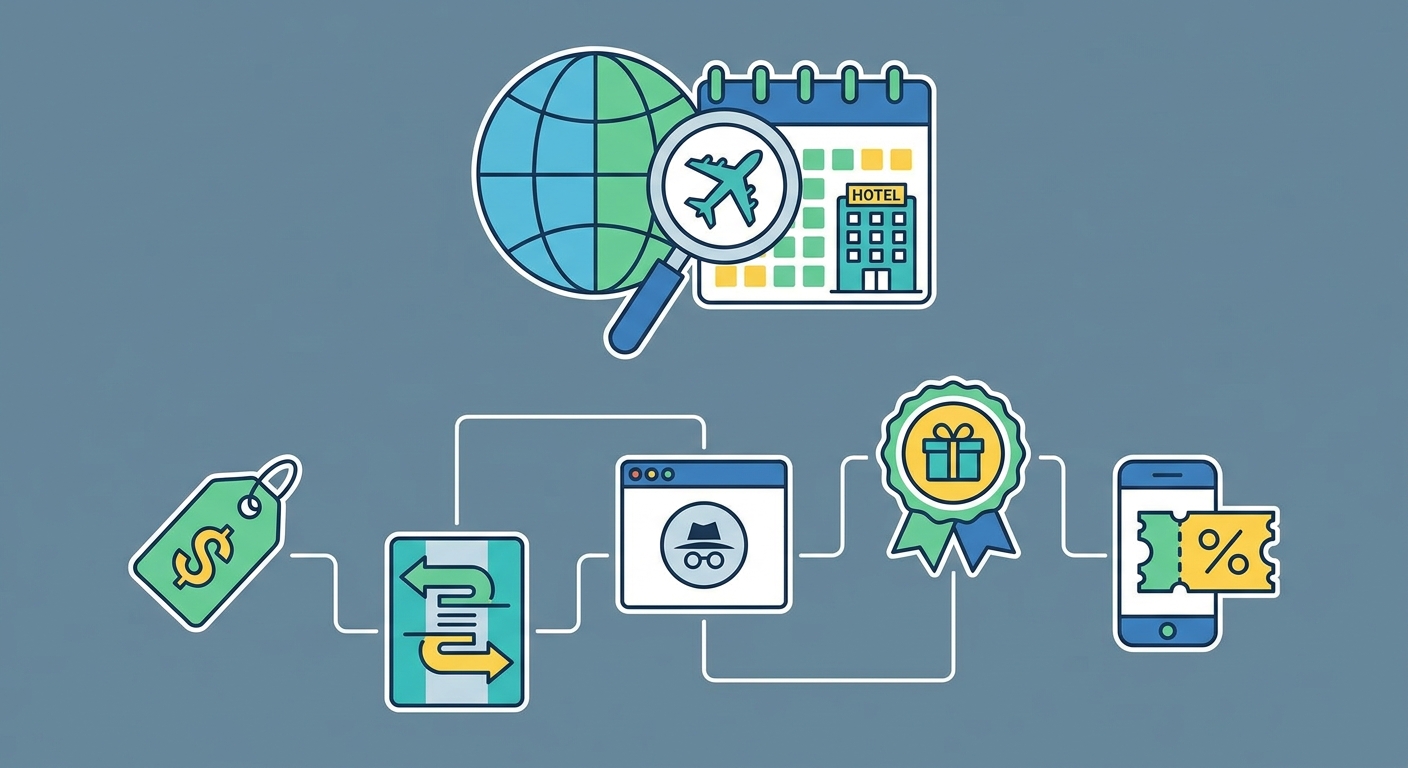
Yes, using a VPN (Virtual Private Network) can sometimes save you significant money on flights and hotels, while Incognito Mode is largely ineffective for this purpose. The savings from a VPN come from its ability to mask your IP address, making it appear as though you are browsing from a different country. This can counteract geo-based price discrimination, where companies show different prices to people in different locations based on the perceived wealth of that country. Incognito Mode, on the other hand, only deletes your local browsing history and cookies; it does not hide your IP address from websites.
Airlines and booking sites often engage in a practice called dynamic pricing. A major component of this is the "point-of-sale." The price of a flight can change depending on the country's website you are booking from. For instance, a domestic flight within Colombia might be priced lower on the airline's Colombian website (for local buyers) than on its U.S. website (for foreign tourists). By using a VPN to set your location to Colombia, you may be able to access and book at that lower local price. This strategy is most effective for international travel, particularly on foreign carriers or for booking domestic flights within another country.
A Practical Example of VPN Savings
Imagine you are in New York and want to book a one-way flight from Lisbon, Portugal, to Marrakech, Morocco, on TAP Air Portugal. When you search from your U.S.-based computer, the price is shown as $150 USD. Now, let's employ a VPN. You connect to a server in Portugal. You clear your browser's cookies and navigate to the Portuguese version of the TAP website. When you search for the exact same flight, the price is now displayed as €110. At the current exchange rate, that's approximately $120 USD. You just saved $30, or 20%, on a single flight by spending two minutes connecting to a VPN. While it doesn't work every time, the potential savings make it a worthwhile check, especially for more complex or multi-leg international itineraries. It's a classic example of travel hacking that leverages technology to overcome pricing algorithms.
Debunking the Incognito Mode Myth
The common advice to use Incognito Mode to prevent airlines from tracking your searches and raising prices is mostly a myth. While it's true that websites use cookies to track your activity, the primary driver of price changes is not your individual search history. It's the overall demand for that route from everyone searching. If you and 100 other people are searching for the same flight to Miami for a holiday weekend, the airline's algorithm sees a spike in demand and raises the price for everyone, not just for you. Incognito Mode prevents the site from remembering you personally, but it doesn't hide the fact that someone is searching. Therefore, it has very little impact on the price you are shown. Your IP address, which a VPN can change, is a much more significant factor in geo-targeted pricing. The clear takeaway is to invest your time in learning to use a VPN rather than relying on the ineffective Incognito Mode for finding cheaper fares.

How Can You Leverage Airline and Hotel Loyalty Programs for Cheaper Travel?
You can leverage airline and hotel loyalty programs to get significantly cheaper - or even free - travel by strategically earning points and miles on your everyday spending and travel, and then redeeming them for high-value flights and hotel stays. These programs are not just for frequent business flyers; they are powerful financial tools that anyone can use. The core concept is to earn the program's currency (points or miles) and then use that currency in place of cash for bookings.
There are two primary ways to earn points: flying/staying with the brand, and earning through partners, most notably co-branded credit cards. While you do earn miles for flights you take, the real acceleration comes from credit card sign-up bonuses and strategic spending. A single credit card bonus can offer 50,000 to 100,000 points, which is often enough for a round-trip international flight. By channeling your regular monthly expenses (groceries, gas, bills) through the right travel rewards card, you are essentially converting your everyday spending into future travel. This is the fundamental principle of what is often called "travel hacking."
Understanding the Value of Your Points
Not all points are created equal. The key is to understand redemption value. For example, if a hotel room costs $200 per night or 20,000 points, you are getting a value of 1 cent per point ($200 / 20,000 points). However, if you find a luxury hotel room that costs $800 per night but is available for 50,000 points, your redemption value jumps to 1.6 cents per point. The goal of savvy travelers is to redeem their points for high-value awards, maximizing the return on their earning efforts. This often means saving points for international business class flights or stays at high-end hotels, where the cash price is exorbitant but the point cost is manageable. Many travel blogs are dedicated to analyzing these values and can help you identify the best redemption opportunities.
Mini Case Study: Sarah's Trip to Hawaii
Let's consider Sarah, who wants to take a trip to Hawaii. Cash prices for round-trip flights are around $700, and a decent hotel costs $300 per night for 5 nights, totaling $1,500. The total trip cost would be $2,200. Instead of paying cash, Sarah plans ahead. She signs up for an airline co-branded credit card with a 60,000-mile sign-up bonus. She uses the card for her regular expenses for three months to meet the minimum spending requirement for the bonus. She now has over 60,000 miles. She finds award availability for a round-trip flight to Hawaii for 45,000 miles. For her hotel, she uses points from a hotel loyalty program she's been contributing to through a different credit card. She books her 5-night stay for 120,000 points. Her total out-of-pocket cost for the flight and hotel is just the taxes and fees on the flight, which are around $11.20. By leveraging loyalty programs, Sarah reduced a $2,200 trip to less than $12. This demonstrates the immense power of this strategy. The actionable insight is to start by choosing one or two major airline and hotel loyalty programs that align with your travel goals and home airport, get the associated credit card, and begin strategically accumulating points.
What Are the Secrets to Finding Hidden "Error Fares" and Last-Minute Deals?
The secret to finding error fares and exceptional last-minute deals is to utilize specialized deal-finding services and remain extremely flexible. Error fares are mistakes in flight pricing caused by human error, currency conversion glitches, or technical issues, resulting in unbelievably low prices. Last-minute deals, while less common for flights, are frequently available for hotels looking to fill unsold rooms. Catching these deals requires you to be prepared to book instantly and travel on short notice.
Error fares are the holy grail of cheap travel. Imagine a round-trip, business-class ticket from New York to Milan that is normally $4,000 being accidentally listed for $400. These deals are real, but they don't last long. Once the airline discovers the mistake, it's corrected within hours or sometimes even minutes. You won't find these by casually searching on Google Flights. The best way to catch them is by subscribing to services that have teams and technology dedicated to hunting for them. Services like Going (formerly Scott's Cheap Flights), Jack's Flight Club, and Thrifty Traveler constantly scan for these fares and send email alerts to their members. When you get an alert, you must act immediately.
The Art of Booking an Error Fare
Let's say you receive an alert for a $250 round-trip fare from Los Angeles to Tokyo, a route that normally costs over $1,000. The key is to book immediately, directly with the airline if possible, before the fare is pulled. A critical rule after booking is to wait. Do not book any non-refundable hotels or make other solid plans for at least one to two weeks. While most airlines will honor mistake fares, there is a small chance they may cancel the ticket. Waiting for the ticket to be officially confirmed (receiving a ticket number, not just a confirmation email) is a crucial step. The flexibility required is immense; the deal might be for travel in three weeks or in nine months, with very specific dates. If your schedule allows for this spontaneity, the savings are astronomical.
Last-Minute Deals: Flights vs. Hotels
The long-held belief that waiting until the last minute to book a flight will yield a cheap deal is now largely a myth. As explained earlier, airline pricing algorithms are designed to penalize last-minute bookers, who are often desperate business travelers with no price sensitivity. The risk of waiting is far too high. Hotels, however, are a different story. A hotel has a fixed number of rooms that are a perishable asset; an empty room for a night earns zero revenue. This is where last-minute deals thrive. Apps like HotelTonight specialize in offering deep discounts on unsold hotel rooms for the same night or a few days out. If you are on a road trip or have a flexible itinerary, you can often book a high-quality hotel for 30-50% off the standard rate by waiting until the day of your stay. This strategy works best in large cities with a high concentration of hotels, where competition for last-minute guests is fierce. The takeaway is to be proactive for flights by using deal services, but reactive for hotels by leveraging last-minute booking apps if your plans are flexible.
Are Package Deals and Vacation Bundles a Good Way to Save Money?
Yes, package deals and vacation bundles can be a very good way to save money, particularly for popular, resort-heavy destinations like the Caribbean, Mexico, or Las Vegas. These bundles, which combine flights, hotels, and sometimes car rentals or activities, can offer savings because large online travel agencies (OTAs) and tour operators can negotiate wholesale rates that are not available to the general public. However, they are not always the cheapest option, and savings depend heavily on the destination and your travel style.
The primary benefit of a package deal is the potential for a "bundle discount." Sites like Expedia, Booking.com, and specialized providers like Costco Travel purchase inventory in bulk. They might commit to buying a certain number of rooms from a hotel or seats from an airline, and in return, they get a lower price. They pass some of these savings on to the consumer when you book multiple components together. This is especially true for all-inclusive resorts or major hotel chains in tourist hotspots. For a family planning a straightforward, one-stop vacation, a package can simplify the booking process and offer genuine savings over purchasing each component separately.
When to Bundle vs. When to Book Separately
Deciding whether to bundle requires a bit of comparison shopping. The key is to always price out the components individually before committing to a package. Spend 20 minutes finding the cost of the flight on Google Flights and the hotel on its own website or a hotel booking site. Then, compare that total to the price of the package deal. This simple check will reveal whether you're truly getting a deal. Packages tend to be less effective for complex, multi-city trips or for travelers seeking unique, boutique accommodations, as the inventory is often limited to larger, more mainstream hotels. For independent travelers who prefer hostels, guesthouses, or Airbnbs, booking separately is almost always the better and more flexible route.
Comparison Table: Bundled vs. Separate Booking
Let's illustrate with a hypothetical 7-night trip for two from Dallas to Cancun:
| Booking Method | Flight Cost (2 people) | Hotel Cost (7 nights) | Total Cost | Pros | Cons |
|---|---|---|---|---|---|
| Separate Booking | $900 ($450 each) | $1,750 ($250/night) | $2,650 | - More choice of flights/hotels - Greater flexibility | - More time-consuming - Potentially higher cost |
| Bundled Package | $2,300 | $2,300 | - Potential for significant savings - Simpler booking process | - Less choice and flexibility - Often requires full payment upfront | |
In this scenario, the bundled package saves $350. The savings are clear, but it comes at the cost of being locked into the specific flights and hotel offered in the package. The actionable insight is to view package deals as a potentially valuable option, not a guaranteed one. Always perform your due diligence by comparing the bundled price against the cost of its individual parts. For straightforward resort vacations, start by looking at packages; for intricate or independent trips, focus on booking each component separately to maximize choice and flexibility.
What Alternative Accommodations Should You Consider Beyond Traditional Hotels?
Beyond traditional hotels, you should strongly consider alternative accommodations such as vacation rentals, hostels, and house-sitting opportunities. These options can offer significant cost savings, more space and amenities, and a more authentic, local experience compared to a standard hotel room. The best choice depends on your travel style, budget, destination, and the level of privacy and comfort you desire.
The world of accommodation has expanded far beyond the simple choice of a hotel or motel. This diversification provides budget-conscious travelers with a wealth of opportunities. Vacation rentals, offered through platforms like Airbnb and Vrbo, are an excellent choice for families, groups, or anyone planning a longer stay. Renting an entire apartment or house often provides more space, a full kitchen to save money on dining out, and a chance to live like a local in a residential neighborhood. For the price of a single hotel room, a family can often rent a two-bedroom apartment, providing separate sleeping areas and a common living space.
The Social and Budget-Friendly World of Hostels
For solo travelers, backpackers, and those on a tight budget, hostels are an unbeatable option. The modern hostel has evolved significantly from its bare-bones reputation. Many now offer clean, stylish facilities, including private room options that rival budget hotels in comfort but at a lower price point. The primary accommodation is typically a bed in a shared dormitory, which is the most cost-effective way to travel. Beyond the savings, the main draw of a hostel is the social atmosphere. They often have common areas, kitchens, and organized activities, making it incredibly easy to meet other travelers from around the world. This is a huge advantage for solo adventurers looking for companionship and travel tips.
Exploring Unique Options: House-Sitting and More
For the truly adventurous and flexible traveler, house-sitting presents an opportunity for completely free accommodation. Websites like TrustedHousesitters connect homeowners who need someone to look after their property and pets while they are away with travelers willing to do so in exchange for a place to stay. This can lead to incredible experiences, like spending a month in a beautiful villa in the French countryside or a chic apartment in Sydney, all without paying a cent for lodging. This option requires a high degree of responsibility and trust, as you are caring for someone's home and beloved pets, but the reward is an immersive and incredibly affordable travel experience.
Ultimately, the actionable takeaway is to broaden your definition of accommodation. Before you default to booking a hotel, explore the other options available in your destination. Check Airbnb for spacious and homey rentals, look at Hostelworld for social and budget-friendly stays, and if you have long-term travel plans, consider creating a profile on a house-sitting platform. By matching the type of accommodation to the specific needs of your trip, you can save money, enhance your comfort, and create a more memorable journey.
How Can You Strategically Use Stopovers and Open-Jaw Tickets to See More for Less?
You can strategically use stopovers and open-jaw tickets to see an extra destination for little to no additional airfare, effectively getting two trips in one. A stopover is a layover of more than 24 hours in a connecting city, while an open-jaw ticket is an itinerary where you fly into one city and return from another. These advanced ticketing strategies require a bit more planning but can dramatically increase the value and experience of your trip.
Many international airlines have official stopover programs designed to promote tourism in their hub city. For example, Icelandair has a famous program that allows you to add a stopover in Reykjavik for up to seven nights on your way between North America and Europe at no extra cost to your airfare. Similarly, TAP Air Portugal offers a stopover in Lisbon or Porto, Emirates offers one in Dubai, and Turkish Airlines has one in Istanbul. Instead of just spending a few hours in an airport, you can spend several days exploring a whole new city and culture. This is an incredibly efficient way to travel, as you are leveraging a single flight ticket to have two distinct vacation experiences.
Putting a Stopover into Practice
Let's look at a concrete example. You're planning a trip from Boston to Paris. A standard round-trip ticket might cost $800. However, you notice that TAP Air Portugal offers a competitive fare of $820 that connects through Lisbon. Using the multi-city search function on a flight aggregator, you can book your trip as follows: Leg 1: Boston to Lisbon. Leg 2: Lisbon to Paris (three days later). Leg 3: Paris back to Boston. The total cost for this itinerary might be nearly identical to the simple round-trip fare. You've just added a 3-day trip to Portugal to your French vacation for a negligible difference in price. This technique transforms a connecting city from an inconvenience into a bonus destination.
The Power of the Open-Jaw Itinerary
An open-jaw ticket is another powerful tool for saving both time and money. It's perfect for trips where you want to travel overland between two points. For instance, you want to explore Italy. A typical round-trip flight to Rome would require you to travel all the way south and then spend a day backtracking all the way north just to catch your flight home. With an open-jaw ticket, you could fly from your home airport into Venice and fly back from Rome. This allows you to travel south through the country (e.g., Florence, Tuscany) via train without ever needing to backtrack. This not only saves you the time and money of a long return train journey but can also be cheaper than a standard round-trip ticket in some cases, as it avoids redundant travel. You can book this type of ticket using the same multi-city search tool as you would for a stopover.
The actionable insight is to think of your flight itinerary as a flexible tool. Before booking a simple round trip, especially for international travel, investigate which airlines have hubs on your route. Check if they have official stopover programs. For trips covering a large region, use a multi-city search tool to price out an open-jaw itinerary. These strategies require a more hands-on approach to booking but reward the effort with richer, more efficient, and often more affordable travel experiences.
Embarking on a journey to a new destination is one of life's most enriching experiences, but the perceived cost can often be a significant barrier. As this guide has demonstrated, the art of finding affordable travel is not about stumbling upon a lucky deal but about applying a consistent and multi-faceted strategy. It's a skill that combines the foundational principle of flexibility with the tactical knowledge of timing, technology, and advanced booking techniques. By moving beyond the simple search for a cheap ticket and embracing a more holistic approach to find cheap flights and hotels, you can fundamentally change your relationship with travel, making it a more frequent and accessible part of your life.
The core pillars of this strategy are worth recapping. It all begins with flexibility - being open to adjusting your dates, destinations, and even airports unlocks the door to the biggest savings. Next is timing; understanding the crucial booking windows for flights and the different logic for hotels prevents you from overpaying. The third pillar is using the right tools, like flight aggregators and deal-finding services, to systematically scan the market and uncover the best prices. Finally, layering on advanced strategies like leveraging loyalty programs, considering alternative accommodations, and booking creative itineraries with stopovers can elevate your savings and experiences from good to extraordinary.
The most important decision you can make is to shift your mindset. Stop seeing travel as an insurmountable expense and start viewing it as a puzzle you can solve. Each trip is an opportunity to apply these techniques, refine your skills, and discover just how affordably you can see the world. Don't be overwhelmed by the options; start small. For your next trip, focus on just two or three of these strategies. Perhaps you'll use Google Flights' calendar view to find the cheapest week to travel and then cross-reference the price on Skyscanner. Or maybe you'll sign up for one airline loyalty program and begin earning points. With each successful booking, your confidence will grow, and soon, these strategies will become second nature, paving the way for a lifetime of affordable adventures.
Frequently Asked Questions
The idea that flights are always cheaper to book on a Tuesday is an outdated myth from the era of manual fare loading. Today, airlines use dynamic pricing algorithms that constantly adjust fares based on real-time supply and demand, 24/7. While you might occasionally find a deal on a Tuesday, there's no guaranteed best day of the week to book. It's far more important to focus on the best *window* to book (1-3 months for domestic, 2-8 for international) and the cheapest days to *fly* (typically Tuesdays, Wednesdays, and Saturdays), as these have a much greater impact on price.
It can be cheaper to book flights and hotels together as a package deal, but it's not always the case. Bundles are most likely to offer savings for popular resort destinations like Cancun or Las Vegas, where travel companies can negotiate bulk discounts. However, for complex trips or if you prefer boutique hotels or vacation rentals, booking separately almost always provides better choice and value. The best strategy is to always price the components individually first and then compare that total cost to the offered package price to see if the bundle offers a genuine discount.
For hotels, a good strategy is to book a room with a free-cancellation policy as soon as your plans are firm, often several months in advance. Unlike flights, hotel prices can often decrease as the date approaches if the hotel has low occupancy. By booking a refundable rate early, you lock in a price and guarantee a room. You can then monitor the price periodically. If you see a price drop for the same room or a special deal becomes available, you can simply cancel your original booking and rebook at the lower rate, ensuring you get the best possible price.
No, flight prices almost always go up significantly in the last two to three weeks before departure. The idea of scoring a cheap last-minute flight is largely a myth in modern travel. Airline pricing models are designed to charge a premium to last-minute bookers, who are often business travelers or others with an urgent need to travel and are less sensitive to price. Waiting until the last minute is a high-risk gamble that rarely pays off. The best prices are consistently found within the prime booking window, well in advance of your travel dates.
Hidden city ticketing involves booking a flight with a layover (e.g., A to C with a stop in B) but ending your journey at the layover city (B) because that itinerary is cheaper than booking a direct flight from A to B. While it can save money, it is very risky and violates the contract of carriage with most airlines. If caught, the airline could cancel the rest of your itinerary, revoke your frequent flyer miles, or even ban you. It only works for one-way tickets (as the rest of the ticket is cancelled once you miss a leg) and you cannot check any luggage.
In most cases, you cannot get a simple cash refund if your flight price drops. Non-refundable tickets, like Basic Economy or main cabin fares, are fixed once purchased. However, many U.S. airlines have eliminated change fees. This means if the price of your exact flight drops, you may be able to 'change' to the same flight, cancel the original, and receive a travel credit or voucher for the price difference. Some booking sites and credit cards also offer price drop protection as a feature, so it's worth checking the specific policies when you book.