
What Are Your Rights for Delayed or Cancelled Flights? (How to Claim Compensation)
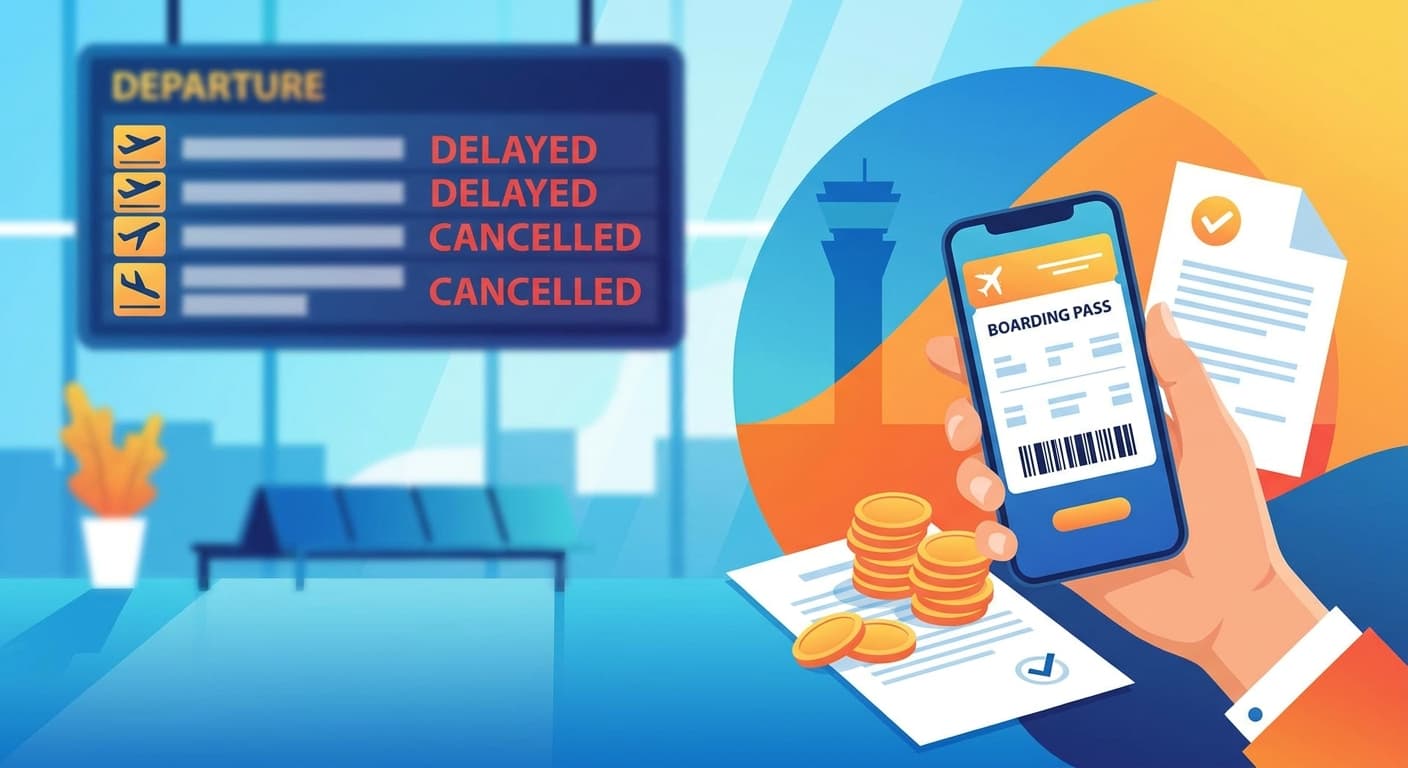
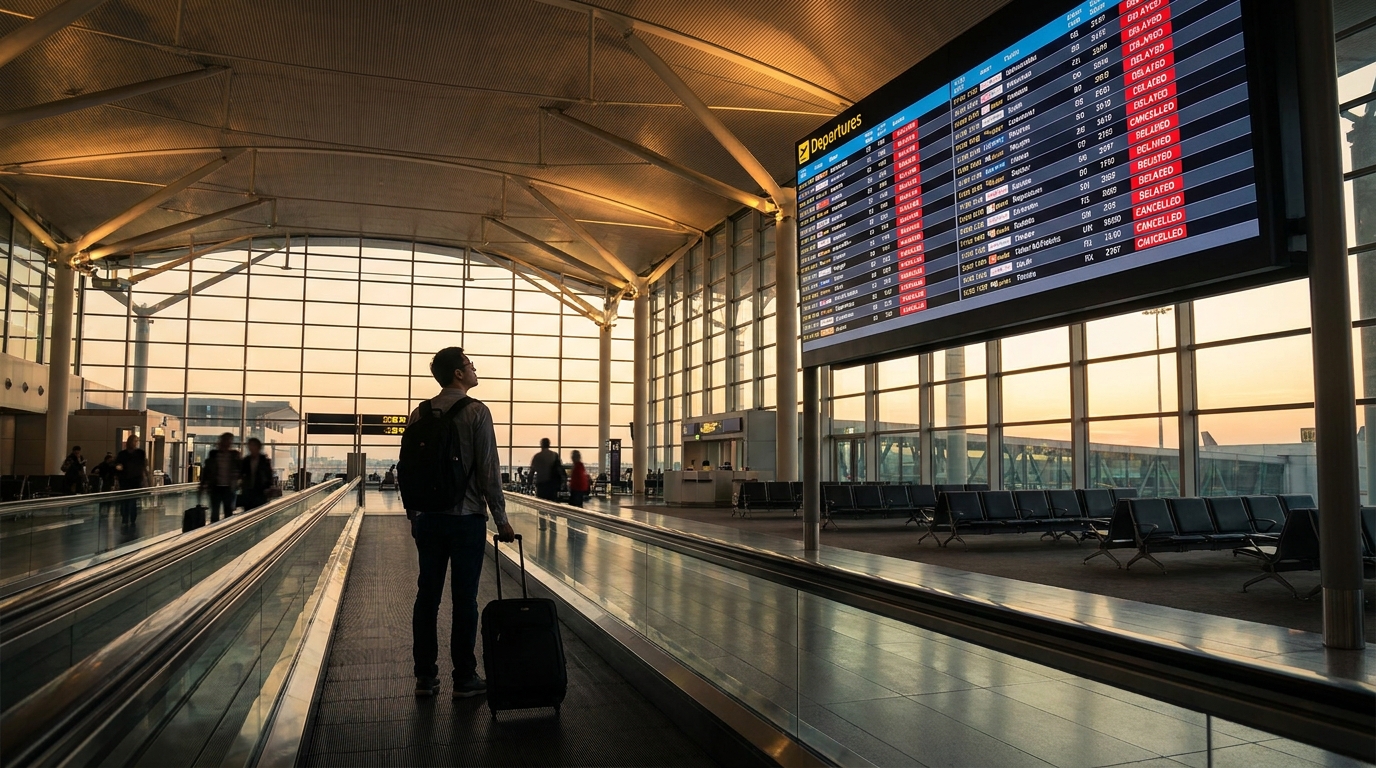
The departure board flashes red. Your flight status changes from "On Time" to "Delayed," then to "Cancelled." It's a moment of dread every traveler fears, a sudden disruption that throws carefully laid plans into chaos. Whether it's a family holiday, a crucial business meeting, or a long-awaited reunion, a flight disruption feels like more than just an inconvenience; it can feel like a personal and financial blow. But in this moment of frustration, it's vital to remember one thing: you have rights. Depending on where you are and where you're going, those rights can be powerful, extending beyond a simple apology to include meals, hotels, and even significant cash compensation.
So, what are your rights for delayed or cancelled flights? Your rights primarily depend on the governing regulations, most notably Regulation EC 261 in Europe and the United Kingdom, and the Department of Transportation (DOT) rules in the United States. Under EU/UK law, you could be entitled to up to €600 in cash for significant delays or cancellations caused by the airline. In the US, while compensation for delays isn't mandated, you have strong protections for situations like being involuntarily bumped from a flight. In almost all cases of major disruption, you are entitled to a "right to care," which includes essentials like food, drinks, and accommodation.
This comprehensive guide will serve as your definitive resource for navigating the complexities of flight disruptions. We will break down exactly what you are owed, demystify the legal jargon, and provide a clear, actionable roadmap for claiming the compensation you deserve. You will learn the critical differences between EU and US regulations, understand what constitutes an "extraordinary circumstance," and discover the step-by-step process for filing a successful claim. By the end of this article, you will be empowered to turn travel turmoil into a resolved issue, armed with the knowledge to hold airlines accountable and secure what is rightfully yours.
What Are My Fundamental Rights When a Flight is Disrupted?
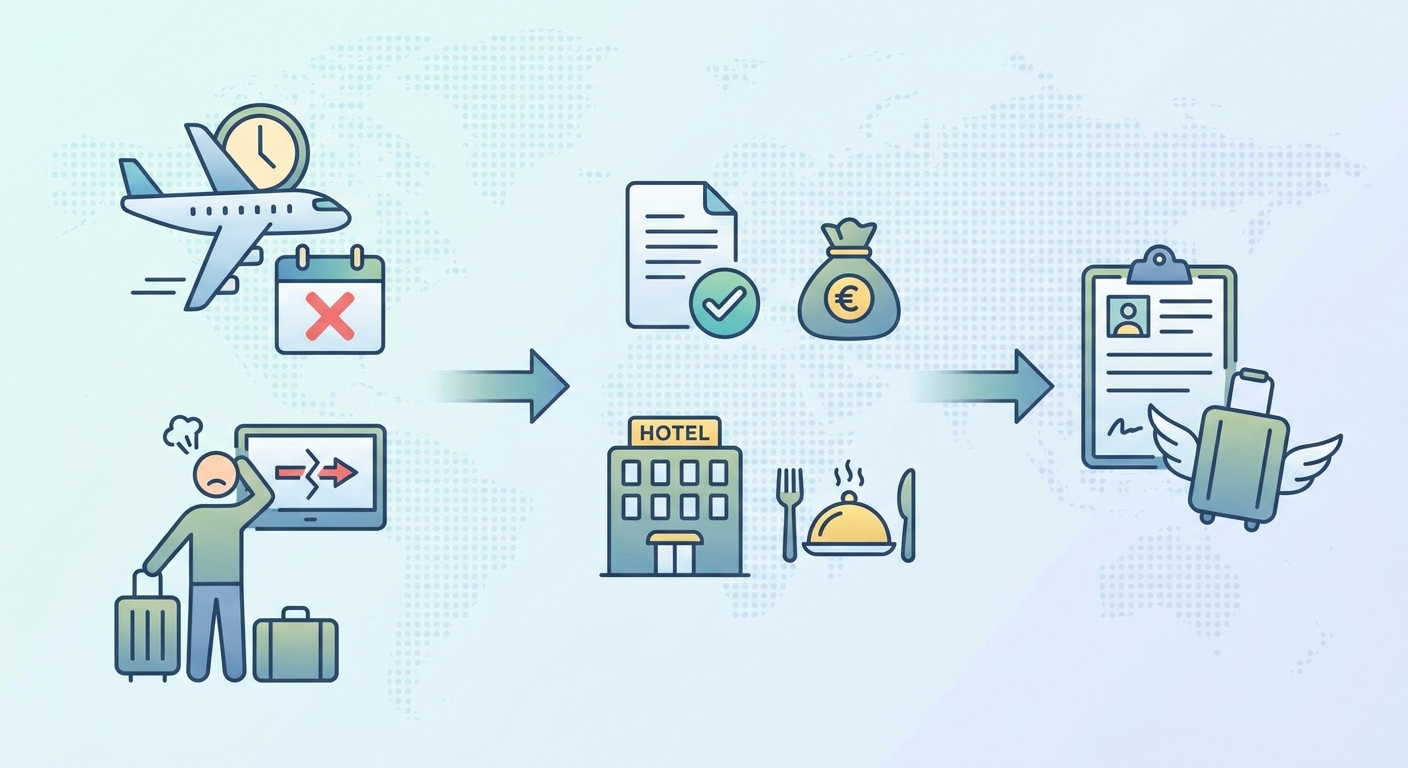
Your most fundamental right during a significant flight delay or cancellation is the "right to care and assistance" from the airline. This entitlement is separate from monetary compensation and applies in most jurisdictions, including the EU, UK, and to some extent the US, often regardless of the reason for the disruption.
This duty of care means the airline is obligated to provide for your essential needs while you wait. It's a foundational passenger protection designed to prevent travelers from being left stranded and out-of-pocket for basic necessities. The trigger for this right is typically a delay of a certain length, which varies by flight distance. For example, under EU rules, it kicks in after a two-hour delay for short flights and extends to four hours for long-haul journeys. This assistance is mandatory, even if the delay is caused by an "extraordinary circumstance" like severe weather, for which the airline wouldn't have to pay cash compensation.
The right to care typically includes several key provisions. First, you are entitled to meals and refreshments in reasonable relation to your waiting time. This usually comes in the form of food and drink vouchers. Second, you must be given access to communication, which means the airline should facilitate two free phone calls, emails, or faxes. Third, and most importantly, if the delay requires an overnight stay, the airline must provide hotel accommodation and transportation between the airport and the hotel. They cannot simply tell you the airport is closed and leave you to fend for yourself.
Real-World Scenario: An Overnight Delay in Paris
Imagine your flight from Paris Charles de Gaulle (CDG) to New York (JFK) is scheduled for 9 PM. At 8 PM, the airline announces a delay due to a technical issue with the aircraft. By 11 PM, it becomes clear the flight will not depart until the next morning. In this situation, the airline's duty of care is activated. They are required to arrange and pay for a hotel for all passengers. They must also provide coach or taxi transportation to the hotel and back to the airport the next day. Furthermore, they should provide vouchers for dinner that evening and breakfast the following morning. If they fail to do this, you can arrange your own reasonable accommodation and meals and claim the costs back later, which is why keeping receipts is absolutely critical.
Actionable Insight: Be Proactive, Not Passive
The most important takeaway is that you must be proactive in claiming this right. Airlines are often chaotic during major disruptions, and gate agents can be overwhelmed. Do not assume these provisions will be offered automatically. Go to the airline's customer service desk as soon as a significant delay is announced and politely but firmly request assistance. Ask specifically for meal vouchers, hotel arrangements, and transport. If they are unable or unwilling to provide it, inform them that you will be making your own reasonable arrangements and will be submitting the receipts for reimbursement as per your rights under the relevant air passenger regulations. Document everything: who you spoke to, what you were told, and keep every single receipt.

How Does EU and UK Law (EC 261/2004) Protect Me?
Regulation EC 261/2004, which has been retained in UK law post-Brexit, is one of the most powerful and comprehensive air passenger rights laws in the world. It mandates that airlines pay fixed monetary compensation for long delays, cancellations, or instances of denied boarding, provided the disruption was within the airline's control and not due to an extraordinary circumstance.
This regulation provides a robust safety net for travelers, shifting the financial burden of operational failures from the passenger to the airline. The law applies to a wide range of flights: any flight departing from an EU/UK airport (on any airline), and any flight arriving at an EU/UK airport on an EU/UK-based airline. This means a flight from New York to London on British Airways is covered, but a flight on American Airlines on the same route would not be (though your rights on the outbound London to New York flight would be covered regardless of the carrier). The amount of compensation is fixed and is not related to the price of your ticket; it is based solely on the flight distance and the length of the delay at your final destination.
The compensation is tiered as follows:
- €250 for all flights of 1,500 km or less.
- €400 for all intra-community flights of more than 1,500 km, and for all other flights between 1,500 km and 3,500 km.
- €600 for all other flights (typically long-haul flights over 3,500 km).
Crucially, for a delay to be eligible, you must arrive at your final destination three hours or more after your originally scheduled arrival time. The definition of "arrival time" is legally defined as the moment at least one of the aircraft's doors is opened, allowing passengers to disembark. This is a key detail, as a flight could depart four hours late but make up time in the air, arriving only 2 hours and 55 minutes late, thus voiding the claim for compensation.
EU/UK Flight Compensation (EC 261) Summary
Here is a table breaking down the compensation amounts based on flight distance and delay at the final destination:
| Flight Distance | Delay Length | Compensation Amount |
|---|---|---|
| Up to 1,500 km | 3+ hours | €250 |
| 1,500 km - 3,500 km (and all intra-EU/UK flights over 1,500 km) | 3+ hours | €400 |
| Over 3,500 km (between an EU/UK and non-EU/UK airport) | 3 to 4 hours | €300 (50% reduction) |
| Over 3,500 km (between an EU/UK and non-EU/UK airport) | 4+ hours | €600 |
Real-World Scenario: A Transatlantic Delay
Consider a passenger flying from Frankfurt, Germany, to Toronto, Canada, a distance of over 6,000 km. The flight is delayed on departure due to a crew scheduling error. It ultimately arrives in Toronto 4 hours and 30 minutes behind schedule. Under EC 261, because the flight departed from an EU airport and the arrival delay at the final destination was more than four hours for a flight over 3,500 km, the passenger is entitled to the full €600 in compensation. The reason - crew scheduling - is considered within the airline's control, making the claim valid. The passenger can submit a claim directly to the airline citing their rights under the regulation.
Actionable Insight: Focus on Arrival Time and Reason
When dealing with EU/UK flight disruptions, your focus should be on two critical pieces of information: the exact time your plane's doors opened at your final destination, and the specific reason for the delay. Airlines can be vague, often citing "operational reasons." Always press for more detail. Was it a technical fault? Was it a staffing issue? This information is vital because it determines whether the airline can claim an "extraordinary circumstance" exemption. Remember, the burden of proof is on the airline to demonstrate that a circumstance was truly extraordinary and that they took all reasonable measures to avoid the disruption.
What Are "Extraordinary Circumstances" That Void Compensation Claims?
Under EU and UK law, "extraordinary circumstances" are specific events that are considered beyond the airline's control, thereby exempting them from the obligation to pay monetary compensation. However, it's crucial to understand that even in these situations, the airline's duty to provide care (meals, accommodation, etc.) still applies. This exemption is the most common reason airlines use to reject claims, making it essential for passengers to know what does and does not qualify.
The legal definition of an extraordinary circumstance is an event that could not have been avoided even if all reasonable measures had been taken. These are typically unforeseeable and external events that disrupt flight operations. The airline must not only prove the event occurred but also that it directly caused the delay or cancellation and that they did everything they could to mitigate the impact. It is not a blanket excuse for any and all problems.
Here's a breakdown of what generally is and is not considered an extraordinary circumstance:
- Considered Extraordinary: Political instability or civil unrest, meteorological conditions incompatible with the safe operation of the flight (e.g., volcanic ash clouds, severe hurricanes), security risks, sabotage or terrorism, strikes by third parties essential to operations (e.g., air traffic controllers, airport ground staff), and hidden manufacturing defects or unexpected flight safety shortcomings.
- Not Considered Extraordinary: Most technical problems with the aircraft found during routine pre-flight checks or maintenance. A landmark European Court of Justice ruling established that technical issues are an inherent part of running an airline. Other examples include airline staff shortages (pilots, cabin crew), airline crew strikes, and issues with flight scheduling or operations that are within the airline's normal management.
Mini Case Study: Technical Faults vs. Bad Weather
Let's compare two scenarios. In Scenario A, a flight from Madrid to Dublin is cancelled because a sudden, un-forecasted blizzard forces the closure of Dublin Airport. This is a clear-cut extraordinary circumstance. The airline could not control the weather. Passengers would be entitled to care and re-routing, but not the €250 cash compensation. In Scenario B, the same flight is cancelled because a pre-flight inspection revealed a faulty hydraulic pump. While this is a safety issue, the maintenance and airworthiness of the aircraft are the airline's responsibility. This is considered an inherent operational issue, not an extraordinary circumstance. Therefore, passengers in Scenario B would be entitled to both care and the €250 compensation.
Actionable Insight: Challenge the Airline's Reasoning
Airlines have been known to broadly classify internal problems as "extraordinary" to avoid payouts. If your claim is rejected for this reason, do not simply accept it. Write back and ask for a more specific explanation. For example, if they cite "a technical issue," ask for the specific nature of the fault. If they blame weather, check if other airlines were flying at the same time. The more you can show that the problem was specific to your airline and not a wider, uncontrollable event, the stronger your case for compensation becomes. If they still refuse, this is when you escalate your complaint to a National Enforcement Body or an alternative dispute resolution service.
What Are My Rights Under U.S. Department of Transportation (DOT) Rules?
Passenger rights in the United States operate under a fundamentally different philosophy than in the EU and UK. With a few key exceptions, there is no federal law requiring airlines to provide compensation or amenities to passengers for delayed or cancelled flights. Instead, your rights are primarily determined by the airline's individual contract of carriage, a legal document that outlines the policies and procedures for that specific carrier.
This means that for a typical delay - say, a four-hour wait due to a mechanical issue - there is no mandated cash payment like the EU's €600. The airline is not legally obligated to provide you with meal vouchers or a hotel room. While many major airlines will offer these as a matter of customer service, especially for their elite status flyers, it is not a guaranteed right. This contract-based system places a much greater onus on the passenger to know the specific policies of the airline they are flying with. You can typically find the contract of carriage on the airline's website, and it's wise to have a basic understanding of their delay policies before you travel.
However, the U.S. Department of Transportation (DOT) does have strict rules for two specific situations: tarmac delays and involuntary denied boarding (bumping).
- Tarmac Delay Rule: For domestic flights, airlines cannot keep a plane on the tarmac for more than three hours without allowing passengers to deplane. For international flights, this limit is four hours. During a tarmac delay, the airline must provide adequate food and water no later than two hours after the delay begins. They must also maintain operable lavatories and provide any necessary medical attention.
- Involuntary Denied Boarding: This is where U.S. rules are arguably stronger than the EU's. If you are involuntarily bumped from an overbooked flight, you are entitled to significant, on-the-spot cash compensation. We will explore this in greater detail in a dedicated section.
Comparison: EU Proactive vs. US Reactive Model
The core difference is one of proactive regulation versus reactive policy. The EU model (EC 261) is proactive; it sets a clear, universal standard for compensation that all airlines must follow. It presumes the passenger is owed compensation for the inconvenience of a significant disruption caused by the airline. The US model is largely reactive and market-driven. It relies on airlines to set their own customer service standards in their contracts, with the DOT stepping in only to regulate specific areas like safety, tarmac delays, and overbooking. This means in the US, your experience during a delay can vary dramatically from one airline to another.
Real-World Scenario: A Domestic US Cancellation
Imagine your flight from Dallas (DFW) to Seattle (SEA) on a US carrier is cancelled due to a crew shortage. Under US law, the airline is not required to pay you compensation for the cancellation. Their primary obligation under their contract of carriage is to either provide a full refund of your ticket price (if you choose not to travel) or rebook you on their next available flight to Seattle at no extra charge. They might offer a meal voucher or a hotel if it's an overnight cancellation, but this is a customer service policy, not a legal requirement. A passenger in the same situation on a flight from London to Rome would, by contrast, be legally entitled to a hotel, meals, and €400 in compensation.
Actionable Insight: Know Your Airline's Contract
When flying within or to/from the United States, your best tool is knowledge of the specific airline's policies. Before you travel, or at least when a delay occurs, pull up their contract of carriage on your phone. If an agent tells you they can't provide a hotel, but their contract says they will for controllable cancellations, you can politely point this out. Your leverage in the US system comes not from overarching federal law (for delays), but from holding the airline accountable to its own published promises.
How Do I Claim Compensation for a Delayed or Cancelled Flight?
Successfully claiming compensation requires a methodical and well-documented approach. To claim what you're owed, you must first gather all relevant documentation, confirm your eligibility under the applicable regulations, and then submit a formal, written claim directly to the airline, clearly stating the legal basis for your request.
The process can seem daunting, but breaking it down into clear steps makes it manageable. Airlines may not make it easy, but by following a structured process, you significantly increase your chances of a successful outcome. The key is to present your case as a clear-cut legal entitlement rather than a mere complaint. This shifts the dynamic and forces the airline to address the specific regulation you are citing.
Here is a step-by-step guide to filing your claim:
- Gather All Your Evidence: This is the most critical step. You need to build a complete file of your disruption. This includes your booking confirmation, e-tickets, and boarding passes (both original and for any re-booked flights). Keep all receipts for expenses incurred, such as food, drinks, accommodation, and transport. Take photos of the departure board showing the delay or cancellation. If possible, get the reason for the delay in writing from airline staff, or make a detailed note of what you were told, by whom, and at what time.
- Determine Your Eligibility: Before you write, confirm you have a valid claim. For EU/UK flights, check the flight route, the delay length at your final destination (over 3 hours), and the reason. Was it an extraordinary circumstance? Use an online eligibility calculator if you're unsure. For US flights, determine if your issue falls under a specific DOT rule, like involuntary denied boarding or a tarmac delay, or if you are claiming expenses based on the airline's contract of carriage.
- Locate the Correct Contact Information: Do not send your claim to a generic customer service email. Go to the airline's website and look for a specific section for "Complaints," "Customer Relations," or "EC 261 Compensation." Most major airlines have dedicated online forms for these claims. Using the official channel ensures your claim is routed to the correct department.
- Write a Clear and Formal Claim: Whether using an online form or writing an email, be concise and professional. State the facts clearly. Include all passenger names, your booking reference number, and full flight details (flight number, date, and route). State the length of the delay or the fact of the cancellation. Crucially, cite the specific law you are claiming under (e.g., "I am writing to claim compensation under Article 7 of Regulation EC 261/2004"). State the exact amount of compensation you are requesting. Attach copies (not originals) of all your evidence.
- Be Persistent and Follow Up: After submitting your claim, you should receive an automated acknowledgement. Airlines are supposed to respond within a reasonable timeframe (e.g., 28 days in the UK). If you don't hear back, send a follow-up email. If they reject your claim with a vague reason, write back asking for a more detailed explanation. Don't give up after the first response.
Actionable Insight: Use a Template and Be Specific
Using a template for your claim letter or email can be incredibly effective. Numerous consumer rights websites offer free templates for EC 261 claims. These are structured to include all the necessary information and legal phrasing. Citing the specific article of the regulation shows the airline you are serious and understand your rights. Instead of saying "I want money for my delay," you are saying, "As per my rights defined in EC 261/2004, I am entitled to €600 due to a 5-hour arrival delay on flight BA293." This professional, fact-based approach is much harder for an airline to dismiss.
What Should I Do if the Airline Rejects My Valid Claim?
If an airline rejects what you believe to be a valid claim for compensation, it is not the end of the road. Your next step is to escalate the complaint to an independent third party, such as a National Enforcement Body (NEB) in the EU/UK or the Department of Transportation (DOT) in the US. Alternatively, you can enlist the help of a claims management company.
Airlines sometimes reject valid claims initially, hoping the passenger will simply give up. They may incorrectly cite extraordinary circumstances or provide no clear reason at all. This is why a formal escalation process exists. These independent bodies are empowered to review your case and compel the airline to pay if your claim is found to be valid. This step is free for the consumer and adds significant pressure on the airline to comply with their legal obligations.
Here's how to approach the escalation process based on your jurisdiction:
- In the European Union and United Kingdom: Each member state has a designated National Enforcement Body responsible for upholding air passenger rights. In the UK, this is the Civil Aviation Authority (CAA). If the airline has given you a final response (often called a "deadlock letter") or has not responded within eight weeks, you can submit your case to the relevant NEB. Many airlines are also members of an approved Alternative Dispute Resolution (ADR) scheme. The CAA can direct you to the correct ADR provider for your airline. These services act as an impartial mediator and their decision is typically binding on the airline.
- In the United States: For issues covered by federal law, such as tarmac delays, denied boarding, or baggage liability, you can file a formal complaint with the Department of Transportation (DOT). You can do this easily via the DOT's online aviation consumer protection form. While the DOT does not have the authority to force an airline to pay compensation for a standard delay (as it's not required by law), they do investigate all complaints. A high volume of complaints against a particular airline can trigger DOT enforcement action and fines, which gives the airline a strong incentive to resolve the issue with you directly.
- Using a Claims Management Company: If you find the process too complex or time-consuming, you can use a claims management company. These firms handle the entire process for you, from the initial claim to potential court action. They have legal expertise and are very effective. The significant downside is their fee structure; they operate on a "no-win, no-fee" basis but will take a substantial commission, typically 25% to 50%, from any compensation they secure for you. This is a trade-off between convenience and keeping the full amount of your compensation.
Real-World Escalation Scenario
A passenger's flight from Lisbon to Manchester is delayed by five hours. The airline is an EU carrier. The passenger submits a claim for €400 under EC 261. The airline replies, rejecting the claim and vaguely citing "unforeseen operational circumstances." The passenger, confident that this is not a valid extraordinary circumstance, escalates the case to the airline's approved ADR provider. They submit all their evidence: booking details, boarding passes, and the airline's rejection email. The ADR body reviews the case, agrees with the passenger, and issues a binding decision instructing the airline to pay the €400 compensation. The airline complies, and the passenger receives their payment.
Actionable Insight: Document Your Final Rejection
Before you can escalate, you usually need to show that you have given the airline a fair chance to resolve the issue. This is why it's important to get a final, written rejection from them. This email or letter is a key piece of evidence for the NEB, ADR, or DOT. It demonstrates that you have exhausted the direct process with the airline and that third-party intervention is now necessary. Keep your communication chain with the airline saved and organized for easy submission to the escalation body.
What Are My Rights If I Am Involuntarily Denied Boarding?
If you are involuntarily denied boarding, commonly known as being "bumped," you have some of the strongest and most immediate rights as an air passenger. This situation typically occurs when a flight is overbooked, and not enough volunteers agree to give up their seats. In this scenario, both EU/UK and US laws mandate specific, immediate compensation, in addition to assistance with re-routing.
Being bumped is not the same as being denied boarding for a valid reason, such as arriving late at the gate, lacking proper documentation, or being a safety risk. Involuntary denied boarding applies only when you have a confirmed reservation, have checked in on time, are at the gate on schedule, and the airline still refuses to let you on the flight, usually due to overselling. Before bumping anyone involuntarily, airlines are required to first ask for volunteers who are willing to give up their seat in exchange for an agreed-upon compensation package.
Here's how the rules differ between the major jurisdictions:
- EU/UK (EC 261): Under EC 261, being involuntarily denied boarding is treated much like a last-minute cancellation. You are immediately entitled to the same fixed compensation amounts: €250, €400, or €600, depending on the flight distance. In addition to the cash compensation, the airline must offer you the choice between three options: 1) a full refund of your ticket, 2) re-routing on the next available flight to your destination, or 3) re-routing at a later date of your convenience. You are also entitled to the full "right to care" (meals, hotel) while you wait for your new flight.
- United States (DOT Rules): U.S. regulations for bumping are very specific and can be quite lucrative for the passenger. The compensation is based on the price of your ticket and the length of the delay caused by the bumping. If the airline can get you to your destination within one hour of your original arrival time, no compensation is due. For longer delays, the compensation is calculated as follows:
- Domestic Delay of 1-2 hours / International Delay of 1-4 hours: You are entitled to 200% of your one-way fare to your destination, capped at $775.
- Domestic Delay of over 2 hours / International Delay of over 4 hours: You are entitled to 400% of your one-way fare to your destination, capped at $1,550.
Comparison Table: Denied Boarding Compensation
| Feature | EU/UK (EC 261) | United States (DOT) |
|---|---|---|
| Compensation Basis | Fixed amount based on flight distance | Percentage of ticket fare based on delay length |
| Maximum Payout | €600 (approx. $650) | $1,550 |
| Payment Form | Cash, bank transfer, or cheque | Cash or cheque (must be offered) |
| Right to Care | Yes (meals, hotel, etc.) | Not mandated, but re-routing is required |
| Refund/Re-routing | Choice of full refund or re-routing | Re-routing is standard; refund if you cancel |
Actionable Insight: Insist on Cash, Not Vouchers
This is arguably the most critical piece of advice for passengers bumped in the United States. The law is clear: the airline must pay you compensation in cash or by check on the day and at the airport where the bumping occurred. However, airlines will almost always try to offer you travel vouchers or credits first, often for a higher face value than the cash amount. These vouchers come with restrictions, blackout dates, and expiry dates. Unless you are a frequent flyer with that specific airline and are certain you will use the voucher, you should always insist on your legal right to a cash or check payment. Politely but firmly state, "I understand my rights under the DOT regulations, and I would like to receive the compensation in cash, please." They are legally obligated to provide it.
Are My Rights Different for Connecting Flights and Missed Connections?
Yes, your rights concerning missed connections are significantly different and depend almost entirely on how you booked your tickets. If your entire journey is on a single booking reference, you are on a "protected connection," and the airline is responsible for getting you to your final destination. If you booked separate tickets yourself, you have a "self-transfer," and the airlines have no responsibility for your missed connection.
Understanding this distinction is crucial in modern travel, where passengers often combine flights from different airlines to find the cheapest fare. While this can save money upfront, it carries a substantial risk. A small delay on the first leg of a self-transfer journey can have a catastrophic and expensive domino effect, for which you have little to no recourse.
Let's break down the two scenarios:
- Single Booking (Protected Connection): When you book a journey like New York -> Frankfurt -> Singapore all under one ticket number (e.g., with Lufthansa and its partner Singapore Airlines), the airlines have a contract to get you to your final destination, Singapore. If your first flight from New York is delayed, causing you to miss your connection in Frankfurt, the airline is obligated to rebook you on the next available flight to Singapore at no extra cost. Furthermore, for compensation purposes under EU261, what matters is the delay at your final destination. If the rebooking causes you to arrive in Singapore more than three hours late, you are eligible for compensation based on the entire journey's distance (New York to Singapore), even if the initial delay was short.
- Separate Bookings (Self-Transfer): Now, imagine you booked a ticket from New York to Frankfurt on one airline, and a completely separate ticket from Frankfurt to Singapore on another airline to save money. If your first flight is delayed and you miss the second, the second airline will mark you as a "no-show." They have no obligation to rebook you. Your ticket will be cancelled, likely with no refund, and you will have to purchase a new, expensive last-minute ticket to Singapore. The first airline is only responsible for the delay on their leg of the journey; they have no liability for your onward travel plans.
Real-World Scenario: A Protected Connection Pays Off
A traveler is flying from Edinburgh to San Francisco via London on a single British Airways ticket. The first flight from Edinburgh to London is delayed by 90 minutes due to a technical fault. This causes the traveler to miss their long-haul connection to San Francisco. British Airways, because it is a protected connection, automatically rebooks the passenger on the next flight, which departs five hours later. The passenger ultimately arrives in San Francisco 5 hours and 15 minutes behind their original schedule. Because the journey originated in the UK and the total delay at the final destination exceeded four hours, the passenger is entitled to the full €600 in compensation under UK law, in addition to the rebooking and care provided in London.
Actionable Insight: Prioritize Single Bookings for Key Journeys
While it can be tempting to save a hundred dollars by booking separate tickets, the risk is often not worth the reward, especially for long-haul or important trips. When booking a journey with connections, always prioritize booking it as a single itinerary with one airline or its codeshare partners. The peace of mind and legal protection offered by a single booking are invaluable. It ensures that in the event of a disruption, the responsibility to fix the problem lies squarely with the airline, not with you.
What About Compensation for Lost, Delayed, or Damaged Baggage?
Your rights regarding lost, delayed, or damaged checked baggage are governed by a different set of international rules, primarily the Montreal Convention. This treaty, signed by over 130 countries including the US, UK, and all EU member states, establishes airline liability for baggage issues during international travel. You can be compensated for reasonable expenses incurred due to a delay, or for the value of a lost or damaged bag, up to a specified limit.
The Montreal Convention sets a maximum liability limit for airlines per passenger for checked baggage that is lost, damaged, or delayed. This limit is not a fixed amount but is expressed in a unit called Special Drawing Rights (SDRs). The current limit is 1,288 SDRs, which translates to approximately $1,700 USD or €1,600. This is the maximum an airline is liable for, not an automatic payout. You must be able to prove the value of your losses with receipts and documentation.
Here is how to handle each type of baggage issue:
- Delayed Baggage: If your bag doesn't arrive on the carousel, your first and most important action is to file a Property Irregularity Report (PIR) at the airline's baggage service desk before you leave the airport. This report is the official record of your missing bag. Once you've filed the PIR, you are entitled to purchase reasonable essential items - such as toiletries, underwear, and a basic change of clothes - and claim reimbursement from the airline. The key word is "reasonable." Buying luxury goods will likely be rejected. Keep every single receipt for these purchases.
- Damaged Baggage: If your bag arrives damaged, report it immediately at the baggage service desk and file a PIR. Take photos of the damage to the bag and any contents. Airlines are responsible for repairing the bag or replacing it if it's beyond repair. Deadlines for reporting damage are strict, often as short as seven days after receiving your luggage, so it is vital to act quickly.
- Lost Baggage: A bag is typically declared officially lost after 21 days. At this point, you can file a claim for the value of the bag and its contents, up to the 1,288 SDR limit. You will need to provide a detailed list of the items in the bag and, ideally, receipts or proof of value for expensive items. This is where having travel insurance with higher coverage limits can be extremely beneficial, as the airline's liability limit may not cover the full value of your belongings.
Real-World Scenario: A Delayed Bag in Rome
A traveler flies from Chicago to Rome for a wedding. Their checked bag containing their suit and other essentials is delayed. Upon arrival in Rome, they file a PIR at the airport. Over the next two days, they purchase a new suit, shirt, shoes, and toiletries, spending a total of €500. They keep all the itemized receipts. Their bag finally arrives on the third day. After their trip, they submit a claim to the airline including a copy of the PIR and all the receipts. The airline, under the Montreal Convention, is obligated to reimburse the traveler for these reasonable and necessary expenses.
Actionable Insight: The Property Irregularity Report (PIR) is Non-Negotiable
We cannot overstate the importance of the PIR. It is the foundational document for any baggage claim. If you leave the airport without filing one, the airline can argue that the loss or damage occurred after the bag was out of their care. No matter how long the queue is or how tired you are, you must file that report before leaving the baggage claim area. Get a copy of the report or at least the file reference number, as you will need it for all future correspondence with the airline.
Traveling can be one of life's greatest joys, but disruptions are an unfortunate and sometimes unavoidable part of the experience. The frustration of a delayed or cancelled flight is real, but it doesn't have to result in financial loss or a sense of powerlessness. By understanding your fundamental rights, you can transform from a passive victim of circumstance into an empowered consumer who knows what they are owed and how to get it. The key is to remain calm, be methodical, and act with confidence based on knowledge.
The most important insights to carry with you are threefold. First, always remember your immediate "right to care." Regardless of the reason for a major disruption, airlines have a duty to provide meals, communication, and accommodation. Never hesitate to ask for it. Second, understand the critical difference between the robust, compensation-focused laws of the EU and UK (EC 261) and the more contract-based system in the US. Knowing which rules apply to your journey is half the battle. Third, documentation is your greatest weapon. From boarding passes and expense receipts to the crucial Property Irregularity Report for baggage issues, your ability to prove your case is paramount.
Navigating airline bureaucracy can be challenging, but persistence pays off. Do not be discouraged by an initial rejection of a valid claim. Use the escalation channels available to you, whether it's a National Enforcement Body in Europe or a formal complaint with the DOT in the US. By following the steps outlined in this guide - gathering evidence, citing the correct regulations, and being persistent - you can successfully hold airlines accountable and secure the compensation you are rightfully due. Travel with confidence, knowing that you are protected by a framework of rights designed to keep you safe, cared for, and compensated when things don't go as planned.
Frequently Asked Questions
A refund and compensation are two distinct entitlements. A refund is the return of the money you paid for your ticket, which you are entitled to if the airline cancels your flight and you choose not to travel on a re-routed flight. Compensation, on the other hand, is a fixed monetary payment (e.g., up to €600 under EU law) intended to compensate you for the time and inconvenience you suffered due to a long delay, cancellation, or denied boarding. In many cases of cancellation, you could be entitled to both a full refund of your ticket *and* separate cash compensation.
The time limit, or statute of limitations, for making a flight compensation claim varies by country. Under EU261, the rule of the country where you file the claim applies. This can range from two years in some countries to as long as six years in the United Kingdom (five in Scotland). It's always best to file your claim as soon as possible while the details are fresh and you have all the documents. For baggage claims under the Montreal Convention, the deadlines are much stricter: you must report damage within seven days and file a formal claim within two years.
Yes, absolutely. Air passenger rights laws like EC 261 in Europe and DOT regulations in the US apply to all airlines operating within their jurisdiction, regardless of their business model. A budget carrier like Ryanair or Wizz Air has the exact same legal obligations under EC 261 as a legacy carrier like Lufthansa or British Airways. Similarly, Spirit Airlines must adhere to all DOT rules regarding tarmac delays and denied boarding. The price of your ticket does not affect your legal rights to care or compensation.
If your flight is diverted to a different airport from your original destination, the airline is responsible for transporting you to your original destination airport or another agreed-upon nearby location. This transport, for example by bus or taxi, must be at the airline's expense. For compensation purposes under EU/UK law, the delay is calculated based on your arrival time at the *original* final destination. So, if your flight lands at a different airport and the subsequent bus journey means you arrive at your intended airport city over three hours late, you would still be eligible for compensation.
Generally, no. When you are legally entitled to cash compensation, such as under EU261 or for being bumped in the US, you should almost always insist on the cash. Airlines offer vouchers because it keeps the money within their company and the vouchers often come with restrictive terms, such as short expiry dates, blackout periods, and being non-transferable. While a voucher might have a higher face value, its real-world usability can be very low. Cash is flexible and has no restrictions. Only consider a voucher if you are a very frequent flyer on that specific airline and the voucher's value is significantly higher than the cash amount.