How to Find the Cheapest Airport Parking: What Savvy Travelers Should Know
The thrill of booking a vacation - securing the flights, choosing the perfect hotel - is often followed by the jarring reality of logistics. Of all the travel-related expenses, few cause as much sticker shock as airport parking. You find a great deal on a flight, only to realize that leaving your car at the airport for a week could cost as much as a one-way ticket. It feels like an unavoidable, frustrating travel tax. But what if it wasn't?
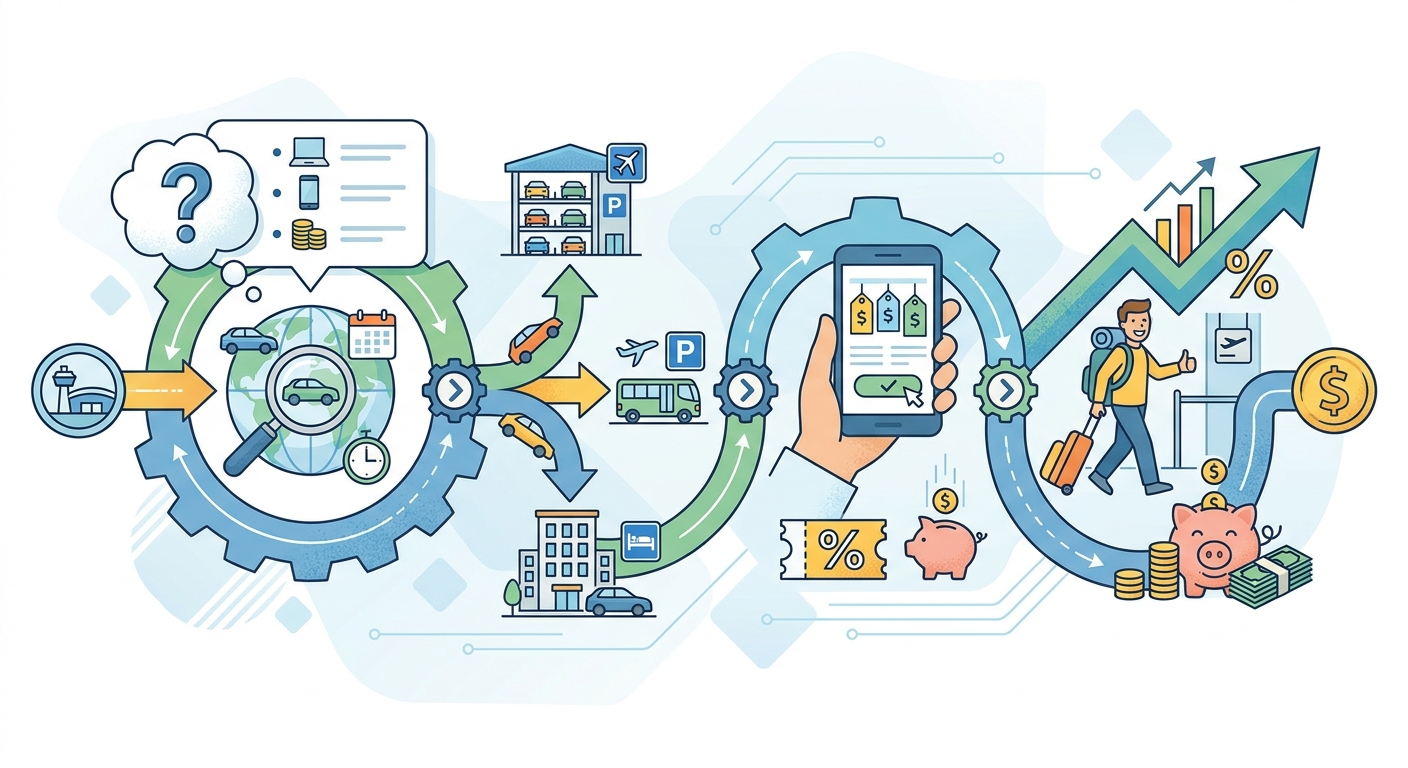
The secret savvy travelers know is that finding cheap airport parking isn't about luck; it's about strategy. The cheapest airport parking is almost always found at off-site lots booked well in advance through a comparison website, often with a discount code applied. This approach combines the three most powerful cost-cutting tactics: moving away from the airport's premium real estate, leveraging the power of pre-booking to avoid surge pricing, and using online tools to compare options and find deals.
This comprehensive guide is designed to transform you from a last-minute parker into a strategic planner. We will deconstruct every aspect of the airport parking puzzle, giving you a clear roadmap to significant savings. You will learn not just what to do, but why it works. We'll explore the critical differences between on-site and off-site lots, the best time to book your spot, how to use powerful online tools, and even clever alternatives like hotel packages that can sometimes include parking for free. Get ready to eliminate one of travel's most annoying expenses for good.
Why Is Airport Parking So Expensive?
The exorbitant cost of airport parking is a result of a perfect storm of factors: prime real estate, high operational costs, and guaranteed customer demand. Airports are massive operations built on valuable land, and parking garages are some of the most conveniently located structures, making that space a premium commodity. This is simple supply and demand in its most potent form.
Beyond the cost of land, running a secure, 24/7 parking facility is a resource-intensive endeavor. These costs include round-the-clock staffing for security and customer service, maintenance of the lots and garages, and significant insurance liabilities. Furthermore, a major expense is the operation of a fleet of shuttle buses that run continuously between the lots and the airport terminals. These shuttles require drivers, fuel, maintenance, and compliance with strict airport regulations, all of which are factored into the daily parking rate you pay.
Airports also levy their own fees and taxes on parking operators, both on-site and off-site. These concession fees, which can be a significant percentage of revenue, are passed directly down to the consumer. This is why even lots located miles away from the terminal still have surprisingly high prices. They are paying for the privilege of accessing the airport and serving its captive audience of travelers who need a safe place to leave their vehicles.
Think of it like buying a bottle of water at a theme park versus at a grocery store. The product is the same, but the location and convenience create a massive price disparity. At an airport, you are paying for proximity, security, and immediate access. The operators know that for many travelers, especially those running late or traveling with families, the convenience of parking right next to the terminal is a necessity they are willing to pay a premium for. This captive audience model allows prices to remain high with little competitive pressure to lower them.
The Role of Convenience Tiers
Airports and parking companies are masters of tiered pricing based on convenience. The lots closest to the terminal, such as short-term or valet parking, command the highest prices. As you move further away to daily or economy lots, the price drops, but your walking distance or shuttle time increases. This structure is designed to extract the maximum possible revenue from every type of traveler, from the business executive on an expense account to the budget-conscious family on vacation. Understanding this tiered system is the first step in dismantling it to your advantage.
The key takeaway is that airport parking isn't just a space for your car; it's a complex service package. The price reflects real estate, security, 24/7 labor, a transportation system, and airport-mandated fees. By understanding these cost drivers, you can more effectively identify which components you're willing to sacrifice - like a few minutes of convenience - to achieve significant savings.

Is It Cheaper to Book Airport Parking in Advance?
Yes, it is almost always significantly cheaper to book airport parking in advance. Pre-booking your spot online, ideally two to four weeks before your trip, can save you anywhere from 20% to 60% compared to the drive-up rate. This is because parking operators use dynamic pricing, similar to airlines, where prices fluctuate based on demand and booking time.
When you book in advance, you are helping the parking facility manage its inventory. This predictability is valuable to them, and they reward you with a lower price. Conversely, the drive-up rate is the highest possible price, targeting travelers who didn't plan ahead and have no other choice. By simply planning this one step of your trip, you avoid the most expensive pricing tier and lock in a competitive rate before last-minute demand spikes occur, especially around holidays or peak travel seasons.
The Power of Dynamic Pricing in Your Favor
Let's consider a real-world scenario. Jane is planning a seven-day trip out of a major airport like JFK during the busy spring break period. If she waits until the day of her flight to find parking, she'll be subject to the full drive-up rate at the on-site economy lot, which could be as high as $35 per day, totaling $245 for the week. However, by going online three weeks before her trip, Jane can use a parking comparison website to see all her options.
She discovers an off-site lot with excellent reviews that offers a pre-booked weekly rate of just $15 per day. By booking then and there, her total cost is only $105. That's a saving of $140, or over 57%, for just a few minutes of online planning. During exceptionally busy times, pre-booking isn't just about saving money; it's about guaranteeing you have a spot at all. Popular lots, both on-site and off-site, can and do sell out during holidays, and arriving without a reservation could lead to a frantic search for parking, potentially causing you to miss your flight.
When is the Sweet Spot for Booking?
While booking further in advance is generally better, there is a sweet spot. Booking more than three months out typically doesn't offer additional savings. The ideal window is between three weeks and two months before your departure. This gives you the best combination of low prices and wide availability. If your travel plans are flexible, you can even set up alerts on some parking apps or websites to notify you if prices for your dates drop. This proactive approach ensures you never miss out on a potential deal.
The actionable insight here is to treat airport parking like you treat your flight or hotel. It should be an integral part of your initial trip planning, not an afterthought you deal with on the way to the airport. By making your parking reservation shortly after you book your flights, you are virtually guaranteed to save a substantial amount of money and travel with one less thing to worry about.
What Are On-Site vs. Off-Site Airport Parking Options?
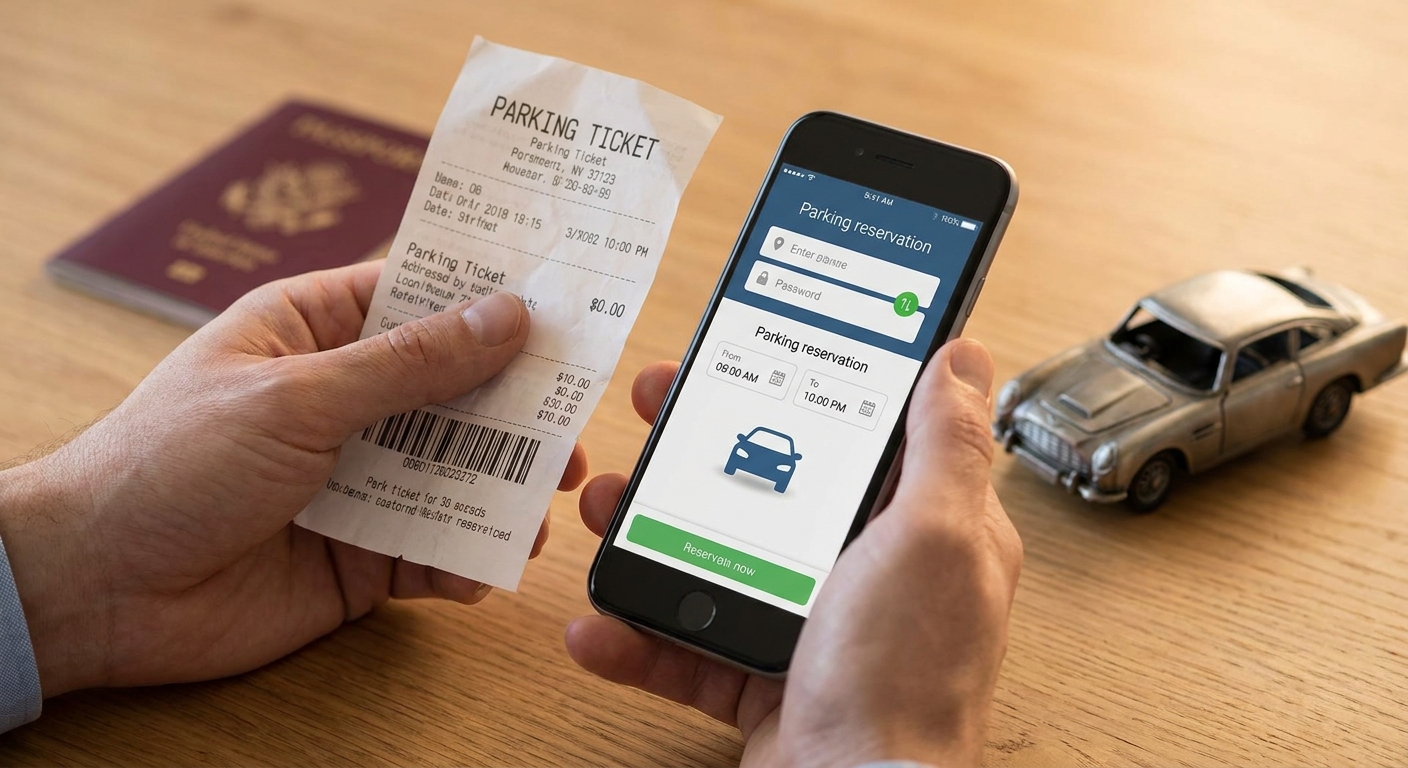
The fundamental choice in airport parking is between on-site lots, which are owned and operated by the airport authority, and off-site lots, which are run by private companies nearby. On-site parking offers maximum convenience at the highest price, while off-site parking provides significant savings in exchange for a short shuttle ride. Understanding the specific trade-offs is crucial for finding the best value for your needs.
On-site parking is located on airport grounds and typically includes options like Terminal (Short-Term), Daily, and Economy lots. The primary advantage is proximity. You can often walk from the daily garage to your terminal or take a very short, frequent airport-run shuttle from the economy lot. This minimizes potential delays and is often preferred by business travelers or those with a lot of luggage. However, this convenience comes at a steep premium, with on-site rates often being double or even triple those of their off-site competitors.
Off-site parking lots, on the other hand, are located anywhere from one to ten miles away from the airport. These privately-owned facilities compensate for their distance by offering much lower prices and often superior service. They operate their own fleets of shuttle buses that run 24/7 to and from the terminals. While this adds an extra step to your journey - typically 15 to 30 minutes - the cost savings are usually dramatic. Many of these lots also offer additional services like car washes, oil changes, and even covered or valet parking at a fraction of the on-site cost.
A Head-to-Head Comparison
To illustrate the differences, let's compare the typical options a traveler might face for a week-long trip. The choice isn't just about price, but also about the level of service and security provided.
| Feature | On-Site Airport Parking | Off-Site Airport Parking |
|---|---|---|
| Average Cost | High ($25 - $60+ per day) | Low to Moderate ($10 - $25 per day) |
| Convenience | Highest; walking distance or very short shuttle ride. | Lower; requires a 5-15 minute shuttle ride. |
| Shuttle Frequency | Very frequent (every 5-10 minutes). | Frequent (every 10-25 minutes, often on-demand). |
| Security | Generally good, but lots can be vast and less monitored. | Often excellent, with fencing, cameras, and 24/7 staffing in a more compact area. |
| Additional Services | Limited (valet, EV charging). | Common (car wash, oil change, covered parking, valet). |
| Best For | Business travelers, those short on time, travelers with mobility issues. | Budget-conscious travelers, long trips, those who plan ahead. |
The actionable takeaway is to honestly assess your priorities. If every minute counts and your budget is flexible, on-site parking is a justifiable choice. However, for the vast majority of travelers, the significant cost savings offered by off-site lots far outweigh the minor inconvenience of a shuttle ride. By planning for an extra 30 minutes in your travel schedule, you can easily cut your parking bill in half, freeing up more money for your actual vacation.
How Do Airport Parking Comparison Websites Work?
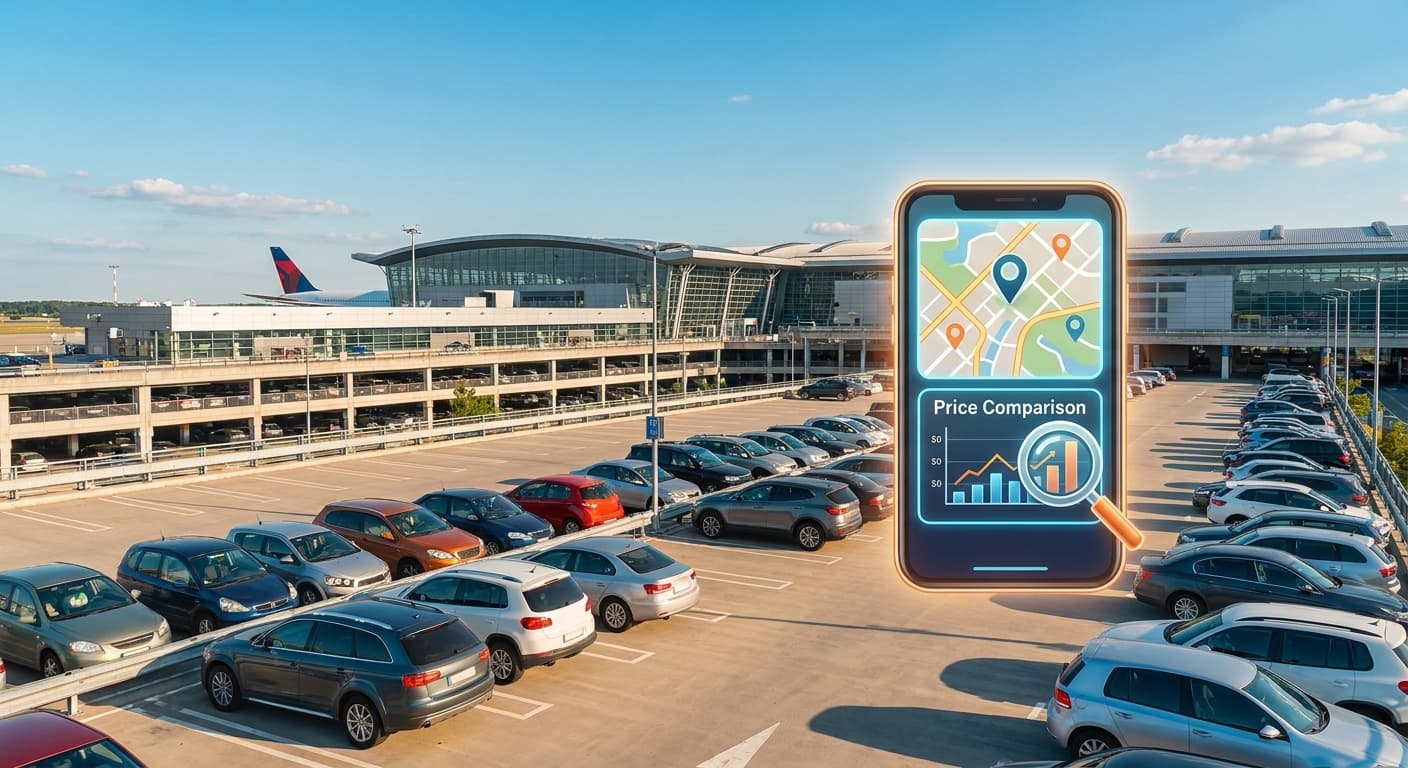
Airport parking comparison websites are powerful online aggregators that function like Expedia or Kayak, but specifically for parking spots near airports. These platforms partner with numerous off-site parking facilities to display their availability, pricing, features, and user reviews all in one place. They provide the single most effective tool for finding the cheapest rates quickly.
The process is simple: you enter your home airport, travel dates, and desired drop-off and pick-up times. The website then queries its database of partner lots and presents you with a list of available options, which you can sort by price, distance to the airport, or user rating. This instantly eliminates the tedious task of visiting dozens of individual parking company websites to compare prices manually. Popular examples of these aggregators include AirportParkingReservations.com, Way.com, and SpotHero.
These sites make their money by taking a small commission from the parking lot operator for each booking made through their platform. Because they drive a high volume of customers, they are often able to negotiate exclusive rates that are lower than what you would find by contacting the lot directly. Furthermore, they frequently offer their own coupon codes and loyalty programs, adding another layer of potential savings for savvy travelers who use them consistently.
Scenario: Putting an Aggregator to the Test
Imagine a family of four flying out of Denver International Airport (DEN) for a 10-day vacation. Without a comparison site, the father might search for "DEN airport parking" and find the airport's official economy lot at $18 per day, for a total of $180. He might also find a well-known national brand like The Parking Spot, which might have a standard rate of $15 per day, totaling $150.
However, by using an aggregator, he instantly sees a dozen different options. He can sort by price and finds a highly-rated, secure local lot called "Canopy Airport Parking" for only $12 per day. The website also shows a 10% off coupon code for first-time users. After applying the code, the daily rate drops to $10.80, and the total for the 10-day trip is just $108. By spending five minutes on a comparison site, he saved $72 compared to the on-site option and $42 compared to booking directly with a major off-site brand. The site also provides hundreds of recent user reviews, giving him confidence in the lot's shuttle reliability and security.
What to Look For on Comparison Sites
When using these websites, don't just focus on the headline price. Pay close attention to these key details:
- User Ratings and Reviews: These are invaluable for gauging the real-world experience. Look for comments on shuttle wait times, staff friendliness, and the ease of pick-up upon return.
- Shuttle Frequency: Does the shuttle run every 10 minutes or every 30 minutes? Is it on-demand during off-hours? This is a critical factor.
- Security Features: The listing should specify if the lot is fenced, well-lit, and has 24/7 surveillance or staff on-site.
- Parking Type: Be clear on whether you are booking self-park or valet, and covered or uncovered. Prices will vary accordingly.
The ultimate insight is that airport parking aggregators have democratized the search for cheap parking. They provide the transparency and competition that forces operators to offer better prices. Making these websites your first stop is the single most effective step you can take to slash your parking costs.

Can You Find Cheaper Parking with Coupons and Loyalty Programs?
Yes, you can absolutely find cheaper airport parking by actively seeking out coupons and participating in loyalty programs. These discounts are readily available but are rarely applied automatically; they reward proactive travelers who take a few extra moments to search for them. Combining a coupon code with an already low pre-booked rate from a comparison site is a classic savings-stacking technique.
Coupon codes are most commonly found through a simple web search, on retail coupon sites like RetailMeNot, or by signing up for the email newsletters of parking companies and comparison websites. Many operators offer a first-time user discount, seasonal promotions, or deals for specific holidays like the Fourth of July or Thanksgiving. These codes can provide a percentage discount (e.g., 10-20% off) or a fixed dollar amount off your total booking, delivering instant and tangible savings.
Loyalty programs, on the other hand, are designed to reward repeat customers. Major off-site parking companies like The Parking Spot have robust programs where you earn points for every dollar spent. These points can then be redeemed for free days of parking in the future. While the benefit isn't immediate, it can lead to significant savings for frequent flyers. Some programs also offer elite status tiers that come with perks like guaranteed availability or access to premium covered parking spaces.
A Practical Example of Savings Stacking
Let's revisit our traveler, Jane, who is booking her week-long trip. She uses a comparison website and finds a great rate of $15 per day at a reputable off-site lot, for a total of $105. Before clicking "book," she opens a new tab and searches for "[Parking Company Name] coupon code." She finds a valid code for 20% off bookings of five days or more.
She applies this code to her reservation, which instantly reduces her total by $21, bringing the new cost down to just $84 for the week. Additionally, since this is a national chain, she signs up for their free loyalty program. For this stay, she earns enough points to get her halfway to a free day of parking on her next trip. This entire process of finding and applying a code took less than two minutes but yielded a 20% saving. Over several trips, these small actions add up to hundreds of dollars in savings.
Where to Hunt for Discounts
- Direct Search: Always perform a quick search for "[Parking Website or Company] promo code" before finalizing any booking.
- Email Newsletters: Sign up for newsletters from major aggregators and parking companies. They often send exclusive deals to their subscribers.
- Membership Associations: Don't forget to check for discounts through organizations like AAA, AARP, or even your credit union. Many have partnerships with travel service providers, including airport parking.
- Social Media: Follow your favorite parking companies on social media, as they sometimes post flash sales or special offers exclusively for their followers.
The key takeaway is that the listed price is often not the final price. By treating your airport parking booking like any other online purchase, you can leverage the power of discount codes and loyalty rewards. This simple habit of searching for a deal before you buy is a hallmark of a savvy traveler and one of the easiest ways to ensure you're getting the absolute lowest price possible.
What Are "Park, Sleep, and Fly" Hotel Packages?
"Park, Sleep, and Fly" packages are special bundles offered by hotels located near airports that combine a one-night hotel stay with a set number of days of free or heavily discounted parking. These packages are one of the most underutilized yet powerful strategies for saving money, especially for travelers with early morning departures or late-night arrivals.
The concept is simple: instead of driving to the airport at 3 a.m. for a 6 a.m. flight, you drive to a nearby airport hotel the evening before. You check in, have a relaxed dinner, get a full night's sleep, and then take the hotel's complimentary shuttle to the terminal in the morning. Meanwhile, your car remains safely parked in the hotel's lot for the entire duration of your trip, often for up to 7 or 14 days. Upon your return, you take the shuttle back to the hotel, pick up your car, and drive home refreshed.
The incredible value of these packages lies in their pricing. In many cases, the total cost of the Park, Sleep, and Fly package is only slightly more - and sometimes even less - than what you would pay for parking alone at an on-site airport lot. You are essentially getting a one-night hotel stay for a minimal cost, while also solving your parking needs. This is a win-win for the hotel, which fills a room that might otherwise be empty, and for you, the traveler, who gets convenience, rest, and parking in one affordable bundle.
Analyzing the Cost-Benefit
Let's consider a scenario for a family from a rural area with a 7 a.m. international flight from a major hub three hours away. Their options are:
- Option A (Parking Only): Wake up at 2 a.m., drive three hours to the airport, park in an off-site lot for 10 days at $16/day ($160 total), and rush to check-in, exhausted.
- Option B (Park, Sleep, Fly): Drive to an airport hotel the afternoon before. They find a Park, Sleep, and Fly package for $220. This includes a one-night stay for the family, up to 14 days of parking, and the shuttle to and from the airport.
In this case, for an extra $60, the family avoids a stressful and dangerous early morning drive, gets a full night of sleep, and starts their vacation feeling rested and relaxed. When you factor in the cost of fuel and the intangible benefit of reduced stress and increased safety, the value of the hotel package becomes undeniable. For travelers living a significant distance from the airport, this strategy often transitions from a money-saver to a near necessity.
How to Find These Packages
Finding these deals is straightforward. You can search on dedicated websites like ParkSleepFly.com or simply call hotels near your departure airport and ask if they offer a "park and fly" rate. When booking, be sure to confirm the following details:
- The exact number of parking days included in the package.
- The frequency and operating hours of their airport shuttle.
- Any potential extra fees for additional parking days beyond what's included.
The actionable insight is to always consider a Park, Sleep, and Fly package if you have an early flight or live more than an hour from the airport. Do the math. Compare the package price against the cost of parking alone. You will often be surprised to find that you can add a night of comfort and convenience to your trip for a negligible cost, completely changing the dynamic of your travel day.
When Should You Consider Peer-to-Peer Parking Services?
You should consider peer-to-peer (P2P) parking services when you are a highly budget-conscious traveler, are comfortable with a less conventional arrangement, and are parking in a high-cost urban area where traditional options are scarce or expensive. These services connect you with local homeowners or small business owners who rent out their unused driveways or parking spots near an airport.
Think of it as the Airbnb for cars. Platforms like Spacer or JustPark facilitate these transactions, handling the booking, payment, and providing a basic framework of rules and support. The primary appeal of P2P parking is its potential for rock-bottom prices. Because these are private individuals with minimal overhead, they can often offer their spaces for significantly less than commercial lots. This can be particularly advantageous for very long trips where even low daily rates at traditional lots can add up.
However, this model comes with a unique set of trade-offs that are not present with established parking companies. The biggest variable is transportation to the airport. Most P2P spots do not come with a dedicated shuttle service. This means you will be responsible for arranging your own transport from the parking spot to the terminal, typically via a rideshare service like Uber or Lyft. This additional cost and logistical step must be factored into your decision.
Weighing the Risks and Rewards
Let's paint a picture of an ideal P2P user. Meet Alex, a solo traveler going on a month-long backpacking trip. The cost of parking at a commercial lot for 30 days, even at $12/day, would be $360. Alex is looking for the absolute cheapest, safest option.
He uses a P2P app and finds a homeowner's driveway two miles from the airport for just $6 per day. The total for his 30-day trip is $180. The listing has positive reviews and photos showing a secure, well-lit space. The Uber ride from the driveway to the terminal costs him $15 each way ($30 total). His all-in cost is $210, a substantial saving of $150 compared to the cheapest commercial option. For Alex, who is traveling light and is comfortable with the extra steps, this is a fantastic deal.
Conversely, a family with two small children, multiple car seats, and six pieces of luggage would likely find the P2P option highly impractical. The hassle of unloading their gear, waiting for an XL rideshare, and then repeating the process upon their return would likely negate any monetary savings. Security can also be more variable than at a commercial lot, though many P2P platforms offer insurance and host verification to mitigate these risks.
Best Practices for Using P2P Parking
If you decide to try P2P parking, follow these tips to ensure a smooth experience:
- Read Reviews Carefully: Pay close attention to what previous users say about the host's communication, the accuracy of the listing, and the safety of the neighborhood.
- Communicate with the Host: Use the platform's messaging system to confirm arrival/departure details and ask any questions you have.
- Factor in All Costs: Calculate the total cost, including the rideshare fares to and from the terminal, before comparing it to traditional parking options.
- Check for Amenities: Some hosts may offer extra perks, but don't assume them. The spot is usually just a space, with no staff or services.
The key takeaway is that P2P parking is a niche but potentially very valuable tool for the right kind of traveler. It's best suited for solo flyers, couples, or long-term travelers who prioritize cost above all else and are willing to manage a bit more of their own logistics. For mainstream travelers, the convenience and reliability of a traditional off-site lot often remain the better choice.
How Does Your Travel Duration Affect Parking Costs?
Your travel duration is one of the most significant factors affecting the total and per-day cost of airport parking. Parking facilities use different pricing structures for short-term and long-term stays, and understanding this can lead to substantial savings. Generally, the longer you park, the lower your average daily rate becomes.
Short-term parking, often found in the garages closest to the terminals, is priced for maximum revenue over short periods. It's designed for people picking up or dropping off passengers and is priced by the hour or even in 30-minute increments. Leaving a car in a short-term lot for several days is a common and costly mistake, as the daily maximum can be incredibly high, sometimes exceeding $60 or $70. This is a trap for uninformed travelers.
Long-term parking, found in on-site economy lots and all off-site facilities, is structured to be more affordable for multi-day trips. These lots charge a flat daily rate, which is significantly lower than the maximum rate at a short-term garage. Furthermore, many of these lots offer even deeper discounts for weekly or monthly stays. A lot might charge $18 for a single day, but offer a weekly rate of $90, which breaks down to just under $13 per day. This tiered pricing heavily incentivizes travelers to choose the correct type of lot for their trip length.
The Per-Day Cost Curve
Let's analyze how the per-day cost changes for a traveler named Mark at a typical off-site lot. The lot's pricing is as follows:
- Daily Rate: $20 per day
- Weekly Rate (7 days): $112
- Extra Day after 1 week: $14
Here's how Mark's per-day cost evolves based on his trip length:
- 2-Day Trip: $40 total, or $20.00 per day.
- 5-Day Trip: $100 total, or $20.00 per day.
- 7-Day Trip: $112 total, or $16.00 per day. The weekly rate kicks in, offering a 20% discount on the daily rate.
- 10-Day Trip: $112 (for the first 7 days) + $42 (for 3 extra days at $14) = $154 total, or $15.40 per day.
- 14-Day Trip: $224 total (2 weekly rates), or $16.00 per day.
This example clearly shows that the most significant price drop occurs when your trip extends into the weekly rate territory. The key is to always pre-book and let the reservation system calculate the most economical rate for your specific duration. Never assume that multiplying the daily rate by the number of days will give you the best price.
The actionable insight for travelers is twofold. First, never use a short-term or hourly garage for an overnight trip or longer. Second, when comparing lots for trips of a week or more, don't just look at the daily rate. Look for special weekly or even monthly rates, as these can dramatically lower your overall cost. Many comparison websites will automatically calculate this for you, but it's essential to understand the principle at play to ensure you're getting the best possible deal for your specific itinerary.
What Hidden Fees Should You Watch Out For?
When booking airport parking, the initial price you see is not always the final price you pay. Savvy travelers should watch out for a range of hidden fees and surcharges that can inflate the total cost. These fees are often added on the final booking page and can include airport access fees, fuel surcharges, service fees, and taxes.
The most common additional charge is the airport access fee. Airports charge off-site parking operators a fee for every shuttle bus trip they make onto airport property. The parking companies, in turn, pass this cost directly on to the consumer. This might appear as a separate line item or be bundled into a generic "service fee." Similarly, during times of high fuel prices, some operators may add a small fuel surcharge to each reservation to cover the increased cost of running their shuttle fleets. These fees are typically a few dollars per day or a flat fee per stay.
Another area to watch is oversized vehicle fees. If you drive a large truck (like a Ford F-150), an extended-length van, or a dually, you may be subject to an additional charge. These vehicles take up more than a standard parking space, and lots will charge a premium for them. This fee is often not clearly stated upfront and can be a surprise upon arrival if you haven't read the fine print. Finally, be aware of booking fees charged by some third-party websites, though most major aggregators have moved away from this practice.
Reading the Fine Print: A Case Study
Let's say you're comparing two off-site lots for a 5-day trip. Lot A advertises a rate of $12 per day. Lot B advertises a rate of $13 per day. At first glance, Lot A seems like the clear winner.
- Lot A (Advertised at $12/day): You proceed to the checkout page. The base rate is $60. Then, the site adds a $2.50/day airport fee ($12.50), a one-time $5.99 service fee, and local taxes. Your final total is now close to $85, making the effective daily rate almost $17.
- Lot B (Advertised at $13/day): You proceed to checkout. Their rate is all-inclusive. The base rate is $65. The only addition is the mandatory local tax. Your final total is around $72, making the effective daily rate about $14.40.
In this scenario, the seemingly more expensive option was actually over 15% cheaper once all the hidden fees were accounted for. This highlights the absolute necessity of proceeding to the final confirmation screen before making a decision. The advertised daily rate can be misleading, and the true cost is only revealed at the very end of the booking process.
The actionable takeaway is to always complete a "mock booking" for your top 2-3 choices. Go all the way through the process until you see the final, all-in price, including all taxes and fees. This is the only number that matters. By comparing the final totals rather than the advertised daily rates, you protect yourself from bait-and-switch pricing and ensure you are making a truly informed, cost-effective decision.
Are There Viable Alternatives to Driving to the Airport?
Yes, there are several viable alternatives to driving and parking at the airport, and for many travelers, they can be more cost-effective and convenient. The best alternative depends on your location, the amount of luggage you have, and your budget. The main options include ridesharing, public transportation, airport shuttles, and the classic friend or family drop-off.
Ridesharing services like Uber and Lyft are incredibly popular and convenient. You can be picked up at your doorstep and dropped off right at your terminal, eliminating the need for parking or shuttles. However, the cost can be highly variable. A standard ride might be cheaper than a few days of parking, but during peak hours or for long distances, surge pricing can make it extremely expensive. It's often a great choice for solo travelers or couples without much luggage who live relatively close to the airport.
Public transportation is usually the most budget-friendly option. Many major cities have direct train or bus links to their airports for just a few dollars. This is an excellent choice for travelers who live near a transit line and are packing light. The downside is that it can be slow, may require multiple transfers, and can be very difficult to navigate with large suitcases or small children. It requires more planning and time but offers unbeatable savings.
Another strong contender is a dedicated airport shuttle service, such as a shared van service. These services pick up multiple passengers in a geographic area and take them to the airport. They are often cheaper than a private rideshare but more convenient than public transit. Finally, the cheapest option of all is having a friend or family member drop you off and pick you up. While it costs you nothing, it does cost them their time and fuel, a social favor that should be used judiciously.
Cost and Convenience Breakdown
Let's imagine a traveler, Sarah, who lives 25 miles from the airport and is going on a 5-day trip. Parking would cost her approximately $75 at an off-site lot.
- Rideshare (Uber/Lyft): A standard one-way trip might cost $40. A round trip would be $80. This is slightly more expensive than parking, but it saves her the hassle of driving in traffic and finding a shuttle. If surge pricing is in effect, this could easily jump to $120 or more.
- Public Transit: A direct airport train from a nearby station costs $12 each way. A round trip is $24. This is a massive saving but requires her to get to the train station and manage her luggage on the train.
- Airport Shuttle Van: A shared van service quotes her $30 for a one-way trip, or $60 round trip. This offers a middle ground between the cost of a rideshare and the inconvenience of public transit.
- Driving & Parking: The cost is $75 plus the cost of fuel for the 50-mile round trip (approx. $8), for a total of about $83. This gives her the most control and convenience, especially for her return trip.
In this case, public transit is the cheapest, the shuttle van is a good value, and ridesharing is a convenient but potentially pricey alternative. The best choice depends entirely on Sarah's priorities: cost, convenience, or a balance of both.
The ultimate takeaway is to not default to driving your own car. Before every trip, take five minutes to evaluate all your options. Use the Uber or Lyft app to get a real-time price estimate. Check your local transit authority's website for airport routes and schedules. A small amount of research can reveal a better, cheaper, and less stressful way to get your journey started.
Conclusion: Your Blueprint for Parking Savings
The days of treating airport parking as an unavoidable, exorbitant travel expense are over. As we've explored, the power to dramatically reduce this cost lies firmly in your hands, armed with a strategic approach and a bit of forward planning. The sticker shock experienced at the airport gate is not a requirement but a choice - a consequence of last-minute decisions in a system designed to capitalize on them. By shifting your mindset from reactive to proactive, you can consistently save 50% or more on your airport parking fees.
The core tenets of this strategy are simple yet profoundly effective. First and foremost, book in advance. This single action is your shield against the punitive drive-up rates. Second, expand your search beyond the airport's official lots. The competitive, privately-owned off-site market is where the best deals are found. Third, leverage the power of technology. Use airport parking comparison websites to instantly survey the market, read reviews, and find the best price without the manual legwork. Finally, always hunt for a coupon code before finalizing your booking to stack your savings even higher.
Your ideal choice will depend on your specific circumstances. For a budget-conscious traveler on a week-long vacation, a pre-booked, coupon-applied spot at a highly-rated off-site lot is likely the unbeatable champion. For someone with a pre-dawn flight living hours from the airport, a Park, Sleep, and Fly hotel package offers an incredible blend of value, convenience, and peace of mind. Even considering alternatives like public transit or ridesharing can sometimes prove to be the most logical and economical solution. The key is to run the numbers for your unique scenario. Don't assume; calculate. A few minutes of comparison can translate into significant savings that can be better spent on an extra dinner out or a memorable experience on your trip.
Frequently Asked Questions
You can typically save between 40% and 70% by choosing an off-site airport parking lot compared to the on-site options. For a week-long trip, this can easily translate to savings of over $100. The price difference is due to lower real estate costs and increased competition among private operators. While it requires a short shuttle ride to the terminal, the significant cost reduction makes it the preferred choice for most budget-conscious travelers. Always pre-book online, as drive-up rates at off-site lots are still higher than reserved rates.
Valet airport parking can be worth the extra cost for travelers prioritizing convenience and speed above all else. It eliminates the need to search for a parking spot and often includes luggage assistance. This service is particularly beneficial for business travelers on tight schedules, families with young children, or those with mobility challenges. For most budget travelers, however, the high premium for valet service is not justifiable. Off-site valet options can offer a compromise, providing the convenience at a lower price point than on-site valet.
If your flight is delayed and you overstay your parking reservation, you will typically be charged for the extra time upon exiting the lot. Most facilities will charge you their standard daily rate for each additional day or part of a day you are parked. Some pre-paid reservations may have a grace period of a few hours, but this varies by company. It's best to contact the parking facility as soon as you know you'll be late to inform them. Keeping your booking confirmation handy will help them locate your record and calculate the additional fee.
For reputable off-site lots, the shuttle services are very reliable. These companies' business models depend on getting customers to and from the airport efficiently. Most run their shuttles on a continuous loop every 10-25 minutes, 24/7. However, reliability can vary between providers. This is why using a comparison website to read recent user reviews is crucial. Look for comments specifically mentioning shuttle wait times, driver professionalism, and the ease of being picked up upon return. A lot with consistently positive shuttle reviews is a safe bet for a stress-free experience.
Yes, reputable off-site airport parking lots are very safe. In many cases, they offer superior security to the vast, often less-monitored on-site economy lots. Private off-site facilities are typically smaller, well-lit, and enclosed by security fencing. Most have 24/7 on-site staff and are monitored by CCTV cameras. When booking, check the lot's description for these security features. Reading recent customer reviews can also provide peace of mind, as users will often comment on the safety and security of the facility. Choosing a well-reviewed lot ensures your vehicle is secure while you travel.