What Is 12Go Asia and How to Use It for Seamless Southeast Asia Travel?
The magic of Southeast Asia lies in its beautiful chaos. From the bustling streets of Bangkok to the serene rice paddies of Sapa, the region promises an adventure at every turn. Yet, this adventure often begins with a logistical puzzle: how do you get from point A to B? Navigating a web of local bus schedules, unfamiliar train station counters, and haggling for ferry tickets can be daunting, especially for first-time visitors. The language barrier, multiple currencies, and the sheer number of private operators can turn simple travel planning into a stressful ordeal.
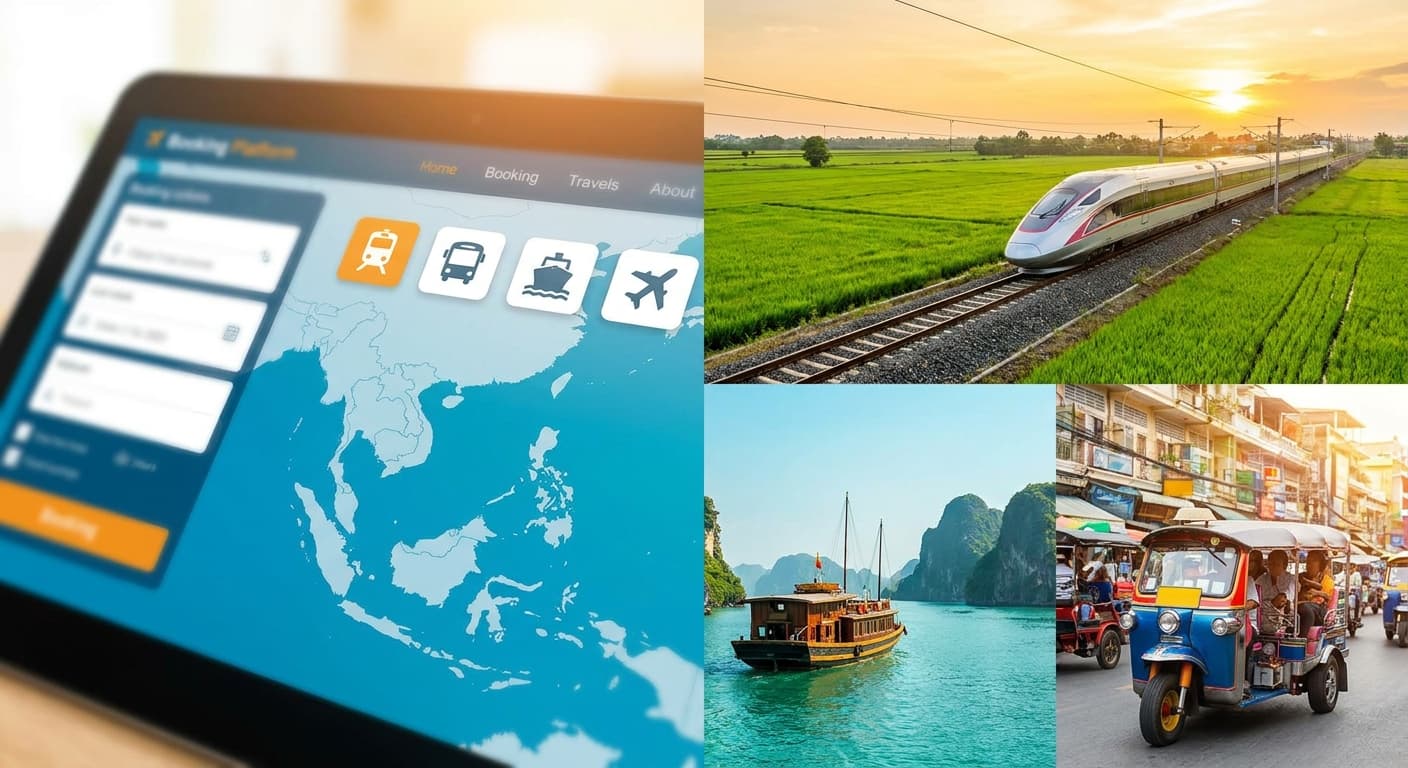
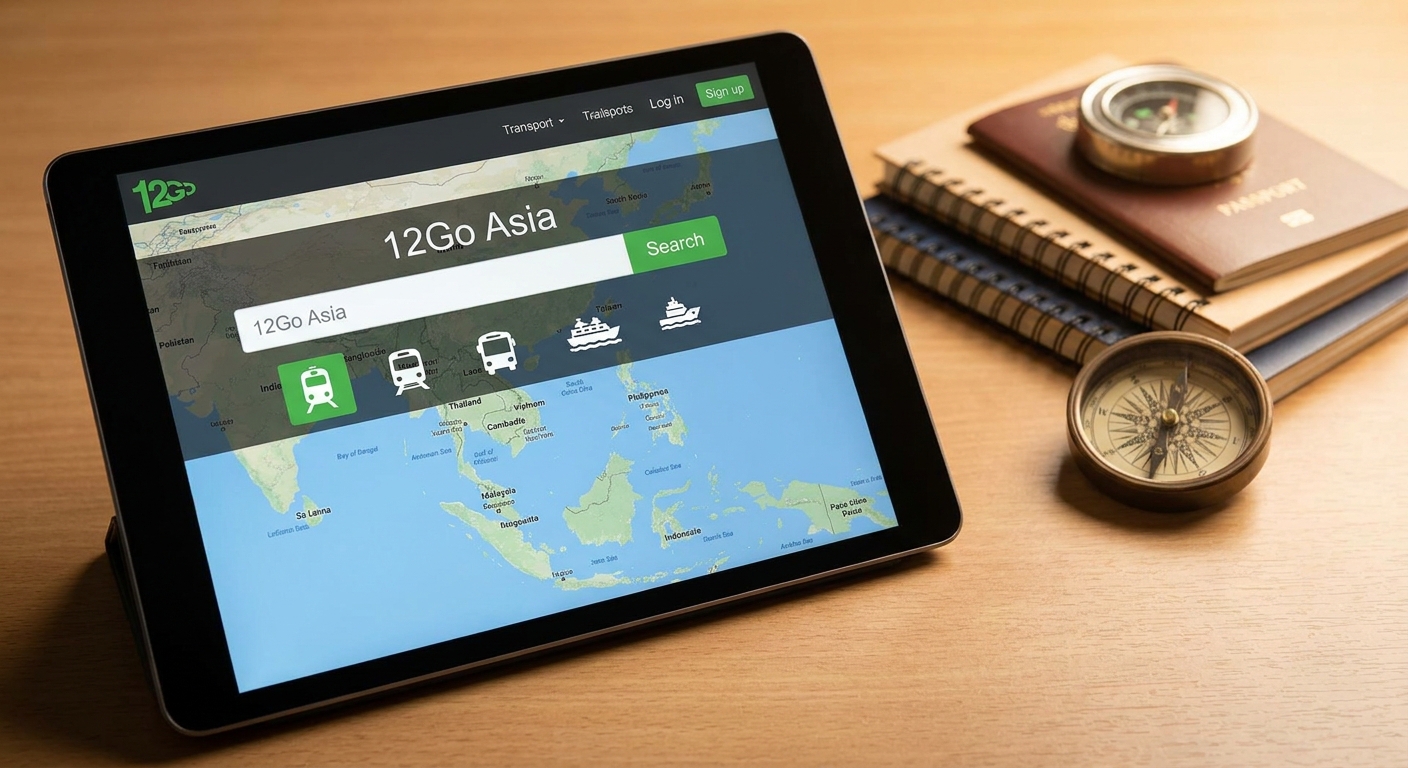
This is precisely the problem that 12Go Asia was created to solve. In short, 12Go Asia is a comprehensive online travel agency (OTA) that aggregates ground and water transportation options across Southeast Asia and beyond, presenting them on a single, user-friendly platform. It acts as a digital bridge, connecting international travelers with hundreds of local transport operators, from major national railways to small, family-run ferry services. It simplifies the entire process of searching, comparing, and booking tickets for trains, buses, ferries, flights, and private transfers, all in your own language and currency.
This in-depth guide is your ultimate resource for mastering this powerful tool. We will move far beyond a simple review, diving deep into how the platform works, its extensive coverage, and a step-by-step walkthrough of the booking process. You will learn about its distinct advantages, potential drawbacks, and how it stacks up against alternatives like booking directly. By the end, you'll be equipped with the knowledge and confidence to use 12Go Asia to build a seamless, stress-free itinerary for your next Southeast Asian adventure.
What Exactly is 12Go Asia and How Does It Work?
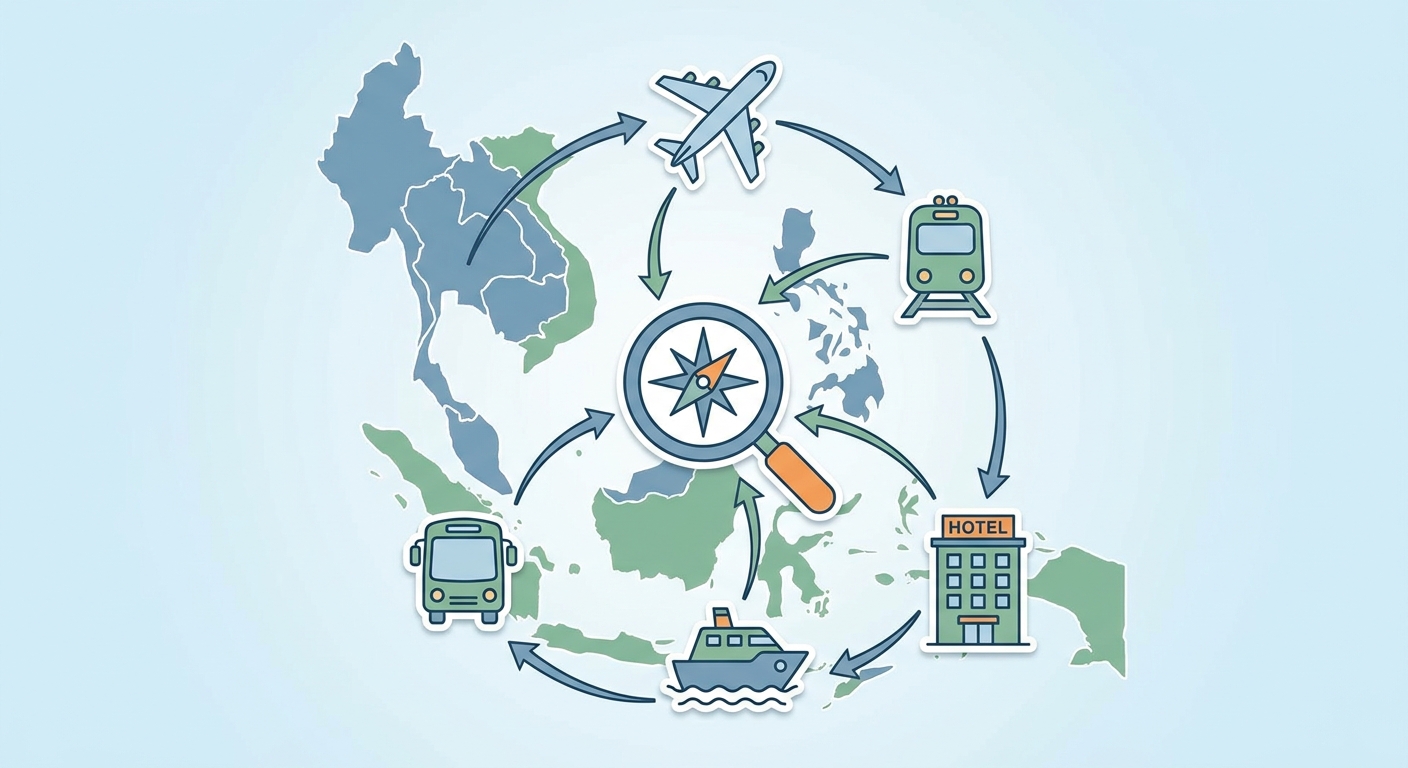
12Go Asia is an online travel agency that functions as a one-stop shop for booking transportation across Asia. It is not a transport operator itself; instead, it acts as a powerful intermediary or aggregator. The platform partners with over 1,500 local transport companies to provide a consolidated, searchable database of routes, schedules, and prices for trains, buses, ferries, and even flights.
The core mechanism is straightforward but technologically complex. When you search for a route, say from Bangkok to Chiang Mai, the 12Go Asia system queries the inventories of its numerous partners in real-time. This includes Thai Railways, various bus companies like Nakhonchai Air, and even airlines. It then presents all available options on a single results page, allowing you to compare departure times, journey durations, prices, and vehicle types (e.g., VIP bus vs. 2nd class sleeper train) side-by-side. This eliminates the need to visit dozens of different websites, many of which may not be in English or accept international credit cards.
Think of it like a Skyscanner or Google Flights, but specifically optimized for the ground and sea travel that forms the backbone of any Southeast Asian backpacking or holiday trip. Once you select your preferred option, you complete the booking and payment directly on the 12Go Asia website. The platform then secures your ticket with the local operator. Depending on the operator's system, you will receive an e-ticket, a voucher to be exchanged for a physical ticket, or instructions on where to collect your ticket, for example, at a nearby office or the station itself.
For this service, 12Go Asia charges a small booking fee, which is their primary business model. This fee covers the cost of running the platform, providing multilingual customer support, and managing the complex web of partnerships and payment processing. For many travelers, this small premium is a worthwhile price for the immense convenience, security, and peace of mind it offers. It transforms a potentially confusing and time-consuming task into a simple, few-click process, allowing you to focus on the exciting parts of your journey rather than the logistics.

Which Countries and Transport Types Does 12Go Asia Cover?
12Go Asia boasts an impressively wide and constantly expanding network, covering the majority of popular travel destinations in Southeast Asia and increasingly, other parts of the world. Its core strength lies in its deep integration within countries that have complex and fragmented transport systems. The platform allows you to book a diverse range of travel modes, making it possible to plan entire multi-modal journeys from a single interface.
The primary geographic focus is Southeast Asia. Key countries with extensive coverage include:
- Thailand: This is their most comprehensive market, covering trains (including the popular sleeper routes), government and private buses, ferries to all major islands (Koh Samui, Koh Phi Phi, etc.), and domestic flights.
- Vietnam: Excellent coverage of the state-run railway system for the famous North-South route, along with a vast network of sleeper buses and ferries to islands like Cat Ba and Phu Quoc.
- Cambodia: A go-to for booking buses and minivans between major cities like Phnom Penh, Siem Reap, and Sihanoukville, as well as ferry routes to Koh Rong.
- Malaysia: Strong coverage for intercity buses and trains, including routes between Kuala Lumpur, Penang, and Singapore.
- Philippines: Particularly useful for its extensive network of ferry routes connecting the archipelago's 7,000+ islands, along with bus services on major islands like Luzon.
- Indonesia: Offers booking for trains across Java, buses, and essential ferry services, including the popular routes around Bali and the Gili Islands.
Beyond these core countries, their network also includes Laos, Myanmar, Singapore, and has expanded into other regions like India, Sri Lanka, China, Japan, Australia, and parts of Europe. The true power of 12Go Asia lies in the variety of transport types available. You can book everything from a 1st class overnight train to a high-speed catamaran. The main categories include:
- Trains: From basic 3rd class seats to air-conditioned sleeper berths.
- Buses: A massive range from local buses to VIP double-decker coaches with reclining seats and onboard snacks.
- Ferries: Slow car ferries, passenger-only speedboats, and large catamarans.
- Flights: The platform aggregates low-cost and full-service carriers for domestic and regional routes.
- Taxis & Private Transfers: You can book private cars or minivans for airport transfers or direct city-to-city travel, offering a more comfortable and convenient option.
This multi-modal approach is a game-changer. For a real-world example, consider traveling from Chiang Mai in northern Thailand to the island of Koh Tao. Without 12Go Asia, you would need to separately book a flight or bus to the southern mainland, then a bus or taxi to the pier, and finally a ferry to the island. With 12Go Asia, you can often book this entire journey as a single combination ticket (bus + ferry), ensuring all your connections are streamlined and managed under one booking reference.
How Do You Book a Ticket on 12Go Asia Step-by-Step?
Booking with 12Go Asia is designed to be intuitive and user-friendly, even for those unfamiliar with the region's geography or transport options. The process strips away the complexity of dealing with local providers directly. Let's walk through a detailed, step-by-step example of booking a popular route: an overnight sleeper train from Bangkok to Chiang Mai, Thailand.
Step 1: Enter Your Route and Date
Navigate to the 12Go Asia homepage. You'll see a prominent search box. Enter your origin (Bangkok), your destination (Chiang Mai), and your desired travel date. The interface uses predictive text, making it easy to find the correct stations and cities. Click the "Find Tickets" button to proceed.
Step 2: Filter and Compare Your Options
You will be taken to a results page displaying a comprehensive list of all available transport modes for your selected route. This is where the platform's power becomes evident. You'll see tabs for trains, buses, flights, and taxis. The page will likely default to showing all options. You can use the filters on the left-hand side to narrow down your search. You can filter by transport type, departure time, price range, and even specific departure or arrival stations.
For our example, we'll click the "Trains" tab. You'll now see a list of all train services for that day. Each listing provides crucial information at a glance: the train number, departure and arrival times, total journey duration, price, and the number of seats remaining. It will also show user ratings for that specific service, which is incredibly helpful for gauging quality and reliability.
Step 3: Select Your Specific Seat or Berth
Click on the train service that best suits your schedule and budget, for instance, the popular Train #9, the 18:40 departure with modern carriages. You will then be shown the available seat classes. For an overnight train, this typically includes 1st Class Sleeper (private cabin for two), 2nd Class AC Sleeper (upper and lower bunks in an open carriage), and sometimes 2nd or 3rd Class seats. Select your preferred class, like "2nd Class AC Sleeper". The system will show you the price per person and allow you to choose between an upper or lower bunk (lower bunks are slightly more expensive but wider and more comfortable). Add the number of passengers and proceed.
Step 4: Enter Passenger Details and Contact Information
This step is critical for ensuring your tickets are issued correctly. You will need to enter the full name of each passenger exactly as it appears on their passport. This is non-negotiable for most transport operators. You'll also provide a primary contact email address (where your booking confirmation and tickets will be sent) and a phone number. Double-check all information for accuracy before moving on.
Step 5: Choose Your Ticket Collection Method
12Go Asia offers different ticket delivery options depending on the operator and route. For Thai Railways, you often have a few choices: e-ticket (if available, sent as a PDF to your email), collection at a 12Go Asia office near the station, or sometimes even postal delivery to a Thai address. E-tickets are the most convenient, but station pickup is a common and reliable alternative. The platform clearly explains each option and any associated fees.
Step 6: Complete Payment
The final step is payment. 12Go Asia accepts a wide range of international payment methods, including major credit cards (Visa, Mastercard), PayPal, and sometimes other regional payment gateways. The payment process is secure and encrypted. Once your payment is confirmed, you will receive an initial confirmation email, followed by another email with your e-ticket or collection voucher once the booking is fully processed with the operator. This final confirmation can sometimes take a few hours, as some bookings are handled manually with the transport companies.
What Are the Pros of Using 12Go Asia for Your Trip?
Using a platform like 12Go Asia offers a multitude of advantages that can significantly enhance your travel experience, particularly in a region as diverse and sometimes chaotic as Southeast Asia. These benefits go beyond simple convenience, providing security, clarity, and peace of mind that is often hard to achieve when dealing with local operators directly.
Unmatched Convenience and Time-Saving
This is the most significant pro. Instead of juggling multiple browser tabs for different bus, train, and ferry companies, you have everything in one place. You can plan and book a multi-stage journey, like from Ho Chi Minh City to Hanoi with a stop in Da Nang, in a single session. This saves an enormous amount of research time and eliminates the stress of visiting a physical travel agent or going to the station in person, which can be a hot, confusing, and time-consuming experience.
Overcoming the Language Barrier
The entire 12Go Asia website and booking process are available in multiple languages, with English being the default. Customer support is also multilingual. This is a huge relief when compared to trying to navigate a local transport website written entirely in Thai or Vietnamese script or communicating with a ticket agent who may not speak English. It ensures you understand exactly what you are booking - a VIP seat, a lower bunk, a window seat - without any misunderstandings.
Secure and Reliable Payment Options
Many local transport operators in Southeast Asia do not have systems that accept international credit cards, or their payment portals may not feel secure. 12Go Asia provides a secure, encrypted payment gateway that accepts a wide array of international payment methods, including PayPal. This not only makes the transaction possible but also adds a layer of security and trust to the process. You receive a clear receipt and booking confirmation, providing a digital paper trail for your purchase.
Transparency and Comparison
The platform's greatest strength is its ability to lay out all your options side-by-side. For a route like Krabi to Koh Samui, you can instantly compare the cost and duration of a bus-and-ferry combo versus flying. You can see user reviews and photos for different bus companies, helping you avoid uncomfortable journeys and choose a reputable operator. This transparency empowers you to make an informed decision based on your budget, comfort level, and schedule, rather than just taking the first option presented to you at a local ticket counter.
Advance Booking and Peace of Mind
Popular routes, especially sleeper trains in Thailand and Vietnam or ferries during peak season, sell out weeks or even months in advance. 12Go Asia allows you to secure these tickets from anywhere in the world long before you arrive in the country. This guarantees your spot and lets you build a solid itinerary without worrying about availability. Arriving with your key transport legs already booked provides incredible peace of mind and allows you to enjoy your trip from the moment you land.

Are There Any Cons or Disadvantages to Booking with 12Go Asia?
While 12Go Asia is an incredibly useful tool, it's important to have a balanced perspective and understand its potential drawbacks. No service is perfect, and being aware of the cons can help you decide when it's the right choice for your booking and when an alternative might be better. These disadvantages generally fall into categories of cost, flexibility, and operational limitations.
Booking Fees and Higher Prices
The most cited disadvantage is the cost. 12Go Asia is a business, and they charge for their service. This comes in the form of a booking fee added at checkout, as well as a potential markup on the base ticket price. This means the final price you pay will almost always be higher than if you bought the same ticket directly from the operator at the train station or bus terminal. For a budget-conscious backpacker on a long-term trip, these small fees can add up over time. The trade-off is clear: you are paying a premium for convenience, security, and the ability to book in advance.
Ticket Collection vs. E-Tickets
While the platform is increasingly moving towards universal e-tickets, there are still many operators and routes where this is not possible. In these cases, you will receive a voucher that must be exchanged for a physical ticket. This might require you to visit a 12Go Asia office near the station or a partner travel agent to collect your ticket, usually an hour or two before departure. This can add an extra step to your travel day and partially negates the convenience of online booking, as you still have to go to a specific location before you can board. It is crucial to read the ticket collection instructions carefully during the booking process to avoid any last-minute surprises.
Limited Availability on Obscure Routes
Although their network is vast, it doesn't cover every single bus, van, and boat service in Southeast Asia. For very local, off-the-beaten-path routes, you may not find any options on the platform. For example, while you can book a bus to a major town, the local shared taxi or songthaew to a remote village will not be listed. In these instances, the traditional method of showing up and buying a ticket on the spot is still the only way. The platform excels at connecting major hubs but may not serve the final, hyper-local leg of your journey.
Less Flexibility with Changes and Cancellations
Booking through a third party like 12Go Asia can sometimes make changes and cancellations more complicated. While they have customer service to assist you, you are bound by two sets of policies: 12Go Asia's and the individual transport operator's. The operator might allow changes if you book directly, but this may not be possible through the aggregator. Cancellation policies are often strict, with high fees or non-refundable tickets being common. If your travel plans are highly flexible and subject to change, the spontaneity of buying tickets a day or two in advance at the station might be a better fit.
How Does 12Go Asia Compare to Booking Directly or Using Alternatives?
When planning your Southeast Asian journey, 12Go Asia is a powerful contender, but it's not the only player in the game. Understanding how it stacks up against other methods - booking directly with the operator or using competing platforms - is key to making the smartest choice for each leg of your trip. The best option often depends on your priorities: cost, convenience, flexibility, or language support.
12Go Asia vs. Booking Directly
Booking directly with the transport operator (e.g., on the Thai Railways website or at the bus station counter) is the most traditional method. The primary advantage is cost; you avoid the third-party booking fees and potential markups, ensuring you get the lowest possible price. However, this path is fraught with challenges. Many local operator websites are not translated into English, are difficult to navigate, and do not accept international credit cards. Buying in person requires you to physically go to the station, wait in line, and deal with potential language barriers, all with the risk that your desired train or bus might be sold out. 12Go Asia's value proposition is that it solves all of these problems for a small fee.
12Go Asia vs. Baolau
Baolau is another major online travel agent in the region and is 12Go Asia's most direct competitor, particularly strong in Vietnam. Both platforms offer similar services, aggregating train, bus, and ferry options. Baolau is often praised for its clean user interface and sometimes has slightly lower fees on certain routes. However, 12Go Asia generally has a broader network, especially in Thailand, Malaysia, and the Philippines. The best approach is often to check both platforms for your specific route. One may have better availability or a slightly lower price than the other, so a quick comparison can save you a few dollars.
12Go Asia vs. Klook
Klook is a different type of platform. While it does offer some transport options like airport transfers and train passes (e.g., Japan Rail Pass), its primary focus is on tours, activities, and attractions. You would use Klook to book a Halong Bay cruise, a cooking class in Chiang Mai, or a SIM card for your destination. 12Go Asia, in contrast, is laser-focused on A-to-B transportation. The two services are more complementary than competitive. A savvy traveler might use 12Go Asia to book their bus from Hanoi to Ha Long City and then use Klook to book their multi-day cruise on the bay.
Here is a comparison table to summarize the key differences:
| Feature | 12Go Asia | Booking Directly | Baolau | Klook |
|---|---|---|---|---|
| Primary Use | A-to-B Transport (Trains, Buses, Ferries) | A-to-B Transport (Single Operator) | A-to-B Transport (Trains, Buses, Ferries) | Tours, Activities, Attractions, SIM Cards |
| Cost | Base Price + Booking Fee | Lowest Price (Base Price Only) | Base Price + Booking Fee (Sometimes lower) | Varies (Often offers discounts) |
| Convenience | Very High (One-stop shop) | Low (Language barrier, payment issues, in-person) | Very High | High (For its specific offerings) |
| Coverage | Excellent in SEA, especially Thailand | Limited to one company's routes | Excellent in SEA, especially Vietnam | Global, but focused on activities not transport |
| Best For | Planners who want to secure all transport in advance with ease. | Budget travelers with flexible plans who are already in the country. | Travelers in Vietnam or those comparing prices against 12Go. | Booking the 'fun stuff' and travel essentials for your trip. |
Ultimately, the best strategy is a hybrid one. Use 12Go Asia for crucial, long-distance, or popular journeys that are likely to sell out. For shorter, local trips where flexibility is key, consider buying your ticket directly at the station a day or two beforehand.
How Can You Manage Your Bookings and Handle Cancellations?
The journey doesn't end once you click 'pay'. Managing your booking, understanding the ticket you've received, and knowing how to handle unforeseen changes or cancellations are crucial aspects of using any online travel agency. 12Go Asia provides a structured system for post-booking management, but it's essential to be proactive and understand the policies that apply to your specific ticket.
Immediately after a successful payment, you will receive a confirmation email. This email is not your ticket. It is an acknowledgment that 12Go Asia has received your order and is processing it with the transport operator. The final confirmation, which includes your e-ticket or collection voucher, can take anywhere from a few minutes to several hours. It's important not to panic if it doesn't arrive instantly. Once it does, review it carefully. Check that all passenger names, dates, and times are correct. Download the PDF ticket or voucher to your phone and perhaps keep a screenshot, ensuring you have access to it even without an internet connection.
If you need to make a change or cancel your booking, your first step should be to log in to your 12Go Asia account. Under the "My Bookings" section, you can view all your trips. Here, you will find the specific cancellation policy for each ticket you've purchased. This is critical because cancellation and amendment rules are not set by 12Go Asia, but by the individual transport operators. A flexible bus ticket might be fully refundable up to 72 hours before departure, while a promotional train ticket is likely to be 100% non-refundable. The platform makes these terms clear before you book and displays them in your account afterward.
To request a cancellation, you typically submit a request through their online system. A customer service representative will then process it according to the operator's policy. Any applicable refund will be returned to your original payment method, which can take several business days. Be aware that 12Go Asia's own booking fee is almost always non-refundable, even if the ticket itself is. If you need to change a booking - for example, travel on a different day - this is often more complex. Many operators do not allow amendments, requiring you to cancel the original ticket (if possible) and make a new booking. For urgent issues, 12Go Asia provides customer support via email and a helpdesk system. Their responsiveness is generally considered reliable, but it's always best to handle non-urgent changes well in advance of your travel date.
What Are Some Advanced Tips for Getting the Best Deals on 12Go Asia?
While 12Go Asia is primarily a tool for convenience, savvy travelers can employ several strategies to maximize its value and even save money. Going beyond a simple search requires thinking strategically about timing, transport modes, and the platform's features. Here are some advanced tips to help you become a power user and get the best possible deals for your journey.
Book Well in Advance, Especially for Popular Routes
This is the golden rule. Transport operators, especially railways, use dynamic pricing and have a limited number of seats in the most desirable classes. The cheapest 2nd class sleeper berths on the Bangkok-Chiang Mai train can sell out 30-60 days in advance, particularly around holidays. By booking early, you not only guarantee your spot but also lock in the lowest price tier. Last-minute bookings are almost always more expensive and offer fewer choices, forcing you into less comfortable or inconvenient options.
Be Flexible with Your Travel Dates and Times
If your itinerary allows, use the flexibility of the platform to your advantage. Check prices for the day before and the day after your ideal travel date. Mid-week departures (Tuesday, Wednesday) are often cheaper than weekend travel (Friday, Sunday). Similarly, overnight buses or trains can sometimes be cheaper than their daytime counterparts. An overnight journey also saves you the cost of one night's accommodation, a classic backpacker trick that adds up to significant savings over a long trip.
Compare Different Modes of Transport Holistically
Don't just assume the bus is the cheapest option. When you search for a route, take a moment to analyze all the tabs: train, bus, and flight. A low-cost flight from Bangkok to Surat Thani might appear more expensive than a bus initially. However, the bus journey takes 10-12 hours, while the flight is just over an hour. Consider the value of your time. The flight could give you an extra half-day to enjoy the beach. Factor in extra costs too: the bus might take you to the city center, while a flight requires an additional taxi fare from the airport. 12Go Asia's comparison layout makes this holistic cost-benefit analysis easy.
Look for Combination Tickets for Complex Journeys
One of the platform's most powerful features is its offering of joint tickets, especially for island travel in Thailand. Instead of booking a bus to the coast and then separately finding a ferry, look for a single "Bus + Ferry" ticket. These combo tickets are offered by companies like Lomprayah and Seatran. Not only are they often cheaper than buying the legs separately, but they also guarantee the connection. The bus will drop you directly at the correct pier, and you won't risk missing your ferry if the bus is delayed. This is a massive stress-reducer and a fantastic way to streamline your travel day.
Read the Reviews and Check Operator Ratings
The cheapest option is not always the best. A rock-bottom price on a bus ticket might mean no air conditioning, frequent breakdowns, or an unsafe driver. 12Go Asia incorporates user reviews and a 5-star rating system for most operators. Take five minutes to read recent reviews for the companies on your shortlist. Previous travelers will often share crucial details about seat comfort, punctuality, staff helpfulness, and the condition of the vehicle. Paying a few extra dollars for a highly-rated operator can be the difference between a miserable journey and a pleasant, comfortable ride.
Is 12Go Asia Legit and Safe to Use for Travelers?
For any traveler entrusting their itinerary and money to an online platform, the questions of legitimacy and safety are paramount. The short answer is a resounding yes; 12Go Asia is a legitimate, well-established, and safe company to book with. However, understanding why it is considered trustworthy can provide the confidence needed to make it a cornerstone of your travel planning.
12Go Asia was founded in 2013 in Singapore, with its main operational headquarters in Bangkok, Thailand. Over the past decade, it has grown into one of the largest and most reputable online travel agencies in the region. It has served millions of customers and has established formal partnerships with thousands of transport operators, including national railways and major bus corporations. This is not a fly-by-night operation; it is a significant player in the Asian travel industry. Their longevity and scale are the first indicators of their reliability.
From a technical security standpoint, the platform employs standard industry practices to protect user data. The website uses SSL encryption (you can see the padlock icon in your browser's address bar) to secure the connection between your device and their servers. This means that your personal information and payment details are encrypted during transmission, protecting them from interception. They utilize reputable international payment gateways to process transactions, adding another layer of security and fraud protection that might not be present on a local operator's direct website.
Beyond the technical aspects, the platform's value lies in the safety net it provides. When you book a ticket at a chaotic bus station, you might be given a flimsy piece of paper with little recourse if something goes wrong. With 12Go Asia, you have a digital record of your purchase, a clear booking reference, and access to an English-speaking customer support team. If a bus is canceled or a ferry schedule changes, they will typically notify you and help you arrange an alternative or process a refund. This centralized support system is invaluable when you are in an unfamiliar country and facing a travel disruption. The vast number of positive reviews on independent sites like Trustpilot further attest to the company's general reliability and customer-centric approach. While no service is immune to occasional issues, the overwhelming consensus is that 12Go Asia is a trustworthy partner for planning and booking travel.
Finally, it's important to set realistic expectations. Most negative reviews stem from misunderstandings of the platform's role. 12Go Asia is an agent, not the operator. They cannot control if a bus driver is reckless or if a train's air conditioning breaks down. What they can and do control is the accuracy of the booking, the security of the payment, and the support provided when things go wrong. By fulfilling these core functions reliably, they have earned their reputation as a safe and legitimate choice for travelers.
Conclusion
Navigating the vibrant, sprawling, and sometimes wonderfully unpredictable transport networks of Southeast Asia is a fundamental part of the travel experience. The challenge has always been to bridge the gap between the desire for adventure and the need for a clear, reliable plan. 12Go Asia has firmly established itself as that bridge. It is more than just a booking website; it is a powerful logistical tool that demystifies the complexities of regional travel, placing the power of choice and planning directly into the hands of the traveler.
Throughout this guide, we have explored the platform from every angle. We've seen how it functions as a central aggregator, bringing thousands of routes from hundreds of operators under one digital roof. We have walked through the simple, intuitive booking process and highlighted its key advantages: the sheer convenience, the ability to overcome language barriers, the security of payment, and the invaluable peace of mind that comes from booking critical transport in advance. We have also taken a balanced look at its drawbacks, such as the booking fees and occasional need for physical ticket collection, to provide a complete picture.
So, is 12Go Asia the right tool for your next trip? For the vast majority of travelers, the answer is a definitive yes. It is particularly indispensable for planners who want to build a structured itinerary before they leave home, for first-time visitors to the region who may be intimidated by local systems, and for anyone undertaking popular, in-demand journeys where advance booking is essential. While the ultra-budget, hyper-flexible backpacker might still prefer the thrill of buying tickets at the station, even they will find 12Go Asia invaluable for securing that one crucial overnight train or island ferry. By leveraging its strengths and understanding its limitations, you can transform what was once a source of travel stress into a seamless, simple, and even enjoyable part of your adventure.
Frequently Asked Questions
Yes, in many cases you can choose or request your seat, but it depends on the specific transport operator. For many train services, especially in Thailand, the system allows you to request a window or aisle seat, as well as an upper or lower bunk on sleeper trains. Some premium bus operators also offer a seat map during the booking process. However, for many other services, seats are assigned automatically by the operator. 12Go Asia facilitates the request, but the final assignment is up to the transport company. It's always best to book early to have a higher chance of your preference being met.
If your trip is canceled by the transport operator due to weather, mechanical issues, or other reasons, 12Go Asia will assist you. Typically, their customer service team will notify you of the cancellation via email as soon as they are informed by the partner company. They will then present you with the options available, which usually include booking an alternative service (if available) or receiving a full refund for the ticket value. Note that while the ticket cost is refunded, 12Go Asia's own service fee is often non-refundable. Their support team acts as your advocate in these situations, which is a major benefit over booking direct.
Yes, tickets on 12Go Asia are generally slightly more expensive than buying them directly at the station counter. This is because the final price includes the base ticket fare plus a service fee charged by 12Go Asia for the convenience of their platform, customer support, and secure payment processing. For many travelers, this small premium is a worthwhile trade-off for the ability to book popular routes in advance from anywhere in the world, avoid language barriers, and compare multiple options in one place. The extra cost buys you convenience and peace of mind.
Yes, 12Go Asia has a mobile app available for both iOS and Android devices. The app provides all the functionality of the website, allowing you to search, compare, and book tickets on the go. It's particularly useful for managing your bookings while you are traveling, as you can easily access your e-tickets and booking details without needing to search through your emails. The app interface is user-friendly and optimized for mobile devices, making it a convenient tool for last-minute bookings or for adjusting your plans while you are already on your trip.
12Go Asia accepts a wide range of international payment methods, making it accessible to travelers from all over the world. The most common options are major credit and debit cards, including Visa, MasterCard, and American Express. In addition to cards, they also prominently feature PayPal as a payment option, which adds an extra layer of security and convenience for many users. Depending on the region you are booking from, other local payment gateways and methods may also be available. All transactions are processed through a secure, encrypted portal, ensuring your financial information is kept safe.
The ideal booking window depends on the route, season, and mode of transport. For popular overnight trains in Thailand (e.g., Bangkok-Chiang Mai) or Vietnam (e.g., Hanoi-Da Nang), it is highly recommended to book at least 30-60 days in advance, especially if you want a specific sleeper berth. The same applies to ferries to popular islands during peak season (December-February or July-August). For most intercity buses, booking a week or two in advance is usually sufficient. However, booking early rarely has a downside and often secures you a better price and more options.