Peak Design Travel Backpack 45L Review: The Ultimate Backpack for Digital Nomads?
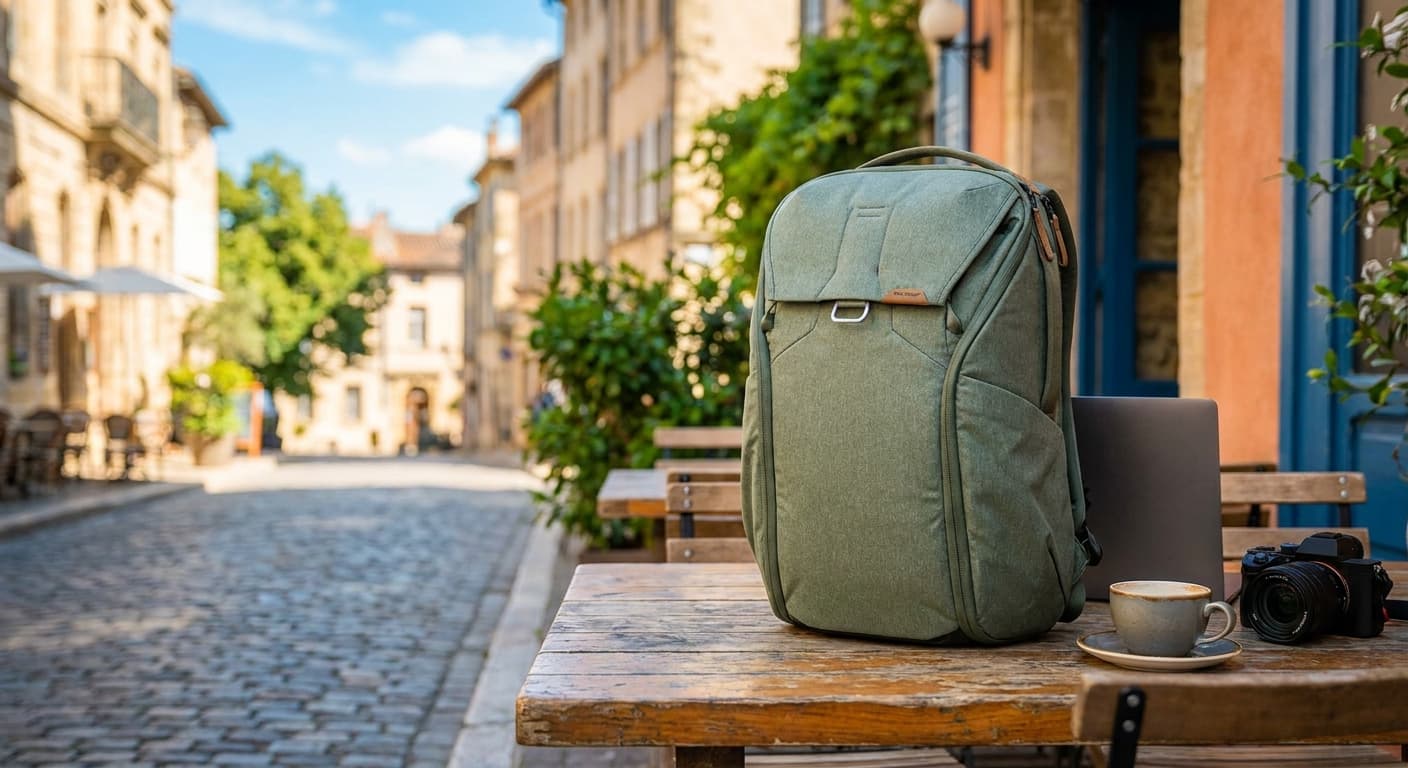
Peak Design Travel Backpack 45L
$299.95The Peak Design Travel Backpack 45L is an exceptionally versatile and durable travel system ideal for digital nomads, photographers, and serious one-bag travelers. Its expandable design and seamless integration with Peak Design's ecosystem justify its premium price for those who need maximum adaptability and organization.
Overall Score
| Peak Design Travel Backpack 45L Summary | |
|---|---|
| Product Name | Peak Design Travel Backpack 45L |
| Key Features | Expandable from 35L to 45L, multiple access points (front, back, side), weatherproof 400D nylon shell, stowable harness system, modular packing system compatibility. |
| Pricing Range | Premium ($299+) |
| Pros | Incredible versatility, exceptional build quality, thoughtful design details, seamless integration with Peak Design ecosystem, carry-on compliant. |
| Cons | High price point, can get heavy when fully packed, boxy aesthetic isn't for everyone, best features require buying more accessories. |
| Overall Rating | 8.8 / 10 |
| Best For | Digital nomads, one-bag travelers, and photographers who value modularity, organization, and premium design. |
| Call to Action | 👉 Check Latest Price on Peak Design |
Quick Verdict: Is The Peak Design Travel Backpack 45L Worth Your Money?
Yes, the Peak Design Travel Backpack 45L is absolutely worth it for the right type of traveler. If you are a digital nomad, a dedicated one-bag traveler, or a photographer who needs a single, hyper-versatile system to adapt to any trip, this backpack is a game-changer. Its genius lies in its expandability - seamlessly shifting from a 35L daypack to a 45L international carry-on - and its deep integration with Peak Design's packing cubes and camera cubes. The build quality is exceptional, featuring a weatherproof 400D nylon shell and robust hardware that justifies its premium price with long-term durability and a lifetime warranty.
However, it's not for everyone. If you're a budget-conscious traveler, the high initial cost (plus the added expense of essential accessories) will be a major hurdle. Ultralight backpackers will find it too heavy, as its robust construction and feature set come with a weight penalty. And if you prefer a simpler, less-structured bag for casual vacations, the highly organized, almost rigid nature of this pack might feel like overkill. In short: buy it for its unparalleled modularity and build quality; skip it if price or weight are your primary concerns.
See Full Specs & User Reviews on Peak DesignWhat is the Peak Design Travel Backpack 45L?
The Peak Design Travel Backpack 45L is a highly modular and versatile travel system designed to be the one and only bag a traveler needs. It's not just a backpack; it's the centerpiece of a comprehensive ecosystem of packing tools, camera cubes, and pouches created by Peak Design, a company renowned for its innovative, user-centric design philosophy. The bag's core promise is adaptability. It meets international carry-on size requirements in its default 35L compressed mode, can be used as a 30L daypack by cinching down further, and expands to a full 45L to maximize packing space for longer journeys. This chameleon-like ability to change size is its defining characteristic, setting it apart from most fixed-volume travel bags on the market.
Born from a massively successful Kickstarter campaign, the brand's DNA is rooted in solving real-world problems for creators and travelers. This backpack is the culmination of that ethos. It features a clean, minimalist aesthetic but is packed with an almost overwhelming number of features: dual side-access zippers, a full back-panel opening for easy packing, a stowable harness system for checking the bag, a protected laptop and tablet sleeve, and countless subtle pockets and attachment points. The entire system is built around a weatherproof, 100% recycled 400D nylon canvas shell, ensuring your gear stays protected from the elements.
A real-world example of its utility is a multi-stage trip. Imagine flying to Lisbon for a week-long work trip. You pack it out to 45L to fit all your clothes, tech, and gear, carrying it on the plane. Once you arrive at your Airbnb, you unpack your main clothes using Peak Design's packing cubes, compress the bag down to its 35L mode, and use it as your daily commuter bag to go to co-working spaces. It eliminates the need to pack a separate, flimsy daypack, providing a single, robust solution for the entire journey. This integrated approach, where the bag adapts to the context of your travel, is what makes it more than just a piece of luggage.
Compared to a traditional hiking backpack like an Osprey, the Peak Design bag sacrifices some contoured, long-hike comfort for superior organization, accessibility, and urban aesthetics. It's designed for the modern traveler who moves through airports, train stations, and city streets, not for someone trekking through the wilderness for days on end. Its primary function is to serve as a mobile base of operations for your life on the road, especially if that life involves carrying expensive electronics or camera equipment.
Is the Peak Design Travel Backpack 45L Worth It in 2026?
Yes, the Peak Design Travel Backpack 45L remains an excellent investment and is arguably more relevant than ever in 2026. While the initial design has been on the market for a few years, its core principles of modularity, durability, and versatility have not been surpassed. In an era of fluctuating airline carry-on restrictions and the rise of flexible, long-term travel, a bag that can adapt its size and function on the fly is incredibly valuable. Its timeless design and bombproof construction mean it hasn't become dated; instead, it has solidified its reputation as a modern classic in the travel gear space.
The key reason for its continued relevance is the ecosystem. Peak Design has continued to refine and expand its line of packing cubes, camera cubes, and tech pouches, all of which integrate flawlessly with the Travel Backpack. This means the bag you buy today is part of a growing and improving system. Unlike a standalone bag from a competitor, which might be replaced by a new model in a year, the Peak Design backpack is a platform. This long-term thinking is also reflected in their lifetime warranty, which adds significant value and peace of mind, making the high initial price tag much more palatable when amortized over years, or even decades, of use.
Consider this scenario: you're planning a 3-month trip through Southeast Asia. Your needs will vary wildly. You'll need maximum capacity for the long-haul flights, but a smaller, more nimble bag for zipping around on a scooter in Chiang Mai. With the Travel Backpack, you can pack it to its 45L gills for the flight, then remove a packing cube of clothes at your hotel and compress the bag to 35L for daily exploration. This adaptability is something newer, flashier bags often fail to replicate with the same elegance. They might offer more pockets or a new material, but few can match this fundamental versatility.
When compared to newer competitors that have emerged since its launch, the Peak Design bag holds its own. While brands like Aer and Nomatic have released fantastic bags, they often focus on a specific niche - excelling at office-to-gym carry or pure urban travel. The Peak Design Travel Backpack remains one of the few that truly tries to be a jack-of-all-trades, and largely succeeds. It's a fantastic photography bag, a capable one-bag travel solution, and a functional daily carry all in one. For the traveler who refuses to be pigeonholed, its value proposition in 2026 is as strong, if not stronger, than the day it was released.
What Are the Key Features of the Peak Design Travel Backpack 45L?
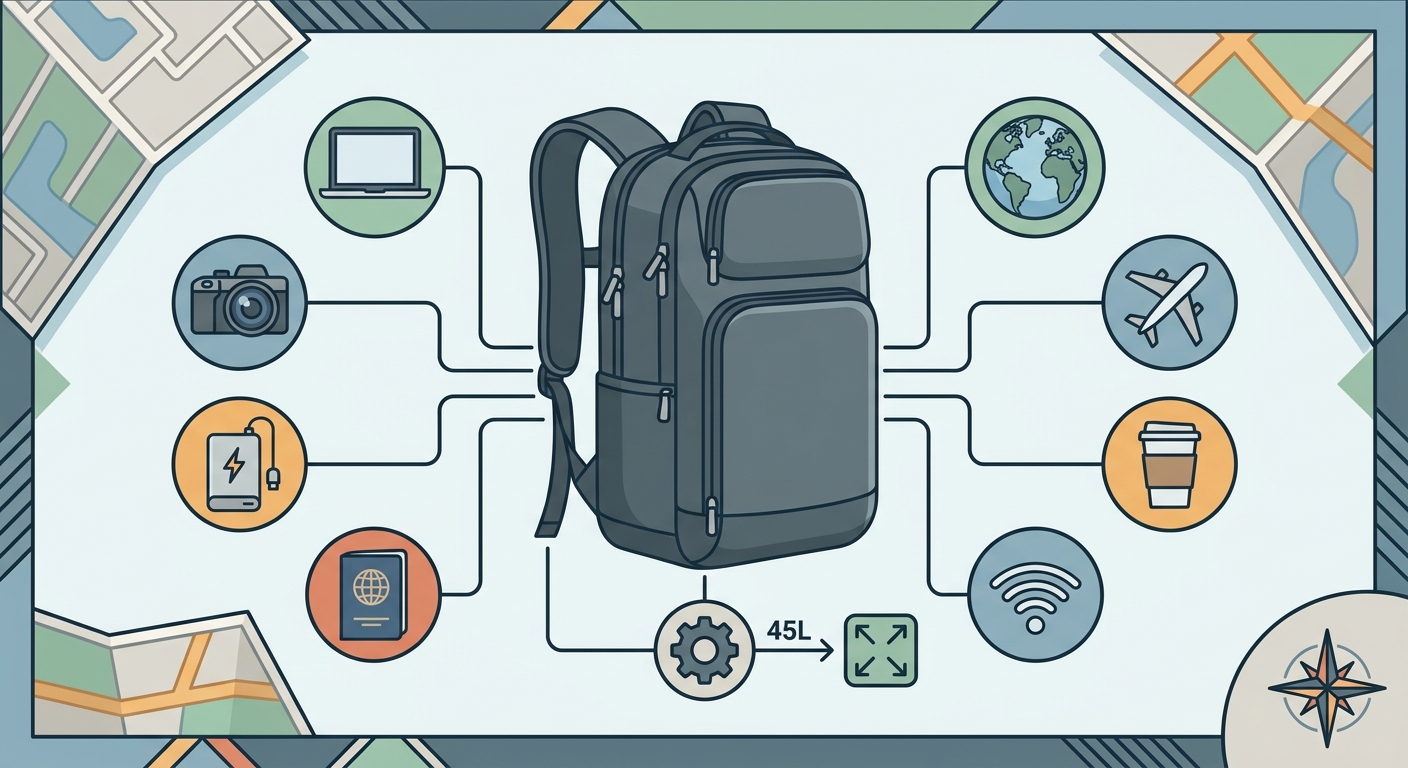
The Peak Design Travel Backpack 45L is defined by a suite of intelligently designed features that prioritize access, modularity, and protection. Its standout feature is the expandable and compressible design. Using a clever system of expansion zippers and compression snaps, the bag can be configured to 30L, 35L (standard carry-on), or a cavernous 45L. This isn't just a gimmick; it fundamentally changes how you use the bag. You can pack for a week-long trip in 45L mode, and upon arrival, compress it down for use as a daypack without it feeling saggy or oversized. This feature alone replaces the need for a separate, packable day bag for many travelers.
Next is the unparalleled access system. Unlike traditional top-loading backpacks, this bag offers multiple ways to get to your gear. The main compartment is accessible via a full clamshell-style rear zipper, allowing you to pack and see everything like an open suitcase. This is a godsend for organization. Additionally, dual side zippers provide quick access to the main compartment, perfect for grabbing a camera or jacket without laying the bag flat. Finally, a large front-access panel opens to a meticulously organized admin section for smaller items, notebooks, and chargers. This multi-access approach means your most needed items are never buried at the bottom.
The stowable harness system is another critical feature for serious travelers. The shoulder straps and hip belt can be quickly unclipped and tucked away behind a magnetically sealed back panel. This transforms the backpack into a clean, snag-free duffel bag, perfect for checking on a flight or stowing in an overhead bin on a crowded train. The handles on the top, sides, and back make it easy to carry in this mode. It's a small detail that makes the airport experience significantly smoother and more professional.
Finally, the bag's true potential is unlocked through its integration with the Peak Design ecosystem. The interior is specifically sized and designed to work with their Camera Cubes and Packing Cubes. These accessories aren't just thrown in; they anchor into the bag via C-clips, creating a rigid, organized internal structure. For a photographer, this means you can configure the bag with a medium camera cube for your gear and a packing cube for your clothes, with both held securely in place. This modularity allows you to customize the bag's layout for every single trip, a level of personalization that few other travel backpacks can offer.
Real-World Performance and User Experience
In real-world use, the Peak Design Travel Backpack 45L performs exceptionally well as a versatile travel companion, though it has a distinct personality that takes some getting used to. Its structured, somewhat rigid form is a departure from softer travel bags. Initially, this can feel bulky, but you quickly appreciate how it protects your gear and stands up on its own, making it easy to pack and access. The user experience is heavily defined by its organization-first approach. If you are someone who loves to have a specific place for everything, this bag is a dream. If you prefer to just stuff and go, you might find its compartmentalization restrictive.
Let's walk through a typical travel day. At the airport, the bag shines. In its 35L compressed mode, it complies with even the strictest budget airline carry-on sizers. The quick-access laptop compartment at the back makes breezing through security simple - no need to open the main compartment. The stowable straps are a brilliant touch. When boarding a packed flight, you can quickly tuck them away, converting it into a duffel that slides easily into the overhead bin without straps catching on everything. The numerous grab handles mean you can pull it out from any angle. This thoughtful design significantly reduces the small stresses of air travel.
However, comfort is a more nuanced topic. For a travel-focused bag, the harness system is very good, with well-padded shoulder straps and a functional, if not overly cushioned, hip belt. Carrying it fully loaded to 45L (around 15kg / 33lbs) through a large airport like Amsterdam Schiphol is manageable. The load lifters help pull the weight closer to your back. That said, it is not a hiking backpack. It doesn't have the advanced ventilation channels or ergonomically curved frame of an Osprey. After an hour of continuous wear with a heavy load, you will feel it. It's designed for transit - from taxi to terminal, terminal to hotel - not for trekking the Annapurna Circuit. For its intended purpose, the comfort is more than adequate.
The bag's durability is another high point in its performance. The 400D recycled nylon shell is tough as nails. After being dragged across floors, stuffed into bus luggage holds, and caught in a few rain showers, it shows minimal wear and tear. The weatherproof zippers add a crucial layer of confidence; you don't panic if you have to walk a few blocks in a downpour to your hotel. This robust build is what you're paying for. It feels less like a disposable piece of luggage and more like a long-term piece of gear, similar to a high-quality tool or camera. The trade-off is weight; at over 2kg (4.5 lbs) empty, it's one of the heavier carry-on bags available, a critical factor for travelers who need to meet strict airline weight limits.
Detailed Breakdown: Pros and Cons
Every product has its trade-offs, and the Peak Design Travel Backpack 45L is no exception. Its strengths are significant, but its weaknesses are equally important to consider before making such a premium investment. Understanding both sides is key to determining if it's the right bag for you.
Pros of the Peak Design Travel Backpack
- Unmatched Versatility: This is the bag's single greatest strength. The ability to expand from a 30L daypack to a 45L travel hauler means it can adapt to almost any trip. A user might take it on a weekend trip to New York in 35L mode, then expand it to 45L for a two-week trip to Japan a month later. This eliminates the need to own multiple travel bags, simplifying your gear closet and providing a consistent packing experience.
- Exceptional Build Quality and Durability: The use of a weatherproof, 100% recycled 400D nylon canvas shell, oversized and weather-sealed zippers, and reinforced stress points means this bag is built to last. It feels substantial and reliable in a way that cheaper bags simply do not. This is backed by Peak Design's lifetime warranty, making the high cost feel more like a long-term investment in gear that won't fail you mid-trip.
- Intelligent, Accessible Design: The multiple access points (rear, front, and dual side) are a masterclass in functional design. A photographer can swing the bag around on one shoulder to grab their camera through the side access panel without ever putting the bag down. The full rear clamshell opening makes packing and finding items effortless, just like a traditional suitcase.
- Seamless Ecosystem Integration: For those already invested in or planning to use Peak Design's accessories, this bag is the perfect hub. The way Camera Cubes and Packing Cubes clip securely into place creates a level of organization that is simply not possible with third-party accessories in a different bag. It transforms a potentially chaotic interior into a neat, modular system.
Cons of the Peak Design Travel Backpack
- High Price Point: There's no getting around it - this is an expensive backpack. At around $300, it's a significant initial outlay. Furthermore, to unlock its full potential, you'll likely want to purchase at least a few of their proprietary packing cubes or a camera cube, which can easily add another $100-$150 to the total cost. This puts it out of reach for many budget travelers.
- Weight: At 2.05 kg (4.52 lbs) empty, it is one of the heavier carry-on backpacks on the market. This is a direct trade-off for its durable materials and feature-rich design. For travelers on airlines with strict 7kg carry-on weight limits (common in Asia and Australia), this bag can consume nearly a third of your allowance before you've even packed anything.
- Boxy and Stiff Structure: The bag's semi-rigid structure is great for protection and organization, but it can feel bulky and less comfortable than more contoured backpacks. It doesn't mold to your back in the same way a hiking-style bag does. Its rectangular shape, while efficient for packing, can also look and feel quite large on smaller-framed individuals.
- Over-engineered for Some: For a casual traveler taking one or two trips a year, the sheer number of features, straps, and zippers can be overwhelming. The complexity that a power user loves might feel like unnecessary clutter to someone who just wants a simple bag to carry their clothes from Point A to Point B.

Who Should Use the Peak Design Travel Backpack 45L?
This backpack is not a one-size-fits-all solution; it is a specialized tool designed for specific types of users who will deeply appreciate its unique feature set. The ideal customer is someone who values organization, modularity, and premium build quality, and is willing to pay for it. We can break down the primary user profiles into three distinct groups.
1. The Digital Nomad or Remote Worker
For a digital nomad, their backpack is their home and office. The Peak Design Travel Backpack 45L excels in this role. The protected, quick-access laptop and tablet sleeve is essential for moving through airports and co-working spaces. The front admin panel provides a dedicated space for chargers, cables, hard drives, and notebooks, keeping the 'office' separate from the 'closet'. A nomad might spend a month in Bali, living out of this bag. They can use the 45L capacity for the initial journey, then compress it down for daily use, carrying their laptop, a water bottle, and a jacket to a cafe to work. The bag's sleek, professional aesthetic fits in perfectly in an urban environment, unlike a brightly colored hiking pack. The durability means they can trust it to protect their livelihood through months of continuous travel.
2. The 'One-Bag' Maximalist Traveler
This is the traveler who wants to carry everything they need for a multi-week trip in a single carry-on, but doesn't want to compromise on what they bring. They aren't ultralight packers; they are efficient packers. The 45L expanded capacity is key for this user. It's one of the largest carry-on compliant bags available, allowing them to pack that extra pair of shoes or a nicer jacket. They will leverage the full ecosystem, using a small packing cube for underwear, a medium one for shirts and pants, and a shoe pouch. The clamshell opening allows them to live directly out of the bag in a hostel or hotel room without needing to fully unpack. For them, the bag is a mobile wardrobe, perfectly organized and accessible.
3. The Hybrid Photographer/Traveler
This is arguably the user Peak Design had most in mind. This person's travels are often centered around photography, but they are not on a dedicated professional shoot. Think of an amateur photographer on a two-week vacation to Iceland. They need to carry their camera body, 2-3 lenses, a tripod, and filters, but also all their clothes and travel essentials. The Travel Backpack's integration with Peak Design's Camera Cubes is the killer feature here. They can slot a Medium Camera Cube into the bottom half of the bag, accessible via the side zippers for quick shooting. The top half can be used for clothes and toiletries. This creates a perfect hybrid camera-and-travel bag, eliminating the need to carry a separate, dedicated camera bag, which often screams "tourist" and can be a target for theft.
Who Should NOT Buy the Peak Design Travel Backpack 45L?
While the Peak Design Travel Backpack is an exceptional piece of gear, its specific design and high price point make it an unsuitable choice for several types of travelers. Being honest about its limitations is crucial for making an informed purchase. If you fall into one of the following categories, you would likely be better served by a different, more specialized backpack.
1. The Ultralight Backpacker or Minimalist
If your travel philosophy is centered on carrying the absolute minimum weight, this is not the bag for you. Weighing over 2 kg (4.5 lbs) empty, the Travel Backpack is a non-starter for ultralight enthusiasts. This type of traveler prioritizes a low base weight above all else, often using frameless or minimalist packs that weigh under 1 kg. The Peak Design's robust materials, extensive padding, and complex feature set are the very things an ultralight traveler seeks to avoid. For them, every gram counts, especially when facing strict 7kg airline carry-on limits. A better alternative would be a bag from a brand like Gossamer Gear or ULA Equipment, which offer far lighter, albeit less feature-rich and less protective, options.
2. The Budget-Conscious Traveler
The premium price tag is the single biggest barrier to entry. For students, backpackers on a shoestring budget, or anyone who sees travel gear as purely functional rather than a long-term investment, the cost is difficult to justify. When a perfectly functional and well-regarded backpack like the Osprey Farpoint 40 can often be found for half the price, the value proposition of the Peak Design bag diminishes. The added cost of the proprietary packing cubes to truly maximize its functionality further widens this gap. A budget traveler could use the $150-$200 they save to fund an extra week on the road, which is a far more compelling use of their money.
3. The Casual Vacationer
If your travel consists of one or two week-long beach vacations a year where you check a large rolling suitcase, the complexity of the Peak Design Travel Backpack is complete overkill. This user doesn't need a stowable harness, modular camera cube integration, or multiple access points. They need a simple bag to hold a book, a tablet, and a change of clothes for the plane. The intricate design and organizational features would go unused and could even be confusing. A simple, less expensive daypack or a basic carry-on from a brand like SwissGear or JanSport would be a much more practical and cost-effective choice for this type of traveler. The Peak Design bag is a high-performance tool, and using it for a simple vacation is like using a professional racing bike to ride to the corner store.
Comparison with Top Competitors: Peak Design vs. The World
The travel backpack market is fiercely competitive, and while the Peak Design 45L is a top contender, it's essential to see how it stacks up against its main rivals. The best bag for you depends entirely on your priorities, whether that's aesthetics, comfort, price, or pure organizational power. We'll compare it against three other giants in the space: the Nomatic Travel Pack, the Aer Travel Pack 3, and the Osprey Farpoint 40.
Peak Design Travel Backpack 45L vs. Nomatic Travel Pack
The Nomatic Travel Pack is perhaps the Peak Design's closest competitor in terms of a feature-rich, tech-focused design. Nomatic is known for its incredible organization, with a pocket for literally everything. The main difference lies in their core philosophy. The Nomatic bag is a master of organization for the tech professional, with dedicated, labeled pockets for your phone, charger, keys, etc. However, it offers less open, cavernous space. The Peak Design, by contrast, provides a large, adaptable main compartment that you customize with its modular cubes. If you want pre-defined organization for your tech gadgets, Nomatic wins. If you want flexible, customizable space for a mix of gear (like cameras and clothes), Peak Design is superior. Aesthetically, Nomatic has a very stark, minimalist, and professional look, while Peak Design is more of a tech-wear/urban explorer vibe. The Nomatic's harness system is also generally considered less comfortable for heavy loads compared to the Peak Design's more substantial straps and hip belt.
Peak Design Travel Backpack 45L vs. Aer Travel Pack 3
Aer has a cult following for its sleek, urban aesthetic and bombproof build quality, often utilizing ballistic nylon and high-end hardware. The Aer Travel Pack 3 is a direct competitor, but it's less of a chameleon. It's a fixed 35L bag, so it lacks the expandability of the Peak Design. Its strength is its brilliant compartmentalization, particularly the separate, ventilated shoe compartment, which is a fantastic feature for gym-goers or anyone who wants to keep dirty shoes separate. The Aer bag feels more like the ultimate weekend warrior bag, perfect for short trips and daily carry. The Peak Design feels more like a dedicated, long-term travel system. If your trips are typically 3-5 days long and you value a clean aesthetic and a dedicated spot for your shoes, the Aer Travel Pack 3 is an amazing choice. If you need the flexibility to pack for a 3-week trip, the Peak Design's extra 10L of expansion space makes it the clear winner.
Peak Design Travel Backpack 45L vs. Osprey Farpoint 40
This is a classic matchup of new-school tech design versus old-school backpacker comfort. The Osprey Farpoint 40 has been a backpacker's favorite for years for one primary reason: its harness system is superb. Drawing on Osprey's decades of experience in hiking packs, the Farpoint is significantly more comfortable to carry for long periods with a heavy load. It features a proper internal frame and a well-ventilated back panel. However, it lacks the organizational prowess, tech-friendly features, and quick access of the Peak Design. It's essentially one large compartment with a laptop sleeve. Packing it requires a more traditional 'stuff and roll' approach. If your travel involves long walks between hostels or you prioritize carrying comfort above all else, the Osprey Farpoint 40 is the better, and cheaper, option. If your travel is more urban and involves protecting expensive electronics and camera gear, the Peak Design's superior organization and access are worth the trade-off in comfort.
| Feature | Peak Design Travel Backpack 45L | Nomatic Travel Pack | Aer Travel Pack 3 | Osprey Farpoint 40 |
|---|---|---|---|---|
| Capacity | 30L / 35L / 45L (Expandable) | 20L / 30L (Expandable) | 35L (Fixed) | 40L (Fixed) |
| Best For | Versatility, Photographers | Tech Organization, Business | Weekend Trips, Urban Carry | Backpacking, Comfort |
| Key Feature | Modular Ecosystem & Expansion | Hyper-Specific Pockets | Separate Shoe Compartment | Superior Harness System |
| Laptop Sleeve | Yes, up to 16" | Yes, up to 16" | Yes, up to 16" | Yes, up to 15" |
| Price Point | Premium | Premium | Mid-High | Mid-Range |
Pricing and Value Analysis: Is The High Cost Justified?
The Peak Design Travel Backpack 45L comes with a premium price tag, typically retailing for around $299.95 USD. This places it firmly in the upper echelon of travel backpacks, and for many, this cost is the single biggest point of hesitation. So, is it truly worth the money? The answer depends on how you define value. If value is simply the lowest price for a functional product, then no, it is not worth it. There are many cheaper bags that will hold your clothes. However, if value is defined by longevity, performance, versatility, and user experience, then the price becomes far more justifiable.
First, consider the total cost of ownership. The bag is backed by Peak Design's legendary lifetime warranty. This is not a limited warranty with pages of exceptions; they stand behind their products. If a zipper fails or a seam rips five years from now, they will repair or replace it. This means you are potentially buying your last travel backpack. When you compare the $300 cost to buying a new $150 backpack every 3-4 years, the long-term financial picture looks much better. This bag is constructed with materials designed to withstand years of abuse, from its 400D weatherproof shell to the robust UltraZips.
Second, we must analyze the value of its versatility. A traveler might otherwise need to own a 30L daypack for daily use, a 40L bag for weekend trips, and a larger bag for international travel. The Peak Design backpack can capably fill all three of these roles. By consolidating your gear into one adaptable system, you save money and space. A real-world scenario is the digital nomad who needs a professional-looking bag for client meetings but also a rugged bag for weekend excursions. This backpack transitions between those roles seamlessly. The value here is in its ability to reduce the amount of gear you need to own and manage.
However, it is crucial to factor in the cost of the ecosystem. To truly unlock the bag's organizational potential, you will want to invest in Peak Design's Packing Cubes and potentially a Tech Pouch or Camera Cube. A set of packing cubes can cost an additional $40-$100. While they are exceptionally well-made (with features like a compression zipper and a separate compartment for dirty laundry), this 'hidden cost' must be part of your calculation. When fully kitted out, the total system cost can approach $400-$500. This is a significant investment, but for the target user - the serious traveler, photographer, or digital nomad - the performance, protection, and organizational efficiency it provides can be a worthwhile expense that pays dividends in convenience and peace of mind on every single trip.
Final Verdict: A Near-Perfect System for the Modern Traveler
After extensive use and analysis, the Peak Design Travel Backpack 45L earns its place as one of the best and most innovative travel bags on the market. It is more than just a backpack; it is a meticulously engineered travel system designed for those who live and work on the move. Its genius lies in its profound adaptability. The ability to be a sleek 35L carry-on one moment and a spacious 45L gear-hauler the next is a feature that fundamentally changes how you pack and travel. This versatility, combined with its rugged, weatherproof construction and lifetime warranty, creates a compelling, long-term value proposition that helps to soften the blow of its high initial price.
The backpack is an organizer's dream, offering thoughtful access points and deep integration with its ecosystem of packing and camera cubes. For photographers and digital nomads, this level of customizable organization is a game-changer, providing unparalleled protection and accessibility for expensive equipment. It's a bag that feels considered in every detail, from the stowable straps that simplify airport handling to the plethora of grab handles and hidden pockets. It's clear that this bag was designed by people who actually travel.
However, the pursuit of perfection leads to trade-offs. Its robust build makes it heavy, which can be a deal-breaker for those facing strict airline weight limits. The structured, boxy design prioritizes packing efficiency over contoured, long-haul comfort, making it less ideal for journeys that involve extensive walking. And, of course, the premium price - especially when factoring in the essential accessories - places it out of reach for budget-conscious travelers. It's a specialized tool, and for the casual vacationer, it's simply too much bag. But for its intended audience - the dedicated one-bag traveler, the mobile creative professional, the digital nomad - the Peak Design Travel Backpack 45L is not just a good choice; it's a transformative piece of gear that streamlines, organizes, and elevates the entire travel experience.
Ready to Upgrade Your Travels? Get the Peak Design 45L Backpack Today!Frequently Asked Questions
Yes, the Peak Design Travel Backpack 45L is designed to be carry-on compliant for most airlines worldwide when in its default 35L compressed mode. Its dimensions in this configuration are typically within the standard 22 x 14 x 9 inch limit. In its fully expanded 45L mode, it may exceed the size restrictions for some stricter airlines, especially budget carriers. The best practice is to pack it to 45L for maximum capacity and then use the compression straps to cinch it down to a compliant size if needed. The stowable straps also help it fit more easily into overhead bins.
No, the dedicated laptop sleeve in the Peak Design Travel Backpack 45L is officially designed to fit up to a 16-inch laptop, such as a MacBook Pro. While it is a spacious and well-protected compartment, a larger 17-inch laptop will likely be too wide or tall to fit comfortably and safely. Attempting to force a larger device could put stress on the zippers and fail to provide adequate protection for the laptop's corners. For users with 17-inch laptops, it is crucial to check the exact dimensions of your device against the compartment's specs before purchasing.
The Peak Design Travel Backpack offers good comfort for a travel bag, but it is not a dedicated hiking pack. It features padded shoulder straps, a sternum strap, and a functional hip belt that helps distribute weight effectively for transit through airports or city streets. However, for continuous wear over several hours with a heavy load, it can become less comfortable than a pack with an advanced suspension and ventilation system, like those from Osprey. Its comfort is more than adequate for its intended use case of moving between transport hubs and accommodations, but it is not designed for long-distance trekking.
While you don't technically need to buy Peak Design's proprietary packing cubes, doing so unlocks the backpack's full potential. The bag's internal dimensions are specifically designed to perfectly fit their cubes, and features like the C-clip attachment system allow you to anchor them inside for superior organization. This prevents gear from shifting around and creates a more structured pack. You can certainly use other third-party packing cubes, but they won't fit as precisely or integrate with the bag's features. To get the full, intended experience and maximum organizational efficiency, investing in at least one or two of their packing cubes is highly recommended.
Peak Design offers one of the best lifetime warranties in the industry, covering any defects in materials or workmanship for the functional life of the product. This includes issues like broken zippers, torn fabric from a faulty seam, or hardware failure. It does not cover cosmetic wear and tear from normal use or accidental damage. The process is generally straightforward, and the company has a strong reputation for standing behind its products. This warranty adds significant long-term value to the purchase, providing peace of mind that your substantial investment is protected against manufacturing flaws for years to come.