Norse Atlantic vs PLAY (2026): The Ultimate Long-Haul Budget Airline Battle
Norse Atlantic Airways
Norse Atlantic offers a superior long-haul experience with its comfortable Boeing 787 Dreamliners and direct routes, making it the best choice for travelers who value comfort and convenience.
Overall Score
Top Picks
Norse Atlantic Airways
Norse Atlantic wins for its superior comfort, direct routes, and better in-flight amenities. It's the best all-around budget option for most long-haul travelers.
PLAY airlines
PLAY is the champion for ultra-budget minimalists and those seeking an Iceland stopover. Its rock-bottom base fares offer unbeatable value if you can travel light.
Comparison
Design
Performance
Value for Money
Ease of Use
Durability
Features
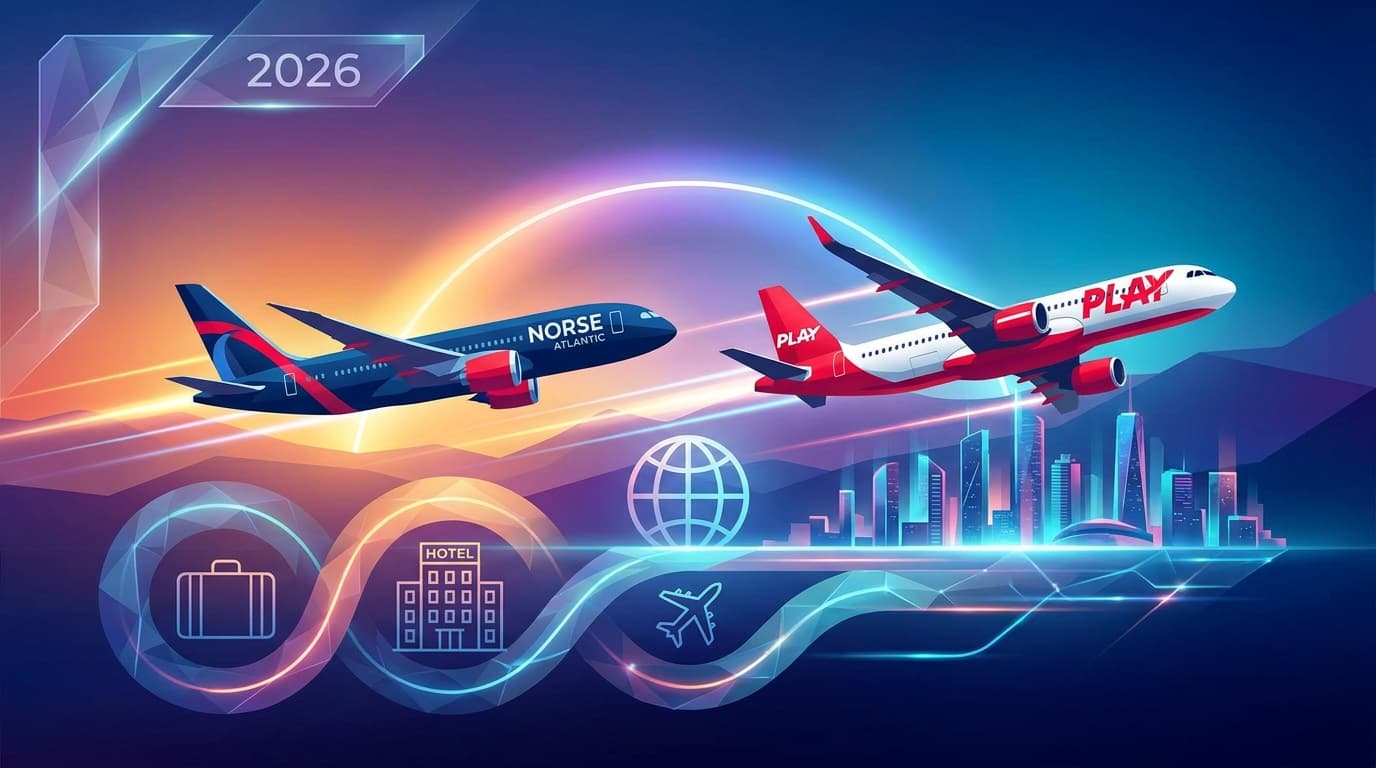
The landscape of transatlantic travel has been revolutionized by a new wave of low-cost carriers, promising to connect continents without emptying your wallet. At the forefront of this movement are two ambitious airlines: Norse Atlantic Airways and PLAY airlines. Both offer tantalizingly low base fares, but they operate on fundamentally different models, offering distinct experiences and cost structures. Choosing the right one is the key to unlocking true value and avoiding unexpected fees that can quickly erode your savings.
This comprehensive, data-driven comparison will dissect every facet of the Norse Atlantic and PLAY experience. We'll go far beyond the advertised ticket price to analyze the aircraft you'll fly on, the true cost of baggage, the in-flight comfort, route networks, and ultimately, which airline offers the superior value proposition for different types of travelers. Whether you're a minimalist backpacker or a family planning a European vacation, this guide will provide the clarity you need to make the smartest choice.
| Feature | Norse Atlantic Airways | PLAY airlines |
|---|---|---|
| Primary Aircraft | Boeing 787 Dreamliner | Airbus A320neo Family (A320/A321) |
| Operating Model | Point-to-point long-haul | Hub-and-spoke via Reykjavik (KEF), Iceland |
| In-Flight Entertainment | Seatback screens available (some content may require payment) | None (BYO device) |
| Wi-Fi | Available for a fee on most aircraft | Not available |
| Base Fare Inclusion | One small underseat item (personal item) | One small underseat item (personal item) |
| Carry-on Bag Policy | Paid ancillary or included in higher fare bundles | Paid ancillary or included in higher fare bundles |
| Typical Routes | USA (NYC, LAX, FLL) to Europe (London, Paris, Oslo, Berlin) | USA (BWI, BOS, SWF) to Europe via Iceland |
| Stopover Program | No | Yes, in Iceland for up to 10 days |
| Best For | Travelers prioritizing comfort on a modern long-haul jet and direct routes. | Ultra-budget travelers, minimal packers, and those wanting an Iceland stopover. |
| Pros | More comfortable Dreamliner aircraft, direct flights, seatback entertainment option. | Often the absolute lowest base fares, Iceland stopover opportunity, modern fuel-efficient fleet. |
| Cons | Base fares can be slightly higher, ancillary fees can add up quickly. | No IFE or Wi-Fi, all flights connect in Iceland, less comfortable aircraft for long-haul. |
| Overall Rating | 8.5/10 | 7.8/10 |
| Check Flights on Norse | Check Flights on PLAY |
Quick Verdict: Which is Better, Norse Atlantic or PLAY?
For most travelers seeking a balance of cost and comfort on long-haul transatlantic flights, Norse Atlantic Airways is the better choice. Its use of the Boeing 787 Dreamliner provides a demonstrably superior in-flight experience with better cabin pressure, larger windows, and the option for seatback entertainment, which makes a significant difference on a 7-9 hour journey. While its base fares may sometimes be marginally higher than PLAY's, Norse's direct, point-to-point routes save valuable time and eliminate the hassle of a connection. When ancillary costs for a standard carry-on and checked bag are factored in, Norse's fare bundles often present a more straightforward and competitive overall price.
However, PLAY airlines excels for two specific types of travelers. First, the ultra-budget-conscious minimalist who can travel with only a small personal item will find PLAY's rock-bottom base fares unbeatable. Second, travelers who are intrigued by the prospect of visiting Iceland will find PLAY's hub-and-spoke model a fantastic opportunity for a multi-day stopover at no extra airfare cost. If you fit into one of these categories and are prepared for a no-frills experience with no entertainment and a mandatory connection, PLAY offers phenomenal value.
Choose Norse Atlantic if: You prioritize comfort, prefer a direct flight, and want the option of in-flight entertainment. It's the better all-around low-cost long-haul product.
Choose PLAY if: Your absolute top priority is the lowest possible base fare, you are an expert light packer, or you want to add an Icelandic adventure to your trip.
Norse Atlantic Airways: Overall Rating 8.5/10
- Aircraft & Comfort: 9.5/10
- Route Network & Performance: 8.5/10
- Value for Money: 8.0/10
- Booking & Ease of Use: 8.5/10
- In-Flight Experience & Features: 8.0/10
Summary: Norse Atlantic wins on passenger experience, leveraging the purpose-built long-haul Dreamliner to offer a more comfortable journey. Its direct routes are a major advantage for time-sensitive travelers.
PLAY airlines: Overall Rating 7.8/10
- Aircraft & Comfort: 7.5/10
- Route Network & Performance: 8.0/10
- Value for Money: 8.5/10
- Booking & Ease of Use: 8.0/10
- In-Flight Experience & Features: 7.0/10
Summary: PLAY is the undisputed champion of the low base fare and offers incredible value through its Iceland stopover program. The trade-off is a more basic in-flight product and a mandatory connection.
What are the Key Differences Between Norse and PLAY?
The single most significant difference between Norse Atlantic and PLAY airlines lies in their choice of aircraft and the resulting operational model. Norse Atlantic exclusively flies the Boeing 787 Dreamliner, a wide-body jet designed for long-haul comfort, while PLAY uses the Airbus A320neo family, a narrow-body jet typically used for shorter routes. This core distinction dictates everything from in-flight experience and route structure to overall passenger comfort.
Norse's Dreamliners allow them to operate direct, point-to-point routes between major hubs in the US and Europe. A flight from New York to London is a single, non-stop journey. The aircraft itself offers benefits like higher humidity and lower cabin pressure altitude, which can reduce jet lag, along with larger windows and more overhead bin space. Furthermore, Norse provides seatback entertainment screens, a feature entirely absent on PLAY. This makes Norse a true low-cost, long-haul carrier in the traditional sense.
In contrast, PLAY operates a hub-and-spoke model with every single flight connecting through their base at Keflavík International Airport (KEF) in Iceland. A journey from Boston to Berlin on PLAY is actually two separate flights: Boston to Reykjavik, and then Reykjavik to Berlin. While their Airbus A321neo aircraft are modern, fuel-efficient, and perfectly safe, they are narrow-body planes with a 3-3 seating configuration. They lack the spacious feel of a wide-body jet and are not equipped with any in-flight entertainment or Wi-Fi. The upside of this model is the unique ability to add an Iceland stopover to your trip, effectively getting two destinations for the price of one.
Beyond the hardware, their ancillary fee structures and fare bundles also differ. Norse tends to push customers towards its 'Classic' or 'Flextra' bundles, which include bags and meals, often providing good value. PLAY's model is more aggressively à la carte, encouraging passengers to stick with the bare-bones 'Basic' fare and only add what is absolutely necessary. This can lead to PLAY having a lower entry price, but Norse can quickly become the cheaper option once a carry-on and checked bag are added to the equation. These foundational differences in fleet and strategy create two very different value propositions for the transatlantic traveler.
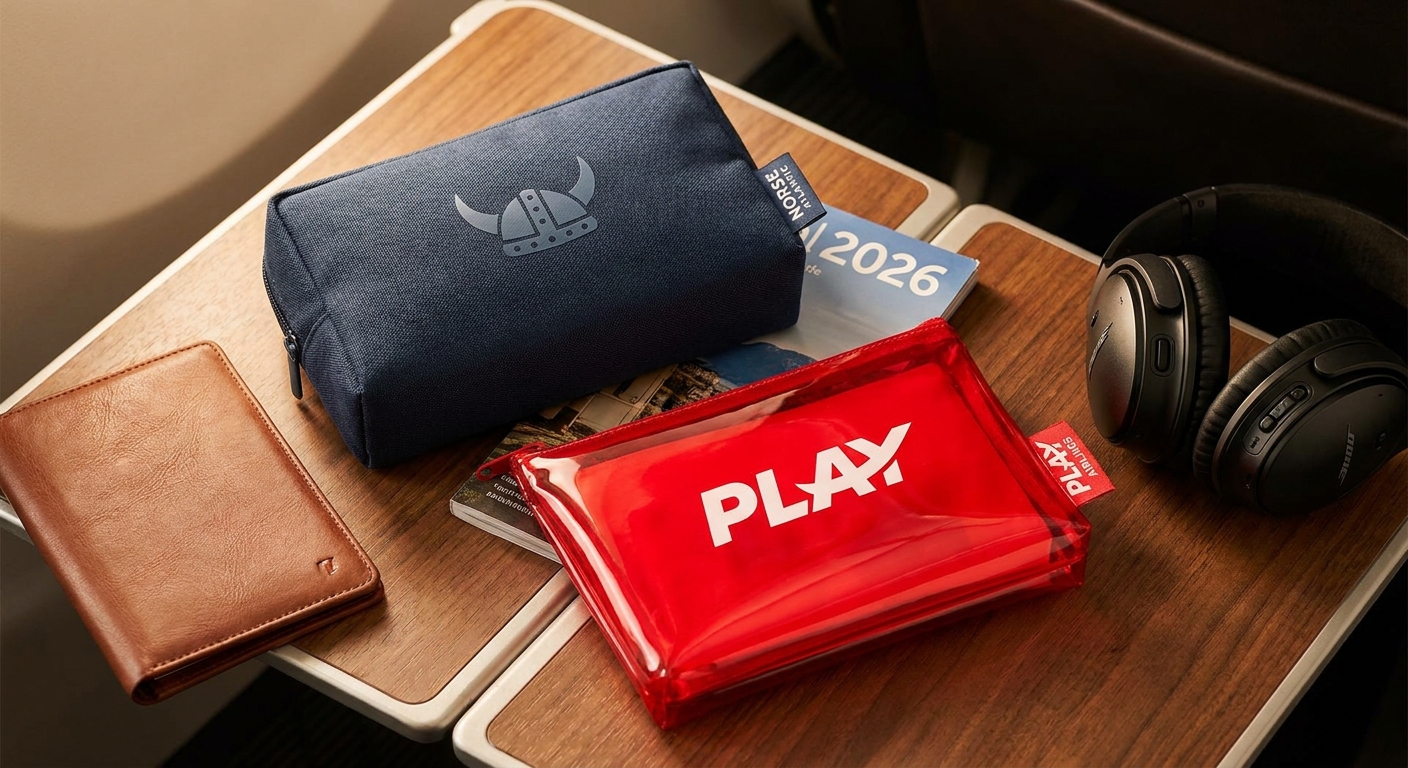
Aircraft and Fleet Quality Comparison: Dreamliner vs. A321neo
When it comes to the physical experience of flying across the Atlantic, the aircraft itself is paramount, and this is where Norse Atlantic has a decisive and undeniable advantage. Norse Atlantic's fleet of Boeing 787 Dreamliners is fundamentally better suited for long-haul travel than PLAY's fleet of Airbus A320neo family aircraft. This isn't a matter of opinion; it's a matter of design, engineering, and passenger-focused features built for intercontinental journeys.
The Boeing 787 Dreamliner, which Norse exclusively operates, is a state-of-the-art wide-body aircraft. Its key benefits for passengers are numerous. The cabin is configured in a 3-3-3 layout, feeling more spacious than a narrow-body jet. More importantly, the aircraft is built with a composite fuselage that allows for a lower cabin altitude (6,000 feet vs. the standard 8,000 feet) and higher humidity levels. This combination is scientifically proven to reduce the effects of jet lag, dehydration, and fatigue on long flights. The Dreamliner is also famous for its massive, electronically dimmable windows and quiet engines, creating a more pleasant and restful environment. For a 7+ hour flight, these are not minor perks; they significantly enhance the quality of the journey.
PLAY, on the other hand, operates a very modern and fuel-efficient fleet of Airbus A320neo and A321neo aircraft. These are excellent planes for short to medium-haul flights, but they are narrow-body jets. This means a single aisle with a 3-3 seating configuration. While the cabins are fresh and the seats are modern slimline designs, they cannot escape the inherent limitations of their design for long-haul travel. The cabin feels more enclosed, there is less room to move around, and they lack the advanced atmospheric systems of the Dreamliner. The journey is broken up by the stop in Iceland, so each flight segment is shorter (around 5-6 hours from the US East Coast to Iceland, then 2-3 hours to mainland Europe), which mitigates this issue somewhat. However, the total time spent in a narrow-body cabin is still significant.
Let's consider a real-world scenario: a traveler sensitive to the dry air on planes flying from Los Angeles to Rome. On Norse, this would be a single, direct flight of about 12 hours on a 787. The higher humidity and lower cabin pressure would make the journey far more comfortable. On PLAY, this route isn't even possible due to the range of their aircraft. But for a route like New York to Paris, the choice is stark. The Norse traveler gets a direct 7.5-hour flight in a wide-body jet designed for that distance. The PLAY traveler faces a ~5.5-hour flight to Iceland, a layover, and then another ~3.5-hour flight to Paris, all within the confines of a narrow-body cabin. For comfort, Norse is the clear winner.
Performance and Route Network Comparison
The route networks of Norse Atlantic and PLAY are a direct reflection of their differing fleet and operational strategies. Norse Atlantic operates a classic point-to-point model with direct flights, whereas PLAY uses a hub-and-spoke model that connects all destinations via Iceland. This fundamental difference has significant implications for travel time, convenience, and destination options.
Norse Atlantic focuses on connecting major international gateways. From the United States, they serve key airports like New York (JFK), Los Angeles (LAX), and Fort Lauderdale (FLL). These are linked directly to popular European destinations such as London (Gatwick), Paris (Charles de Gaulle), Rome (Fiumicino), Berlin, and Oslo. The major advantage here is speed and simplicity. If you want to go from JFK to CDG, you get on one plane in New York and get off in Paris. There are no connections, no layovers, and your total travel time is minimized. This makes Norse an excellent choice for travelers who value their time and want the most efficient journey possible. The drawback is that their network is less comprehensive; if your final destination isn't one of their key hubs, you'll need to book a separate onward flight.
PLAY's network is built entirely around its hub at Keflavík (KEF). They serve a different set of US airports, often focusing on secondary or more budget-focused gateways like Baltimore (BWI), Boston (BOS), and Newburgh (SWF) near New York City. From Iceland, they branch out to a wide array of European cities, including major hubs like Paris and Berlin, but also smaller destinations like Copenhagen, Dublin, and Prague. The non-negotiable aspect of flying PLAY is that every single itinerary involves a layover in Iceland. While often efficient (sometimes as short as 60-90 minutes), it inherently adds several hours to your total travel time compared to a direct flight. The massive, unique benefit, however, is the ability to turn this layover into a multi-day stopover. You can book a flight from Boston to Paris, spend four days exploring Iceland's glaciers and volcanoes, and then continue to Paris, all on the same ticket. This transforms the "disadvantage" of a layover into a compelling two-in-one vacation opportunity.
In terms of performance, both airlines operate modern fleets, which generally leads to good reliability. However, the hub-and-spoke model is more susceptible to cascading delays. A delay on an inbound flight to KEF can impact dozens of connecting passengers heading to various European cities. Norse's point-to-point model is more resilient in this regard; a delay on the JFK-LGW flight only affects passengers on that specific route. For the traveler who needs to be in London for a meeting at a specific time, the simplicity and reduced risk of Norse's direct flight is the clear winner. For the flexible leisure traveler, PLAY's network offers more destinations and the incredible value of the Iceland stopover.
Features and In-Flight Experience Comparison
The in-flight experience is where the philosophical differences between Norse and PLAY become most apparent to the passenger. Norse Atlantic provides a 'low-cost-plus' experience with some amenities expected on a long-haul flight, while PLAY offers a strictly no-frills, 'what-you-see-is-what-you-get' service. The choice between them depends entirely on your expectations and needs for a transatlantic crossing.
On a Norse Atlantic flight, every seat is equipped with a personal entertainment screen. While the library of free movies and TV shows might not be as extensive as on a legacy carrier like Delta or British Airways, the hardware is there. They often operate a tiered system where a basic selection is free, and a premium selection can be unlocked for a fee. USB charging ports are also available at every seat. Furthermore, Norse offers Wi-Fi for purchase on most of its 787s, allowing you to stay connected over the ocean. When it comes to food and drink, nothing is free with the most basic 'Light' fare. However, their 'Classic' and 'Flextra' fare bundles include meals, or you can purchase a decent selection of hot meals, snacks, and beverages from the crew. The overall ambiance, aided by the Dreamliner's quiet cabin and mood lighting, feels like a step above a typical budget airline.
PLAY's in-flight experience is starkly different and proudly minimalist. There are no seatback screens. There is no Wi-Fi. There are no USB ports at most seats (some newer aircraft may have them, but it's not guaranteed). The expectation is that you will bring your own entertainment pre-downloaded onto a phone, tablet, or laptop. The cabin is modern, clean, and safe, but it is an entirely self-service environment for entertainment. Similarly, no food or drink is complimentary. You can purchase a selection of sandwiches, snacks, and drinks from their menu, which is reasonably priced for an airline. The focus is purely on getting you from Point A to Point B (via Iceland) safely and cheaply, with zero included frills.
Let's paint a picture for a family traveling with two children from New York to Berlin. On Norse, the direct flight would be a significant advantage. The kids could plug in headphones and watch movies on the seatback screens, and the parents could purchase a Wi-Fi pass. The included meals in a 'Classic' fare bundle would simplify logistics. On PLAY, the same family would need to ensure all devices are fully charged and loaded with content for two separate flights. They would need to navigate the connection in Reykjavik with tired children and purchase all food and drinks for four people onboard. While the PLAY option might save money on the base fare, the Norse experience would likely be far less stressful and more comfortable for the family as a whole. Conversely, for a solo traveler who sleeps easily on planes and always has a power bank and a tablet full of Netflix shows, PLAY's no-frills approach is perfect, as they aren't paying for features they don't need.
Pricing and Value for Money: A Deep Dive into Ancillary Fees
At first glance, PLAY airlines often appears to be the cheaper option, with base fares that can undercut Norse Atlantic by a noticeable margin. However, the true cost of flying either airline is only revealed after a thorough analysis of their ancillary fees. The airline that offers better value for money depends entirely on your baggage requirements, as Norse's bundled fares can quickly become more economical than PLAY's à la carte model for anyone traveling with more than a personal item.
Both airlines are unbundled, meaning the lowest advertised fare - 'Light' on Norse, 'Basic' on PLAY - includes only one small personal item that must fit under the seat in front of you (e.g., a backpack or laptop bag). Anything more, including a standard roll-aboard carry-on, costs extra. This is the most critical point for travelers to understand. Let's break down a typical pricing scenario for a one-way flight from the US East Coast to Europe:
- Scenario: You need to bring one personal item, one standard carry-on bag, and one checked bag.
- PLAY 'Basic' Fare: $180
- Norse 'Light' Fare: $200
On PLAY, you would need to add the bags individually. A carry-on might cost $55, and a 20kg checked bag could cost $70 when booked online in advance. Your total cost on PLAY becomes $180 + $55 + $70 = $305.
On Norse, instead of adding bags to the 'Light' fare, it's almost always cheaper to upgrade to their 'Classic' fare bundle. This bundle typically costs around $90 more than the 'Light' fare. For that price, it includes a personal item, a 10kg carry-on bag, a 23kg checked bag, and a standard meal service. Your total cost on Norse becomes $200 + $90 = $290. In this very common scenario, Norse is not only cheaper but also includes a meal and a heavier checked bag allowance.
This demonstrates the core of their value propositions. PLAY's model is designed to reward the minimalist packer. If you can genuinely travel with just a backpack, their $180 fare is untouchable. But the moment you need standard luggage, the equation flips. Norse's fare structure is more transparent for the average traveler, bundling the most common extras into a single, understandable price point. Other fees, such as seat selection, follow a similar pattern. Both charge for advance seat selection, with prices varying by location (exit row, front of cabin, etc.). Again, Norse's higher fare bundles often include standard seat selection, while on PLAY it's almost always an extra charge.
Ancillary Fee Comparison Table
| Service | Norse Atlantic Airways (Typical Cost) | PLAY airlines (Typical Cost) |
|---|---|---|
| Standard Carry-On (10kg) | $45-$70 (or included in Classic/Flextra fare) | $50-$75 (or included in higher bundles) |
| 1st Checked Bag (23kg/20kg) | $65-$90 (or included in Classic/Flextra fare) | $60-$85 (or included in higher bundles) |
| Standard Seat Selection | $20-$45 (or included in Flextra fare) | $15-$40 (always extra on Basic fare) |
| Extra Legroom Seat | $50-$150 | $45-$120 |
| Main Meal Service | $30-$40 (or included in Classic/Flextra fare) | Not available for pre-purchase, onboard snacks only |
Note: Prices are estimates and vary significantly by route and time of booking. Always check the airline's website for the most accurate pricing.
Pros and Cons: Norse Atlantic vs PLAY
Choosing between these two budget carriers requires a clear-eyed look at their respective strengths and weaknesses. What one traveler sees as a deal-breaking con, another might view as an acceptable trade-off for a lower price. Here's a detailed breakdown of the pros and cons for each airline.
Norse Atlantic Airways
Pros:
- Superior Aircraft Comfort: This is Norse's biggest advantage. The Boeing 787 Dreamliner is a wide-body jet designed for long-haul flights, offering a more spacious cabin, better air quality, and a quieter ride that significantly enhances passenger comfort and reduces fatigue.
- Direct, Point-to-Point Routes: Norse's non-stop flights between major US and European cities save considerable time and eliminate the stress and potential for misconnection associated with layovers.
- In-Flight Entertainment Options: The presence of seatback screens, even with some paid content, provides a welcome diversion on long flights and is a feature completely absent on PLAY.
- Straightforward Fare Bundles: The 'Classic' fare bundle, in particular, offers excellent value by packaging a carry-on, checked bag, and meal for a reasonable price, simplifying the booking process for average travelers.
- Wi-Fi Availability: The option to purchase Wi-Fi is a crucial feature for business travelers or anyone needing to stay connected during the flight.
Cons:
- Potentially Higher All-In Cost: While often competitive, Norse's base fares can be slightly higher than PLAY's, and if you don't need all the items in a bundle, the cost can escalate.
- Limited Route Network: By focusing on major point-to-point routes, Norse serves fewer destinations than PLAY. If your origin or destination isn't a major hub, you may need to arrange separate travel.
- Unbundled Premium Experience: While the Dreamliner is a premium aircraft, Norse unbundles the service. Expect to pay extra for everything from blankets to a full selection of movies on the basic fare.
PLAY airlines
Pros:
- Lowest Potential Base Fares: For the traveler who can pack into a single personal item, PLAY's 'Basic' fares are often the absolute cheapest way to cross the Atlantic.
- Iceland Stopover Program: This is a unique and high-value proposition, allowing travelers to explore Iceland for up to 10 days for no additional airfare, effectively creating a two-in-one trip.
- Modern, Efficient Fleet: PLAY's fleet of Airbus A320neo family aircraft is among the youngest and most fuel-efficient in the sky, contributing to their low operational costs and fares.
- Wider Range of European Destinations: Thanks to its hub-and-spoke model, PLAY can efficiently serve a larger number of smaller European cities that might not sustain a direct long-haul flight.
Cons:
- Mandatory Layover in Iceland: Every single flight connects in Reykjavik. This adds hours to the total journey time and introduces the risk of connection issues. There are no direct flight options.
- No In-Flight Entertainment or Wi-Fi: The complete lack of built-in entertainment or connectivity is a significant drawback on flights that, even when broken up, involve many hours in the air.
- Narrow-Body Aircraft on Long Routes: Flying for 5-6 hours in a single-aisle A321neo is inherently less comfortable than in a wide-body 787. The cabin feels more cramped, and there's less space to move around.
- Aggressive À La Carte Pricing: The low base fare is deceptive. The cost can balloon rapidly once a carry-on bag, checked luggage, and seat selection are added.
Which is Best for Beginners to Budget Long-Haul?
For a traveler new to the world of low-cost, long-haul flying, Norse Atlantic Airways is the better and safer choice. The experience it offers is a gentler introduction to the unbundled model, more closely resembling what a passenger might expect from a standard international flight, albeit with more optional charges. The transition is less jarring, and the overall journey is more comfortable and straightforward.
The primary reason is the combination of a superior aircraft and a direct route network. A first-timer might be overwhelmed by the logistics of a tight connection in a foreign airport, especially after a long overnight flight. Norse eliminates this anxiety entirely. You board in your departure city and deplane at your final destination. This simplicity cannot be overstated for someone unfamiliar with international travel. Moreover, the comfort of the Dreamliner provides a psychological and physical buffer. The more spacious cabin, personal entertainment screen (even with limited free content), and better cabin atmosphere make the long flight more tolerable and less intimidating than the stark, no-frills environment of PLAY.
Furthermore, Norse's 'Classic' fare bundle is an ideal product for a budget long-haul beginner. It removes the guesswork and mental calculation of ancillary fees. A new traveler might not realize just how much it costs to add a carry-on and a checked bag separately. By choosing the 'Classic' fare, they get the most common necessities - luggage and a meal - included in one upfront, transparent price. This prevents the dreaded 'sticker shock' at the airport when they realize their 'cheap' flight has suddenly become very expensive because they didn't pre-book their bags correctly.
PLAY, while offering incredible value, demands a more seasoned and savvy traveler. To truly benefit from its low prices, one must be a master of minimalist packing, comfortable with self-catering entertainment for long durations, and confident in navigating a connecting flight. A beginner might easily fall into the trap of its low base fare, only to find their total cost spiraling upwards with necessary add-ons. The mandatory connection and the spartan in-flight experience could be stressful and disappointing for someone whose expectations were set by traditional airlines. Therefore, for a smoother, more comfortable, and less complex initiation into budget transatlantic travel, Norse Atlantic is the recommended starting point.
Use-Case Segmentation: Who Should Choose Norse vs. PLAY?
The best choice between Norse and PLAY is not universal; it depends entirely on who you are and what you prioritize for your trip. We've broken down the decision-making process for different traveler profiles.
For the Solo Backpacker or Minimalist Traveler
Winner: PLAY airlines
This is PLAY's target audience. The solo traveler who has perfected the art of packing everything into a single 40L backpack that fits under the seat can take full advantage of PLAY's rock-bottom 'Basic' fares. This traveler doesn't need in-flight entertainment because they have a Kindle and downloaded podcasts. They don't need a meal because they'll pack their own snacks. The connection in Iceland is just part of the adventure, and the potential for a multi-day stopover to see the Northern Lights or the Blue Lagoon is a massive bonus. For this profile, paying for the bundled comforts of Norse would be a waste of money. PLAY delivers the cheapest possible price to get across the ocean, and for the minimalist, that's all that matters.
For Couples on a Romantic Getaway
Winner: Norse Atlantic Airways
A couple planning a trip to Paris or Rome will likely value time and comfort more. Norse's direct flights mean they arrive at their destination faster, with less travel fatigue, giving them more quality time to enjoy their vacation. The superior comfort of the Dreamliner makes the journey itself part of the experience, rather than just a means to an end. They can share a movie on the seatback screen and arrive feeling more refreshed. While they will likely pay a bit more than the absolute cheapest PLAY fare, the value gained from a direct, more comfortable flight makes Norse the better choice for a special trip.
For Families with Children
Winner: Norse Atlantic Airways
This is perhaps the most clear-cut decision. For families, Norse is overwhelmingly the better option. A direct flight is infinitely easier to manage with children than a connection. The presence of seatback entertainment is a lifesaver for keeping kids occupied for hours. The wider cabin of the 787 provides more space, and the simple act of being able to get up and walk to a different lavatory section can make a big difference. The 'Classic' fare bundle, which includes meals, also simplifies the logistics for parents. The potential savings from PLAY are unlikely to outweigh the added stress of a connection, a cramped cabin, and the need to provide 100% of the entertainment for the entire family.
For the Digital Nomad or Business Traveler
Winner: Norse Atlantic Airways
For anyone who needs to work while traveling, Norse is the only viable option of the two. The availability of Wi-Fi for purchase is a non-negotiable requirement for many business travelers and digital nomads. The direct routes ensure they can get to meetings or their next destination on a predictable schedule. The more comfortable and quieter cabin of the Dreamliner also provides a better environment for working on a laptop. PLAY's lack of connectivity and mandatory layover make it unsuitable for most professional travel needs.
Use-Case Decision Table
| Traveler Profile | Best Choice | Key Reason |
|---|---|---|
| Solo Backpacker / Minimalist | PLAY airlines | Lowest possible base fare for personal-item-only travel; Iceland stopover bonus. |
| Couple on a Budget Getaway | Norse Atlantic Airways | Direct flights maximize vacation time; superior comfort on the Dreamliner. |
| Family with Young Children | Norse Atlantic Airways | Direct routes, seatback entertainment, and a more spacious cabin are critical. |
| Digital Nomad / Business Traveler | Norse Atlantic Airways | Wi-Fi availability and direct, time-saving routes are essential. |
Final Verdict: The Smart Choice for Your Transatlantic Flight
After a comprehensive analysis of aircraft, routes, pricing, and in-flight experience, a clear picture emerges. Both Norse Atlantic Airways and PLAY airlines successfully deliver on their promise of affordable transatlantic travel, but they cater to fundamentally different priorities and traveler types. The decision of which is 'better' is less about a universal winner and more about a personal fit.
Norse Atlantic Airways stands out as the superior all-around choice for the majority of travelers. It strikes an impressive balance between low cost and genuine long-haul comfort. By operating the Boeing 787 Dreamliner, Norse offers a passenger experience that is leagues ahead of PLAY's narrow-body jets. The direct, point-to-point routes are a massive advantage, saving precious hours and simplifying the travel day. For families, couples, business travelers, and anyone who isn't a packing minimalist, Norse's 'Classic' fare bundle often proves to be the best value, providing luggage and a meal for a transparent, competitive price. If you want a budget-friendly flight that doesn't feel overly punishing, Norse is your answer.
PLAY airlines, however, carves out a brilliant niche for itself and is the unbeatable champion for specific travelers. If your goal is to cross the Atlantic for the absolute minimum amount of money and you have the discipline to travel with only a small backpack, PLAY's 'Basic' fare is your golden ticket. No other airline can consistently compete on that metric. Furthermore, its Iceland stopover program is a game-changing feature, offering a two-for-one vacation that provides immense value. If you are a flexible, adventurous traveler who sees the journey as part of the destination and wants to explore Iceland's unique landscapes, PLAY is not just a good choice; it's the perfect one.
In conclusion, your choice is a reflection of your priorities. For a comfortable, efficient, and surprisingly refined budget journey, choose Norse Atlantic. For the ultimate low fare and the adventure of an Icelandic stopover, choose PLAY. By understanding their core differences, you can confidently book the right airline and enjoy the incredible value that modern, low-cost long-haul travel has to offer.
Frequently Asked Questions
Yes, Norse Atlantic is generally considered a reliable airline. It operates a modern fleet of Boeing 787 Dreamliners, which have a strong safety and technical performance record. As a newer airline, it is still establishing its long-term on-time performance metrics, but it adheres to the same strict international safety regulations as all major carriers operating between the US and Europe. Delays and cancellations can occur, as with any airline, but its operational model is sound and it is a legitimate and safe choice for transatlantic travel.
PLAY's 'Basic' fare is extremely unbundled. It includes only one small personal item that must fit under the seat in front of you (max 42x32x25 cm). It does not include a standard carry-on bag for the overhead bin, any checked luggage, advance seat selection, any food or drinks onboard, or any form of in-flight entertainment. All of these are available as paid extras. It is designed for the true minimalist traveler, and passengers should be prepared to pay for any service beyond simple transportation.
Yes, Norse Atlantic flights are equipped with seatback entertainment screens at every seat. This is a significant advantage over PLAY. The system typically offers a selection of free movies, TV shows, and a flight map. They may also offer an expanded 'premium' library of content available for an additional fee. Every seat also includes a USB port for charging personal devices. While the selection might not be as vast as on legacy carriers, the presence of the hardware itself is a major comfort feature for long-haul flights.
Absolutely, the Iceland stopover is arguably PLAY's most valuable feature. It allows you to add a visit to Iceland for up to 10 days to your transatlantic itinerary for no extra airfare. This transforms a simple trip to Europe into a two-destination vacation. For travelers who have always wanted to see Iceland's unique landscapes, glaciers, and volcanoes, this is an incredibly cost-effective way to do it. If you have the flexibility in your schedule, the stopover program offers phenomenal value and is highly recommended.
Norse Atlantic has better seats and a more comfortable seating environment. This is primarily because they fly the Boeing 787 Dreamliner, a wide-body jet with a more spacious 3-3-3 cabin layout. While seat pitch is comparable on both airlines (around 31 inches for standard seats), the overall feeling of space, the wider cabin, and the larger seats on the Dreamliner make for a more comfortable long-haul journey. PLAY's Airbus A321neo has a narrower 3-3 configuration, which can feel more cramped on a flight of 5+ hours.
Yes, both Norse and PLAY are typically very strict with their baggage policies, as this is a primary source of their ancillary revenue. They will check the size and weight of personal items and carry-on bags more frequently than many legacy carriers. It is crucial to adhere to the stated dimensions and weight limits precisely. If your bag is oversized, you will be forced to check it at the gate, often for a significantly higher fee than you would have paid online. Always book any required baggage in advance to avoid expensive airport charges.