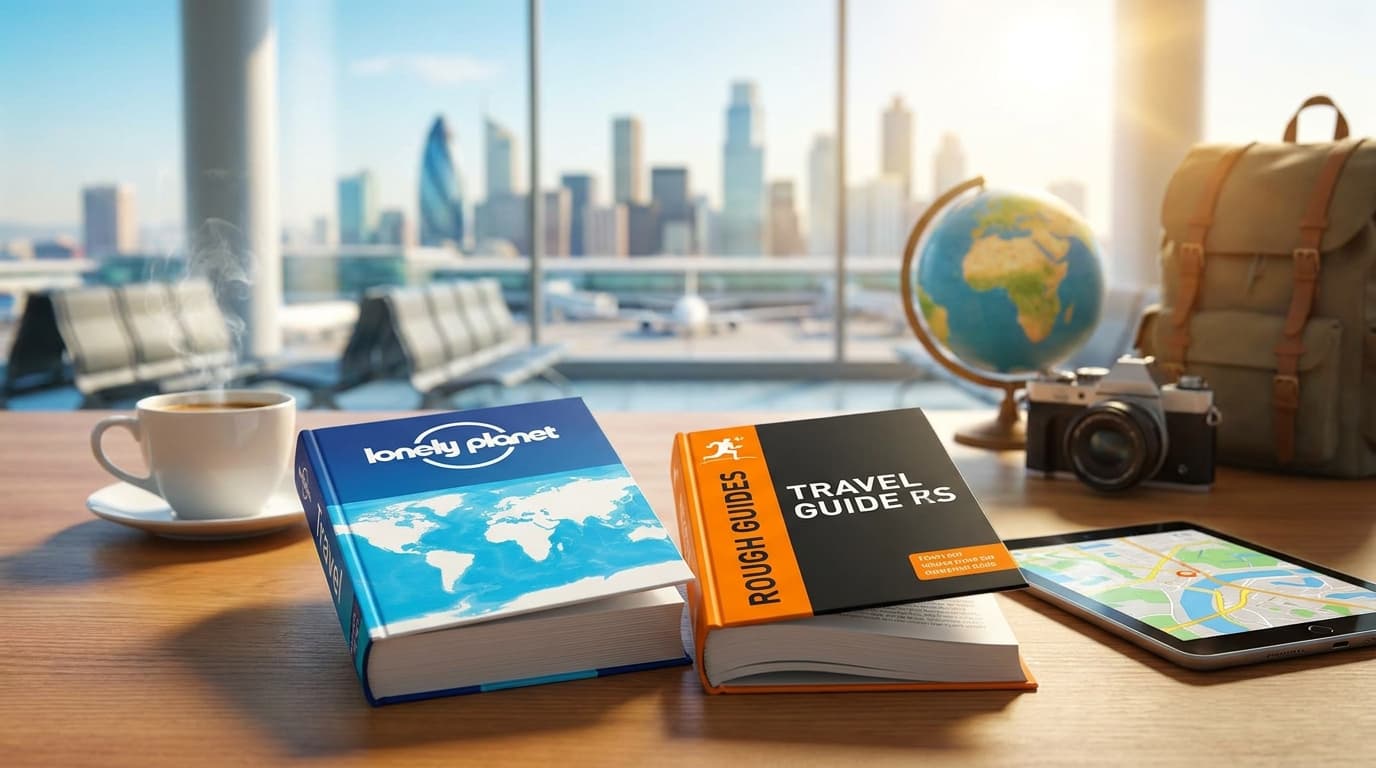
Lonely Planet vs. Rough Guides: Which Travel Guidebook is Right for Your Trip in 2026?
Lonely Planet Guidebooks
Lonely Planet is the ideal choice for travelers seeking an inspirational, easy-to-use guide with reliable recommendations and a fantastic digital app. It excels at pre-trip planning and helping you efficiently experience the best highlights a destination has to offer.
Overall Score
Top Picks
Lonely Planet Guidebooks
Lonely Planet is the market leader for a reason. Its design is second to none, making it a joy to use for both planning and navigation. It strikes an excellent balance between detail and accessibility, making it the perfect choice for most travelers.
Rough Guides
What Rough Guides lacks in visual polish, it more than makes up for in substance. The depth of its cultural and historical content is unmatched, offering incredible value for travelers who want more than just a list of sights.
Comparison
Design
Performance
Value for Money
Ease of Use
Durability
Features
Choosing a travel guidebook can feel as monumental as picking your destination. It's your paper-and-ink companion, your trusted advisor in a foreign land, and the key to unlocking a region's secrets. For decades, two giants have dominated this landscape: Lonely Planet and Rough Guides. While both promise to guide you through bustling cities and remote landscapes, they do so with fundamentally different philosophies and styles. This isn't just a choice between two brands; it's a choice between two distinct ways of seeing the world.
So, which one deserves a place in your backpack? Is it the polished, inspirational, and ever-popular Lonely Planet, or the candid, context-rich, and fiercely independent Rough Guides? This comprehensive, data-driven comparison will dissect every facet of these iconic guidebooks - from their design philosophy and map accuracy to their digital offerings and overall value for money. We'll move beyond surface-level claims and dive into real-world scenarios to give you a definitive answer on which guide is right for your unique travel style.
| Feature | Lonely Planet | Rough Guides |
|---|---|---|
| Overall Rating | 9.1/10 | 8.7/10 |
| Target Audience | Broad range: from backpackers to families and mid-range travelers. Excellent for first-timers. | Independent travelers, budget-conscious explorers, and those seeking deep cultural/historical context. |
| Writing Style | Inspirational, concise, and highly practical. Focus on highlights and experiences. | Candid, opinionated, and context-heavy. Strong focus on history, politics, and culture. |
| Design & Layout | Full-color, glossy pages, image-heavy, intuitive layout with icons and highlights. Very skimmable. | More text-focused, often two-color printing, practical but less visually flashy. Prioritizes information density. |
| Map Quality | Clear, easy-to-read color maps integrated throughout the text. Generally very reliable. | Detailed and functional maps, but can be less visually appealing and sometimes harder to navigate. |
| Digital Offering | Excellent. User-friendly 'Guides' app, PDF chapters, and extensive online content. | Solid ebook offerings, but lacks a dedicated, integrated mobile app experience. |
| Pricing | Generally mid-to-high range for the premium physical product. | Slightly more affordable, offering excellent value for the depth of information provided. |
| Best For | Pre-trip planning, first-time visitors, itinerary building, and finding top-rated highlights quickly. | On-the-ground discovery, understanding a destination's soul, budget travel, and off-the-beaten-path exploration. |
| Pros | - Visually appealing and easy to use - Excellent for planning - Reliable recommendations - Strong digital integration |
- Unmatched cultural and historical depth - Honest and critical reviews - Great for independent travelers - Often better for budget options |
| Cons | - Can focus on popular tourist trails - Less critical perspective - Higher price point |
- Denser, less skimmable layout - Weaker digital app presence - Can be overwhelming for beginners |
| Check Price - Lonely Planet | Check Price - Rough Guides |
Quick Verdict: Which Guidebook Should You Buy?
For those short on time, here's the direct answer. For the majority of travelers, especially those visiting a destination for the first time or who value ease-of-use and inspirational planning tools, Lonely Planet is the better choice. Its polished, full-color layout, intuitive structure, and reliable, well-curated recommendations make trip planning and on-the-ground navigation a seamless experience. It excels at helping you quickly identify the must-see sights and build a fantastic itinerary without getting bogged down in excessive detail.
However, for the fiercely independent traveler, the curious backpacker, or the history enthusiast who wants to get under the skin of a destination, Rough Guides is the superior option. Its unparalleled depth in cultural, historical, and political context provides a much richer understanding of the places you visit. The writing is more candid and critical, often pointing you toward genuinely unique, off-the-beaten-path experiences that other guides might miss. If you prefer comprehensive information over glossy photos and value substance over style, Rough Guides will be a more rewarding travel companion.
Ultimately, your choice depends on your travel philosophy. Choose Lonely Planet if you want a beautiful, efficient, and inspiring guide to the best a destination has to offer. Choose Rough Guides if you want an intelligent, in-depth, and honest companion for a journey of true discovery.
Which Is Better: Lonely Planet or Rough Guides?
The direct answer is: Lonely Planet is better for travelers who prioritize inspirational content, user-friendly design, and efficient trip planning, while Rough Guides is better for independent travelers who seek deep cultural context, candid advice, and off-the-beaten-path discoveries. Neither is definitively superior; their value is determined entirely by the user's travel style and priorities. Think of it as choosing between a curated highlights tour and a self-guided deep-dive expedition. Lonely Planet provides the former, offering a beautifully packaged and reliable guide to a destination's best features. It's designed to be visually engaging and incredibly easy to navigate, with clear sections for planning, itineraries, and top sights. This makes it ideal for first-time visitors, families, or anyone with limited time who wants to maximize their experience with minimal friction.
On the other hand, Rough Guides caters to a traveler who wants to understand the 'why' behind the 'what'. Its strength lies in its comprehensive background sections covering history, politics, art, and music, providing a framework for a much deeper understanding of the culture. The tone is more opinionated and less polished, feeling like advice from a well-traveled, intelligent friend rather than a corporate entity. This approach empowers travelers to make their own informed decisions and often leads them to more authentic, less tourist-trodden places. If you're a backpacker on a long-term trip, a student of history, or simply someone who bristles at the thought of following the crowd, Rough Guides will align more closely with your values.
A real-world scenario highlights this difference perfectly. Imagine two travelers planning a trip to Peru. Traveler A wants to see Machu Picchu, explore Cusco, and try ceviche in Lima within a two-week holiday. Lonely Planet's 'Peru' guide, with its 'Top 20 Experiences' section, sample itineraries, and stunning photos, would be the perfect tool. It would help them efficiently plan logistics, book recommended tours, and find top-rated restaurants. Traveler B, however, is backpacking through South America for three months and wants to understand Peru's complex history, from the Incas to the Shining Path. They want to find small, family-run guesthouses and explore lesser-known ruins. Rough Guides' detailed historical timelines, critical analysis of tourism's impact, and extensive listings of budget-friendly options would be invaluable, providing the context and practical advice needed for a more immersive journey.
Therefore, the question isn't 'which is better?' but 'which is better for me?'. For structured, highlight-focused travel, Lonely Planet wins. For deep, independent exploration, Rough Guides is the champion.
What Are the Key Differences? A Head-to-Head Breakdown
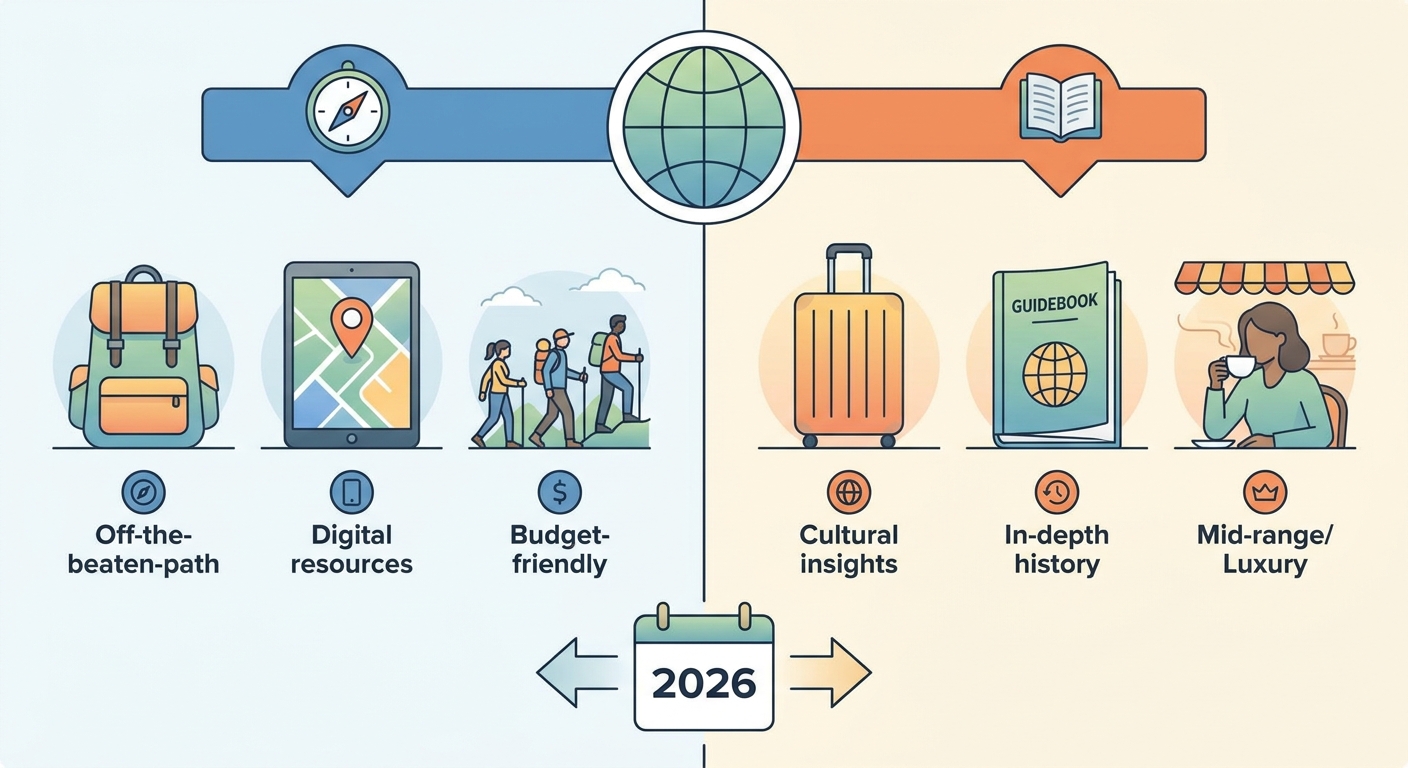
The key difference between Lonely Planet and Rough Guides lies in their core philosophy: Lonely Planet focuses on inspiration and accessibility, while Rough Guides prioritizes context and candor. This philosophical divide informs every aspect of their products, from the writing style and layout to the type of information they choose to include. Lonely Planet aims to make travel easy, exciting, and accessible to a broad audience. It presents information in a highly digestible, visually appealing format, acting as a trusted curator of a destination's best experiences. Its goal is to get you excited about your trip and then provide the practical tools to make it happen smoothly.
Rough Guides, born from a more counter-cultural, independent travel ethos, assumes its reader is more self-reliant and curious. It provides the deep, foundational knowledge - historical, cultural, and political - that empowers a traveler to explore with greater awareness and understanding. Its tone is more subjective and critical, unafraid to call out tourist traps or discuss sensitive local issues. It treats the reader not as a tourist to be led, but as an intelligent traveler to be informed. This results in a guide that is less of a step-by-step manual and more of a comprehensive briefing document for your journey.
This table breaks down the most significant distinctions:
| Aspect | Lonely Planet | Rough Guides |
|---|---|---|
| Core Philosophy | Inspiration & Accessibility: "Here are the best things to do and how to do them." | Context & Candor: "Here's everything you need to know to understand this place and explore it yourself." |
| Visual Design | Magazine-like, full-color, high-quality photos, heavy use of icons and call-out boxes. | Book-like, text-dense, two-color or limited color, functional photos. |
| Information Focus | Emphasis on 'what to see' and 'what to do'. Curated lists, top experiences, and itineraries. | Emphasis on 'why it is'. In-depth sections on history, culture, music, politics, and environment. |
| Target Voice | Helpful, enthusiastic, and authoritative. A professional tour guide. | Witty, opinionated, and intellectual. A knowledgeable, well-traveled friend. |
| Recommendation Style | Generally positive and well-vetted. Focuses on reliable and popular options across budgets. | More critical and discerning. Includes hidden gems and isn't afraid to warn against certain places. |
Consider a traveler in Rome. Using a Lonely Planet guide, they would quickly find a walking tour of the 'Top 10 Ancient Roman Sights', complete with a beautiful map, opening hours, and a recommendation for the best gelato nearby. It's efficient and ensures they see the main attractions. A traveler with a Rough Guide would first read a ten-page chapter on the rise and fall of the Roman Empire, giving them a rich context for the ruins they are about to see. The guide might then suggest a less-crowded alternative to the Colosseum or recommend a specific trattoria not for its trendiness, but for its historical significance and authentic cuisine. The Lonely Planet experience is about seeing Rome; the Rough Guides experience is about understanding it.
Design & Build Quality Comparison
In a direct comparison of design and build quality, Lonely Planet is the clear winner, offering a superior tactile and visual experience with its full-color, glossy pages and intuitive, magazine-style layout. From the moment you pick up a Lonely Planet guide, it feels like a premium product. The thick, durable cover, high-quality paper, and vibrant color photography throughout make it not just a tool, but a piece of travel inspiration in itself. The layout is masterfully designed for scannability. Information is broken down with clear headings, icons, colored tabs, and pull-out boxes. This makes it incredibly easy to find what you're looking for, whether it's the opening times for a museum or a list of vegetarian restaurants. The use of color maps embedded directly within the relevant text is a significant usability advantage, preventing the constant flipping back and forth that can plague other guides.
Rough Guides, in contrast, adopts a more utilitarian and traditional book-like approach. The design is functional but far less flashy. Most guides use a two-color printing process (black and one other color), and photographs are used more sparingly, often grouped together in a central glossy section rather than distributed throughout. The pages are typically thinner, and the overall feel is less that of a coffee-table book and more that of a serious reference manual. The layout is text-heavy, with long, dense paragraphs that prioritize information delivery over visual appeal. While this allows them to pack in an astonishing amount of detail, it can feel intimidating to new users and makes quick information retrieval more challenging. You have to be willing to read, not just scan, to get the most out of a Rough Guide.
Let's consider the real-world durability. A traveler on a six-month backpacking trip through Southeast Asia will put their guidebook through hell. It will be shoved in backpacks, rained on, and leafed through with greasy fingers. The Lonely Planet, with its sturdier cover and thicker pages, often holds up slightly better to this abuse. The spine is robust, and the pages are less likely to tear. The Rough Guide's thinner paper can be more susceptible to wear and tear, and the less-laminated cover can show scuffs more easily. However, many seasoned travelers see a battered Rough Guide as a badge of honor, a testament to a journey well-traveled. The design choice reflects the brand's philosophy: Lonely Planet is a beautiful object designed for a perfect trip, while Rough Guides is a workhorse tool designed to be used, abused, and absorbed on a real adventure.
Performance Comparison: Real-World Use in the Field
In terms of real-world performance, Lonely Planet excels in pre-trip planning and on-the-ground efficiency, while Rough Guides shines in facilitating spontaneous discovery and providing deeper cultural immersion. The 'better' performer depends entirely on the task at hand. If your goal is to create a structured itinerary and navigate between major sights with ease, Lonely Planet's performance is flawless. Its clear, color-coded maps, 'Top Sights' sections, and pre-designed itineraries allow you to build a comprehensive plan before you even leave home. When you arrive, the guide's layout makes it easy to quickly look up a restaurant recommendation or check museum hours, minimizing downtime and maximizing your experience. The information is reliable and up-to-date, especially for popular destinations, making it a dependable choice for travelers who value structure and certainty.
Rough Guides, however, performs best in unscripted moments. Its true value emerges when you have time to sit in a cafe and read the detailed history of the neighborhood you're in, or when you decide to ditch the main tourist drag and need suggestions for a less-visited district. The guide's in-depth descriptions and candid reviews give you the confidence to explore independently. It might not always give you the single 'best' restaurant, but it will give you three interesting options with a detailed explanation of their cultural significance or culinary specialty, empowering you to make your own choice. Its performance is measured not in efficiency, but in the quality and depth of the experience it facilitates. The maps, while less visually appealing, are often packed with detail, though sometimes they can be harder to read in a hurry compared to Lonely Planet's cleaner designs.
Imagine a practical scenario: finding dinner in Hanoi's Old Quarter. The Lonely Planet user would flip to the color-coded map, locate the 'Eating' icons, and choose a place with a star next to it, confident it's a vetted, popular choice. They'd likely have a great meal. The Rough Guides user might first read a two-paragraph introduction to the culinary history of the Old Quarter, explaining the origins of bún chả. They would then find a list of street food stalls, some of which might be little more than a plastic stool on the pavement, chosen for their authenticity rather than their ambiance. The process is less direct, but the potential reward is a more memorable and authentic cultural experience. Both guides get you fed, but their process and the nature of the resulting experience are fundamentally different. Lonely Planet optimizes for a great outcome; Rough Guides optimizes for a great story.
Furthermore, when it comes to practicalities like transport, Rough Guides often provides more granular detail. It might explain the nuances of buying a bus ticket as a foreigner or detail multiple, less-obvious routes between two cities. Lonely Planet's transport advice is typically clear and accurate but may focus on the most straightforward options. For the seasoned traveler navigating a complex region, the detailed logistics in a Rough Guide can be a lifesaver.
Features Comparison: Digital Apps, Maps, and Special Content
When comparing features beyond the core text, Lonely Planet has a significant edge due to its superior digital ecosystem, particularly its 'Guides' mobile app. Lonely Planet has invested heavily in its digital presence, and it shows. The 'Guides' app is a standout feature, offering offline maps, curated city guides, and bookmarking capabilities. It seamlessly integrates the book's content into a user-friendly mobile format. A traveler can buy the physical book for deep planning and then rely on the app for lightweight, on-the-go navigation, which is a powerful combination. Furthermore, Lonely Planet's website is a vast resource of articles, videos, and forums, and they offer the ability to purchase individual PDF chapters of a book. This is a fantastic feature for travelers visiting multiple countries who don't want to carry several heavy books. For example, if you're only visiting Bangkok and Chiang Mai, you can just buy those chapters from the Thailand guide.
Rough Guides' digital offerings are more traditional. They produce excellent ebooks in various formats (Kindle, ePub) that are faithful reproductions of the physical books. These are highly functional and perfect for travelers who want to save weight by using an e-reader or tablet. However, they lack a dedicated, integrated app experience comparable to Lonely Planet's. There's no central hub for your Rough Guides content, no interactive offline maps, and no easy way to sync bookmarks between devices. While their website also has travel content, it feels less integrated with their guidebook products. The focus remains squarely on the book, whether in physical or digital form, as a self-contained product. This approach isn't necessarily bad, but it feels a generation behind Lonely Planet's multi-platform strategy.
In terms of in-book features, the comparison is more nuanced. Lonely Planet excels at special content designed for planning and inspiration. Features like 'If You Like...', 'Month by Month', and detailed, illustrated itineraries are visually engaging and extremely helpful for building a trip from scratch. Their 'Top Experiences' lists are a cornerstone of the brand and an effective way to quickly grasp a destination's highlights. Rough Guides counters with its own unique features, primarily the unparalleled 'Contexts' section. This deep-dive into history, music, film, and literature is a defining feature that Lonely Planet simply doesn't match in depth. They also include curated reading lists, which are a fantastic resource for any traveler wanting to engage with a destination's culture through its literature. For maps, as mentioned, Lonely Planet's are generally cleaner, full-color, and better integrated, making them easier to use at a glance. Rough Guides' maps are detailed and accurate but can be more cluttered and less intuitive to navigate.
A use-case breakdown: A family planning a two-week trip to Italy would find Lonely Planet's features invaluable. They could use the 'Family Travel' section, follow a suggested 'Rome in 3 Days' itinerary, and use the app for navigation. A solo traveler spending a month in India, however, might find more value in the Rough Guide. They could read the 'Contexts' section on the flight over to understand the country's complex religious and political landscape and consult the detailed transport information to navigate the chaotic train system.
Find Your Perfect Lonely Planet Guide
Pricing & Value for Money
While Lonely Planet guides often have a higher cover price, Rough Guides frequently offer better value for money, especially for budget-conscious and information-hungry travelers. The concept of 'value' here is critical; it's not just about the price tag but about what you get for your money. A standard country guide from Lonely Planet can be 10-20% more expensive than its Rough Guides equivalent. This premium price is justified by the higher production costs: full-color printing on high-quality paper is significantly more expensive than the two-color, text-focused approach of Rough Guides. For many, this extra cost is worth it for the enhanced user experience, beautiful photography, and inspirational layout. If the design and ease-of-use are key factors for you, then Lonely Planet represents good value.
However, if your primary metric for value is the sheer quantity and depth of information, Rough Guides is the undisputed champion. For a slightly lower price, you get a guide that is often more comprehensive, particularly in its background and cultural content. The page count might be similar, but the information density on each page of a Rough Guide is far greater. You are paying for substance over style. For a backpacker on a tight budget, the practical, money-saving tips and extensive coverage of budget accommodation and food in a Rough Guide can pay for the cost of the book many times over. Their motto, "Make the most of your time on Earth," is delivered by providing you with the most information possible, and in that regard, the value proposition is immense.
Let's also consider the digital pricing. Both brands offer ebooks at a lower price than their physical counterparts, which is a great value option for any traveler looking to save money and weight. Lonely Planet's model of selling individual PDF chapters offers a unique form of value. A traveler on a multi-country European trip could buy just the 'Paris' chapter for a few dollars instead of the full 'France' guide for over twenty. This a-la-carte model is incredibly cost-effective for targeted travel. Rough Guides does not currently offer this feature, meaning you must buy the entire ebook. This makes Lonely Planet a better value for short city breaks or single-destination visits within a larger trip, while Rough Guides maintains its value for deep dives into a single country or region.
Ultimately, value is subjective. Traveler A, who uses their Lonely Planet Italy guide to find a fantastic restaurant and a great hotel, saving them from a tourist trap, will feel they got excellent value. Traveler B, who uses their Rough Guide India to understand the caste system and navigate a complex bus journey, will also feel they got excellent value. Lonely Planet's value is in its curated convenience and quality, while Rough Guides' value is in its comprehensive knowledge and empowerment.
Pros and Cons: A Detailed Breakdown
Moving beyond a simple list, let's dissect the core advantages and disadvantages of each guidebook series, explaining why each point matters to a traveler on the ground.
Lonely Planet: The Polished Navigator
Pros:
- Highly Visual and Intuitive: This is Lonely Planet's greatest strength. The full-color layout, abundant photos, and clear icons aren't just cosmetic; they are functional design choices that make information processing faster and less stressful. When you're tired and jet-lagged in a new city, being able to quickly find information saves valuable time and energy.
- Excellent for Pre-Trip Planning: The curated 'Top Experiences' lists and sample itineraries are invaluable for building a trip from scratch. They provide a clear framework that you can either follow directly or adapt to your interests, taking the guesswork out of the overwhelming initial stages of planning.
- Strong Digital Integration: The ability to use the physical book for deep research at home and the 'Guides' app for light, on-the-go navigation is a game-changer. Offline maps in the app can save you from expensive data roaming charges and the hassle of carrying a bulky book everywhere.
- Reliable and Vetted Recommendations: While some critics argue it can be too mainstream, Lonely Planet's recommendations are almost always reliable. You can be confident that a hotel or restaurant listed will meet a certain standard of quality, which is reassuring, especially for less experienced travelers or those with limited time.
Cons:
- Can Lead to Over-Tourism: The 'Lonely Planet effect' is real. The guide's immense popularity means that the places it recommends can become crowded, sometimes losing the very charm that got them listed in the first place. Following it too closely can mean you're sharing every experience with dozens of other tourists clutching the same book.
- Less Cultural Depth: To maintain its accessible and skimmable format, Lonely Planet has to sacrifice depth. The history and culture sections are often brief overviews rather than deep dives. You'll learn what to see, but not always the rich context behind it.
- Higher Price Point: The premium production quality comes at a cost. Lonely Planet guides are consistently among the more expensive options on the shelf, which can be a factor for travelers on a tight budget.
Rough Guides: The Independent Scholar
Pros:
- Unmatched Informational Depth: This is the core appeal. The 'Contexts' section is like a mini-course on your destination's history, politics, and culture. This knowledge transforms your trip from a sightseeing tour into an educational journey, allowing for a far richer and more meaningful travel experience.
- Candid and Opinionated Writing: The authors are not afraid to be critical. This honesty is refreshing and builds trust. A Rough Guide will tell you if a famous sight is an overrated tourist trap and will often champion lesser-known alternatives, leading to more unique and authentic discoveries.
- Excellent for Budget Travelers: Rough Guides has stayed true to its backpacking roots. It consistently features more detailed information on budget accommodation, cheap eats, and free activities than Lonely Planet, making it a powerful money-saving tool.
- Promotes Independent Travel: By providing comprehensive information rather than just curated lists, Rough Guides empowers you to make your own decisions. It gives you the tools to explore confidently off the beaten path, fostering a more adventurous and self-reliant style of travel.
Cons:
- Dense and Potentially Overwhelming Layout: The text-heavy design can be intimidating. Finding a specific piece of information can sometimes require reading through a long paragraph, which is less convenient than scanning for an icon in a Lonely Planet guide. It's not designed for quick glances.
- Weaker Digital Offering: The lack of a sophisticated, integrated mobile app is a significant drawback in the modern travel landscape. While the ebooks are functional, they don't offer the same on-the-go convenience as Lonely Planet's app with its offline maps and interactive features.
- Less Visually Inspiring: The functional, two-color design and limited photography don't spark the same pre-trip excitement as a Lonely Planet guide. It feels more like a textbook than an invitation to adventure, which might be off-putting for some users.
Which is Best for Beginners?
For beginners and first-time travelers, Lonely Planet is unequivocally the better choice. The entire product, from its design philosophy to its content structure, is geared towards making travel less intimidating and more accessible. A novice traveler is often overwhelmed by the sheer number of choices and logistical challenges involved in planning a trip. Lonely Planet addresses this directly with its clear, structured, and visually-driven approach. The 'Plan Your Trip' section at the beginning of each guide is a godsend for beginners. It includes features like 'Top Experiences', 'What's New', 'Need to Know', and suggested itineraries, which provide a perfect starting point and a sense of direction.
The magazine-style layout with its heavy use of color, photos, and icons makes the information easy to digest. This reduces the cognitive load on a traveler who is already processing a lot of new information. For someone navigating a foreign country for the first time, the ability to quickly and easily find a hotel recommendation or understand the layout of a city via a clear, color-coded map cannot be overstated. It builds confidence and reduces the friction of travel. The curated nature of Lonely Planet's recommendations provides a safety net; a beginner can trust that the listed options are reliable, saving them from the potential pitfalls of choosing a bad restaurant or a poorly located hotel.
In contrast, a Rough Guide could be overwhelming for a first-time traveler. The dense blocks of text and lack of visual signposting require more effort from the reader. The guide's philosophy of providing comprehensive information and empowering the traveler to make their own choices is fantastic for someone with experience, but for a beginner, it can lead to decision paralysis. Being presented with a deep dive into the political history of a region before even learning how to get from the airport to the city can be more stressful than helpful. Rough Guides assumes a certain level of travel savvy and independence that a first-timer may not yet possess. Lonely Planet holds your hand a little more, and for a beginner, that guidance is often exactly what's needed for a successful and enjoyable first trip.
Use-Case Segmentation: Who Should Choose What?
The best guidebook for you depends entirely on who you are as a traveler. Let's break it down by travel style to provide a clear, actionable recommendation for different user profiles. This is where the decision becomes simple.
The First-Time Backpacker (1-3 Months): Winner - Rough Guides While Lonely Planet seems like the beginner's choice, for a first-time long-term backpacker, Rough Guides often has the edge. Why? Because a long trip is less about a packed itinerary and more about immersion and budget management. The Rough Guide's superior detail on transport options, extensive listings of budget hostels and guesthouses, and candid advice on saving money are invaluable. The deep cultural context also becomes more important over a longer trip, helping the backpacker understand the places they are lingering in. The book is designed to be a companion for slow, independent travel, which is the essence of backpacking.
The Family on a Two-Week Holiday: Winner - Lonely Planet This is an easy victory for Lonely Planet. Families need efficiency, reliability, and activities that cater to different age groups. Lonely Planet's clear layouts, 'Family Travel' sections, and recommendations for vetted, reliable restaurants and hotels are perfect. The inspirational photos and 'Top Sights' help get kids excited about the trip, and the easy-to-read maps make navigation with children in tow far less stressful. The focus on highlights ensures the family can see the best of a destination in their limited time.
The Cultural Explorer & History Buff: Winner - Rough Guides For the traveler whose primary motivation is to understand the history, art, and culture of a destination, Rough Guides is in a class of its own. The 'Contexts' section alone is worth the price of admission. This traveler will appreciate the detailed descriptions of archaeological sites, the nuanced explanations of local politics, and the recommended reading lists. They are not just sightseeing; they are conducting a field study, and Rough Guides provides the perfect reference text for their research.
The Couple on a Honeymoon or Luxury Trip: Winner - Lonely Planet While neither guide focuses exclusively on luxury, Lonely Planet's polished presentation and curated recommendations for boutique hotels, fine dining, and unique experiences align better with a higher-end trip. The guide's inspirational tone and beautiful photography help set the mood for a special occasion. Its clear structure helps couples maximize their time together, focusing on enjoyment rather than getting bogged down in complex logistics.
The Weekend City-Breaker: Winner - Lonely Planet For a short 2-4 day trip, efficiency is paramount. Lonely Planet's pocket guides or the city chapters from a country guide are perfect. The pull-out maps, suggested walking tours, and 'Top 10' lists are designed for travelers who need to hit the ground running. The ability to buy just the city chapter as a PDF is also a huge advantage, providing incredible value and convenience.
| Traveler Type | Recommended Guide | Reasoning |
|---|---|---|
| First-Time Backpacker | Rough Guides | Superior budget travel info, cultural depth for long-term immersion, and focus on independent travel. |
| Family on Holiday | Lonely Planet | Easy-to-use layout, reliable recommendations, family-specific tips, and efficient planning tools. |
| History Buff | Rough Guides | Unmatched depth in history, politics, and culture via its signature 'Contexts' section. |
| Luxury Couple | Lonely Planet | Inspirational design, curated high-end options, and focus on special experiences. |
| Weekend City-Breaker | Lonely Planet | Pocket-friendly format, walking tours, and focus on highlights for time-crunched travelers. |
Alternatives to Consider
While Lonely Planet and Rough Guides are the dominant players, they are by no means the only options. A savvy traveler should be aware of the other excellent guidebooks that cater to specific niches and travel styles.
Fodor's Travel: Often seen as a direct competitor to Lonely Planet, Fodor's caters to a slightly more mid-range to luxury traveler. Their guides are well-written, with a strong focus on dining and accommodation. They excel in providing high-quality, reliable recommendations for hotels and restaurants, making them a great choice for travelers who prioritize comfort and culinary experiences. They are less focused on budget travel than either LP or RG.
Frommer's: A classic, trusted name in travel, Frommer's sits comfortably in the middle ground. The guides are practical, well-organized, and written by local experts. They offer a good balance of cultural information and practical advice, with a focus on value for money across all budget levels. They are particularly known for their candid, star-rated reviews of hotels and restaurants.
Rick Steves' Europe: If you are traveling to Europe, Rick Steves is a phenomenon worth considering. His guides have a cult-like following due to their highly opinionated, prescriptive advice. Steves tells you exactly what to see, where to eat, and how to do it to maximize your time and money. His 'back door' philosophy focuses on authentic, local experiences. The guides are incredibly practical but are limited to Europe and reflect a very specific travel style.
Bradt Guides: For the truly adventurous traveler heading off the beaten path, Bradt is the gold standard. They specialize in destinations that other publishers won't touch, from Ghana and Uzbekistan to North Korea. If you're going somewhere remote or less-traveled, a Bradt guide is often the only, and best, option available. They are known for their unparalleled detail and expert authorship.
Check Price - Lonely Planet Check Price - Rough GuidesFinal Verdict: Your Trip, Your Guide
After a deep and comprehensive analysis, the choice between Lonely Planet and Rough Guides becomes clear - not because one is definitively better, but because they serve different masters. The final decision rests on a simple, honest assessment of your personal travel philosophy and the practical needs of your next trip. This is not about picking the 'best' guide; it's about picking the 'right' guide for you.
You should choose Lonely Planet if:
- You are a first-time traveler or are visiting a destination for the first time.
- You value an intuitive, visually-appealing design that makes finding information quick and easy.
- Your trip is two weeks or less, and you want to efficiently see the main highlights.
- You rely heavily on digital tools and would benefit from an integrated app with offline maps.
- You are a visual planner who gets inspired by beautiful photography and curated 'Top Experiences' lists.
You should choose Rough Guides if:
- You are an experienced, independent traveler who enjoys forging your own path.
- You crave deep cultural and historical context and want to understand the soul of a place.
- You are traveling on a tight budget or for an extended period (one month or more).
- You prefer candid, opinionated writing and appreciate honest critiques of popular sights.
- You get more satisfaction from discovering a hidden gem than from seeing the number one attraction.
Ultimately, both are exceptional products crafted by passionate travelers. Consider your next adventure: Is it a whirlwind tour of Europe's greatest hits or a slow journey through the villages of Vietnam? The answer to that question will point you directly to the right guidebook for your shelf - and your backpack.
Frequently Asked Questions
Yes, absolutely. While blogs and travel sites are useful, a guidebook offers a curated, vetted, and structured resource that you can trust. All information is in one place, it works offline, and it's written by experts. It provides a reliable framework that free, often contradictory online content cannot match, saving you time and reducing planning stress.
Generally, yes. Rough Guides often provides more extensive listings and details for budget accommodation, local eateries, and public transportation. While Lonely Planet has excellent budget options too, Rough Guides has its roots in independent, low-cost travel and that ethos is still very present in its content, making it a powerful tool for stretching your travel funds further.
Lonely Planet typically has better maps in terms of usability and design. They use full color, clear icons, and a clean layout that makes them very easy to read at a glance. Rough Guides' maps are detailed and accurate but are often two-color and more cluttered with text, which can make them slightly harder to navigate quickly on a busy street corner.
For cities and developed countries where things like restaurants and hotels change frequently, buying the latest edition is highly recommended for accuracy. For destinations focused on historical sites or nature, an edition that is one or two years old is often perfectly fine, as the core information doesn't change much. Always check for major transport or visa changes online, regardless of your guide's age.
The main difference is that Lonely Planet's style is inspirational, practical, and concise, aiming to efficiently guide you to great experiences. Rough Guides' style is more literary, candid, and context-heavy. It feels more like getting advice from a very knowledgeable and opinionated friend who wants you to understand the culture, not just see the sights.
No, this is a common misconception. They are direct competitors. Lonely Planet was acquired by Red Ventures in 2020. Rough Guides was acquired by APA Publications, the parent company of Insight Guides, in 2017. Both have long, independent histories but are now part of larger media and publishing companies.