

Sustainable Travel: How to Minimize Your Impact and Travel Responsibly
The allure of exploring new corners of the globe is undeniable. We dream of bustling markets, serene landscapes, and vibrant cultures. Yet, with every flight taken and every destination visited, we leave a footprint. The growing awareness of our collective impact on the planet has given rise to a crucial question: how can we continue to explore the world without harming it? The answer lies in sustainable travel, a thoughtful approach that seeks to balance our wanderlust with a deep respect for the environment, culture, and economy of the places we visit. This isn't about giving up travel; it's about making it better.
Sustainable travel is the practice of making conscious choices that reduce the negative consequences of tourism while maximizing the positive ones. It involves minimizing your environmental footprint, supporting local communities, respecting cultural heritage, and ensuring that the money you spend benefits the people who live in your chosen destination. It's a mindset shift from being a mere consumer of a place to becoming a respectful guest. This comprehensive guide will serve as your roadmap to becoming a more responsible traveler.
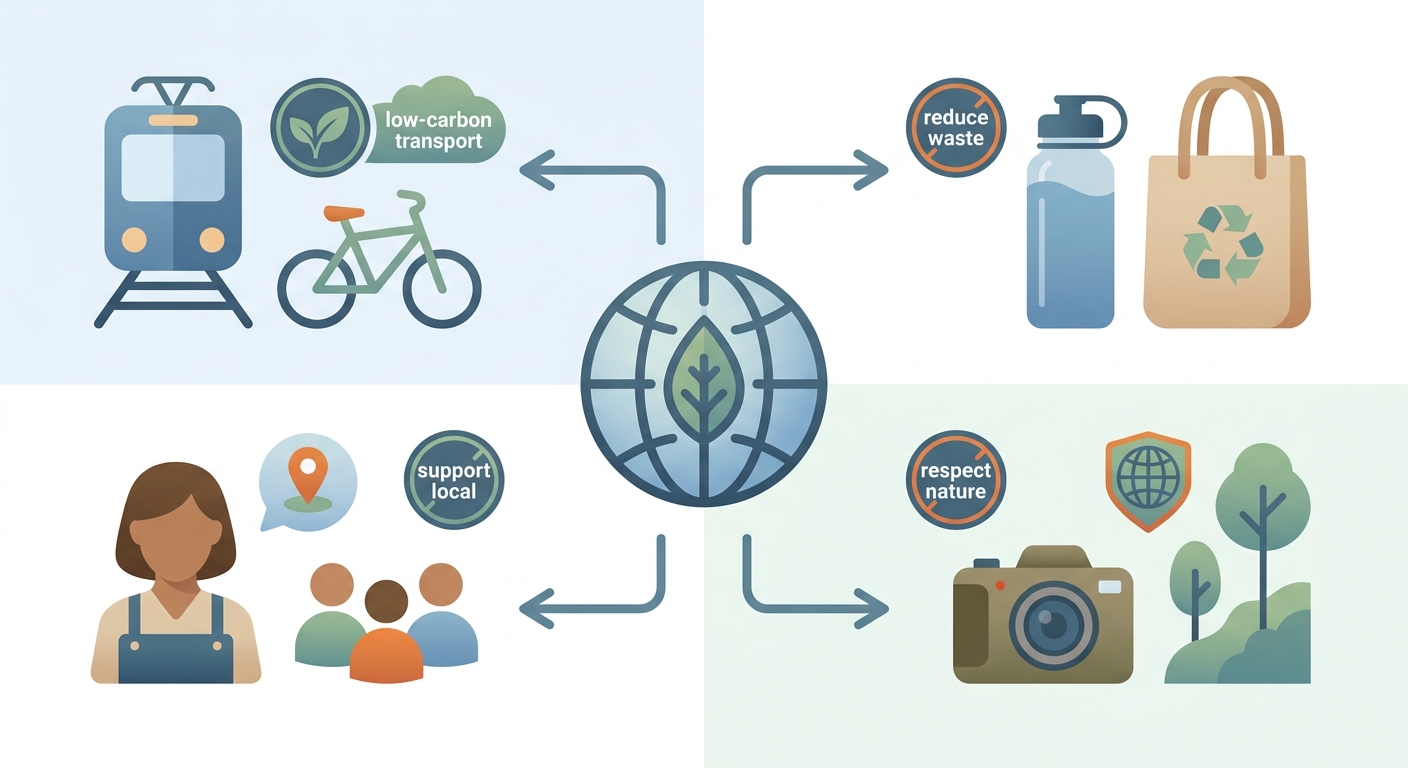
Throughout this article, we will delve into the practical, actionable steps you can take at every stage of your journey. You will learn how to choose the most eco-friendly transportation, identify truly sustainable accommodations, pack in a way that reduces waste, and engage with local cultures and wildlife ethically. We will explore how your spending choices can empower communities and how simple habits can protect fragile ecosystems. By the end, you will be equipped with the knowledge and confidence to transform your future trips into positive forces for change, ensuring that the beauty of our world can be enjoyed by generations to come.
What Does Sustainable Travel Truly Mean?
Sustainable travel means exploring the world in a way that respects and benefits local people, cultures, economies, and the environment. It's a comprehensive approach built on three core pillars: environmental protection, social responsibility, and economic viability. This philosophy moves beyond simply reducing your carbon footprint to encompass a holistic view of your impact as a traveler.
At its heart, sustainable travel is about making intentional choices. It's about recognizing that every dollar you spend and every interaction you have can either contribute to or detract from the well-being of a destination. The goal is to leave a place as good as, or even better than, you found it. This involves actively seeking out opportunities to support conservation efforts, preserve cultural heritage, and ensure that tourism is a positive force for the local community. It's the difference between a trip that extracts value and one that creates it, fostering a more profound and meaningful connection with the places you visit.
A real-world example of this principle in action is choosing a community-based tourism project over a large, foreign-owned resort. Imagine visiting a rural village in Southeast Asia. Instead of staying at an all-inclusive resort where most of the profits leave the country, you opt for a homestay organized by a local cooperative. Here, your money directly supports host families, funds community projects like schools or clean water initiatives, and you gain an authentic insight into daily life. Your guide is a local resident, you eat meals prepared with ingredients from the village farm, and you learn about traditions firsthand. This model ensures that the economic benefits of your visit are distributed directly within the community, empowering residents and giving them a vested interest in preserving their culture and environment for future visitors.
This contrasts sharply with mass tourism models that often lead to environmental degradation, cultural commodification, and economic leakage. While a luxury resort might seem appealing, it can create a bubble that isolates tourists from the local reality and funnels profits to international corporations. Sustainable travel encourages us to break out of that bubble. It challenges us to ask critical questions: Where is my money going? Who is benefiting from my presence? What is the long-term impact of my visit? By prioritizing local ownership and community engagement, you actively contribute to a more equitable and resilient tourism industry. The actionable takeaway is to always research the social and economic structure of your tourism choices, not just their environmental claims.

How Can You Choose Sustainable Transportation?
Choosing sustainable transportation involves selecting modes of travel that have the lowest possible environmental impact, with a focus on reducing carbon emissions. This means prioritizing ground travel like trains and buses over air travel whenever feasible and opting for human-powered methods like walking or cycling for shorter distances once you've arrived at your destination.
The transportation sector is one of the largest contributors to global greenhouse gas emissions, and aviation is a significant part of that. A single long-haul flight can generate more CO2 than the average person in many countries produces in an entire year. Therefore, the most impactful decision a sustainable traveler can make is to fly less and fly smarter. This could mean choosing destinations closer to home, taking fewer but longer trips, or opting for direct flights, as takeoffs and landings are the most fuel-intensive parts of a flight. When flying is unavoidable, choosing airlines with modern, fuel-efficient fleets can also make a difference.
A powerful example of sustainable transportation is Europe's extensive rail network. A traveler planning a multi-city European tour could fly between London, Paris, and Amsterdam, a process involving multiple airport transfers, security checks, and significant carbon emissions. Alternatively, they could take the Eurostar and other high-speed trains. This option not only drastically cuts down their carbon footprint but also offers a more enriching travel experience. The journey becomes part of the adventure, offering scenic views of the countryside while traveling from one city center directly to another, saving time and hassle. Many European countries also offer night trains, which further enhance sustainability by combining travel and accommodation, saving on the resources needed for a hotel room for a night.
To better understand the trade-offs, consider this comparison of travel modes for a 500-kilometer journey:
| Mode of Transport | Relative Carbon Footprint | Typical Speed | Benefits | Drawbacks |
|---|---|---|---|---|
| High-Speed Train | Very Low | High | City center to city center, relaxing, scenic views | Not available everywhere, can be expensive if not booked in advance |
| Coach / Bus | Low | Moderate | Very affordable, extensive network | Slower, can be less comfortable |
| Electric Vehicle (EV) | Low (depends on grid) | Moderate | Flexibility, low running costs | Range anxiety, charging infrastructure varies |
| Conventional Car | High | Moderate | Maximum flexibility and convenience | High emissions, traffic, parking costs |
| Short-Haul Flight | Very High | Very High | Fastest for long distances | Highest emissions, airport hassle, security |
This table illustrates a clear hierarchy. For many journeys, the train offers an excellent balance of speed, comfort, and low environmental impact. The actionable insight here is to always research ground transportation options before defaulting to a flight. Use platforms like Rome2rio or Omio to compare the time, cost, and environmental impact of different travel modes. By reframing travel time as part of the experience rather than something to be minimized at all costs, you open yourself up to more sustainable and often more memorable journeys.

What Makes an Accommodation Eco-Friendly?
An eco-friendly accommodation is a hotel, lodge, or guesthouse that has made significant commitments to minimizing its negative environmental and social impact. This goes far beyond simply asking guests to reuse their towels. Truly sustainable lodging incorporates green practices into its core operations, including energy and water conservation, waste reduction and recycling, the use of sustainable materials, and a commitment to supporting the local community.
To identify these properties, look for tangible evidence of their commitment. Do they use renewable energy sources like solar panels? Have they implemented advanced water-saving systems, such as rainwater harvesting or greywater recycling? Do they source their food from local farmers and producers, reducing food miles and supporting the local economy? Furthermore, a genuinely eco-friendly accommodation respects its social context. It should employ local staff, pay fair wages, and actively contribute to community well-being. Certifications from reputable bodies like Green Key, EarthCheck, or LEED can be a helpful indicator, but it's also important to look at the specific actions they are taking.
Consider the case of the Lapa Rios Lodge in Costa Rica, a prime example of a truly eco-friendly accommodation. Nestled in a private nature reserve, the lodge was built with locally harvested, renewable materials. It operates with a strict conservation ethos, protecting over 1,000 acres of primary rainforest that serves as a vital wildlife corridor. The lodge uses solar power for heating water, has a chemical-free pool, and processes all its waste responsibly. Crucially, it is also a major employer in the local community and was instrumental in funding the construction of the local primary school. Guests who stay here are not just enjoying a beautiful location; they are actively contributing to the preservation of the rainforest and the economic stability of the local population.
This model stands in stark contrast to a conventional, large-scale hotel chain in the same region. Such a hotel might have a minimal environmental policy - perhaps just the towel-reuse card - while its construction may have displaced local ecosystems. It might import most of its food, employ management from abroad, and offer little in terms of authentic cultural connection. While both offer a place to sleep, the Lapa Rios Lodge offers an immersive, regenerative experience. The actionable takeaway for travelers is to dig deeper than surface-level marketing. Read the 'sustainability' page on a hotel's website. Look for specific, measurable actions, not vague promises. Ask questions via email before booking: How do you manage waste? Where does your food come from? How do you support your local community? The answers will reveal their true commitment.

How Do You Pack for a Responsible Trip?
Packing for a responsible trip involves a minimalist and conscious approach, focusing on reducing waste, minimizing environmental impact, and being prepared for sustainable practices on the road. It means choosing multi-purpose items, avoiding single-use plastics, and selecting products that are kind to the ecosystems you plan to visit. Every item in your suitcase is an opportunity to make a more sustainable choice.
The core principle is to pack light and pack smart. A lighter suitcase means a lighter load for planes, trains, and automobiles, which translates to lower fuel consumption and fewer carbon emissions. Beyond weight, the contents of your bag matter immensely. The goal is to become a self-sufficient traveler who doesn't rely on disposable items provided by hotels or sold at tourist spots. This starts with creating a 'zero-waste travel kit' containing essentials like a reusable water bottle, a coffee cup, a set of bamboo or metal cutlery, a cloth napkin, and a reusable shopping bag. These simple items can prevent hundreds of pieces of plastic from ending up in landfills or oceans over the course of a trip.
Imagine a traveler preparing for a one-week beach holiday in Thailand. A conventional packer might throw in several travel-sized plastic bottles of shampoo, conditioner, and body wash, along with a bottle of standard sunscreen. During their trip, they would likely buy multiple plastic bottles of water each day to stay hydrated in the heat. In contrast, a responsible packer would bring solid toiletries - shampoo, conditioner, and soap bars - which are plastic-free, last longer, and aren't subject to liquid restrictions in carry-on luggage. They would pack a water bottle with a built-in filter, allowing them to safely refill from taps and avoid buying bottled water. For sun protection, they would choose a reef-safe sunscreen that doesn't contain oxybenzone and octinoxate, chemicals known to cause coral bleaching and damage marine ecosystems.
The difference in impact is profound. The first traveler leaves behind a trail of plastic waste and potentially harmful chemicals, while the second leaves almost no trace. The actionable insight is to conduct a 'sustainability audit' of your packing list. For each item, ask yourself: Is this necessary? Is there a multi-purpose alternative? Is there a plastic-free version? This mindset extends to clothing as well. Choose versatile, high-quality pieces that can be layered and worn in multiple combinations, reducing the need for a large wardrobe. Opt for natural, durable fabrics like merino wool, which is naturally odor-resistant and requires less washing. By packing with intention, you not only reduce your environmental footprint but also simplify your travel experience, freeing you to focus on the destination itself.

How Can You Support Local Economies Ethically?
Supporting local economies ethically means intentionally directing your travel spending towards businesses that are owned and operated by local people. This ensures that the financial benefits of tourism stay within the community, fostering sustainable development, creating jobs, and empowering residents. It's a conscious choice to prioritize authenticity and community welfare over the convenience of international chains and foreign-owned enterprises.
The core strategy is to 'buy local' at every opportunity. This applies to where you sleep, eat, shop, and what activities you choose. Opt for family-run guesthouses or locally-owned boutique hotels instead of large multinational hotel chains. Dine at restaurants that source their ingredients from nearby farms and markets. When shopping for souvenirs, seek out artisan cooperatives or markets where you can buy directly from the craftspeople, ensuring they receive a fair price for their work. Hire local guides for tours, as they can offer unparalleled insights into their culture and home, and your payment directly supports their family.
Consider a trip to Cusco, Peru, the gateway to Machu Picchu. A tourist could easily spend their entire budget within a bubble of foreign-owned businesses: a Marriott hotel, a Starbucks for coffee, a tour booked through a large international operator, and souvenirs from a generic shop selling mass-produced trinkets. In this scenario, a significant portion of the money spent 'leaks' out of the Peruvian economy and goes to international corporations. An ethical traveler, however, would make different choices. They might stay at a locally-owned 'hospedaje', eat at a 'picantería' (a traditional family-run restaurant), and buy textiles directly from a weaver in the Sacred Valley. They would hire a local Quechua guide who can share deep knowledge of Inca history and the natural environment.
The impact of these choices is transformative. In the first case, tourism can exacerbate inequality and create dependency. In the second, it becomes a tool for grassroots economic development. The money circulates within the community, paying for school fees, healthcare, and investment in local infrastructure. It provides a dignified livelihood that celebrates and preserves local culture rather than replacing it. The actionable takeaway is to be a curious and mindful consumer. Before making a purchase, ask yourself, "Who am I giving my money to?" Look for small, unassuming establishments off the main tourist drag. Engage with vendors, ask about their products, and be willing to pay a fair price for authentic goods and services. Your wallet is one of the most powerful tools you have for creating positive change when you travel.
How Should You Interact with Wildlife and Nature Responsibly?
Interacting with wildlife and nature responsibly means observing animals in their natural habitat from a respectful distance without disturbing them, and leaving natural environments pristine. The guiding principle is to prioritize animal welfare and conservation above your desire for a close-up photo or a hands-on experience. It requires a commitment to the mantra: take only pictures, leave only footprints.
Responsible wildlife tourism is passive. It never involves touching, feeding, or baiting animals, as these actions can alter their natural behaviors, make them dependent on humans, and even endanger both the animal and you. When choosing tours or visiting sanctuaries, it's crucial to do thorough research to distinguish truly ethical operators from those that exploit animals for profit. A genuine sanctuary focuses on rescue, rehabilitation, and conservation, and will not allow activities like riding elephants, petting tiger cubs, or swimming with captive dolphins. These activities are often supported by cruel training methods and a lifetime of captivity for the animals involved.
Let's compare two different elephant encounters in Thailand. One popular tourist attraction allows visitors to ride elephants, watch them perform tricks like painting, and pose for photos while hugging their trunks. To make an elephant compliant enough for these activities, it must undergo a brutal training process known as 'the crush' when it is young, where its spirit is broken through confinement and abuse. This is a clear example of unethical, exploitative tourism. An alternative is visiting an ethical sanctuary like the Elephant Nature Park in Chiang Mai. Here, the focus is on observation and education. Visitors can watch rescued elephants roam freely in a large, naturalistic enclosure, forage for food, and bathe in the river. You might help prepare their food or clean their living areas, but direct interaction is limited and always on the animal's terms. The experience is about learning their stories and supporting their recovery.
Furthermore, responsible interaction with nature extends to our digital habits. The practice of geotagging photos in sensitive natural areas can have devastating consequences. A beautiful, remote waterfall or a field of rare wildflowers, once tagged on social media, can be inundated with visitors, leading to trail erosion, litter, and habitat destruction. The actionable insight is to adopt a 'do no harm' philosophy. Always maintain a safe and respectful distance from wildlife. Use a zoom lens for photos instead of approaching animals. Stay on marked trails to protect fragile vegetation. Never leave any waste behind, including organic matter like fruit peels. And think twice before geotagging a specific location; sometimes, the most responsible thing you can do is to keep a beautiful place a secret. Your goal should be to be a silent, respectful observer, not an intrusive participant.
Why is Reducing Waste Crucial While Traveling?
Reducing waste while traveling is crucial because many popular tourist destinations, particularly in developing countries and on remote islands, lack the infrastructure to manage the massive influx of garbage generated by visitors. This leads to overflowing landfills, plastic pollution in oceans and landscapes, and significant harm to local ecosystems and wildlife. Your waste doesn't disappear when you check out of your hotel; it becomes a long-term burden on the community you visited.
The problem is often one of scale. A small island community that has sustainably managed its resources for centuries can be completely overwhelmed by the plastic bottles, takeaway containers, and other single-use items brought in by thousands of tourists each week. These items often cannot be recycled locally and must be burned in open pits, releasing toxic fumes, or shipped away at great expense. Much of it inevitably ends up in the natural environment, choking marine life, polluting beaches, and spoiling the very beauty that attracted travelers in the first place. Therefore, as a visitor, you have a direct responsibility to minimize the amount of trash you create.
Consider the example of the Philippines, an archipelago famous for its stunning beaches. Many of its smaller islands have limited to no waste management facilities. A tourist might buy several plastic water bottles a day, get their lunch in a styrofoam container with plastic cutlery, and use multiple plastic bags for their purchases. Over a week, this single person can generate a large bag of non-biodegradable trash. Now multiply that by the thousands of tourists visiting that one island. The result was starkly illustrated when the popular island of Boracay had to be closed for six months in 2018 for a massive environmental cleanup, partly due to a failing waste and sewage system overwhelmed by unchecked tourism.
The alternative is to adopt a 'pack in, pack out' mentality, especially in remote or sensitive areas. This means being prepared to carry your own trash until you find a suitable disposal facility. The most effective strategy, however, is to not create the waste in the first place. This is where the zero-waste travel kit becomes essential. By consistently using your reusable water bottle, coffee cup, and shopping bag, you can drastically cut down on single-use plastics. You can also make conscious choices at restaurants, opting to dine in rather than take away, and politely refusing plastic straws. The actionable insight is to view yourself as a custodian of the place you visit. Before you buy something, think about its entire lifecycle. Where will this wrapper, bottle, or container end up? By taking ownership of your consumption, you shift from being part of the problem to becoming part of the solution.
How Can You Engage with Local Cultures Respectfully?
Engaging with local cultures respectfully means approaching your interactions with humility, an open mind, and a genuine desire to learn and understand. It involves recognizing that you are a guest in someone else's home and adapting your behavior to align with local customs, traditions, and values. Respectful engagement enriches your travel experience and fosters positive, dignified relationships between visitors and hosts.
The foundation of respectful cultural engagement is pre-trip research. Before you arrive, take the time to learn about the local etiquette, religious beliefs, and social norms. What is the appropriate way to dress, especially when visiting religious sites? Are there specific customs around greeting people, dining, or giving gifts? Learning even a few basic phrases in the local language - such as 'hello', 'please', and 'thank you' - is a powerful gesture of respect that can open doors and create warm connections. It shows that you see the culture as more than just a backdrop for your vacation.
A powerful example of this is the protocol for visiting temples in Southeast Asia, such as those in Thailand or Cambodia. A disrespectful tourist might arrive in shorts and a tank top, speak loudly, and take intrusive photos of monks and worshippers without permission. This behavior can be deeply offensive in a sacred space. A respectful traveler, in contrast, would have researched beforehand. They would arrive wearing clothing that covers their shoulders and knees, or they would rent a sarong at the entrance. They would move quietly and observe ceremonies from a distance. If they wished to take a photograph of a person, they would first make eye contact, smile, and ask for permission, often with a simple gesture. This approach honors the sanctity of the place and the dignity of the people there.
This principle extends beyond religious sites. It's about being a mindful observer of daily life. Pay attention to how local people interact with each other. Avoid making assumptions or judgments based on your own cultural background. Be cautious about topics that may be sensitive, such as politics or history. The comparison here is between cultural exchange and cultural appropriation. Exchange is a two-way street built on mutual respect and learning. Appropriation is taking elements from a culture without understanding or respecting their context, often reducing them to a costume or a trend. The actionable insight is to always lead with curiosity and humility. Ask questions instead of making statements. Listen more than you speak. And always remember that the goal is not to judge or change a culture, but to appreciate it for what it is.
What is the Role of Carbon Offsetting in Sustainable Travel?
Carbon offsetting is a mechanism that allows individuals and organizations to compensate for the greenhouse gas emissions they produce by funding projects that reduce or remove an equivalent amount of emissions elsewhere. In the context of travel, this typically involves calculating the carbon footprint of a flight or trip and then paying a certified organization to invest in projects like reforestation, renewable energy development, or methane capture from landfills.
It's important to understand that carbon offsetting is not a perfect solution and should be viewed as a last resort, not a guilt-free pass to travel without consideration for one's impact. The primary focus of a sustainable traveler should always be on the 'reduce and avoid' principles first: flying less, choosing more efficient transportation, and reducing overall consumption. Offsetting should only come into play after you have already done everything possible to minimize your direct emissions. The effectiveness of offsetting schemes can also vary widely, so it's crucial to choose high-quality, certified programs.
For example, a traveler who must take a long-haul flight from New York to Sydney for an important family event has generated a significant carbon footprint. After booking the most direct route on the most fuel-efficient aircraft available, they decide to offset their emissions. They use an online calculator to determine their flight produced approximately 3.5 tonnes of CO2. They then research certified offsetting providers, such as those verified by the Gold Standard or Verra (Verified Carbon Standard). They choose to donate to a Gold Standard project that distributes efficient cookstoves in rural Ghana. These stoves burn less wood, which reduces deforestation (a source of CO2) and improves indoor air quality, providing both environmental and social benefits.
This is a more responsible approach than simply ignoring the emissions or choosing an unverified, cheap offset program that may not deliver any real climate benefit. However, it's crucial to recognize the limitations. A traveler who uses offsets to justify frequent, non-essential flights is missing the point of sustainable travel. The ideal approach is to change travel patterns first. Instead of four short international weekend trips a year, a sustainable traveler might take one longer, three-week trip, significantly reducing the number of flights taken. The actionable insight is to follow a clear hierarchy: 1) Avoid and reduce emissions wherever possible. 2) For unavoidable emissions, choose the most efficient option. 3) As a final step, offset the remaining emissions through a reputable, certified, and transparent provider. View offsetting as a complementary tool, not a primary strategy.
Conclusion
Embarking on the path of sustainable travel is a journey of conscious choices, not a quest for unattainable perfection. It is about transforming our perspective from that of a consumer to that of a global citizen, recognizing that our actions have a ripple effect on the places and people we are privileged to visit. As we have explored, this responsible approach is built on a foundation of respect - for the environment, for diverse cultures, and for local economies. It's not about a restrictive checklist of 'don'ts', but rather an empowering framework of 'do's' that enrich our travels and leave a positive legacy.
We have seen how simple shifts can create profound change. Choosing a train over a short-haul flight, staying in a locally-owned guesthouse, packing a reusable water bottle, buying crafts directly from an artisan, and observing wildlife from a respectful distance are all individual actions that collectively shape a more equitable and sustainable tourism industry. Each decision is a vote for the kind of world we want to explore. It's a commitment to ensuring that the wonders of our planet - its pristine ecosystems, vibrant cultures, and welcoming communities - are not just preserved but are actively supported and strengthened by our presence.
The ultimate guidance for any aspiring sustainable traveler is to start small and be intentional. You don't need to do everything at once. Pick one or two areas from this guide to focus on for your next trip. Perhaps it's eliminating single-use plastics from your luggage or dedicating your food budget to family-run restaurants. As you integrate these practices, they become second nature, paving the way for deeper commitments. The most beautiful destinations are not just places of scenic beauty, but places where the environment is healthy, the culture is thriving, and the local community is prospering. By traveling sustainably, you don't just see the world - you become an active participant in its well-being, ensuring its magic remains for all the travelers who will follow in your footsteps.
Frequently Asked Questions
Sustainable travel is not necessarily more expensive and can often be cheaper. While some eco-lodges or certified tours might have a higher price tag, many core principles of responsible tourism save money. For example, using reusable water bottles, eating at local markets instead of tourist-trap restaurants, and choosing public transportation or trains over flights or taxis can significantly reduce costs. Prioritizing locally-owned guesthouses over international hotel chains is also frequently a more budget-friendly option. The focus is on making conscious choices, many of which align with savvy budget travel practices by cutting out unnecessary, resource-intensive conveniences.
Ecotourism is a specific niche within the broader concept of sustainable travel. Ecotourism focuses primarily on environmentally responsible travel to natural areas, with an emphasis on conservation, education, and low-impact visitor activities. Sustainable travel, on the other hand, is a more holistic concept that applies to any type of travel, whether to a city, beach, or nature reserve. It encompasses three pillars: environmental, social, and economic. While all ecotourism should be sustainable, not all sustainable travel is ecotourism. For example, staying in a green-certified hotel in a major city and supporting local businesses is sustainable travel, but not ecotourism.
To find a truly ethical animal sanctuary, look for organizations that prioritize animal welfare over visitor entertainment. A genuine sanctuary does not allow riding, petting, or performances involving the animals. They should have a strong focus on rescue and rehabilitation, providing large, naturalistic habitats. Look for accreditations from bodies like the Global Federation of Animal Sanctuaries (GFAS). Read reviews carefully, looking for mentions of the animals' well-being and living conditions. The sanctuary's mission should be centered on conservation and education, not on providing photo opportunities for tourists. If it feels like a performance, it's likely an exploitative tourist trap.
The easiest first steps involve tackling single-use plastics and making conscious spending choices. Start by assembling a simple 'zero-waste' kit: a reusable water bottle, a tote bag for shopping, and perhaps a reusable coffee cup. This single habit dramatically reduces your plastic footprint. The second easy step is to prioritize local businesses. Make a rule to eat at family-run restaurants instead of international chains and to buy souvenirs from local artisans rather than generic shops. These two changes are simple to implement, have a significant positive impact, and often lead to a more authentic and affordable travel experience.
Carbon offsetting can work, but it must be approached with caution and seen as a last resort. For it to be effective, you must invest in high-quality, verified projects. Look for certifications like Gold Standard or Verified Carbon Standard (VCS), which ensure the projects are real, permanent, and 'additional' (meaning they wouldn't have happened without the offset funding). However, offsetting does not erase the initial pollution. The best strategy is always to reduce your emissions first by flying less and traveling more efficiently. Offsetting should only be used to compensate for unavoidable emissions, not as an excuse for unsustainable travel habits.