
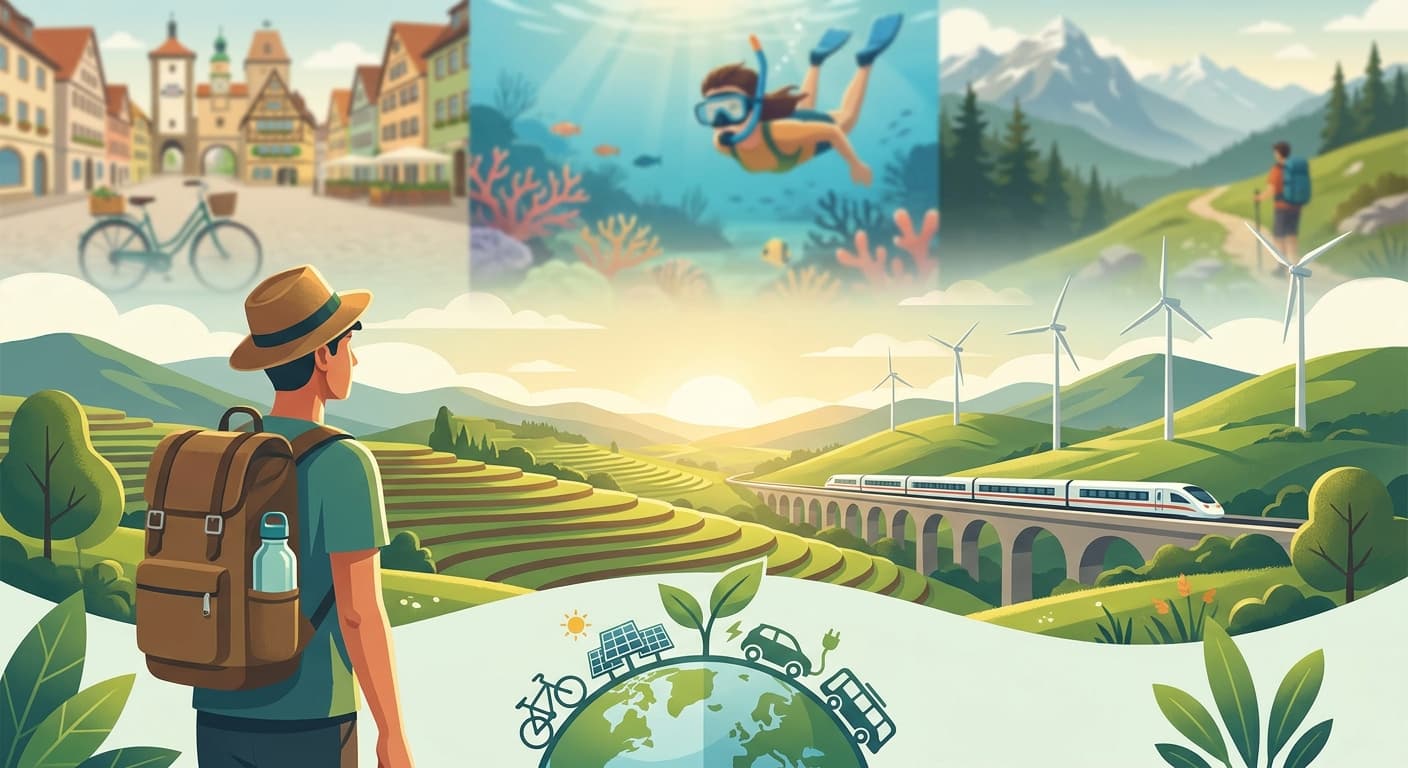
Sustainable Travel: 15 Ways to Reduce Your Environmental Impact While Exploring the World
The desire to explore our planet is a powerful human impulse. We dream of seeing towering mountains, ancient cities, and vibrant cultures. Yet, a growing paradox shadows our adventures: the very act of traveling to appreciate the world can contribute to its degradation. From the carbon emissions of flights to the plastic waste left behind, our footprint can be heavier than we realize. This doesn't mean we should stop exploring. Instead, it calls for a shift in mindset towards a more conscious and respectful way of moving through the world.
Sustainable travel is about making simple, intentional choices that collectively reduce your negative impact and enhance your positive contributions. It involves protecting the environment, supporting local communities, and preserving cultural heritage for future generations to enjoy. It's not about perfection; it's about progress. It's choosing the train over a short-haul flight, carrying a reusable water bottle, or buying souvenirs directly from the artisan who made them. These small acts create a powerful ripple effect, ensuring the destinations we love remain beautiful and vibrant.
In this comprehensive guide, you will learn 15 actionable ways to embrace sustainable travel. We will move beyond the basics, offering deep insights, practical examples, and clear strategies you can implement on your next trip. You'll discover how to choose greener transportation and accommodation, how to minimize waste, interact ethically with wildlife, and genuinely support the local economies of the places you visit. By the end, you'll be equipped not just with tips, but with a new philosophy for exploring the world more thoughtfully and responsibly.
How Can You Choose More Sustainable Transportation?
Your choice of transportation is often the single largest factor determining your trip's carbon footprint. To travel more sustainably, prioritize overland routes like trains and buses whenever possible, and when flying is necessary, choose direct flights, pack light, and fly economy class to minimize your individual emissions.
Aviation accounts for a significant portion of tourism-related CO2 emissions. A single long-haul flight can generate more carbon than the average person in some countries produces in an entire year. However, not all air travel is created equal. Choosing a direct flight is a powerful first step, as takeoffs and landings are the most fuel-intensive parts of a journey. Avoiding layovers, especially for shorter distances, drastically cuts down on fuel consumption. Furthermore, the class you fly matters. A seat in business or first class takes up more space and, therefore, accounts for a much larger share of the plane's total emissions - sometimes three to four times more than an economy seat. By flying coach, you are effectively increasing the passenger density and improving the fuel efficiency per person.
The second pillar of sustainable transport is embracing slow travel. This philosophy champions the journey itself, not just the destination. Instead of rushing between cities by air, consider the rich experiences offered by trains, buses, or even ferries. Overland travel is significantly less carbon-intensive. For example, traveling by train can reduce your carbon footprint by up to 90% compared to flying the same route. Slow travel encourages you to see the landscape change, stop in smaller towns you'd otherwise fly over, and connect more deeply with the country you're visiting.
Let's consider a real-world scenario: a trip from Paris to Barcelona. A flight takes about 1.5 hours (not including airport transit), but a high-speed train takes around 6.5 hours. While the train is longer, it delivers you from city center to city center, eliminating stressful and costly airport transfers. You get to witness the French countryside morph into the Spanish landscape, all while emitting a fraction of the carbon. This approach transforms travel from a logistical hurdle into an integral part of the adventure. Your takeaway is to re-evaluate how you measure travel time. Factor in the total journey, from your starting point to your final destination, including transit to and from airports. When you do, overland travel often becomes not only more sustainable but also more efficient and enjoyable.
Transportation Mode Carbon Footprint Comparison
| Mode of Transport | Average CO2 Emissions (grams per passenger-km) | Pros | Cons |
|---|---|---|---|
| Domestic Flight | 255g | Fast for long distances | Highest carbon footprint, airport hassle |
| Long-Haul Flight (Economy) | 150g | Connects continents | Very high total emissions, jet lag |
| Car (Single Occupant) | 170g | Flexibility, door-to-door | High emissions per person, traffic |
| Bus / Coach | 68g | Affordable, extensive networks | Slower, can be less comfortable |
| Train (National Rail) | 41g | Efficient, comfortable, scenic | Can be expensive, less flexible routes |
| High-Speed Train / Eurostar | 6g | Extremely low emissions, fast | Limited to specific high-traffic routes |
What Should You Look for in Eco-Friendly Accommodation?
To find truly eco-friendly accommodation, look beyond marketing claims and seek out properties with reputable third-party certifications like Green Key, LEED, or EarthCheck. Prioritize locally-owned guesthouses and hotels that demonstrate tangible commitments to resource conservation, such as using renewable energy, implementing water-saving measures, and sourcing food locally.
The term "eco-friendly" is often used loosely in the hospitality industry, a phenomenon known as greenwashing. A hotel might advertise its optional linen-reuse program while simultaneously wasting enormous amounts of energy and water elsewhere. To cut through the noise, certifications are your best ally. Organizations like the Global Sustainable Tourism Council (GSTC) recognize standards that are credible and transparent. When you see a hotel certified by a GSTC-accredited body, you can be more confident that it has undergone a rigorous audit of its environmental and social practices. These practices go far beyond asking guests to reuse towels; they include waste management systems, energy-efficient building design, protection of local ecosystems, and fair labor practices.
If a property lacks a formal certification, which is common for smaller, independent establishments, you can become a sustainability detective. Before booking, check their website for a dedicated sustainability page. Do they talk about specific actions? For example, do they mention solar panels on the roof, a rainwater harvesting system, a farm-to-table restaurant, or a policy of hiring staff from the local community? If this information isn't available online, don't hesitate to email them and ask. A genuinely sustainable hotel will be proud to share details about its initiatives. This proactive approach not only helps you make an informed decision but also signals to the industry that consumers care about these issues.
Once you've checked in, your role in sustainability continues. You can make a significant impact by practicing the same resource conservation habits you would at home. This means turning off lights and air conditioning when you leave the room, taking shorter showers, and reusing towels and linens for the duration of your stay. In many destinations, especially islands or arid regions, water and electricity are precious and often carbon-intensive resources. A simple act like reporting a dripping faucet can save hundreds of gallons of water over time. The key insight is to treat your hotel room not as a temporary space where consumption doesn't matter, but as a part of the local environment you've come to enjoy and have a responsibility to protect.
How Does Supporting Local Economies Contribute to Sustainability?
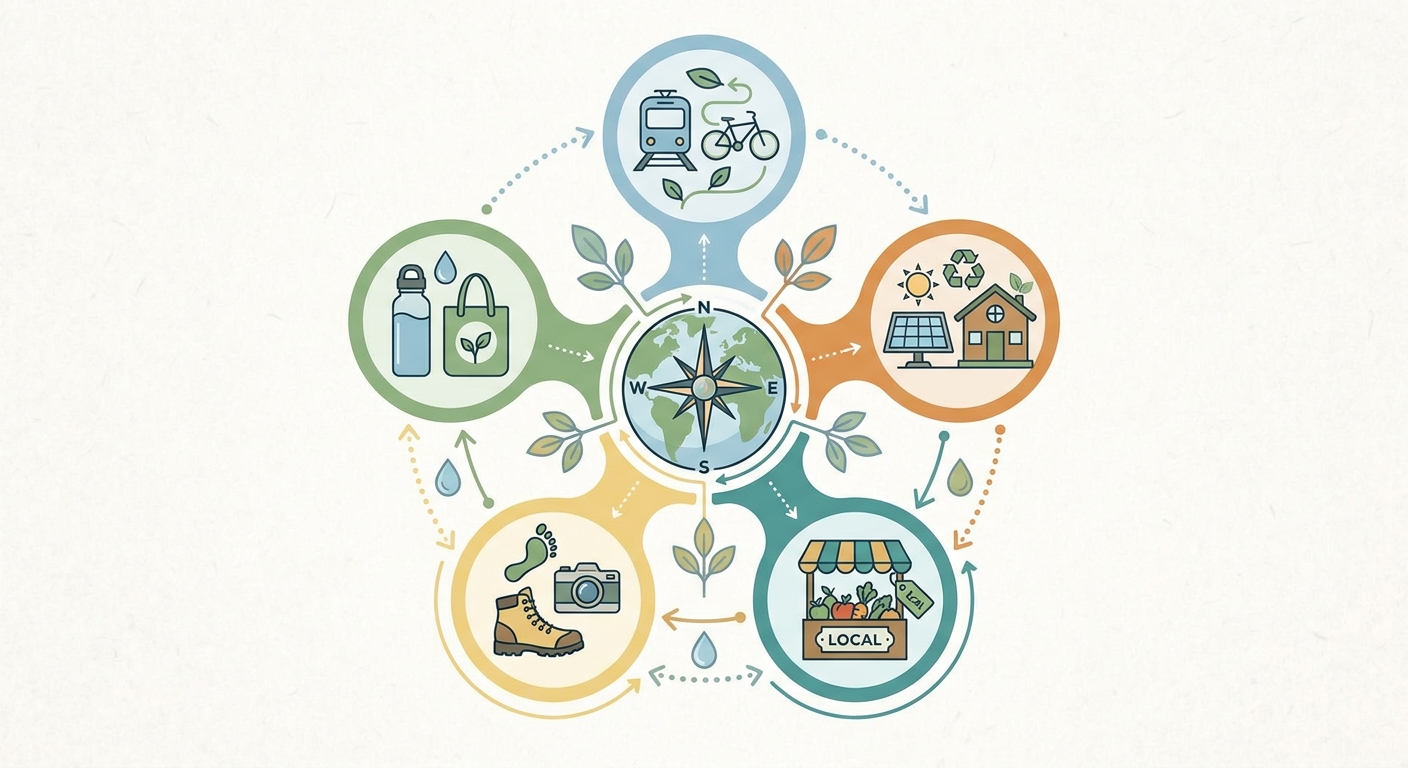
Supporting local economies is a cornerstone of sustainable travel because it ensures that your tourism dollars directly benefit the people and communities you are visiting. This is achieved by prioritizing locally-owned businesses - from guesthouses and restaurants to tour operators and artisan shops - over large, international corporations, thereby reducing economic leakage and fostering authentic cultural exchange.
A major problem in mass tourism, particularly in the context of all-inclusive resorts and cruise ships, is "economic leakage." This occurs when the money spent by tourists does not stay in the local economy. Instead, it is 'leaked' back to the multinational corporations headquartered in other countries that own and operate these facilities. In some developing countries, this leakage can be as high as 80%, meaning for every $100 a tourist spends, only $20 remains in the host community. This model creates a dependency on tourism without providing the economic empowerment needed for communities to thrive, protect their natural resources, and preserve their cultural heritage.
To counter this, make a conscious effort to seek out and patronize businesses that are truly local. Instead of a Starbucks, find a family-run café. Instead of a generic souvenir shop selling mass-produced trinkets, visit a local market or a cooperative where you can buy crafts directly from the artisans. This not only ensures your money has a greater impact but also leads to more memorable and authentic experiences. Dining at a local restaurant that sources its ingredients from nearby farms, for instance, gives you a literal taste of the region's culture and supports a whole network of local producers.
Hiring local guides is another powerful way to contribute. A licensed, independent guide from the community possesses a depth of knowledge and a personal connection to the place that you simply cannot get from a large tour company's standardized script. They can offer unique insights into local customs, history, and the natural environment. Furthermore, this provides a respectable, skilled livelihood that incentivizes the preservation of the very culture and nature that attracts visitors. For example, hiring a local guide for a trek in a national park ensures you are supporting someone whose well-being is directly tied to the health of that ecosystem. They are its best protectors because they understand its value in a way no outsider can. The takeaway is to view every purchase as a vote. By choosing local, you are casting a vote for a more equitable, authentic, and sustainable model of tourism that enriches both the visitor and the host.
What's the Best Way to Reduce Waste While Traveling?
The most effective way to reduce waste while traveling is to proactively refuse single-use plastics and come prepared with a zero-waste travel kit. This simple kit should contain essentials like a reusable water bottle with a filter, a coffee cup, cutlery, a cloth napkin, and a tote bag, empowering you to avoid disposable items offered on the go.
Tourist destinations are often hotspots for plastic pollution. The convenience-oriented nature of travel, combined with inadequate waste management infrastructure in many popular locations, creates a perfect storm for environmental damage. Plastic bottles, bags, straws, and food containers clog waterways, harm wildlife, and litter beautiful landscapes. As a traveler, you have the power to break this cycle by simply saying "no" and bringing your own alternatives. The concept of a zero-waste kit isn't about achieving perfection, but about being prepared for the most common sources of travel waste.
Let's break down the essential components of a travel-ready zero-waste kit. First, a reusable water bottle is non-negotiable. In countries where tap water isn't potable, invest in a bottle with a built-in purifier, like a Lifestraw or Grayl. This single item can save dozens of plastic bottles on a single trip and is often cheaper in the long run. Second, a reusable coffee cup or tumbler is perfect for your daily caffeine fix, whether from a cafe or a hotel breakfast bar. Third, a set of lightweight bamboo or metal cutlery and a reusable straw means you can enjoy street food and takeaway meals without the plastic waste. Finally, a foldable tote bag is indispensable for shopping at markets or carrying daily essentials, eliminating the need for plastic bags.
Consider this real-world scenario: you're exploring a bustling night market in Thailand. The aromas are incredible, and you want to try everything. Without a kit, each snack and drink comes with a plastic fork, a styrofoam plate, a plastic cup, a straw, and a plastic bag. Over one evening, you could accumulate a small mountain of trash. Now, imagine the same scenario with your kit. You hand over your reusable container for pad thai, your tumbler for a fruit smoothie, and use your own spork. You've enjoyed the exact same delicious food but have created zero waste. This simple shift in behavior, when multiplied by millions of travelers, has a transformative impact.
The key takeaway is that reducing waste on the road is about preparation and mindset. Before you leave, think about the disposable items you typically use and find a reusable alternative to pack. It might feel like a small effort, but it's a tangible, visible way to leave a destination cleaner than you found it. It sends a powerful message to local vendors that there is a demand for more sustainable, plastic-free options, encouraging a shift in their own practices over time.

How Can You Interact Responsibly with Wildlife and Nature?
To interact responsibly with wildlife, always observe animals from a safe and respectful distance, never feed them, and refuse any attraction that involves touching, riding, or forcing animals to perform. For nature, this means strictly adhering to the seven Leave No Trace principles, which are designed to minimize your impact on the natural environment.
The allure of an up-close animal encounter is strong, but it has led to a proliferation of unethical and harmful tourism practices. Any activity that allows you to ride an elephant, cuddle a tiger, or swim with captive dolphins is almost certainly causing immense suffering to the animals involved. These creatures are often taken from the wild, subjected to cruel training methods ('breaking the spirit'), and kept in unnatural conditions, all for the sake of a tourist photo. A truly ethical wildlife experience is one that prioritizes the animal's welfare above all else. This means choosing experiences like safaris in national parks with reputable guides who follow strict viewing protocols, or visiting legitimate conservation centers and sanctuaries that focus on rehabilitation and release, not entertainment.
When you are in natural habitats, remember the golden rule: you are a visitor in their home. Never feed wild animals. It disrupts their natural foraging behaviors, can make them sick, and leads to them becoming dangerously habituated to humans. Keep your distance, use binoculars or a zoom lens for a closer look, and be quiet and calm to avoid causing stress. If an animal changes its behavior because of your presence, you are too close. This respect extends to the entire ecosystem.
This is where the Leave No Trace principles provide an essential framework. These seven guidelines are universally applicable, whether you're hiking in a remote wilderness or visiting a popular city park. They are:
- Plan Ahead and Prepare: Research your destination, know the regulations, and carry the right gear to minimize your impact.
- Travel and Camp on Durable Surfaces: Stay on existing trails to avoid trampling fragile vegetation.
- Dispose of Waste Properly: Pack it in, pack it out. This includes food scraps like apple cores and banana peels.
- Leave What You Find: Let others enjoy the beauty. Don't take natural souvenirs like shells, rocks, or flowers.
- Minimize Campfire Impacts: Use a camp stove for cooking and obey all fire restrictions.
- Respect Wildlife: As discussed, observe from a distance and never feed animals.
- Be Considerate of Other Visitors: Preserve the tranquility of the natural world for everyone.
Imagine you're hiking to a pristine alpine lake. Following Leave No Trace means you stick to the marked path, eat your lunch on a large rock instead of delicate wildflowers, pack out all your food wrappers, and resist the temptation to take a beautiful stone home with you. The actionable insight here is to internalize these principles until they become second nature. True appreciation for the natural world isn't just about seeing it; it's about actively working to protect it so that it remains wild and beautiful for generations to come.
Is Carbon Offsetting an Effective Strategy for Sustainable Travel?
Carbon offsetting can be an effective strategy for mitigating the unavoidable emissions from travel, particularly flights, but only when used as a last resort and directed towards high-quality, verified projects. It should complement, not replace, efforts to reduce your travel footprint through more sustainable choices in transportation, accommodation, and activities.
At its core, carbon offsetting is the process of compensating for the carbon dioxide emissions your actions have produced by funding projects that reduce or remove greenhouse gases from the atmosphere elsewhere. When you purchase a carbon offset, your money might go towards planting trees (reforestation), developing renewable energy projects like wind or solar farms, or capturing methane from landfills. The goal is to balance out the emissions you created, making your flight, for example, theoretically "carbon neutral."
However, the world of carbon offsetting is complex and not without its critics. One major concern is the concept of "additionality." For an offset project to be legitimate, it must prove that the emissions reduction would not have happened without the funding from the offset purchase. If a wind farm was going to be built anyway, funding it doesn't create an additional benefit. Another issue is "permanence," especially with forestry projects. If a forest planted to offset emissions burns down or is logged a decade later, the stored carbon is released back into the atmosphere. This is why choosing the right offset provider is absolutely critical.
To ensure your money is making a real difference, look for projects certified by internationally recognized, independent standards. The two most reputable are the Gold Standard and the Verified Carbon Standard (VCS). These organizations have rigorous verification processes to ensure projects are additional, permanent, and have real, measurable benefits. Many airlines offer to offset your flight during the booking process, but it's often better to do it yourself through a third-party provider. This allows you to choose the specific project you want to support - whether it's clean cookstoves in Africa or renewable energy in South America - and gives you more transparency about where your money is going.
Let's put this into practice. You've calculated that your round-trip flight from New York to London will generate approximately 1.6 metric tons of CO2. After choosing a direct flight and packing light to minimize your impact, you decide to offset the remainder. You visit the Gold Standard marketplace, browse their portfolio of projects, and choose to support a project that provides safe, clean drinking water via boreholes in Uganda. This not only reduces emissions (by eliminating the need to boil water over wood fires) but also provides significant social and health benefits to the local community. The key takeaway is to view offsetting not as a license to pollute, but as a responsible final step in a broader strategy. First, reduce your emissions as much as possible. Then, and only then, offset what remains through a high-quality, verified project.
How Can You Pack Light and More Mindfully?
Packing light and mindfully is a surprisingly impactful sustainable travel practice. It reduces your carbon footprint by lowering the weight of aircraft, and it involves consciously choosing multi-purpose items and eco-friendly products, like solid toiletries and reef-safe sunscreen, to minimize both physical and chemical pollution in your destination.
The connection between your luggage weight and your carbon footprint is direct. Heavier planes require more fuel to fly. While the impact of a single passenger packing a few fewer pounds may seem negligible, when multiplied by millions of passengers every day, it adds up to a significant amount of saved fuel and reduced CO2 emissions. Airlines are very aware of this; it's a primary reason they have such strict baggage allowances. By embracing a minimalist packing philosophy, you are contributing to a more fuel-efficient aviation industry. This means choosing versatile clothing that can be layered and worn in multiple combinations, opting for a smaller carry-on instead of a large checked bag, and leaving unnecessary gadgets and "just in case" items at home.
Mindful packing extends beyond just weight. It also involves carefully considering the products you bring with you. A key example is sunscreen. Many conventional sunscreens contain chemicals like oxybenzone and octinoxate, which are devastating to marine ecosystems. When these chemicals wash off swimmers' skin, they can cause coral bleaching, damage coral DNA, and disrupt the development of fish and other marine life. This is particularly problematic in popular coastal destinations. By choosing a "reef-safe" sunscreen that uses mineral-based active ingredients like zinc oxide or titanium dioxide, you are actively protecting the underwater world you may have traveled so far to see.
The same principle applies to all your toiletries. Opting for solid versions of shampoo, conditioner, soap, and even toothpaste dramatically reduces plastic packaging waste. A single shampoo bar can replace two or three plastic bottles and often lasts much longer. They also have the added travel benefit of not being subject to liquid restrictions in carry-on luggage. When choosing any product, from insect repellent to soap, consider its ingredients and packaging. Are they biodegradable? Is the packaging minimal and recyclable? This level of mindfulness helps prevent the introduction of harmful chemicals and excess waste into fragile environments.
Imagine you are packing for a beach holiday in Mexico. Instead of two large suitcases, you challenge yourself to fit everything into a carry-on. You choose quick-drying fabrics and solid toiletries. You purchase a large tube of reef-safe, mineral-based sunscreen. At your destination, you move around more easily, you don't contribute to marine pollution when you swim in the cenotes, and you leave behind almost no plastic waste from your bathroom products. The actionable insight is that mindful packing is a holistic practice. It's about efficiency, environmental protection, and a lighter, more flexible travel style that benefits both you and the planet.
How Can You Continue Your Sustainable Impact After Your Trip?
Your sustainable impact doesn't end when you return home; it enters a new and powerful phase. You can continue to create positive change by educating yourself and others about responsible travel practices, sharing your experiences, and providing thoughtful, constructive feedback to the businesses you patronized, encouraging them to improve their sustainability efforts.
One of the most valuable things you bring back from a trip is a new perspective. You've witnessed firsthand the beauty of a place and perhaps some of the challenges it faces, whether from over-tourism, pollution, or economic disparity. Sharing these stories with your friends, family, and social networks can be a powerful tool for advocacy. This doesn't mean preaching or being judgmental. It's about sharing what you've learned in an authentic way. For example, post a photo of the beautiful, locally-made craft you bought and tag the artisan's cooperative. Write a blog post about your experience choosing a train over a plane and the unexpected joys of slow travel. When people see you practicing sustainable travel in an accessible and positive way, they are more likely to be inspired to make similar choices themselves.
Providing feedback is another crucial post-trip action. The tourism industry is driven by consumer demand and reviews. When you leave a review for a hotel, tour operator, or restaurant, you have an opportunity to influence their practices and inform future travelers. Be specific and constructive. If a hotel had an excellent water conservation program, praise it explicitly in your review on TripAdvisor or Google. This not only rewards the business for its efforts but also highlights this feature for other eco-conscious travelers. Conversely, if you noticed an opportunity for improvement, mention it politely. For example, "We loved our stay! One suggestion would be to install a water refill station to help guests reduce plastic bottle waste."
This feedback loop is vital for accountability. Businesses are more likely to invest in sustainable initiatives if they know it's a factor in their customers' decisions and public reviews. You can also take this a step further by sending a private email to the management with more detailed thoughts. Your perspective as a customer is incredibly valuable. Your simple act of communication can be the catalyst that leads to a hotel eliminating single-use plastic straws or a tour company adopting more ethical wildlife viewing guidelines. The ultimate takeaway is that as a sustainable traveler, you are also an ambassador. Your journey creates ripples. By sharing your knowledge, amplifying good practices through positive reviews, and encouraging improvement through thoughtful feedback, you help shape a better, more responsible future for the travel industry as a whole.
Conclusion
Embracing sustainable travel is not about sacrificing the joy and wonder of exploration. On the contrary, it is about deepening it. It is a conscious shift from being a passive consumer of places to an active and respectful participant in them. As we've explored through these 15 strategies, this journey involves every stage of our travels, from the initial planning to the stories we tell when we return. It's in choosing the scenic train ride that allows the landscape to unfold, selecting the family-owned guesthouse where our money directly supports the community, and packing the reusable bottle that becomes a trusted companion on our adventures.
The path to becoming a more sustainable traveler is one of progress, not perfection. It can feel overwhelming to try and do everything at once. Instead, focus on making small, incremental changes. On your next trip, perhaps you'll focus on eliminating single-use plastics. On the one after that, you might research and offset your flight's carbon footprint. Each step, no matter how small, contributes to a larger, positive movement. These individual choices, when made by millions of us, have the collective power to protect our planet's most precious natural and cultural treasures.
Ultimately, sustainable travel is the highest form of respect we can show for the world we are so privileged to explore. It ensures that the stunning coastlines, vibrant ecosystems, ancient traditions, and welcoming communities we cherish today will not only survive but thrive for future generations of travelers to experience. It transforms our journeys from a simple vacation into a meaningful exchange - one where we leave a place, and its people, better than we found them. So, as you plan your next adventure, carry these principles with you. Travel with curiosity, with kindness, and with a commitment to being a guardian of our beautiful world.
Frequently Asked Questions
These terms are often used interchangeably but have subtle differences. Eco-tourism is a subset, specifically focusing on travel to natural areas that conserves the environment and improves the well-being of local people. Responsible travel is a broader concept about the choices travelers make, such as respecting local cultures and minimizing their footprint. Sustainable travel is the most encompassing term, referring to the entire industry's impact. It is about meeting the needs of present tourists and host regions while protecting and enhancing opportunities for the future, balancing environmental, social, and economic factors.
Absolutely. Sustainable travel is often more affordable than mass tourism. Practices like choosing overland transport instead of flights, staying in locally-owned guesthouses instead of international chains, and eating at local restaurants are not only more sustainable but also significantly cheaper. Packing a reusable water bottle saves money on buying bottled water daily. Furthermore, many of the most rewarding sustainable activities, like hiking in national parks or exploring a city on foot, are low-cost or free. The misconception is that 'eco' always means 'expensive luxury lodge,' when in reality, it's about making smarter, more conscious choices.
Yes, significantly so. A business or first-class seat takes up much more physical space on an airplane than an economy seat. Since an aircraft's total emissions are divided among its passengers, those occupying more space are allocated a larger share of the carbon footprint. Estimates vary, but a business class seat can be responsible for three to four times the emissions of an economy seat on the same flight. A first-class seat can be up to nine times more. For a traveler concerned about their carbon footprint, choosing to fly in economy is one of the most impactful decisions they can make.
Greenwashing is when a company uses misleading marketing to appear more environmentally friendly than it is. To spot it, look for specifics instead of vague claims like "eco-friendly." A genuinely sustainable hotel will provide details about its initiatives, such as using solar power, having a water recycling system, or sourcing food from its own garden. Look for reputable third-party certifications like LEED, Green Key, or EarthCheck. Be wary if a hotel's only 'green' practice is asking you to reuse towels. A truly committed establishment will have sustainability integrated into all aspects of its operations, not just in guest-facing requests.
While being a completely zero-waste traveler is an admirable goal, it is extremely difficult to achieve in practice. The nature of travel often involves situations and systems outside of your control. However, the aim should be progress, not perfection. By using a zero-waste kit (reusable bottle, cutlery, bag), you can drastically reduce the vast majority of your travel waste. Focus on refusing the most common single-use items: plastic bottles, bags, straws, and coffee cups. Don't be discouraged if you cannot avoid all waste; every single item you refuse makes a positive difference.