Solo Female Travel Safety Tips: How to Stay Safe and Confident on Your Adventures
The idea of traveling the world alone as a woman is intoxicating. It promises unparalleled freedom, profound self-discovery, and the chance to write your own story, one city at a time. Yet, for many, this dream is shadowed by a persistent question: "Is it safe?" This concern, echoed by friends, family, and our own inner voice, can be powerful enough to keep our passports tucked away and our biggest adventures on hold. The world can seem intimidating, and the unique challenges women face are real and valid. But these challenges are not insurmountable roadblocks; they are simply hurdles that, with the right knowledge and preparation, you can confidently overcome.
The definitive answer is yes, solo female travel can be incredibly safe, rewarding, and empowering. Safety isn't about avoiding risk entirely - that would mean never leaving home. Instead, it's about developing the skills to manage risk intelligently. It's about swapping fear for awareness, anxiety for preparation, and uncertainty for confidence. True travel safety is a mindset built on a foundation of thorough research, strategic planning, and trusting your intuition. It's about learning to navigate new environments with a quiet confidence that deters unwanted attention and empowers you to handle any situation that arises.
This comprehensive guide is designed to be your ultimate resource for safe and confident solo travel. We will move beyond generic advice and dive deep into actionable strategies that cover every stage of your journey. You will learn how to meticulously research destinations, choose secure accommodation, pack essential safety gear, develop unshakable situational awareness, navigate transportation like a local, and handle difficult situations with grace and strength. By the end, you won't just have a list of tips; you'll have a complete framework for exploring the world on your own terms, safely and fearlessly.
How Should You Research a Destination for Solo Female Travel?
Properly researching a destination is the single most important step you can take to ensure your safety and enjoyment. This foundational work involves looking beyond tourist brochures to understand the local culture, potential risks, and practical logistics from the perspective of a woman traveling alone. It's about building a mental map of your destination before you even step on the plane.
Your research should start with a macro view and gradually narrow down to specifics. Begin by investigating the country's overall political stability, general safety for tourists, and any specific advisories for women. Government websites, like the U.S. Department of State or the UK's Foreign, Commonwealth & Development Office, provide reliable, up-to-date travel advisories. These resources offer objective information on crime rates, common scams, and areas to avoid. However, don't let these be your only source, as they can sometimes be overly cautious. The next layer is to seek out firsthand accounts. Travel blogs written by other solo female travelers are an invaluable resource. Look for recent posts (within the last 1-2 years) that discuss specific neighborhoods, transportation experiences, and cultural norms regarding women's dress and behavior.
A powerful research technique is to compare official advice with on-the-ground experiences. For example, an official advisory might warn about pickpocketing in Barcelona's Las Ramblas. A travel blogger might expand on this, explaining that it's most common in crowded areas near street performers and providing specific tips, like wearing a cross-body bag zipped and in front of you. This combination of objective data and subjective experience gives you a much more nuanced understanding. Dive into forums like Reddit's r/solotravel or Facebook groups dedicated to female travelers. Here, you can ask specific questions like, "Is the neighborhood around XYZ train station safe to walk through at 10 PM?" and get real-time answers from women who have been there.
Finally, focus on cultural etiquette. Understanding local customs is not just about respect; it's a critical safety tool. In some conservative countries, dressing modestly by covering your shoulders and knees can help you blend in and avoid unwanted attention. In other cultures, direct eye contact might be interpreted differently than it is at home. Researching topics like tipping customs, appropriate greetings, and local attitudes towards alcohol can prevent you from making a misstep that could make you vulnerable. Your takeaway should be a detailed picture of your destination, including safe neighborhoods to stay in, reliable transportation options, common scams to watch for, and the cultural nuances that will allow you to move through the space with confidence and respect.
What Are the Most Important Documents and Financial Precautions to Take?
Taking meticulous care of your documents and finances is a non-negotiable part of safe solo travel. A lost passport or a blocked credit card can turn an amazing adventure into a logistical nightmare, leaving you vulnerable and stressed. The key is to create a system of backups and redundancies so that no single point of failure can derail your trip.
Before you leave, create both digital and physical copies of all your essential documents. This includes your passport photo page, visas, driver's license, birth certificate, travel insurance policy, and flight and hotel confirmations. For digital copies, save them to a secure cloud service like Google Drive or Dropbox, and also email them to yourself and a trusted emergency contact back home. For physical copies, print out two sets. Keep one set with you but separate from the originals (e.g., originals in your money belt, copies in your locked luggage). Leave the second set with your emergency contact. This system ensures that even if you lose your phone and your wallet, you can access proof of your identity and travel plans from any internet cafe or with a single phone call.
Your financial strategy should be built on diversification. Never rely on a single source of money. Bring at least two different credit cards and two different debit cards, ideally from different banking networks (e.g., a Visa and a Mastercard). Before you leave, call each bank and inform them of your travel dates and destinations. This prevents their fraud detection systems from automatically blocking your card when they see a transaction from another country. Ask them about their international transaction fees and ATM withdrawal fees so you can choose the most cost-effective card for each situation. Store these cards in different places. For example, keep one credit card and one debit card in your wallet for daily use, and the backups locked in your accommodation's safe.
Consider a real-world scenario: Emily is in Thailand and her wallet gets stolen, containing her primary debit card and some cash. Because she prepared, this is an inconvenience, not a catastrophe. She immediately uses her phone (which was in her pocket) to access her cloud storage, where she has a copy of her passport. She uses her backup credit card, which was locked in her hotel safe, to pay for a meal and withdraw emergency cash from an ATM using her backup debit card. The next day, she can go to the embassy with her passport copy to begin the replacement process, all while still having full access to her funds. This level of preparation turns a potential crisis into a manageable problem.
Finally, always carry a small amount of local currency in cash for emergencies. This is crucial for situations where credit cards aren't accepted, like small local eateries, markets, or a taxi ride if the card machine is broken. Don't carry a large wad of cash, but having enough for a taxi ride back to your hotel and a meal can be a lifesaver. This multi-layered approach to documents and finances provides a robust safety net, giving you the peace of mind to focus on enjoying your trip, knowing you're prepared for any mishap.
How Do You Choose Safe Accommodation When Traveling Alone?
Choosing the right place to stay is one of the most critical safety decisions a solo female traveler will make. Your accommodation is your home base, your sanctuary, and your secure space to recharge. The right choice enhances your entire trip, while the wrong one can introduce unnecessary risk and anxiety. Prioritize security features and location over price alone.
The golden rule is to scrutinize recent reviews through the specific lens of a solo female traveler. A five-star rating doesn't tell the whole story. Use the filter or search function on booking sites to look for reviews that mention keywords like "solo female," "safe," "alone," "security," and "location." A review from a couple praising a secluded, romantic apartment might be a red flag for you, as "secluded" can mean isolated and poorly lit. Pay close attention to reviews from the last six months, as management and neighborhood dynamics can change. Look for mentions of a 24-hour front desk, responsive hosts, secure locks (deadbolts are a plus), and well-lit hallways and entrances. These details are your best source of on-the-ground intelligence.
Location is paramount. Before booking, use Google Maps and its Street View feature to virtually explore the neighborhood. Is it on a main road or a dark alley? Are there restaurants, shops, and a metro station within a short, well-lit walking distance? A cheap hotel that requires a long walk through an unlit park or a deserted industrial area at night is not a bargain. It's a liability. Aim for centrally located areas with plenty of "eyes on the street" - a term for places with consistent, safe foot traffic. For example, staying in a hotel near a major, well-serviced train station is often a better choice than a remote guesthouse, even if the guesthouse has slightly better reviews for its decor.
Different types of accommodation offer varying levels of security and social interaction. It's crucial to compare them based on your personal comfort level and the specific destination. A social hostel might be perfect for a trip to a city like Lisbon, while a hotel with a 24/7 concierge might be more appropriate for a first-time solo trip to a more challenging destination like Cairo. Below is a comparison to help you decide:
Accommodation Safety Comparison for Solo Female Travelers
| Feature | Hotel | Hostel | Vacation Rental (e.g., Airbnb) |
|---|---|---|---|
| Security Features | Often highest. 24/7 reception, keycard access, in-room safes, on-site security staff. | Variable. Look for female-only dorms, large personal lockers (bring your own lock), and 24-hour staff. | Most variable. Depends on host. Look for professional hosts, secure building entry, and good-quality door locks. No on-site staff. |
| Social Aspect | Low. Generally private and anonymous. Good if you want solitude. | High. Easy to meet other travelers in common areas and through organized events. | Low to medium. Private, but you might interact with the host or neighbors. |
| Vetting Process | Formal. Established brands have consistent standards. | Relies heavily on recent guest reviews. Check ratings on multiple platforms. | Crucial to vet the host. Look for "Superhosts" with many positive, recent reviews. |
| Actionable Takeaway | Best for privacy and guaranteed security features. A reliable choice for first-time solo travelers. | Excellent for budget and social connection. Always book a female-only dorm if available. | Offers a local experience. Only book with highly-rated, verified hosts in well-reviewed, safe locations. |
Ultimately, your choice should align with your risk tolerance. An actionable takeaway is to create a pre-booking checklist: 1. Read at least 10 recent reviews from solo women. 2. Verify the location and its surroundings on Google Street View. 3. Confirm the presence of key security features (24/7 staff, safe, good locks). 4. Have the accommodation's address and phone number saved offline on your phone. Trust your gut; if a listing feels off, even if you can't pinpoint why, move on. There will always be another, safer option.
What Should You Pack for Safety and Peace of Mind?
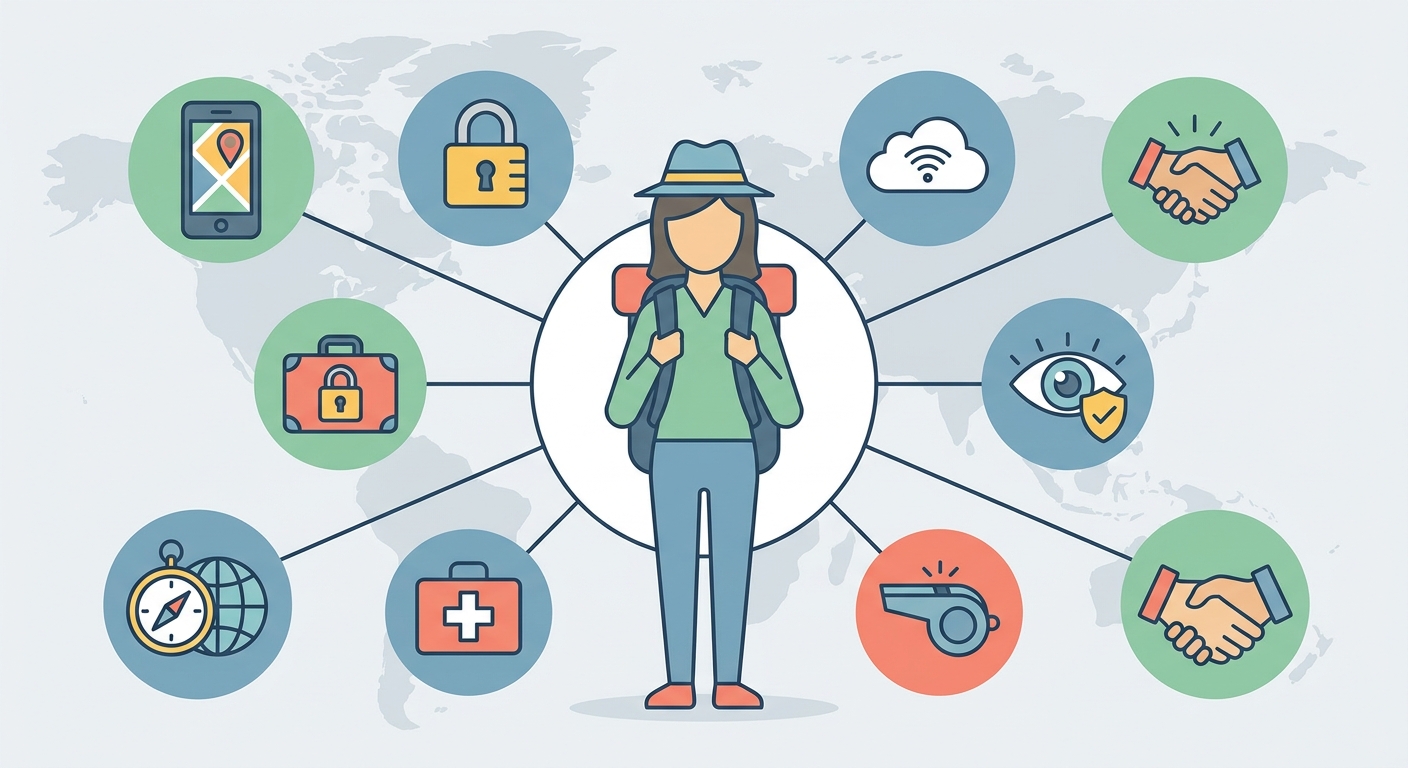
Packing for a solo trip as a woman goes beyond clothes and toiletries; it's about strategically selecting items that enhance your safety, security, and overall peace of mind. While you don't need to load your bag with bulky gadgets, a few key items can make a significant difference in how prepared and confident you feel. The goal is to pack smart, not heavy, focusing on multi-purpose items that address common solo travel concerns.
Your personal security toolkit should start with items for your accommodation. A rubber doorstop is a lightweight, inexpensive, and incredibly effective tool. Kicked firmly under your hotel or Airbnb door from the inside, it provides an extra layer of physical security, preventing the door from being opened even with a key. For an audible deterrent, consider a doorstop alarm, which blares a loud siren if pressure is applied to the door. Another essential is a quality padlock. This is non-negotiable for staying in hostels to secure your belongings in a locker, but it's also useful for locking zippers on your daypack in crowded places or even securing a cabinet in a private room rental.
Next, consider your on-the-go safety. A personal safety alarm is a small keychain device that emits an extremely loud, attention-grabbing noise when activated. It's a powerful tool for deterring potential attackers or drawing help in an emergency without escalating a situation physically. A whistle serves a similar purpose and doesn't rely on batteries. A reliable portable power bank is also a critical safety item. A dead phone means no access to maps, translation apps, emergency contacts, or ride-sharing services. Ensure your power bank can provide at least two full charges for your phone.
Think about a scenario where you're returning to your guesthouse late at night. The alley is darker than you expected. You can pull out a small flashlight (or use your phone's, but a separate one saves battery) to illuminate your path, making you look more purposeful and aware. As you get to your door, you place your doorstop alarm inside before you sleep. These small actions create powerful layers of security. Similarly, a money belt or anti-theft bag worn under your clothes keeps your passport, cash, and backup cards completely hidden and secure, mitigating the risk of pickpocketing in crowded tourist areas. This is far superior to keeping valuables in a back pocket or a loose purse.
Finally, pack a basic, customized first-aid kit. While you can buy supplies anywhere, having essentials on hand is crucial for immediate needs. Include basics like bandages, antiseptic wipes, and pain relievers, but also add items specific to your needs and destination, such as blister plasters, motion sickness medication, antihistamines for unexpected allergies, and any personal prescription medications (with a copy of the prescription). Having these items readily available prevents a minor issue like a blister or a headache from turning into a trip-disrupting problem. This curated collection of safety and health items doesn't just provide practical solutions; it builds a foundation of confidence, allowing you to explore more freely knowing you're well-prepared.
How Can You Develop Strong Situational Awareness While Traveling?
Developing strong situational awareness is the most powerful, portable, and versatile safety tool you possess. It's not about being paranoid or fearful; it's the art of being present, observant, and attuned to the environment around you, allowing you to proactively identify and avoid potential risks. This skill is more effective than any gadget and is the hallmark of a confident, savvy traveler.
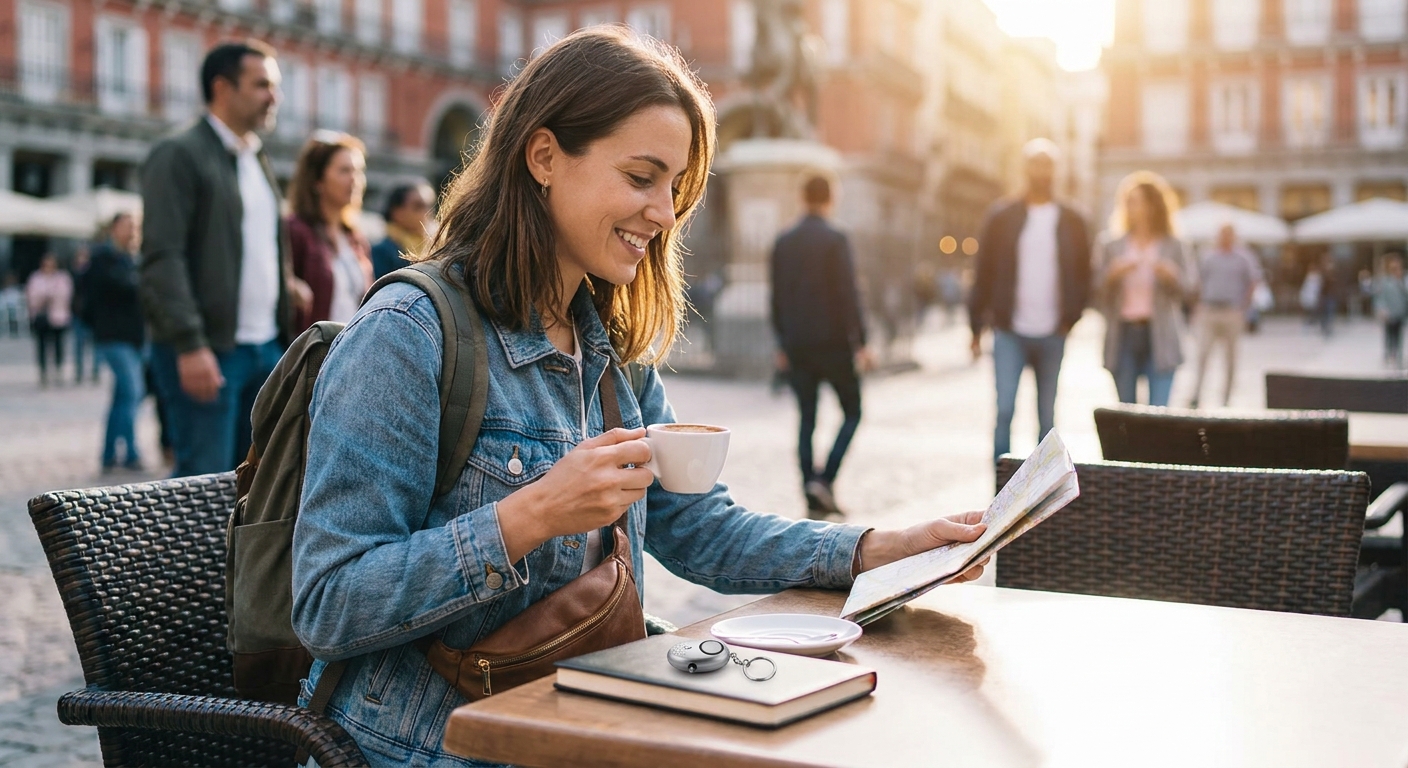
The core of situational awareness is projecting confidence and purpose, even when you're lost. Walk with your head up, shoulders back, and make brief eye contact with people. This confident posture, often called "walking with purpose," makes you look like you know where you're going and are comfortable in your surroundings, which makes you a less appealing target than someone who looks lost, timid, or distracted. Avoid staring down at your phone or a large paper map in the middle of a crowded sidewalk. If you need to check your directions, step into a shop or a cafe. This small act moves you from a vulnerable, static position to a more secure, private space while you reorient yourself.
A key technique is to practice active observation. When you enter a new space - be it a train station, a restaurant, or a public square - take a moment to scan the area. Mentally note the exits, the general mood of the crowd, and who is around you. You don't need to analyze everyone, but simply get a baseline feeling for the environment. This helps you notice when something is out of the ordinary. For example, if the entire square is bustling and loud, but one small area is unnaturally quiet or a commotion is starting, your baseline awareness will flag this, and you can choose to move away from that area before a problem fully develops. This is the difference between reacting to a situation and proactively avoiding it.
Consider this real-world application: Sarah is sitting at an outdoor cafe in Paris. Instead of being completely absorbed in her book, she practices soft focus. She is aware of the people at the tables around her and the foot traffic on the sidewalk. She notices a pair of individuals who are not talking or eating but seem to be watching tourists' bags. Because she is aware, she instinctively pulls her own bag closer and places her hand on it. A few minutes later, she sees them attempt to distract a nearby tourist and snatch their phone. Sarah was never in direct danger, but her awareness allowed her to identify a potential threat, secure her belongings, and observe the situation without becoming a victim. This is situational awareness in action.
To enhance this skill, it is crucial to trust your intuition. That nagging feeling in your gut that a street doesn't feel right, or that a person is being overly friendly, is your subconscious mind processing thousands of subtle environmental cues. Learn to listen to this instinct. It's better to be overly cautious and cross the street or leave a bar than to ignore a warning sign and regret it later. Blending in is also a major component. Observe how local women dress, carry themselves, and interact. While you don't need to completely change your identity, making small adjustments - like wearing a scarf or opting for more conservative clothing in certain areas - can help you stand out less and move more seamlessly through the local culture.
What Are the Best Practices for Using Transportation Safely?
Navigating transportation in an unfamiliar place is a daily necessity of travel, and it's also a time when solo travelers can be more vulnerable. From hailing a taxi to using a ride-sharing app or public transit, adopting a set of best practices is crucial for ensuring your safety. The key is to prioritize reputable services, maintain awareness, and have backup plans.
When it comes to taxis, always use official, licensed services. At airports, this means going to the designated taxi rank and ignoring unsolicited offers from drivers in the arrivals hall. In a city, ask your hotel or restaurant to call a trusted company for you. If you must hail a cab on the street, look for official markings, a meter, and a visible driver identification card. Before getting in, confirm the destination with the driver and have a general idea of the route and fare. You can follow along on your own phone's GPS. If the driver insists the meter is broken or tries to negotiate a flat, exorbitant fare, simply decline and wait for another cab. It's better to wait a few extra minutes for a legitimate ride than to get into an unverified vehicle.
Ride-sharing apps like Uber or Grab (popular in Southeast Asia) offer a great layer of security compared to traditional taxis. The entire journey is tracked via GPS, the driver's identity and vehicle information are provided upfront, and the payment is cashless. However, you must still be diligent. Before your ride arrives, check that the license plate, car model, and driver's photo match what's shown in the app. Never get into a car if there are discrepancies. When you get in, confirm the driver's name and ask them to confirm your name and destination. Share your trip status with a friend or family member through the app's built-in feature. This provides a live link to your journey, offering an extra layer of accountability.
Public transportation is often the most economical and authentic way to explore a city, but it requires heightened situational awareness. Try to avoid traveling late at night when services are less frequent and stations are more deserted. If you must, try to sit in the first car of the train, near the conductor, or on a bus close to the driver. When waiting on a platform, stand with your back against a wall to avoid being vulnerable to being pushed or having your pockets picked from behind. Keep your belongings secure and in front of you, and be mindful of your surroundings, especially during crowded rush hours. If a train car or bus feels unusually empty or has someone who makes you uncomfortable, it's perfectly acceptable to get off at the next stop and wait for the next one.
A practical scenario illustrates the difference in approach. A traveler, Maria, arrives at a new city's airport. Instead of accepting a ride from a man who approaches her offering a "cheap taxi," she follows the signs to the official, well-lit taxi queue. She gets into a marked cab, notes the driver's ID number, and follows the route on her phone. Her friend, on a different trip, uses a ride-sharing app. When the car arrives, she first matches the license plate, then opens the door and asks, "Are you here for Chloe?" before getting in, confirming the driver is her assigned ride. Both travelers arrive safely because they used verified methods and practiced simple but effective safety checks.
How Can You Protect Your Digital Information and Stay Connected Safely?
In today's hyper-connected world, travel safety extends far beyond the physical realm. Protecting your digital information and maintaining secure lines of communication are just as important as protecting your passport. A compromised bank account or a lost phone can create significant distress and logistical chaos. A proactive digital safety strategy is essential for any modern solo traveler.
The first line of defense is securing your devices. Before you leave, ensure your smartphone, laptop, and tablet are all password-protected with strong, unique passwords or biometric locks (fingerprint or face ID). Install anti-malware software and enable the "Find My Phone" feature, which allows you to remotely track, lock, or even erase your device if it's lost or stolen. It's also wise to back up your phone's data to the cloud before your trip, so you don't lose precious photos and contacts if the worst happens. This simple pre-trip checklist can save you from a world of trouble.
Be extremely cautious when using public Wi-Fi networks in airports, cafes, or hotels. These networks are often unsecured, making it easy for malicious actors to intercept your data. Avoid logging into sensitive accounts like your online banking or entering credit card information while connected to public Wi-Fi. If you must access sensitive data, use a Virtual Private Network (VPN). A VPN creates an encrypted connection, essentially a secure tunnel for your data, making it unreadable to anyone who might be snooping on the network. Using a VPN is a simple and highly effective way to protect your privacy and financial information while on the road.
Staying connected with people back home is both a comfort and a safety measure. Before you depart, set up a communication plan. Share your detailed itinerary - including flight numbers, hotel addresses, and planned activities - with a trusted friend or family member. Arrange to check in with them at regular intervals, whether it's a quick text each morning or a call every few days. This creates a system where if you miss a scheduled check-in, someone will know to be concerned and can take action. For added security, consider enrolling in your home country's program for citizens abroad, like the U.S. State Department's Smart Traveler Enrollment Program (STEP). This service registers your trip with the nearest embassy or consulate, which can then assist you in an emergency, from a natural disaster to a lost passport.
Let's compare two scenarios. Traveler A uses the free airport Wi-Fi to check her bank balance before her flight. A hacker on the same network captures her login credentials. Traveler B, in the same airport, needs to do the same. She first connects to her VPN on her phone, then logs into her banking app. Her connection is encrypted, and her data is safe. This simple, single step makes all the difference. The actionable takeaway is to treat your digital identity with the same care as your physical belongings. Use a VPN, have strong passwords, and maintain a clear communication line home. This digital safety net provides immense peace of mind, allowing you to navigate the world with confidence.
How Should You Handle Unwanted Attention or Harassment?
Dealing with unwanted attention and street harassment is an unfortunate but possible reality for solo female travelers in some parts of the world. Having a clear set of strategies to deploy can empower you to shut down situations quickly and effectively, preserving your sense of safety and confidence. The key is to respond with firm, decisive action while avoiding unnecessary escalation.
Your first and most powerful tool is your body language and non-verbal cues. Projecting confidence is a major deterrent. Walk with purpose, keep your head up, and avoid looking lost or vulnerable. When you receive unwanted comments or stares, often the best response is no response at all. Do not engage, do not smile politely, and do not make eye contact. Simply ignore the person and continue on your way as if you haven't heard them. This communicates that you are not an easy target and are not interested in interacting. In many cases of low-level street harassment, this is enough to de-escalate the situation immediately. The harasser is looking for a reaction, and denying them one removes their power.
If someone is persistent and ignoring them isn't working, you may need to be more direct. Turn to face the person, use a firm, loud voice, and say a clear, unambiguous command like "No," "Stop," or "Leave me alone." Use strong, direct body language - stand tall and use a hand gesture to indicate "stop." There is no need to be polite or make excuses. A direct, forceful response is often shocking and effective. It's also useful to learn these key phrases in the local language. A loud "Stop!" in the local tongue can be more effective and is more likely to draw the attention of bystanders who can help.
If you feel a situation is escalating or you feel physically threatened, your priority is to remove yourself and seek safety. This is not the time for confrontation. Move towards a safe, public space. Walk into a busy shop, a family-run restaurant, a hotel lobby, or approach a group of women or a family. The presence of other people is a powerful deterrent. If you are being followed, do not lead the person back to where you are staying. Instead, walk to a police station or a public place and call for a taxi or ride-share from there. You can also use your phone to pretend to be on a call, speaking loudly and saying things like, "I'm right on the corner, I see you now," which creates the illusion that you are meeting someone.
Consider this example: a woman is walking and a man starts following her, making persistent comments. Her first step is to ignore him and pick up her pace. He continues. She stops, turns around, and says loudly and firmly, "Leave me alone!" while putting her hand up. This draws the attention of a few other people on the street. The man, surprised by her directness and the public attention, backs off and walks away. She successfully de-escalated without aggression. The key takeaway is to have a tiered response system: first, ignore. Second, use a firm verbal command. Third, move to a safe, public place. Trust your instincts - if a situation feels wrong, it is. Your safety is more important than anyone else's feelings or being perceived as 'rude'.
What Are the Key Health and Wellness Strategies for a Solo Trip?
Maintaining your health and wellness on a solo trip is about much more than just avoiding illness; it's the foundation of a successful and enjoyable adventure. When you're traveling alone, you are your own primary caregiver. Being proactive about your physical and mental well-being ensures you have the energy and resilience to handle the challenges and fully embrace the joys of your journey.
Before you even leave, schedule a visit with your doctor or a travel health clinic at least a month in advance. Discuss your itinerary and get any recommended vaccinations or preventative medications, such as for malaria. Refill any personal prescriptions to ensure you have more than enough for your entire trip, and carry them in their original containers with a copy of the prescription. It's also essential to purchase comprehensive travel insurance. This is non-negotiable. Ensure your policy covers medical emergencies, emergency evacuation, and trip cancellation. Read the policy carefully to understand what is covered. Having robust insurance provides an invaluable safety net and peace of mind.
On the ground, be mindful of food and water safety. A bout of food poisoning can sideline you for days. In destinations with questionable water quality, stick to bottled or purified water, and avoid ice in drinks. Be cautious with street food; a good rule of thumb is to choose vendors that are busy and popular with locals, as this indicates fresh ingredients and high turnover. Eat well-cooked food and be wary of raw salads or unpeeled fruits unless you've washed them yourself with safe water. While you should absolutely be adventurous with local cuisine, applying these simple filters can prevent most common travel-related stomach illnesses.
Equally important is managing your mental health and preventing burnout. Solo travel can be intense; you are constantly navigating new environments, making decisions, and processing new experiences. It's okay to feel lonely, overwhelmed, or homesick at times. Schedule downtime into your itinerary. You don't have to be exploring every single minute. Spend an afternoon reading in a park, have a relaxed meal, or even just rest in your hotel room. Stay connected with your support system back home. A video call with a friend or family member can provide a much-needed sense of connection and perspective.
Finally, listen to your body. Pay attention to your energy levels and don't push yourself too hard, especially in the first few days as you adjust to a new time zone and climate. Stay hydrated, try to get enough sleep, and be moderate with alcohol consumption. Alcohol lowers your inhibitions and impairs your judgment, which can put you in a vulnerable position. A healthy, well-rested traveler is a more aware and resilient traveler. By taking a holistic approach to your well-being - from pre-trip medical prep to daily self-care on the road - you equip yourself with the physical and mental fortitude needed to travel solo safely and sustainably.
Conclusion: Embracing the World with Confidence
Embarking on a solo journey as a woman is a profound declaration of independence and curiosity. It's an opportunity to connect with the world and yourself on an unfiltered, deeply personal level. While the concerns about safety are valid, they should be viewed not as barriers, but as calls to thoughtful preparation. As we've explored, solo travel safety is not a matter of luck or fear; it's a skill set that can be learned, practiced, and mastered. It is the conscious decision to empower yourself with knowledge, turning potential anxieties into a structured plan for a secure and successful adventure.
The journey to becoming a confident solo traveler begins long before you board the plane. It starts with meticulous research into your destination's culture and customs, allowing you to move with respect and awareness. It's solidified through the practical steps of organizing your finances and documents into a redundant, crisis-proof system. It takes physical form in the careful selection of secure accommodation and the packing of a few essential safety items that provide both practical help and peace of mind. These preparatory steps build the foundation upon which all your travel experiences will rest.
Once on the road, your greatest asset is your own awareness. By learning to project confidence, observe your surroundings, and trust your intuition, you transform from a passive tourist into an active, engaged navigator of your environment. You learn to handle unwanted attention with firm grace, use transportation with savvy diligence, and protect your digital life as carefully as your physical belongings. You prioritize your health and well-being, recognizing that a rested and healthy traveler is a safe traveler. These are not just tips on a checklist; they are pillars of a self-reliant mindset that will serve you long after you return home.
Ultimately, the goal of these strategies is not to encase you in a bubble of caution, but to give you the freedom to break out of your comfort zone responsibly. The world is filled with immense beauty, incredible kindness, and life-changing experiences, and you deserve to witness it all. By embracing these safety principles, you are not diminishing the spontaneity or joy of travel. Instead, you are giving yourself the ultimate gift: the confidence to say "yes" to adventure, to navigate the unknown with skill, and to explore the vast, wonderful world on your own terms, knowing you have the wisdom and preparation to do so safely.
Frequently Asked Questions
The safest countries for first-time solo female travelers often have low crime rates, excellent tourist infrastructure, and a reputation for political stability. Countries like Iceland, New Zealand, Finland, and Japan consistently rank high on global peace indexes and are known for their safety and ease of travel. European destinations such as Portugal, Spain, and Ireland are also popular choices due to their well-trodden tourist paths and reliable public transport. Ultimately, the "safest" country is subjective, but these options provide a great starting point for building confidence and experiencing the joys of solo travel in a secure environment.
Address your family's concerns by presenting a well-researched and detailed plan. Instead of just announcing your desire to travel, show them your itinerary, the research you've done on your destination's safety, and the precautions you'll be taking. Explain your communication plan, such as daily check-ins. Share links to travel blogs by other solo women who have visited the same places. By demonstrating that you are taking your safety seriously and have prepared thoroughly, you replace their fear of the unknown with confidence in your capabilities. This approach shows maturity and respect for their concerns while affirming your decision.
If you lose your passport, first file a police report to have official documentation of the loss. Next, contact your country's nearest embassy or consulate immediately. They are equipped to handle this exact situation. Having digital and physical copies of your passport and other IDs will significantly speed up the process of issuing an emergency travel document or replacement passport. The embassy staff will guide you through the required paperwork and photo specifications. This is why having backups and knowing the location of your embassy beforehand is a critical part of pre-trip planning for any solo traveler.
Using dating apps while traveling can be a way to meet locals, but it requires extreme caution. If you choose to meet someone, always do so in a very public place for the first few times. Inform a friend back home of your plans, including who you are meeting, where you are going, and when you expect to be back. Share your live location with them. Never go back to their accommodation or reveal where you are staying until you feel completely comfortable. Trust your intuition; if a person or situation feels off, leave immediately. Your safety is always the top priority.
Absolutely not. The notion that a woman choosing to do something for her own personal growth is selfish is an outdated societal pressure. Traveling solo is an act of self-investment, curiosity, and courage. It builds resilience, independence, and a broader understanding of the world, making you a more well-rounded person. Taking time for yourself and pursuing your passions is healthy and necessary. Your desire to explore the world on your own terms is a valid and empowering choice, not a selfish one. It's an experience that can enrich your life and, by extension, your relationships with others.