How to Pack a Carry-On Only: A Minimalist Travel Guide for Beginners
The moment of truth arrives at every airport: the baggage carousel. You watch with bated breath as dozens of identical black suitcases circle endlessly, hoping yours is next. The alternative? A world where you step off the plane, breeze past the carousel, and are already on your way to your destination while others are just beginning their wait. This isn't a travel fantasy reserved for seasoned nomads; it's the accessible reality of carry-on only travel. Packing everything you need into a single, compact bag is a skill that transforms your entire travel experience, making it lighter, faster, and remarkably less stressful.
So, how do you pack a carry-on only, especially as a beginner? The secret lies in a simple, three-part formula: choosing versatile items, maximizing every inch of space through smart techniques, and adopting a minimalist mindset. It's less about what you can't bring and more about the freedom you gain by bringing only what truly matters. This isn't about deprivation; it's about intentionality. It's about swapping checked-bag fees for an extra dinner out, trading baggage claim anxiety for an earlier start to your adventure, and eliminating the risk of lost luggage entirely.
This comprehensive guide is designed to walk you through the entire process from start to finish. You will learn the philosophy behind one-bag travel, how to select the perfect bag, and the art of building a capsule wardrobe that can take you anywhere. We'll dive into the nitty-gritty of packing techniques, demystify liquid restrictions, and help you conquer the "just in case" mindset that leads to overpacking. By the end, you'll have a repeatable system to pack efficiently for any trip, whether it's a weekend getaway or a two-week European adventure.
Why Should You Master Carry-On Only Travel?
Mastering carry-on only travel is about gaining freedom, saving money, and reducing stress. By limiting yourself to one bag, you eliminate checked baggage fees, remove the risk of the airline losing your luggage, and gain significant time and mobility at your destination. It streamlines your entire travel process from airport check-in to arrival.
The most immediate and tangible benefit is financial. Most airlines now charge hefty fees for checked bags, often for both domestic and international flights. A round trip with one checked bag can easily add $60 to $100 or more to your ticket price. For a family, this number multiplies quickly. Traveling carry-on only means that money stays in your pocket, ready to be spent on experiences, food, or activities that create lasting memories, not on transporting things you might not even use. This financial saving becomes even more significant when flying with budget airlines, where the business model often relies on ancillary fees like checked luggage.
Beyond the cost savings is the unparalleled convenience and peace of mind. The sinking feeling of watching an empty baggage carousel is something every traveler dreads. With one-bag travel, that anxiety is completely gone. Your belongings are with you at all times, secure and accessible. This also grants you incredible flexibility. If your flight is delayed or you need to make a tight connection, you aren't tethered to the logistics of a checked bag. You can move through airports quickly, take public transport with ease, and navigate crowded city streets or train stations without wrestling a bulky suitcase. This agility can fundamentally change the way you experience a place, allowing for more spontaneity.
Adopting this minimalist approach also forces you to be more intentional with your packing. It's a mental exercise in distinguishing needs from wants. You learn to build a versatile, efficient wardrobe where every item earns its place. This skill of intentionality often spills over into other areas of life. You become a more resourceful and decisive traveler, confident in your ability to thrive with less. The focus shifts from your stuff to your experience, which is the ultimate goal of travel in the first place.
What is the First Step to Packing a Carry-On?
The first and most critical step to packing a carry-on is creating a detailed packing list based on your destination's itinerary and weather. This planning phase happens before you even think about touching a piece of clothing or your suitcase. It shifts packing from a chaotic guessing game into a deliberate, strategic process that prevents overpacking from the start.
Begin by researching your destination thoroughly. Check the weather forecast not just for temperature, but for humidity, wind, and precipitation. A 65°F day in a dry climate feels very different from a 65°F day with damp coastal winds. Next, write down a day-by-day itinerary. You don't need to plan every minute, but have a general idea of your activities. Will you be hiking in the mountains, dining at a fancy restaurant, lounging by a pool, or spending most of your time walking through city museums? Each activity dictates a specific type of clothing. Listing these out helps you visualize what you actually need, rather than packing for imaginary scenarios.
With your research complete, start building your list. A great method is to use a spreadsheet or a simple notes app, creating categories like 'Tops', 'Bottoms', 'Outerwear', 'Shoes', 'Toiletries', and 'Electronics'. Now, challenge every single item you add. Ask yourself: Can this item be worn in at least three different outfits? Is there a lighter or more compact alternative? For instance, instead of packing a bulky cotton hoodie, consider a thin, packable merino wool sweater that offers more warmth for less weight and can be dressed up or down. Instead of three pairs of shoes for different occasions, can one versatile pair of stylish, comfortable sneakers or boots cover 90% of your needs?
Here's a real-world scenario: You're planning a 10-day trip to Paris in the fall. Your itinerary includes museum visits, long walks, one nice dinner, and exploring neighborhoods. Your list would prioritize layers: three versatile base-layer shirts (e.g., black, white, striped), two pairs of comfortable yet stylish dark-wash jeans or trousers, one sweater that works for both day and night, a waterproof trench coat, and one pair of waterproof boots or comfortable leather sneakers. For the nice dinner, you might pack a simple silk blouse or a nice scarf to elevate one of your daytime outfits, rather than a whole separate dress and heels. This planning process ensures every item has a purpose, laying the foundation for a perfectly packed carry-on.
How Do You Choose the Perfect Carry-On Bag?
Choosing the perfect carry-on bag requires balancing airline size restrictions with your personal travel style and the bag's functionality. The ideal bag should maximize packing space while remaining compliant, be comfortable to carry, and have organizational features that suit your needs. There is no single 'best' bag for everyone; the choice between a backpack and a roller suitcase is highly personal.
First, understand the constraints. While dimensions vary slightly, the most common domestic carry-on size limit in the U.S. is 22 x 14 x 9 inches. For international travel, especially on European budget airlines, the limits can be even stricter. Always check the specific airlines you plan to fly. Within these limits, you face your first major decision: hard-shell roller vs. soft-shell roller vs. travel backpack. Hard-shell cases offer superior protection for fragile items and are often lighter, but they have no external pockets and their rigid shape means no 'squeezing' it into a tight overhead bin. Soft-shell rollers offer more flexibility and external pockets for easy access to items like laptops or documents. Travel backpacks are the most mobile option, perfect for navigating cobblestone streets or multiple flights of stairs, and their soft sides are forgiving when packing. However, they place all the weight on your shoulders and back.
Consider your typical travel style. If your trips usually involve going from the airport directly to a hotel via taxi, a roller suitcase is excellent. The wheels do the heavy lifting, and maneuverability isn't a major issue. However, if you're a backpacker at heart, hopping between trains, buses, and hostels, a travel backpack is almost non-negotiable. A good travel backpack will have a padded hip belt to distribute weight, a clamshell (suitcase-style) opening for easy packing, and compression straps to cinch down your load. Look for brands like Osprey, Tortuga, or Aer that specialize in this category.
Let's compare two traveler profiles. Traveler A is a business consultant who flies weekly. They need to look sharp upon arrival and carry a laptop and documents. For them, a high-quality soft-shell roller with a dedicated laptop compartment and suiter section is ideal. Traveler B is a recent graduate on a three-week trip through Southeast Asia. They will be using various modes of transport and staying in different types of accommodation. For them, a 40L travel backpack is the clear winner, offering comfort and hands-free mobility. The actionable takeaway is to honestly assess your own travel habits and physical comfort before investing. The 'best' bag is the one you forget you're carrying.
What is the Best Way to Select Your Travel Wardrobe?
The best way to select your travel wardrobe is to build a 'capsule wardrobe' based on a cohesive color palette. This involves choosing a limited number of versatile, high-quality pieces that can be mixed and matched to create a multitude of outfits. The goal is to maximize your outfit options while minimizing the number of items you pack.
The process starts with a simple color scheme. Choose one or two neutral base colors, such as black, navy, grey, or khaki. These will form the foundation of your wardrobe, primarily for your bottoms, outerwear, and shoes. These items are the most difficult to pack and should be the most versatile. Then, select one or two accent colors that complement your neutral bases. These will be for your tops and accessories, like scarves or hats. This disciplined approach ensures that every single top you pack can be worn with every single bottom, instantly multiplying your outfit combinations. For a 10-day trip, this could look like: navy pants, dark jeans (bases), with tops in white, light blue, and burgundy (accents).
Next, focus on fabric and function. Opt for materials that are lightweight, wrinkle-resistant, and quick-drying. Merino wool is a traveler's miracle fabric: it regulates temperature (keeps you warm when it's cold and cool when it's warm), wicks moisture, and is naturally odor-resistant, meaning you can wear it multiple times without washing. Other great travel fabrics include synthetics like polyester and nylon blends, as well as Tencel and modal. Avoid bulky, slow-drying fabrics like 100% cotton, especially for items like jeans or hoodies, unless you have a specific need for them. Every item should earn its place by serving multiple purposes. A pashmina or large scarf can be a blanket on the plane, an accessory for dinner, and an extra layer of warmth.
Consider this example for a week-long city break in a mild climate. Your capsule could consist of nine core clothing items: two pairs of bottoms (e.g., black travel pants, dark jeans), five tops (e.g., two neutral t-shirts, one long-sleeve merino shirt, one button-down shirt, one nice blouse), one versatile sweater or cardigan, and one weather-appropriate jacket (like a trench coat or a packable down jacket). Add two pairs of shoes (one for walking, one slightly dressier) and a few accessories. From these nine pieces of clothing, you can create over twenty different outfits, more than enough for a week. The key takeaway is to view your clothing not as individual items, but as components of a highly efficient system. Planning this system before you pack is the secret to traveling light and always feeling well-dressed.
How Can You Pack Clothes to Maximize Space?
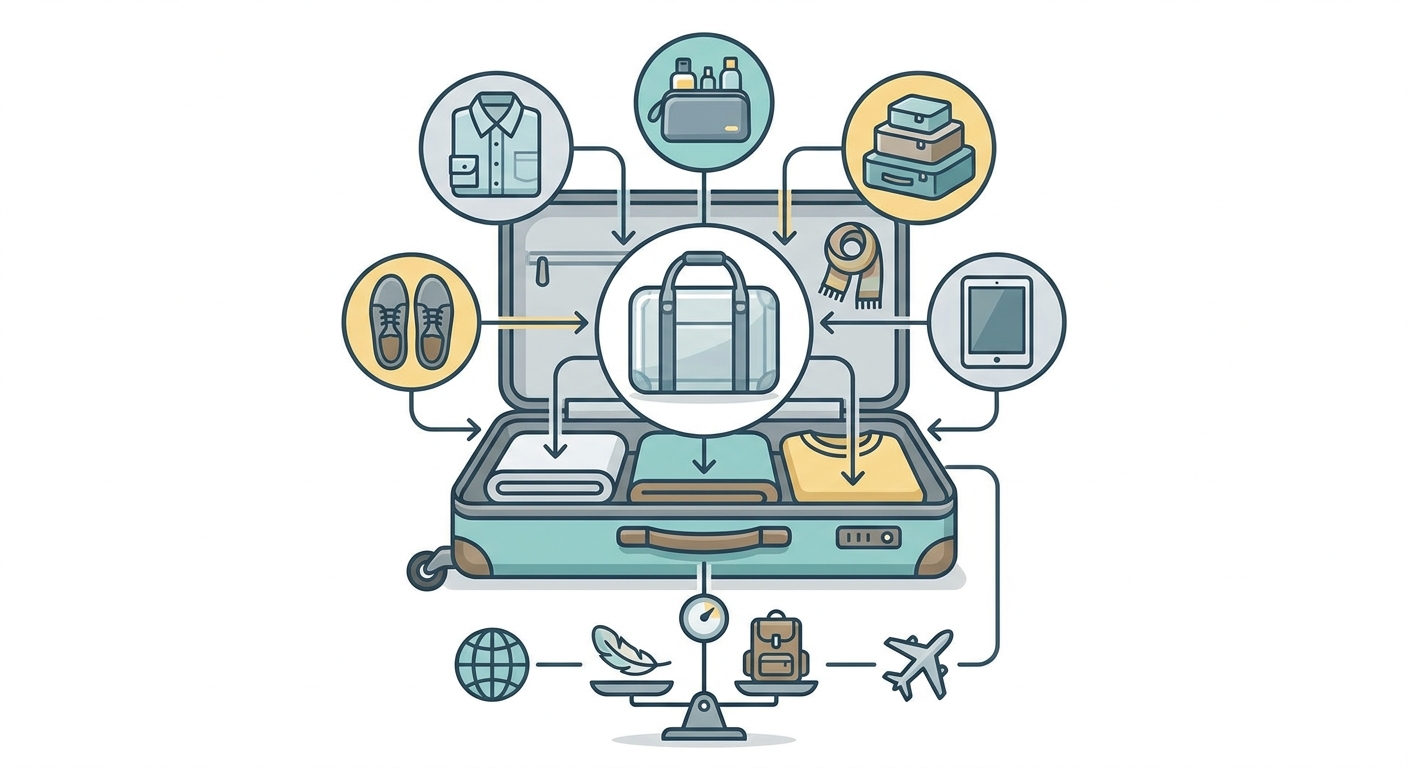
The most effective way to pack clothes and maximize space is by using a combination of the rolling method and compression packing cubes. This dual strategy compresses garments to their smallest possible volume, prevents severe wrinkling, and transforms a chaotic suitcase into a neatly organized, modular system.
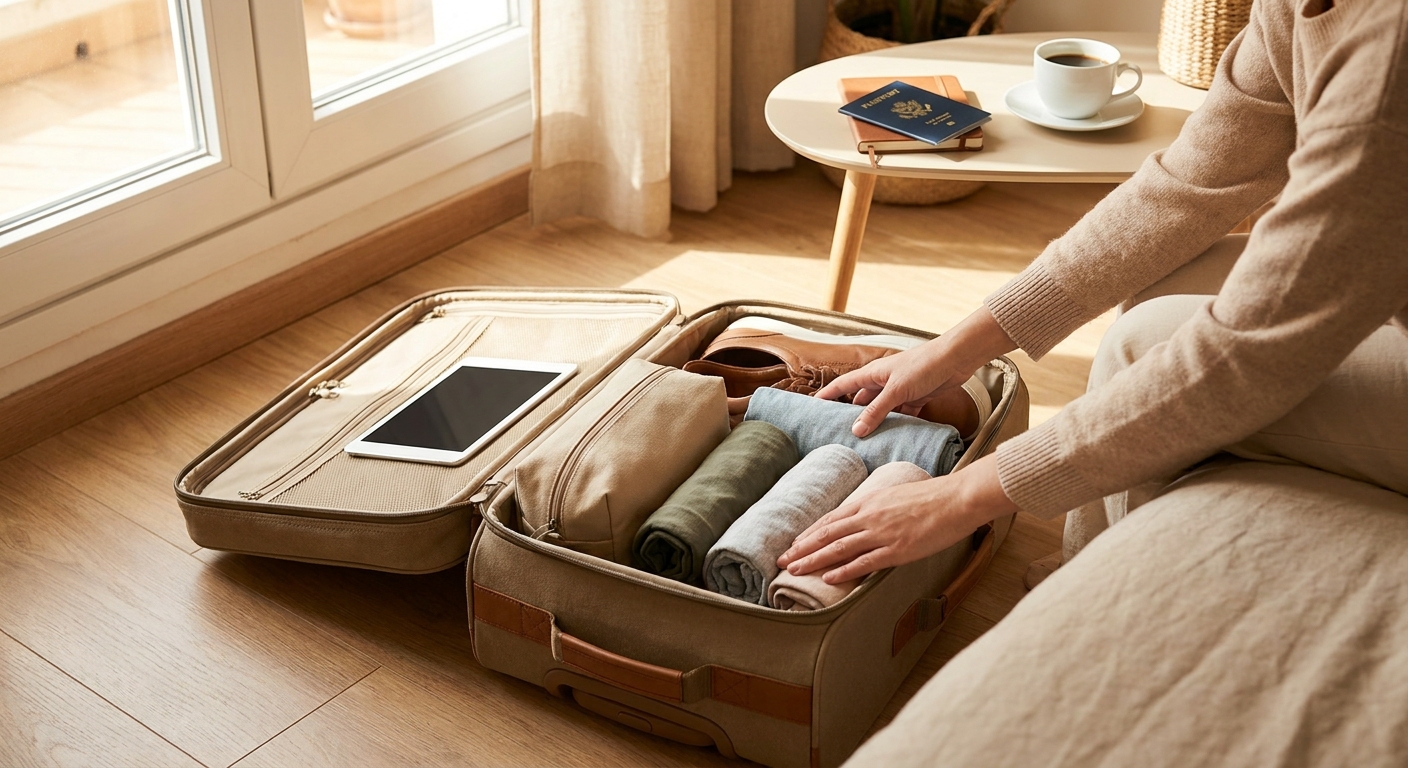
The rolling method is superior to folding for most clothing items like t-shirts, pants, casual dresses, and knitwear. When you fold clothes, you create air pockets between the layers, which wastes a significant amount of space. Rolling, by contrast, expels that air and creates dense, uniform logs of fabric that can be packed tightly together. To roll properly, lay the garment flat, fold in any sleeves, and then fold it in half lengthwise. Finally, starting from the bottom hem, roll it as tightly as you can. This tight roll not only saves space but also minimizes the hard creases that flat-folding can create.
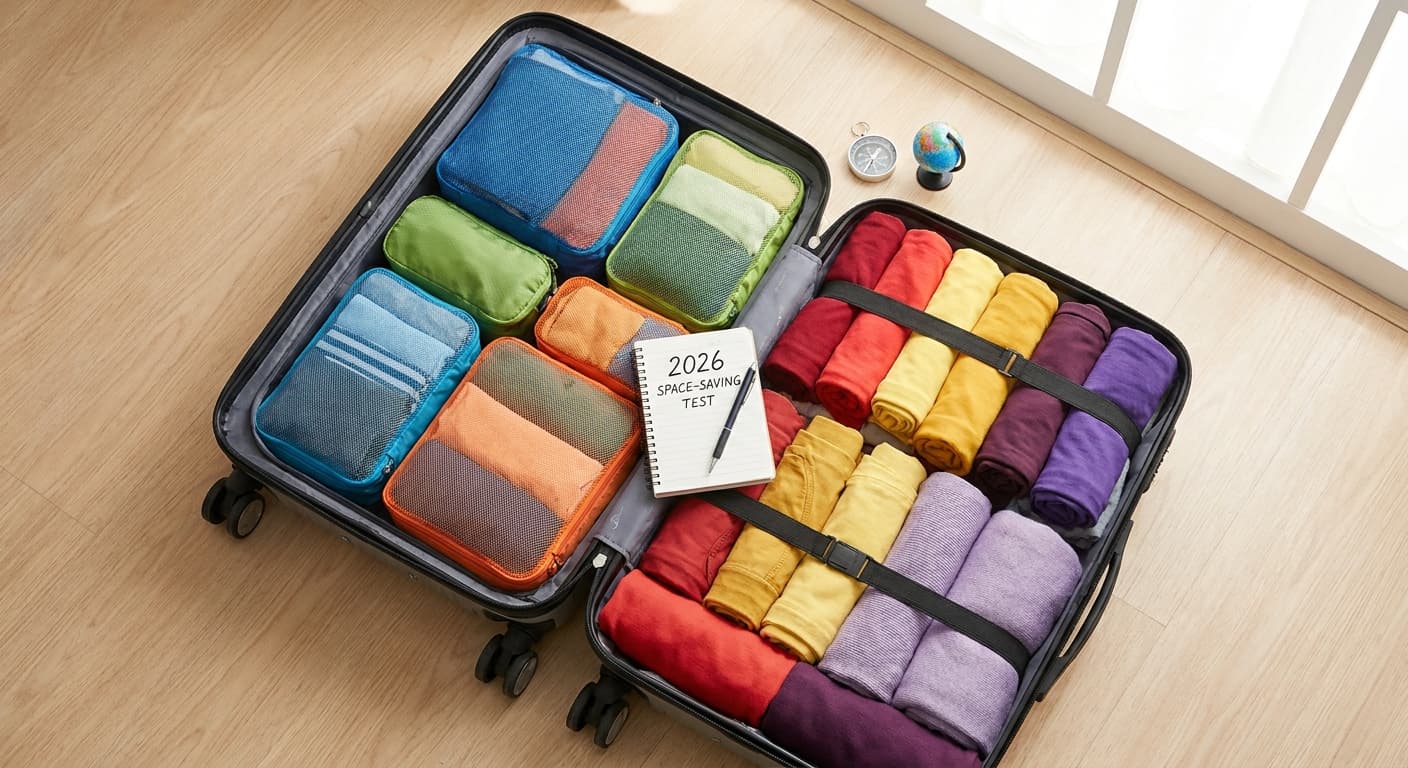
Packing cubes elevate this technique to the next level. These zippered fabric containers come in various sizes and act as drawers for your suitcase. By themselves, they offer excellent organization, allowing you to separate tops from bottoms, or clean clothes from dirty laundry. However, their true power is unlocked when you use compression cubes. These have an extra zipper that runs around the perimeter. After you fill the cube with your rolled clothes, you zip this second zipper, which cinches the cube down and squeezes out any remaining air, reducing its volume by 30-50%. This creates dense, stackable bricks of clothing that make packing feel like a game of Tetris you can actually win.
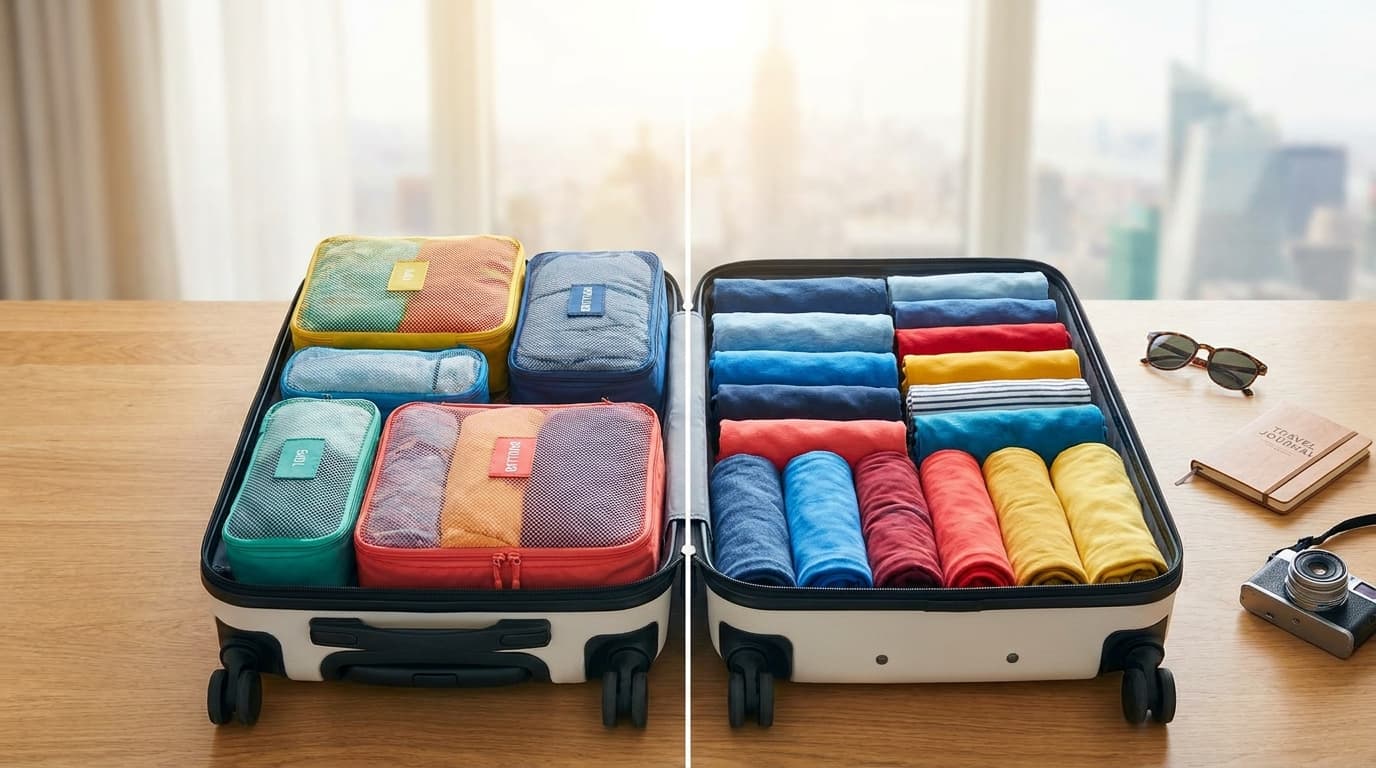
Here's a practical comparison. Imagine you need to pack five t-shirts, two pairs of jeans, and seven pairs of underwear and socks. If you simply fold them, they might take up half of your carry-on. If you roll them, they might take up a third. But if you tightly roll each item and place them in a medium-sized compression cube, you can squeeze them down into a package roughly the size of a large book. This methodical approach leaves an astonishing amount of free space for bulkier items like shoes, a jacket, or toiletries.
| Packing Method | Best For | Pros | Cons |
|---|---|---|---|
| Flat Folding | Structured items (blazers, dress shirts) | Minimizes wrinkles on formal wear | Inefficient use of space, creates air pockets |
| Rolling | Casual wear (t-shirts, jeans, knits) | Excellent space-saving, reduces creasing | Can stretch very delicate fabrics if rolled too tight |
| Packing Cubes | All clothing types | Superior organization, easy to unpack | Slight added weight, initial purchase cost |
| Compression Cubes | Bulky items (sweaters, pants) | Maximum space compression, organizational benefits | Can cause wrinkles if over-packed, requires effort to close |
The ultimate takeaway is to invest in a quality set of compression packing cubes and practice the rolling technique. Do a trial run before your trip. The visual proof of how much space you save will be a game-changer, converting you to this method for all future travels.
How Do You Pack Toiletries and Liquids in a Carry-On?
To pack toiletries and liquids in a carry-on, you must adhere to the TSA's 3-1-1 rule and strategically switch to solid alternatives wherever possible. The 3-1-1 rule dictates that all liquids, aerosols, gels, creams, and pastes must be in containers of 3.4 ounces (100 milliliters) or less, and all these containers must fit inside one single, clear, quart-sized zip-top bag.
Understanding and complying with the 3-1-1 rule is the first step. This isn't a guideline; it's a strict security requirement. Begin by gathering all the liquids you think you need. This includes everything from shampoo and toothpaste to sunscreen and foundation. Then, transfer them into travel-sized, reusable containers that are 3.4 oz or smaller. It's crucial to leave a little empty space in each bottle to account for pressure changes in the aircraft cabin, which can cause leaks. Once all your liquids are bottled, place them in a single, clear, quart-sized bag. This bag must be taken out of your carry-on and placed in a separate bin for screening at the security checkpoint, so keep it in an easily accessible pocket.
The real secret to mastering carry-on toiletries, however, is to minimize the number of liquids you carry in the first place. The market for solid toiletries has exploded in recent years, offering high-quality alternatives for nearly everything. You can find solid shampoo and conditioner bars, solid perfume, solid sunscreen sticks, and even toothpaste tablets. These items are not subject to the 3-1-1 rule, freeing up precious space in your quart-sized bag for essentials that don't have a solid version, like contact lens solution or specific facial serums. This switch not only simplifies your security screening but also eliminates the risk of leaks and spills in your luggage.
For example, a traditional toiletry kit might include liquid shampoo, conditioner, body wash, face wash, and toothpaste, easily filling up your quart bag. A minimalist traveler, however, might pack a solid shampoo bar (which can often double as body wash), a solid conditioner bar, a solid face wash stick, and toothpaste tablets. This leaves their entire liquids bag available for just sunscreen and a favorite face cream. The actionable insight here is to proactively audit your toiletry routine before a trip and invest in a few key solid products. They might seem like a novelty at first, but the space they save and the convenience they offer will make them a permanent part of your travel kit.
What Electronics and Gadgets Should You Pack?
When packing electronics for carry-on only travel, the key is to consolidate and minimize. You should pack only essential multi-functional gadgets, a single universal power adapter, and a portable power bank. The goal is to reduce cable clutter and weight while ensuring you have the power and connectivity you need for your trip.
Start by auditing your electronic needs ruthlessly. In an era where smartphones are incredibly powerful, they can often replace multiple other devices. Your phone is your camera, GPS, music player, boarding pass, and communication tool all in one. Unless you are a professional photographer, the camera on a modern smartphone is more than sufficient for travel photos. This means you can likely leave your bulky DSLR at home. Similarly, do you really need a tablet, a laptop, and a Kindle? For most leisure trips, a Kindle or just the Kindle app on your phone is enough for reading, and a phone can handle most casual browsing and communication needs. For business travel, a lightweight ultrabook or a tablet with a keyboard case can serve all your needs without the bulk of a traditional laptop.
Cable management is the next frontier. The nightmare of a tangled mess of different chargers can be solved with a bit of planning. The first step is to consolidate around a single charging standard, like USB-C, as much as possible. Many modern devices, including laptops, tablets, phones, and headphones, now use this standard. This means you might only need one charging brick and one cable to power everything. For any remaining devices that use other connectors (like micro-USB or Apple's Lightning), consider a multi-tip cable that has interchangeable heads. Pair this with a compact Gallium Nitride (GaN) charger, which can deliver high power output from a much smaller brick than traditional chargers.
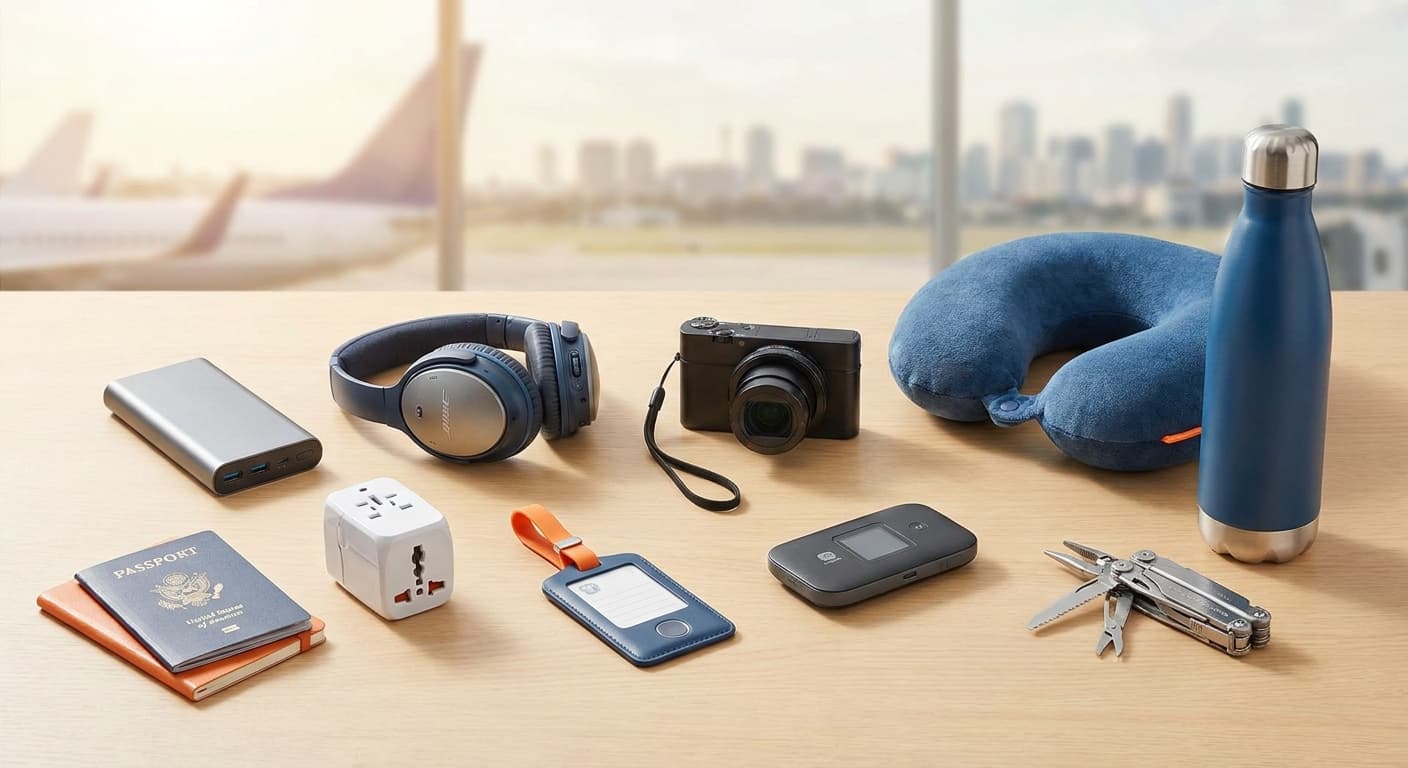
A universal travel adapter and a portable power bank are non-negotiable. A good universal adapter will have sliders for different international prong types (UK, EU, AU/US) and include multiple USB ports, allowing you to charge several devices from a single wall outlet. This is a lifesaver in older hotel rooms with limited plugs. A power bank (portable charger) is your safety net, ensuring your phone doesn't die while you're navigating a new city. A 10,000mAh power bank is a great sweet spot between size and capacity, typically providing 2-3 full phone charges. For example, a well-packed electronics kit might contain: one smartphone, one e-reader, noise-canceling earbuds, a single GaN charger, a 3-in-1 cable, a universal adapter, and a slim power bank. This entire setup can fit into a small pouch, keeping your bag organized and your devices ready for action.
How Do You Handle "Just In Case" Items?
You handle "just in case" items by logically evaluating their necessity with the '20/20 rule' and shifting your mindset from 'what if I need this?' to 'where could I get this if I need it?'. This strategy helps you overcome the fear of being unprepared, which is the primary cause of overpacking, by building confidence in your resourcefulness.
The core of the problem with "just in case" packing is that we plan for worst-case, low-probability scenarios. We pack a heavy raincoat for a trip to a desert 'just in case' of a freak storm, or three extra outfits 'just in case' we get invited to an unexpected formal event. The '20/20 rule' provides a practical filter for these items: if you can purchase the item for under $20 and within a 20-minute walk from where you're staying, don't pack it. This rule applies perfectly to common items like a cheap umbrella, basic toiletries you forgot, a spare pair of socks, or over-the-counter medication. The vast majority of travel destinations are not remote wildernesses; they are populated areas with shops and pharmacies.
Let's apply this to a real-world scenario. You're packing for a week in Rome. You're tempted to pack a bulky first-aid kit with supplies for every conceivable ailment. Instead, apply the new mindset. Pack a small blister pack of your essential personal medications and a few adhesive bandages for immediate needs. For anything else - headache pills, cold medicine, stomach remedies - you can walk into any 'farmacia' on virtually any street corner in Rome and get what you need, often with the help of a knowledgeable pharmacist. This approach not only saves a huge amount of space but also connects you with the local culture in a small, practical way. You're not just a tourist living out of a bubble; you're a resourceful traveler interacting with the local environment.
This mental shift is about building trust in yourself and in the world. Realize that forgetting something is not a catastrophe; it's an inconvenience at worst and often an opportunity to solve a small problem. The alternative is packing a heavy bag full of items that act as a security blanket, weighing you down physically and mentally. The actionable takeaway is to pack for your definite plans and most probable scenarios. For everything else, pack your resourcefulness and a credit card. Freeing yourself from the burden of 'just in case' is one of the most liberating aspects of minimalist travel.
What is a Final Pre-Flight Carry-On Checklist?
A final pre-flight carry-on checklist is a systematic final review of your bag's contents, weight, and organization to ensure it is compliant, comfortable, and convenient for the airport and flight. This last-minute check prevents common travel mistakes like forgetting crucial documents, packing prohibited items, or having an overweight bag.
The checklist can be broken down into three critical categories: Compliance, Comfort, and Convenience. Start with Compliance. First, weigh your packed bag. Use a simple digital luggage scale. Many airlines, especially budget carriers, have strict weight limits for carry-on luggage (often 7-10 kg or 15-22 lbs). Don't get caught with an overweight bag at the gate, as the fees can be exorbitant. If you're over the limit, now is the time to make tough decisions - can you wear your heaviest items (boots, jacket) on the plane? Is there anything you can discard? Second, double-check your liquids bag against the 3-1-1 rule one last time. Ensure all containers are under the limit and the bag zips closed easily. Finally, confirm you have all your essential travel documents: passport/ID, visas, boarding passes (digital or printed), and any necessary health documentation.
Next, focus on Comfort for the journey itself. Is your 'in-flight kit' easily accessible? This small pouch should contain everything you'll want during the flight without having to get up and rummage through the overhead bin. This typically includes headphones, a book or e-reader, a power bank and cable, lip balm, hand sanitizer, any personal medications, and a reusable water bottle (empty, to be filled after security). Also, consider your travel outfit. Wear your heaviest shoes and bulkiest jacket or sweater on the plane. This not only saves a huge amount of space and weight in your bag but also ensures you have layers to adjust to the plane's fluctuating cabin temperature.
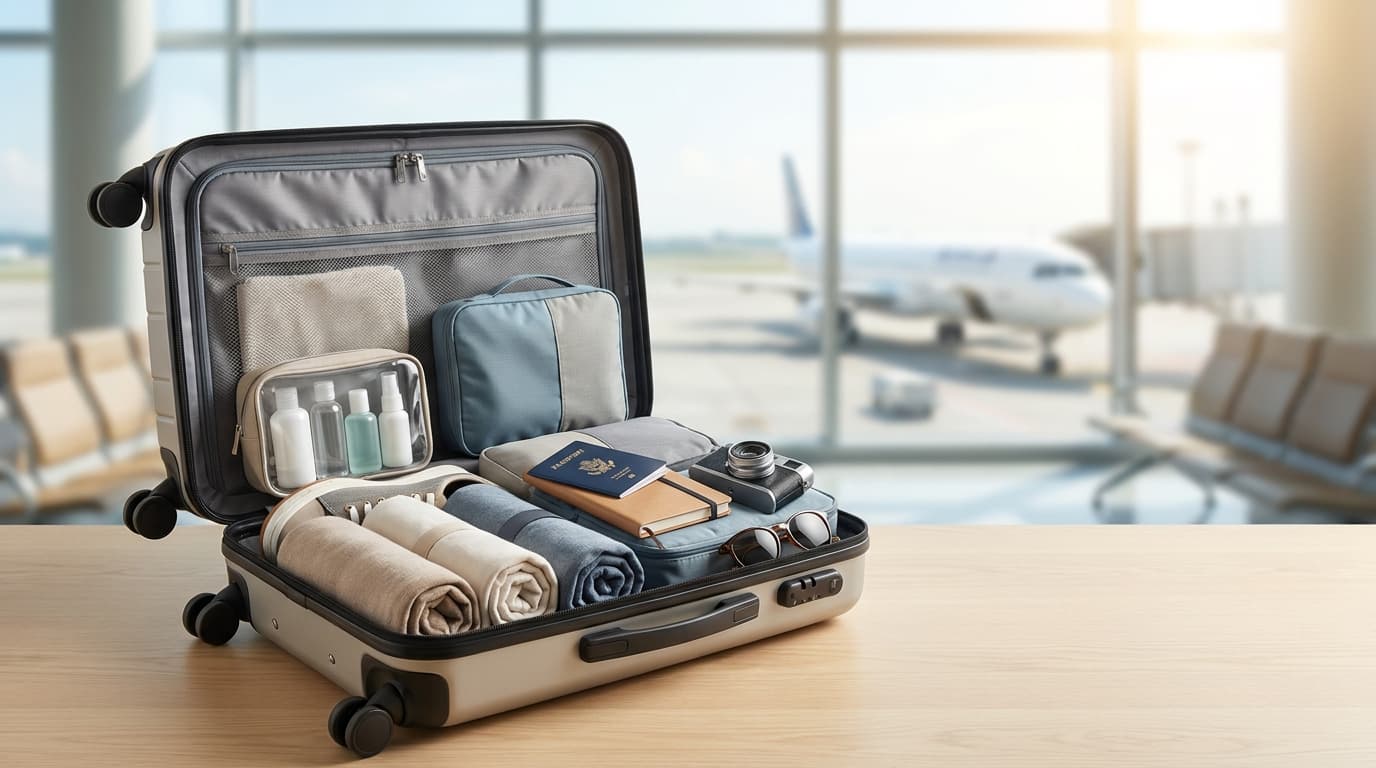
Finally, review for Convenience at your destination. Does your packing system make sense for your arrival? For instance, if you're arriving late at night, are your pajamas and toothbrush packed near the top for easy access? Is the address of your accommodation saved on your phone and also written down as a backup? Think through the first few hours of your arrival and optimize your pack accordingly. A great example of this final check in action is placing your liquids bag and laptop in an outer pocket of your backpack. This allows you to breeze through security, pulling them out and putting them back without having to unpack your entire bag in the middle of a crowded line. This final, methodical sweep takes only ten minutes but can save you from significant stress, money, and hassle on your travel day.
Conclusion: The Freedom of Traveling Light
Embarking on the path of carry-on only travel is more than just a packing strategy; it's a fundamental shift in how you approach your adventures. It is the conscious decision to prioritize freedom over excess, experience over possessions, and simplicity over complexity. As we've explored, the journey begins not with the bag itself, but with a mindset of intentionality. By meticulously planning your wardrobe around a versatile capsule, you unlock endless outfit possibilities from a handful of items. By mastering smart packing techniques like rolling and using compression cubes, you conquer the physical limitations of your bag, creating space you never thought possible.
The practical benefits are undeniable. You will save money on checked bag fees, bypass the dreaded baggage claim carousel, and eliminate the risk of lost luggage. You will navigate airports, train stations, and new cities with an ease and agility that those wrestling with heavy suitcases can only envy. This newfound mobility opens up a world of spontaneous opportunities, allowing you to say 'yes' to a side street, a sudden detour, or a walk across town without being burdened by your belongings. The skills you develop - distinguishing needs from wants, solving small problems on the fly, and trusting in your own resourcefulness - extend far beyond the realm of travel.
If you are a beginner standing before an empty suitcase, feeling overwhelmed, remember this: start small. Your first carry-on only trip doesn't have to be a month-long international epic. Try it for a weekend getaway. Test the capsule wardrobe concept. See how liberating it feels to walk off the plane and straight out the door. Each successful trip will build your confidence and refine your system. The ultimate goal isn't to follow a rigid set of rules, but to create a personalized travel style that works for you, one that makes every journey lighter, smarter, and infinitely more enjoyable. So take the leap, pack with purpose, and discover the profound freedom of traveling with everything you need on your back, and nothing more.
Frequently Asked Questions
Yes, you can absolutely travel for two weeks with just a carry-on. The secret is not to pack for 14 unique days, but to pack a versatile one-week capsule wardrobe and plan to do laundry once. Choose quick-drying fabrics like merino wool or synthetics that can be easily sink-washed and air-dried overnight. By packing interchangeable tops and bottoms in a neutral color palette, you can create dozens of outfits. Utilize compression packing cubes to maximize space and switch to solid toiletries to reduce your liquid footprint. The mindset shift from 'packing more' to 'packing smarter' is what makes extended carry-on travel possible and surprisingly easy.
The 3-1-1 rule is a security regulation for carry-on luggage established by the Transportation Security Administration (TSA). It stands for: 3.4 ounces (or 100 milliliters) per container; 1 quart-sized, clear, zip-top bag; and 1 bag per passenger. All your liquids, gels, aerosols, creams, and pastes must be in individual containers no larger than 3.4 ounces. All of these containers must then fit comfortably inside a single quart-sized bag. This bag must be removed from your carry-on and placed in a separate bin for X-ray screening at the security checkpoint, so keep it easily accessible.
Yes, packing cubes are absolutely worth it, especially for carry-on only travel. Their value comes from two main benefits: organization and compression. They allow you to compartmentalize your luggage, separating tops from bottoms, or clean clothes from dirty ones, so you don't have to tear your entire bag apart to find one item. More importantly, compression cubes, which have an extra zipper to squeeze out air, can reduce the volume of your clothes by 30-50%. This creates significantly more space in your suitcase for other essentials. They transform packing from a chaotic mess into a neat, modular, and space-efficient system.
The best way to handle a bulky item like a coat is not to pack it at all - wear it on the plane. Your travel outfit is valuable packing space. Wearing your heaviest and most voluminous items, such as your coat, sweater, and boots, frees up an enormous amount of room in your carry-on. If you must pack a bulky jacket, look for a 'packable' down or synthetic-fill jacket that can be compressed into its own small stuff sack. You can also use a large compression sack to shrink it down, but wearing it remains the most space-efficient strategy for any one-bag traveler.
The single biggest packing mistake beginners make is 'just in case' packing. This is the fear-driven impulse to pack for every unlikely scenario, leading to a heavy, overstuffed bag filled with items that never get used. Beginners often pack too many shoes, a separate outfit for every single day, and an excess of toiletries that could easily be purchased at their destination. The key to overcoming this is to pack only for your definite plans and most likely scenarios. Trust in your ability to be resourceful and acquire minor items if an unexpected need arises. Traveling light is about confidence, not just clever packing techniques.