Top 10 Essential Travel Gadgets for Smarter and Easier Travel
The romance of travel often clashes with the reality of modern logistics: dead phone batteries, lost luggage, unreliable Wi-Fi, and the general stress of navigating unfamiliar territories. While the spirit of adventure is timeless, the tools we use to conquer its challenges have evolved dramatically. Today, a few carefully chosen electronic companions can transform a potentially chaotic journey into a seamless, enjoyable, and connected experience. It's no longer about simply packing clothes; it's about packing smart solutions.
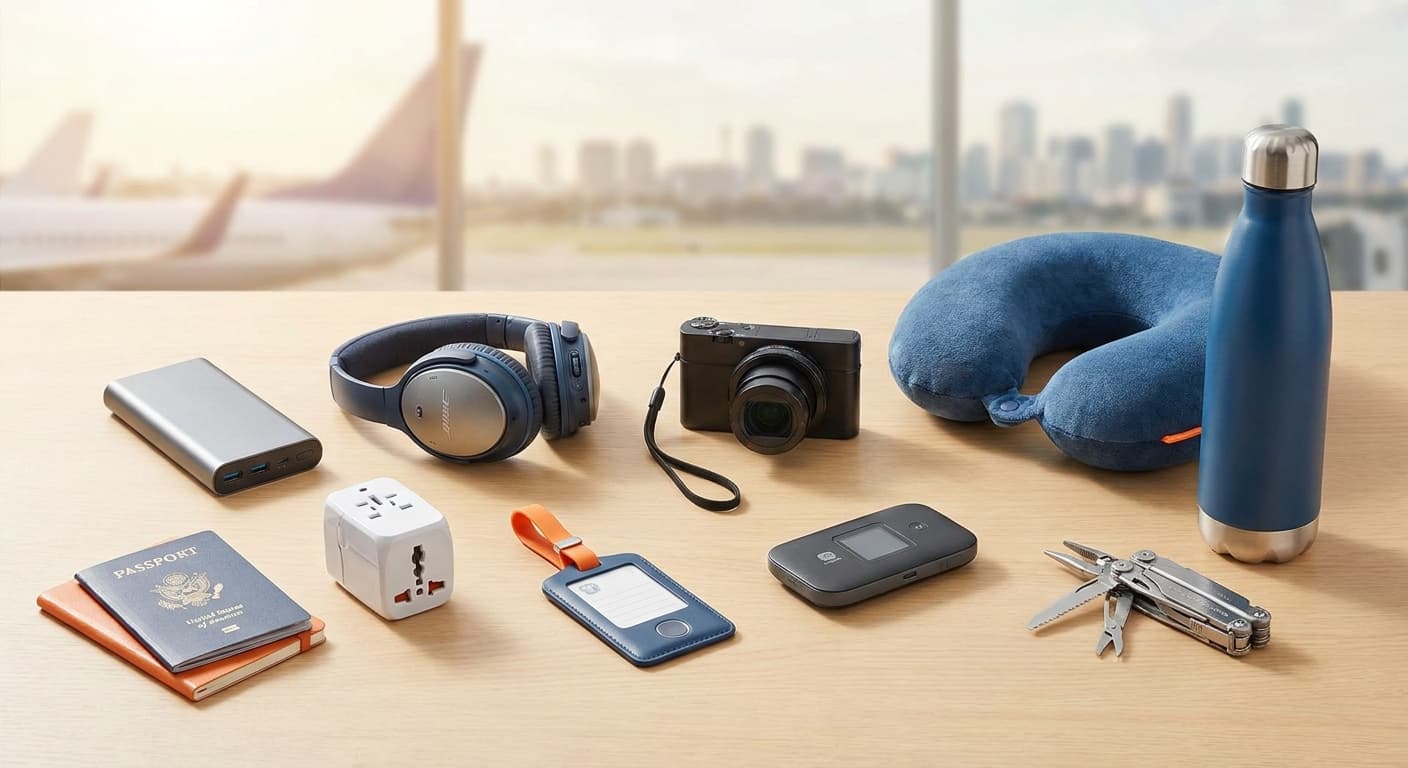
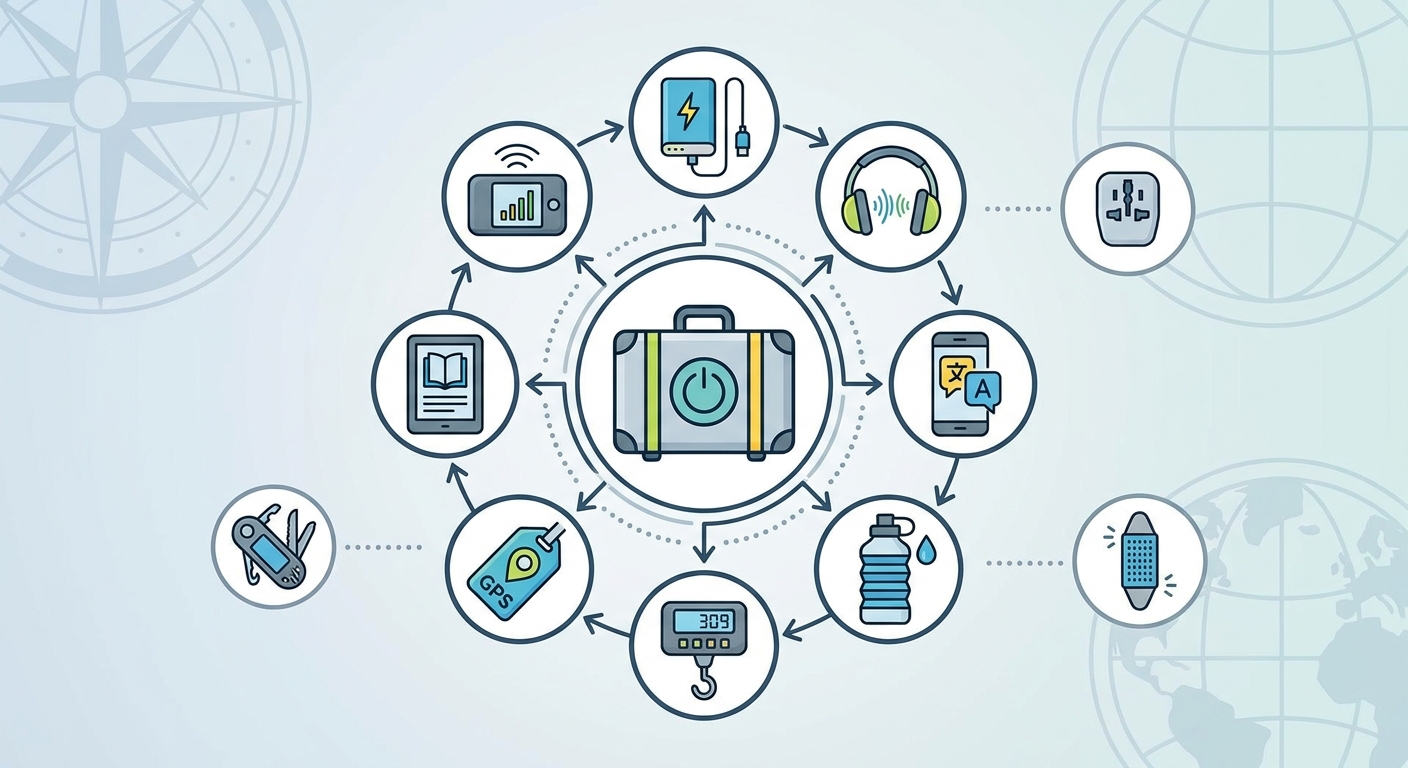
The most essential travel gadgets are those that solve common travel problems, providing power, connectivity, safety, and convenience when you need them most. This guide moves beyond a simple list, offering a deep dive into the ten categories of tech that have become non-negotiable for the modern traveler. We'll explore not just what they are, but why they are indispensable, how they function, and what you should look for when choosing the right one for your adventures.
In this comprehensive article, you will learn about the critical features of portable power banks, the life-saving importance of a universal adapter, and how noise-cancelling headphones can redefine your comfort. We will demystify portable Wi-Fi hotspots, compare different types of luggage trackers, and explore how smart gadgets for hydration and packing can save you money and stress. By the end, you'll have a clear roadmap for equipping yourself with the technology that empowers smarter, safer, and significantly easier travel in 2026 and beyond.
What Makes a Portable Power Bank an Absolute Travel Lifesaver?
A portable power bank is an absolute travel lifesaver because it provides a reliable, on-demand source of energy for your essential electronics, ensuring you are never left disconnected or unable to navigate due to a dead battery. It is your personal power grid, freeing you from the desperate hunt for a wall outlet in crowded airports or remote locations.
In today's travel landscape, our smartphones are our boarding passes, maps, translators, cameras, and communication hubs. When that single device runs out of power, your entire travel plan can be thrown into disarray. A power bank, also known as a portable charger, is a compact, rechargeable battery designed to charge your devices via a USB connection. It acts as a crucial buffer, allowing you to top up your phone, tablet, headphones, or e-reader multiple times before the power bank itself needs recharging. This simple gadget single-handedly eliminates one of the most common and potent sources of travel anxiety.
Understanding Capacity and Power Delivery
Not all power banks are created equal. The most important specification is its capacity, measured in milliampere-hours (mAh). A 5,000 mAh bank might give your smartphone one full charge, making it suitable for a day trip. However, for serious travel, a 10,000 mAh to 20,000 mAh power bank is the sweet spot. A 10,000 mAh unit can typically charge a modern smartphone two to three times, while a 20,000 mAh can handle multiple devices or several charges over a few days. It's crucial to also consider airline regulations; most airlines restrict lithium-ion batteries to 100 watt-hours (Wh), which is roughly 27,000 mAh, and they must be kept in your carry-on luggage.
Another key feature is Power Delivery (PD), usually found on USB-C ports. This technology allows for much faster charging speeds for compatible devices. A power bank with a USB-C PD port can charge your iPhone from 0% to 50% in about 30 minutes, a game-changer when you only have a short layover to refuel your tech.
Real-World Scenario: The Missed Connection
Imagine you've just landed in Tokyo after a 12-hour flight. Your phone, which you used to watch movies, is at 5% battery. Your connecting flight information, hotel address, and digital train pass are all on that device. There are no available outlets at your gate. Without a power bank, this is a moment of pure panic. With one, you simply plug in your phone, and within minutes, you have enough power to access your crucial information, navigate the airport, and inform your hotel of your arrival time. The stress evaporates, replaced by calm and control.
Actionable Insight: What to Look For
When choosing a power bank for travel, prioritize a capacity between 10,000 and 20,000 mAh. Ensure it has at least one USB-C port with Power Delivery (PD) for fast charging and a USB-A port for older devices. Look for models with passthrough charging, which allows you to charge the power bank while it simultaneously charges your devices. A slim, lightweight design is also a major plus for portability. Investing in a quality power bank from a reputable brand like Anker or Belkin is a small price to pay for the immense peace of mind it provides on the road.
Why is a Universal Travel Adapter Non-Negotiable for International Trips?
A universal travel adapter is non-negotiable for international trips because it is the essential key that allows you to plug in and charge your electronics in any country, regardless of their different wall socket shapes and configurations. Without it, your devices from home are effectively useless bricks abroad, leaving you powerless and disconnected.
The world operates on more than a dozen different types of electrical outlets. The two flat prongs used in North America (Type A/B) are completely incompatible with the three thick, rectangular prongs of the United Kingdom (Type G) or the two round prongs common in Europe (Type C/F). A universal travel adapter is a single, compact gadget that features multiple sets of retractable prongs and sockets. By sliding different levers or buttons, you can configure it to fit the outlets in over 150 countries, from Australia to Argentina. This versatility means you only need to pack one small item instead of a confusing bag of single-country adapters.
Beyond the Prongs: Voltage and USB Ports
It's vital to understand the difference between an adapter and a converter. An adapter simply changes the plug shape; it does not change the electrical voltage. North America runs on 110-120V, while most of the world uses 220-240V. Fortunately, most modern electronics like laptops, phone chargers, and camera batteries are dual-voltage (look for "INPUT: 100-240V" printed on the device's power brick). For these devices, a simple adapter is all you need. However, for single-voltage items like certain hair dryers or curling irons, you would need a bulky voltage converter to avoid frying them.
Modern universal adapters have evolved beyond just adapting plug types. The best models now come equipped with multiple built-in USB-A and high-speed USB-C ports. This is a massive advantage, as it allows you to charge your smartphone, power bank, and smartwatch directly from the adapter, freeing up the main AC socket for your laptop. It effectively turns a single foreign wall outlet into a multi-device charging station.
Real-World Scenario: The First Night in a New Country
Picture this: you arrive at your hotel in Rome late at night, exhausted from your travels. Your phone is nearly dead, and you need to set an alarm for an early tour. You pull out your charger only to be met with two round holes in the wall, completely alien to your North American plug. Every outlet is the same. Without a universal adapter, you have no way to charge your phone. You're faced with the prospect of starting your vacation disconnected and potentially oversleeping. A universal adapter instantly solves this problem, providing immediate power and peace of mind.
Actionable Insight: Choosing the Right Adapter
When selecting a universal travel adapter, look for one that covers at least the major plug types (US, EU, UK, AU). Prioritize models with at least one USB-C PD port for fast charging and several USB-A ports. A built-in, replaceable fuse for surge protection is another critical feature that can save your expensive electronics from power spikes. Finally, ensure it has a compact, one-piece design for easy packing. This small, affordable gadget is one of the most powerful enablers of a smooth and connected international travel experience.
How Do Noise-Cancelling Headphones Transform Your Travel Experience?
Noise-cancelling headphones transform your travel experience by creating a personal bubble of tranquility, actively erasing the droning chaos of engines, crowds, and announcements. This allows you to rest, focus, or enjoy your entertainment with crystal clarity, arriving at your destination feeling more refreshed and less stressed.
The journey is often the most grueling part of travel. The constant, low-frequency roar of a jet engine, the chatter of fellow passengers, the clatter of train wheels - this cacophony of sounds is mentally and physically draining. Active Noise Cancellation (ANC) technology is the solution. It works by using built-in microphones to listen to the ambient sound around you. The headphone's internal processor then generates an inverse sound wave (a mirror image of the noise) and plays it back into your ear. These two waves effectively cancel each other out, creating a remarkable sense of silence without you having to blast your music at unsafe volumes.
The Science of Serenity: ANC Explained
The effectiveness of ANC is most pronounced on consistent, low-frequency sounds, which is why it's so brilliant for air and train travel. It dramatically reduces engine hum and air conditioning noise to a faint whisper. While it's less effective at blocking sudden, high-pitched sounds like a baby crying or a nearby conversation, the overall reduction in background noise is profound. This sonic isolation allows you to sleep on a red-eye flight, become fully immersed in a movie, or simply enjoy a moment of peace and quiet amidst the hustle and bustle of a busy terminal.
Comparison: Over-Ear vs. In-Ear (Earbuds)
When it comes to travel, the choice often comes down to over-ear headphones versus in-ear earbuds. Over-ear headphones (like the Bose QuietComfort or Sony WH-1000XM series) typically offer the most powerful noise cancellation and the best sound quality. Their plush earcups are comfortable for long-haul flights, and their long battery life (often 20-30 hours) will last the entire journey. Their main downside is their bulk. In-ear earbuds (like the AirPods Pro or Sony WF-1000XM series) are incredibly compact and portable, easily fitting into a pocket. While their ANC has become impressively effective, it generally isn't as all-encompassing as their over-ear counterparts. Their battery life per charge is shorter (usually 5-7 hours), but their charging cases provide multiple recharges. The choice depends on your priority: maximum comfort and performance (over-ear) or ultimate portability (in-ear).
Actionable Insight: Investing in a Better Journey
Investing in a quality pair of noise-cancelling headphones is an investment in your well-being. Before purchasing, consider your primary use case. For frequent long-haul flyers, the superior comfort and battery life of an over-ear pair is likely worth the space. For light packers and those on shorter trips, the convenience of premium earbuds might be the better choice. Look for features like a 'transparency' or 'ambient' mode, which uses the microphones to let you hear your surroundings without taking the headphones off - perfect for listening to gate announcements or ordering a coffee. A good pair of ANC headphones doesn't just play music; it actively improves the quality of your entire travel day.
Can a Portable Wi-Fi Hotspot Keep You Connected Anywhere?
Yes, a portable Wi-Fi hotspot can keep you reliably and securely connected almost anywhere in the world by creating your own private, password-protected wireless network. It acts as a personal mobile router, giving you internet access for multiple devices without relying on slow, insecure public Wi-Fi or expensive international roaming plans.
In an age where we rely on the internet for maps, translation, bookings, and remote work, consistent connectivity is paramount. Public Wi-Fi at cafes, hotels, and airports can be frustratingly slow, unreliable, and, most importantly, a significant security risk. Hackers can easily intercept data transmitted over unsecured public networks. A portable Wi-Fi hotspot, also known as a MiFi device, solves this problem. It uses a SIM card to connect to local 4G or 5G cellular networks and then broadcasts that connection as a private Wi-Fi signal that you and your travel companions can use for laptops, tablets, and phones.
How It Works: SIM vs. Cloud SIM Models
There are two main types of portable hotspots. The first is a traditional SIM-based hotspot. You purchase an unlocked device and then buy a local prepaid data SIM card in each country you visit. This is often the most cost-effective method for longer stays in a single country, as local data plans are typically cheap. The downside is the hassle of finding and purchasing a new SIM card upon arrival in each new destination.
The second, and increasingly popular, option is a Cloud SIM or eSIM hotspot. These devices, from brands like Solis (formerly Skyroam) or GlocalMe, do not require a physical SIM card. They can digitally connect to local network partners in hundreds of countries. You manage your connection and purchase data passes (e.g., a day pass or a monthly gigabyte plan) through a simple app. This offers incredible convenience for multi-country trips, though the data can sometimes be slightly more expensive than a local SIM. It's the ultimate 'plug-and-play' solution for global connectivity.
Real-World Scenario: The Digital Nomad's Dilemma
Imagine you're a remote worker traveling through Southeast Asia. You have a critical video conference with a client but the Wi-Fi in your guesthouse is unstable. You move to a nearby cafe, but their network is even slower and open to the public. This is a professional crisis. With a portable Wi-Fi hotspot, you simply turn on the device, connect your laptop to your own secure network, and conduct your meeting with a fast, stable connection. It provides the freedom and reliability to work from anywhere, turning a park bench or a train carriage into a viable office.
Actionable Insight: Is a Hotspot Right for You?
A portable Wi-Fi hotspot is an essential gadget for digital nomads, business travelers, families traveling with multiple devices, or anyone who values a secure and reliable internet connection. Before buying, consider your travel style. If you're taking a one-week trip to a single country, using your phone's built-in hotspot feature with an international data plan might suffice. However, if you travel frequently, visit multiple countries, or need to connect devices like a laptop, a dedicated hotspot is a superior solution. It saves your phone's battery and provides a more robust and manageable connection for all your tech.
What Are the Benefits of Using a Smart Luggage Tracker?
The primary benefit of using a smart luggage tracker is the immense peace of mind it provides by allowing you to know the location of your checked bag at all times via an app on your smartphone. It transforms the anxious wait at the baggage carousel into a confident and informed process, and it can be an invaluable tool if your luggage is delayed or lost.
The sinking feeling of being the last person at an empty baggage claim is a traveler's nightmare. Airlines do their best, but bags get mishandled. A smart luggage tracker is a small, battery-powered device that you place inside your suitcase. It uses location technology to transmit its position, which you can then view on a map on your phone. This simple piece of tech empowers you, the traveler, with information that was once only available to the airline, if at all. You can see if your bag made it onto the plane, confirm it arrived at your destination airport, and even locate it if it was sent to the wrong carousel or left behind.
Comparison: Bluetooth Trackers vs. GPS Trackers
There are two main categories of luggage trackers, and understanding their differences is key to choosing the right one. They operate on fundamentally different technologies, which impacts their range, cost, and battery life.
| Feature | Bluetooth Trackers (e.g., Apple AirTag, Tile) | GPS Trackers (e.g., LandAirSea, Invoxia) |
|---|---|---|
| How it Works | Uses the network of nearby phones (e.g., Apple's Find My network) to anonymously report its location. | Uses satellites to determine its precise location and a cellular connection (SIM card) to transmit it. |
| Range | Relies on being near another device in its network. Excellent in populated areas like airports. | Truly global range, as long as it has a view of the sky and a cellular signal. |
| Battery Life | Excellent. Typically lasts a year or more on a replaceable coin-cell battery. | Shorter. Requires recharging every few days or weeks, depending on usage. |
| Cost | Low initial cost for the device. No subscription fee (for Apple AirTag). | Higher initial cost for the device plus a monthly or annual subscription fee for the cellular data plan. |
| Best For | Confirming your bag's location within an airport or city. Great for most common travel scenarios. | Tracking valuable shipments or luggage in truly remote areas where a device network is sparse. |
Real-World Scenario: The Lost-in-Transit Bag
You land in London, but your bag doesn't. The airline agent assures you they will find it but can only tell you it was last scanned in New York. This is where a tracker becomes invaluable. You open your app and see your AirTag is pinging its location from an airport in Amsterdam. You can now provide the airline with precise, real-time information. You're no longer a passive victim of the system; you are an active participant in your bag's recovery. This information can dramatically speed up the process of getting your luggage back, turning a week-long ordeal into a one or two-day inconvenience.
Actionable Insight: Which Tracker Should You Choose?
For the vast majority of travelers, a Bluetooth tracker like the Apple AirTag (for iPhone users) or a Tile Pro (for Android or iPhone users) is the perfect solution. They are affordable, require no subscription, have incredible battery life, and leverage massive device networks that are densest in the exact places you need them most: airports and cities. A full-blown GPS tracker is overkill for most, better suited for tracking vehicles or high-value assets in remote locations. Placing a simple Bluetooth tracker in your checked bag is one of the smartest, cheapest, and most effective ways to reduce travel stress.
Is a Reusable Smart Water Bottle Worth the Investment?
Yes, a reusable smart water bottle is worth the investment for health-conscious and eco-friendly travelers, as it combines hydration tracking with advanced water purification technology. This ensures you can drink safe water from virtually any source, reduce plastic waste, and stay properly hydrated during your travels.
Staying hydrated is critical for staving off jet lag, maintaining energy levels, and staying healthy on the road. However, travelers often face a dilemma: constantly buying single-use plastic water bottles is expensive and environmentally damaging, yet drinking tap water in many countries can be risky. A smart water bottle addresses both issues head-on. The 'smart' aspect comes in two forms: some bottles track your water intake and sync with an app, while others, more usefully for travelers, incorporate a purification system.
The Magic of UV-C Purification
The most compelling feature of travel-focused smart bottles, like those from LARQ or CrazyCap, is the built-in UV-C LED light in the cap. UV-C light is a non-chemical method of purification that neutralizes up to 99.9% of bio-contaminants, including harmful bacteria and viruses like E.coli and Salmonella. With the press of a button, the light activates for about 60-90 seconds, sanitizing both the water and the inner surface of the bottle. This means you can confidently refill your bottle from airport water fountains, hotel taps, or even natural sources like streams and rivers (provided the water is clear of sediment).
This technology is a significant step up from simple filtering bottles. While filters are great at removing particulates and protozoa, they may not eliminate smaller viruses. UV-C purification tackles the microbiological threats, offering a higher level of safety. The bottles are typically double-wall insulated stainless steel, keeping water cold for up to 24 hours, and are rechargeable via USB, with a single charge lasting for weeks.
Real-World Scenario: The Adventurous Hiker
Imagine you're on a multi-day trek in the mountains of Peru. Carrying enough bottled water for the entire trip is impossible due to the weight and bulk. Your only option is to refill from natural streams. In the past, this would require carrying separate purification tablets or a cumbersome pump filter, both of which can be slow and affect the water's taste. With a UV-C smart bottle, you simply fill it up from the stream, press a button, and in under two minutes, you have safe, taste-free drinking water. This technology provides convenience, safety, and self-sufficiency in off-the-grid environments.
Actionable Insight: A Smart Choice for Health and Planet
While the upfront cost of a smart water bottle is higher than a standard reusable bottle, its value proposition for a traveler is immense. It eliminates the recurring cost of buying bottled water, which can easily add up to over $50 on a week-long trip. More importantly, it drastically reduces your environmental footprint by preventing dozens of plastic bottles from ending up in landfills or oceans. For any traveler who ventures outside of countries with reliably potable tap water, or for anyone who wants to make a more sustainable choice, a self-purifying smart water bottle is a brilliant and worthwhile piece of travel gear.
Why Should You Pack a Compact Digital Luggage Scale?
You should always pack a compact digital luggage scale to avoid exorbitant and unexpected excess baggage fees at the airport. This tiny, inexpensive gadget allows you to weigh your bags accurately at your hotel before you leave, giving you the chance to repack and stay within airline weight limits, potentially saving you hundreds of dollars.
Every airline has strict weight limits for both checked and carry-on luggage, and the fees for exceeding these limits can be punishingly high. An overweight bag can cost anywhere from $50 to over $200, often more than the cost of the flight itself for budget carriers. The 'bathroom scale' method is notoriously inaccurate, and discovering your bag is overweight for the first time at the check-in counter is a traveler's nightmare. It leads to a frantic, public shuffle of belongings from one bag to another, a stressful start to any journey. A digital luggage scale eliminates this gamble entirely.
Precision and Portability
A digital luggage scale is a simple device. It consists of a small handle with a digital screen and a short, durable strap with a hook. You loop the strap around your suitcase handle, lift it slightly off the ground, and the screen instantly displays the precise weight, often with an accuracy of within 0.1 pounds or 50 grams. The entire device is incredibly small and lightweight, often weighing just a few ounces, so it takes up negligible space and weight in your luggage. This portability is key; you can bring it with you to weigh your bags before your return flight, after you've added souvenirs and shopping to your load.
The digital display is a major advantage over older, analog spring-based scales. It's easier to read, more accurate, and often includes features like a tare function (to zero out the weight of an empty container) and the ability to switch between pounds and kilograms, which is essential for international travel where weight limits are almost always in kilograms.
Real-World Scenario: The Souvenir Shopper's Salvation
Consider a trip to Italy where you've purchased bottles of olive oil, wine, and heavy ceramic gifts for your family. Your bag felt fine when you packed it, but these dense items have added significant weight. Without a scale, you arrive at the airport and your 26 kg bag is 3 kg over the 23 kg limit. The airline's fee is $100 for any bag over the limit. You're forced to pay. Had you used a digital luggage scale in your hotel room, you would have seen the problem. You could have then moved the heaviest items, like a bottle of wine, into your carry-on or your partner's half-empty suitcase, easily getting both bags under the limit and saving yourself $100. The scale pays for itself in a single use.
Actionable Insight: A Must-Have Budget Tool
A digital luggage scale is one of the highest-ROI (return on investment) travel gadgets you can buy. For an initial cost of just $10-$15, it provides the certainty and control you need to manage one of the most unpredictable travel expenses. When choosing one, look for a high weight capacity (at least 110 lbs or 50 kg), a clear, backlit LCD screen for easy reading, and a sturdy strap. It's a small, simple tool that empowers you to be a smarter, more prepared, and more budget-conscious traveler.
How Does a GPS Smartwatch Enhance Your Travel Adventures?
A GPS smartwatch enhances travel adventures by serving as a multi-functional command center on your wrist, providing discreet navigation, robust safety features, activity tracking, and convenient notifications without you ever having to pull out your phone. It allows you to stay present and engaged with your surroundings while remaining connected and safe.
While your smartphone is an indispensable travel tool, constantly holding it in your hand can make you a target for theft and disconnects you from the experience of a new place. A GPS smartwatch, like an Apple Watch or a Garmin Fenix, moves the most critical travel functions to your wrist. This is more than just a convenience; it fundamentally changes how you interact with a new city or landscape. You can follow walking directions with subtle haptic feedback - a buzz on your wrist telling you when to turn left or right - allowing you to look up at the architecture instead of down at a screen.
Navigation, Safety, and Health in One
Modern GPS smartwatches offer a powerful suite of travel-centric features. Offline Maps are a standout; you can download maps for a region before you leave, allowing you to navigate even without a cellular connection, which is invaluable for hiking or exploring areas with spotty service. Safety Features are another critical component. Many watches include fall detection, which can automatically alert emergency contacts if you take a hard fall, and an emergency SOS function that can call local emergency services and share your location. This provides a significant safety net, especially for solo travelers.
Beyond navigation and safety, a smartwatch is also a powerful health and fitness tool. It tracks your steps as you explore a new city, monitors your heart rate on a strenuous hike, and can even help you adjust to new time zones by tracking your sleep. It encourages you to stay active and aware of your well-being, which is often neglected during the rigors of travel.
Real-World Scenario: Exploring a Bustling City
Imagine you're navigating the crowded, winding streets of Marrakech. Pulling out your expensive smartphone at every intersection to check the map is not only inconvenient but also makes you a conspicuous tourist. With a GPS smartwatch, you start the walking directions on your phone, put it safely in your pocket, and navigate by the gentle taps on your wrist. You receive a notification for a message from your travel companion, which you can glance at without breaking stride. You use the watch's contactless payment feature to buy a bottle of water from a street vendor. You're moving through the city seamlessly and safely, fully immersed in the sights and sounds around you.
Actionable Insight: Choosing Your Wrist-Worn Companion
When selecting a GPS smartwatch for travel, battery life is a key consideration. A watch that can last multiple days on a single charge (like many Garmin models) is ideal for multi-day treks or trips where charging opportunities are scarce. For city explorers, the rich app ecosystem and seamless phone integration of an Apple Watch or Samsung Galaxy Watch might be more appealing. Consider what features matter most to you: advanced mapping, long battery life, cellular connectivity for phone-free calls, or contactless payments. A good travel smartwatch isn't just about telling time; it's about saving time, enhancing safety, and making your adventures richer.
What Makes a Portable Bluetooth Speaker a Great Travel Companion?
A portable Bluetooth speaker makes a great travel companion by allowing you to create your own personal soundscape, enhancing the ambiance of any location from a hotel room to a beach. Its portability, durability, and long battery life provide a way to enjoy music, podcasts, or audiobooks with better quality than your phone's tiny speakers, making moments more memorable.
While headphones are perfect for personal listening in public spaces, there are many travel moments that are enhanced by shared sound. A portable Bluetooth speaker lets you fill your space with music, whether you're unwinding in your Airbnb after a long day of sightseeing, having a picnic in a park, or relaxing by the pool. It adds a layer of comfort and personalization to unfamiliar environments, making a sterile hotel room feel a little more like home. It's a simple way to set the mood and elevate your downtime during a trip.
Key Features for the Road: Durability and Battery
Not all Bluetooth speakers are built for the rigors of travel. The most important feature to look for is durability, often indicated by an IP (Ingress Protection) rating. An IP67 rating, for example, is a common standard for top travel speakers. The '6' means it is completely dustproof, and the '7' means it can be submerged in up to one meter of water for 30 minutes. This level of ruggedness means you don't have to worry about it getting damaged by sand at the beach, splashed by the pool, or caught in a sudden rain shower. It's built to handle the unpredictable nature of travel.
Battery life is the second critical factor. A good travel speaker should offer at least 10-15 hours of playtime on a single charge. This ensures it can last through a full day at the beach or provide background music for an entire evening without needing to be plugged in. Many modern speakers charge via USB-C, which is a convenient bonus as it means you can use the same cable and power bank that you use for your phone and other gadgets.
Real-World Scenario: The Perfect Beach Day
You and your friends have found the perfect secluded beach in Thailand. The setting is idyllic, but silent. You pull a small, rugged Bluetooth speaker like a JBL Clip or Ultimate Ears Wonderboom from your bag. In seconds, you've paired your phone and are playing a relaxed, sunny playlist. The music is clear and fills your small patch of sand without disturbing others far down the beach. The speaker gets covered in sand and splashed by a wave, but its IP67 rating means it's completely unfazed. The addition of music transforms a quiet afternoon into a vibrant, memorable experience, creating a soundtrack for your travel memories.
Actionable Insight: Finding the Balance
When choosing a portable Bluetooth speaker for travel, the key is balancing sound quality with size and weight. While larger speakers produce better bass and volume, they can be bulky to pack. The sweet spot for travel is often found in compact, cylindrical, or puck-shaped speakers that deliver surprisingly robust sound for their size. Look for brands known for their durable designs, such as Ultimate Ears, JBL, or Anker Soundcore. Consider features like a built-in clip or strap for easily attaching it to a backpack. This small addition to your packing list can have a big impact on the enjoyment of your trip.
Why is a High-Quality E-Reader Better Than Physical Books for Travel?
A high-quality e-reader is unequivocally better than physical books for travel because it allows you to carry a vast library of thousands of books in a single, lightweight device that boasts a weeks-long battery life. It saves precious luggage space and weight, offers a superior reading experience in all lighting conditions, and provides instant access to new books from anywhere in the world.
For avid readers, the question of what books to pack can be a source of pre-trip anxiety. Physical books are heavy and bulky; packing just two or three can add significant weight and take up space that could be used for clothes or other essentials. What if you finish your books early in the trip? An e-reader, like the Amazon Kindle Paperwhite or Kobo Clara HD, elegantly solves all of these problems. These devices are incredibly thin and light, often weighing less than a single paperback, yet they can store an entire lifetime's worth of reading material.
The E-Ink Advantage
The core technology that makes e-readers so special is their E-Ink screen. Unlike the backlit LCD screens on phones and tablets that cause eye strain, an E-Ink screen mimics the appearance of real paper. It's not backlit; instead, it uses tiny microcapsules of black and white ink to form text. This results in a glare-free reading experience that is comfortable for hours on end, even in direct sunlight where a phone screen would be unreadable. Modern e-readers also feature a built-in, adjustable front light that illuminates the screen's surface (not your eyes), making it perfect for reading in a dark airplane cabin or hotel room without disturbing a sleeping partner.
Perhaps the most significant travel advantage is the phenomenal battery life. Because E-Ink screens only use power when the page is turning, a single charge can last for weeks, not hours. You can realistically go on a two or three-week vacation and never have to worry about charging your e-reader.
Real-World Scenario: The Voracious Vacation Reader
You're on a week-long beach vacation, and you've been devouring the thriller you brought. It's only day three, and you're on the last chapter. With physical books, your only option would be to search for an English-language bookstore, which might be miles away and have a limited selection. With an e-reader, you simply connect to the hotel's Wi-Fi, browse an online bookstore with millions of titles, and download your next read in under a minute. You can be starting a new book without ever leaving your lounge chair. Many e-readers also integrate with library services like Libby, allowing you to borrow e-books for free from your home library while you're thousands of miles away.
Actionable Insight: A Must-Have for Traveling Readers
If you plan to read at all during your travels, an e-reader is one of the most practical and enjoyable gadgets you can own. The Amazon Kindle Paperwhite is often considered the gold standard due to its waterproof design, crisp 300 ppi E-Ink screen, and massive ecosystem of books. When choosing, look for a model that is waterproof (perfect for the beach or pool) and has an adjustable warm light to reduce blue light exposure for nighttime reading. An e-reader doesn't just replace books; it upgrades the entire reading experience for a traveler.
Traveling in the 21st century is a beautiful paradox. We seek to disconnect from our daily grind, yet we rely on technology to make our escape smoother, safer, and more enriching. The ten essential gadgets explored in this guide are not about adding complexity to your journey; they are about systematically removing the most common points of friction and anxiety that can detract from the magic of discovery. They are the invisible support crew working behind the scenes to ensure you have power, connectivity, peace, and security, allowing you to focus on what truly matters: the experience itself.
From the foundational assurance of a fully charged phone provided by a power bank to the serene bubble created by noise-cancelling headphones, each piece of tech serves a distinct and powerful purpose. A universal adapter is the simple key that unlocks the world's power grids, while a luggage tracker provides the modern miracle of knowing your bag's location thousands of miles away. A smart water bottle offers health and sustainability in a single package, and a digital luggage scale is a small shield against hefty fees. These tools empower you to be a proactive, prepared, and self-sufficient traveler.
Ultimately, the goal is not to become dependent on gadgets, but to use them intelligently to enhance your freedom. A GPS smartwatch lets you navigate a new city with your eyes up, not buried in a phone. An e-reader gives you an entire library without the weight, and a portable speaker lets you craft the perfect ambiance for a moment of relaxation. As you plan your next adventure, consider which of these travel pain points you've experienced and how one of these smart solutions could transform your journey from good to truly great. Pack smarter, and you'll undoubtedly travel easier.
Frequently Asked Questions
Yes, in fact, they are mandatory in carry-on luggage. Due to safety regulations regarding lithium-ion batteries, airlines prohibit placing most power banks and spare batteries in checked baggage. The typical limit is 100 watt-hours (Wh), which equates to about 27,000 mAh, so most travel power banks fall well within this limit. It's always a good practice to check the specific regulations of your airline before flying, but as a general rule, keep your power banks, e-cigarettes, and any spare lithium-ion batteries with you in the cabin.
A travel adapter simply changes the physical shape of your device's plug to fit a foreign electrical outlet; it does not change the voltage of the electricity. A voltage converter is a much heavier device that actually transforms the electrical voltage up or down (e.g., from 220V to 110V). Most modern electronics like phone and laptop chargers are dual-voltage (rated 100-240V) and only need an adapter. You would only need a converter for single-voltage items, typically high-power heating appliances like some hair dryers or straighteners.
The right capacity depends on your needs. For a single day trip, a slim 5,000 mAh power bank might be enough for one phone charge. For general travel, 10,000 mAh is the sweet spot, offering about 2-3 full smartphone charges. If you are traveling with a partner, have multiple devices (tablet, headphones), or are going on a multi-day hike, a 20,000 mAh power bank provides a substantial power reserve. Anything larger than that starts to become heavy and may face stricter airline scrutiny, so 10,000-20,000 mAh is ideal for most travelers.
A dedicated portable Wi-Fi hotspot is often better for several reasons. First, it has its own battery, so it won't drain your phone's battery, which you need for other tasks. Second, they are designed to provide a stronger, more stable Wi-Fi signal to multiple devices, like laptops and tablets. Finally, using a hotspot with a cheap, local SIM card or a flexible global data plan can be significantly more cost-effective than paying for expensive international roaming on your primary phone plan. For frequent travelers or digital nomads, a dedicated hotspot is a superior solution.
While not strictly necessary, active noise-cancelling (ANC) headphones dramatically improve the quality of travel. The constant drone of an airplane engine contributes significantly to travel fatigue. ANC headphones reduce this low-frequency noise, creating a calmer environment that makes it easier to sleep, relax, or enjoy entertainment without high volume. They help you arrive at your destination feeling more refreshed and less stressed. For frequent flyers or those sensitive to noise, they are considered an essential, game-changing gadget that makes the journey itself far more comfortable and enjoyable.