

How to Choose the Best Travel Tours and Activities for an Unforgettable Trip
You're standing at a crossroads, scrolling endlessly through a dozen browser tabs. One offers a whirlwind bus tour of Rome's greatest hits, another promises an intimate pasta-making class in a Trastevere apartment, and a third suggests a self-guided Vespa adventure. The sheer volume of options can be paralyzing, turning exciting trip planning into a chore. How do you cut through the noise and find the experiences that will define your journey, not just fill your time? The secret isn't finding the "best" tour; it's finding the tour that's best for you.
The most effective method for how to choose travel tours is to first deeply understand your personal travel style and then use that as a filter to evaluate options based on group size, itinerary pacing, operator reputation, and overall value. It's a methodical process that shifts the focus from an overwhelming list of choices to a curated selection of experiences perfectly aligned with your desires.
This comprehensive guide will transform you from a bewildered tourist into a savvy travel planner. We will deconstruct the entire selection process, providing you with a clear framework to follow. You will learn how to identify your traveler archetype, decipher the different types of tours available, master the art of reading reviews to spot hidden red flags, and evaluate itineraries like a seasoned pro. By the end, you'll have the confidence to book tours and activities that don't just show you a place, but help you connect with it in a meaningful and unforgettable way.
What is Your Personal Travel Style and How Does It Influence Tour Selection?
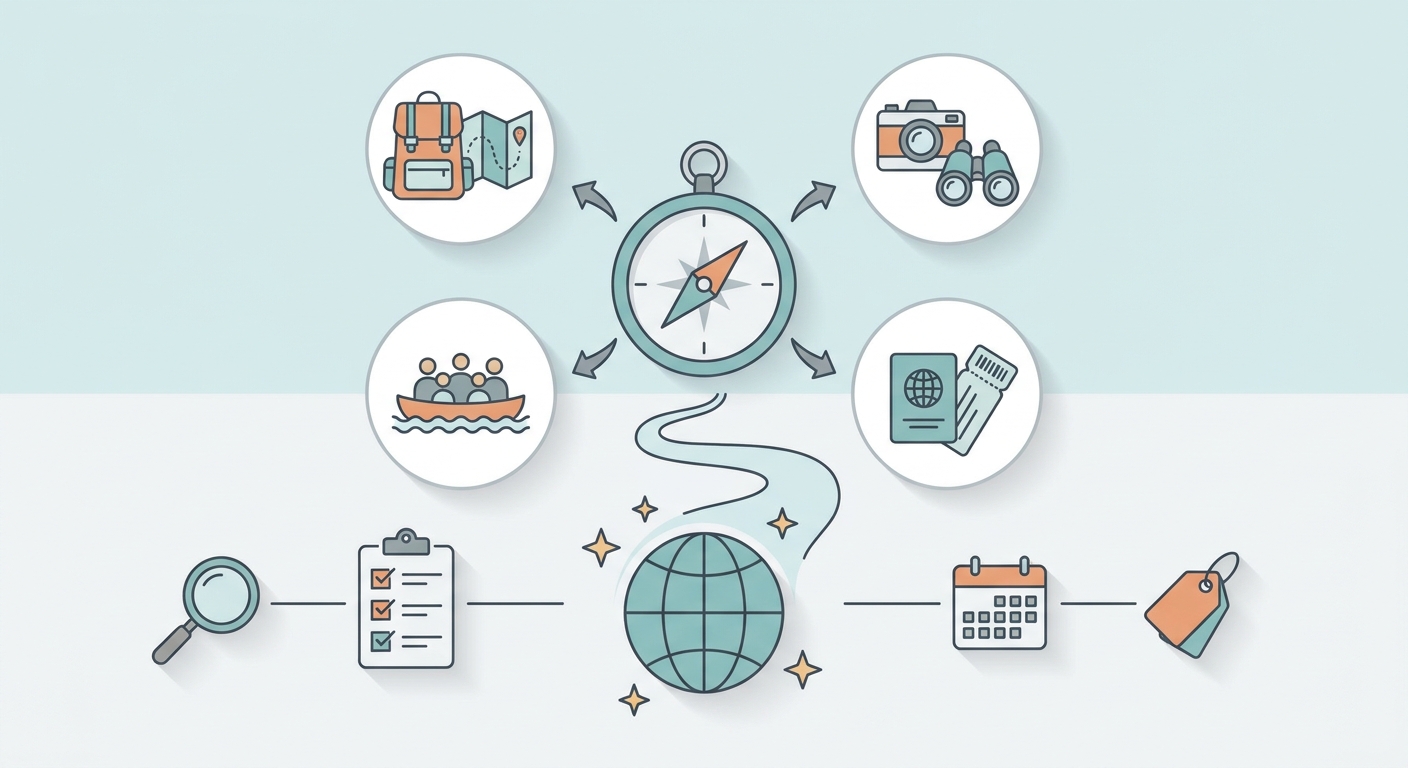
Your personal travel style is the single most important factor in choosing the right tours and activities. Before you even look at a single brochure or website, you must first understand what you want from your travels. Are you seeking adrenaline-pumping adventure, quiet cultural immersion, or luxurious relaxation? Answering this question honestly prevents you from booking a tour that, while highly-rated, is fundamentally a bad fit for your personality.
Think of your travel style as your unique travel DNA. It's a combination of your interests, energy levels, budget, and social preferences. Identifying it acts as a powerful filter. For example, a traveler who loves spontaneity and deep dives into local life would likely feel stifled on a rigid, large-group bus tour that rushes from one photo-op to the next. Conversely, someone who values efficiency and comfort might find a DIY, self-guided tour stressful and unfulfilling. Understanding this core identity is the first step toward building a trip filled with highlights, not regrets.
Let's explore a few common traveler archetypes. See which one resonates most with you:
- The Adventurer: You crave excitement and physical challenges. Your ideal day involves hiking a volcano, kayaking through sea caves, or zip-lining over a jungle canopy. You should look for tours explicitly labeled as "active," "adventure," or "trekking." Keywords like "off-the-beaten-path" and "physically demanding" are your friends.
- The Cultural Enthusiast: You travel to learn. Museums, historical sites, art galleries, and local traditions are your passion. You'll thrive on expert-led historical walking tours, deep-dive museum guides, or workshops with local artisans. Look for tours led by historians, archaeologists, or certified local experts.
- The Foodie: Your itinerary is planned around meals. You want to taste everything a destination has to offer, from street food stalls to Michelin-starred restaurants. Your perfect activities are market tours, cooking classes, wine or spirit tastings, and neighborhood food crawls. Prioritize experiences that promise authenticity and hands-on participation.
- The Relaxer: For you, a vacation is a true escape from the daily grind. You seek comfort, pampering, and scenic beauty without the stress. You'd enjoy sunset catamaran cruises, all-inclusive resort day passes, spa experiences, and private car tours of scenic drives. Avoid tours with early morning starts or packed itineraries.
- The Social Butterfly: You travel to meet new people and share experiences. You enjoy the energy of a group and making new friends from around the world. Small-group tours, fun-themed pub crawls, or hostel-organized day trips are excellent choices for you. The social dynamic is as important as the activity itself.
Once you've identified your primary style (you can be a mix of two or three!), you can begin your search with incredible focus. Instead of searching for "things to do in Paris," a Cultural Enthusiast can search for "in-depth Louvre tours with an art historian," while a Foodie can look for "Le Marais pastry and chocolate tour." This simple shift from a generic to a specific, style-aligned search is the foundation of finding experiences that will truly resonate with you and create lasting memories.

How Do You Decipher Tour Types: From Group Excursions to Private Guides?
Once you know your travel style, the next step is to understand the different formats tours come in. The structure of a tour - its size, leadership, and flexibility - dramatically impacts the experience. Choosing the right type is a crucial part of how to choose travel tours. A magnificent landmark can be a disappointing memory if experienced in a way that clashes with your preferences.
The main categories of tours are defined by group size and the level of guidance provided. These range from massive, cost-effective bus tours to highly personalized private excursions. Each has distinct advantages and disadvantages related to cost, social dynamics, flexibility, and depth of experience. There is no universally "best" type; the ideal choice depends entirely on your goals for that specific day and destination.
Let's break down the most common tour types to help you make an informed decision.
Large-Group Tours (25-50+ people)
This is the classic bus tour. It's often the most budget-friendly option and is highly efficient at covering major landmarks in a short amount of time. You'll travel on a large coach, follow a strict schedule, and listen to a guide on a microphone.
Example: A "Best of Rome in a Day" bus tour that stops for 20 minutes at the Colosseum, 15 at the Trevi Fountain, and 30 at the Vatican.
Pros: Very affordable, covers a lot of ground quickly, no logistical planning required.
Cons: Rushed pacing, impersonal, very little flexibility, limited interaction with the guide, can feel like being herded.
Small-Group Tours (6-15 people)
This is often the sweet spot for many travelers, offering a balance between the affordability of a group and the intimacy of a more private experience. You'll typically travel in a minibus or van, and the smaller size allows for more questions and a bit more flexibility in the schedule.
Example: A 12-person tour of the Scottish Highlands in a sprinter van, allowing for spontaneous photo stops and a more conversational guide.
Pros: Good balance of cost and personal attention, more relaxed pace, easier to ask questions, better social dynamic.
Cons: More expensive than large groups, still follows a set itinerary with limited deviation.
Private Tours (1-5 people)
This is the premium option, where you hire a guide and often a vehicle exclusively for yourself, your family, or your friends. The itinerary is usually fully customizable, and the pace is entirely up to you. You get the guide's undivided attention.
Example: A family hires a guide and driver for a day in Bangkok to visit temples they're interested in, spend extra time at a market, and eat at a specific restaurant recommendation.
Pros: Complete flexibility and customization, unparalleled access to the guide's expertise, move at your own pace, privacy.
Cons: Significantly more expensive, requires more input from you to design the day.
Self-Guided & Audio Tours
For the independent traveler, this option provides structure without a physical guide. You might follow a pre-designed route on a GPS device (like for a scenic drive) or use an app-based audio guide for a museum or historical site. It offers maximum freedom.
Example: Downloading the Rick Steves Audio Europe app to guide you through the Roman Forum at your own leisure.
Pros: Ultimate flexibility and independence, very low cost (often free), you set the pace entirely.
Cons: No expert to ask questions, requires self-discipline, you can miss nuances a live guide would point out.
Choosing between these requires you to weigh your priorities. If your budget is tight and you just want to see the main sights, a large group tour might be perfect. If you want to dive deep into a subject and have a flexible day, investing in a private guide is worth every penny. For most people, the small-group tour offers the best of both worlds.
Where Should You Look for Reputable Tours and Activities?
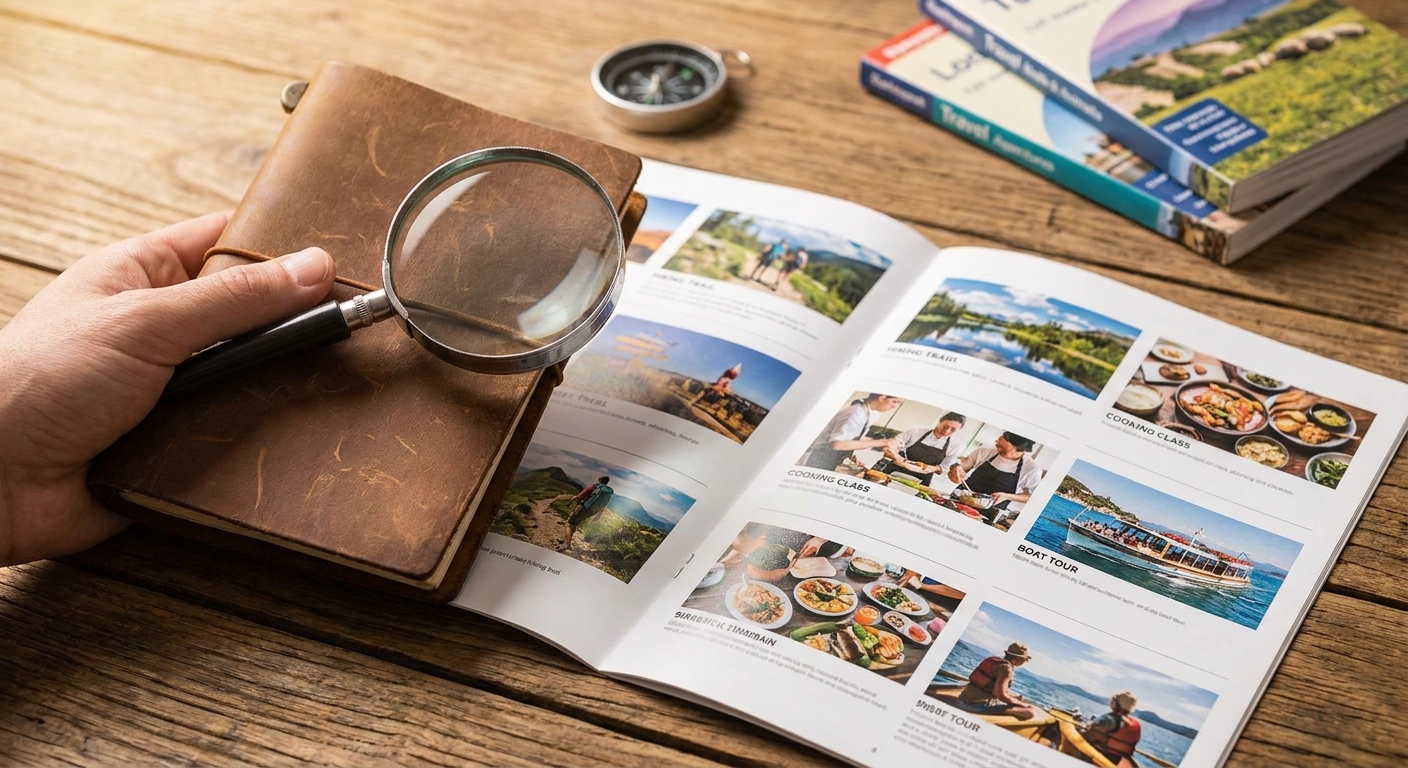
Knowing where to look is a key step in how to choose travel tours that are trustworthy and high-quality. In the digital age, you have a vast array of options at your fingertips, from massive online marketplaces to the websites of tiny, family-run operations. Using a multi-channel approach to research is the most effective way to find the best fit, verify quality, and sometimes even get a better price.
Your search should start broad and then narrow down as you identify specific activities that interest you. The best strategy is to use large online platforms for discovery and comparison, then cross-reference your top choices by looking for the direct operator. This allows you to leverage the convenience of a marketplace while also vetting the provider more deeply.
Here are the primary channels for finding and booking tours, along with their pros and cons:
Online Travel Agencies (OTAs) or Consolidators
These are massive online marketplaces that aggregate tours from thousands of different providers. The biggest names are Viator (owned by TripAdvisor), GetYourGuide, and Klook. They are an excellent starting point for your research.
Example: Searching "Florence cooking class" on GetYourGuide will yield dozens of options from different schools and chefs, all comparable on one screen.
Pros: Huge selection, easy to compare prices and itineraries, extensive user reviews, often flexible cancellation policies.
Cons: Can be overwhelming, OTAs take a significant commission (20-30%), which can inflate prices or squeeze small operators. You are a customer of the OTA, not the tour company, which can complicate communication or issue resolution.
Directly with the Tour Operator
Once you find a specific tour you like on an OTA, a smart next step is to search for the operator's own website. Booking direct often has benefits for both you and the small business providing the service.
Example: You see a tour called "Highlights of Lisbon Walking Tour by LisbonWalks" on Viator. You then Google "LisbonWalks" and find their direct website.
Pros: Often a slightly lower price (as there's no commission), supports the local business directly, direct line of communication with the provider, may offer more tour times or options not listed on OTAs.
Cons: Can be harder to find, cancellation policies may be stricter, website might be less sophisticated than a major OTA.
Local Tourism Board Websites
The official tourism office for your destination (e.g., VisitScotland, Tourism New Zealand) is a treasure trove of vetted information. They often list accredited guides and reputable companies, providing a layer of trust.
Example: The official tourism website for Provence, France, might have a dedicated section listing certified lavender farm tour operators.
Pros: Features licensed and vetted operators, provides authentic local suggestions, highlights unique cultural events.
Cons: Not a booking platform (usually links out), selection might be smaller than on an OTA.
Travel Blogs and Niche Publications
For finding unique and off-the-beaten-path experiences, specialized travel blogs can be invaluable. Look for bloggers who focus on your destination or travel style. Their firsthand accounts can provide insights you won't find in a generic tour description.
Example: A foodie blogger specializing in Japan might write a detailed review of a specific sushi-making class in Tokyo, including photos and a personal story.
Pros: In-depth, personal reviews; often uncover hidden gems; provide context and a real-world perspective.
Cons: Can be biased (sponsored content), may be outdated, requires more effort to sift through content.
The best approach is to triangulate. Start on a big platform like Viator to see what's available. When a few tours catch your eye, search for the operator's name directly. Finally, search for blog reviews of that specific tour to get an unbiased, in-depth opinion. Once you've made your decision, our guide on how to book tours and activities can walk you through the final steps.
What Red Flags Should You Watch Out for When Reading Tour Reviews?
Tour reviews are one of the most powerful tools at your disposal, but learning to read them critically is an art. A simple star rating doesn't tell the whole story. To truly gauge the quality of a tour and its suitability for you, you must dig deeper and learn to spot the subtle clues and red flags hidden within the text of the reviews themselves.
The goal is not just to find tours with good reviews but to understand the context of those reviews. A five-star review from someone with completely different travel preferences than you is less valuable than a nuanced three-star review that highlights specific issues you might also care about. A savvy traveler reads between the lines to build a realistic picture of the experience.
Here are the key red flags and critical analysis techniques to employ when sifting through reviews:
1. Vague or Overly Gushing Praise
Be wary of reviews that are short and non-specific. Comments like "Great tour!" or "So much fun! Highly recommend!" are nice but offer zero actionable information. They can sometimes be low-effort or even fake. Look for reviews that provide details.
Red Flag Example: A slew of five-star reviews all posted around the same time, all saying generic things like "Amazing experience!"
Green Flag Example: "Our guide, Maria, was incredible. She not only knew the history of the Acropolis but also pointed out the best spots for photos away from the crowds and recommended a fantastic local taverna for lunch afterward. The van was also clean and air-conditioned, which was a lifesaver in the July heat."
2. Ignoring the Outliers (Both Good and Bad)
Don't let a single one-star review scare you off if there are hundreds of positive ones. Read the negative review to see if the complaint is valid or if it was a one-off issue or a mismatched expectation. The reviewer might be complaining about something you don't care about (e.g., "We had to walk too much!"). Conversely, don't be blinded by a few five-star reviews if the majority are mediocre.
3. Look for Recurring Themes
This is the most critical skill. Scan dozens of reviews and look for patterns. If one person says the guide was late, it might be a fluke. If ten people across several months mention that the tour started 30 minutes late, you've identified a chronic organizational problem.
Common Themes to Watch For:
- Positive: A specific guide's name mentioned repeatedly, praise for excellent communication, comments on the tour being well-paced.
- Negative: Complaints about disorganization, feeling rushed, unexpected extra costs, overcrowded vehicles, guides being unenthusiastic or difficult to understand.
4. Filter for Recency and Reviewer Profile
A review from three years ago may not be relevant today. Management, guides, and itineraries change. Prioritize reviews from the last 6-12 months. Also, check the reviewer's profile if possible. Someone who has left 50 detailed travel reviews is generally more credible than an account with only one review.
5. Assess Photo Evidence
Many review platforms allow users to upload photos. These are unfiltered gold. Do the pictures of the tour vehicle match the luxurious one in the official description? Do the crowds in the background look overwhelming? Do the meals included look appetizing? Photos provide a raw, unbiased glimpse into the actual experience that marketing materials might gloss over.
By adopting this forensic approach to reviews, you move beyond the star rating. You start to understand the tour's operational strengths and weaknesses, the quality of its guides, and whether the experience delivered matches the promises made. This deeper understanding is key to avoiding disappointment and ensuring your chosen tour is a perfect match.

How Can You Evaluate a Tour's Itinerary for Value and Pacing?
A tour's itinerary is its promise to you. It's the blueprint for your day or even your week. Learning to dissect this document is a crucial skill for separating a well-crafted, valuable experience from a poorly planned, overpriced one. This analysis is central to understanding how to choose travel tours that deliver real value. You need to look beyond the list of sights and analyze the flow, inclusions, and hidden details to understand what you're truly paying for.
The key is to evaluate both the tangible and intangible elements. The tangible elements are the listed stops, included meals, and entrance fees. The intangible elements are the pacing, the amount of free time, and the logical flow of the day. A great itinerary balances iconic highlights with unique experiences and ensures you spend more time enjoying the destination than in transit.
Here's a step-by-step guide to analyzing a tour itinerary for value and pacing:
1. Map it Out (Literally)
Pull up a map and plot the locations mentioned in the itinerary. Does the route make geographical sense, or does it zigzag inefficiently across the city or region? A poorly planned route means more time in a vehicle and less time at the attractions. A logical, flowing path shows that the operator is thoughtful and experienced.
Example: A day trip from Florence that goes to Siena (south), then San Gimignano (northwest of Siena), and finally Pisa (far west) is a logical progression. One that goes from Florence to Pisa, then back to Siena, then to San Gimignano is a logistical nightmare.
2. Scrutinize the Inclusions and Exclusions
This is where the true value lies. A tour that seems cheap upfront may become expensive once you add up all the extras. Look for a detailed "What's Included" list.
- Tickets: Does it include entrance fees to all specified attractions? "Visit the Colosseum" is different from "Entrance ticket to the Colosseum included."
- Meals: If lunch is included, what is it? A three-course meal at a traditional restaurant or a pre-packed sandwich?
- Transportation: Is it an air-conditioned coach, a private car, or public transport?
- Extras: Are things like water, wine tasting fees, or port taxes included?
Pro Tip: Look for the phrase "skip-the-line tickets." In popular destinations during high season, this feature alone can be worth a significant portion of the tour cost, saving you hours of waiting.
3. Analyze the Timing and Pacing
Look at the start and end times, and the duration allocated to each stop. This will tell you about the pace of the tour.
Red Flag Itinerary - "The Death March":
- 8:00 AM: Depart Paris
- 11:00 AM: Arrive Normandy D-Day Beaches (Omaha Beach)
- 12:00 PM: Visit American Cemetery
- 1:00 PM: Quick stop at Arromanches
- 2:00 PM: Depart for Paris
- 5:00 PM: Arrive in Paris
This itinerary involves 6 hours of driving for only 3 hours on site. It's incredibly rushed. You'll be exhausted and won't have time to absorb the profound history of the location.
Green Flag Itinerary - "The Immersive Experience":
- 7:30 AM: Depart Paris via high-speed train
- 9:30 AM: Arrive in Bayeux, meet guide and small-group van
- 10:00 AM - 1:00 PM: In-depth tour of Omaha Beach and American Cemetery
- 1:00 PM - 2:00 PM: Lunch at a local cafe in Arromanches (included)
- 2:00 PM - 4:00 PM: Explore German bunkers and Pointe du Hoc
- 5:00 PM: Return to Bayeux for train
- 7:30 PM: Arrive in Paris
This second option, while likely more expensive, offers a much richer and better-paced experience by using faster transport and dedicating more time to the actual sites.
By taking 15 minutes to critically break down an itinerary, you can predict the quality of your experience with surprising accuracy. You can spot the difference between a tour designed to check boxes and one designed to create memories.
Is a More Expensive Tour Always a Better Tour?
It's a common travel dilemma: should you opt for the budget-friendly tour or splurge on the premium-priced option? The answer is not always straightforward. While a higher price can often correlate with higher quality, it's not a guarantee. Understanding what factors contribute to a tour's cost is essential to determining if a more expensive option offers genuine value or just inflated pricing.
The price of a tour is a reflection of several key variables: group size, guide expertise, quality of inclusions, transportation, and exclusivity. A more expensive tour is not inherently "better"; it's simply offering a different package of these variables. The "best" choice is the one where the cost aligns with the elements you personally value most. For some activities, a basic, no-frills option is perfectly adequate, while for others, the investment in a premium experience can elevate your entire trip.
Let's break down the components that drive up the cost and when it's worth paying more:
1. Group Size
This is one of the biggest cost drivers. A private tour for two people will always be more expensive per person than a bus tour for 50, because the guide's salary and vehicle costs are divided among fewer participants.
When to Splurge: For complex historical sites like the Roman Forum or Pompeii, a small group or private guide is invaluable. You can ask questions, hear the guide clearly, and navigate crowded spaces more easily. The personalized attention transforms a confusing ruin into a vivid story.
When to Save: For simple transportation-focused trips, like a ferry to an island or a shuttle to a popular viewpoint, a larger group is perfectly fine. You're paying for the transport, not the intimate guidance.
2. Guide Expertise and Qualifications
Top-tier guides with advanced degrees (e.g., an art historian for the Uffizi Gallery) or special certifications (e.g., a certified naturalist in Costa Rica) command higher fees. A standard guide might recite a script, while an expert provides deep context and answers complex questions.
When to Splurge: When the subject matter is the main reason for the tour. If you are a history buff, a foodie, or an art lover, paying for a true expert will make the experience exponentially more rewarding.
When to Save: For a lighthearted activity like a pub crawl or a simple city highlights tour, a charismatic and friendly guide is more important than an academic background.
3. Quality of Inclusions
The details matter. A higher-priced tour might include a meal at a renowned restaurant instead of a tourist-trap buffet. It might use a comfortable, air-conditioned Mercedes van instead of a cramped, older bus. It might include premium "skip-the-line" tickets that get you in faster than standard group tickets.
Scenario Comparison: Wine Tours in Tuscany
- Budget Tour ($80): Large bus, visits two large-scale commercial wineries, includes a small tasting and breadsticks, lunch is not included.
- Premium Tour ($250): Small group in a luxury van, visits two exclusive, family-run boutique wineries, includes extensive tastings with a sommelier, followed by a multi-course Tuscan lunch with wine pairings.
For a true wine aficionado, the premium tour offers far better value and a more authentic experience. For someone who just wants to see the countryside and take a few photos, the budget tour might suffice.
4. Exclusivity and Access
Some expensive tours offer access that you simply cannot get on your own or with cheaper options. This could be after-hours access to a museum, a private visit to a normally closed-off area, or a meeting with a local artisan.
Example: A Vatican tour that includes early morning entry to the Sistine Chapel before it opens to the general public. You pay a premium to experience the masterpiece in relative silence, which is a priceless experience for many.
Ultimately, the decision comes down to personal value. Before booking, ask yourself: what is the primary goal of this activity? If it's a once-in-a-lifetime, bucket-list experience, investing more is often justified. If it's a fun way to spend an afternoon, a more modest option is probably the smarter choice.
How Do You Find Authentic, Local Experiences and Avoid Tourist Traps?
One of the greatest goals of modern travel is the pursuit of authenticity. Travelers increasingly want to connect with a destination on a deeper level, moving beyond the crowded landmarks to experience the local culture, traditions, and daily life. Finding these genuine experiences requires a conscious effort to look past the most heavily marketed tours and seek out operators who prioritize substance over spectacle.
The key to avoiding tourist traps is to shift your focus from consumption to participation and from observation to interaction. An authentic experience is often characterized by smaller groups, local leadership, and a focus on a specific skill, craft, or cultural aspect. It's about learning and doing, not just seeing. These tours support local communities directly and provide you with a much richer, more memorable story to take home.
Here are actionable strategies for finding authentic local experiences:
1. Prioritize Tours Led by Locals
Look for companies that proudly highlight their local guides. A guide who was born and raised in the area brings a level of passion, personal anecdotes, and insider knowledge that an expat or temporary guide simply cannot replicate. Their perspective is inherently more authentic. Tour company websites that feature detailed bios of their local guides are a great sign.
2. Search for Niche and Special-Interest Tours
Instead of a generic "city tour," look for activities focused on a specific theme. This naturally filters out the large, impersonal operators.
Examples:
- In Kyoto, instead of a bus tour, search for a "Kintsugi (golden joinery) workshop with a local artisan."
- In Buenos Aires, forgo the big tango show and look for a "beginner's tango class in a local milonga."
- In New Orleans, skip the ghost tour on Bourbon Street and find a "Creole cooking class in the Garden District."
These experiences are immersive and connect you directly with the cultural fabric of the destination.
3. Leverage Platforms That Specialize in Local Experiences
While the big OTAs are good for discovery, there are smaller platforms built specifically to connect travelers with locals. Websites like EatWith (for dining experiences in local homes), Airbnb Experiences, and Withlocals are designed to offer more personal and authentic activities than traditional tours. These platforms often vet their hosts and provide a more intimate setting.
4. Look for Signs of Responsible and Sustainable Tourism
Authenticity and responsibility often go hand in hand. Tour operators who are committed to sustainable practices are usually more deeply invested in their local community. Look for certifications or mentions of their commitment to the environment, fair wages for staff, and supporting local businesses (e.g., eating at family-run restaurants instead of international chains). This ethos generally leads to a more thoughtful and genuine tour experience.
5. Learn to Spot the Hallmarks of a Tourist Trap
Tourist traps often share common characteristics that you can learn to identify:
- Aggressive Sales Tactics: Touts on the street trying to pressure you into a tour.
- Vague Itineraries: Descriptions that are heavy on buzzwords ("magical," "best") but light on details.
- Location: Tours that are sold and start right next to a major, overcrowded landmark.
- Hidden Costs: The initial price is low, but you're pressured to buy souvenirs, pay for photos, or tip excessively.
- Large Crowds: The tour itself feels like a massive queue.
By actively seeking out participation, local leadership, and niche subjects, you can easily sidestep the manufactured experiences and find the heart of a destination. The reward is a deeper connection, a better understanding of the culture, and a travel story that is uniquely yours.
What Practical Logistics Should You Confirm Before Booking Any Tour?
You've found a tour that matches your style, has stellar reviews, and features a well-paced itinerary. Before you click that "book now" button, there's one final, crucial step: verifying the practical logistics. Overlooking these details can lead to unnecessary stress, unexpected costs, or even missing your tour entirely. A few minutes of due diligence on the fine print can ensure a smooth and enjoyable experience from start to finish.
The goal is to eliminate any ambiguity about the tour's operational details. You need to know exactly what is expected of you and what you can expect from the operator. This includes understanding the rules around cancellations, knowing the physical requirements, and confirming all meeting and contact information. A reputable company will make this information clear and easy to find.
Here is a comprehensive checklist of practical logistics to confirm before you finalize your booking:
1. Cancellation and Refund Policy
This is arguably the most important detail. Life happens - flights get delayed, weather turns bad, or you might get sick. You need to know your options.
What to Look For:
- Cancellation Window: Can you cancel for a full refund up to 24 hours before? 48 hours? 7 days?
- Refund vs. Credit: Do you get your money back, or are you only offered a credit for a future tour?
- Weather Policy: What happens if the tour is canceled due to bad weather? Will they reschedule or offer a full refund? A flexible 24-hour cancellation policy is the gold standard and is offered by many major booking platforms.
2. Communication and Confirmation
How and when will the tour operator communicate with you? After booking, you should receive an immediate confirmation email with a voucher, meeting details, and contact information. Many operators will also send a reminder email or text message the day before.
Actionable Tip: Make sure you have a local phone number or WhatsApp contact for the operator on the day of the tour. This is invaluable if you're running late or can't find the meeting point.
3. Meeting Point and Time
Don't just glance at the meeting location. Look it up on a map to see exactly where it is in relation to your accommodation. Is it easy to find? Is it a specific storefront, a statue, or just a street corner?
What to Check:
- Clarity: Is the address precise? Are there landmarks mentioned? Is there a photo of the meeting point?
- Arrival Time: Does it say to arrive 15 minutes before the start time? Punctuality is key, as many tours leave exactly on schedule and will not wait for latecomers.
4. Physical Fitness and Accessibility Requirements
Be honest with yourself about your physical abilities. Itineraries should clearly state the level of physical activity involved.
Look for Keywords: "This tour involves a significant amount of walking," "includes climbing over 300 stairs," "not recommended for those with mobility issues," or "strenuous 5-hour hike." If this information isn't available, contact the operator to ask. It's better to know beforehand than to hold up the group or suffer through an activity you can't enjoy.
5. Dietary Restrictions and Accommodations
If the tour includes a meal, and you have allergies or dietary restrictions (vegetarian, gluten-free, etc.), you must confirm that they can be accommodated. Do not assume they can. Most booking forms have a section for this, but it's wise to send a direct message to the operator to confirm they have received and can honor your request.
By methodically running through this checklist, you are protecting your investment of both time and money. It's the final layer of security that ensures the fantastic tour you researched on paper translates into a seamless and stress-free reality on the ground.
How Does Group Size Impact Your Travel Experience?
The number of people you share a tour with fundamentally shapes its character and your enjoyment. Group size is a critical factor that influences everything from the tour's pacing and flexibility to your ability to interact with the guide and fellow travelers. Understanding the profound differences between a large coach tour, a small-group excursion, and a private tour allows you to consciously choose the environment that best suits your social preferences and travel goals.
There is no universally superior group size; each format offers a distinct set of advantages and compromises. A large group provides energy and affordability, a small group fosters camaraderie and balance, and a private tour offers intimacy and control. The right choice depends on whether you're seeking social buzz, personal connection, or complete autonomy for a particular activity.
Let's delve deeper into the specific ways group size impacts your experience:
Pacing and Logistics
The simple logistics of moving people around is a primary differentiator. A larger group is inherently slower. Just getting 50 people on and off a bus, through a bathroom break, or gathered at a meeting point takes a significant amount of time. This logistical overhead means less time at the actual attractions.
Example: On a large bus tour, 15 minutes at each stop might be dedicated to disembarking and re-boarding. In a small group of 8 traveling by van, this time is reduced to just a minute or two, adding up to a substantial amount of extra sightseeing time throughout the day.
Flexibility and Spontaneity
Small groups are nimble. A guide leading a 10-person van tour can make spontaneous decisions that are impossible for a 50-person coach tour. They can pull over for an unexpected photo opportunity, take a scenic detour to avoid traffic, or spend a little extra time at a spot the group is particularly enjoying.
Scenario: A small group touring the Irish countryside might stumble upon a local sheepdog trial. The guide can easily decide to stop for 20 minutes to watch. A large bus tour must stick to its rigid, pre-approved schedule and would have to drive right by.
Access and Intimacy
Many unique locations simply cannot accommodate large groups. A small, family-run winery, a tiny artisan workshop, or a narrow, historic street might be off-limits to a big bus. Smaller groups can access more intimate and authentic venues, leading to a more memorable experience.
Example: A cooking class in a chef's home apartment is a classic small-group activity. It's an intimate, hands-on experience that would be impossible to replicate with 40 people.
Interaction with the Guide
This is one of the most significant impacts. In a large group, you are one of many. Your interaction with the guide is often limited to listening to their commentary over a speaker system. In a small group, it's a conversation. You can easily ask questions, delve deeper into topics that interest you, and get personalized recommendations. The guide becomes less of a lecturer and more of a host and local expert.
The following table summarizes the key trade-offs:
| Feature | Large Group (25+) | Small Group (6-15) | Private Tour (1-5) |
|---|---|---|---|
| Cost | Lowest | Moderate | Highest |
| Pacing | Rushed, strict schedule | Relaxed, some flexibility | Completely flexible |
| Guide Interaction | Impersonal, lecture-style | Conversational, personal | Dedicated, fully interactive |
| Flexibility | None | Some spontaneity | Fully customizable |
| Social Dynamic | Anonymous, part of a crowd | Camaraderie, easy to mingle | Intimate, just your party |
When choosing a tour, consider what you want from that specific day. If you're looking for an efficient, budget-friendly overview of a city's main sights, a large group might be fine. But if you want to learn, connect, and have a more personal and flexible day, investing in a small-group or private tour will almost always yield a far superior experience.
When Should You Book Tours in Advance vs. On the Ground?
The question of when to book your tours is a strategic one that can significantly impact your budget, your itinerary's flexibility, and your ability to secure a spot for high-demand activities. There isn't a single rule that applies to all situations. The optimal booking time depends on the popularity of the activity, the season of your travel, and your personal tolerance for spontaneity versus structure.
The best approach is a hybrid one: identify and book your absolute must-do, can't-miss activities well in advance, while leaving room in your schedule to book more generic or flexible tours once you are at your destination. This strategy ensures you don't miss out on bucket-list items while still allowing for the serendipity and freedom that makes travel exciting.
Here's a breakdown of when to book in advance and when it's better to wait:
Book Well in Advance For:
- World-Famous, Limited-Capacity Attractions: This is the most critical category. Certain sites have a strictly limited number of daily visitors and sell out weeks, or even months, in advance. Waiting to book on the ground is not an option; you will be turned away.
Examples: Tickets to visit Alcatraz in San Francisco, the Alhambra in Granada, the Anne Frank House in Amsterdam, or a climb to the summit of the Eiffel Tower. For these, book as soon as you know your travel dates. - Highly Specialized or Niche Tours: If you want to take a tour with a specific, highly-regarded guide (like a renowned historian or a celebrity chef), or a tour offered by a small company with only a few slots per week, you must book ahead. Their availability is extremely limited.
Example: A private, after-hours tour of the Uffizi Gallery or a multi-day wildlife tracking expedition with a top naturalist. - Travel During Peak Season: If you are traveling to a popular destination during its busiest time (e.g., Europe in July/August, Caribbean during Christmas week), competition for all tours is fierce. Booking in advance provides peace of mind and guarantees your spot. This applies to everything from boat trips to walking tours.
- Complex Multi-Day Tours: Any tour that involves intricate logistics, multiple hotel bookings, and coordinated transportation should be booked months ahead to ensure all the components can be secured.
Book On the Ground (or a Few Days Before) For:
- Generic City Walking Tours: In most major cities, there are numerous companies offering similar general-interest walking tours (e.g., "Historic City Center Tour"). You can easily book one the day before or even show up at the meeting point. This allows you to pick a day with the best weather.
- Flexible Day Trips: If you have several days in a city and want to take a day trip to a nearby town, you can often wait to book. This gives you the flexibility to decide based on how you're feeling or the weather forecast. Many hotels and local tour offices can book these for you with just a day's notice.
Example: Deciding on a whim to take a bus trip from Dublin to the Cliffs of Moher. - Seeking Local Deals: Sometimes, small local operators who aren't on the big online platforms offer tours directly through hostels, hotels, or their own small storefronts. Booking in person can sometimes lead to finding unique options or getting a small cash discount.
- Low Season Travel: If you are traveling during the off-season, demand is much lower. You have the luxury of being more spontaneous, and booking tours just a day or two in advance is usually not a problem.
In summary, your booking strategy should be a reflection of your priorities. Secure your non-negotiable, high-demand experiences as early as possible. For the rest of your itinerary, embrace flexibility. This balanced approach ensures you experience your top highlights without over-scheduling your trip, leaving room for the unexpected discoveries that often become the most cherished travel memories.
Mastering how to choose travel tours is an active, not a passive, process. It begins with introspection - understanding your own travel desires - and moves through a structured evaluation of the options available. By shifting your mindset from simply finding "things to do" to curating experiences that align with your personality, you transform your role from a mere tourist to the architect of your own unforgettable journey. The power to craft a truly memorable trip lies not in the destination itself, but in the thoughtful choices you make about how you engage with it.
Remember the core framework: first, define your travel style. Are you an adventurer, a foodie, a history buff, or a relaxer? This is your compass. Next, use this compass to navigate the vast ocean of choices, filtering by tour type, from intimate private guides to social small groups. Scrutinize the details with a critical eye - read between the lines of reviews, dissect the itinerary for pacing and value, and never be afraid to question whether a higher price tag translates to a genuinely better experience. Finally, sweat the small stuff by confirming the practical logistics of cancellation policies and meeting points.
This methodical approach may seem like a lot of work upfront, but the payoff is immense. It's the difference between a trip filled with generic, forgettable activities and one brimming with moments of genuine connection, discovery, and joy. It's the difference between coming home with a camera full of pictures and coming home with a heart full of stories. So, the next time you find yourself paralyzed by a dozen browser tabs, take a deep breath, close them all, and start not with a search for a tour, but with a simple question: "What kind of experience do I truly want to have?" The answer will guide you to the perfect choice, every single time.
Frequently Asked Questions
You should book world-famous, limited-capacity attractions like Alcatraz or the Alhambra months in advance, as they sell out quickly. For specialized tours with popular guides or during peak travel season, booking 4-6 weeks ahead is wise. However, for more generic activities like city walking tours or in the off-season, booking a few days in advance or even on the ground is often fine. This hybrid approach secures your must-do experiences while leaving room for spontaneity. Always book anything that is central to your trip's purpose as early as possible to avoid disappointment.
Both Viator and GetYourGuide are excellent and reliable online travel agencies (OTAs) for booking tours, and neither is definitively "better" - they are just different. Viator, owned by TripAdvisor, often has a larger inventory and more user reviews. GetYourGuide is known for its user-friendly mobile app and curated "Originals" tours. The best practice is to check both platforms for the specific activity you're interested in. Compare prices, cancellation policies, and read recent reviews on both sites before making a decision. Sometimes, the same tour from the same local operator is listed on both platforms.
A 'skip-the-line' ticket allows you to bypass the general admission queue, which can often be hours long at popular attractions. However, it does not mean you will have no wait at all. You will typically still need to go through a security check, which may have its own line. Additionally, you will join the queue for other 'skip-the-line' or pre-booked ticket holders. While not an instant entry, it is almost always worth the cost, as it can save you a significant amount of valuable vacation time, easily turning a 2-hour wait into a 15-minute one.
All-inclusive tours can be a great deal for travelers who prioritize budget certainty and convenience. They bundle accommodations, transport, meals, and activities into one upfront price, eliminating financial surprises. This is ideal for complex, multi-day itineraries or for those who prefer not to handle logistics. However, they can be a bad deal if you value flexibility, prefer dining at local restaurants of your choice, or enjoy spontaneous exploration. You may end up paying for activities or meals you wouldn't have chosen yourself. Evaluate the itinerary and inclusions carefully to see if it matches your travel style.
Tipping etiquette for tour guides varies significantly by country and culture. In the United States and Canada, tipping is customary and expected. A standard tip for a good day-tour guide is 15-20% of the tour price per person. For a shorter walking tour, $5-$10 per person is appropriate. In many parts of Europe, a smaller tip of 5-10% or rounding up the bill is appreciated but not always obligatory. In some Asian countries like Japan, tipping is not practiced and can be considered rude. Always research the local custom for your destination before your trip to avoid any awkwardness.