What To Do When Your Flight is Delayed or Canceled? A Traveler's Guide
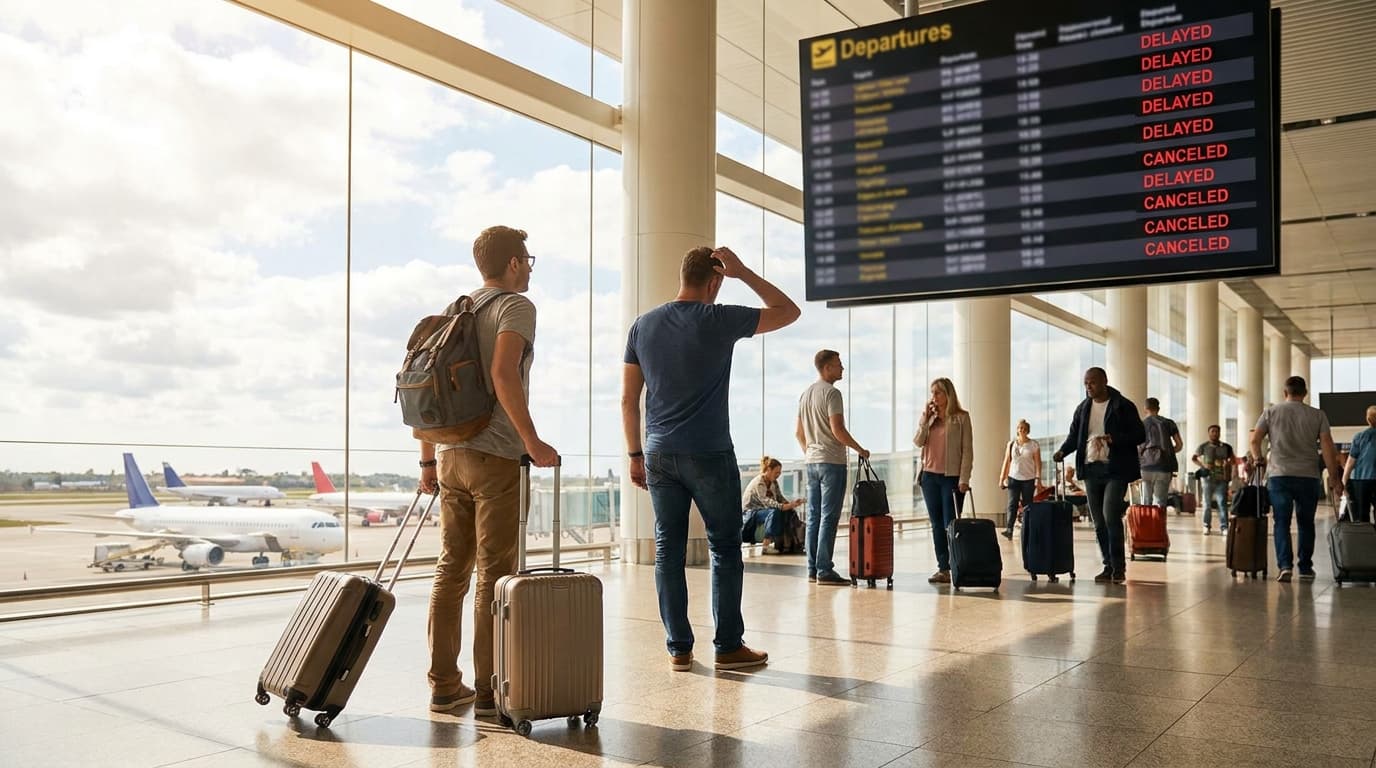
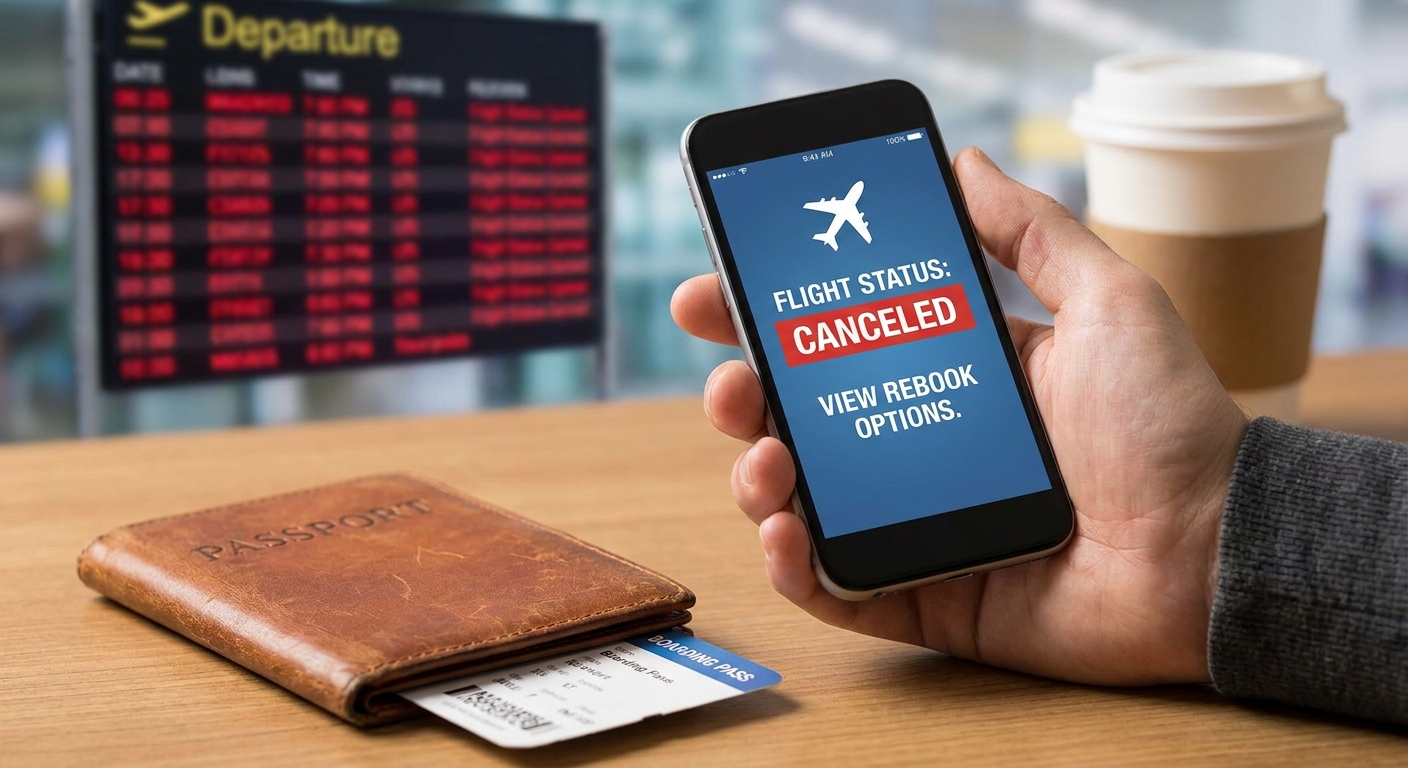
The dreaded notification buzzes on your phone, or the bold red letters flash across the departures board: CANCELED. A wave of anxiety washes over you. Your meticulously planned vacation, your crucial business meeting, your trip home - it all hangs in the balance. A flight delayed or canceled can feel like the ultimate travel catastrophe, leaving you stranded, frustrated, and unsure of what to do next. It's a moment where chaos seems to reign supreme, but it doesn't have to.
The single most important thing to do when your flight is delayed or canceled is to act quickly and knowledgeably. Your immediate actions in the first hour can significantly impact your outcome, from getting rebooked on the next available flight to securing compensation for your inconvenience. This isn't just about waiting in line; it's about understanding your rights, leveraging technology, and communicating effectively with the airline. Panic leads to poor decisions, while a calm, informed approach puts you back in control of your journey.
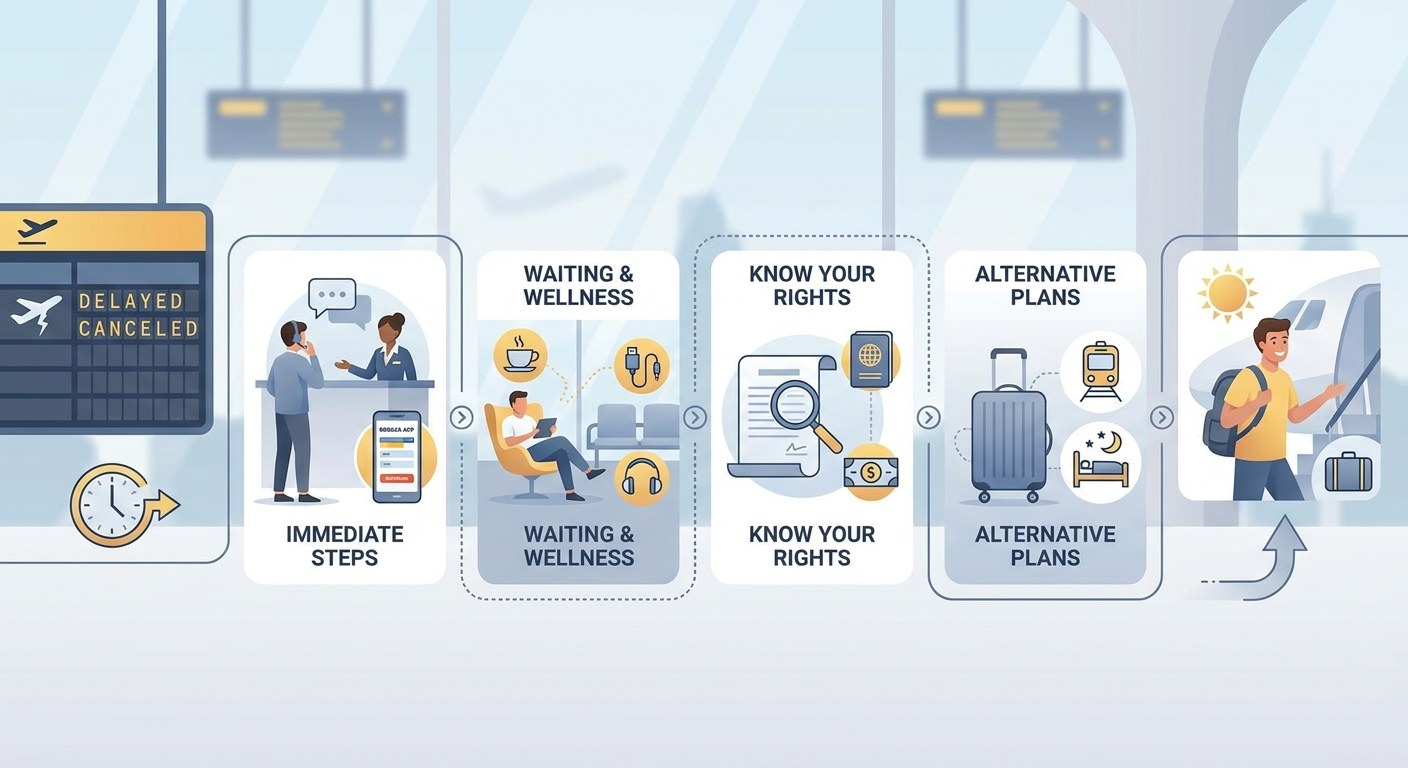
This comprehensive guide is designed to be your trusted co-pilot through the turbulence of travel disruptions. We will walk you through everything, step-by-step. You will learn the critical first actions to take, how to determine the reason for the disruption (and why it matters), and what your rights are regarding rebooking, refunds, and compensation under different regulations. We'll explore the smartest ways to get rebooked, the role of travel insurance, what happens to your luggage, and how to claim what you're owed. By the end, you'll be equipped with the strategies and confidence to navigate any flight delay or cancellation like a seasoned pro.
What Are the Very First Steps to Take When You Hear Your Flight is Delayed or Canceled?
The first 30 minutes after learning your flight is disrupted are critical. Your immediate actions should focus on gathering information and positioning yourself for the best possible solution. Avoid the initial urge to simply rush to the nearest customer service desk, as this is what everyone else will be doing, creating a massive queue.
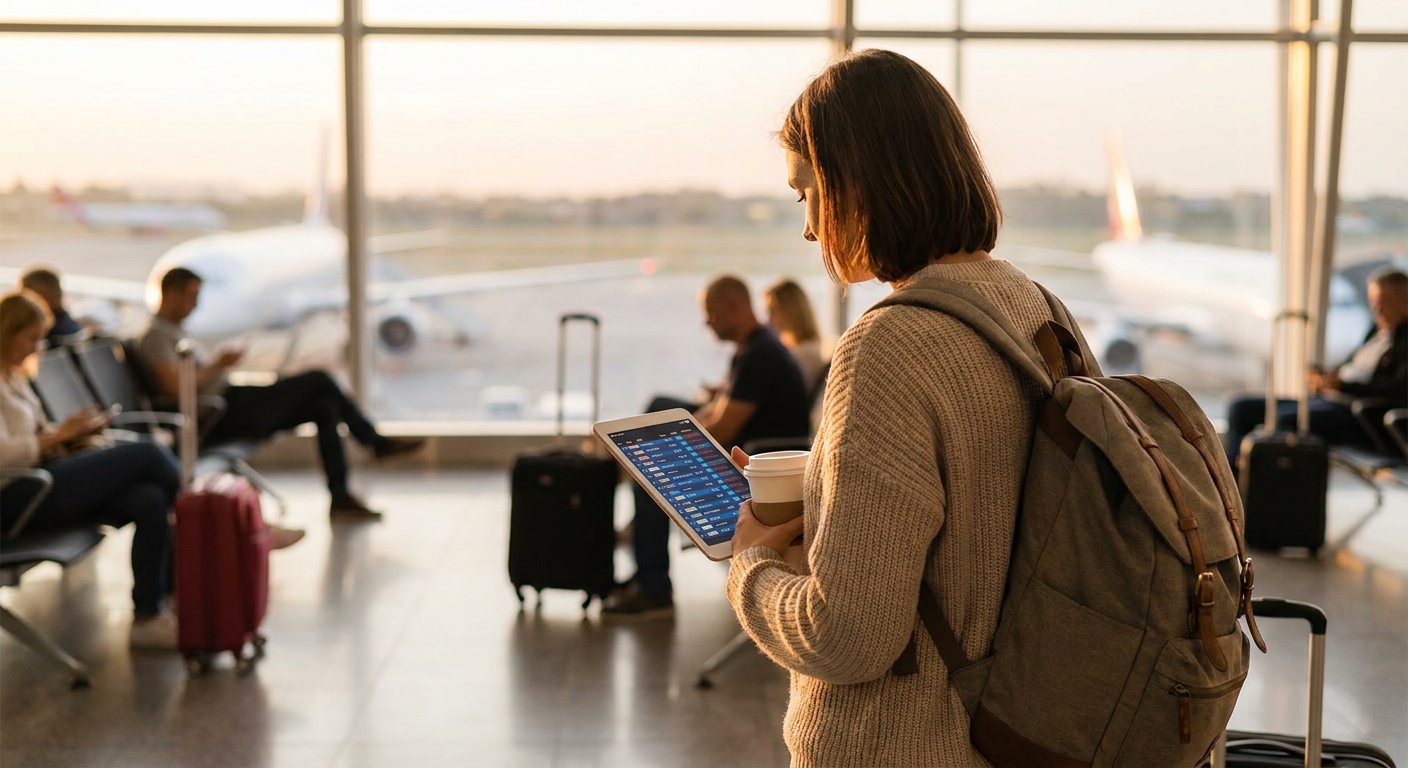
First, stay calm and confirm the information. Check the airline's official app, the airport departure screens, and text or email alerts. Sometimes information is inconsistent across platforms, so cross-referencing gives you the clearest picture. Understand if it's a delay - and for how long - or an outright cancellation. This distinction will guide your next steps. Next, immediately start researching alternatives while you wait for official instructions. Use your smartphone to look up other flights to your destination, not just on your original airline but on competitors as well. This gives you leverage and options when you finally speak to an agent.
Now, it's time to get in line, but strategically. While you physically stand in the queue at the gate or customer service center, simultaneously call the airline's customer service hotline. Many travelers forget this two-pronged approach. You are essentially in two lines at once. Often, the phone agents have the same power as the gate agents and you may get through to them faster. Some airlines also offer excellent support through social media direct messages (like on X, formerly Twitter), which can be another line of communication to open. The goal is to be the first person to speak to a representative, regardless of the channel.
A real-world example of this strategy in action involves a canceled flight from Denver to San Francisco due to a mechanical issue. A passenger, Sarah, immediately saw the cancellation on the app. While her fellow passengers swarmed the gate agent, she found a quiet corner, put her headphones in, and called the airline's elite status phone line. As she waited on hold, she used a flight search engine to find an alternate United flight leaving in two hours. By the time the phone agent answered 25 minutes later, Sarah was ready. She politely explained her situation and suggested the specific United flight she had found. The agent was able to book her onto it directly, and she was on her way while hundreds of others were still waiting in the physical line. Her proactive, multi-channel approach saved her hours of stress and waiting.
The key takeaway is to multitask effectively. Don't just passively wait. Use the downtime to arm yourself with information and open multiple lines of communication. This proactive stance transforms you from a victim of circumstance into an active participant in finding a solution, dramatically increasing your chances of salvaging your travel plans with minimal disruption.
How Do You Find Out Why Your Flight Was Disrupted?
The official reason for your flight's delay or cancellation is the single most important piece of information you can obtain, as it directly determines your rights to compensation, meals, and accommodation. Airlines categorize disruptions into two main buckets: those within their control and those outside of it. Your entitlements hinge entirely on which category the disruption falls into.
To find out the reason, you must ask the airline representatives directly and persistently. Gate agents, phone operators, and even app notifications may provide this information. Be specific in your questioning. Instead of asking "Why is the flight canceled?", ask "Can you please tell me the official reason for the cancellation that will be logged for this flight? Is it weather, air traffic control, a mechanical issue, or a crew problem?" The wording matters. A vague answer like "operational issues" is not sufficient. Politely press for a more precise cause. If you get conflicting answers, make a note of who told you what and when. This documentation can be crucial later if you need to file a claim.
Disruptions within the airline's control typically include mechanical problems, crew shortages or scheduling issues, IT system outages, or delays in cleaning or fueling the aircraft. When the airline is at fault, they have a greater 'duty of care' to their passengers. This is when you are most likely to be eligible for compensation, meal vouchers, and overnight hotel stays. Conversely, disruptions outside the airline's control, often called 'force majeure' events, include bad weather, air traffic control directives, medical emergencies, political unrest, or security threats. In these situations, the airline's primary responsibility is to get you to your destination on their next available flight or offer a refund if you cancel, but they are generally not required to provide additional amenities like hotels or meals.
Consider this scenario: Two flights are canceled out of Chicago O'Hare. Flight A is canceled due to a severe blizzard, an event clearly outside the airline's control. Passengers on Flight A are entitled to be rebooked on the next available flight or receive a refund, but the airline is not obligated to provide hotels for the night. Flight B, leaving from an adjacent gate, is canceled because the scheduled flight crew timed out (exceeded their legal working hours) due to a previous, unrelated delay. This is considered within the airline's control. Therefore, passengers on Flight B are not only entitled to rebooking or a refund but also to meal vouchers and a hotel room for the night, paid for by the airline. The passengers' experiences are vastly different, all based on that one crucial detail: the reason for the cancellation.
Your actionable insight is to become a polite but firm investigator. Don't accept vague answers. The reason for the delay is not just a piece of trivia; it is the key that unlocks your rights as a passenger. Document what you are told, and if possible, get it in writing or take a screenshot of the reason provided in the airline's app. This information is your power when it comes to negotiating rebooking and claiming compensation.
What Are Your Rights to Rebooking and Refunds?
Understanding your rights when you have a flight delayed or canceled is crucial. Under U.S. Department of Transportation (DOT) regulations, you are entitled to two primary options: a full refund or rebooking on a new flight. It is crucial to understand that the choice is yours. You do not have to accept a travel voucher or credit if you no longer wish to travel. It's worth noting that these processes can be more complex if you booked through a third-party; booking flights and hotels through an OTA has its own set of considerations.
If your flight is canceled for any reason, you are entitled to a full refund of the unused portion of your ticket, including any fees for extras like seat selection or checked bags. This applies even if you purchased a non-refundable ticket. The refund must be paid in your original form of payment (e.g., back to your credit card) within seven business days for credit card purchases. Airlines may offer you a travel voucher for future use, often with a bonus amount to entice you, but you are under no obligation to accept it. A cash refund provides far more flexibility.
For significant delays, the rules are similar. While the DOT hasn't defined an exact time that constitutes a "significant delay," it is generally determined on a case-by-case basis but often interpreted as a few hours. If a delay becomes so long that it fundamentally disrupts your travel plans (e.g., you miss a cruise departure or a wedding), you can opt to cancel your trip and receive a full refund. The airline is responsible for getting you to your destination. If they can't do so in a timely manner, you are entitled to your money back. This includes situations where they rebook you on a flight that arrives much later or has a much longer layover than you originally booked.
Scenario: The Canceled Connecting Flight
Imagine you are flying from Boston to Honolulu with a connection in Los Angeles. Your first leg from Boston to Los Angeles is on time, but while you're in the air, your connecting flight from Los Angeles to Honolulu is canceled due to a mechanical issue. When you land in LA, you are effectively stranded mid-journey. In this situation, the airline must offer you a seat on their next available flight to Honolulu. If the next flight isn't until the following day, they should also provide accommodation. However, if this delay means you'll miss two full days of your planned vacation, you might decide the trip is no longer worth it. You can inform the airline that you are canceling the remainder of your trip. You are then entitled to a refund for the unused portion (the LA to Honolulu leg) AND the portion you already flew (Boston to LA), because the cancellation made the entire trip pointless. The airline must also fly you back to your origin city, Boston, at no extra cost if you choose this option.
The critical difference between rebooking and a refund is your travel intent. If you still need to get to your destination, focus on the best rebooking options. Ask about flying on partner airlines or even competitors, which some airlines will do in cases of major disruption. If the disruption has ruined the purpose of your trip, firmly and politely demand a full cash refund. Do not let the airline pressure you into accepting a voucher that might expire or have blackout dates. Knowing you have the right to a full refund is your strongest negotiation tool.
When Are Airlines Required to Provide Compensation, Hotels, and Meals?
Airlines are required to provide compensation, hotels, and meals primarily when a flight delayed or canceled is caused by a problem within their own control. This 'duty of care' is not explicitly mandated by law in the United States as it is in Europe, but it is outlined in each airline's contract of carriage - the legal document you agree to when you buy a ticket. Understanding this distinction is key to managing your expectations and knowing what to ask for.
When a delay or cancellation is the airline's fault - such as mechanical issues, crew availability, or routine operational problems - the airline is generally expected to provide amenities to stranded passengers. For delays of a few hours, this typically means meal vouchers. The value can vary, but it's usually enough for a standard airport meal ($10-$15 per voucher). If the disruption requires you to stay overnight, the airline should provide a hotel room, transportation to and from the hotel, and meal vouchers for dinner and breakfast. They will usually have arrangements with nearby hotels and will give you a voucher for a specific property.
However, if the disruption is caused by factors outside the airline's control - like severe weather, air traffic control mandates, or a regional security issue - these obligations disappear. The airline's only responsibility is to get you on their next available flight or provide a refund if you choose to cancel. They are not required to pay for your hotel, meals, or other expenses. This is where many travelers become frustrated, finding themselves stranded overnight due to a snowstorm with no assistance from the airline. This is precisely the scenario where travel insurance or premium credit card benefits become invaluable, as they can cover these costs when the airline won't.
Example: Mechanical vs. Weather Delay
Let's compare two passengers, Alex and Ben, both scheduled to fly from New York to Miami. Alex's flight is delayed by five hours and eventually canceled because of a hydraulic pump failure on the aircraft. This is a mechanical issue and is 100% the airline's responsibility. The airline provides Alex with a meal voucher during the delay. When the flight is canceled, they book him a hotel room for the night, provide a shuttle, and rebook him on the first flight the next morning. Ben, on the other hand, is at an adjacent gate. His flight is canceled because a hurricane is approaching Miami and the airport is closing. This is a weather event, entirely outside the airline's control. The airline rebooks Ben on a flight two days later, after the storm is projected to pass. They do not, however, provide him with a hotel, meals, or any other compensation. Ben is responsible for his own expenses for the next two days in New York.
The takeaway is to be proactive in asking for what you are owed. If your delay is due to a mechanical issue, don't wait for the gate agent to announce meal vouchers. Go to the desk, state the length of your delay, and politely ask for them. If an overnight stay becomes likely, ask about hotel arrangements early. If the agent is overwhelmed, ask if you can book your own reasonably priced hotel and submit the receipt for reimbursement, getting their approval first if possible. Always know the why behind the delay, as it dictates what you can and should receive.
How Do International Flight Regulations Like EU261 Differ from US Rules?
International flight regulations, particularly the European Union's EU261/2004, offer passengers significantly more robust and clearly defined rights compared to the rules in the United States. While US regulations are largely based on individual airline policies (contracts of carriage), EU261 is a law that mandates specific compensation amounts for delays, cancellations, and denied boarding. Knowing which set of rules applies to your flight is crucial for claiming what you're owed.
EU261 applies to any passenger flying from an EU airport on any airline, or flying to an EU airport on an EU-based airline. This means a flight from New York to Paris on Air France is covered, but the same flight on American Airlines is not (though a return flight from Paris to New York on American Airlines would be covered). The regulation mandates cash compensation for delays of three hours or more upon arrival, cancellations with less than 14 days' notice, or denied boarding, provided the disruption was within the airline's control. The compensation is a fixed amount based on flight distance, not the ticket price: €250 for flights under 1,500 km, €400 for flights between 1,500 and 3,500 km, and €600 for flights over 3,500 km.
This is a stark contrast to the US system. In the US, there is no federal mandate for airlines to provide compensation for a standard delay, regardless of the length or reason. The only time monetary compensation is federally mandated is for involuntary denied boarding (getting bumped) due to overbooking. For all other delays and cancellations, amenities like meals and hotels are provided at the airline's discretion, as outlined in their contract of carriage, and only for controllable disruptions. US rules focus on getting you a refund or rebooking, while EU261 focuses on compensating you for your lost time in addition to providing care and rebooking.
Comparison Table: US DOT Rules vs. EU261
| Feature | US DOT Regulations | EU261 Regulation |
|---|---|---|
| Mandatory Cash Compensation for Delays | No, only for involuntary denied boarding. | Yes, for delays over 3 hours (arrival time), cancellations, and denied boarding. |
| Compensation Amount | Up to 400% of one-way fare for denied boarding (max $1,550). | €250 to €600 based on flight distance. |
| Duty of Care (Meals, Hotel) | Determined by airline's contract of carriage, typically for controllable disruptions only. | Legally mandated for all delays over a certain threshold, regardless of reason (except for compensation). |
| Reason for Disruption | Affects eligibility for meals/hotels. No compensation either way. | Affects eligibility for cash compensation. Does not affect duty of care (meals/hotel). |
| Applicability | Primarily applies to domestic US flights and international flights by US carriers. | Flights departing the EU, and flights to the EU on an EU carrier. |
Consider a flight from London to Boston on British Airways that is canceled due to a crew shortage. Under EU261, the passengers are entitled to rebooking, meals and accommodation as needed, AND €600 in cash compensation because the flight is over 3,500 km and the reason was within the airline's control. If the same cancellation happened on a domestic US flight from Boston to Los Angeles, passengers would be entitled to rebooking and likely meals/hotel, but zero cash compensation. The actionable insight is to always be aware of which regulations govern your specific itinerary. If your travel involves Europe, the UK (which has similar post-Brexit laws), or other regions with strong passenger rights, your leverage and potential compensation increase dramatically.
What is the Smartest Way to Rebook Your Flight?
The smartest way to rebook a disrupted flight is to pursue multiple communication channels simultaneously and have your own alternative flights already researched. Relying solely on the gate agent is often the slowest and most frustrating path, as they are dealing with an entire plane's worth of anxious passengers. A multi-pronged, informed approach will get you moving faster.
Your rebooking toolkit should include four key methods used in parallel. First, the physical queue for the gate agent or customer service desk. Get in line, but don't just stand there. Second, use your phone to call the airline's main customer service number. If you have elite status, call your dedicated line, which almost always has shorter wait times. Third, use the airline's mobile app. Many apps now have powerful self-service rebooking tools that can offer you alternative flights with just a few taps, allowing you to bypass human agents entirely. Fourth, contact the airline via social media, particularly X (formerly Twitter). Airlines have dedicated social media teams that are often empowered to handle rebooking requests and can be surprisingly responsive.
Before you even speak to anyone, do your own research. Use a flight search engine like Google Flights or Kayak to find viable alternatives to your destination. Look for flights on your airline and even on their partners or competitors. When you finally connect with an agent (on the phone or in person), you can then proactively suggest a solution. Instead of saying, "What can you do for me?", you can say, "My flight was canceled. I see there is a seat on Flight 856 through Dallas, or a seat on your partner airline's Flight 451. Can you please book me on one of those?" This makes the agent's job easier and shows you've done your homework, often leading to a quicker, more favorable outcome.
For instance, during a major system outage for a large US airline, thousands of passengers were stranded. One traveler, Mark, was stuck in Atlanta trying to get to Seattle. The line at the service desk was over 200 people long. Mark got in line, but immediately called the airline's international number (often less busy) via a web calling app and sent a direct message to their X account. While on hold, he found a flight routing through Salt Lake City on a partner airline. The X team responded first, within 15 minutes. He provided his record locator and suggested the Salt Lake City option. The social media agent confirmed his identity and rebooked him right there in the direct message thread. Mark left the physical line and headed to his new gate, saving himself what could have been a 4-5 hour wait.
The key takeaway is to be your own travel agent. The person who gets rebooked fastest is often the one who presents a clear, viable solution to the airline representative. Use technology to your advantage, explore all communication channels, and don't passively wait for the airline to solve your problem for you. Take control of the process to minimize your delay.
How Can Travel Insurance and Credit Card Benefits Protect You?
Travel insurance and premium travel credit card benefits act as a critical safety net, filling the significant gaps in coverage that airlines leave, especially during disruptions outside of their control. While an airline might rebook you after a weather cancellation, they won't pay for the hotel room and meals you need while you wait. This is where your insurance or credit card perks kick in, potentially saving you hundreds of dollars in out-of-pocket expenses.
Most comprehensive travel insurance policies and premium credit cards include Trip Delay Reimbursement and Trip Cancellation/Interruption coverage. Trip Delay coverage is designed for shorter disruptions. If your flight is delayed by a specified number of hours (typically 6 to 12), this benefit will reimburse you for reasonable expenses incurred during that delay, such as meals, a hotel room, toiletries, and ground transportation. Trip Cancellation coverage, on the other hand, reimburses you for prepaid, non-refundable travel expenses if you have to cancel your trip entirely for a covered reason before you leave. Trip Interruption covers you if you have to cut your trip short after it has already begun.
The key is that these benefits often cover delays and cancellations for a much wider range of reasons than the airlines do, including weather. If a blizzard cancels your flight and the airline offers no assistance, you can book a nearby hotel, save your receipts for meals, and file a claim with your insurance or credit card provider for reimbursement up to the policy limit (often $300 to $500 per trip). To be eligible for credit card coverage, you must have paid for a portion of your trip (like the flight) with that specific card.
Real-World Scenario: The Weather Stranding
Consider a family of four flying from Chicago to Orlando for a Disney vacation in February. A massive snowstorm hits Chicago, and all flights are canceled for 24 hours. The airline, citing the weather, is not obligated to provide hotels or food. The family is now facing an unexpected night in a hotel, plus three meals for four people, easily costing over $400. However, they had purchased their flights using a premium travel rewards credit card. They check their card's benefits guide and see they have Trip Delay coverage that activates after a 6-hour delay, with a maximum reimbursement of $500 per ticket.
They confidently book a room at an airport hotel, take a taxi, and have dinner and breakfast, keeping all itemized receipts. The next day, after they finally get to Orlando, they go to the credit card's online claims portal. They upload pictures of their receipts, their original and new boarding passes, and a statement from the airline confirming the cancellation was due to weather. A few weeks later, they receive a statement credit for the full amount of their expenses. Their credit card benefit turned a stressful, expensive situation into a manageable inconvenience.
The actionable insight is to never travel without this layer of protection. Before your trip, review the benefits guide for the credit card you used to book your flight. Understand the delay threshold (in hours), the coverage limit (in dollars), and the documentation required to file a claim. If you don't have a card with these benefits, consider purchasing a standalone travel insurance policy. This proactive step ensures that when a disruption hits, you have the resources to stay comfortable without breaking the budget.
What Happens to Your Checked Luggage During a Long Delay or Cancellation?
One of the most common sources of anxiety during a flight disruption is the fate of your checked luggage. When your travel plans change unexpectedly, your bags are on their own journey behind the scenes. Understanding the airline's process and your options can help you manage your belongings and minimize stress.
In the case of a relatively short delay (a few hours), your luggage will typically stay on the plane or in the baggage holding area, ready to be loaded for the new departure time. You will not have access to it. For a long delay, an overnight delay, or a cancellation where you are rebooked for the next day, the situation becomes more complex. The airline's default procedure is to keep your bag and automatically tag it to be transferred to your new flight. They prefer this method as it is logistically simpler for them. However, this means you will be without your checked belongings overnight.
You generally have the right to request that your bag be returned to you, but be aware that this can be a slow and complicated process. It can take several hours for baggage handlers to locate and retrieve a specific bag from a fully loaded aircraft or a container. If you request your bag back, you will then have to check it in again for your new flight the next day, meaning you'll need to arrive at the airport even earlier. You should weigh the inconvenience of being without your bag against the hassle of retrieving it and re-checking it.
Strategic Packing and Proactive Communication
The best strategy begins before you even leave for the airport: pack smart. Always keep essential items in your carry-on bag. This includes a change of clothes, any necessary medications, device chargers, toiletries, and important documents. Assume you will be separated from your checked bag for at least 24 hours. This preparation makes an overnight delay far less stressful.
If your flight is canceled and you need your bag back, go to the airline's baggage service office, which is usually located near the baggage claim carousels. Do not wait at the gate. Provide the agent with your baggage claim receipt. Be prepared for a long wait. A better alternative, if you can manage, is to leave the bag with the airline. Before leaving the airport, speak with a customer service or baggage agent to confirm your bag has been re-tagged for your new flight. Ask them to verify the new luggage tag number and destination in their system. Take a photo of the new tag information if possible. This provides peace of mind that your bag is on the right track.
For example, if a flight from Dallas to London is canceled, and you're rebooked for the next morning, you might be tempted to get your large suitcase back. But retrieving it could take three hours. A smarter traveler who packed essentials in their carry-on would simply confirm with the baggage agent that the bag is secured and tagged for the new flight, get their hotel voucher, and leave the airport. They save hours of waiting and the hassle of dragging a large bag to a hotel and back. The key takeaway is to prepare for the worst by packing a well-stocked carry-on, and in most cases, trust the airline to retag and transfer your bag, but always get verbal or written confirmation that this has been done correctly.
How Do You File a Claim for Compensation After the Fact?
Successfully filing a claim for compensation after a flight disruption requires a methodical approach, thorough documentation, and persistence. Whether you are claiming cash compensation under EU261 or reimbursement for expenses from an airline or travel insurance, the burden of proof is on you. Starting the process with all your evidence organized will dramatically increase your chances of success.
The first step is to gather all your documentation. This is a crucial step that should begin the moment you learn of the disruption. Create a digital folder and save everything. Your essential documents include: your original booking confirmation and ticket numbers, original and new boarding passes, all communication with the airline (emails, screenshots of app notifications or social media messages), photos of the departure board showing the delay/cancellation, and itemized receipts for all expenses you incurred (hotels, meals, transportation). It is also wise to write down a timeline of events, noting who you spoke to, when, and what they told you, especially regarding the reason for the delay.
Next, identify the correct channel for your claim. If you are claiming cash under EU261 or reimbursement for amenities from a controllable cancellation, your first point of contact is the airline itself. Go to the airline's website and look for a dedicated customer relations, complaints, or compensation form. Do not just send a generic email. Using their official portal ensures your claim is tracked properly. Fill out the form clearly and concisely, state the facts, mention the specific flight and date, and explain why you believe you are entitled to compensation, citing the relevant regulation (e.g., "Under EU261...") if applicable. Upload all your supporting documents. If the airline rejects your valid claim or doesn't respond within a reasonable time (e.g., 30-60 days), you can then escalate the issue to the relevant government body (like the DOT in the US) or a national enforcement body in the EU.
For claims related to travel insurance or credit card benefits, you will follow a similar process but through the insurance provider's or credit card company's claims portal. These portals are typically very structured and will guide you through the required information and document uploads. They will often require a statement from the airline confirming the reason and length of the delay, which you can request from the airline's customer service.
Mini Case Study: The Persistent Passenger
A passenger was flying from Frankfurt to Toronto on an EU airline. The flight was delayed by five hours due to a technical issue with the aircraft. Upon returning home, the passenger knew they were entitled to €600 under EU261. They submitted a claim through the airline's online form, attaching their boarding pass and a screenshot from a flight tracking website showing the arrival delay. The airline initially responded with an offer of a €300 travel voucher, vaguely citing "unforeseen operational circumstances." The passenger politely declined the voucher, re-stating their right to a €600 cash payment under the law for a technical delay. When the airline delayed further, the passenger filed a complaint with the German national enforcement body. Within two weeks, the airline contacted the passenger and processed the full €600 payment. The passenger's persistence and knowledge of their rights were key to overcoming the airline's initial attempt to offer a lower-value voucher.
The actionable insight is to be organized and persistent. Treat filing a claim like a business transaction. Present a clear, evidence-backed case and don't be discouraged by initial pushback or lowball offers. Know your rights, follow the correct procedures, and be prepared to escalate your claim if necessary.
What Proactive Steps Can You Take to Minimize Future Disruptions?
While you can never completely eliminate the risk of flight delays and cancellations, you can make strategic choices during the booking and planning process that significantly minimize your exposure to disruptions and their impact. Being a proactive traveler means thinking defensively and building resilience into your itinerary from the very beginning.
First, choose your flights wisely. Whenever possible, book the first flight of the day. These flights are less likely to be delayed because the aircraft and crew are typically already at the airport from the night before, eliminating the risk of a late-arriving aircraft causing a cascading delay. Statistically, delays accumulate throughout the day, making evening flights the most susceptible to problems. Similarly, try to book non-stop flights. Each connection you add to your itinerary is another potential point of failure - another chance for a delay, misconnection, or lost luggage. If you must connect, leave a generous layover time (at least 90 minutes for domestic, 2-3 hours for international) to provide a buffer against minor delays.
Second, consider the airline and airport. Some airlines have better on-time performance records than others. The Department of Transportation and various aviation analytics companies publish monthly and annual reports on airline performance. A few minutes of research can help you choose a more reliable carrier. The same logic applies to airports. When connecting, try to avoid airports that are notoriously prone to congestion or weather-related disruptions, especially during certain times of the year (e.g., Chicago in winter, Dallas in summer thunderstorm season).
Third, leverage technology and prepare for the worst. Before you leave home, download your airline's app and enable push notifications. This is often the fastest way to receive updates on your flight status. Also, use a third-party flight tracking app like FlightAware or Flightradar24. These apps can sometimes provide more detailed information about your inbound aircraft than the airline's own app, giving you an early warning if your plane is delayed. Finally, as discussed previously, ensure you have a safety net. Book your flight with a credit card that offers trip delay protection or purchase a separate travel insurance policy. This financial backup turns a potential crisis into a mere inconvenience.
Imagine two travelers planning a trip to a destination wedding in Mexico. Traveler A finds a cheap flight with a 45-minute connection in Houston during hurricane season. They book with a basic credit card and don't think twice. Traveler B pays slightly more for a non-stop flight on an airline with a good on-time record, books with their premium travel card, and schedules their arrival for a full day before the wedding festivities begin. When a thunderstorm inevitably delays flights out of Houston, Traveler A misses their connection and the wedding. Traveler B, on their non-stop flight, might experience a short delay but arrives with plenty of time to spare, secure in the knowledge that even if their flight were canceled, their card benefits would cover their expenses. This foresight is the difference between a ruined trip and a minor hiccup.
Your ultimate takeaway is that controlling your travel experience starts long before you get to the airport. By making smarter booking choices, building buffers into your schedule, and having a financial safety net, you can significantly reduce the odds of a disruption derailing your entire trip.
Navigating the turbulent world of flight delays and cancellations can be daunting, but it is not a situation you have to face helplessly. The journey from frustrated passenger to empowered traveler begins with knowledge and a proactive mindset. As we've explored, the key to handling a flight delayed or canceled is to replace panic with a plan. By understanding the critical first steps, the importance of the 'why' behind the disruption, and the full scope of your rights, you shift the balance of power back in your favor. You are not just at the mercy of the airline; you are a customer with rights and resources.
Remember the core principles: act quickly and communicate through multiple channels. Arm yourself with information by researching alternatives before you even speak to an agent. Know your rights under both US DOT regulations and powerful international laws like EU261, as this knowledge dictates what you can and should demand. Differentiate between a controllable delay, where the airline owes you a duty of care, and an uncontrollable one, where your travel insurance and credit card benefits become your essential safety net. Always protect your journey by packing essentials in your carry-on and confirming the plan for your checked luggage.
Ultimately, the best defense is a good offense. Planning your travels thoughtfully by choosing early, non-stop flights, reliable airlines, and building buffers into your schedule can prevent many problems before they begin. When disruptions do occur, view them not as a catastrophe, but as a problem to be solved. Keep meticulous records, be persistent but polite in your claims, and leverage every tool at your disposal - from the airline's app to your credit card's insurance policy. By adopting this strategic approach, you transform from a passive victim into an active, resilient traveler, capable of navigating any obstacle and ensuring your journey, no matter the bumps along the way, continues forward.
Frequently Asked Questions
Generally, you cannot get compensation from the airline for a weather-related delay. Weather is considered an 'extraordinary circumstance' or 'act of God' outside the airline's control. Their only obligation is to rebook you on their next available flight. However, this is where travel insurance or premium credit card benefits are vital. Their trip delay coverage will often reimburse you for expenses like hotels and meals incurred during a weather delay, even when the airline provides nothing. So while the airline won't compensate you directly, your insurance policy can cover your out-of-pocket costs.
A 'significant delay' is a term used by the U.S. Department of Transportation (DOT), but it is intentionally not defined by a specific number of hours. It is determined on a case-by-case basis. Generally, if a delay fundamentally alters your travel plans - causing you to miss a cruise departure, a wedding, or a business meeting - it would be considered significant. For most travelers, a delay of 3-5 hours might be considered significant enough to warrant requesting a refund if you choose to cancel your trip. Always state that the delay has made your trip's purpose moot when requesting a refund.
No, you do not have to accept a travel voucher. If the airline cancels your flight for any reason, U.S. federal law entitles you to a full cash refund to your original form of payment. Airlines will often offer vouchers, sometimes with a bonus value, because it keeps the cash within their company. However, the choice is yours. A cash refund offers far more flexibility than a voucher, which may come with expiration dates and blackout periods. If you want your money back, politely but firmly insist on a cash refund as required by DOT regulations.
If you believe the airline is misrepresenting the reason for a delay (e.g., calling a mechanical issue a weather problem to avoid paying for hotels), documentation is key. Note the time, the agent's name, and what you were told. Take screenshots of the flight status in the app. You can also use flight tracking websites that may show the status of the inbound aircraft. After your trip, you can file a formal complaint with the airline's corporate customer relations department, presenting your evidence. If they remain uncooperative, you can file a complaint with the Department of Transportation, which investigates such issues.
It depends on the airline and the situation. There is no federal requirement for an airline to book you on a competitor's flight. However, some major airlines have interline agreements with each other and may do so as a courtesy, especially for their elite status members or during major, widespread disruptions caused by their own systems. It never hurts to ask. If your flight is canceled, research available flights on other airlines and politely ask the agent if they can endorse your ticket over to another carrier. The worst they can say is no.