Best Time to Visit Europe: A Complete Month-by-Month Guide for 2026
Planning a trip to Europe is an exhilarating experience, filled with visions of ancient Roman ruins, Parisian cafes, and sun-drenched Greek islands. Yet, one question looms larger than any other: when is the best time to go? The answer isn't a simple date on a calendar; it's a complex tapestry woven from threads of weather, crowds, costs, and your personal travel dreams.
The best time to visit Europe is during the shoulder seasons: April to early June (Spring) and September to October (Autumn). During these months, you'll find a delightful balance of pleasant weather, manageable crowds, and more affordable prices for flights and accommodation compared to the peak summer season. This period offers the quintessential European experience without the extreme heat and overwhelming tourist numbers of July and August.
However, the 'best' time is deeply personal. A budget backpacker seeking the lowest prices will find their sweet spot in the winter chill of January, while a sun-worshipper will brave the summer crowds for a perfect Mediterranean beach holiday. This guide is designed to be your definitive resource, moving beyond generic advice to provide a detailed, month-by-month breakdown. We will explore the cheapest months to travel, the realities of peak season, the unique charms of each season across different regions, and how your specific travel style dictates your ideal timeline. By the end, you'll be equipped to choose the perfect window for your unforgettable European adventure.

What is the Absolute Best Time to Visit Europe for Ideal Weather and Fewer Crowds?
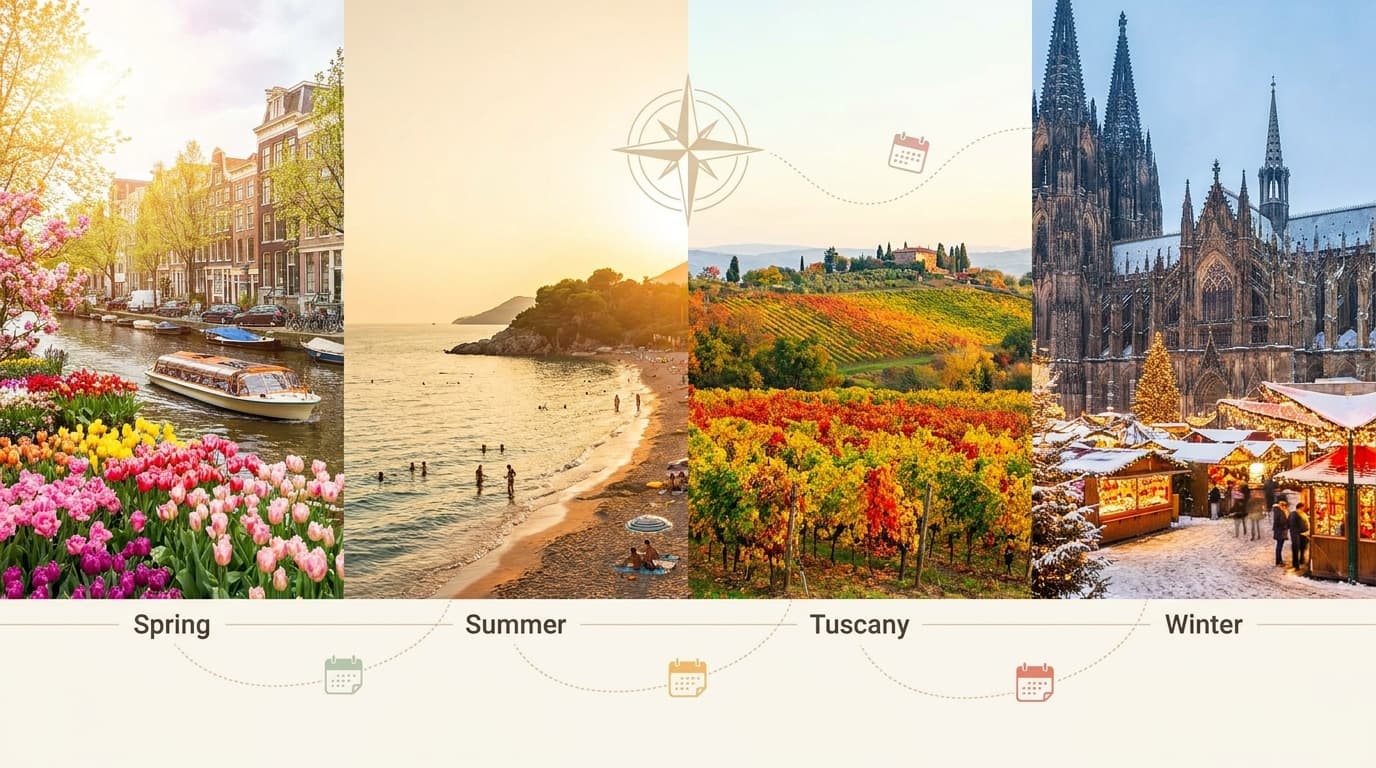
The absolute best time to visit Europe for a harmonious blend of pleasant weather and manageable crowds is during the two shoulder seasons: Spring (April to early June) and Autumn (September to October). These periods act as the 'sweet spot' for most travelers, offering the best of both worlds without the significant drawbacks of peak or off-peak travel.
During these months, the continent awakens or winds down, creating a magical atmosphere. In spring, flowers are in full bloom from the Keukenhof Gardens in the Netherlands to the rolling hills of Tuscany. The weather is generally mild and sunny, perfect for long days of sightseeing in cities like Paris, Rome, or Prague without the oppressive heat of summer. Similarly, autumn brings a crispness to the air and a stunning palette of red and gold foliage, particularly in regions like Bavaria in Germany or the Douro Valley in Portugal. The summer crowds have dissipated, allowing for a more relaxed and authentic experience at major attractions.
Let's consider a real-world example. Imagine visiting the Colosseum in Rome. In August, you might wait in line for over an hour under the scorching sun, surrounded by thousands of other tourists. In May or October, you'll experience shorter queues, more comfortable temperatures for exploring the unshaded ruins, and the ability to take photos without a sea of heads in your shot. This difference is palpable and can significantly enhance your enjoyment of iconic sites. The same applies to strolling through the charming streets of Santorini or enjoying a canal cruise in Amsterdam; the experience is simply more pleasant with a bit more breathing room.
Compared to the peak summer months of July and August, the shoulder seasons offer significant advantages. While summer guarantees hot weather ideal for beach holidays, it also brings peak pricing for flights and hotels, fully booked attractions, and a general sense of congestion in popular destinations. Conversely, while the winter off-season (November to February) offers the lowest prices, it comes with the trade-off of cold, often dreary weather and shorter daylight hours, limiting outdoor activities. The shoulder seasons strike the perfect equilibrium, making them the top recommendation for first-time visitors or anyone wanting a balanced European trip.
The key takeaway is to aim for this sweet spot if your schedule allows. You'll save money compared to summer, avoid the worst of the crowds, and enjoy comfortable weather ideal for a wide range of activities, from city exploration to countryside hiking. It's the most strategic choice for a high-value, low-stress European vacation.
When is the Cheapest Time to Travel to Europe?
The cheapest time to travel to Europe is during the deep off-season, specifically from January to February and, to a lesser extent, November. During these months, the holiday crowds have vanished, and the summer rush is a distant memory, leading to a significant drop in demand. This translates directly into the lowest prices you'll find all year for flights, accommodations, and even some tours.
This period is characterized by cold weather across most of the continent, with Northern and Eastern Europe often experiencing snow and freezing temperatures. While this might not be ideal for a sun-and-sand holiday, it presents a golden opportunity for budget-conscious travelers. Airlines and hotels slash their prices to attract customers, and you can often find round-trip flights for a fraction of their summer cost. For example, a flight from New York to Paris that might cost $1200 in July could potentially be found for under $500 in February. Similarly, a hotel room in a central location in Vienna or Berlin might be 30-50% cheaper than it would be in June.
Consider the scenario of a backpacker planning a multi-city tour. By traveling in the off-season, their budget stretches significantly further. The money saved on a single transatlantic flight could fund an entire week's worth of hostel stays and meals. They can visit world-class museums like the Louvre or the Prado with fewer people, allowing for a more intimate and unhurried experience. The lack of queues means more time seeing sights and less time waiting, maximizing their travel days. This is the time for cozying up in a traditional English pub, enjoying the hearty stews of Prague, or experiencing the unique 'hygge' culture in Scandinavia.
The main alternative for budget travel is the tail end of the shoulder seasons, such as late October or early April. While not as cheap as the deep winter, these months can still offer good deals before prices ramp up for the holidays or the summer. However, for the absolute rock-bottom prices, January and February are unparalleled. The trade-off is clear: you sacrifice warm weather and long days for incredible savings and a more local, less tourist-centric atmosphere.
The actionable insight here is to embrace the winter if your primary goal is saving money. Focus your itinerary on indoor activities like museums, galleries, concerts, and culinary experiences. Pack warm layers, and you'll be rewarded with a European trip that is both incredibly affordable and refreshingly free of crowds. It's a chance to see the continent's famous cities in a different, more contemplative light.
How Does Summer in Europe Truly Feel for a First-Time Visitor?
For a first-time visitor, summer in Europe (late June to August) feels like a vibrant, energetic, and overwhelmingly popular festival. It's the continent at its most lively and sun-drenched, but also at its most crowded and expensive. The experience is a duality of incredible highs and potential frustrations.
On one hand, the weather is fantastic. Long, sunny days stretch into warm evenings, perfect for alfresco dining in Italy, island hopping in Greece, or enjoying outdoor music festivals across the continent. The atmosphere is electric; cities are buzzing with energy, parks are full of people, and there's a palpable sense of celebration in the air. This is the season when Europe's natural beauty is on full display - the lavender fields of Provence are in bloom, the beaches of the Algarve are sparkling, and the hiking trails in the Swiss Alps are lush and accessible. For those dreaming of a classic sun-drenched European holiday, summer delivers exactly that.
However, this popularity comes at a cost. Imagine trying to see the Mona Lisa in the Louvre in July. You'll be navigating a dense crowd, craning your neck over hundreds of others for a fleeting glimpse. The charming, narrow streets of Dubrovnik's Old Town can feel less like a historical discovery and more like a human traffic jam. The heat, especially in Southern Europe, can be intense and draining, with temperatures often soaring above 35°C (95°F), making midday sightseeing an exhausting endeavor. Furthermore, this is peak season for prices. Flights, hotels, and even train tickets can be double what they would be in the off-season, requiring a much larger budget.
Let's compare this to a shoulder season visit. A trip to the Amalfi Coast in May offers warm, pleasant weather perfect for swimming, but the towns are less congested, and you can find a table at a seaside restaurant without a reservation made weeks in advance. In August, the same trip would involve bumper-to-bumper traffic on the coastal roads, packed ferries, and beaches where every inch of sand is claimed. The summer experience is more intense and requires more patience and planning.
The key takeaway for first-timers considering a summer trip is to set realistic expectations and plan strategically. Book everything - flights, accommodation, major attraction tickets, and high-speed trains - far in advance. Embrace the siesta culture in southern countries by exploring in the morning and late afternoon, and relaxing during the peak heat of the day. Consider visiting less-famous but equally beautiful destinations to escape the worst of the crowds. Summer can be a magnificent time to visit Europe, but you must be prepared for the realities of peak season travel.

Is Visiting Europe in Winter a Good Idea?
Yes, visiting Europe in winter (December to February) is an excellent idea, provided your travel goals align with what the season has to offer. While it's not the time for sunbathing, winter unveils a completely different, often more magical and authentic side of the continent, coupled with significant budget and crowd-related benefits.
The primary draw of a winter trip is the festive atmosphere and unique seasonal activities. December is dominated by enchanting Christmas markets, particularly in Germany (Nuremberg, Dresden), Austria (Vienna), and France (Strasbourg). These markets are a feast for the senses, with twinkling lights, the scent of mulled wine (Glühwein) and gingerbread, and stalls selling traditional crafts. Beyond the holidays, winter is the prime season for skiing and snowboarding in the Alps, with world-class resorts in France, Switzerland, Austria, and Italy. For those less inclined to outdoor sports, it's the perfect time for cozy, indoor-focused city breaks. Imagine spending a cold afternoon in a Viennese coffee house, exploring the vast collections of the British Museum in London without the crowds, or enjoying a thermal bath in Budapest as snow falls around you.
Let's take the example of visiting Prague. In summer, you'd share Charles Bridge with thousands of other tourists. In January, you could find yourself walking across it on a crisp morning with only a handful of others, the city's spires shrouded in a mystical fog. The experience is more atmospheric and feels less like a tourist attraction and more like stepping into a fairytale. You can enjoy hearty Czech cuisine like goulash and dumplings in a warm, traditional pub, a far cozier experience than in the summer heat.
Of course, the trade-off is the weather. Days are short, and temperatures can be cold, often dropping below freezing, with rain, sleet, or snow being common depending on the region. Southern Europe, while milder than the north, can be cool and rainy. This makes winter unsuitable for travelers whose primary goal is to explore beaches or spend extensive time outdoors hiking in non-alpine regions. You must pack appropriately with warm, waterproof layers, and be prepared for less daylight for sightseeing.
Ultimately, a winter trip to Europe is a fantastic choice for budget travelers, culture enthusiasts, and anyone seeking a festive or cozy atmosphere. If you are prepared for the cold and focus your itinerary on the unique strengths of the season - Christmas markets, winter sports, and indoor cultural attractions - you will be rewarded with a deeply memorable and affordable European adventure.
Which European Regions are Best to Visit in Spring (March-May)?
Spring is a magnificent time across Europe, but certain regions truly shine from March to May as they shake off winter's chill. The best regions to visit depend on your priorities, whether it's chasing early warmth, seeing iconic floral displays, or enjoying pleasant city breaks before the summer rush.
For those seeking sunshine and warmth, Southern Europe is the premier choice. The Mediterranean begins to warm up significantly, offering beach-worthy weather by May without the intense heat and crowds of summer. Countries like Portugal (the Algarve), Southern Spain (Andalusia), Southern Italy (Sicily and Puglia), and Greece are ideal. You can explore ancient ruins in comfortable temperatures, enjoy coastal drives, and even take a dip in the sea by the end of the season. For instance, visiting the island of Crete in May means you can hike the Samaria Gorge before it gets too hot and relax on Elafonisi Beach before it's covered in summer tourists.
Western Europe is perfect for classic city breaks and countryside exploration. In the Netherlands, April is synonymous with the vibrant tulip bloom at Keukenhof Gardens and across the countryside, a truly spectacular sight. In France, Paris is famously beautiful in the spring, with blossoms in its many parks and pleasant weather for strolling along the Seine. The Loire Valley is also exceptional, as its famous chateaux are framed by lush, green landscapes. This is the time to enjoy cafe culture and explore cities like Amsterdam, Brussels, and London when they are at their most picturesque and comfortable.
Central and Eastern Europe also come alive, though spring arrives a bit later here. By May, cities like Prague, Budapest, and Krakow are gorgeous, with parks in full bloom and pleasant temperatures for walking tours. It's a great time to visit before the summer heat and humidity sets in. The main contrast with Southern Europe is the temperature; while Andalusia might be hot in May, Prague will likely be mild and pleasant, making it more suitable for those who prefer cooler weather for city exploration.
Northern Europe (Scandinavia and the Baltics) is the last to warm up. March and even April can still feel quite wintery. However, by late May, the region experiences the magic of long daylight hours leading up to the midnight sun. It's a wonderful time to visit cities like Stockholm or Copenhagen as locals emerge to celebrate the return of the sun, filling parks and outdoor cafes. The key takeaway is to match the region to the month. Head south in March and April for the best chance of sun, and explore the west and north in May as the season peaks across the continent.
Where Should You Go in Europe During the Autumn Months (September-November)?
Autumn is a fantastic and often underrated season for European travel, offering a diverse range of experiences from lingering summer warmth in the south to spectacular fall foliage in the north and center. The best destination depends heavily on which month you travel and whether you're seeking sun, scenery, or cultural events.
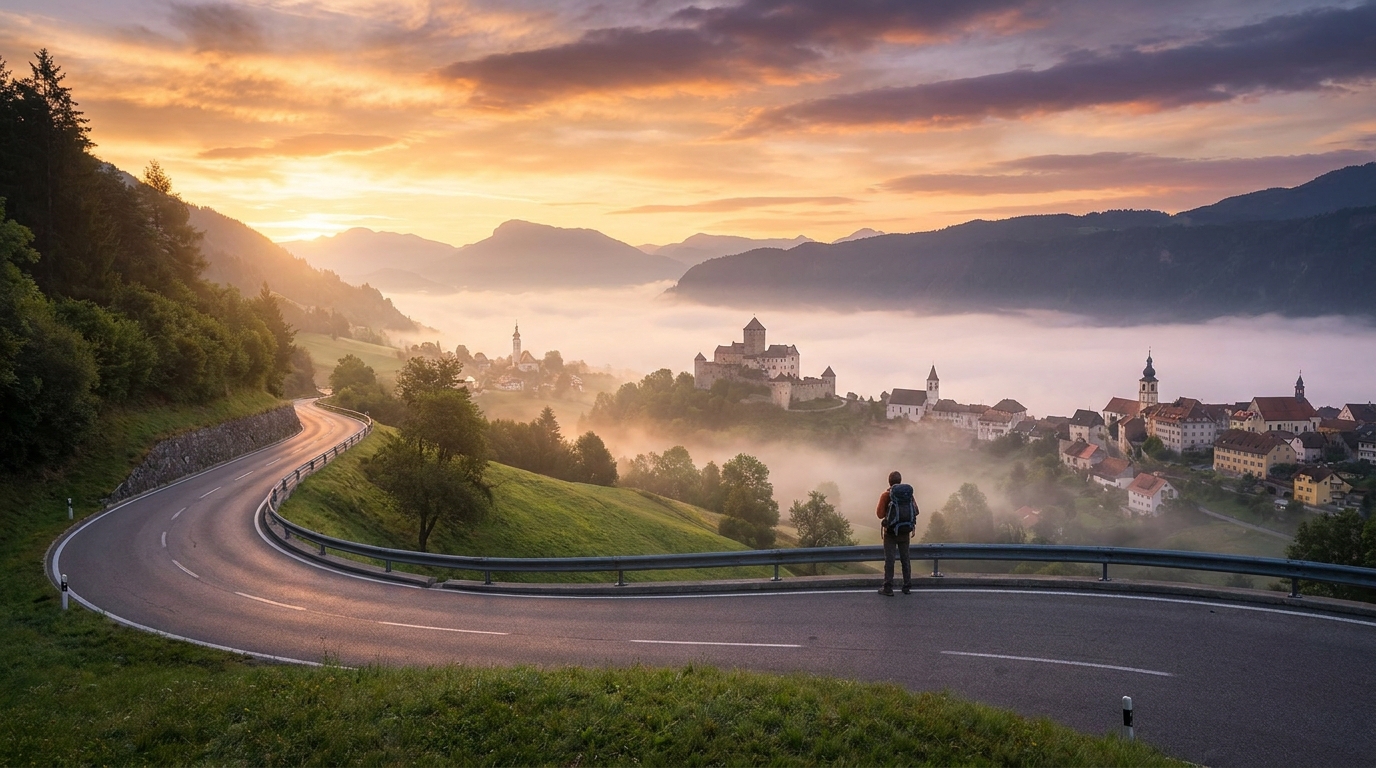
In September and early October, Southern Europe remains the star destination for those wanting to extend their summer. The Mediterranean Sea is still warm enough for swimming, the crowds of August have thinned out, and the heat has subsided to a more comfortable level. This is arguably the best time of year for the Greek Islands, Croatia's Dalmatian Coast, and the beaches of Southern Italy. For example, visiting Santorini in September means you get the iconic sunsets and beautiful weather without the shoulder-to-shoulder crowds of peak season. It's also harvest season, making it a prime time for wine tourism in regions like Tuscany (Italy) and the Douro Valley (Portugal), where you can witness the grape harvest and enjoy food festivals.
As you move into mid-October and November, the focus shifts to Central and Western Europe for fall foliage and cozy city breaks. Germany, particularly Bavaria with its fairy-tale castles like Neuschwanstein, is breathtaking when framed by autumn colors. The forest regions of the Czech Republic and Austria are also spectacular for hiking and scenic drives. Cities like Paris, Vienna, and Budapest take on a romantic, atmospheric quality. The crisp air is perfect for exploring, and the lack of crowds makes visiting museums and palaces a more enjoyable experience. This is also the time for major cultural festivals, most notably Oktoberfest in Munich, which typically runs from late September to the first weekend in October.
A great real-world scenario is planning a road trip through the Scottish Highlands in October. The landscape, already dramatic, becomes even more stunning with hues of orange, red, and yellow. The summer midges are gone, and you can enjoy hiking around lochs and through glens, ending your day by a warm fire in a local pub. This experience is vastly different from a beach holiday in Portugal during the same season, highlighting autumn's incredible diversity.
By late November, much of Northern and Central Europe is turning cold and grey as winter approaches. However, this is when the first Christmas markets begin to open, offering an early dose of festive cheer. The key takeaway for autumn travel is to follow the sun south in September and embrace the foliage and cozy culture of the central and western regions in October and November. It's a season of transition that offers something for every type of traveler.
How Can You Avoid Crowds in Europe Even During Peak Season?
Avoiding crowds in Europe during the peak summer season requires a strategic and flexible approach, but it is entirely possible. Rather than avoiding summer altogether, you can employ several key tactics to find pockets of tranquility and have a much more enjoyable experience. The core principle is to go where and when others don't.
First, prioritize 'second-city' travel. Instead of heading to the most famous destinations, explore their just-as-charming but less-visited counterparts. For example, instead of Venice, which can be overwhelmingly crowded, consider visiting Treviso or Padua nearby. Instead of Florence, explore Bologna, a culinary capital with a rich history and a more local feel. In Portugal, swap the busy Algarve for the wilder, more pristine beaches of the Alentejo coast. These places offer authentic experiences, lower prices, and a fraction of the tourists, even in July and August.
Second, master the art of timing. The vast majority of tourists visit major attractions between 10 AM and 4 PM. You can beat the rush by being an early bird or a night owl. Arrive at an iconic landmark like the Eiffel Tower or the Acropolis right when it opens to enjoy a relatively peaceful first hour. Alternatively, visit attractions that have late hours in the evening. Many European cities are beautiful at night, and a late-night visit to a place like Rome's Trevi Fountain can be a magical experience compared to the midday scrum. This simple shift in your daily schedule can transform your trip.
Third, book everything that can be booked in advance. This doesn't reduce the number of people, but it eliminates your time spent in queues, which is a major source of frustration. For major museums like the Uffizi Gallery in Florence or the Anne Frank House in Amsterdam, a pre-booked time slot is essential. The same goes for high-speed trains between popular cities. By securing your spot, you can bypass the long, snaking lines and walk right in, saving hours of your precious vacation time.
Finally, embrace slow travel and explore residential neighborhoods. A great example is in Barcelona. While La Rambla is a congested tourist thoroughfare, the nearby Gràcia neighborhood offers beautiful plazas, quirky boutiques, and authentic tapas bars where you'll be surrounded by locals. Spend an afternoon simply wandering without a specific goal, and you'll discover the true heart of a city away from the tourist trail. The actionable insight is that escaping crowds in peak season isn't about finding a secret, undiscovered spot; it's about making conscious choices to visit popular places at unpopular times and to balance your itinerary with time in less-famous but equally rewarding locations.
What Are Europe's Must-See Seasonal Events and Festivals?
Europe's calendar is packed with vibrant seasonal events and festivals that can become the centerpiece of an unforgettable trip. Planning your visit to coincide with one of these celebrations offers a unique insight into local culture, history, and traditions. The best events are spread throughout the year, catering to all interests.
Winter (December - February): The winter season is dominated by Christmas and New Year's festivities. The Christmas Markets (Christkindlmärkte) in Germany, Austria, and the Alsace region of France are iconic. Imagine sipping mulled wine in Nuremberg's medieval square or browsing handcrafted ornaments in Vienna. In February, the Venice Carnival in Italy is a world-famous spectacle of elaborate masks and costumes, creating a mysterious and theatrical atmosphere throughout the city's canals and alleyways.
Spring (March - May): Spring is a time of rebirth and celebration. In Ireland, St. Patrick's Day on March 17th transforms Dublin into a city-wide party. In Spain, Semana Santa (Holy Week) features solemn and dramatic processions, especially in Seville and Málaga. In the Netherlands, late April brings King's Day (Koningsdag), a massive street party where the entire country dresses in orange to celebrate the king's birthday, particularly vibrant in Amsterdam. This is also the season of the Cannes Film Festival in France in May, bringing glamour to the French Riviera.
Summer (June - August): Summer is peak festival season. Music lovers have endless options, from the legendary Glastonbury Festival in the UK to electronic music festivals like Tomorrowland in Belgium. In Spain, the bizarre and messy La Tomatina festival takes place in Buñol in August, where thousands participate in a giant tomato fight. A more traditional and visually stunning event is the Palio di Siena in Italy (July and August), a historic horse race held in Siena's main square, filled with medieval pageantry.
Autumn (September - November): The most famous autumn event is undoubtedly Oktoberfest in Munich, Germany. Running from late September to early October, it's the world's largest beer festival, attracting millions for beer, food, and traditional Bavarian music. For film buffs, the Venice Film Festival kicks off the season in early September. In the UK, November 5th is Guy Fawkes Night, celebrated with bonfires and fireworks displays across the country, commemorating a failed plot to blow up Parliament.
The key takeaway is to research events in your destination's region before you book. A trip to Munich is a completely different experience during Oktoberfest than at any other time. While these events can mean more crowds and higher prices, the unique cultural immersion they offer is often well worth the trade-off. It's a chance to see Europe at its most festive and traditional.
How Does Your Travel Style Affect the Best Time to Go to Europe?
The 'best time to visit Europe' is not a one-size-fits-all answer; it is fundamentally determined by your personal travel style and priorities. What is a dream trip for a budget backpacker could be a nightmare for a luxury-seeking beach lover. Understanding your own travel profile is crucial to choosing the right season.
The Beach Lover: If your goal is to swim, sunbathe, and enjoy coastal life, the summer months of June to August are your prime time. This is when the Mediterranean Sea is warmest and the beach resorts from the Côte d'Azur to the Greek Islands are in full swing. While you could visit in the shoulder seasons (May, September), the water might be cooler and the vibrant beach club atmosphere less pronounced. For you, the crowds and high prices of summer are a worthwhile trade-off for guaranteed sunshine and perfect swimming conditions.
The Budget Backpacker: For those prioritizing low costs and stretching their money as far as possible, the deep off-season of January and February is ideal. This is when flights and hostels are at their absolute cheapest. The cold weather is a secondary concern, as the goal is to see iconic cities and museums without the crowds and on a shoestring budget. A backpacker would thrive on the savings, enjoying the freedom to travel longer or see more places, something impossible with a summer budget.
The Culture and History Buff: This traveler, focused on museums, historical sites, and city exploration, will find the shoulder seasons of April-May and September-October to be perfect. The weather is mild and pleasant for walking all day, and the crowds at major sites like the Acropolis, the Vatican, or the Tower of London are far more manageable than in summer. The experience of absorbing history is greatly enhanced when you are not battling extreme heat or overwhelming queues. This traveler values comfort and accessibility over guaranteed hot weather or the lowest possible price.
The Outdoor Adventurer/Hiker: The best time for this traveler depends on the specific activity. For hiking in the Alps or the Pyrenees, the summer months of July and August are optimal, as the trails are snow-free and mountain huts are open. However, for hiking at lower elevations, such as the coastal paths of Italy's Cinque Terre or the Camino de Santiago in Spain, the shoulder seasons of late spring and early autumn are far superior, offering cooler temperatures that make long-distance walking much more pleasant.
The actionable insight is to first define your primary goal for the trip. Are you there for the beaches, the museums, the nightlife, or the nature? Once you identify your travel style, the choice of season becomes much clearer. Don't just follow the generic advice for shoulder season travel if your dream is a sun-drenched Greek island adventure; likewise, don't pay peak summer prices if your plan is to spend your days inside the Louvre and the Musée d'Orsay.
What is the Month-by-Month Breakdown for a Trip to Europe?
Choosing the perfect month to visit Europe requires a detailed look at the trade-offs between weather, cost, and crowds across the continent. Here is a comprehensive month-by-month guide to help you pinpoint the ideal time for your specific travel plans.
January & February: The Budget Traveler's Dream
This is the heart of the off-season. Expect cold weather, short days, and the lowest prices of the year. It's ideal for city breaks focused on indoor attractions like museums in London, Paris, or Rome. Ski resorts in the Alps are in their prime. Southern Europe is milder but can be rainy. It's the best time for budget travel and avoiding crowds, but the worst for weather.
March: The Cautious Start of Spring
Winter's grip begins to loosen, especially in the south. Southern Spain, Portugal, and Sicily start to see pleasant, sunny days. Northern Europe remains chilly and damp. It's still considered the off-season, so prices are low and crowds are minimal. It's a good month for a budget-friendly trip to the Mediterranean if you don't mind cooler evenings.
April: Spring in Full Swing
The shoulder season begins in earnest. Flowers bloom, and temperatures become mild and pleasant across Western and Southern Europe. This is a fantastic month for city breaks in places like Paris, Amsterdam (for the tulips), and Lisbon. Crowds are still manageable, and prices are moderate. Be aware of the Easter holiday, which can cause a temporary spike in crowds and prices.
May: The Pre-Summer Sweet Spot
May is arguably one of the best months to visit. The weather is warm and sunny in most places, even becoming hot in the south. It's perfect for both city exploration and outdoor activities like hiking. The summer crowds have not yet arrived, but the continent feels alive and vibrant. Prices start to climb but haven't reached their summer peak.
June: The Onset of Summer
Early June continues the 'sweet spot' of May, but by the end of the month, peak season is underway. The weather is fantastic everywhere, and the days are long. It's a great time for beach holidays before the main school holidays begin. Crowds and prices increase significantly as the month progresses.
July & August: Peak Season Intensity
This is the hottest, most crowded, and most expensive time to visit Europe. It's ideal for sun-seekers, festival-goers, and those whose schedules are tied to school holidays. Book everything far in advance. To escape the crowds, consider exploring Eastern Europe or less-famous regions. Be prepared for intense heat in the south.
September: The Second 'Sweet Spot'
Like May, September is a fantastic month. The summer crowds disperse, prices begin to drop, and the weather remains warm and pleasant, especially in the south. The sea is at its warmest, making it a perfect time for a Mediterranean beach holiday. It's a top-tier choice for almost any type of European trip.
October: Autumn's Charm
The weather cools, and autumn foliage creates beautiful scenery in central and northern regions. Southern Europe still enjoys mild, often sunny weather. It's a great month for cultural travel, food and wine tours (harvest season), and enjoying cities without the crowds. Prices are generally moderate.
November: The Quiet Before the Storm
This is the second off-season month. The weather turns cold and often grey across much of the continent. However, it's a great time for budget travelers seeking to avoid crowds. By the end of the month, the first Christmas markets begin to open, offering a magical start to the festive season.
December: Festive Magic
The focus is squarely on the holidays. Christmas markets in Germany, Austria, and France are a major draw. Cities are decorated and festive. It's a cold but magical time for a city break. Expect crowds and high prices in popular market towns and ski resorts, but other areas remain quiet.
| Month | Weather | Crowds | Costs | Best For |
|---|---|---|---|---|
| Jan-Feb | Cold, short days | Very Low | Very Low | Budget travel, skiing, museums |
| Mar | Cool to Mild | Low | Low | Early spring in the south, city breaks |
| Apr | Mild, pleasant | Moderate | Moderate | Tulips in Netherlands, city breaks |
| May | Warm, sunny | Moderate | Moderate-High | Almost everything, ideal balance |
| Jun | Warm to Hot | High | High | Beaches, outdoor activities |
| Jul-Aug | Hot, sunny | Very High | Very High | Beach holidays, festivals |
| Sep | Warm, pleasant | Moderate | Moderate-High | Almost everything, ideal balance |
| Oct | Cool to Mild | Moderate | Moderate | Fall foliage, wine harvest, cities |
| Nov | Cold, damp | Low | Low | Budget travel, pre-holiday quiet |
| Dec | Cold, festive | High (in markets) | High (in markets) | Christmas markets, festive atmosphere |
This breakdown serves as your ultimate cheat sheet. By cross-referencing your travel style, budget, and tolerance for crowds with this monthly guide, you can confidently select the perfect time for your European adventure.
Ultimately, the best time to visit Europe is a personal calculation. There is no single correct answer, only the answer that is right for you. Whether you're seeking the vibrant energy of a summer music festival, the quiet contemplation of a winter museum visit, or the balanced perfection of a spring city break, Europe has a season and a destination waiting for you. By understanding the distinct personality of each season and each month, you move from being a tourist to being a strategic traveler, ready to unlock the very best that this diverse and endlessly fascinating continent has to offer.
Conclusion
Choosing the best time to visit Europe is the foundational step in crafting your perfect journey. While the 'correct' answer is subjective and deeply tied to your personal goals, a clear pattern emerges for the savvy traveler. The shoulder seasons of April-May and September-October consistently offer the most compelling blend of pleasant weather, manageable crowds, and reasonable costs. These months represent the sweet spot for those who want to experience Europe at its most comfortable and accessible, whether you're wandering the ancient streets of Rome or cruising the canals of Amsterdam.
However, the ideal time is a nuanced decision. The peak summer months of July and August, despite their crowds and high prices, remain unbeatable for those dreaming of a sun-drenched Mediterranean beach holiday or attending one of the continent's legendary music festivals. Conversely, the deep off-season of January and February presents an unparalleled opportunity for the budget-conscious traveler, offering rock-bottom prices and crowd-free access to world-class museums, provided you're prepared for the winter chill. Winter also holds the unique magic of festive Christmas markets in December, a singular experience worth braving the cold for.
Your final decision should be a thoughtful reflection of your priorities. Are you seeking value, perfect weather, or a specific cultural event? Are you a history buff who thrives in the quiet of a museum, or an adventurer ready to hike snow-free alpine trails? Use this guide as a framework. Start with your 'why' - the core purpose of your trip. Then, overlay that with the realities of Europe's seasons. By aligning your travel style with the month-by-month breakdown, you can move beyond generic advice and pinpoint the precise window that will transform a good trip into an extraordinary one. Europe's treasures are waiting, and now you have the key to unlock them at the perfect moment.
Frequently Asked Questions
The most expensive months to visit Europe are overwhelmingly July and August. This is the absolute peak of the tourist season, driven by school holidays across North America and Europe, combined with the hottest and sunniest weather. During this time, demand for flights, accommodations, and even train tickets skyrockets, leading to significantly inflated prices. You can expect to pay a premium for nearly everything. For popular destinations like the Amalfi Coast or the Greek Islands, hotel prices can be double or even triple what they would be in the off-season. To save money, avoid these months if possible.
For a first-time visitor, a trip of 10 to 14 days is ideal to get a good taste of Europe without feeling too rushed. This allows you to visit two or three cities in different countries, spending about 3-4 days in each location. For example, a classic trip could include Paris, Rome, and Amsterdam. If you have less time, a 7-day trip focused on one country or two closely connected cities (like London and Paris) is a great option. For a more in-depth, multi-country experience, a trip of three weeks or more is recommended to truly immerse yourself and avoid travel burnout.
Yes, Europe is generally considered very safe for solo female travelers. Many countries on the continent have low crime rates and excellent infrastructure, making them easy and secure to navigate alone. Countries like Iceland, Finland, Switzerland, and Portugal are often ranked among the safest in the world. As with any travel, it's important to exercise standard precautions: be aware of your surroundings, especially at night; keep your valuables secure; and trust your instincts. Sticking to well-lit areas, researching your destinations beforehand, and sharing your itinerary with someone back home are all smart practices for a safe and enjoyable solo trip.
For the best weather year-round, Southern Europe is the clear winner, specifically regions like Spain's Canary Islands, Portugal's Algarve, and the island of Cyprus. The Canary Islands, located off the coast of northwestern Africa, are often called the 'Islands of Eternal Spring' because of their mild, pleasant temperatures throughout the year. While mainland Europe experiences distinct seasons, these southern outposts offer sunshine and comfortable conditions even in the middle of winter, making them popular destinations for those looking to escape the cold without traveling to a different hemisphere. Mainland Southern Spain and the Algarve also offer very mild winters and abundant sunshine.
Choosing between spring and autumn depends on your preferences for scenery and activities. Spring (April-May) is about rebirth: flowers are blooming, landscapes are lush and green, and there's a sense of excitement as the continent awakens. It's perfect for seeing floral displays like the Dutch tulips. Autumn (September-October) offers a different beauty, with rich fall foliage, harvest festivals, and a cozy atmosphere. The sea in the Mediterranean is also warmer in early autumn than in spring. Both seasons offer similar benefits of mild weather and fewer crowds, so the choice often comes down to aesthetic preference. For most travelers, they are equally fantastic options.