How to Find the Best Deals on Airport Parking: A Comprehensive Guide
The thrill of booking a vacation - the flights, the hotel, the itinerary - is often followed by the tedious, and surprisingly expensive, task of figuring out what to do with your car. For many travelers, the cost of airport parking can feel like an unavoidable penalty, a budget line item that quietly balloons and eats into your spending money. It's a common frustration to see a week-long parking bill rival the cost of a regional flight. But what if it didn't have to be this way? What if you could consistently cut your airport parking costs by 50% or more with just a little bit of planning and insider knowledge?
Finding the best deals on airport parking is not about finding a single secret trick; it's about employing a multi-layered strategy. The core principle is simple: book well in advance, compare all your options thoroughly, and leverage discounts that are readily available but often overlooked. By shifting your perspective from seeing parking as a last-minute chore to an integral part of your travel planning, you can unlock substantial savings. This isn't about compromising on safety or convenience; it's about making smarter choices that keep your money in your pocket, where it belongs.
In this comprehensive guide, we will demystify the world of airport parking. You will learn precisely why it costs so much, how far in advance you need to book to secure the lowest rates, and how to evaluate the safety and reliability of cheaper off-site lots. We will walk you through using comparison websites effectively, uncover the various types of discounts you should be hunting for, and explore clever alternatives like hotel bundles and peer-to-peer parking. By the end, you'll be equipped with an arsenal of actionable strategies to ensure you never overpay for airport parking again.
Why Is Airport Parking So Expensive?
Airport parking is notoriously expensive primarily due to a combination of high demand, limited prime real estate, significant operational costs, and its role as a crucial revenue generator for the airport authority. Airports leverage their monopoly on location and convenience to set premium prices that travelers are often willing to pay for proximity and ease of access.
The land on and immediately surrounding an airport is some of the most valuable and highly regulated real estate in any city. Airports need vast amounts of space for terminals, runways, and operational facilities, leaving a finite amount for parking. This scarcity of land, coupled with the constant high demand from millions of passengers, creates a classic supply-and-demand scenario that naturally drives up prices. Building and maintaining multi-level parking garages or sprawling surface lots is also a massive capital investment. These facilities require constant upkeep, including lighting, security patrols, CCTV surveillance, snow removal, paving, and staffing, all of which are factored into the daily parking rate.
Furthermore, non-aeronautical revenue, which includes income from parking, retail, and concessions, is a vital lifeline for airports. This income helps fund major infrastructure projects, terminal upgrades, and day-to-day operations, often subsidizing the costs for airlines and keeping ticket prices more competitive. In essence, every dollar spent on parking contributes to the overall functioning and improvement of the airport. You are not just paying for a patch of asphalt; you are paying for the convenience of being steps away from the terminal and contributing to the airport's financial health.
A real-world example can be seen at any major international hub like Hartsfield-Jackson Atlanta International Airport (ATL) or Los Angeles International Airport (LAX). The hourly and daily rates for terminal-side garages are exceptionally high because they cater to business travelers on expense accounts and those prioritizing speed above all else. The slightly more distant 'Economy' or 'Long-Term' lots, still on airport property, offer a lower price but require a shuttle bus. This tiered pricing model is designed to capture maximum revenue from different segments of travelers based on their willingness to pay for convenience.
Understanding these underlying economic factors is the first step toward finding cheap airport parking deals. The high price of official, on-site parking is precisely what creates the market for the more competitive and affordable alternatives. By recognizing that you are paying a premium for convenience, you can make a conscious decision to trade a little bit of that convenience - like a 10-minute shuttle ride - for significant financial savings. The takeaway is that the official airport lot should be your benchmark, not your default option.

How Far in Advance Should You Book Airport Parking for the Best Deals?
For the absolute best deals, you should aim to book your airport parking at least four to six weeks in advance of your travel date. Much like airline tickets, airport parking prices operate on a dynamic pricing model. The rates are at their lowest when demand is low and inventory is high, and they climb steadily as the departure date gets closer and spots fill up.
The concept of dynamic pricing is key here. Parking providers, both on-site and off-site, use sophisticated algorithms to adjust their prices based on a multitude of factors. These include historical booking data, the number of available spaces, the time of year, local events, and even the number of flights scheduled to depart. During peak travel periods like major holidays (Thanksgiving, Christmas), spring break, or the middle of summer, this price inflation is even more pronounced. Leaving your parking reservation to the last minute, especially during these times, is the surest way to pay the highest possible 'drive-up' rate, which can be double or even triple the price of an advanced booking.
Booking early does more than just save you money; it also guarantees you a spot. At smaller airports or during exceptionally busy periods, the most desirable and affordable lots can sell out completely. An early reservation provides peace of mind, ensuring you won't be left scrambling to find a last-minute, exorbitant option or, in a worst-case scenario, missing your flight because you couldn't find a place to park. This is particularly crucial for travelers who prefer a specific lot due to its location, security features, or shuttle service reputation.
Consider this real-world scenario: a family is planning a 10-day trip to Orlando during spring break in March. They book their flights in January. If they also book their airport parking at the same time, they might find a reputable off-site lot for $14 per day, totaling $140. However, if they wait until the week before their trip, they'll find that demand has surged. The same lot might now be charging $28 per day, if it has any availability at all, bringing the total to $280. That's a $140 difference for the exact same parking spot, simply based on booking time. This demonstrates that the savings from early booking aren't trivial; they are substantial.
The most actionable insight you can take from this is to change your travel planning habit. Make booking your airport parking the very next thing you do after you've confirmed your flights and accommodations. Treat it with the same level of importance. Set a calendar reminder if you have to. By bundling these tasks together, you lock in the best rates before the demand-driven price hikes begin, making it the single most effective strategy for cutting down your travel costs.
Are Off-Site Airport Parking Lots a Cheaper and Safer Alternative?
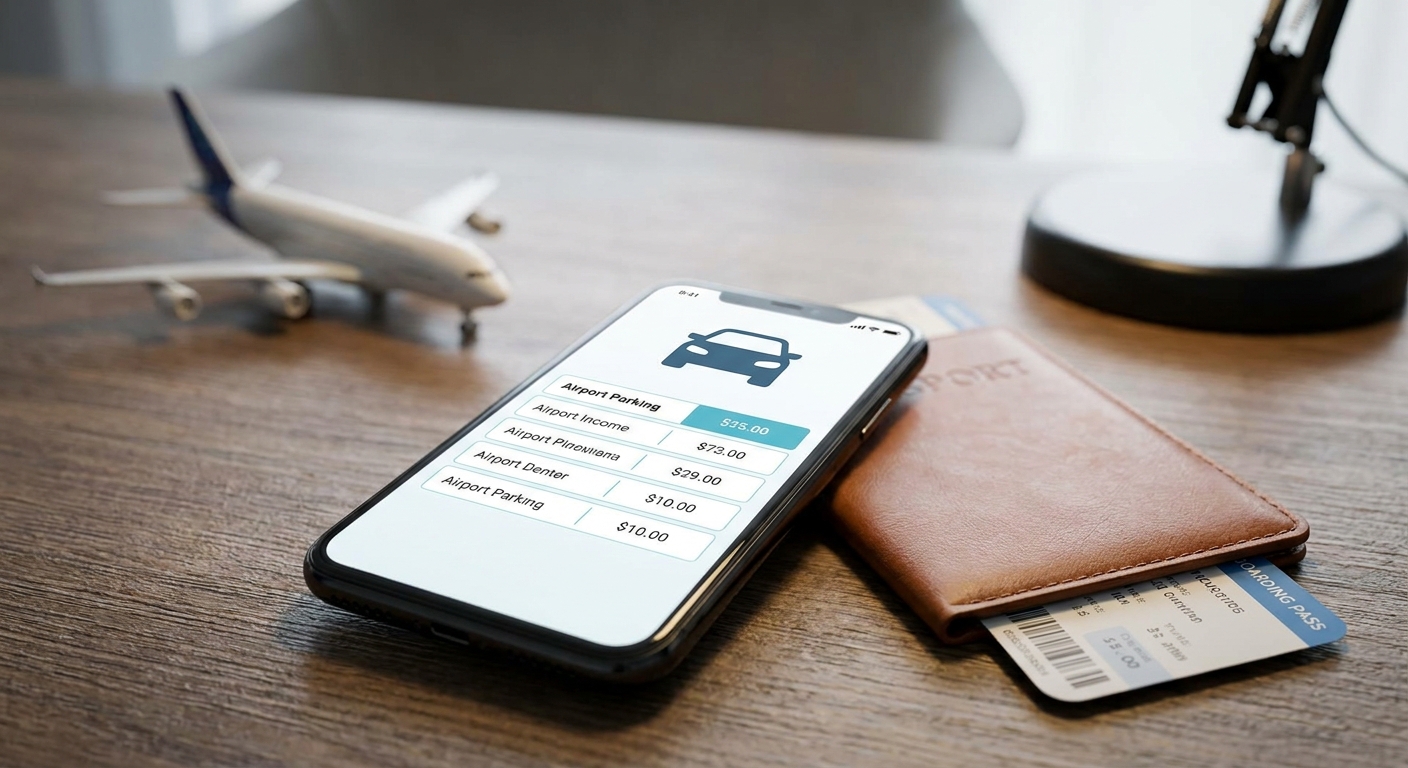
Yes, in the vast majority of cases, off-site airport parking lots are a significantly cheaper and perfectly safe alternative to official on-site options. These independent businesses thrive by offering competitive pricing to lure travelers away from the convenience of on-airport lots, while still providing essential services like security and reliable terminal transportation.
The primary advantage of off-site parking is, without a doubt, the cost. Because these lots are located on property that is not owned by the airport authority, their real estate costs and overheads are considerably lower. They pass these savings directly on to the consumer. It is not uncommon to find off-site parking rates that are 30-70% cheaper than the on-site economy lots, especially for longer trips where the daily savings accumulate. These lots also compete fiercely with each other, which further suppresses prices and often leads to better service as they vie for customers.
Safety is a common concern for travelers considering an off-site lot, but reputable providers take security very seriously. Their entire business model depends on customers trusting them with their vehicles for extended periods. Standard security features to look for include 24/7 staffing, high-perimeter fencing, bright lighting, and comprehensive CCTV surveillance. Many lots also have controlled entry and exit gates. Before booking, you can verify a lot's reputation by reading recent customer reviews on independent platforms like Google, Yelp, or Trustpilot. Pay close attention to comments about vehicle safety, staff professionalism, and the condition of the facility.
Let's look at a practical example for a traveler flying out of Denver International Airport (DEN) for a seven-day trip. The on-site economy lot might cost around $18 per day, for a total of $126. A quick search on a comparison website could reveal several highly-rated off-site lots within a 10-15 minute shuttle ride. One of these, like The Parking Spot or a local equivalent, might offer a rate of $10 per day with an online coupon, for a total of $70. The traveler saves $56 and, in many cases, might receive complimentary luggage assistance and a shuttle that drops them directly at their airline's check-in door, which can be more convenient than navigating a massive airport-run shuttle system.
The main trade-off is the extra time required for the shuttle. While on-site lots might have shuttles running every 5-10 minutes, off-site shuttles may run every 15-25 minutes. This is a crucial factor to build into your travel schedule. The actionable takeaway is to always add an extra 30-45 minutes to your airport arrival plan when using an off-site lot to account for shuttle wait times and transit. By doing a little research on reviews and planning for a slightly earlier arrival, you can confidently use off-site lots to achieve massive savings without sacrificing the safety of your vehicle.

How Do Airport Parking Comparison Websites Work?
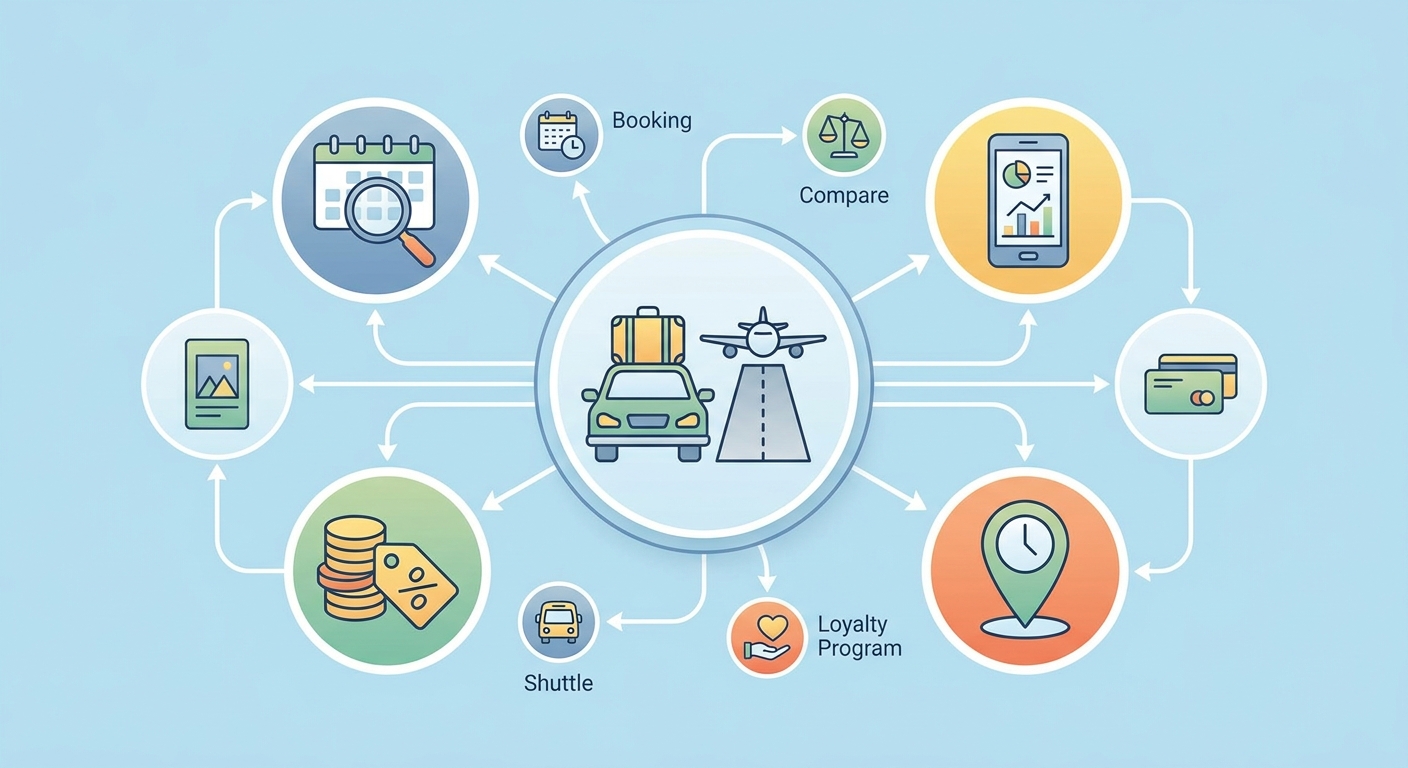
Airport parking comparison websites, often called aggregators, function as powerful search engines specifically for parking. They consolidate real-time availability, pricing, and service details from a wide array of both official on-site and independent off-site parking providers into a single, user-friendly interface, allowing you to compare your options and find the best deals on airport parking in minutes.
These platforms don't own the parking lots themselves. Instead, they partner with dozens of parking companies at hundreds of airports. When you enter your chosen airport, departure date, and return date, the website's technology queries the databases of all its partners simultaneously. It then presents you with a comprehensive list of available options, which you can typically sort and filter based on your priorities. Common filtering options include price (lowest to highest), distance from the airport, customer rating, and service type, such as self-park, valet, covered, or uncovered parking. This saves you the immense hassle of visiting ten different websites to manually compare prices.
The business model for these aggregators is based on commission. The parking providers give the comparison site a discounted, wholesale rate, and the aggregator adds a small markup or receives a commission for each booking generated through their platform. Often, the final price you pay is still lower than the 'drive-up' rate you would pay by going directly to the lot, as the providers are willing to offer discounts in exchange for the volume of customers the aggregator sends their way. Popular and reputable sites in this space include AirportParkingReservations.com, Way.com, and SpotHero.
Imagine a traveler flying from Newark Liberty International Airport (EWR). They need parking for five days. Instead of just checking the official EWR parking site, they go to a comparison platform. They input their details and are immediately presented with a dozen choices. The list might show: EWR's on-site economy lot at $29/day, a nearby off-site valet service for $22/day, a self-park lot with a 15-minute shuttle for $16/day, and a hotel's 'Park, Sleep, Fly' option. The platform also displays user ratings, shuttle frequency (e.g., 'every 15 minutes'), and photos of the lot. The traveler can see that the $16/day option has a 4.5-star rating from over 5,000 reviews, giving them the confidence to book the cheaper option.
The key actionable insight here is to use these tools strategically. First, never rely on just one comparison site. Check at least two or three, as they may have different partners or exclusive deals. Second, once you've identified the best lot and price on an aggregator, it can sometimes be worth visiting the parking lot's own website directly. Occasionally, they may offer a slightly better 'direct booking' discount to avoid paying the aggregator's commission. By using comparison sites as your primary discovery tool, you empower yourself with market knowledge to make the most informed and cost-effective decision.
What Types of Airport Parking Discounts and Codes Should You Look For?
To secure the best deals on airport parking, you should actively look for a variety of discounts, including online coupon codes, early-bird booking promotions, loyalty program benefits, and special rates offered through memberships like AAA or corporate affiliations. Layering these discounts on top of an already competitive price from a comparison site is the key to maximizing your savings.
The most common and easily accessible type of discount is the online promo or coupon code. Before you ever click 'confirm booking', you should perform a quick web search for "[Parking Company Name] promo code" or "[Comparison Website Name] discount code". Websites like RetailMeNot, Honey, or Groupon often list codes for 10-20% off or a specific dollar amount, like $5 off your total. These codes can usually be applied in a designated box at checkout for instant savings. Many parking providers also offer their own 'early-bird' discounts, automatically applying a lower rate if you book a certain number of weeks or months in advance, reinforcing the importance of planning ahead.
Loyalty programs are another powerful tool. Most major off-site parking companies (like The Parking Spot with its 'Spot Club') and even some aggregators have free-to-join rewards programs. These programs allow you to earn points for every dollar you spend, which can be redeemed for free parking days in the future. Members often get access to exclusive, lower rates and members-only promotions. Signing up is typically free and only takes a minute, making it a worthwhile investment for even infrequent travelers.
Don't overlook discounts available through your existing memberships and affiliations. The American Automobile Association (AAA) has partnerships with numerous parking providers, offering members a standard discount, typically around 10%, upon presenting their card or entering their membership number online. Similarly, AARP offers travel-related discounts, and some companies have corporate discount programs with specific parking chains. It's always worth checking if your employer has such a partnership. Furthermore, some travel-focused credit cards may have special offers or statement credits for parking expenses through their rewards portals.
For example, a traveler finds a week-long parking stay for $120 on an aggregator site. Before booking, they search for a promo code and find one for 15% off, reducing the price to $102. They are also a AAA member, but the terms state that only one discount can be applied, so they choose the better 15% off code. They pay with their travel rewards credit card and sign up for the parking lot's free loyalty program, earning points towards a future free day. This multi-step process took an extra five minutes but saved them $18 upfront and earned them future rewards. The critical takeaway is to adopt a 'never pay full price' mentality. Always take a few moments to hunt for an additional layer of savings before completing your reservation.
Can Bundling Parking with a Hotel Stay Save You Money?
Absolutely. Bundling airport parking with a one-night hotel stay, commonly known as a 'Park, Sleep, and Fly' or 'Park and Fly' package, can be one of the most effective and surprisingly economical ways to manage your airport logistics, especially for travelers with very early morning flights or late-night arrivals.
These packages are offered by hotels located near major airports. The deal typically includes a one-night stay at the hotel, complimentary shuttle service to and from the airport terminal, and parking for your vehicle in the hotel's lot for the entire duration of your trip (often for up to 7, 14, or even 21 days). The genius of this model is that the total cost of the package is often significantly less than what you would pay for long-term parking at the airport alone, essentially making the hotel stay heavily discounted or even 'free' in some scenarios.
Hotels are able to offer these deals because it allows them to monetize their parking lot, which might otherwise have empty spaces, and fill rooms on nights that might have lower occupancy. It's a win-win: the hotel generates extra revenue, and the traveler gets incredible value and convenience. This option transforms the stressful rush of an early morning flight into a relaxed experience. You can drive to the airport area the evening before your flight, have a good night's sleep, and take a leisurely shuttle to the terminal in the morning without worrying about traffic or finding a spot.
Let's consider a detailed scenario. A couple has a 6:00 AM international flight from Boston Logan (BOS). A seven-day stay at the airport's central parking garage would cost approximately $280 ($40/day). A nearby off-site lot might be cheaper, at $200 ($28/day). However, they find a 'Park, Sleep, and Fly' package at a reputable airport hotel for $225. This package includes a comfortable room for the night before their flight (a value of ~$150), up to 10 days of parking in the hotel's secure lot, and a 24/7 shuttle. In this case, they are effectively paying just $75 for their week of parking and getting a stress-free start to their vacation. The value proposition is undeniable.
To illustrate this more clearly, here is a comparison:
| Option | Cost for 7-Day Trip | Included Services | Convenience Factor |
|---|---|---|---|
| On-Site Airport Parking | $280 | Parking only | High (short walk/shuttle) |
| Off-Site Parking Lot | $200 | Parking + Shuttle | Medium (longer shuttle ride) |
| Park, Sleep, Fly Package | $225 | 1-Night Hotel Stay + Parking + Shuttle | Very High (removes travel-day stress) |
The actionable takeaway is to always investigate 'Park, Sleep, and Fly' packages, especially if you have an inconvenient flight time. Websites like ParkSleepFly.com or BuyReservations.com specialize in these deals, but you can also find them on general hotel booking sites or by calling airport-area hotels directly. It's a strategy that offers a powerful combination of savings and stress reduction.
What Are the Hidden Costs and Fees in Airport Parking?
The most common hidden costs and fees in airport parking include online booking fees, oversized vehicle surcharges, state and local taxes, and airport access fees that are often not included in the advertised daily rate. These extra charges can inflate your final bill by 10-30%, making it crucial to look at the all-in price before you book.
When you see an attractive daily rate like '$9.95 per day', it's easy to multiply that by your number of travel days and assume that's your total. However, the final checkout screen often tells a different story. Many third-party booking websites add a 'booking fee', 'service fee', or 'reservation fee', which is a charge for using their platform. This can range from a flat few dollars to a percentage of your total. While not always exorbitant, it's an added cost that wasn't part of the headline price.
Taxes and airport fees are another significant component. Just like hotel rooms have occupancy taxes, parking spots are subject to state and local sales taxes. Additionally, many airports impose their own concession fees or access fees on off-site parking operators who use their roadways. These operators, in turn, pass that cost on to the consumer. These combined taxes and fees can easily add a substantial amount to your bill. Some companies are more transparent and include these in the initial quote, while others only reveal them on the final payment page.
Furthermore, if you drive a large vehicle like a full-size SUV (e.g., a Chevy Suburban), a pickup truck, or a large van, you may be subject to an oversized vehicle surcharge. These fees can add an extra $2 to $5 per day to your rate because your vehicle takes up more space or may need to be parked in a specific area. This information is usually found in the fine print of the terms and conditions, so it's important to check if it applies to your vehicle. Lastly, some lots have started adding small 'fuel surcharges' or 'energy recovery fees' to help cover the rising cost of running their shuttle fleets.
Here is a classic example: a traveler sees an ad for parking at $12 per day for their 8-day trip, expecting a total of $96. At checkout, the breakdown is as follows: Parking Rate: $96.00. Booking Fee: $4.95. State & Local Tax (9%): $8.64. Airport Access Fee: $6.00. The final total comes to $115.59, which is over 20% higher than the initial calculation. This is why comparing the final checkout prices, not the advertised daily rates, is so important.
The ultimate actionable insight is to treat booking airport parking like booking a flight on a budget airline. You must always proceed to the final payment screen for each option you are considering to see the true, non-negotiable total. This is the only way to perform an accurate, apples-to-apples comparison and ensure the deal that looks best initially is actually the cheapest in the end.
Are There Unconventional Alternatives to Traditional Airport Parking?
Yes, several unconventional and often cheaper alternatives to traditional airport parking exist, including peer-to-peer parking marketplaces, public transportation, and strategic use of ride-sharing services. The viability of each option depends heavily on the length of your trip, the amount of luggage you have, and your proximity to the airport.
Peer-to-peer (P2P) parking is an innovative solution where local residents who live near an airport rent out their empty driveways, garage spaces, or private parking spots to travelers. Websites and apps like Spacer or JustPark facilitate these transactions. The primary benefit is cost, as these private rentals are often significantly cheaper than commercial lots. However, it requires careful consideration of logistics. You need to check the homeowner's reviews, confirm the security of the spot, and figure out your transportation from their house to the airport terminal, which usually means a short Uber or bus ride. This adds a layer of complexity but can yield great savings for the budget-conscious traveler.
For those living in cities with robust public transit systems, taking a train or express bus directly to the airport can be the most economical choice. Many major airports like Chicago's O'Hare (Blue Line 'L' train) or London's Heathrow (Heathrow Express) have direct rail links to the city center. This option completely eliminates parking costs and worries about traffic. The main drawbacks are the inconvenience of hauling luggage through stations and the time it takes. It's an ideal solution for solo travelers or couples with minimal baggage but can be challenging for families with small children and multiple large suitcases.
Ride-sharing services like Uber and Lyft present a compelling alternative, particularly for short trips. It's essential to do a break-even analysis. Estimate the round-trip cost of a ride-share from your home to the airport. Then, calculate the total cost of parking for your trip's duration. For example, if a round-trip Uber costs $90 and parking for a four-day trip costs $80 ($20/day), parking is the slightly cheaper choice. However, for a ten-day trip, the $90 Uber cost is far more attractive than the $200 parking bill. The convenience of being dropped off directly at your terminal with no need to park or take a shuttle is also a major selling point. The price of ride-sharing can surge during peak hours, so it's wise to check estimates at the time you'd be traveling.
The final, and often best, alternative is relying on the kindness of friends or family for a ride. While not always possible, it's the only option that is truly free and comes with the added benefit of a personal send-off. The key takeaway is to think beyond the default option of driving your own car. Before every trip, take a few minutes to perform a quick cost-benefit analysis of these alternatives. Factor in the total cost, travel time, and convenience to determine if an unconventional option is a better fit for your specific travel needs.
How Can You Maximize Rewards and Points on Your Parking Expenses?
You can maximize rewards on your parking expenses by strategically stacking multiple earning methods: use a travel rewards credit card with a high multiplier for parking, book through an online shopping portal to earn airline miles or hotel points, and sign up for the parking provider's own loyalty program. This transforms a simple travel cost into a valuable rewards-earning opportunity.
The foundation of this strategy is using the right credit card. Many premium travel credit cards offer bonus points or miles on broad travel categories that often include parking. Cards like the Chase Sapphire Preferred or Reserve, for example, categorize parking under their general travel category, earning you 2x or 3x points per dollar spent. Other cards might categorize it under transit. It's crucial to check your card's specific terms to see which one offers the best return for this type of purchase. Paying with a card that earns 1x point is leaving rewards on the table.
The next layer is to use an online shopping portal. Many airline, hotel, and credit card loyalty programs have these portals. Instead of going directly to the parking comparison site (like Way.com), you first log in to your preferred portal (e.g., AAdvantage eShopping, Rakuten) and use their link to navigate to the parking site. By doing this, you'll earn a set number of miles or a percentage of cash back for every dollar you spend, in addition to the points you earn from your credit card. This is a form of 'double-dipping' that rewards you for an extra click.
The final, and most direct, layer is the parking company's own loyalty program. As mentioned earlier, major chains like The Parking Spot have robust programs that are free to join. By ensuring you are logged into your account when you book, you'll earn points directly from the provider. These points can typically be redeemed for free days of parking on future trips, offering a very tangible return. This creates a powerful 'triple-dip' effect where one single transaction earns you three different types of rewards.
Let's walk through a complete example. A traveler needs to book a $200 parking stay. First, they log into their favorite airline's shopping portal, which offers 4 miles per dollar at AirportParkingReservations.com. They click through the portal. They find their preferred lot and proceed to checkout. They pay with their Chase Sapphire Preferred card, which earns 2x points on travel. Finally, they make sure to enter their parking lot's loyalty number in the reservation. The result: they earn 800 airline miles (200 4), 400 Chase Ultimate Rewards points (200 2), and loyalty points from the parking company (e.g., 2000 points). They have successfully stacked three rewards from one expense.
The actionable insight is to build this stacking process into your booking routine. It might seem complex at first, but after doing it once, it becomes a simple, three-step habit: Portal -> Booking Site -> Rewards Card. This deliberate approach allows you to extract maximum value from every dollar you spend on travel, turning a mundane expense like parking into a booster for your next vacation's points and miles balance.
Conclusion
Navigating the world of airport parking doesn't have to be a costly or frustrating experience. As we've explored, the path to finding the best deals on airport parking is paved with proactive planning, smart comparison, and a keen eye for discounts. The days of accepting exorbitant drive-up rates as a non-negotiable part of travel are over. By implementing the strategies in this guide, you can take firm control of your travel budget and consistently reduce your parking expenses, often by more than half. The power lies in shifting your mindset from reactive spending to strategic planning.
Let's recap the cornerstones of this approach. The single most impactful action you can take is to book your parking well in advance - ideally, the moment you confirm your flights. This simple habit allows you to capitalize on the lowest prices before dynamic pricing models drive them up. Secondly, embrace the competitive market of off-site parking lots. These secure and reliable alternatives almost always offer superior value compared to their on-site counterparts. Use comparison websites as your primary tool to survey the entire landscape of options, but always click through to the final checkout screen to compare the true, all-in costs.
Finally, never leave money on the table. Always spend a few extra minutes hunting for promo codes, leveraging membership discounts from organizations like AAA, and investigating the incredible value of 'Park, Sleep, and Fly' packages for inconvenient flight times. By stacking these methods and paying with a rewards-earning credit card, you not only save money upfront but also accumulate points and miles for future adventures. Your journey to a smarter, more affordable travel experience begins long before you pull out of your driveway. It starts with a commitment to being an informed consumer, and now, you have all the tools you need to succeed.
Frequently Asked Questions
Valet airport parking can be worth the extra cost for travelers prioritizing maximum convenience and speed. The primary benefit is the time saved; you simply pull up to the curb, hand over your keys, and head straight to check-in without searching for a space. This is ideal for those with tight schedules, mobility issues, or traveling with young children. However, it is almost always the most expensive option. For budget-conscious travelers who have planned adequate time, the significant cost savings of self-parking at an off-site lot will likely outweigh the convenience of valet service.
If your flight is delayed and you overstay your pre-booked parking reservation, you will typically be charged for the extra time at the lot's standard 'drive-up' rate. This rate is often significantly higher than the discounted price you paid online. Most parking facilities have a grace period of a few hours, but for a full day's delay, expect to pay that extra day's cost when you exit. It is always a good practice to call the parking lot's customer service as soon as you know you'll be delayed. Some may offer flexibility, but you should budget for the possibility of extra charges.
Most reputable off-site airport parking lots offer 24/7 shuttle service to ensure reliability regardless of your flight time. However, the frequency of shuttles may decrease during off-peak hours, such as between midnight and 4 AM. Instead of running every 10-15 minutes, they might run every 25-30 minutes or on-demand, meaning you may need to call them for a pickup upon your return. Before booking, check the lot's website or recent customer reviews for specific comments on their overnight shuttle service to ensure they meet your needs and to avoid any unexpected delays.
Yes, most airport parking reservations can be canceled or changed, but the policies vary by company. Typically, you can receive a full refund if you cancel at least 24 or 48 hours before your scheduled arrival time. Cancellations made closer to the time may incur a fee or result in a credit for future use rather than a cash refund. Some deeply discounted, 'non-flexible' rates may be non-refundable. Always read the cancellation policy carefully on the checkout page before you confirm your booking to understand the specific terms and deadlines for making changes to your reservation.
Whether you need to leave your car keys depends on the type of service you book. For standard 'self-park' services, you park your car in a designated spot and take your keys with you. This is the most common option. However, if you choose a 'valet' service, you must leave your keys with the attendants so they can park your car for you and retrieve it upon your return. Some high-density lots may also require you to leave your keys so they can efficiently arrange cars, so it's important to check the lot's policy before booking.