

What Are the Best Alternatives to Car Rental for Airport Transportation?
The moment your plane touches down, a new journey begins: the trip from the airport to your final destination. For decades, the default choice for many travelers has been to head straight to the rental car counter. But in today's world, is that really the smartest, most cost-effective, or most convenient option? The hidden costs, long queues, and the stress of navigating an unfamiliar city can quickly turn the convenience of a rental car into a significant headache. The reality is, a wealth of efficient and affordable alternatives to car rental for airport transportation are waiting just outside the terminal doors.
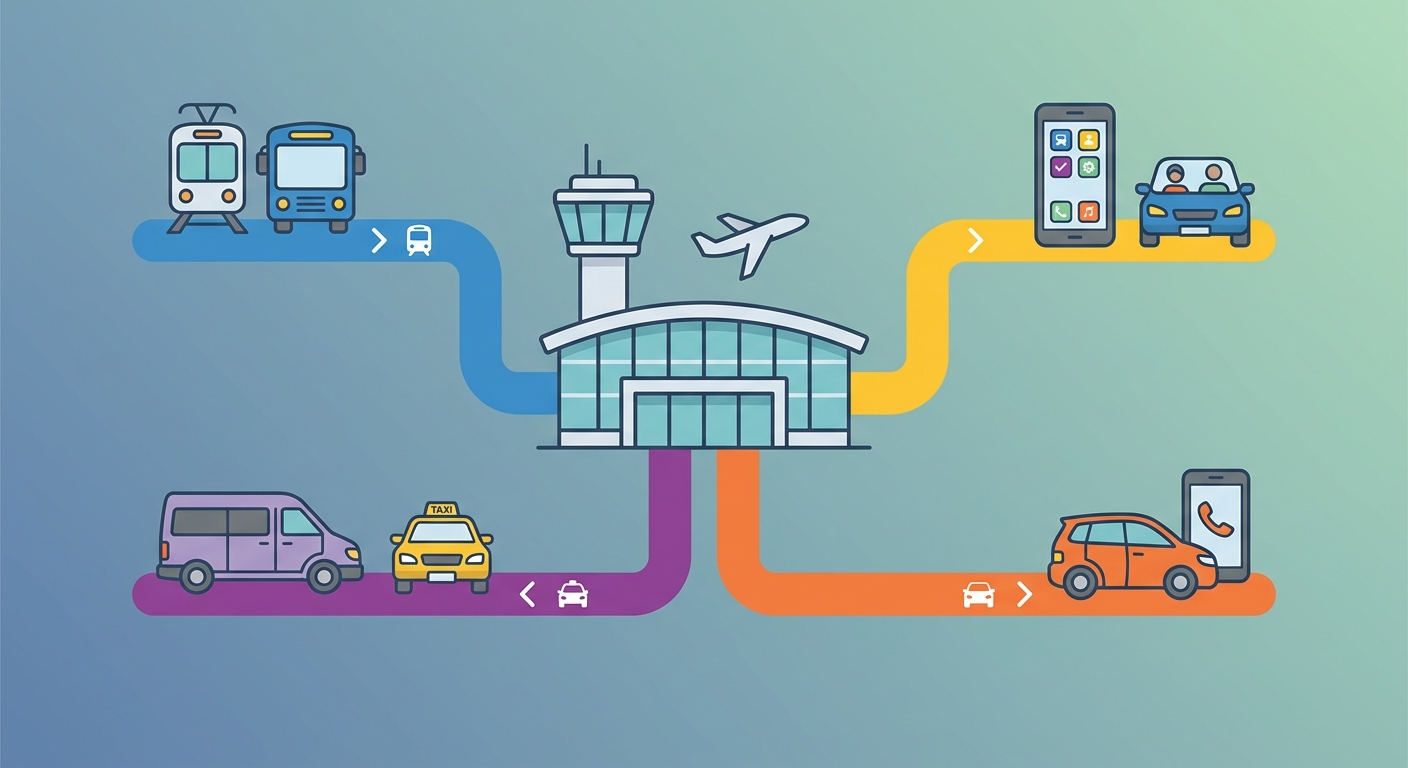
The best alternatives to car rental for airport transportation include ridesharing services like Uber and Lyft, traditional taxis, airport shuttle services, public transportation, and pre-booked black car services. Each option offers a unique balance of cost, convenience, and comfort, catering to different types of travelers, from solo adventurers on a budget to large families with mountains of luggage. The right choice depends entirely on your specific needs, destination, and travel style.
This comprehensive guide will navigate you through the landscape of post-flight ground transportation. We will perform a deep dive into nine distinct alternatives, weighing their pros and cons with real-world scenarios. You will learn how to analyze your own travel needs to select the perfect option, whether it's the unparalleled affordability of a city bus or the seamless luxury of a private chauffeur. By the end, you'll be equipped to bypass the rental counter with confidence, saving time, money, and stress on your next trip.
Why Should You Consider Alternatives to Renting a Car at the Airport?
You should consider alternatives to renting a car at the airport to save money, avoid stress, and gain flexibility. The advertised daily rate of a rental car is often just the tip of the iceberg, with hidden fees, insurance costs, fuel expenses, and exorbitant parking charges quickly inflating the final bill. Beyond the financial aspect, choosing an alternative can significantly improve your travel experience.
The process of renting a car itself can be a major source of friction. After a long flight, the last thing anyone wants is to wait in a lengthy queue, deal with complex paperwork, and then face an aggressive upsell on insurance or vehicle upgrades. Once you finally have the keys, the challenges continue. You have to navigate unfamiliar roads, hunt for expensive and scarce parking at your hotel or attractions, and worry about potential dings or scratches. For trips centered in a dense urban core with excellent public transit or walkability, a rental car can become more of a liability than an asset, sitting unused in a parking garage while you rack up daily fees.
Let's consider a real-world scenario: a couple visiting New York City for a four-day trip. They plan to stay in Manhattan and visit attractions like Times Square, Central Park, and the Museum of Modern Art. Renting a car from JFK would cost them not only the daily rental fee (e.g., $70/day) and insurance, but also tolls to get into the city ($20+), and then a staggering hotel parking fee of $50-$80 per night. The car would likely remain parked for the entire trip, as navigating Manhattan traffic is stressful and most destinations are easily accessible via the subway. Their total cost for a car they barely use could exceed $500. An alternative, like taking the AirTrain and subway or a single taxi ride, would be a fraction of the cost and far more practical.
The core takeaway is that the perceived freedom of a rental car often comes with significant hidden costs and logistical burdens. Alternatives offer a more tailored approach. You can use a rideshare for a quick trip to the hotel, rely on public transit for city exploration, and even book a private car for a special night out. This a la carte approach to transportation is often more efficient, economical, and allows you to focus on enjoying your destination rather than managing a vehicle.

How Do Ridesharing Services Like Uber and Lyft Compare to Airport Car Rentals?
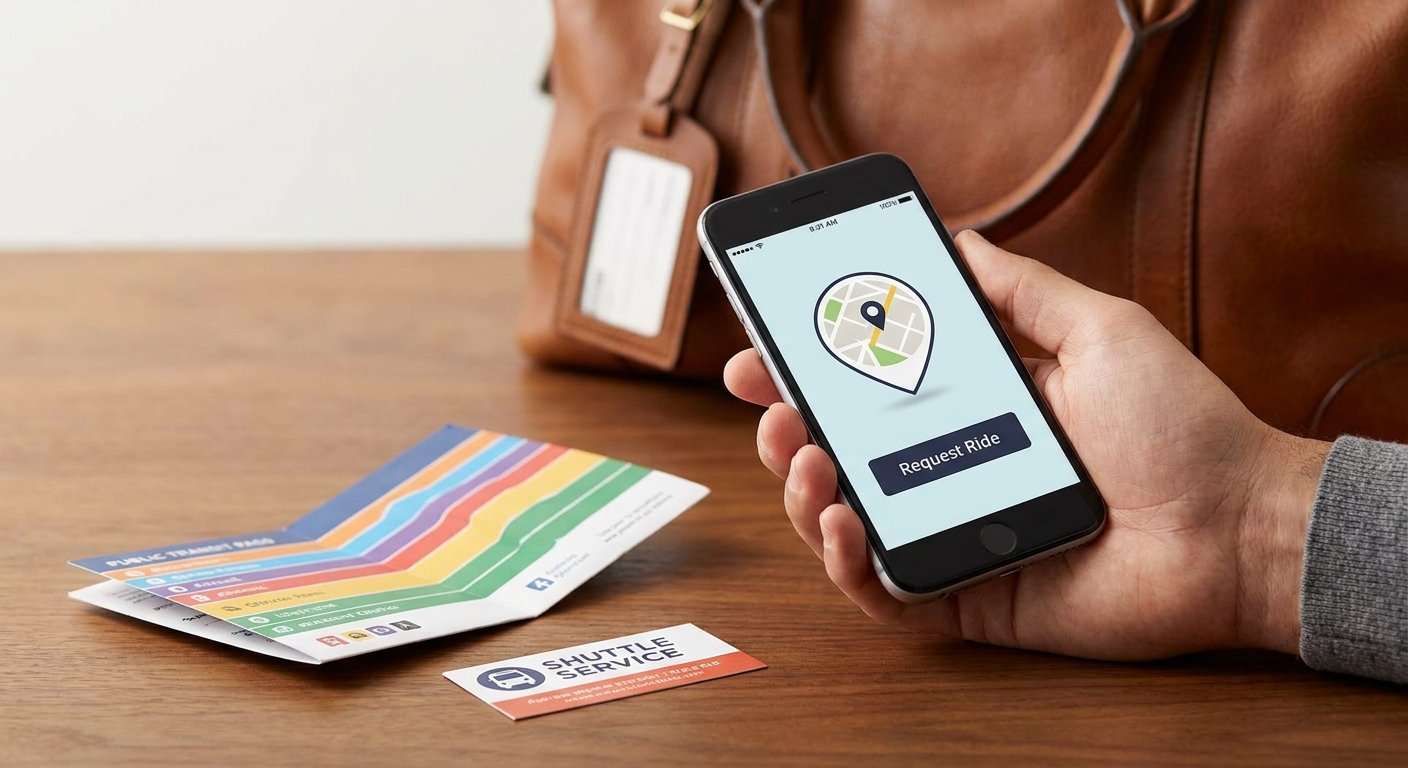
Ridesharing services like Uber and Lyft offer on-demand convenience and cost-effectiveness for short to medium distances, making them a strong alternative to airport car rentals. Unlike a rental, there are no reservations, paperwork, or parking concerns. You simply open an app, request a ride, and are typically on your way within minutes, with payment handled seamlessly through your phone.
The primary advantage of ridesharing is its direct, door-to-door service without the long-term commitment of a rental. For travelers heading to a hotel in a city center or a specific location where a car won't be needed for the duration of their stay, ridesharing is almost always the more logical and economical choice. It eliminates the daily rental fee, insurance costs, fuel expenses, and parking fees. The app-based system also provides transparency with upfront price estimates (barring significant traffic changes), route tracking, and driver information, which adds a layer of security and predictability.
Consider a business traveler, Sarah, flying into Chicago O'Hare (ORD) for a two-day conference at a downtown hotel. Her meetings are all within the hotel or a short walk away. Renting a car would involve a shuttle to the rental facility, paperwork, and then a stressful drive in heavy traffic, followed by a search for hotel parking that could cost $60 per night. Instead, Sarah uses a rideshare app. She requests a car from the designated pickup zone at ORD, and a 45-minute ride takes her directly to her hotel entrance for about $50. Her total round-trip transportation cost is roughly $100. The rental car, with fees and parking, would have easily cost over $250, not to mention the added time and stress.
What Are the Downsides of Relying on Rideshares?
Despite their convenience, ridesharing services are not without their drawbacks, most notably surge pricing. During peak hours, bad weather, or major events, the cost of a ride can multiply significantly, sometimes making it more expensive than a taxi or even a single day's car rental. Furthermore, finding the designated rideshare pickup zones at large, unfamiliar airports can be confusing and often requires a long walk with luggage. For families with small children, securing a vehicle with a car seat can be challenging and may require requesting a specific, more expensive service level with longer wait times.
Luggage capacity can also be a significant issue. While you can request a larger vehicle (like an Uber XL or Lyft XL) for an additional cost, a standard sedan may not accommodate a family with multiple large suitcases, strollers, or sports equipment. The unpredictability of wait times, while usually minimal, can be a concern for travelers on a tight schedule. In essence, while ridesharing excels for convenience and cost on typical point-to-point journeys, its variable pricing and capacity limitations make it less ideal for large groups or those with specialized needs.
Are Traditional Taxis Still a Viable Option for Airport Transportation?
Yes, traditional taxis remain a highly viable and often very reliable option for airport transportation. Taxis offer a straightforward, no-app-needed service with designated, clearly marked queues right outside the baggage claim. This simplicity can be a significant advantage for travelers who are not tech-savvy, have a dead phone battery, or are arriving in a country where their data plan doesn't work.
One of the key benefits of taxis is their regulated and predictable pricing structure in many cities. While some operate on a meter, many major airports have established flat-rate fares to key destinations like the downtown core. This eliminates the risk of surge pricing that plagues rideshare apps during peak times. A traveler arriving at JFK, for instance, can take a taxi to any location in Manhattan for a fixed flat fare (plus tolls and tip), providing absolute cost certainty regardless of traffic or demand. Taxis are also driven by professional, licensed drivers who typically have extensive knowledge of the city, which can be invaluable for navigating around traffic jams or finding obscure addresses.
Imagine a family of four, the Jacksons, arriving on an international flight. They are tired, their phones are low on battery, and they are not familiar with the local rideshare apps. Instead of trying to connect to airport Wi-Fi and navigate an app, they can simply follow the signs to the official taxi stand. They are directed to a minivan taxi that easily fits their four large bags and a stroller. The dispatcher confirms the flat rate to their hotel, and they are on their way without any digital hassle. This level of simplicity and guaranteed availability is a core strength of the traditional taxi service.
How Do Taxis Compare to Ridesharing in 2026?
The competition from Uber and Lyft has forced the taxi industry to evolve. Many taxi companies now have their own booking apps, offering features similar to rideshares, such as GPS tracking and in-app payments. However, the fundamental differences remain. Taxis generally have an advantage in terms of airport accessibility, with prime curb-side pickup locations that rideshares are often prohibited from using. The drivers are also more likely to be career professionals who undergo more rigorous background checks and training compared to the average rideshare driver.
On the other hand, ridesharing platforms often win on cost during non-peak hours, and their user interface provides a level of convenience that many still find superior. The ability to see your driver's rating, track their arrival in real-time, and have a record of your trip details in one place is a powerful draw. Ultimately, the choice between a taxi and a rideshare often comes down to the specific situation. For guaranteed cost and no-fuss access, especially during high-demand periods, a taxi is a rock-solid choice. For potential cost savings and app-based convenience during normal hours, a rideshare may have the edge.

What Are the Benefits of Using Airport Shuttle Services?
Airport shuttle services offer a cost-effective and practical middle ground between public transportation and private rides. They are an excellent alternative to car rentals, especially for solo travelers, couples, and groups who want a direct ride to their hotel without the high cost of a taxi or the complexity of navigating a new public transit system. Shuttles come in two main forms: shared-ride and private.
Shared-ride shuttles are the most economical option. You book a seat in a van or small bus that is heading in the same general direction as other passengers. The shuttle makes multiple stops to drop off travelers at their respective hotels or locations. This model significantly reduces the per-person cost compared to a private ride. While it takes longer than a direct trip, it's a stress-free option where you can relax while a professional driver handles the luggage and navigation. This is particularly beneficial for budget-conscious travelers who value convenience over speed.
For example, a group of four friends is traveling to Las Vegas. A taxi or Uber XL from the airport to their hotel on the Strip could be costly. Renting a car is unnecessary as they plan to walk or use rideshares for short trips. They opt for a shared-ride shuttle. For a flat fee of around $15 per person, they get dropped off directly at their hotel's entrance. The trip might take 45 minutes instead of 20, with a couple of stops along the way, but they save a significant amount of money that can be better spent on entertainment. The shuttle provides a perfect balance of affordability and door-to-door service for their needs.
When Should You Choose a Private Shuttle?
A private shuttle, which you book exclusively for your group, offers many of the benefits of a black car service but often at a more moderate price point. This is an ideal solution for larger families or groups traveling together. Instead of coordinating multiple taxis or rideshares, the entire group can travel in a single vehicle, ensuring everyone arrives at the same time. This simplifies logistics and can be very cost-effective on a per-person basis when the vehicle is full.
Private shuttles are pre-booked, so your transportation is guaranteed to be waiting for you upon arrival, eliminating any uncertainty. The driver often meets you at baggage claim, assists with luggage, and provides a direct, non-stop trip to your destination. This service level is a significant step up from a shared shuttle or public transit. It's perfect for corporate groups attending a conference, wedding parties, or families with lots of gear who prioritize a seamless, coordinated arrival. It combines the space and exclusivity of a private vehicle with the professional, hassle-free nature of a dedicated transport service.

Can Public Transportation Be a Practical Choice for Getting to and from the Airport?
Yes, public transportation can be an extremely practical and budget-friendly choice for airport travel, particularly for solo travelers or couples with minimal luggage. Most major cities around the world have integrated their airports into their public transit networks with dedicated trains, subways, or express buses. This option is often the single cheapest way to get into the city center.
The primary advantage of using public transit is the massive cost savings. A train ticket from the airport to downtown might cost a few dollars, compared to the $50-$100+ you might spend on a taxi, rideshare, or a single day's car rental with parking. Public transit also avoids road traffic entirely if you're using a train or subway system, making it the fastest option during rush hour in congested cities like London (with the Heathrow Express) or Tokyo (with the Narita Express). It offers a predictable travel time and allows you to experience the city like a local from the moment you arrive.
Let's take the example of a backpacker, Alex, arriving at Denver International Airport (DEN). He's staying at a hostel in Union Station downtown. Instead of a $70 rideshare, he follows the signs to the A-Line commuter train. For a single fare of about $10.50, he enjoys a comfortable 37-minute ride directly to Union Station, just steps from his accommodation. He has one backpack, so navigating the train is easy. For Alex, public transit isn't just a choice; it's the most logical, efficient, and economical solution, saving him money and connecting him directly to the city's central hub.
What Are the Limitations of Airport Public Transit?
Despite its benefits, public transportation is not suitable for every traveler. The most significant limitation is what's known as the "last mile" problem. While the train or bus might get you to a central station, you still need to get from that station to your final destination. This can involve a transfer to another bus or subway line, a long walk, or even a short taxi ride, which adds complexity and cost. For travelers with heavy luggage, children, or mobility issues, navigating stairs, escalators, and crowded vehicles can be a major physical challenge.
Furthermore, public transit operates on a fixed schedule. If you arrive late at night, the service may be infrequent or may have stopped running altogether, leaving you stranded. The routes are also inflexible; if your hotel or destination is not located near a transit stop, the convenience factor plummets. Therefore, before committing to public transport, it's crucial to research the route thoroughly, consider your luggage situation, and check the operating hours. It's a fantastic option for the right type of traveler and trip, but a potential nightmare for the wrong one.
When is a Black Car or Limousine Service the Right Choice for Airport Travel?
A black car or limousine service is the right choice for airport travel when you prioritize comfort, reliability, and a premium, stress-free experience over cost. This option is ideal for business executives, travelers celebrating a special occasion, or anyone who wants to start their trip with a touch of luxury and absolute certainty. Unlike on-demand services, a pre-booked car service guarantees a professional chauffeur will be waiting for you, often right outside baggage claim with a personalized sign.
The core value proposition of a black car service is the elevated level of service and professionalism. The vehicles are typically high-end, impeccably clean sedans or SUVs. The chauffeurs are vetted, experienced professionals who understand the importance of punctuality and discretion. They monitor your flight status and adjust the pickup time accordingly, so you don't have to worry about delays. They handle all your luggage, navigate traffic expertly, and provide a quiet, comfortable environment where you can relax, take a call, or catch up on work. The price is all-inclusive and agreed upon in advance, so there are no surprise fees or surge pricing.
Consider a CEO, Ms. Thompson, flying in for a critical investor meeting. Her time is extremely valuable, and she needs to be focused and prepared. She books a black car service. Upon landing, she bypasses the chaos of the taxi and rideshare queues. Her chauffeur greets her, takes her luggage, and escorts her to a waiting luxury sedan. During the ride, she has the quiet space to make confidential calls and review her presentation. She arrives at her destination relaxed and on schedule. For Ms. Thompson, the higher cost is a worthwhile investment in efficiency, productivity, and peace of mind.
Black Car Service vs. Premium Rideshare (Uber Black)
While services like Uber Black aim to replicate the premium experience of a traditional black car service, there are key differences. Uber Black offers the convenience of on-demand booking through the app and often at a lower price point than a pre-booked limousine company. The vehicles are generally high-quality, and the drivers have higher ratings than standard Uber drivers. However, the level of service may not be as consistent.
A traditional, pre-booked black car service typically offers a more personalized and guaranteed experience. You are booking with an established company, not just a driver on a platform. This often includes complimentary wait time for flight delays, a dedicated dispatcher you can call with issues, and the option to request specific amenities or even a specific driver you've used before. While Uber Black is a significant step up from a standard rideshare and a great option for a more polished ride, a dedicated black car service provides an unparalleled level of reliability and bespoke service that is essential for high-stakes business travel or very special occasions.
How Does Peer-to-Peer Car Sharing (like Turo) Differ from Traditional Rentals?
Peer-to-peer (P2P) car sharing services like Turo act as a marketplace, allowing you to rent a car directly from a private owner rather than a large corporation. This model offers a fundamentally different experience, providing greater vehicle variety and potentially more flexible pickup options. Instead of choosing from a standard fleet of sedans and SUVs, you can rent anything from a budget-friendly Honda Civic to a luxury Porsche or a rugged Jeep Wrangler.
The key differentiator is the personalization and flexibility. Many Turo hosts offer airport delivery, where they will meet you at the curb with the car or leave it in a designated airport parking spot for a seamless remote pickup. This can be far more convenient than taking a shuttle to an off-site rental lot. The pricing can also be more competitive than traditional rentals, especially for unique or long-term rentals, as you are dealing with individual owners setting their own rates. The entire process, from booking to unlocking the car, is often handled through a smartphone app, which can feel more modern and efficient.
For example, a family is planning a ski trip to Colorado. They need an all-wheel-drive SUV with a ski rack. Traditional rental agencies might have limited availability for such specific requirements and charge a premium. On Turo, they can filter specifically for AWD SUVs with ski racks. They find a local owner renting out their Subaru Outback. The owner offers airport pickup and has excellent reviews. The family gets the exact vehicle they need, often for a better price, and interacts with a local host who might even offer tips on the best slopes.
What Are the Risks and Considerations with P2P Car Sharing?
While P2P car sharing offers unique benefits, it also comes with its own set of risks and considerations. The primary one is insurance. You are not covered by your personal auto insurance or often even your credit card's rental insurance. You must purchase a protection plan through the P2P platform, and it's crucial to read the fine print to understand the coverage limits and deductibles. The quality and maintenance of the vehicle can also vary significantly from host to host. While most hosts are diligent, you are relying on an individual, not a corporation with standardized maintenance schedules.
Furthermore, logistical issues can arise. If a host is late for a pickup or there's a problem with the car, the customer support process might not be as robust as walking up to the counter at Hertz or Avis. Cancellation policies can also be stricter. You need to be diligent in checking a host's reviews, communicating clearly about pickup and drop-off procedures, and thoroughly documenting the car's condition with photos before and after your trip to avoid any disputes over damages. P2P sharing is a fantastic alternative for those seeking specific vehicles or a more personal experience, but it requires a bit more due diligence from the renter.
What Should You Know About Airport Hotel Shuttles?
Airport hotel shuttles are a highly convenient and often free transportation alternative, but they are only available to guests of specific hotels, usually those located near the airport. These shuttles typically run on a continuous loop between the airport terminals and a cluster of nearby hotels, providing a seamless link for arriving and departing guests. This is an incredibly valuable perk that can eliminate ground transportation costs entirely.
The main advantage is the combination of convenience and cost-savings. For travelers who have an early morning flight or arrive late at night, staying at an airport hotel is a popular choice. The ability to simply walk out of the terminal, board a designated hotel shuttle, and be at your hotel in 10-15 minutes is a massive relief. There's no need to hail a cab, book a rideshare, or figure out a new transit system. The cost is bundled into your hotel stay, making it feel like a free service. This is especially beneficial for business travelers on a tight per diem or families looking to minimize travel expenses.
Imagine a traveler, Mark, who has a 6 AM flight. Instead of waking up at 3 AM to drive to the airport from his home an hour away, he books a room at an airport hotel for the night before. He drives to the hotel in the evening, parks his car there for the duration of his trip (often at a lower rate than airport parking), and takes the hotel's complimentary shuttle to the terminal in the morning. He avoids a stressful early morning drive and the high cost of on-site airport parking, making his travel day significantly smoother and more relaxed.
What Are the Limitations of Hotel Shuttles?
The most obvious limitation is that this service is tied to a hotel stay; it's not a general-purpose transportation option. The shuttles only serve a specific set of airport-area hotels, so if your final destination is downtown or elsewhere in the city, this option is not for you. Another point to consider is the operating schedule. While many run 24/7, some smaller hotels may have limited shuttle hours, which could be an issue for very early or late flights. You should always confirm the shuttle schedule with the hotel before booking.
The shuttles also run on a fixed loop, so you may have to wait for up to 20-30 minutes for the next one to arrive, and the ride itself might involve stops at several other hotels before reaching yours. This can make the journey slightly longer than a direct taxi or rideshare. Luggage space can also be limited on smaller shuttle vans, which might be a concern for those with oversized items like ski bags or multiple large suitcases. Despite these limitations, for travelers staying near the airport, the hotel shuttle remains one of the most efficient and cost-effective transportation perks available.
Are Pre-Booked Private Car Services a Good Middle Ground?
Yes, a pre-booked private car service is an excellent middle ground, offering a blend of the reliability and professionalism of a high-end black car service with a price point that is often more accessible. This service sits comfortably between an on-demand rideshare and a full-fledged limousine experience, making it a strong alternative to car rentals for travelers who value certainty and comfort.
Unlike hailing a taxi or hoping for a nearby Uber, a private car service is booked in advance. This means a driver and vehicle are reserved specifically for you. The key benefit is guaranteed availability at a fixed price. You won't face the uncertainty of rideshare availability or be subject to surge pricing if you land during a busy period. Many services include complimentary flight tracking and a "meet and greet" service, where the driver will be waiting for you in the baggage claim area with a sign, ready to assist with your luggage. This personal touch significantly reduces the stress of navigating a crowded, unfamiliar airport.
Consider a family with two young children arriving on an international flight. They are tired and have multiple bags, a stroller, and car seats. Ordering a large enough rideshare on the spot could be difficult and stressful. Instead, they pre-book a private car service, specifying they need a minivan with two car seats installed. When they clear customs, their driver is waiting. He helps load everything into the pre-cooled vehicle, and they can relax on the way to their rental house. The fixed, all-inclusive price was known beforehand, and the convenience was well worth the premium over a standard taxi.
How is a Private Car Service Different from a Taxi or Black Car?
A private car service distinguishes itself from a taxi by being pre-arranged and offering a higher, more consistent level of service. The vehicles are generally cleaner and more comfortable than the average taxi, and the drivers are focused on customer service rather than just transportation. You are a client, not just a fare. Compared to a high-end black car or limousine service, a private car service might use less luxurious vehicles (e.g., a standard SUV or minivan instead of a luxury sedan) and may not include amenities like bottled water or a newspaper. This makes it more affordable while retaining the core benefits of pre-booking, reliability, and professional service.
Ultimately, this option is for the planner. It's for the traveler who wants to remove all uncertainty from their airport arrival. It's perfect for families, small groups, and business travelers who need reliable, comfortable transportation without the opulence (and associated cost) of a full limousine service. It provides peace of mind, which, after a long day of travel, is often priceless.
How Can You Choose the Best Airport Transportation Alternative for Your Trip?
Choosing the best among the many alternatives to car rental for airport transportation requires you to assess four key factors: your budget, group size, luggage situation, and destination. There is no single "best" option; the ideal choice is the one that best aligns with the specific needs of your trip. By thoughtfully considering these elements, you can select a method that is both cost-effective and convenient.
First, evaluate your budget. If minimizing cost is your absolute top priority, public transportation is nearly always the winner, provided you have light luggage and your destination is near a transit line. For a balance of low cost and convenience, shared-ride shuttles are a strong contender. Second, consider your group size. A solo traveler or a couple can easily use a standard rideshare or taxi, but a family of five will likely find a pre-booked private van or an Uber XL to be more cost-effective and practical than ordering two separate cars. Third, be realistic about your luggage. Two backpacks are perfect for the subway, but four large suitcases, a stroller, and a car seat make a pre-booked private car or minivan taxi a necessity.
Finally, analyze your destination and itinerary. If you are staying in a dense, walkable city center with great public transit (like Boston or Washington D.C.), a car is a burden. A one-time ride from the airport is all you need. However, if you are staying at a secluded resort or plan to take multiple day trips to explore a wider region (like visiting national parks from Las Vegas), the freedom and flexibility of a rental car or a P2P car share like Turo might be the most logical choice after all. The key is to match the transportation to the trip's activities, not just the arrival.
Comparison of Airport Transportation Alternatives
To help you decide, here is a table summarizing the key characteristics of each alternative. Use this as a quick reference guide to compare your options side-by-side.
| Alternative | Typical Cost | Convenience | Best For |
|---|---|---|---|
| Ridesharing (Uber/Lyft) | Low to Moderate | High | Solo travelers, couples, tech-savvy users |
| Traditional Taxi | Moderate | High | Reliability, avoiding surge pricing, no-app users |
| Airport Shuttle (Shared) | Low | Moderate | Budget travelers, solo riders going to hotels |
| Public Transportation | Very Low | Low to Moderate | Solo travelers with light luggage, budget purists |
| Black Car / Limo Service | Very High | Very High | Business travel, special occasions, luxury |
| P2P Car Sharing (Turo) | Low to High | Moderate to High | Specific vehicle needs, longer trips |
| Hotel Shuttle | Free (with stay) | High | Guests of airport-area hotels |
| Private Car Service | High | Very High | Families, groups, planners who value certainty |
By using this framework, you can move beyond the default choice of a rental car and make an informed decision. This thoughtful approach ensures your journey from the airport is as smooth, efficient, and well-suited to your trip as possible, setting a positive tone for the rest of your travels.
Conclusion
The journey from the airport terminal to your hotel or home is a critical transition that sets the stage for your entire trip. While renting a car has long been the go-to solution, it is far from the only - or often even the best - option. The modern travel landscape offers a diverse ecosystem of alternatives, each with a distinct profile of cost, convenience, and comfort. From the unparalleled affordability of public transit to the on-demand ease of ridesharing and the guaranteed luxury of a black car service, there is a solution perfectly tailored to every traveler's unique circumstances.
The key to mastering airport transportation is to consciously move away from habit and towards a more analytical approach when considering alternatives to car rental for airport transportation. Before you book that rental, take a moment to consider the true nature of your trip. Will you be exploring a dense city where a car is a burden, or venturing into the countryside where it is a necessity? Are you a solo traveler with a single backpack, or a large family with a mountain of luggage? Answering these simple questions will guide you toward the most logical and efficient choice, whether it's a shared shuttle, a traditional taxi, or a pre-booked private van.
By embracing these alternatives, you can save significant money, avoid the common frustrations of rental counters and parking garages, and gain a more flexible and enjoyable travel experience. The right choice empowers you to start your trip on the right foot - relaxed, on budget, and ready to explore. So next time you land, look beyond the rental signs and confidently choose the path that truly works for you.
Frequently Asked Questions
For most short trips (1-3 days) in urban areas, it is significantly cheaper to use Uber or another rideshare service than to rent a car. When you rent a car, you pay not only the daily rate but also taxes, airport fees, insurance, fuel, and parking, which can easily double or triple the advertised price. A couple of Uber rides to and from your hotel will almost always be more economical. However, for longer trips, or if you plan to do a lot of driving and exploration outside the city center, the cost of multiple rideshare trips can add up, potentially making a rental car the more cost-effective option.
You have many excellent options to get from the airport to your hotel without a car. The most popular are ridesharing apps like Uber and Lyft, which offer door-to-door convenience. Traditional taxis are also readily available at designated stands. For a budget-friendly choice, look into shared-ride airport shuttles that drop off at major hotels or public transportation like trains and buses. If you're staying at an airport-area hotel, check if they offer a complimentary shuttle service. For more comfort and convenience, especially with a group, you can pre-book a private car or shuttle service to meet you upon arrival.
The most reliable forms of airport transportation are typically pre-booked private car services and traditional taxis from official airport queues. A pre-booked service guarantees a vehicle and driver will be waiting for you, monitoring your flight for delays and eliminating all uncertainty. Taxis are also highly reliable due to their constant presence at airports and regulated nature, ensuring you can always find a ride. While rideshares are generally reliable, you can face long wait times or surge pricing during peak periods. Public transit on a fixed schedule, like an airport express train, is also extremely reliable in terms of timing as it avoids road traffic.
Yes, you can absolutely use Turo for airport trips, and it can be a very convenient option. Many Turo hosts offer airport delivery services. They can either meet you at the terminal for a direct hand-off of the keys or arrange for remote pickup by leaving the car in a designated airport parking garage. This can be much faster than taking a shuttle to an off-site rental car lot. It's a great way to rent the specific type of vehicle you want, from an SUV to a convertible. Just be sure to coordinate the pickup and drop-off logistics clearly with the host beforehand and factor in any airport parking fees.
Yes, reputable airport shuttle services are generally considered very safe for solo female travelers. These companies operate with professional, licensed drivers and marked vehicles. Shared-ride shuttles involve traveling with other passengers, which can add a sense of security. To enhance your safety, book with a well-known, highly-rated company. You can check reviews online before your trip. Share your ride details with a friend or family member, and always confirm you are boarding the correct, official shuttle for the company you booked with. If you prefer a more private option, booking a private shuttle or car service is also an excellent and secure choice.
For services that require booking, it's best to reserve your transportation as soon as your flight and accommodation are confirmed, especially during peak travel seasons. For private car services, black car services, or private shuttles, booking at least a week or two in advance is ideal to ensure availability and lock in pricing. For shared-ride shuttles, booking 24-48 hours ahead is usually sufficient. Options like ridesharing, taxis, and public transportation do not require any advance booking, as they are available on-demand upon your arrival at the airport. Planning ahead for booked services provides peace of mind and prevents last-minute stress.