DJI Mini 3 Pro Review: The Best Travel Drone for Stunning Aerial Photography?
DJI Mini 3 Pro
The DJI Mini 3 Pro remains one of the best value propositions in the drone market, hitting a sweet spot with professional-grade features in a sub-250g, travel-friendly body. It is the ideal choice for serious hobbyists and content creators who demand excellent image quality and intelligent flight modes without the high cost of the latest models.
Overall Score
| DJI Mini 3 Pro Summary | |
|---|---|
| Product Name | DJI Mini 3 Pro |
| Key Features | Sub-250g weight, 1/1.3-inch sensor, 4K/60fps video, True Vertical Shooting, Tri-Directional Obstacle Sensing, FocusTrack suite. |
| Pricing Range | $750 - $950 (depending on controller and battery options) |
| Pros | Excellent image quality, regulation-friendly weight, vertical video mode, advanced safety features, great flight time. |
| Cons | Significantly more expensive than its predecessors, no side obstacle sensors, some features require the Plus battery which exceeds 250g. |
| Overall Rating | 8.9 / 10 |
| Best For | Travelers, content creators, and serious hobbyists who need professional-grade features in a compact, regulation-friendly package. |
| Call to Action | 👉 Check Latest Price on Amazon |
Quick Verdict: The Short Answer
Yes, the DJI Mini 3 Pro is absolutely worth it in 2026, but for a specific type of user. It remains one of the best value propositions in the drone market, hitting a sweet spot that its successor, the Mini 4 Pro, sometimes overshoots on price. This is the drone for the serious hobbyist, the aspiring content creator, and the globetrotter who refuses to compromise on image quality but demands portability and regulatory freedom. Its sub-250g weight means you can fly it in more places with fewer restrictions, yet its 1/1.3-inch sensor and 4K/60fps capabilities produce footage that punches far above its weight class. The introduction of tri-directional obstacle sensing and advanced tracking features brought the Mini line from a beginner's toy to a legitimate creative tool. If you want the best possible image quality and features without jumping to the larger, more expensive, and more regulated Air or Mavic series, the Mini 3 Pro is your answer. However, if you are a casual user who only needs simple aerial shots for social media, the higher price tag might be overkill. Similarly, professional cinematographers needing 10-bit D-Log M and full 360-degree obstacle avoidance should look towards the Mini 4 Pro or Air 3.
Check Current Price for the DJI Mini 3 ProWhat Is the DJI Mini 3 Pro?
The DJI Mini 3 Pro is a high-end, compact, and lightweight camera drone that fundamentally changed the sub-250 gram category. Before its release, drones under this critical weight threshold were largely seen as entry-level options, often sacrificing camera quality, flight performance, and safety features to stay light. The Mini 3 Pro shattered that perception by packing professional-grade features into a foldable airframe that weighs just 249 grams with its standard battery. This specific weight is crucial because in many regions, including the USA and Europe, it exempts the drone from stricter registration and licensing requirements, making it incredibly travel-friendly and accessible to a wider audience. It represents DJI's successful effort to bridge the gap between their beginner-friendly Mini series and their more powerful Air series.
At its core, the Mini 3 Pro is designed for creators on the move. It introduced a completely redesigned gimbal that can rotate 90 degrees for 'True Vertical Shooting' - a game-changer for content destined for platforms like Instagram Reels, TikTok, and YouTube Shorts. This feature allows you to capture vertical video without cropping a horizontal frame, thereby preserving the full resolution and quality of the sensor. It also boasts a larger 1/1.3-inch CMOS sensor with a bright f/1.7 aperture, capable of shooting stunning 48MP RAW photos and crisp 4K/60fps video. This was a massive leap forward from the smaller sensors in previous Mini models, offering significantly better low-light performance and greater dynamic range for more flexibility in post-production.
Beyond the camera, the Mini 3 Pro was the first in the Mini series to incorporate advanced safety and flight features. It includes tri-directional obstacle sensing (forward, backward, and downward), a significant upgrade that provides pilots with greater confidence when flying in complex environments. Furthermore, it inherited the sophisticated FocusTrack suite from its larger siblings, including ActiveTrack 4.0, Spotlight 2.0, and Point of Interest 3.0. This allows the drone to intelligently and autonomously track subjects, a feature previously unheard of in a sub-250g drone. It essentially democratized pro-level aerial filmmaking, making cinematic shots accessible to everyone, not just experienced pilots.
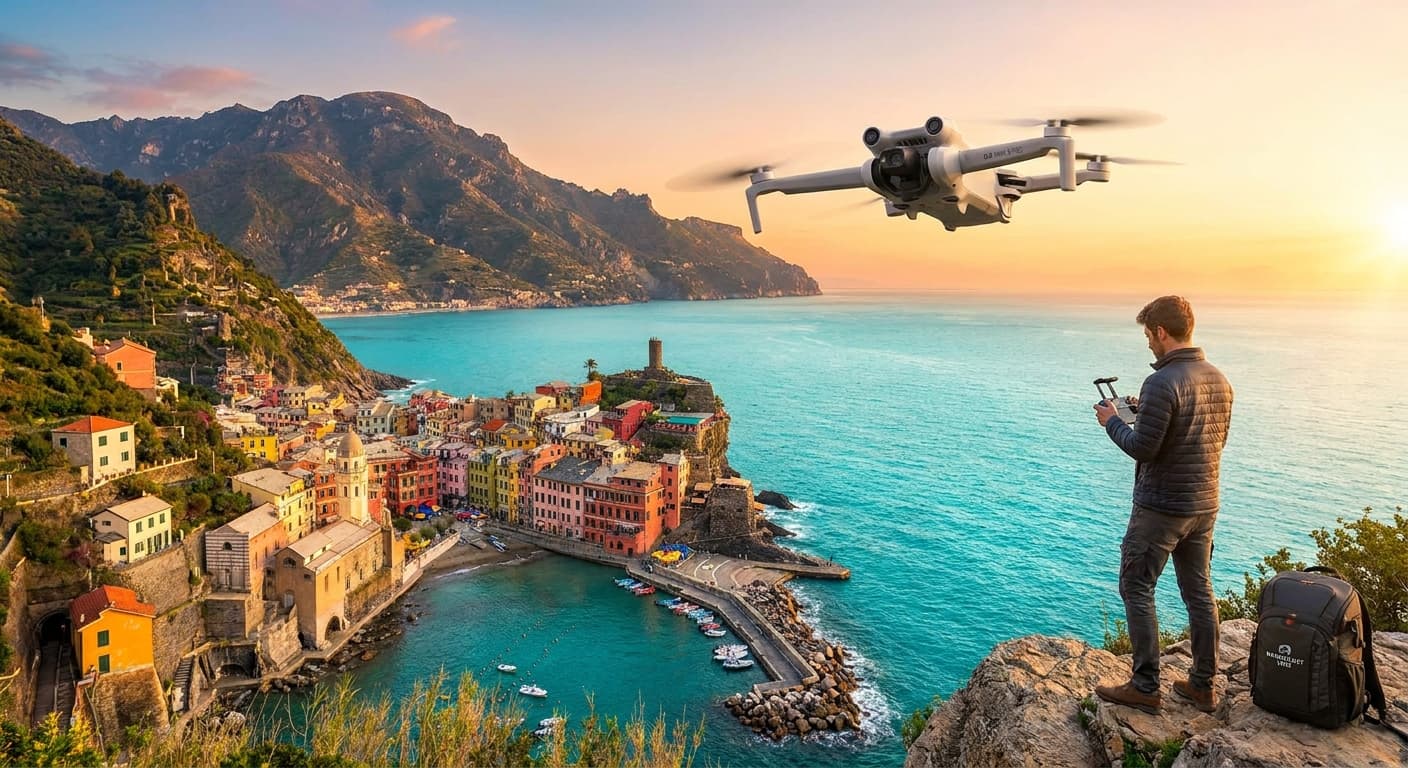
A real-world scenario where the Mini 3 Pro shines is for a travel vlogger documenting a trip through the tight streets of a European city. Its small size is inconspicuous, and the sub-250g weight means fewer legal hurdles. They can launch it quickly to get an establishing shot of a historic square, use ActiveTrack to follow themselves walking across an old bridge, and then switch to True Vertical Shooting to capture a stunning, ready-to-post Reel of a cathedral's spire against the sky. Compared to the older Mini 2, which lacked obstacle sensing and advanced tracking, this kind of dynamic, worry-free shooting would have been nearly impossible. The actionable insight here is that the Mini 3 Pro isn't just a drone; it's a complete aerial content creation system that fits in your jacket pocket, empowering solo creators to capture shots that once required a dedicated camera operator.
Is the DJI Mini 3 Pro Worth It in 2026?
Yes, the DJI Mini 3 Pro remains an excellent purchase and arguably offers the best value in the entire drone market in 2026. While its successor, the DJI Mini 4 Pro, has introduced incremental upgrades like omnidirectional obstacle sensing and 10-bit D-Log M color profiles, the Mini 3 Pro still holds its ground as a powerful tool that meets the needs of over 90% of drone pilots. The key to its enduring value lies in its price-to-performance ratio. With the release of the new model, the Mini 3 Pro has seen significant price drops, placing it in a sweet spot where you get professional-grade features for a mid-range price. For most users, the enhancements of the Mini 4 Pro are 'nice-to-haves' rather than 'must-haves', making the savings on the Mini 3 Pro a very smart financial decision.
The core components that made the Mini 3 Pro revolutionary are still just as relevant today. The 1/1.3-inch sensor is fantastic, producing crisp, vibrant 4K footage that is more than enough for YouTube, social media, and even semi-professional client work. Its low-light performance, aided by the wide f/1.7 aperture, is still impressive for a drone of this size. The tri-directional obstacle sensing provides ample safety for most flight scenarios, and the FocusTrack suite is incredibly reliable for tracking subjects. Unless you are a professional colorist who absolutely needs the flexibility of a 10-bit log profile, or you frequently fly sideways at high speed through dense forests, the Mini 3 Pro's feature set is not a significant downgrade from the latest and greatest.
Consider the use case of an aspiring real estate photographer. They need high-quality 48MP RAW photos to capture stunning exterior shots of properties and smooth 4K video for virtual tours. The Mini 3 Pro delivers on all these fronts. The tri-directional obstacle sensing is crucial for safely navigating around trees and rooflines. The cost savings compared to the Mini 4 Pro could be invested in other essential gear, like a better ground camera or editing software. The slightly less advanced obstacle sensing is a non-issue in this scenario, as most real estate shots are slow, deliberate, and forward-facing. The Mini 3 Pro provides 95% of the capability for around 75% of the cost, which is a winning formula for a small business.
The actionable insight for a potential buyer in 2026 is to critically assess your specific needs against the features of the Mini 4 Pro. Do you need to fly sideways through tight gaps regularly? If not, the Mini 3 Pro's forward, backward, and downward sensors are sufficient. Are you a professional filmmaker who grades every clip using LUTs and needs the maximum possible color data? If not, the standard D-Cinelike color profile on the Mini 3 Pro is excellent and much easier to work with for most people. For the vast majority of content creators, travelers, and serious hobbyists, the Mini 3 Pro offers a near-identical real-world user experience to its more expensive successor, making it the smarter, higher-value purchase today.
A Deep Dive into the Key Features
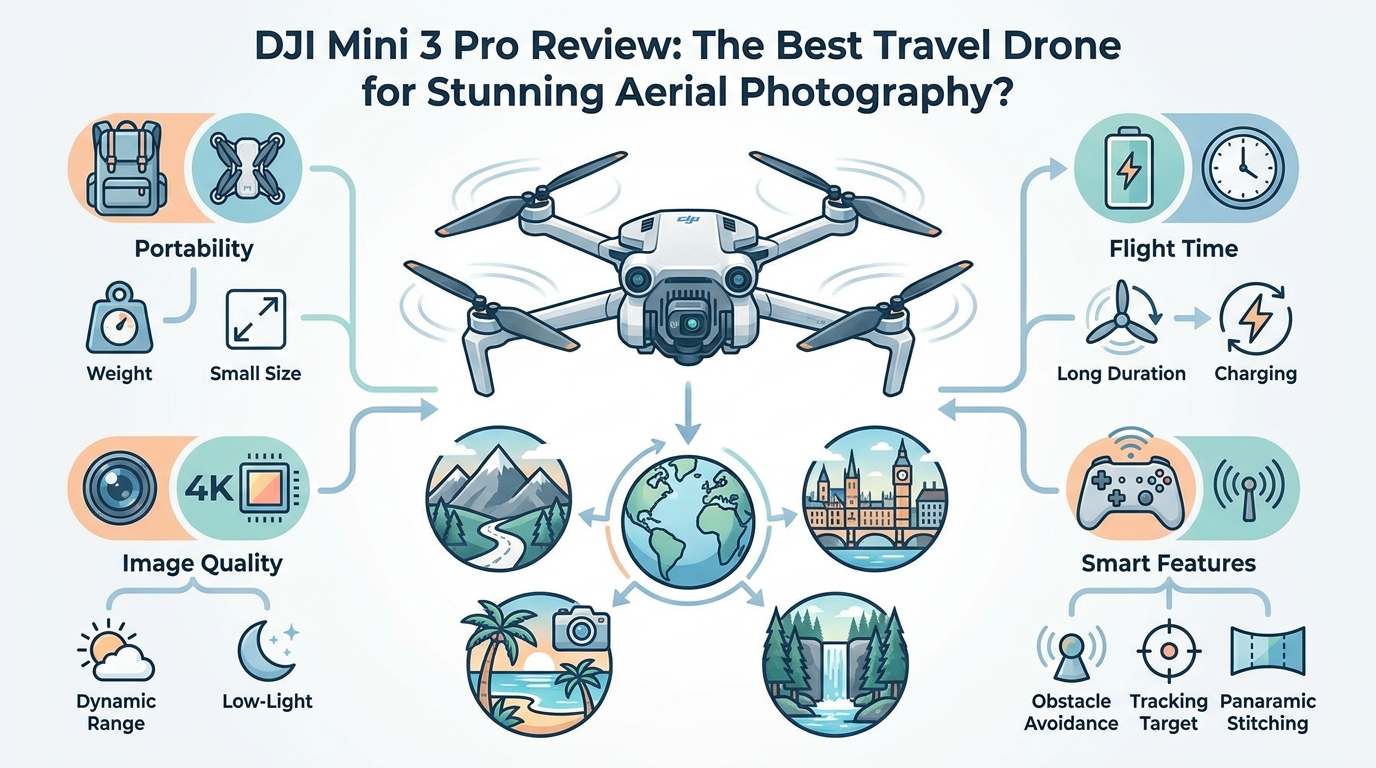
The DJI Mini 3 Pro is defined by a trifecta of features that elevate it far beyond a simple flying camera: its professional-grade imaging system, its advanced flight intelligence, and its regulation-friendly design. Each element is impressive on its own, but their combination in a sub-250g package is what makes this drone a landmark product. The most significant feature is undoubtedly the camera. It boasts a large 1/1.3-inch CMOS sensor, a size typically found in larger, more expensive drones. This larger sensor, combined with a bright f/1.7 aperture and dual native ISO technology, translates to superior image quality with better dynamic range, less noise in low light, and more vibrant colors. It can capture stunningly detailed 48MP RAW photos and shoot video at up to 4K/60fps. This isn't just about resolution; the quality of the pixels is what matters, and the Mini 3 Pro delivers clean, sharp footage that holds up well to color grading and editing.
A standout camera feature is 'True Vertical Shooting'. Instead of simply cropping a horizontal video, the entire gimbal and camera assembly physically rotates 90 degrees. This means your vertical videos for TikTok or Instagram Reels use the full width of the sensor, resulting in a much higher quality, uncropped final product. For a social media content creator, this is a revolutionary feature. Imagine you're a travel influencer in Santorini. With a traditional drone, you'd have to fly far away to fit the iconic blue-domed churches in a horizontal frame, then crop it vertically, losing significant detail. With the Mini 3 Pro, you can fly closer, rotate the camera, and capture a breathtaking, high-resolution vertical shot that perfectly frames the scene, ready to be posted with minimal editing.
The second pillar is its advanced flight intelligence, primarily the Tri-Directional Obstacle Sensing and the FocusTrack suite. The inclusion of forward, backward, and downward dual-vision sensors was a first for the Mini line and a massive step up in safety and pilot confidence. These sensors allow the drone to automatically detect and avoid obstacles in its path, enabling more complex shots in challenging environments. This system powers APAS 4.0 (Advanced Pilot Assistance Systems), which can be set to either brake in front of an obstacle or intelligently navigate around it. This is complemented by FocusTrack, which includes ActiveTrack 4.0. You can draw a box around a subject - a person, a car, a boat - and the drone will autonomously follow it, keeping it perfectly framed. This allows solo creators to be in their own videos, capturing dynamic, cinematic shots without needing a second person to pilot the drone. For example, a mountain biker can use ActiveTrack to have the drone follow them down a trail, getting epic action shots that were previously impossible to achieve alone.
Finally, its design is a key feature in itself. The sub-250g weight is the headline act, providing freedom from many regulations worldwide. But the redesigned airframe is also more aerodynamic, with larger propellers and a more aggressive forward tilt, leading to better wind resistance and slightly faster flight speeds compared to its predecessors. It also allows for the inclusion of the DJI RC, a remote controller with a built-in screen. This is a massive quality-of-life improvement, as you no longer need to drain your smartphone's battery or deal with clumsy cables and mounts. The screen is bright, clear, and always ready to go, streamlining the entire flight experience. The actionable insight here is that the Mini 3 Pro's features are not just bullet points on a spec sheet; they are thoughtfully integrated solutions to real-world problems faced by creators, making the entire process of capturing stunning aerial content easier, safer, and more efficient.
Real-World Performance & User Experience
In the real world, away from spec sheets and marketing jargon, the DJI Mini 3 Pro performs exceptionally well, delivering a user experience that feels both powerful and remarkably intuitive. From the moment you unbox it, the drone feels like a premium product. The setup is straightforward: unfold the arms, power on the drone and the controller, and the DJI Fly app guides you through any necessary firmware updates. The DJI RC controller with its built-in screen is a particular highlight. Not having to connect your phone saves time and hassle, and the screen is bright enough to be easily visible even in direct sunlight, a common pain point for pilots using their smartphones. The pre-flight checklist in the app is clear, and the drone acquires a GPS lock almost instantly, meaning you can go from 'in the bag' to 'in the air' in under two minutes.
Once airborne, the Mini 3 Pro is incredibly stable and responsive. Even in moderate winds (up to its rated 24 mph wind resistance), it holds its position with confidence, producing smooth, steady footage thanks to the superb 3-axis mechanical gimbal. For a drone so small and light, its ability to fight the wind is genuinely impressive. Flight time is another strong point. The standard Intelligent Flight Battery is officially rated for 34 minutes, and in real-world conditions with some wind and maneuvering, you can consistently expect 25-28 minutes of usable flight time. This is more than enough for most creative sessions, allowing you to capture multiple shots and angles without the constant pressure of a rapidly depleting battery. For those needing more, the optional Intelligent Flight Battery Plus extends this to a staggering 47 minutes (realistically around 38-40 minutes), though it's crucial to remember this pushes the drone's weight over the 250g limit.
The user experience is defined by how easily you can achieve professional-looking results. The automatic flight modes, or QuickShots (like Dronie, Rocket, Circle, and Helix), are fantastic for beginners. With a few taps, the drone performs a complex, cinematic maneuver while keeping your subject perfectly in frame, delivering a clip that looks like it was flown by a pro. The real game-changer for experienced users, however, is the reliability of ActiveTrack. Let's say you're filming a paddleboarder on a lake. You can set the drone to follow them from behind, from the side, or in parallel. The tracking is tenacious; it smoothly follows the subject, navigating around obstacles like trees on the shoreline (using APAS 4.0) without losing the lock. This frees you up to focus on the creative aspects, like controlling the camera's altitude and angle, rather than just the basic stick movements of piloting.
However, the experience isn't flawless. The primary limitation is the lack of side-facing obstacle sensors. While the forward, backward, and downward sensors provide a great safety net for most situations, you are flying blind when strafing sideways. This means when using automatic tracking modes like Parallel, you need to be acutely aware of the environment to avoid a lateral collision. Compared to the Mini 4 Pro or Air 3 with their omnidirectional sensing, this is a noticeable limitation that requires more pilot awareness. The actionable insight is that the Mini 3 Pro offers a 90% pro-level experience. Its performance is robust, reliable, and empowers incredible creativity. But users must remain mindful of that missing 10% - the lack of side sensors - and fly accordingly, especially when relying on automated flight modes in cluttered environments.
See User Reviews and Check AvailabilityPros and Cons: A Detailed Breakdown
Making a smart purchasing decision requires a balanced look at both the strengths and weaknesses of a product. The DJI Mini 3 Pro has a long list of compelling advantages, but it also has a few trade-offs that potential buyers need to be aware of. Understanding these points in detail will help you determine if it's the right fit for your specific needs and budget.
| Pros | Cons |
|---|---|
| ✅ Superb Image Quality from 1/1.3" Sensor | ❌ Premium Price Point |
| ✅ Sub-250g Weight (Regulation-Friendly) | ❌ No Side Obstacle Sensors |
| ✅ True Vertical Shooting for Social Media | ❌ Plus Battery Exceeds 250g Limit |
| ✅ Advanced Features (ActiveTrack, APAS 4.0) | ❌ D-Cinelike Profile is 8-bit, not 10-bit |
| ✅ Excellent Flight Time and Wind Resistance | ❌ Limited Onboard Storage |
| ✅ Optional DJI RC with Built-in Screen | ❌ App Can Feel Cluttered for Beginners |
The Pros in Detail
The most significant pro is undeniably its superb image quality. The combination of a large 1/1.3-inch sensor, f/1.7 aperture, and 4K/60fps video capability puts it in a class of its own for a sub-250g drone. The footage is sharp, the colors are rich (especially in the D-Cinelike profile), and the low-light performance is surprisingly clean. For a travel blogger capturing a sunset over a city, this means less grainy footage and more usable, vibrant shots. The 48MP RAW photos provide incredible flexibility for editing, allowing you to recover details from shadows and highlights that would be lost on a lesser sensor.
The sub-250g weight is a close second. This isn't just a number; it's a passport to freedom. It allows you to bypass many of the tedious and sometimes costly registration processes required for heavier drones in many parts of the world. This is a massive advantage for international travelers who don't want to navigate complex aviation laws in every new country. Paired with its compact, foldable design, it's the ultimate grab-and-go aerial camera.
Lastly, the inclusion of advanced features like ActiveTrack and tri-directional obstacle sensing truly sets it apart. These were once the exclusive domain of DJI's larger, more expensive drones. Being able to have the drone autonomously follow you while you hike, bike, or kayak opens up a world of creative possibilities for solo creators. It's like having a dedicated aerial camera operator in your backpack.
The Cons in Detail
The most prominent drawback is its premium price point. While its value has improved over time, it was launched at a price significantly higher than previous Mini models, pushing it out of reach for casual users or those on a tight budget. It firmly positioned the 'Pro' model in the serious hobbyist category. For someone who just wants to take occasional holiday photos from the air, the cost may be hard to justify when simpler, cheaper drones exist.
The lack of side obstacle sensors is a critical limitation to be aware of. While forward, backward, and downward sensing is a huge help, you are vulnerable when flying sideways. This requires constant vigilance from the pilot, especially when using tracking modes in areas with trees, buildings, or other potential hazards. This is the single biggest hardware advantage the newer Mini 4 Pro has over its predecessor.
Finally, a nuanced con is that to achieve the advertised maximum flight time, you need the Intelligent Flight Battery Plus, which pushes the drone's weight over 249 grams. This means you have to choose between maximum endurance and regulatory freedom. If you use the Plus battery, you lose the sub-250g advantage and must comply with the rules for heavier drones. This can be an annoying trade-off for those who need both long flight times and hassle-free travel.
Who Should Buy the DJI Mini 3 Pro?
The DJI Mini 3 Pro isn't a one-size-fits-all drone; it's a specialized tool that excels for specific types of users. Understanding these user profiles is key to knowing if the investment is right for you. It's designed for those who demand high quality and advanced features but are constrained by weight, space, or regulations.
1. The Travel Content Creator & Vlogger
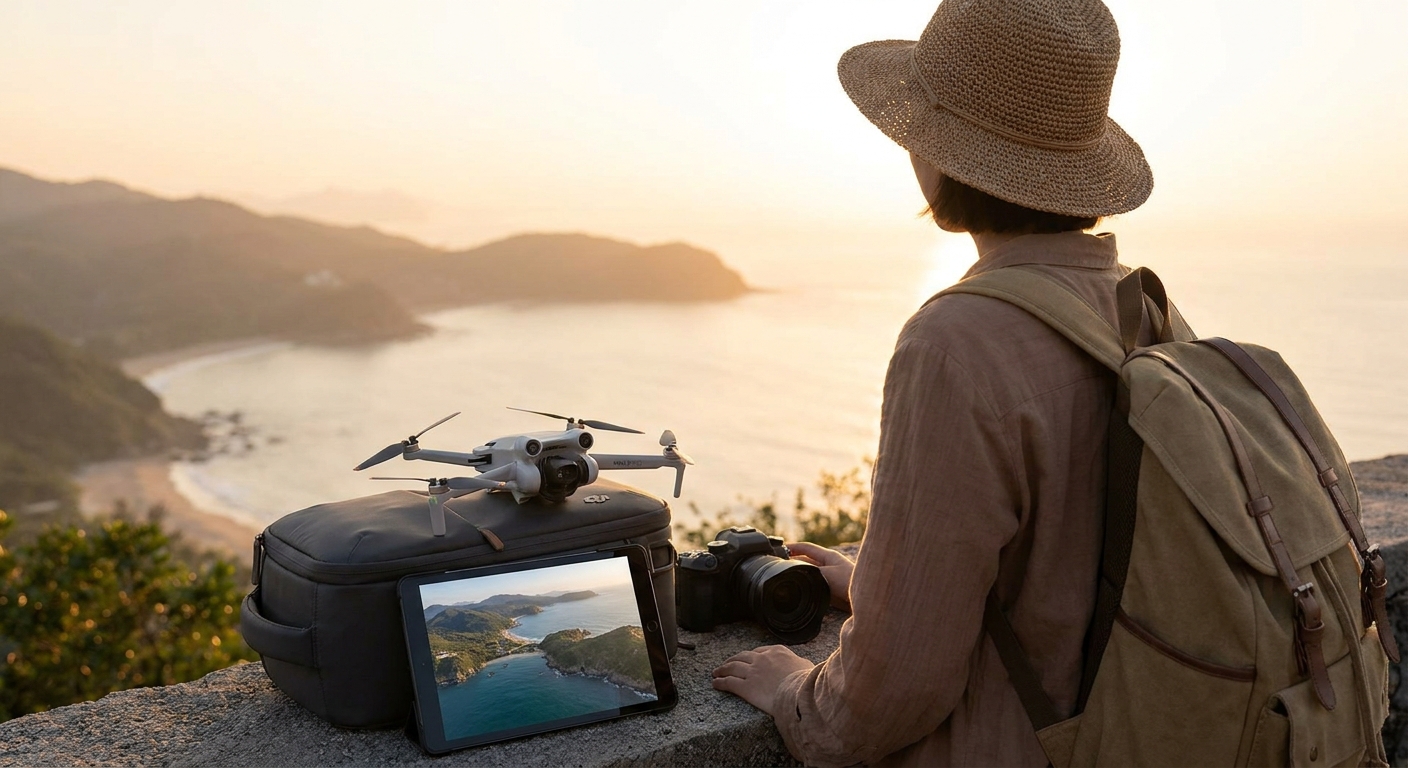
This is the primary audience for the Mini 3 Pro. For individuals whose work and passion involve constant travel, portability is paramount. The drone's tiny footprint and sub-250g weight make it a dream to pack, easily fitting into a camera bag side pocket. More importantly, it minimizes legal headaches when crossing borders and flying in different countries. The image quality from the 1/1.3-inch sensor is more than good enough for professional-looking YouTube videos and social media content. A travel vlogger exploring Southeast Asia can use it to capture epic shots of limestone karsts in Vietnam, use ActiveTrack to follow their scooter along a coastal road, and then instantly shoot a vertical Reel of a bustling Bangkok market, all with one device that doesn't weigh them down or attract unwanted attention.
2. The Serious Hobbyist & Tech Enthusiast
This user is passionate about aerial photography and videography but may not do it for a living. They've likely outgrown entry-level drones and are frustrated by the limitations of a smaller sensor or the lack of intelligent flight modes. The Mini 3 Pro is the perfect upgrade. It offers a taste of the high-end features found in the Mavic series - like APAS 4.0, MasterShots, and RAW photography - without the much higher cost and bulk. This user would enjoy experimenting with long-exposure night photos using the 48MP mode on a tripod, or creating complex hyperlapses of cityscapes. For them, the drone is a creative outlet, and the Mini 3 Pro provides a vast canvas of features to explore and master.
3. The Real Estate Agent or Small Business Owner
For small businesses, particularly in real estate, professional-looking marketing material is crucial. The Mini 3 Pro offers a cost-effective way to produce stunning aerial photos and videos of properties without hiring an expensive professional drone pilot for every listing. The high-resolution 48MP photos are perfect for creating sharp, detailed images for online listings, and the smooth 4K video can be used for compelling virtual tours. Its ease of use and safety features mean that an agent can learn to fly it confidently with a bit of practice. The initial investment can be quickly recouped by the enhanced quality of their property marketing. The small size also makes it less intimidating to homeowners when flying around their property compared to a much larger, louder drone.
The actionable insight across all these groups is the desire for professional output without professional hassle. The Mini 3 Pro removes barriers - the barrier of weight, the barrier of regulation, the barrier of complexity - and empowers these users to focus on creativity. If you identify with the need for high-quality, portable, and intelligent aerial imaging, this drone is tailored for you.
Who Should NOT Buy the DJI Mini 3 Pro?
While the DJI Mini 3 Pro is an exceptional drone, it is not the right choice for everyone. Its 'Pro' moniker comes with a 'Pro' price tag and a feature set that might be overkill for some or insufficient for others. Identifying that you fall into one of these categories can save you a significant amount of money and ensure you get a tool better suited to your actual needs.
1. The Complete Beginner or Casual User
If you've never flown a drone before and are simply curious, or if you only plan to fly a few times a year on vacation to get a simple aerial selfie, the Mini 3 Pro is likely too much drone for you. Its price is substantial, and many of its advanced features, like D-Cinelike color profiles and 48MP RAW photos, require a willingness to engage in post-production and editing to see their full benefit. A much better and more cost-effective option would be a drone like the standard DJI Mini 2 SE or DJI Mini 3 (non-pro). These models are significantly cheaper, incredibly easy to fly, and still capture excellent 2.7K or 4K video that is perfect for sharing with family and friends. The actionable advice is to start small. Learn the basics of flight and composition on a more affordable drone before investing in a pro-level machine.
2. The Professional Cinematographer or Commercial Pilot
At the other end of the spectrum are the high-end professionals. While the Mini 3 Pro's camera is excellent for its size, it does have limitations for demanding commercial work. The video is captured in an 8-bit color depth, which offers less flexibility for heavy color grading compared to the 10-bit video found on the Mini 4 Pro or the DJI Air and Mavic series. Professionals often need this extra color information to match footage with other ground cameras and achieve a specific cinematic look. Furthermore, the lack of side obstacle sensors and a top sensor can be a deal-breaker for jobs that require flying in complex, high-stakes environments. These users should be looking at the DJI Mini 4 Pro for its omnidirectional sensing and 10-bit Log video, or more likely, the DJI Air 3 or Mavic 3 Pro, which offer superior cameras, better wind handling, and a more robust feature set designed for professional workflows.
3. The Adrenaline Junkie or FPV Racer
If your goal is high-speed, acrobatic flight through gaps and around obstacles, the DJI Mini 3 Pro is the wrong tool for the job. It is a stabilized camera platform designed for smooth, cinematic footage. It is not an FPV (First-Person View) drone. The experience you're looking for is provided by drones like the DJI Avata or custom-built FPV quads. These drones are flown with goggles, offer manual flight control for flips and rolls, and are built for speed and agility. Trying to fly the Mini 3 Pro in this way would be frustrating and would likely end in a crash. The insight here is to match the type of drone to the type of flying experience you desire. The Mini 3 Pro is for capturing the view; an FPV drone is for experiencing the flight.
DJI Mini 3 Pro vs. The Competition
In 2026, the DJI Mini 3 Pro's primary competition comes from within its own family - the newer DJI Mini 4 Pro - and from other brands trying to crack the sub-250g market, like Autel with its EVO Nano+ series. Understanding the key differences is crucial for making an informed decision, as each drone caters to slightly different priorities.
The most direct competitor is the DJI Mini 4 Pro. On paper, the Mini 4 Pro is a direct upgrade. It takes the successful Mini 3 Pro formula and adds key refinements. The biggest upgrade is the sensor system: the Mini 4 Pro has full omnidirectional obstacle sensing, adding side sensors that the Mini 3 Pro lacks. This provides 360-degree protection and allows for more confident use of automated flight modes. The second major upgrade is the camera's video capabilities. The Mini 4 Pro can shoot in a 10-bit D-Log M color profile, offering significantly more data for professional color grading. It also offers 4K/100fps slow-motion, compared to the Mini 3 Pro's 1080p/120fps. However, for the average user, these differences may not be worth the substantial price increase. The core image quality from the sensor is very similar, and the tri-directional sensing on the Mini 3 Pro is more than adequate for most pilots. The choice boils down to this: if you are a professional who needs the best color flexibility or you frequently fly in highly complex environments, the Mini 4 Pro's upgrades are worth it. For everyone else, the Mini 3 Pro offers 95% of the performance for a much lower price.
Another key rival is the Autel EVO Nano+. Autel is DJI's most significant competitor, and the Nano+ was a direct answer to the Mini 3 Pro. It also features a sub-250g weight, a large sensor (1/1.28-inch, slightly larger than the Mini 3 Pro's), and three-way obstacle avoidance. The Autel's camera, with its f/1.9 aperture, also performs exceptionally well, especially in low light. A key advantage for Autel is its controller and app ecosystem, which some users find more straightforward, and crucially, it does not have geofencing restrictions in the same way DJI drones do, offering more freedom to fly (which also comes with more responsibility). However, DJI's software is generally considered more polished, particularly its subject tracking technology. DJI's ActiveTrack is smoother and more reliable than Autel's Dynamic Track. Furthermore, DJI's QuickTransfer and general ecosystem are more mature. For a user who values a polished, seamless software experience and the best tracking available, the DJI Mini 3 Pro is the better choice. For a pilot who prioritizes maximum camera performance in low light and freedom from geofencing, the Autel EVO Nano+ is a compelling alternative.
Feature Comparison Table
| Feature | DJI Mini 3 Pro | DJI Mini 4 Pro | Autel EVO Nano+ |
|---|---|---|---|
| Weight | 249g | 249g | 249g |
| Camera Sensor | 1/1.3-inch CMOS | 1/1.3-inch CMOS | 1/1.28-inch CMOS |
| Max Video Resolution | 4K/60fps | 4K/100fps | 4K/30fps |
| Color Profile | Normal, D-Cinelike (8-bit) | Normal, D-Log M (10-bit) | Standard, Log |
| Obstacle Sensing | Forward, Backward, Downward | Omnidirectional (360°) | Forward, Backward, Downward |
| Subject Tracking | ActiveTrack 4.0 | ActiveTrack 360° | Dynamic Track 2.1 |
| Vertical Video | Yes (Mechanical) | Yes (Mechanical) | No (Digital Crop) |
| Max Flight Time | 34 min (Standard) / 47 min (Plus) | 34 min (Standard) / 45 min (Plus) | 28 min |
The actionable insight from this comparison is clear: the DJI Mini 3 Pro occupies a powerful middle ground. It's significantly more capable than the Autel EVO Nano+ in terms of video frame rates and software polish, and it's much more affordable than the DJI Mini 4 Pro while retaining the most critical features like the excellent sensor and True Vertical Shooting. It is the value champion of the high-end, sub-250g category.
Pricing & Value Analysis: Is the 'Pro' Price Justified?
The DJI Mini 3 Pro's pricing represented a strategic shift for DJI's Mini line, and analyzing its value requires looking beyond the initial sticker price. When it launched, it was considerably more expensive than the Mini 2, causing some sticker shock. However, the price is not for the name 'Pro' alone; it is justified by a radical leap in hardware and software capabilities that effectively created a new category: the sub-250g prosumer drone. As of 2026, with its price having settled after the release of its successor, its value proposition has become even stronger.
The core justification for the price is the convergence of three expensive technologies into a tiny package: a large, high-quality camera sensor; a multi-directional obstacle avoidance system; and an advanced subject tracking AI. Previously, to get this combination, you would have needed to buy a drone from the DJI Air series, which was not only hundreds of dollars more expensive but also heavier, bulkier, and subject to more regulations. The Mini 3 Pro democratized these features. For example, the 1/1.3-inch sensor is a piece of high-performance hardware that delivers demonstrably better dynamic range and low-light performance. For a photographer, this means fewer bracketed shots and more keepers from a single RAW file, saving time and effort. This tangible improvement in image quality alone justifies a significant portion of the cost increase over older models.
When evaluating value, you must also consider the cost of accessories and different bundles. DJI typically offers a few options: the drone on its own (for those upgrading), a standard bundle with the basic RC-N1 controller (which uses your smartphone), and the most popular bundle featuring the DJI RC with its built-in screen. The DJI RC bundle, while more expensive upfront, offers tremendous value. A dedicated screen controller with similar brightness and performance sold separately would cost a significant amount. By bundling it, DJI offers a more integrated and enjoyable flying experience for a reasonable premium. A real-world scenario: a creator filming in a bright, snowy landscape would struggle to see their smartphone screen. The 700-nit brightness of the DJI RC makes framing shots in these conditions effortless, a practical value that far outweighs the initial cost difference.
Compared to its competitors, the Mini 3 Pro's value becomes even more apparent in 2026. It is now priced significantly lower than the Mini 4 Pro, yet as we've established, it delivers a very similar real-world experience for most users. The money saved could be used to purchase the Fly More Combo, which includes extra batteries, a charging hub, and a carrying bag - accessories that are essential for any serious creator. The actionable insight is this: don't view the Mini 3 Pro's price in a vacuum. View it as an investment in capability and convenience. It's a single, compact tool that can replace a heavier, more complex setup, saving not just money in the long run but also the invaluable currency of space in your travel bag and time in the field. For what it delivers, the price is not just justified; it's a strategic bargain.
Final Verdict: The Ultimate Travel Drone, Or Is There a Better Choice?
After exhaustive testing and analysis, the DJI Mini 3 Pro earns its reputation as a revolutionary drone that still stands as one of the best choices for aerial creators in 2026. It successfully redefines what is possible in a sub-250 gram package, delivering a potent combination of stellar image quality, intelligent flight features, and unparalleled portability. It answers the question posed in the title with a resounding 'yes' - for a huge segment of the market, it remains the ultimate travel drone, striking an almost perfect balance between performance, price, and convenience.
Its enduring strength lies in the core features that truly matter to creators on the go. The 1/1.3-inch sensor delivers footage and photos that are crisp, vibrant, and flexible enough for semi-professional work. This isn't just a marginal improvement; it's a leap that puts the Mini 3 Pro's output in the same league as much larger drones. The addition of True Vertical Shooting was a visionary move, acknowledging the dominance of vertical video and providing a hardware solution that maintains maximum quality. These camera features, combined with the safety net of tri-directional obstacle sensing and the creative power of ActiveTrack, make for a package that empowers solo creators to capture shots that are simply breathtaking, without needing a film crew or years of piloting experience.
Of course, the landscape has evolved. The DJI Mini 4 Pro now exists, offering a more complete safety system and 10-bit video. However, these are incremental gains that come at a steep premium. The Mini 3 Pro exists in a value sweet spot that is arguably more compelling for the majority of users. It forces a critical question: do you need the absolute best, or do you need the best value? For professional colorists and those with a high-risk flight profile, the Mini 4 Pro is the logical choice. But for the travel vlogger, the serious hobbyist, the real estate agent, and the family documentarian, the Mini 3 Pro delivers everything they need and more, with the significant savings being a major bonus.
The final actionable decision framework is simple. If your top priority is the absolute best image quality and most advanced features in a sub-250g drone, and budget is not your primary concern, then the DJI Mini 4 Pro is your drone. But if you are looking for the best possible blend of performance, portability, and price - the point of maximum return on your investment - the DJI Mini 3 Pro is still the undisputed champion. It's a modern classic that hit the market so perfectly that even its successor struggles to make it feel obsolete. It's not just a good drone; it's a smart, strategic investment in your creative toolkit that will continue to pay dividends for years to come.
Buy the DJI Mini 3 Pro NowFrequently Asked Questions
The real-world flight time is excellent. With the standard Intelligent Flight Battery, DJI claims 34 minutes. In practical use, factoring in wind, return-to-home functions, and maneuvering, you can reliably expect between 25 to 28 minutes of usable flight time. For the Intelligent Flight Battery Plus, which is rated for 47 minutes, real-world flight times are consistently between 38 and 40 minutes. Remember, using the Plus battery pushes the drone's weight over the 249g limit, which may require registration in your region. For most creative sessions, the standard battery provides ample time to get the shots you need.
Yes, the DJI Mini 3 Pro is a great drone for ambitious beginners, but it may be overkill for casual first-time flyers. Its intuitive controls, GPS stability, and obstacle avoidance sensors make it very easy and safe to fly. The DJI Fly app is user-friendly, and automated modes like QuickShots help new pilots create amazing videos with just a few taps. However, its higher price point compared to entry-level models like the Mini 2 SE means it's best for beginners who are serious about learning aerial photography and plan to grow with the drone's advanced capabilities.
In many countries, including the United States, you do not need to register or get a license to fly the DJI Mini 3 Pro for recreational purposes, as long as you use the standard battery that keeps it under 250 grams. However, laws vary significantly by region and are always changing. For example, in Europe and Canada, all drones with a camera require registration regardless of weight. You must always follow local laws, which may include passing an online safety test. If you use the drone for commercial purposes, you will almost certainly need to be certified. Always check the regulations of your local aviation authority.
The DJI Mini 3 Pro's camera is surprisingly capable in low light conditions for a drone of its size. This is due to its large 1/1.3-inch sensor, wide f/1.7 aperture, and Dual Native ISO technology. Together, these features allow the camera to gather more light and produce cleaner images with less visible noise at dusk, dawn, or in overcast conditions compared to drones with smaller sensors. While it won't match a full-frame mirrorless camera, it delivers some of the best low-light video and photo quality you can find in a sub-250g drone, making it highly versatile.
You should buy the DJI Mini 3 Pro if you want the best value for your money. It offers about 95% of the Mini 4 Pro's real-world performance for a significantly lower price. You still get the fantastic 1/1.3-inch sensor, 4K/60fps video, and reliable tracking. You should only buy the more expensive Mini 4 Pro if you are a professional who absolutely needs 10-bit D-Log M for serious color grading, or if you require the peace of mind that comes with 360-degree omnidirectional obstacle sensing for flying in very complex environments. For most creators and hobbyists, the Mini 3 Pro is the smarter purchase.