Europe by Train vs Plane: Which is Faster, Cheaper, and More Scenic?
Train Travel
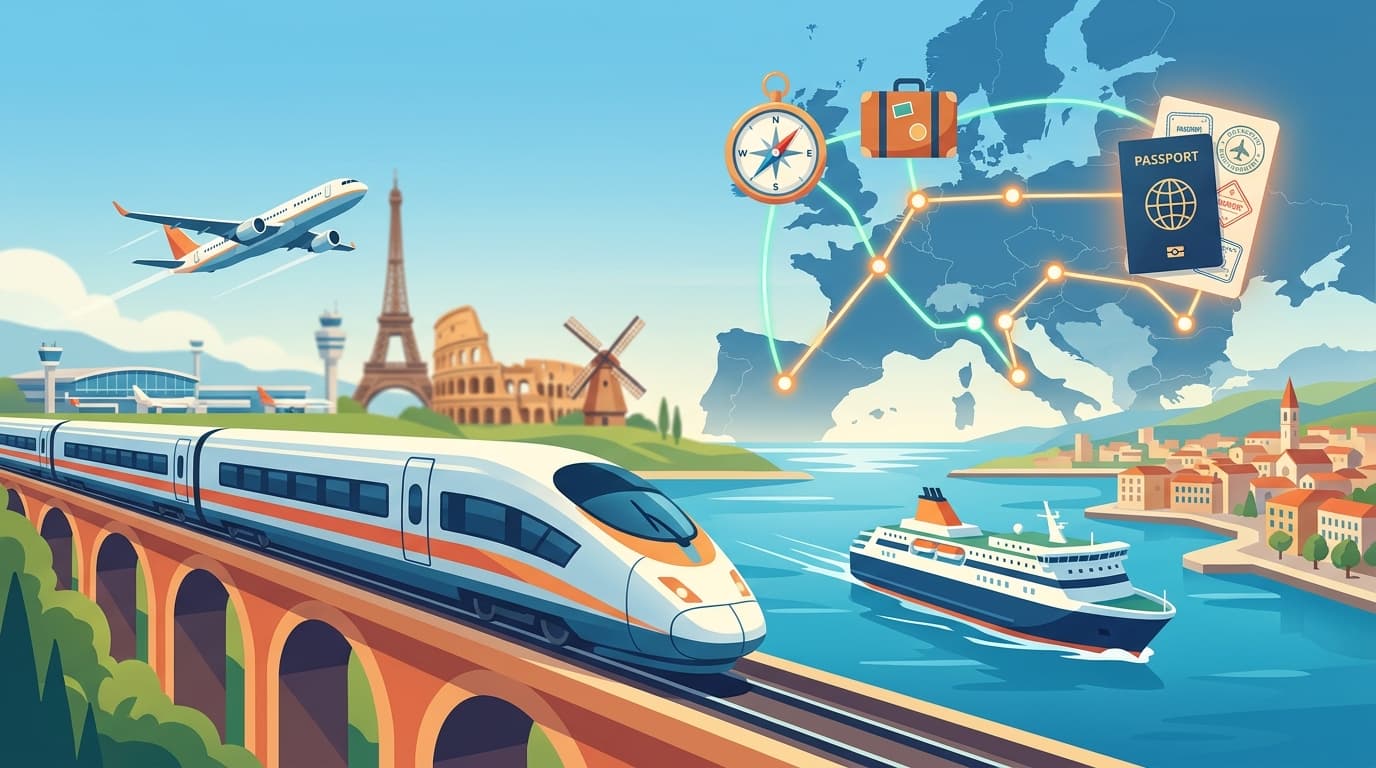
For most intra-European travel, the train is the superior choice, offering a seamless blend of speed (door-to-door), comfort, and scenic beauty that turns the journey into a highlight of the trip.
Overall Score
Top Picks
Train Travel
Train travel excels in providing a comfortable, seamless, and scenic travel experience. Its city-center-to-city-center convenience is a game-changer, saving valuable vacation time.
Air Travel
Air travel remains the undisputed king of long-distance speed. However, it loses points on the overall experience due to airport hassles, hidden costs, and environmental concerns.
Comparison
Comfort & Onboard Experience
Speed & Punctuality
Overall Cost & Inclusions
Convenience & Accessibility
Reliability & Environmental Impact
Baggage, Wi-Fi & Amenities
| Feature | Train Travel | Air Travel |
|---|---|---|
| Overall Rating | 9.0/10 | 7.8/10 |
| Speed (Door-to-Door) | Faster for journeys under 4-5 hours (e.g., Paris to Amsterdam) | Faster for long-distance or cross-continent journeys (e.g., Lisbon to Warsaw) |
| Total Cost | Often higher base fare but fewer hidden fees. Predictable pricing. | Low base fares but numerous add-ons (luggage, seat selection, airport transfers). |
| Comfort & Experience | Spacious seating, freedom to move, large windows, dining cars. | Cramped seating, limited mobility, turbulence, airport stress. |
| Scenic Value | Excellent. Travels through countryside, mountains, and coastlines. | Limited to takeoff and landing; mostly cloud views. |
| Baggage Allowance | Extremely generous. Typically 2 large bags + personal item at no extra cost. | Highly restrictive. Costly fees for checked bags and often for carry-ons. |
| Convenience | City center to city center stations, no long check-ins or security lines. | Outlying airports, requires 2-3 hours for check-in and security. |
| Environmental Impact | Significantly lower carbon footprint per passenger. | Major contributor to carbon emissions in the travel sector. |
| Best For... | City-hopping, scenic journeys, families, travelers with luggage, eco-conscious tourists. | Long distances, travel between non-connected regions, time-critical cross-continent trips. |
| Check Train Fares | Check Flight Prices |
Quick Verdict: Which Should You Choose?
For the majority of journeys within continental Europe, train travel is the superior option. It offers a winning combination of convenience, comfort, generous baggage allowances, and a significantly lower environmental impact. By connecting city centers directly, trains eliminate the time-consuming and costly process of traveling to and from outlying airports, navigating lengthy security queues, and waiting at boarding gates. The total door-to-door travel time for routes like Paris to Brussels or Milan to Rome is often shorter by train than by plane.
You should choose Train Travel if: You are traveling between major cities less than 700-800 kilometers apart, you value comfort and scenic views, you are traveling with significant luggage, or you are an environmentally conscious traveler. The ability to work, relax, or socialize in a spacious seat while the European landscape rolls by is an unmatched experience. It turns the journey itself into a memorable part of your vacation.
You should choose Air Travel if: Your journey spans the continent (e.g., Portugal to Poland), involves crossing significant bodies of water (like traveling to the Greek islands or the UK), or if you find a budget airline deal that significantly undercuts train prices even after accounting for all extra fees. For trips over 6-7 hours by rail, flying becomes the more practical and time-efficient choice, despite the associated hassles of the airport experience.
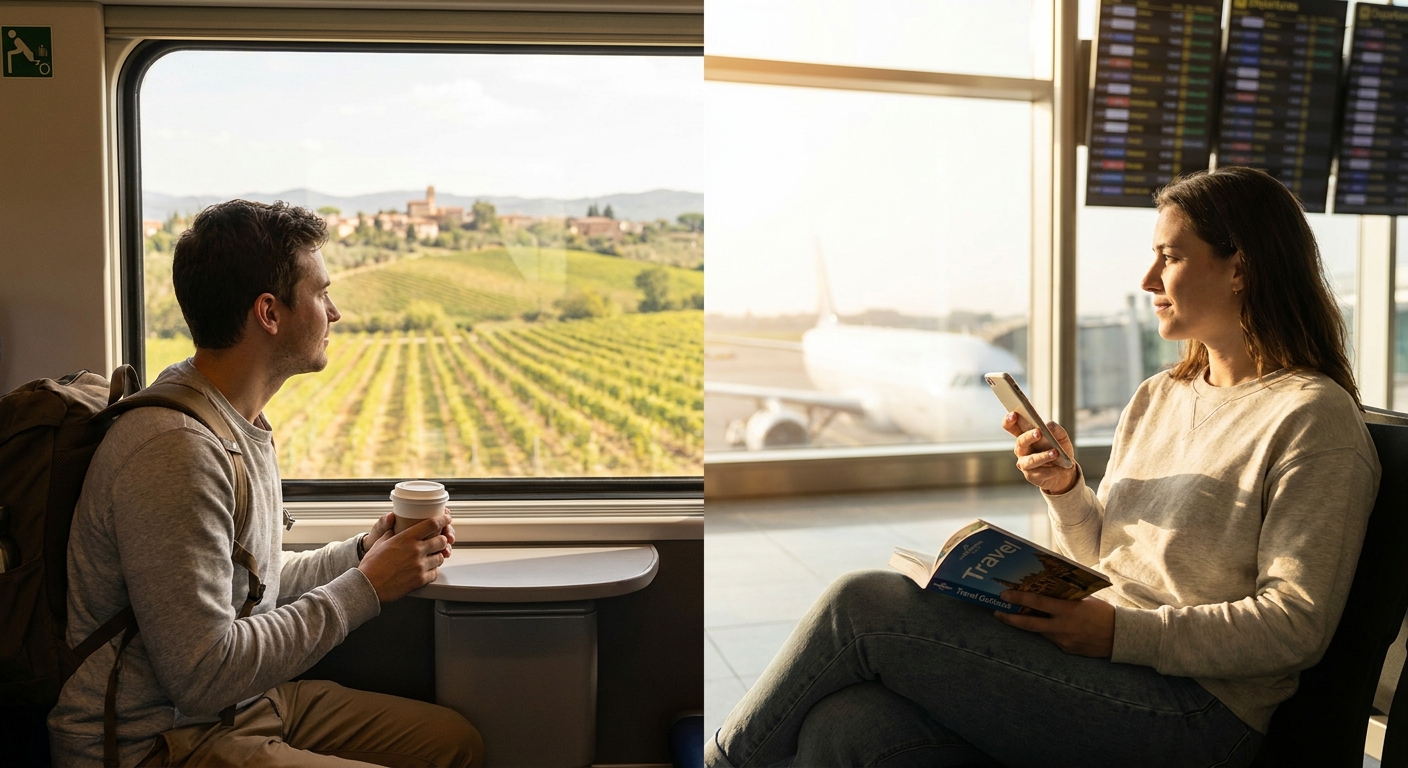
Which Is Better: Train Travel or Air Travel in Europe?
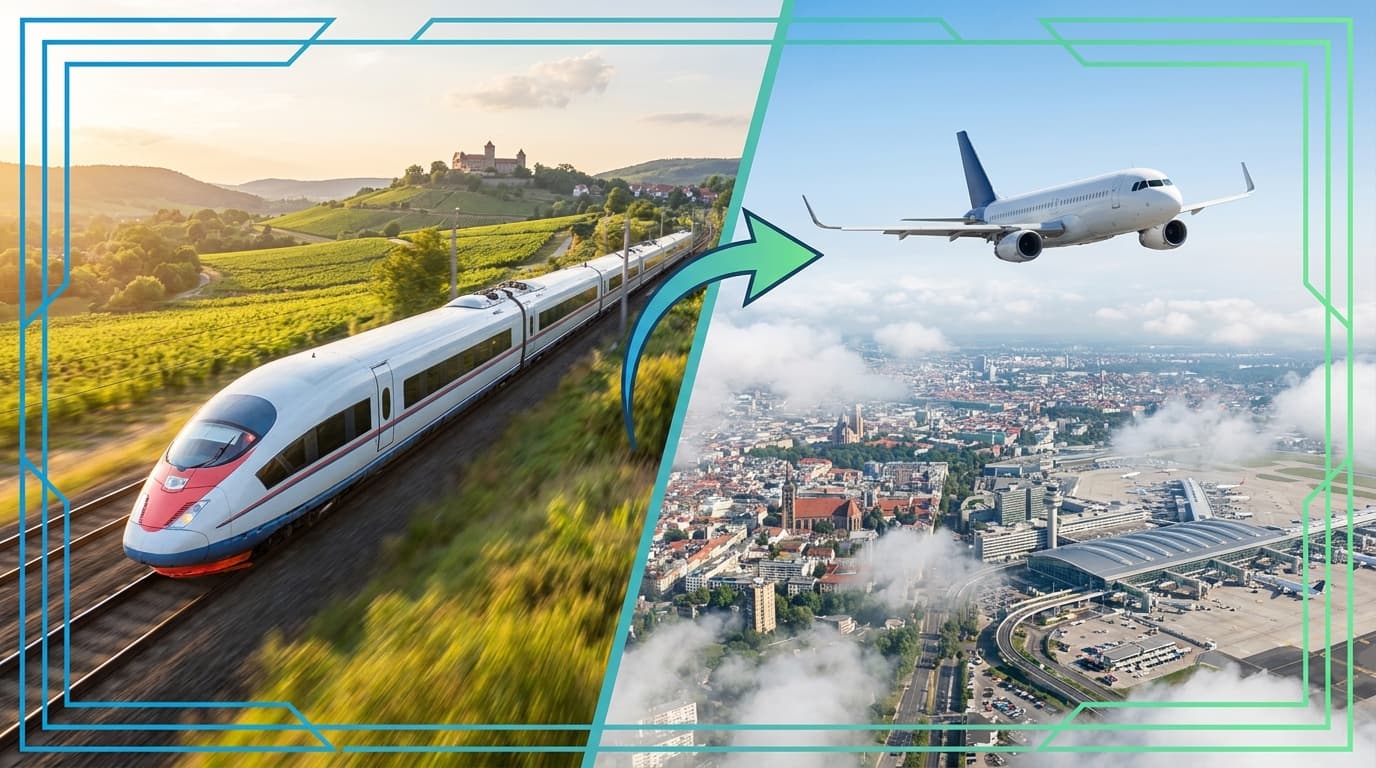
The definitive answer is: for most intra-European journeys, train travel is better. This conclusion is based on a holistic view of travel that extends beyond the simple duration of the flight or train ride. When you factor in the total door-to-door journey time, overall cost, comfort levels, and environmental impact, the train emerges as the more efficient, enjoyable, and responsible choice for a significant number of routes.
Consider a classic European trip from Amsterdam to Paris. A flight is advertised as being just over an hour long. However, the reality of the journey is far different. You must first travel from Amsterdam's city center to Schiphol Airport (a 20-minute train ride, plus buffer time). You're advised to arrive at the airport at least two hours before your flight for check-in, bag drop, and security. After the one-hour flight, you land at Charles de Gaulle Airport, which is a 45-60 minute train or bus ride into central Paris. In total, the 'one-hour flight' easily consumes four to five hours of your day. In contrast, the high-speed Thalys train takes approximately 3 hours and 20 minutes, traveling directly from Amsterdam Centraal to Paris Gare du Nord. You can arrive at the station just 30 minutes before departure, sit in a comfortable seat, and step off the train directly in the heart of your destination city.
This principle holds true for countless popular routes: Brussels to London, Madrid to Barcelona, Vienna to Budapest, Rome to Florence. In all these cases, the train is not only comparable in time but often significantly faster door-to-door. Air travel only begins to make logical sense when the distances become vast. A journey from Lisbon to Berlin, for instance, is impractical by train for most tourists on a limited schedule. Here, a three-hour flight, even with the associated four hours of airport logistics, is far superior to a 30+ hour train journey. Therefore, the 'better' choice is entirely dependent on the specific geography of your itinerary, but for the classic multi-city European tour, the railway network is your greatest asset.
What Are the Key Differences?
The fundamental difference between train and air travel in Europe lies in their approach to the journey itself. Train travel integrates the journey into the travel experience, while air travel treats it as a logistical hurdle to be overcome. This core distinction manifests in several key areas: station vs. airport location, the process of boarding, onboard comfort, and the connection to the landscape.
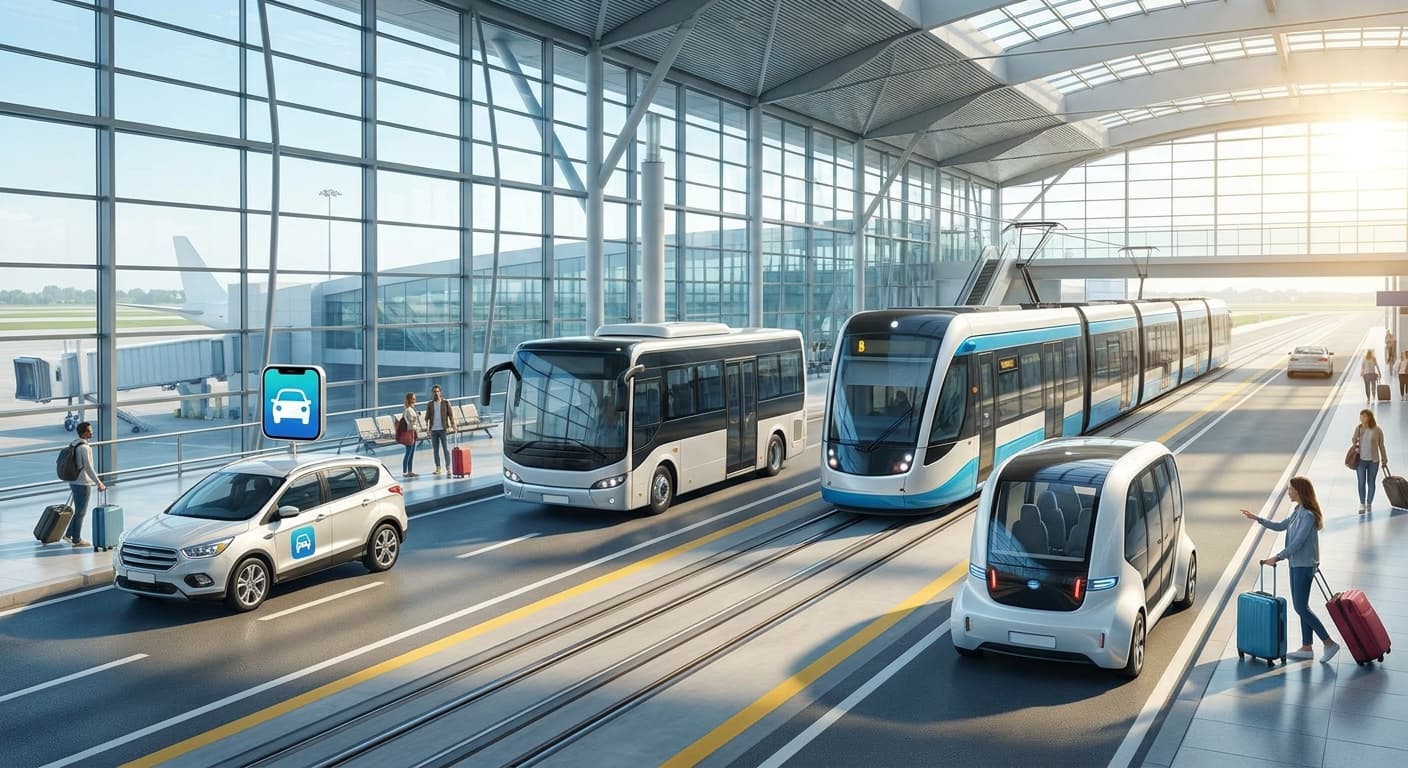
First, the location of terminals is a primary differentiator. Europe's grand train stations were built in the 19th and early 20th centuries and are almost invariably located in the historic and geographic center of the city. This means you can walk out of your hotel, take a short taxi or metro ride, and be at your platform. Airports, requiring vast amounts of space, were built much later and are typically located tens of kilometers outside the city center. This necessitates a separate, often costly and time-consuming, journey just to begin your travel day.
Second, the pre-departure process is vastly different. For a typical intra-Schengen train journey, you simply need to find your platform and board the train, often with no formal check-in or security check for your luggage. At most, for international services like the Eurostar, there is a streamlined security and passport check that requires you to be there 30-45 minutes beforehand. Air travel, by contrast, involves a rigid and often stressful process: airline check-in desks, strict baggage weigh-ins, extensive security screenings where liquids and electronics must be removed, and long waits at the gate. This process adds hours of unproductive time to your journey.
Finally, the onboard experience itself is worlds apart. A train offers space. You have significant legroom, wider seats, and the freedom to get up and walk to a dining car or simply stretch your legs. Large panoramic windows offer a constantly changing view of the continent's diverse landscapes. An airplane, particularly on the budget carriers that dominate European routes, is designed for maximum capacity. This means minimal legroom, narrow seats, and a view of clouds for most of the journey. The train is a moving room with a view; the plane is a pressurized cabin. These differences fundamentally shape your travel day, making one a relaxing experience and the other a test of patience.
Speed Comparison: Door-to-Door, Not Just Flight Time
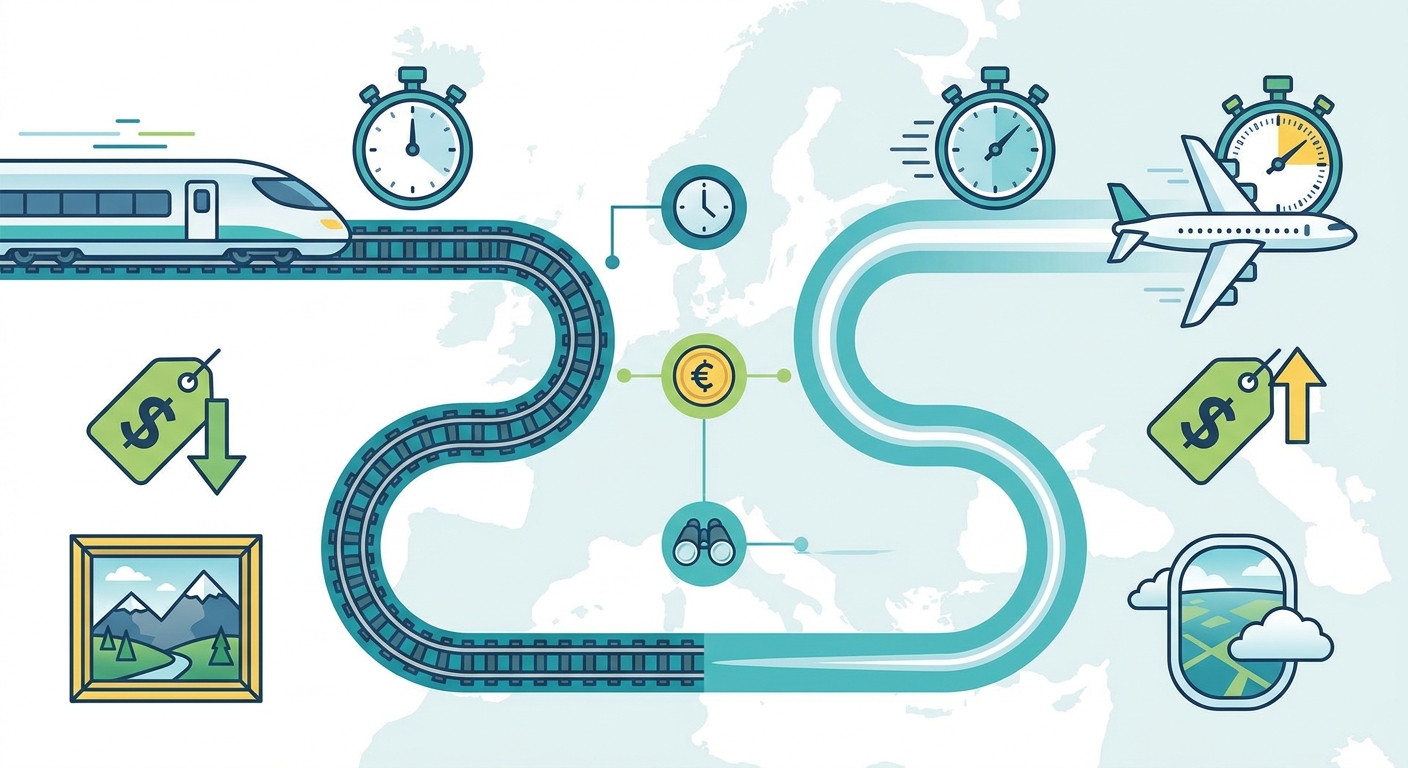
When comparing speed, the train is significantly faster than the plane for most European journeys under five hours of rail time. This is because the most accurate measure of travel speed is the total 'door-to-door' time, not the advertised 'flight time'. The latter is a misleading metric that ignores the substantial time sinks inherent in air travel.
Let's conduct a detailed, real-world breakdown of a journey from a hotel in central London to a hotel in central Paris. This is one of the world's most competitive train-vs-plane routes.
Scenario 1: Air Travel
- Hotel to Airport (1h 15m): Travel from a central London hotel (e.g., Covent Garden) to Heathrow Airport via the Piccadilly Line or Heathrow Express. Factor in walking and wait times.
- Airport Pre-Flight (2h 00m): Arrive at the airport the recommended 2 hours before the flight for bag drop, security screening, and walking to the gate.
- Flight Time (1h 15m): The actual time spent in the air from London to Paris.
- Post-Flight Airport (0h 45m): Deplaning, walking through the terminal, passport control, and waiting for checked luggage at CDG.
- Airport to Hotel (1h 00m): Take the RER B train from Charles de Gaulle airport to central Paris (e.g., Châtelet-Les Halles) and then a short walk or metro to the hotel.
Scenario 2: Train Travel
- Hotel to Station (0h 20m): Travel from the Covent Garden hotel to St. Pancras International station via the Piccadilly Line.
- Station Pre-Departure (0h 45m): Arrive at the station 45 minutes before departure for the quick security and passport check for the Eurostar.
- Train Time (2h 20m): The actual time spent on the train from London to Paris.
- Post-Arrival Station (0h 15m): Disembark the train at Gare du Nord and walk out of the station. No baggage claim or passport control on arrival.
- Station to Hotel (0h 20m): Take a short metro or taxi ride from Gare du Nord to the hotel.
In this direct comparison, the train saves over two hours of valuable travel time. This time-saving advantage for trains holds for a vast network of city pairs across Europe. The breakeven point where flying starts to become genuinely faster is typically around the 700-800 km mark. For any journey shorter than that, the time spent in airport procedures negates any speed advantage gained in the air. Travelers must look beyond the advertised flight duration and calculate their personal door-to-door time to make an informed decision.
Cost Comparison: Base Fare vs. Total Trip Price
While budget airlines often advertise incredibly low base fares, train travel is frequently more cost-effective once all ancillary fees associated with flying are accounted for. The pricing models are fundamentally different: train tickets tend to be more inclusive, while airline pricing is based on an 'a la carte' model where the initial price covers little more than your seat.
Let's dissect the total cost of a journey from Rome to Venice, comparing a budget airline with Italy's high-speed train service, Trenitalia.
Scenario 1: Air Travel (Budget Airline)
- Base Fare: Advertised at a tempting €30.
- Airport Transfer in Rome: Taxi or Leonardo Express train to Fiumicino Airport (FCO) - €14-€50.
- Carry-on Bag Fee: Many budget airlines now charge for a full-sized carry-on bag - €25.
- Checked Bag Fee: A standard 20kg checked bag - €40.
- Seat Selection: To choose a seat, even a standard one - €15.
- Airport Transfer in Venice: Bus from Marco Polo Airport (VCE) to Piazzale Roma - €10.
Scenario 2: Train Travel (Trenitalia)
- Base Fare: A standard class Frecciarossa ticket booked in advance can be found for €50-€80.
- Baggage Cost: Included. You can bring two large suitcases and a personal item at no extra charge.
- Seat Selection: Included with your ticket.
- Transportation Cost: Zero. The journey is from Roma Termini in central Rome to Venezia Santa Lucia, which is directly on the Grand Canal in Venice. You walk out of the station and are in the heart of the city.
This example illustrates a common pattern across Europe. The headline price of a flight is rarely the price you pay. When you factor in the mandatory costs of getting to and from remote airports and the near-unavoidable fees for luggage, the train often becomes the cheaper option, especially for travelers who don't pack exceptionally light. Furthermore, train ticket prices are generally more stable when booked a few weeks in advance, whereas airline prices can fluctuate wildly. To get a true cost comparison, travelers must calculate the total expenditure, not just the ticket price.
Find the Best Train Fares for Your Trip Search for Competitive Flight PricesComfort & Onboard Experience Comparison
In the realm of comfort and the quality of the journey experience, train travel offers a demonstrably superior product compared to economy class air travel. The design philosophy of a modern train prioritizes passenger comfort and utility, whereas the design of a modern short-haul aircraft prioritizes maximizing passenger density. This results in two vastly different experiences.
The most immediate difference is personal space. A standard class train seat in Europe is significantly wider and offers much more legroom than a typical airline seat on a low-cost carrier. For example, a Eurostar seat has a pitch of 84.5 cm, while a Ryanair seat has a pitch of just 76 cm. This difference is immediately noticeable and contributes significantly to comfort on journeys of any length. Moreover, train seats often recline more generously and are aligned with large panoramic windows, allowing you to fully appreciate the passing scenery. In contrast, many budget airlines have non-reclining seats to save on maintenance and space, and your view is often obstructed by the wing or a misaligned window.
Beyond the seat itself, the freedom of movement on a train is a major advantage. You are not confined to your seat by a seatbelt sign. You can easily get up, walk to the onboard cafe or restaurant car for a proper coffee or a meal, or simply stand in the vestibule to stretch your legs. This ability to move around breaks the monotony of travel and makes the journey feel less restrictive. On a plane, movement is limited to short, often turbulent, walks to a cramped lavatory. For families with children or anyone who finds it difficult to sit still, the train is a far more humane environment.
Productivity and amenities also lean in the train's favor. Most European long-distance trains offer free, reliable Wi-Fi and at-seat power outlets, making it easy to work, watch movies, or stay connected. While some airlines are catching up, in-flight Wi-Fi is often slow, expensive, and not available gate-to-gate. The combination of a stable surface (a table), power, and connectivity makes a train carriage a functional mobile office. The constant announcements, turbulence, and cramped conditions of a plane make sustained work or relaxation much more challenging. The train journey is a calm, stable, and productive environment, while the plane journey is often a noisy and disruptive interlude.
Scenic Value & Journey Experience
When it comes to the scenic value and the overall quality of the journey as an experience, train travel is unequivocally the winner. The train journey is not just about getting from A to B; it's about seeing the country in between. It offers a ground-level perspective that connects you to the geography and culture of the places you visit in a way that flying, by its very nature, cannot.
Flying gives you a magnificent view of clouds, with brief, high-altitude glimpses of the landscape during ascent and descent. The train, however, immerses you in that landscape for the entire duration of the trip. Imagine a journey from Zurich to Milan. By train, this route takes you through the heart of the Swiss Alps. You'll wind through green valleys, pass by pristine lakes like Lake Lugano, and plunge through the world's longest land tunnel, the Gotthard Base Tunnel, emerging into the Italian-speaking Ticino region with its palm trees and distinct architecture. You witness the dramatic change in scenery, culture, and climate in real-time. The same journey by plane would involve seeing the tops of the Alps for a few minutes from 35,000 feet, completely detached from the scale and beauty of the mountains.
This principle applies across the continent. The train from Cologne to Mainz in Germany follows the curves of the Rhine River, passing medieval castles perched on hillsides and terraced vineyards. The journey through the Scottish Highlands from Glasgow to Mallaig offers breathtaking views of lochs and rugged moors. A trip along the French Riviera from Marseille to Nice provides stunning coastal vistas of the Mediterranean Sea. These are not just transit routes; they are world-class scenic experiences that become a highlight of the trip itself. Air travel offers none of this immersive, ground-level engagement.
Furthermore, the train experience is more 'human'. You interact with the landscape, see small towns and villages flash by, and get a sense of the distances you are covering. The slower, more deliberate pace allows you to decompress and reflect. The airport experience is, by contrast, a sterile and generic process. The architecture, shops, and procedures of Heathrow are largely indistinguishable from those of Madrid-Barajas or Rome-Fiumicino. It is a non-place, designed for efficient processing rather than human experience. The train, with its connection to the city and the countryside, offers a richer, more authentic, and ultimately more memorable way to travel.
| Aspect | Train Travel | Air Travel |
|---|---|---|
| Traveler Type | Recommended Choice | Recommended Choice |
| Solo Backpacker on a Budget | Excellent for flexibility with rail passes, but single tickets can be pricey. Great for meeting people. | Good for covering long distances cheaply, but luggage fees are a major drawback. |
| Family with Young Children | Highly Recommended. More space, no luggage limits for toys and supplies, kids can move around. | Challenging. Airport security is stressful, kids are confined to seats, pressure changes hurt ears. |
| Business Traveler | Highly Recommended. City-center access, productive work environment with Wi-Fi and tables. | Necessary for long-distance/international meetings, but less productive door-to-door. |
| Couple on a Romantic Getaway | Highly Recommended. Scenic, relaxing, and comfortable. First-class upgrades offer a luxurious experience. | Less romantic. The stress of the airport can detract from the holiday mood. |
| Photographer or Scenery Lover | The Only Choice. Offers unparalleled opportunities to see and photograph the landscape. | Not suitable. Limited views from a small window. |
Baggage Allowance & Luggage Policies
For any traveler with more than a small backpack, the generous and straightforward baggage policies of trains are a massive advantage over the restrictive and costly policies of airlines. This is one of the most significant practical differences that can impact both your budget and your stress levels. European airlines, especially low-cost carriers, have turned baggage into a major revenue stream, with complex rules and punitive fees.
On virtually every national and international train service in Europe, a standard ticket includes a generous luggage allowance at no extra cost. The typical policy allows for two large suitcases (often with a weight limit of 25-30kg each, though it's rarely checked) plus a smaller piece of hand luggage or a personal item. There are no meticulous weigh-ins or size checks at the platform. You simply bring your bags onto the train and store them in the dedicated racks at the end of the carriage or in the overhead space above your seat. This freedom is liberating. You can pack what you need without worrying about incurring hefty fees, whether it's hiking gear for the Alps, wine purchased in France, or outfits for various climates.
In stark contrast, air travel is a minefield of baggage restrictions. A basic ticket on airlines like Ryanair or EasyJet often includes only one small personal item that must fit under the seat in front of you. A larger, cabin-approved roller bag requires paying for a 'priority boarding' package. A checked bag will incur a separate fee, which increases with weight and is significantly more expensive if you add it at the airport rather than booking it online in advance. For a couple traveling with one checked bag each, this can easily add €100-€150 to the round-trip cost of the 'cheap' flight. These policies create stress, forcing travelers to meticulously weigh their bags and worry about whether their carry-on will fit in the sizing cage at the gate.
This difference is particularly crucial for certain types of travelers. Families with children, who need to pack strollers, car seats, and extra supplies, find the simplicity of train travel invaluable. Long-term travelers, students studying abroad, or anyone moving with their belongings will find flying prohibitively expensive. Even regular tourists who want to shop for souvenirs or bring back local delicacies will appreciate the flexibility the train offers. The ability to travel with your luggage without anxiety or extra cost is a powerful, practical argument in favor of the train.
Environmental Impact: A Sustainable Choice?
For the environmentally conscious traveler, the choice is clear: train travel is vastly more sustainable and has a significantly lower carbon footprint than air travel. In an era of increasing climate awareness, the environmental impact of our travel choices is a critical consideration, and the difference between rail and aviation is stark.
Flying is one of the most carbon-intensive activities an individual can undertake. Airplanes emit CO2, nitrogen oxides, and water vapor directly into the upper atmosphere, where their warming effects are amplified. According to the European Environment Agency, direct emissions from aviation account for about 3% of the EU's total greenhouse gas emissions, but when the non-CO2 effects are included, the total impact is much higher. On a per-kilometer basis, flying is by far the most damaging mode of transport.
Rail travel, on the other hand, is one of the most energy-efficient forms of transport. A significant portion of Europe's rail network is electrified, and many countries are increasingly powering their trains with renewable energy sources like wind, solar, and hydropower. The Eurostar, for example, claims that a journey from London to Paris by train emits up to 90% less carbon than the equivalent flight. Data consistently shows that on a passenger-kilometer basis, the train's emissions are a small fraction of the plane's. By choosing the train, a traveler can dramatically reduce the environmental cost of their trip.
Let's consider a real-world example: a trip from Madrid to Barcelona, a distance of about 620 km. Traveling by plane would generate approximately 115 kg of CO2 per passenger. The same journey on Spain's high-speed AVE train network generates only about 17 kg of CO2 per passenger. For a single traveler, that's a saving of nearly 100 kg of CO2. When scaled across the millions of tourists who travel in Europe each year, the cumulative impact of choosing rail over air is enormous. Many European governments are now actively promoting this shift, with some countries like France even banning short-haul domestic flights on routes where a viable train alternative of less than 2.5 hours exists. This policy reflects a growing recognition that for the future of sustainable tourism, the train is the way forward.
Final Verdict: Making the Right Choice for Your European Adventure
After a comprehensive analysis of speed, cost, comfort, convenience, and environmental impact, Train Travel emerges as the superior choice for the quintessential European travel experience. It transforms the act of transit from a stressful necessity into an enjoyable and integral part of the adventure. For journeys between major cities under 800km, the train is not only more pleasant but often faster and cheaper when all factors are considered.
The core strength of the train lies in its seamless integration with the urban fabric of Europe. Departing from and arriving in central, historic stations saves immense time and money that would otherwise be spent on airport transfers. The civilized boarding process, free from the long queues and invasive security of airports, sets a relaxed tone for the entire journey. Onboard, the generous space, comfortable seating, large windows, and freedom of movement create an environment where you can relax, work, or simply watch the continent's beautiful landscapes unfold. Paired with generous baggage allowances and a minimal carbon footprint, the train presents a compelling, modern, and responsible way to travel.
However, Air Travel retains its essential role for specific itineraries. It is the only practical option for spanning vast distances, connecting the mainland to islands, or linking cities in opposite corners of the continent. If your trip involves traveling from southern Spain to northern Scandinavia, or from Ireland to Greece, flying is indispensable. While it compromises on comfort and convenience, and comes with a heavier environmental toll, its raw speed over long distances is unmatched. The savvy traveler will utilize budget airlines strategically for these long-haul hops within their European itinerary.
Choose Train Travel if:
- Your itinerary consists of city pairs less than 5-6 hours apart by rail.
- You value a comfortable, relaxing, and scenic journey.
- You are traveling with family, significant luggage, or are concerned about your carbon footprint.
- You want to maximize your time in cities by avoiding airport transit and queues.
Choose Air Travel if:
- You need to cover very long distances across the continent (over 1000 km).
- Your route involves crossing major seas or connecting two points not well-served by rail.
- You are an extremely light packer and find a flight deal that remains cheaper after accounting for transfers.
Ultimately, the best European itineraries often involve a smart combination of both. Use the magnificent rail network for the core of your journey, hopping between major cultural hubs, and reserve flights for the one or two long-distance leaps that stitch your grand tour together.
Frequently Asked Questions
Often, the train is cheaper once all costs are considered. While budget airlines advertise very low fares, they charge extra for everything from luggage to seat selection. These fees, combined with the cost of traveling to and from remote airports, can make the total price of flying higher than a more inclusive train ticket, which covers luggage and delivers you to the city center.
Yes, for many journeys it is. While a plane is faster in the air, the total 'door-to-door' travel time is often shorter by train. This is because train travel avoids the 2-3 hours required for airport check-in, security, and boarding, plus the time spent traveling to and from airports located far outside city centers. For routes like Paris-Brussels or Madrid-Barcelona, the train is the faster overall option.
Most European train services have a very generous baggage allowance included in the ticket price. Typically, you can bring two large suitcases and one piece of hand luggage per person. There are rarely strict weight or size checks, providing much more flexibility and less stress than flying, where luggage fees are common and expensive.
Yes, overnight trains can be an excellent way to save both time and money. They combine your transportation and accommodation costs into one ticket. You can fall asleep in one city and wake up in another, saving a full day of travel time and the cost of a hotel room for one night. Services like the ÖBB Nightjet are reviving this comfortable and efficient way to travel long distances.
While it's subjective, some of the most famously scenic train rides include the Bernina Express in Switzerland, which crosses the Alps; the Rhine Valley Line in Germany, which passes dozens of castles; and the West Highland Line in Scotland, known for its rugged and dramatic landscapes. The beauty of European train travel is that even standard inter-city routes often pass through stunning countryside, offering a window into the continent's diverse scenery.
It is highly recommended to book train tickets in advance, especially for high-speed and long-distance routes. Booking several weeks or even a few months ahead can save you a significant amount of money, as prices operate on a tiered system and increase as the travel date approaches. For regional or local trains, you can often buy tickets on the day of travel with no price difference.
A rail pass can be worth it if you plan on traveling frequently over a set period and value flexibility. It is best for travelers who want to be spontaneous and take multiple long-distance journeys. However, if you have a fixed itinerary with only a few train trips, it is often cheaper to book point-to-point tickets in advance. You should calculate the cost of individual tickets for your planned route to see if a pass offers better value.