Airbnb vs. Hotel: Which is the Best Accommodation Option for You in 2026?
Airbnb
Airbnb offers unparalleled space and value for groups and families, providing a unique, home-like experience with amenities like full kitchens. It's the best choice for travelers seeking authenticity and self-sufficiency on longer stays.
Overall Score
Top Picks
Airbnb
Unbeatable for space, value for groups, and providing an authentic local experience. Access to a full kitchen and residential amenities offers cost savings and comfort for longer stays.
Hotel
The gold standard for consistency, reliability, and service. For travelers wanting a predictable, hassle-free stay with robust on-site support, a hotel is the safer, more convenient bet.
Comparison
Experience & Ambiance
Consistency & Reliability
Value for Money
Booking & Check-in Process
Safety & Security
Amenities & Services
The travel landscape has fundamentally changed over the last decade, and the biggest disruptor has been the choice of where you stay. The classic debate - Airbnb vs. Hotel - is more relevant than ever. One offers the promise of a unique, local experience with the comforts of home, while the other provides standardization, service, and reliability. But which one is truly the best fit for your next trip? It's not a simple question with a one-size-fits-all answer. The right choice depends entirely on your travel style, budget, group size, and what you value most in your accommodation.
This comprehensive, data-driven guide will dissect every facet of the Airbnb vs. Hotel dilemma. We'll move beyond the surface-level talking points to give you a granular breakdown of cost, space, amenities, safety, and the overall travel experience. We'll explore real-world scenarios, from a solo business traveler needing efficiency to a large family wanting space to spread out. By the end of this analysis, you won't just have an opinion; you'll have a clear, confident decision tailored specifically to you.
| Feature | Airbnb | Hotel |
|---|---|---|
| Overall Rating | 8.8 / 10 | 8.5 / 10 |
| Average Price | Varies widely, often cheaper for groups/long stays | More predictable, can be cheaper for solo/couples on short trips |
| Space | Typically more space, separate rooms, outdoor areas | Usually confined to a single room and bathroom |
| Amenities | Full kitchen, washer/dryer, private pools, unique features | Gym, pool, daily housekeeping, room service, concierge |
| Privacy | High (entire home) to moderate (private room) | Moderate (private room, but shared common areas) |
| Service Level | Minimal to none (self-check-in, host contact only if needed) | High (24/7 front desk, daily service, on-site staff) |
| Consistency | Variable; quality depends heavily on the individual host | High; brand standards ensure a predictable experience |
| Best For | Families, large groups, long-term stays, travelers seeking a local experience | Solo travelers, business travelers, couples on short breaks, those wanting full service |
| Pros | More space, cost-effective for groups, kitchen access, unique properties | Predictable quality, on-site amenities, daily service, enhanced security |
| Cons | Inconsistent quality, potential for hidden fees, lack of on-site support | Less space, can be expensive for families, limited privacy in common areas |
| Call to Action | Find Your Perfect Airbnb | Book a Top-Rated Hotel |
Quick Verdict: Which Should You Choose?
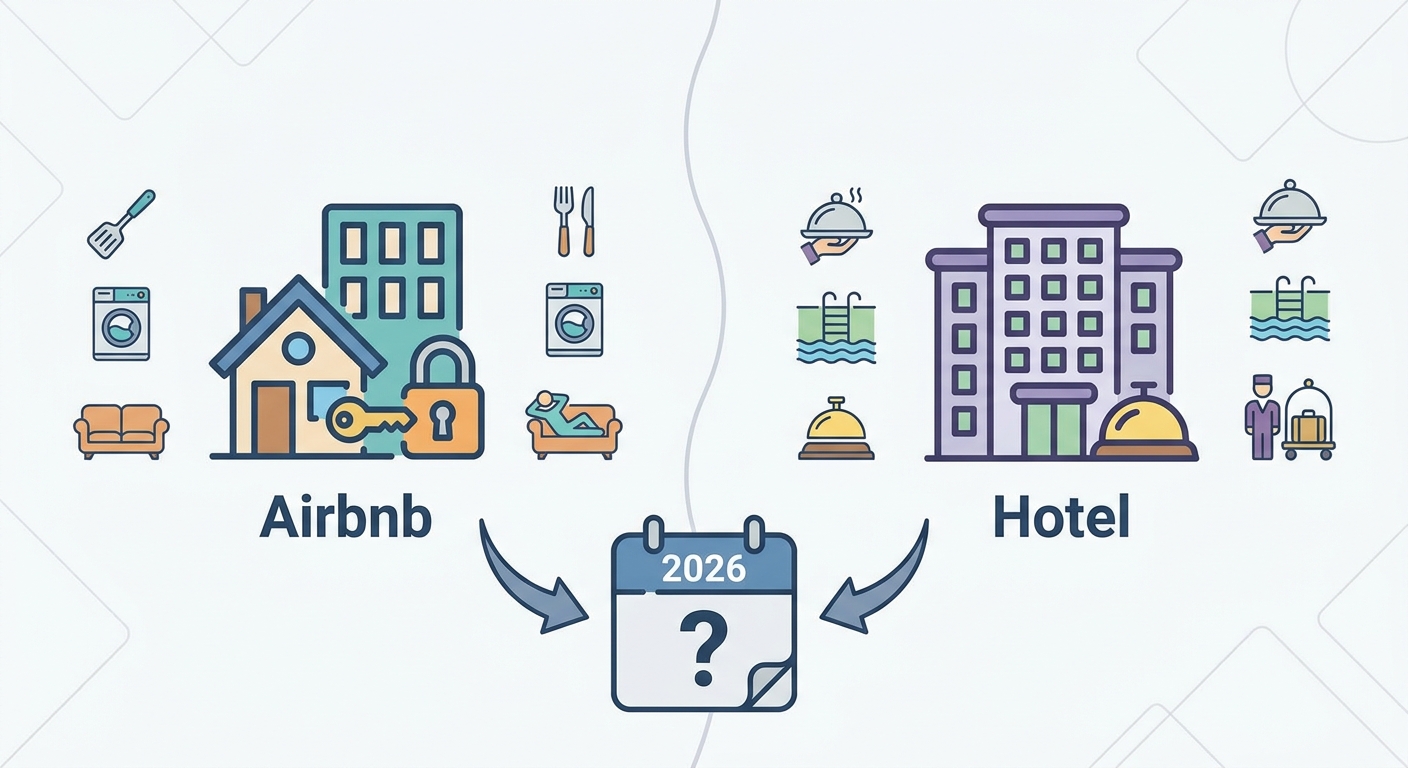
For travelers who need a direct answer, here's the breakdown. The choice between an Airbnb and a hotel hinges on your priorities: space and local immersion versus service and predictability.
Choose an Airbnb if: You're traveling with a family or a group, planning a stay longer than a few days, or you're a budget-conscious traveler who wants to save money by cooking your own meals. If you value having a unique, residential experience, with amenities like a full kitchen, a private backyard, or multiple bedrooms under one roof, Airbnb is the undeniable winner. It offers unparalleled space and value for groups, transforming a trip into a home-away-from-home experience.
Choose a Hotel if: You're a solo or business traveler, a couple on a short weekend getaway, or anyone who prioritizes convenience and service above all else. If the thought of daily housekeeping, a 24/7 front desk for assistance, on-site amenities like a gym and restaurant, and a guaranteed standard of quality brings you peace of mind, a hotel is the superior choice. Hotels eliminate the variables and potential chores of a rental, allowing you to focus purely on your trip with a full support system at your disposal.
In short, Airbnb excels at providing a home, while a hotel excels at providing a service. Your decision should be guided by which of those two things you need more on your upcoming journey.
Airbnb: Overall Rating 8.8/10
- Experience & Ambiance: 9.5/10
- Consistency & Reliability: 7.5/10
- Overall Value: 9.0/10
- Booking & Check-in Process: 8.5/10
- Safety & Security: 8.5/10
- Amenities & Services: 9.0/10
Where Airbnb Wins: Airbnb is unbeatable for providing space, value for groups, and a truly authentic, local experience. Access to a full kitchen and residential amenities offers both cost savings and a higher degree of comfort for longer stays.
Hotel: Overall Rating 8.5/10
- Experience & Ambiance: 8.0/10
- Consistency & Reliability: 9.5/10
- Overall Value: 8.0/10
- Booking & Check-in Process: 9.0/10
- Safety & Security: 9.0/10
- Amenities & Services: 8.5/10
Where Hotels Win: Hotels provide a gold standard of consistency, reliability, and on-demand service. For travelers who want a predictable, hassle-free stay with robust on-site support and amenities like daily cleaning and a fitness center, a hotel is the safer, more convenient bet.
Which is Better: Airbnb or Hotel?
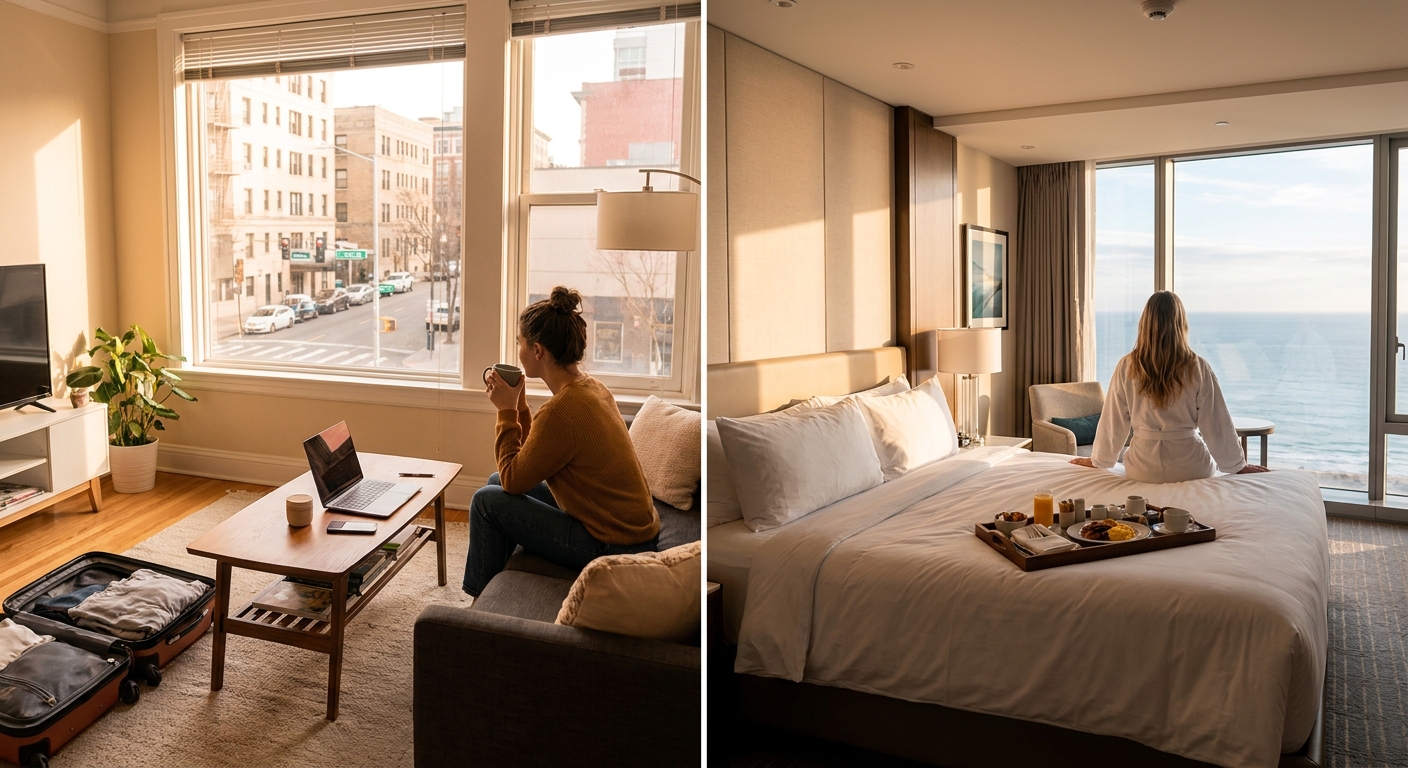
The direct answer is: An Airbnb is generally better for groups, families, and long-term stays due to its superior space and value, while a hotel is better for solo travelers, business trips, and short stays due to its convenience, service, and reliability. The 'better' option is not universal; it's situational, defined by the specific needs of your trip. To make the right choice, you must weigh the trade-offs between the flexibility of a residential stay and the structured comfort of a commercial establishment.
The fundamental appeal of an Airbnb lies in its ability to offer a 'home'. This isn't just about having a place to sleep; it's about having a living room to relax in, a kitchen to prepare a simple breakfast, and separate bedrooms for privacy. Consider a family of four on a week-long vacation. In a hotel, they would likely need two adjoining rooms, leading to a disjointed experience and a higher cost. In an Airbnb, they could rent a two-bedroom apartment or a small house for a comparable or even lower price, gaining a common area, a kitchen, and often outdoor space. This completely changes the dynamic of the trip, allowing for more relaxed, communal moments that are impossible in a standard hotel setup.
On the other hand, the primary strength of a hotel is its predictability and service infrastructure. When you book a room at a major hotel chain, you know almost exactly what you're going to get, regardless of whether you're in New York or Tokyo. The room will be clean, the bed will be made daily, and there will be someone at the front desk 24/7 to handle any issues, from a lost key card to a request for extra towels. This reliability is invaluable for business travelers on a tight schedule or for vacationers who want to completely check out from domestic chores. The hotel experience is designed to be frictionless, removing all the small logistical hurdles of daily life.
Ultimately, the decision requires a self-assessment of your travel priorities. Are you willing to trade daily housekeeping for a washing machine? Would you prefer a concierge who can book tours or a host who can give you a list of their favorite neighborhood coffee shops? Is the guaranteed safety of a hotel lobby with security more important than the privacy of your own front door? Airbnb offers a deeper immersion into a location, while a hotel offers a more insulated and serviced experience. Neither is inherently superior, but one will almost certainly be a better fit for the trip you're planning.
What Are the Key Differences?
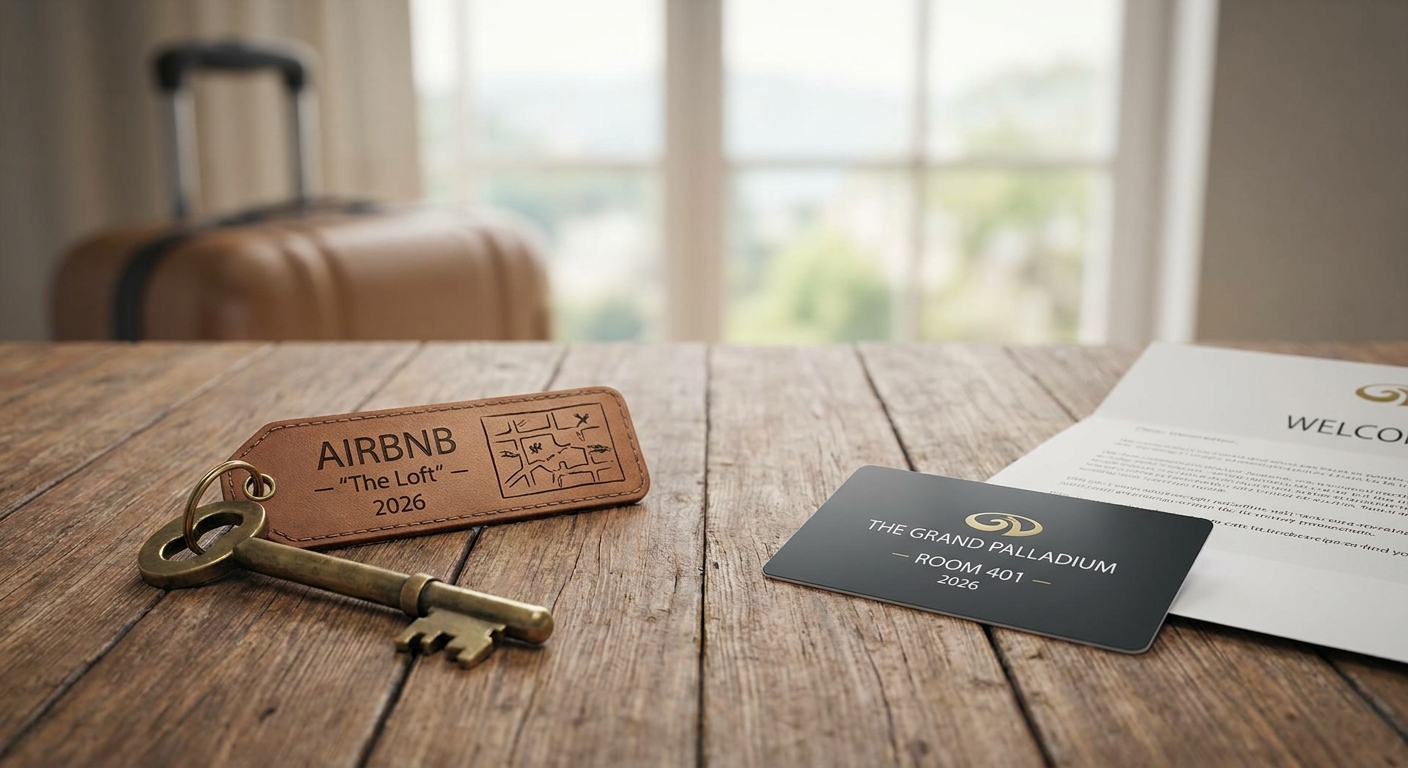
The key difference between an Airbnb and a hotel is that an Airbnb is a residential property rental, offering a 'live like a local' experience with varied quality, while a hotel is a commercial operation providing a standardized, service-oriented lodging product. This core distinction influences everything from the booking process and check-in to the amenities and overall feel of your stay. Understanding these foundational differences is crucial to managing your expectations and avoiding disappointment.
First, consider the nature of the property itself. An Airbnb can be anything from a spare room in someone's apartment to a sprawling 10-bedroom villa. This variety is both a strength and a weakness. It allows you to find unique, character-filled accommodations that a hotel could never replicate - a houseboat in Amsterdam, a treehouse in Costa Rica, or a historic brownstone in Brooklyn. However, it also means there's no enforced brand standard. The quality of the mattress, the water pressure in the shower, and the speed of the Wi-Fi are all at the discretion of the individual host. A hotel, by contrast, operates under a strict set of brand guidelines. A Marriott in one city will feel remarkably similar to a Marriott in another, offering a consistent and predictable level of comfort and quality. This standardization is the hotel's biggest selling point.
Second, the service model is fundamentally different. In a hotel, you are a guest being catered to by a professional staff. There's a front desk, a concierge, housekeeping, and often room service and a restaurant. Your needs are anticipated and met by a team of hospitality professionals. In an Airbnb, you are typically a tenant. Service is limited to your interactions with the host, which can range from very involved to completely hands-off. Check-in might be a lockbox with a code, and your only communication might be via text message. While many hosts are incredibly helpful, there's no one on-site to immediately fix a broken appliance or address a noise complaint from a neighbor.
Finally, the overall experience and atmosphere diverge significantly. An Airbnb places you directly within a residential neighborhood. You'll shop at the local grocery store, grab coffee at the corner cafe, and get a genuine feel for the daily life of the city. This immersion is a powerful draw for many travelers. A hotel, even a boutique one, is inherently a more transient, tourist-oriented environment. It's located for convenience, often in central tourist or business districts, and its common areas are filled with other travelers. This can be great for networking or feeling part of a bustling hub, but it provides a less authentic glimpse into the local culture. The choice comes down to whether you want to visit a place or temporarily live in it.
Experience & Ambiance Comparison
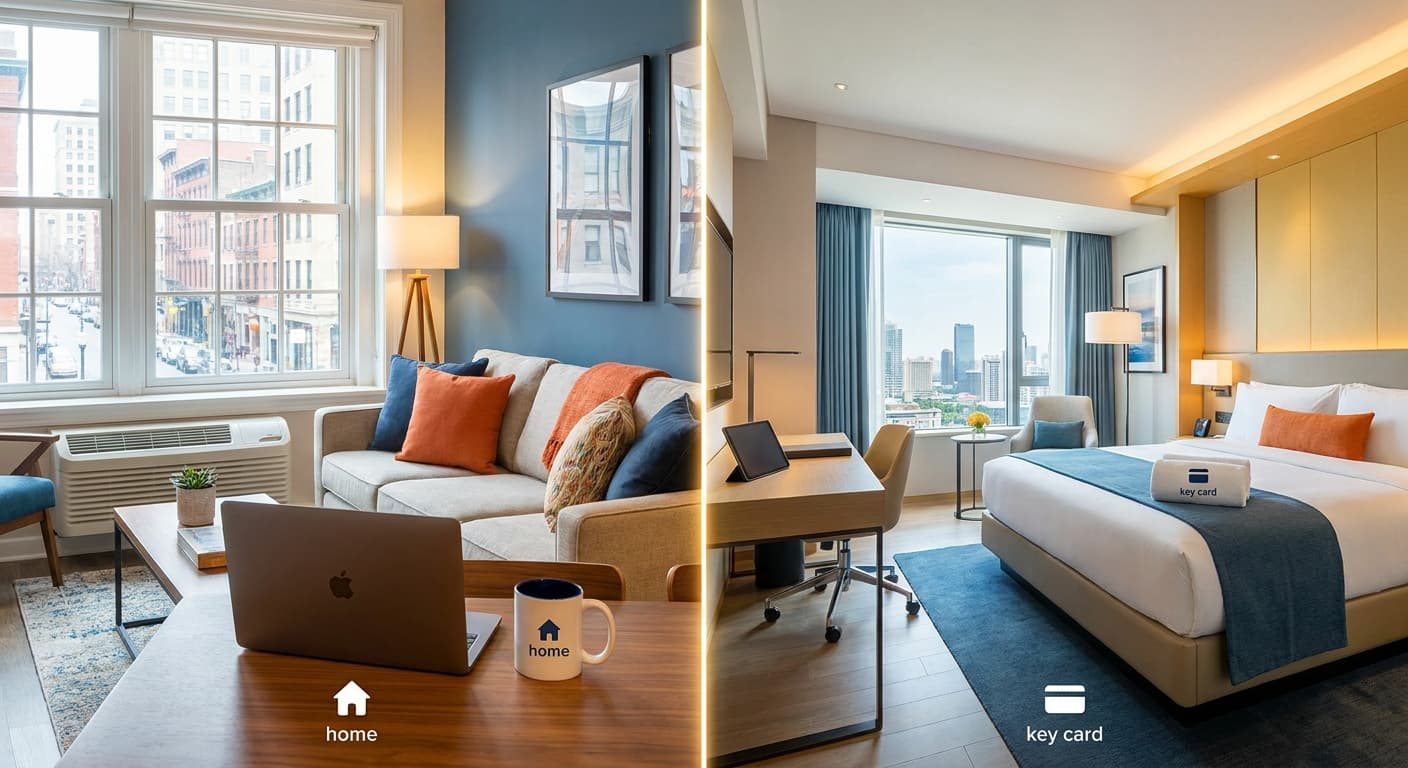
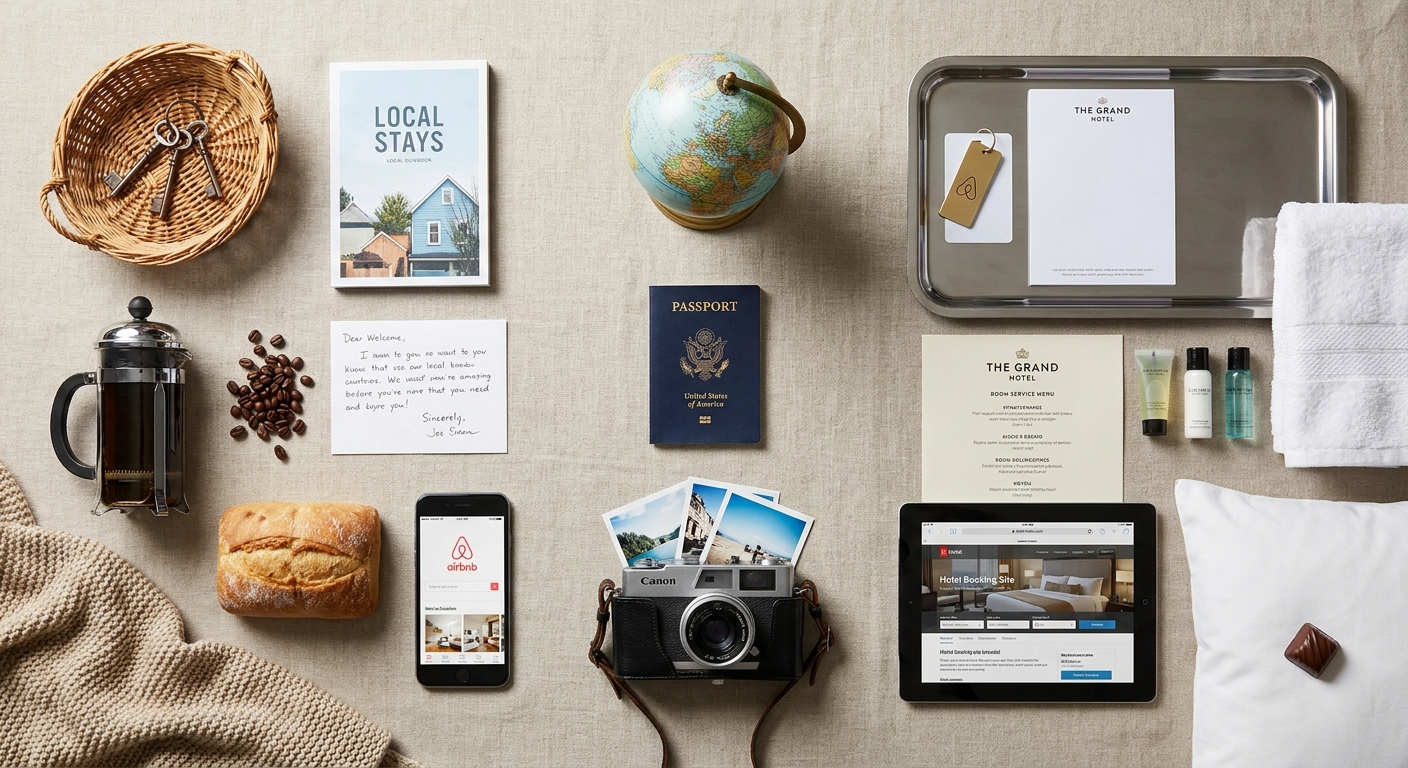
In terms of experience and ambiance, Airbnbs offer a unique, personalized, and authentic local feel, while hotels provide a more standardized, luxurious, and service-driven atmosphere. Your preference will depend on whether you seek the charm and character of a real home or the polished, professional environment of a hospitality establishment. Neither is objectively better, but they cater to vastly different desires for a travel experience.
The ambiance of an Airbnb is defined by its individuality. Each property is a reflection of its owner's taste and the local culture. You might find a bookshelf filled with the host's favorite novels, local art on the walls, or a kitchen stocked with regional spices. This creates a sense of place and personality that a hotel room, designed by a corporate committee to be as inoffensive as possible, can rarely match. Staying in an Airbnb feels like borrowing a friend's apartment, allowing you to step into the shoes of a local resident. You wake up in a real neighborhood, not a tourist zone, which can lead to discovering hidden gems like a family-run bakery or a quiet park that isn't in any guidebook. This authenticity is the primary driver for travelers who want to connect more deeply with their destination.
Conversely, the ambiance of a good hotel is one of curated escape and effortless comfort. From the moment you step into the lobby, the environment is designed to make you feel welcomed and cared for. The lighting is professionally designed, there might be a signature scent in the air, and the decor is cohesive and often luxurious. The experience is seamless. You don't have to think about where to find extra towels or how to work the coffee machine. Everything is intuitive and supported by a full staff. This creates a bubble of relaxation and convenience, allowing you to completely disconnect from the stresses of daily life. For many, this is the very definition of a vacation - an escape from the domestic, not an immersion in someone else's version of it.
Let's take a real-world scenario: a couple celebrating an anniversary in Paris. An Airbnb could be a charming, slightly quirky apartment in Le Marais with a small balcony overlooking a cobblestone street. It would be romantic and feel incredibly authentic. They could shop at the local market and prepare a meal together. A hotel, like the Four Seasons George V, would offer a different kind of romance: opulent decor, impeccable service, a world-class spa, and a concierge who can secure last-minute reservations at a Michelin-starred restaurant. The Airbnb offers personal, intimate charm; the hotel offers grand, serviced luxury. The 'better' romantic experience is entirely subjective and depends on the couple's personality and desires.
Consistency & Reliability Comparison
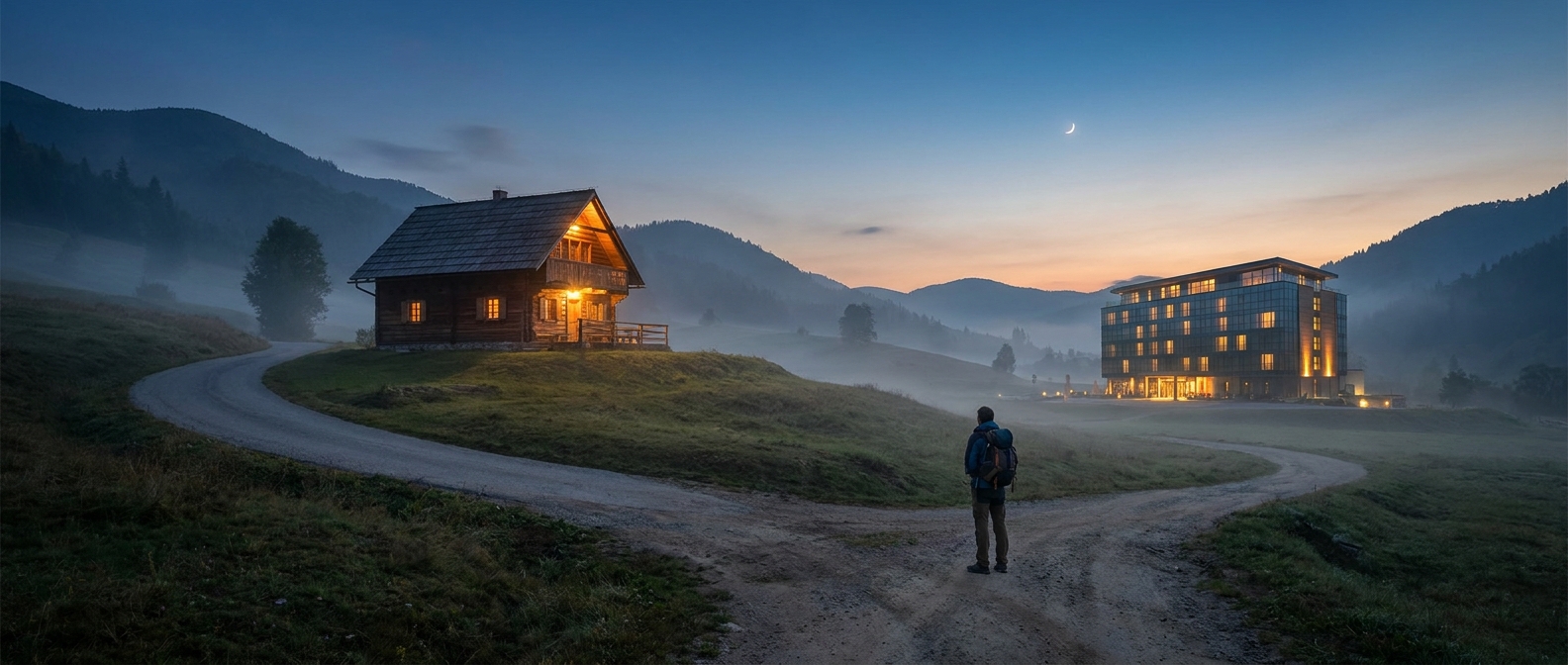
When it comes to consistency and reliability, hotels are the clear winner, offering a predictable and standardized product backed by corporate accountability. Airbnbs are inherently variable, with the quality of the stay depending almost entirely on the individual host. This is perhaps the most critical trade-off a traveler makes when choosing between the two. You trade the potential for a uniquely wonderful Airbnb experience for the risk of a uniquely terrible one.
A hotel's entire business model is built on consistency. When you book a Hilton, a Hyatt, or even a Holiday Inn, you are buying a promise. The promise is that the room will be clean, the bed will be comfortable, the Wi-Fi will work, and there will be a baseline level of safety and service. This promise is maintained through rigorous brand standards, staff training, and quality control. If something goes wrong - the air conditioning breaks, the room is noisy, or the key card fails - there is a system in place to fix it immediately. You can go to the front desk and expect a resolution, whether it's a maintenance person arriving in minutes or being moved to a new room. This reliability removes a massive layer of potential stress from travel.
Airbnb, on the other hand, is the 'wild west' of accommodation. While the platform has implemented reviews and Superhost programs to create some level of quality control, the experience is still a gamble. A property with beautiful photos and glowing reviews can still have undisclosed issues. The mattress might be old and lumpy, the 'fully equipped' kitchen might be missing a corkscrew, or the host might be unresponsive when you have a problem. If you check in late at night and find the heating doesn't work, your only recourse is to message the host and hope they respond. There's no on-site staff to solve the problem, and Airbnb's customer service can be slow and bureaucratic to deal with in an emergency. The responsibility for vetting the property and dealing with issues falls much more heavily on the traveler.
Consider a business traveler arriving in a new city for an important meeting the next morning. They need a seamless, stress-free night. A hotel guarantees a quiet room, a reliable wake-up call, and a place to print documents. An Airbnb might offer a larger space with a desk, but it also carries the risk of a complicated check-in process, a noisy neighbor in the apartment above, or unreliable internet - any of which could jeopardize their preparations. For this traveler, the ironclad reliability of a hotel far outweighs the potential benefits of an Airbnb. The 'performance' of the accommodation, in this case, is its ability to function flawlessly as a base of operations, and hotels are designed for exactly that purpose.
Amenities & Services Comparison
Hotels excel in providing on-demand services and communal amenities like gyms and pools, while Airbnbs offer practical, in-unit amenities like full kitchens and laundry facilities that provide a more self-sufficient, home-like experience. The 'better' set of amenities depends on the length and purpose of your stay. Short, convenience-focused trips favor hotels, while longer, more immersive trips benefit from an Airbnb.
The amenity package at a hotel is designed around service and convenience. The most common offerings include daily housekeeping, a 24/7 front desk, a concierge, room service, on-site restaurants and bars, a business center, and fitness facilities. For many travelers, these are invaluable. A business traveler can get their suit pressed overnight. A family can enjoy the large swimming pool without worrying about maintenance. A couple can order a late-night meal after a long day of sightseeing. These services remove the small frictions of travel and daily life, creating a truly restful experience. However, these amenities are shared among all guests, and the costs are bundled into the room rate, whether you use them or not.
Airbnb amenities are centered around the concept of a self-contained home. The single most significant feature is almost always the kitchen. Having a full kitchen with a refrigerator, stove, oven, and microwave fundamentally changes the economics and experience of a trip. A family can save hundreds of dollars by preparing their own breakfasts and occasional dinners instead of eating out for every meal. It's also a lifesaver for those with dietary restrictions. Another key amenity is often a washer and dryer, allowing you to pack lighter and avoid searching for a laundromat. Other common Airbnb perks can include free parking, private outdoor space like a balcony or yard, and more personal touches like board games, books, or a smart TV with streaming services already logged in.
Let's compare a week-long beach vacation for a group of friends. A hotel might offer a prime beachfront location with a large pool, a swim-up bar, and daily towel service. This is fantastic for a resort-style, all-inclusive feel. An Airbnb, perhaps a beach house a few blocks from the ocean, would offer a different set of benefits. It would have a full kitchen for making group meals and mixing drinks, a living room for hanging out in the evenings, a grill in the backyard for barbecues, and a washing machine for dealing with sandy clothes. The hotel provides a serviced, public vacation experience, while the Airbnb provides a private, self-directed one. The choice depends on whether the group wants to be served or wants to create their own self-contained fun.
| Amenity / Service | Airbnb | Hotel |
|---|---|---|
| Kitchen | Common (Full or kitchenette) | Rare (Only in suites/aparthotels) |
| Laundry | Often available in-unit | Valet service (expensive) or guest laundry room |
| Housekeeping | None during stay (cleaning fee applies at end) | Daily service included |
| On-site Support | Host (remote) | 24/7 Front Desk & Staff |
| Fitness Center | Rare | Common |
| Swimming Pool | Sometimes (private) | Common (shared) |
| Workspace | Varies (dining table, sometimes a desk) | Often a dedicated desk, plus business center |
| Parking | Often free (driveway/street) | Usually paid valet or garage |
Pricing & Value for Money
For pricing and value, Airbnbs typically offer better value for groups, families, and stays longer than three nights, while hotels can be more cost-effective for solo travelers and short, one or two-night trips. The sticker price is often misleading; a true comparison requires factoring in hidden fees and the indirect savings offered by different amenities. Value is not just about the lowest nightly rate, but about the total cost of the trip.
The pricing structure for hotels is relatively straightforward. You have the nightly rate, plus taxes and sometimes a mandatory 'resort fee' or 'destination fee' that covers amenities like Wi-Fi and pool access. The price is per room, not per person (up to a certain occupancy), making it simple to calculate for one or two people. For a solo business traveler, a $150 hotel room is often the most economical and logical choice. The price is all-inclusive of services like housekeeping and front-desk support, which have real value.
Airbnb pricing is more complex and less transparent. You start with a base nightly rate, but then add a service fee (paid to Airbnb), a cleaning fee (which can sometimes be as much as a full night's stay), and local occupancy taxes. These fees can add 20-40% to the total cost, so a property advertised at $120 per night might actually cost over $160 once everything is included. However, Airbnb's value shines when you scale up. A three-bedroom house that costs $300 per night is a bargain for six people ($50 per person), whereas three separate hotel rooms would cost at least $450 total. The real game-changer is the kitchen. A family of four spending $150 per day on restaurants can save a significant portion of that by cooking breakfast and a few dinners, a savings that can easily offset a higher nightly rate for an Airbnb over the course of a week.
Let's run a hypothetical scenario: a 5-night trip to a major city for two couples.
Hotel Option: Two standard rooms at $200/night each. Total cost = 2 rooms x $200 x 5 nights + taxes/fees (~20%) = $2,400. Add daily food costs for eating out every meal, say $120/day per couple = $1,200. Total trip cost = $3,600.
Airbnb Option: A two-bedroom apartment for $280/night. Base cost = $280 x 5 nights = $1,400. Add cleaning fee ($100) and service fee/taxes (~15%) = $1,400 + $100 + $210 = $1,710. They cook breakfast and 3 dinners, reducing food costs to $70/day per couple = $700. Total trip cost = $1,710 + $700 = $2,410.
In this common scenario, the Airbnb provides more space, more privacy, and saves the group nearly $1,200. This demonstrates how, for groups and longer stays, Airbnb's value proposition becomes incredibly compelling, even if the initial nightly rate seems comparable to a hotel.
Find a Value-Packed Airbnb Stay Discover Great Hotel Deals
Pros and Cons (Detailed Breakdown)
While summary tables are helpful, a deeper dive into the specific advantages and disadvantages of each option reveals the critical nuances that should influence your decision. This detailed breakdown goes beyond the basics to explore the real-world implications of choosing an Airbnb or a hotel.
Airbnb: Pros & Cons
Pros:
- Unmatched Space and Value for Groups: This is Airbnb's single greatest advantage. A multi-bedroom house or apartment allows families and groups to stay together under one roof with common areas to socialize. When you calculate the cost per person or per bedroom, it's almost always significantly cheaper than booking multiple hotel rooms.
- Kitchen and Laundry Facilities: Access to a full kitchen provides massive cost savings and convenience, especially for longer stays or travelers with dietary needs. A washing machine means you can pack lighter and refresh your wardrobe mid-trip, a luxury that is prohibitively expensive via hotel valet services.
- Authentic Local Experience: Staying in a residential neighborhood provides an immersive experience that hotels in tourist districts cannot replicate. You interact with a different side of the city, discovering local markets, cafes, and parks, which can lead to a more memorable and unique trip.
- Unique and Diverse Properties: The platform offers an incredible range of properties, from architecturally significant homes and rustic cabins to quirky tiny houses and luxury penthouses. This allows you to choose an accommodation that is a destination in itself, rather than just a place to sleep.
Cons:
- Inconsistency and 'Host Roulette': There are no brand standards. The quality of everything from the bed linens to the kitchen knives is variable. A 'Superhost' designation helps, but you are still placing your trust in an individual rather than a corporation, and a bad host can ruin a vacation.
- Hidden and High Fees: The final price is often significantly higher than the advertised nightly rate due to hefty cleaning fees, service fees, and taxes. These fees, especially the cleaning fee, can make short stays disproportionately expensive.
- Lack of On-Site Support: If something goes wrong - you're locked out, the Wi-Fi dies, the toilet clogs - you have to contact a host who may not be immediately available. There is no 24/7 front desk to provide an instant solution, which can be stressful and disruptive.
- Chores and Responsibilities: Many Airbnbs come with a list of rules and check-out procedures, such as stripping the beds, taking out the trash, or running the dishwasher. This element of 'doing chores' can detract from the feeling of being on vacation.
Hotel: Pros & Cons
Pros:
- Predictability and Quality Assurance: When you book with a reputable hotel chain, you know what you're getting. The room will meet a certain standard of cleanliness and comfort, ensuring a reliable and stress-free experience. This is invaluable for short trips or business travel.
- Comprehensive On-Site Service: The 24/7 front desk, concierge, daily housekeeping, and maintenance staff provide a powerful safety net. Any problem can be resolved quickly and professionally, and services like luggage storage or tour booking add immense convenience.
- Central and Convenient Locations: Hotels are typically situated in prime locations, offering easy access to airports, convention centers, tourist attractions, and public transportation. This can save you significant time and money on transit.
- Safety and Security: Hotels generally offer a higher level of security, with staffed lobbies, key-card access to floors, and on-site security personnel. This controlled environment provides peace of mind, especially for solo travelers or those in an unfamiliar city.
Cons:
- Limited Space and 'Cookie-Cutter' Rooms: The standard hotel room is often just a bedroom and a bathroom, which can feel cramped, especially for stays longer than a couple of nights. The decor is often generic and lacks the personality and charm of a unique rental property.
- Expensive for Families and Groups: The need to book multiple rooms can make hotels prohibitively expensive for larger parties. The cost escalates quickly, and the experience remains disjointed, with no central place to gather.
- Lack of Self-Sufficiency: Without a kitchen, you are forced to eat out for every meal, which significantly increases the total cost of your trip. Simple tasks like doing a load of laundry become expensive and inconvenient chores.
- Impersonal and Tourist-Focused: The hotel experience can feel insulated from the local culture. You are surrounded by other tourists, and the staff's recommendations may be geared towards generic, tourist-friendly options rather than authentic local spots.
Which is Best for Beginners (First-Time Travelers)?
For beginners or first-time travelers, a hotel is almost always the better and safer choice. The structured, predictable, and service-oriented environment of a hotel eliminates many of the variables and potential pitfalls that can trip up an inexperienced traveler. It provides a crucial safety net and a simplified experience, allowing them to focus on navigating a new destination without also having to navigate the complexities of a private rental.
A first-time traveler is already dealing with a significant amount of new stimuli and potential stress: managing transportation, overcoming language barriers, and understanding a new culture. The last thing they need is to arrive late at night and struggle to find a hidden lockbox, discover the Wi-Fi password is wrong, or realize the host is unreachable. A hotel's check-in process is standardized and easy: you walk up to a well-lit front desk and a professional gives you a key. This simple, reliable process is incredibly reassuring after a long journey. The 24/7 on-site staff acts as a built-in support system. If a traveler needs directions, a taxi, a restaurant recommendation, or help with a lost passport, the hotel concierge and front desk staff are trained to assist.
Furthermore, hotels are typically located in central, well-trafficked areas that are easier for a newcomer to navigate. An Airbnb might be in a charming but remote residential neighborhood that is difficult to find and may feel less safe to someone unfamiliar with the city's layout. Hotels offer a controlled, secure environment that helps a new traveler build confidence. The presence of other guests and staff can feel comforting, reducing the sense of isolation that can sometimes come with staying in a private apartment in a foreign place.
While an Airbnb can offer a more authentic experience, that authenticity comes with the responsibility of self-sufficiency. A beginner traveler may not yet have the skills or confidence to manage this. They are better served by the 'soft landing' a hotel provides. After one or two trips, once they have a better feel for the rhythm of travel and what they value in accommodation, they can then graduate to exploring the world of Airbnb with a clearer understanding of the trade-offs involved. For the inaugural journey, the reliability and support of a hotel are an invaluable foundation for a positive and successful trip.
Use-Case Segmentation: Who Should Choose What?
The best choice between an Airbnb and a hotel is rarely universal; it's highly dependent on your traveler profile. Here's a detailed breakdown of which accommodation type is typically better for different kinds of travelers and trips, along with real-world reasoning.
Families with Children
Winner: Airbnb. For families, the advantages of an Airbnb are so overwhelming that it's often the only practical option. The availability of multiple bedrooms is paramount, allowing parents to have their own space while kids sleep soundly in another room. A shared living room provides a crucial common area for relaxing and playing, avoiding the 'cabin fever' that sets in when a family is confined to a single hotel room. The biggest factor, however, is the kitchen. Being able to prepare simple breakfasts, pack lunches for outings, and cook dinner for picky eaters not only saves a tremendous amount of money but also reduces the stress of constantly finding kid-friendly restaurants. Amenities like a washing machine and a backyard are game-changers.
Large Groups (Friends, Bachelor/Bachelorette Parties)
Winner: Airbnb. Similar to families, the economics and social dynamics for large groups heavily favor Airbnb. Renting a large house with multiple bedrooms and a large common area is vastly more affordable and enjoyable than booking a block of disconnected hotel rooms. The shared spaces - a living room, a backyard with a grill, or a private pool - become the central hub for the group's activities. It fosters a communal, celebratory atmosphere that's impossible to replicate in a hotel. The ability to stock a fridge with drinks and snacks and cook meals together adds to both the fun and the cost-effectiveness.
Solo Travelers
Winner: Hotel. While a solo traveler can certainly use Airbnb (especially a private room in a shared house to meet locals), hotels often have the edge in terms of safety, convenience, and value. A single hotel room is often cheaper than an entire studio apartment once Airbnb's fees are factored in. The security of a 24/7 staffed lobby is a significant comfort, especially for solo female travelers. Furthermore, hotels in central locations make it easy to explore a city without a car, and the on-site amenities and potential for social interaction in a hotel bar or lounge can be a welcome bonus for someone traveling alone.
Business Travelers
Winner: Hotel. The priorities for business travel are efficiency, reliability, and convenience. Hotels are built for this. They offer guaranteed amenities like fast Wi-Fi, a proper desk, a business center for printing, and on-site restaurants for meetings. The frictionless experience - from a quick check-in to an itemized receipt for expenses - is crucial. The reliability of knowing the room will be clean and ready, and that support is available 24/7, removes any potential accommodation-related stress, allowing the traveler to focus entirely on their work. While a long-term corporate booking might favor an aparthotel or an Airbnb, for typical short business trips, hotels are the undisputed champion.
Couples on a Short Romantic Getaway (1-3 nights)
Winner: Hotel. For a short, special occasion trip, the pampering and service of a hotel often outweigh the practicalities of an Airbnb. The focus is on relaxation and indulgence. A luxury hotel can offer a spa, room service for a romantic breakfast in bed, a concierge to book a special dinner, and daily housekeeping so the couple doesn't have to lift a finger. The experience is designed to feel like an escape from daily life. The high cleaning fees on Airbnb also make them less cost-effective for very short stays.
Long-Term Stays (1 week+)
Winner: Airbnb. As the duration of a stay increases, the case for Airbnb becomes exponentially stronger. Many hosts offer significant weekly or monthly discounts, making the nightly rate far cheaper than a hotel. Over a longer period, the need for 'home' amenities becomes a necessity, not a luxury. A kitchen is essential for avoiding the cost and fatigue of dining out for weeks on end. A separate living space is critical for mental well-being, and a washing machine is a practical must-have. An Airbnb provides the comfort and functionality needed to settle in and live in a place, not just visit it.
| Traveler Type | Top Priority | Recommended Choice | Reasoning |
|---|---|---|---|
| Families with Kids | Space, Kitchen, Cost | Airbnb | Multiple bedrooms and a kitchen provide immense value and convenience. |
| Large Groups | Shared Space, Cost per Person | Airbnb | Far more economical and socially conducive than multiple hotel rooms. |
| Solo Travelers | Safety, Simplicity, Value | Hotel | Offers better security and is often cheaper than a full apartment for one person. |
| Business Travelers | Reliability, Service, Efficiency | Hotel | Guaranteed amenities and 24/7 support are critical for work-focused trips. |
| Couples (Short Trip) | Pampering, Service, Ambiance | Hotel | The service and luxury of a hotel create a more special 'getaway' feel. |
| Long-Term Stays | Cost, Home Amenities, Comfort | Airbnb | Weekly/monthly discounts and home features make it the only practical choice. |
Final Verdict: Making the Right Choice for Your Trip
After a deep and comprehensive analysis of every angle of the Airbnb vs. Hotel debate, the conclusion is clear: there is no single 'best' option. The right choice is a deeply personal one, intricately tied to the specific context of your trip. The winner is the one that best aligns with your budget, your travel companions, your desired experience, and your tolerance for variability. The decision-making process should be a simple exercise in prioritizing what matters most to you.
To put it in the simplest terms, the choice boils down to a trade-off between Space/Autonomy and Service/Predictability.
You should book an Airbnb if your priorities are:
- Maximizing Space: You are traveling with family or a group and need multiple bedrooms and common areas to comfortably coexist.
- Controlling Your Budget: You want the ability to cook your own meals to save significant money on food costs, especially over a longer stay.
- Seeking an Authentic Experience: You desire to live like a local, stay in a residential neighborhood, and experience a destination beyond its tourist facade.
- Long-Term Travel: You are staying for a week or more, where the comforts and practicalities of a home (kitchen, laundry, space) become essential.
If these points resonate with you, the slight risks of inconsistency and lack of on-site service are well worth the immense benefits in value, comfort, and experience that an Airbnb provides.
You should book a Hotel if your priorities are:
- Guaranteed Quality and Reliability: You need to know exactly what you're getting. The peace of mind that comes with brand standards is your top concern.
- Hassle-Free Convenience: You are on a short trip or a business trip where you want a frictionless experience with services like a 24/7 front desk, daily cleaning, and on-site support.
- Safety and Security: You are a solo traveler or simply value the enhanced security features of a commercial establishment with a staffed lobby and controlled access.
- Access to Amenities: You plan to make use of on-site facilities like a gym, a large pool, a business center, or a concierge service.
If this list aligns with your needs, the higher cost for groups and the smaller, more impersonal space are acceptable trade-offs for a seamless, secure, and service-oriented stay.
Ultimately, both platforms have revolutionized travel for the better, offering more choices than ever before. By honestly assessing the specific needs of your next journey and using the detailed frameworks in this guide, you can move past the generic debate and confidently select the perfect accommodation that will not just house you, but enhance your entire travel experience.
Start Your Airbnb Search Now Find the Best Hotel Rates