

What Is Travel Insurance and Do You Really Need It? A Complete 2026 Guide
You've spent months, maybe even years, planning the perfect getaway. You've booked the flights, reserved the dream hotel with the ocean view, and mapped out an itinerary that balances adventure with relaxation. The excitement is palpable. But in the back of your mind, a nagging question surfaces: what if something goes wrong? What if a family emergency forces you to cancel? What if you get sick in a foreign country? What if the airline loses your luggage filled with essential gear?
This is where the concept of travel insurance enters the picture. For some, it's an absolute necessity, an non-negotiable part of their travel budget. For others, it feels like an unnecessary expense, a bet against a vacation that will probably go off without a hitch. The truth is, the answer isn't the same for everyone. Travel insurance is a financial safety net designed to protect you from the unexpected costs and losses that can occur while traveling. It's a product that buys you peace of mind, ensuring that a sudden mishap doesn't turn your dream vacation into a financial nightmare.
So, do you really need it? The short answer is: it depends. The value of travel insurance is directly proportional to the financial risk you're taking with your trip. A $300 weekend road trip carries far less risk than a $15,000 African safari. This guide will cut through the confusion. We will explore exactly what travel insurance is, how it works, what it covers (and what it pointedly does not), and provide you with a clear framework to help you decide if it's a wise investment for your specific travel plans. By the end, you'll be equipped to make an informed choice, not just a guess.
What Exactly Is Travel Insurance?
At its core, travel insurance is a type of insurance policy that protects the financial investment you've made in a trip. It's a contract between you and an insurance company where you pay a premium in exchange for coverage against a range of unforeseen events and potential losses that can happen before or during your travels. Think of it as a protective bubble for your journey, shielding you from financial fallout when things don't go as planned.
Unlike other insurance products you might be familiar with, like car or home insurance, travel insurance is specifically designed for the unique risks associated with being away from home. Its primary purpose is reimbursement. If a covered event occurs - for example, you have to cancel your trip due to a covered illness - you file a claim with the insurance company. After reviewing your documentation, they will reimburse you for your prepaid, non-refundable expenses, up to the limits of your policy. This prevents you from losing the thousands of dollars you may have already paid for flights, hotels, and tours.
A helpful analogy is to see travel insurance as an à la carte menu of protections. A basic policy might only cover trip cancellation, while a comprehensive plan will bundle together a suite of benefits. These often include coverage for medical emergencies abroad, trip interruptions, travel delays, lost or damaged baggage, and even emergency medical evacuation. You choose the level of coverage that matches your trip's complexity, your destination, and your personal risk tolerance. The more comprehensive the coverage, the higher the premium, but also the broader your financial safety net.
For example, imagine you book a two-week cruise through the Caribbean that costs $8,000. A week before departure, you come down with a severe case of pneumonia, and your doctor advises against traveling. Without travel insurance, that $8,000 is likely gone, as cruise lines have strict cancellation policies. With a good trip cancellation policy, you can file a claim, provide your doctor's note and trip invoices, and get reimbursed for that non-refundable cost. This single event highlights the core value proposition: it transforms a potentially catastrophic financial loss into a manageable inconvenience.
How Does Travel Insurance Actually Work?
Travel insurance works on a principle of reimbursement for covered losses. First, you purchase a policy that outlines specific coverages and limits. If an unexpected, covered event occurs, you typically pay for the expenses out-of-pocket and then file a claim with the insurance provider for reimbursement. The key is understanding this process so you can navigate it smoothly if the need arises.
The process can be broken down into four main steps. First is the purchase. You select a plan based on your needs and pay the premium. This is best done shortly after making your initial trip payments to maximize your coverage window. Second, a covered event occurs. This could be anything from a medical emergency during your trip to a flight cancellation that forces you to miss the start of a cruise. It's crucial at this stage to contact your insurance provider's 24/7 assistance line, especially for major issues like medical emergencies. They can provide guidance, help coordinate care, and explain what documentation you'll need.
The third and most critical step is documentation. This is where many claims go wrong. You must meticulously collect all relevant paperwork. If your trip is cancelled due to illness, you'll need a doctor's note and all receipts for non-refundable payments. If your baggage is lost, you need the report you filed with the airline. If you have a medical expense, you need all hospital bills and receipts. The more thorough your documentation, the smoother the claims process will be. Think of yourself as building a case for your reimbursement; every piece of paper is evidence.
Finally, you file the claim. Most providers now have online portals to make this easier. You'll fill out a claim form, upload all your supporting documents, and submit it for review. An adjuster will then assess your claim to ensure the event is covered under your policy and that the documentation is complete. If approved, you will receive a payment, usually via check or direct deposit, for your covered losses. The timeframe can vary from a few weeks to a couple of months, depending on the complexity of the claim and the provider. Understanding this workflow from the start helps manage expectations and ensures you take the right steps during a stressful travel disruption.
What Are the Main Types of Travel Insurance Coverage?
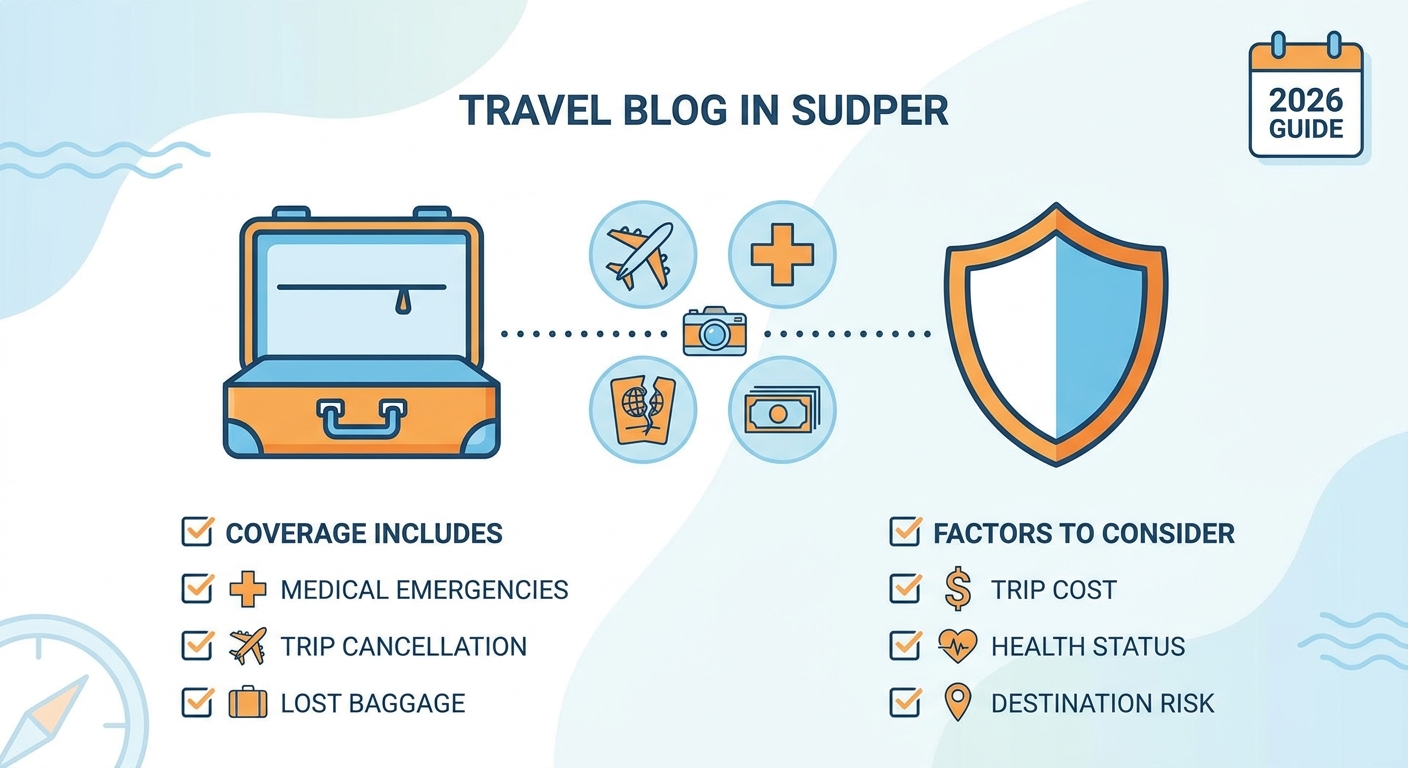
A comprehensive travel insurance policy is not a single benefit but a bundle of different coverages, each designed to address a specific travel-related risk. Understanding these core components is essential to choosing a policy that truly meets your needs. The most common and important types of coverage are Trip Cancellation, Trip Interruption, Emergency Medical, Medical Evacuation, and Baggage Loss/Delay.
Trip Cancellation: This is often the primary reason people buy travel insurance. It reimburses you for prepaid, non-refundable travel expenses if you have to cancel your trip before you depart for a reason covered by your policy. Covered reasons typically include the unforeseen illness or death of you, a travel companion, or a close family member; severe weather events; or a legal obligation like jury duty.
Trip Interruption: This is the sibling to trip cancellation, but it applies after your trip has already started. If you need to cut your trip short and return home for a covered reason (similar to those for cancellation), this benefit reimburses you for the unused portion of your trip and can also cover the cost of a last-minute, one-way ticket home.
Emergency Medical and Dental: This is arguably the most critical coverage for international travel. It covers the costs of medical treatment for illnesses or injuries that occur during your trip. Your domestic health insurance plan often provides little to no coverage outside your home country. This benefit can cover everything from a visit to a local doctor for food poisoning to major surgery and a hospital stay after an accident.
Emergency Medical Evacuation: This provides coverage for medically necessary evacuation and transportation to the nearest adequate medical facility or, in some cases, back to your home hospital. In remote areas or places with substandard medical care, an emergency evacuation can easily cost over $100,000. This coverage is designed to handle those extreme, high-cost scenarios.
Baggage and Personal Effects: This coverage can reimburse you if your luggage is lost, stolen, or damaged during your trip. There's also usually a sub-benefit for Baggage Delay, which provides a certain amount of money to purchase essential items like toiletries and clothing if your bags are delayed by the airline for a specified period, such as 12 or 24 hours.
These core coverages form the foundation of most comprehensive plans. Many policies also include other benefits like 24/7 travel assistance services, coverage for travel delays (reimbursing meals and lodging), and rental car damage protection, creating a robust safety net for a wide array of potential travel mishaps.
Is Trip Cancellation Insurance Worth the Cost?
Trip cancellation insurance is often the headline benefit of any travel policy, and for good reason: it protects the core financial investment of your trip. This coverage is designed to refund your prepaid and non-refundable deposits if you're forced to cancel your plans for a covered reason. Whether it's worth the cost depends entirely on how much money you stand to lose if you can't go.
To determine its value, start by calculating your total non-refundable trip cost. Add up everything you've paid for upfront that you wouldn't get back if you canceled tomorrow: flights, cruise payments, hotel deposits, pre-booked tours, and event tickets. If this total is a sum you'd be uncomfortable or unable to walk away from, then trip cancellation coverage is likely a very wise investment. For a $500 weekend trip, you might be willing to risk it. For a $10,000 honeymoon, the risk is significantly higher, making the protection almost essential.
It's vital to understand what constitutes a "covered reason." These are explicitly listed in the policy document and are quite specific. They almost always include the sudden illness, injury, or death of the traveler, a traveling companion, or a non-traveling family member. Other common covered reasons include your home being rendered uninhabitable (by fire or flood), being required to serve on a jury, a documented traffic accident on the way to the airport, or your travel supplier (like a cruise line) going out of business. What isn't covered is just as important: changing your mind, breaking up with a travel partner, or work-related cancellations (unless you have a specific work-related add-on).
For travelers seeking maximum flexibility, there is a premium upgrade called Cancel for Any Reason (CFAR) coverage. As the name implies, a CFAR policy allows you to cancel your trip for literally any reason not listed as a standard covered peril and still receive a partial reimbursement. Typically, CFAR will refund between 50% and 75% of your non-refundable trip costs. To be eligible, you usually must purchase the policy within a short window (14-21 days) of your initial trip deposit and you must cancel the trip at least 48 hours before your scheduled departure. While more expensive, CFAR provides the ultimate peace of mind for those with complex personal situations or who are simply risk-averse.
How Does Emergency Medical Coverage Protect You Abroad?
Emergency medical coverage is the most crucial component of a travel insurance policy for anyone leaving their home country. Its purpose is to pay for unexpected medical and dental expenses incurred while traveling. This protection is vital because most domestic health insurance plans, including Medicare and many private PPOs/HMOs, offer extremely limited or zero coverage outside of national borders. Relying on your home plan abroad is a significant financial gamble.
Imagine this scenario: you're on a hiking trip in Costa Rica, you slip on a wet trail and suffer a complex leg fracture. You're taken to a local private clinic that requires payment upfront for surgery and a multi-day stay. The bill comes to $25,000. Your US-based health insurance may consider this an "out-of-network" provider in a foreign country, meaning they will not cover the costs, or will only reimburse a tiny fraction months later. Without travel medical insurance, you would be responsible for this entire bill out-of-pocket. With a good policy, you would contact the 24/7 assistance line, and they would coordinate with the hospital, often guaranteeing payment directly, and covering your eligible medical expenses up to the policy limit.
A key distinction to understand is whether your policy provides primary or secondary medical coverage. Primary coverage is the first payer; it handles your medical bills directly without involving any other insurance. This is simpler and faster. Secondary coverage, on the other hand, only kicks in after you've submitted the claim to your regular health insurer and they have paid what they will (which, internationally, may be nothing). You then submit the remaining bills and the explanation of benefits from your primary insurer to the travel insurance company for reimbursement. For international trips, a policy with primary medical coverage is highly recommended to avoid delays and complex paperwork during a stressful time.
When selecting a policy, pay close attention to the coverage limits. For travel to developed countries with high healthcare costs like those in Western Europe or Japan, a minimum of $100,000 in medical coverage is advisable. For more remote or adventurous travel, limits of $250,000 or even $500,000 are not uncommon. It may seem like a high number, but a serious medical event combined with the need for a medical evacuation can quickly exhaust lower limits. This coverage isn't just about financial protection; it's about ensuring you have access to quality medical care no matter where you are in the world.
What Does Travel Insurance Typically Not Cover?
Understanding a travel insurance policy's exclusions is just as important as knowing its benefits. No policy covers everything, and being aware of the common limitations can prevent disappointment and frustration when filing a claim. These exclusions are listed in the policy document and are legally binding, so it's crucial to read them before you buy.
One of the most significant exclusions relates to pre-existing medical conditions. A pre-existing condition is typically defined as any illness, injury, or medical issue for which you received treatment, advice, or a diagnosis within a specific period (usually 60 to 180 days) before purchasing your policy. If you cancel your trip due to a flare-up of a known condition, a standard policy will likely deny the claim. However, many comprehensive policies offer a "Pre-existing Medical Condition Exclusion Waiver." To get this waiver, you must typically purchase your policy within a short time (e.g., 14-21 days) of your initial trip payment and insure the full non-refundable cost of your trip. This waiver essentially removes the exclusion, providing coverage even if a known condition causes a disruption.
Another major category of exclusions involves high-risk activities. Standard travel insurance policies are designed for typical tourist activities. If you plan on participating in adventure sports like skydiving, mountaineering, or scuba diving below a certain depth, you will likely need to purchase an optional sports rider or a specialized policy. Always check the list of excluded activities. Participating in a non-covered sport and getting injured could leave you with massive medical bills that your insurance will not pay.
Furthermore, policies will not cover foreseeable events. This is a critical concept. Once a major event like a hurricane is named or a political uprising is widely reported in the news, it becomes a known, foreseeable event. If you buy insurance after that point hoping to be covered for a cancellation related to it, your claim will be denied. This is why it's so important to buy insurance early. Other common exclusions include losses due to being under the influence of drugs or alcohol, non-emergency or cosmetic medical procedures, and travel to countries with a formal "Do Not Travel" advisory from a government body like the U.S. Department of State.

How Much Should You Expect to Pay for Travel Insurance?
The cost of travel insurance is not a one-size-fits-all figure; it's a variable expense influenced by several key factors. As a general rule of thumb, you can expect a comprehensive travel insurance policy to cost anywhere from 4% to 10% of your total non-refundable trip cost. For a $5,000 vacation, this would mean a premium ranging from $200 to $500. The specific price you pay within that range depends on the details of your trip and yourself.
The most significant factors influencing the premium are: the total cost of the trip and the age of the travelers. The higher the trip cost, the more financial risk the insurer takes on for a potential cancellation claim, thus increasing the premium. Similarly, the risk of medical issues increases with age, so older travelers will always pay more than younger travelers for the same coverage. A 70-year-old traveler might pay two to three times more for a policy than a 30-year-old for the exact same trip.
Other important factors include the duration and destination of your trip. A longer trip naturally carries more risk than a shorter one, so a month-long trip will be more expensive to insure than a week-long one. The destination also matters. Travel to a remote location with limited medical infrastructure or a country with exceptionally high healthcare costs may result in a higher premium. Finally, the level of coverage you select plays a huge role. A basic, no-frills policy will be cheaper than a premium plan that includes a "Cancel for Any Reason" upgrade, higher medical limits, and adventure sports coverage.
To illustrate, let's look at a comparison table for a hypothetical $6,000, two-week trip to Italy:
| Traveler Age | Basic Plan (Lower Limits) | Comprehensive Plan (Higher Limits) | Premium Plan (Includes CFAR) |
|---|---|---|---|
| 35-year-old | $240 (4%) | $330 (5.5%) | $480 (8%) |
| 55-year-old | $300 (5%) | $420 (7%) | $600 (10%) |
| 70-year-old | $480 (8%) | $660 (11%) | $840 (14%) |
As you can see, the cost varies significantly. The best approach is to use online comparison sites to get quotes from multiple providers. This allows you to input your specific trip details and traveler information to find a policy that offers the best balance of coverage and cost for your unique situation. Don't just shop on price; compare the benefit limits and covered reasons to ensure you're getting the protection you actually need.
When Is the Best Time to Purchase Travel Insurance?
The best time to purchase travel insurance is immediately after making your first non-refundable payment toward your trip. While you can technically buy a policy up until the day before you depart, purchasing it early - specifically within 14 to 21 days of your initial trip deposit - unlocks critical, time-sensitive benefits that are otherwise unavailable.
The most important of these early-purchase benefits is the Pre-existing Medical Condition Exclusion Waiver. As discussed, standard policies exclude coverage for losses caused by pre-existing conditions. However, if you buy your policy within that early window, most comprehensive plans will waive this exclusion. This means if you have a chronic but stable condition like asthma or diabetes, and you have an unexpected flare-up that forces you to cancel your trip, you would be covered. If you wait and buy the policy a month later, that same cancellation would not be covered. For any traveler with a known medical history, this benefit alone is a compelling reason to buy insurance early.
Another crucial time-sensitive benefit is eligibility for "Cancel for Any Reason" (CFAR) coverage. This premium add-on, which allows you to cancel for reasons not typically covered, is almost always only available for purchase within that same 14-21 day window after your initial trip payment. If you want the ultimate flexibility and peace of mind that CFAR provides, you cannot wait to buy your policy.
Beyond these specific waivers and upgrades, buying early provides the longest possible period of trip cancellation coverage. Your protection begins the day you purchase the policy. If a covered event happens two months before your departure, you're protected. If you wait to buy insurance until a week before your trip, you have no protection for any event that might occur in the months leading up to it. For example, if you book a cruise in January for a September departure but wait until August to buy insurance, you would not be covered if you broke your leg in June and couldn't travel. By purchasing the policy back in January, your investment is protected from day one.
Do You Need Travel Insurance for Domestic Trips?
The question of whether to buy travel insurance for domestic trips is more nuanced than for international travel. For trips within your own country, your regular health insurance will typically cover you for medical emergencies, removing one of the biggest drivers for buying a policy. However, this doesn't mean travel insurance is useless for domestic journeys; its value simply shifts to protecting you against other types of financial loss.
The primary reason to consider travel insurance for a domestic trip is for trip cancellation and interruption coverage. If you have prepaid a significant amount in non-refundable costs for flights, hotels, rental homes, or event tickets, this coverage is just as valuable as it is for an international trip. For instance, if you've booked a $4,000 week-long ski trip in another state with non-refundable condo rentals and lift tickets, a last-minute illness could mean you lose that entire amount. A domestic travel insurance policy would protect that investment.
Travel delay and baggage coverage can also be extremely useful. Domestic flights are just as prone to delays and cancellations as international ones. If a mechanical issue causes you to miss a connecting flight and you get stuck overnight, travel delay benefits can reimburse you for the cost of an unexpected hotel stay, meals, and transportation. Similarly, if the airline loses your luggage on the way to a wedding or an important business meeting, baggage delay coverage can provide funds to buy necessary clothing and essentials while you wait for your bag to arrive.
Consider a real-world scenario: A family plans a cross-country trip to a national park. They've prepaid $3,000 for flights and a rental cabin. Two days before they leave, their child gets a severe ear infection and the pediatrician advises against flying. Their health insurance will cover the doctor's visit, but it won't do anything about the $3,000 they are about to lose on the trip. A travel insurance policy with trip cancellation would have reimbursed them. Ultimately, the decision comes down to the same principle as international travel: assess your prepaid, non-refundable financial risk. If the amount is more than you're comfortable losing, a domestic travel insurance policy is a smart and relatively inexpensive way to protect your vacation investment.
Conclusion: Making the Final Decision
After navigating the complexities of coverage, exclusions, and costs, the fundamental question remains: is travel insurance a necessary purchase for you? The answer isn't found in a simple yes or no, but in a personal assessment of risk, investment, and peace of mind. Travel insurance is not about expecting the worst; it's about having a concrete financial plan in place so that an unexpected event doesn't derail your finances along with your travel plans. It's a tool for managing uncertainty in an uncertain world.
To make your decision, consider three key areas. First, your financial investment. Calculate the total non-refundable cost of your trip. If losing that amount would cause you significant financial stress, insurance is a strong consideration. The more you've invested, the more you have to protect. Second, your health and destination. Are you or a family member managing a chronic health condition? Are you traveling to a remote area with limited medical facilities or a country where healthcare is notoriously expensive? If so, the medical and evacuation benefits of a comprehensive policy are not just a convenience; they are a critical safety net.
Finally, consider your personal tolerance for risk. Some people are comfortable with uncertainty and are willing to self-insure, setting aside funds to cover potential mishaps. Others find immense value in paying a relatively small premium to transfer that risk to an insurance company, allowing them to travel with the confidence that they are protected. There is no right or wrong answer, only what is right for your situation. By weighing these factors honestly, you can move beyond the generic advice and make a smart, informed decision that aligns perfectly with the unique circumstances of your next great adventure.
Frequently Asked Questions
The main difference is scope. Travel medical insurance focuses almost exclusively on covering emergency medical and dental expenses, plus medical evacuation. It's designed for travelers who are primarily concerned about health crises abroad. Comprehensive travel insurance, on the other hand, is a bundled package. It includes travel medical coverage but also adds a wide range of benefits that protect your financial investment, such as trip cancellation, trip interruption, travel delay, and coverage for lost or delayed baggage. For most vacationers with significant non-refundable costs, a comprehensive plan offers a much broader safety net.
It is very difficult and often impossible to buy traditional travel insurance after you've already departed. Most policies must be purchased before your trip begins. This is because the risk of an issue occurring is much higher once you are already traveling. There are a few specialized companies that offer policies for travelers already abroad, but they tend to have waiting periods for coverage to begin (e.g., 24-72 hours) to prevent people from buying a policy only after an accident has happened. It is always best to purchase your insurance before you leave home.
Generally, no. If an airline cancels your flight, it is their responsibility to rebook you on another flight or provide you with a refund for the ticket. Travel insurance is designed to cover *you* for canceling for a covered reason, not for when a travel supplier cancels. However, if an airline's cancellation causes a significant travel delay (e.g., over 6 or 12 hours), your policy's Travel Delay benefit could kick in to reimburse you for meals and an overnight hotel. If the cancellation causes you to miss 50% or more of your trip, it might be covered under Trip Interruption.
Most travel insurance policies are purchased on a per-trip basis. You enter your specific trip dates, costs, and traveler details, and you pay a one-time premium for a policy that covers that single journey. However, for frequent travelers, many companies offer Annual or Multi-Trip policies. With these, you pay one yearly premium that covers all trips you take during that 12-month period, up to a certain trip length (e.g., 30 or 45 days per trip). This can be more convenient and cost-effective than buying separate policies for every getaway if you travel several times a year.
Documentation is key to a successful claim. The specific documents depend on the type of claim, but you should always be prepared to provide proof of your loss. For trip cancellation, you'll need all trip invoices, proof of payment, and documentation for why you canceled (e.g., a doctor's note). For medical expenses, you need all itemized bills from the hospital or clinic and receipts for payment. For baggage loss, you must have the report you filed with the airline and receipts for any essential items you had to purchase. Always keep meticulous records of everything.