

How To Find the Best Hotel Deals Online (A Deep Dive for NH Hotels & Zenhotels)
The thrill of planning a trip can quickly be overshadowed by the daunting task of finding affordable accommodation. Hotel prices can feel like a moving target, fluctuating based on season, demand, and a dozen other factors you can't see. You know the deals are out there, but navigating the maze of comparison sites, loyalty programs, and booking tricks can feel like a full-time job. The good news? It doesn't have to be. Finding the best hotel deals online is not about luck; it's about strategy.
The core principle is simple: combine smart technology with flexible planning and a deep understanding of how hotel pricing works. By leveraging the right tools, knowing when and where to look, and capitalizing on loyalty programs from brands like NH Hotels, you can consistently book incredible stays for a fraction of the listed price. This isn't about finding a single glitch in the system but about building a repeatable process that saves you money on every trip you take.
This comprehensive guide will transform you from a casual booker into a savvy travel hacker. We will move beyond the basic advice and dive deep into actionable strategies you can implement today. You will learn the foundational principles of deal hunting, how to master hotel comparison engines, and the secrets behind timing your booking perfectly. We'll explore the specific advantages of loyalty programs like NH Discovery and the unique offerings of platforms like Zenhotels. Furthermore, we'll unpack advanced techniques like using a VPN to unlock regional pricing and stacking discounts with cashback offers. By the end, you'll have a complete toolkit to ensure you never overpay for a hotel room again.
What Are the Foundational Strategies for Finding Hotel Deals?
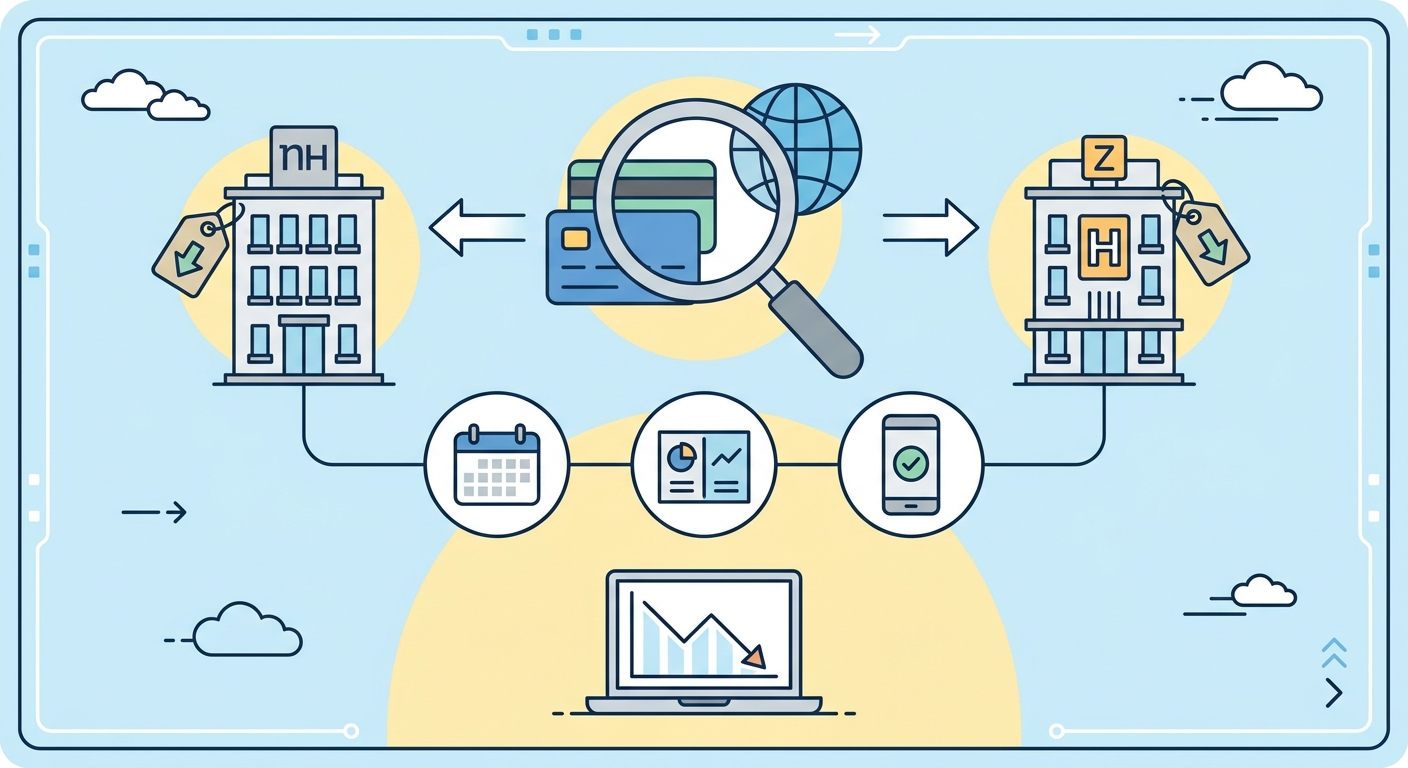
The most effective strategies for finding hotel deals begin with a solid foundation of smart browsing habits and travel flexibility. Before diving into advanced tools, you must master the basics of being a price-conscious traveler, a crucial first step in learning how to find the best hotel deals online. This involves controlling the information booking sites have on you, being open to alternative travel dates, and understanding the rhythm of the travel industry to your advantage.
First and foremost, always search for hotels in your browser's 'incognito' or 'private' mode. Hotel booking websites use cookies to track your activity. If they see you repeatedly searching for the same dates and destination, they may infer high intent and show you higher prices, creating a false sense of urgency. An incognito window prevents cookies from being stored, showing you a 'fresh' price each time. This simple step ensures you're seeing a baseline rate, not one inflated by your search history. It's a fundamental check against the dynamic pricing algorithms that dominate online travel booking.
Second, flexibility is your most powerful negotiation tool. If your travel dates are rigid, you are at the mercy of market demand. However, if you can shift your stay by just a day or two, you can unlock significant savings. Traveling mid-week (Tuesday to Thursday) is almost always cheaper than staying over a weekend. Similarly, consider traveling during the 'shoulder season' - the period just before or after the peak season. A trip to a European capital in May or September can offer the same great weather as June or July but with lower hotel rates and fewer crowds. Use tools like Google Flights' price graph feature (which also provides hotel pricing insights) to visualize the cheapest days or weeks to travel to your chosen destination.
Finally, timing and location play a crucial role. Booking a hotel in a central business district is often cheaper on weekends when corporate travelers have gone home. Conversely, leisure-focused destinations are cheaper during the week. Don't be afraid to look at hotels slightly outside the main tourist hub. A property that is a 10-minute metro ride away from the city center can be 30-40% cheaper than one right in the middle of the action, offering a more local experience as a bonus. Combining these three foundational principles - private browsing, date flexibility, and strategic location choice - sets the stage for every other cost-saving tactic you'll use.

How Can You Leverage Hotel Comparison Websites Effectively?
Hotel comparison websites, also known as Online Travel Agencies (OTAs), are powerful tools, but using them effectively goes beyond a simple search. To truly leverage these platforms, you must understand their nuances, use their filter systems strategically, and know when to book directly with the hotel instead. These sites aggregate prices from thousands of sources, but the lowest displayed price isn't always the best value. For more specific tactics, explore our guide on the best ways to find cheap hotels.
The key to mastering OTAs like Kayak, Skyscanner, or Google Hotels is to use their advanced filtering and sorting options. Don't just sort by 'Price (Low to High)'. A cheap hotel without essential amenities can end up costing you more in the long run. Instead, stack multiple filters to narrow down your options to find true value. For instance, apply filters for your non-negotiables first: 'Free Cancellation', 'Breakfast Included', and a minimum guest rating of '8+' or '4 stars'. This immediately removes subpar or inconvenient options. Only after applying these value-based filters should you sort the remaining list by price. This ensures you're comparing apples to apples and choosing the cheapest option among a pool of high-quality, convenient choices.
A common mistake is to trust the initial price displayed without clicking through. Many OTAs will show a base rate that doesn't include mandatory resort fees or local taxes, which can add a significant amount to the final bill. Always proceed to the final checkout page to see the all-in price before making a decision. Furthermore, compare prices for the same hotel across two or three different OTAs. While they often have similar rates due to price parity agreements, you can sometimes find discrepancies or platform-specific promotions. For example, a platform like Zenhotels might have access to unique wholesale rates that aren't available elsewhere.
Scenario: Booking a Hotel in Rome
Imagine you're booking a 3-night stay in Rome. A basic search shows a hotel for $150 per night. A more advanced searcher would do the following:
- Apply a filter for 'Free Wi-Fi' and 'Guest Rating 8.5+'.
- Add another filter for 'City Center' location.
- Sort the new, smaller list by price. You might find a slightly more expensive hotel at $165 per night that includes a full breakfast (a $20/person daily value) and is located next to a metro station, saving you money on transportation and food.
- Finally, you check the price for that specific hotel directly on its own website. Sometimes, hotels offer a small discount or a perk like a free room upgrade for booking direct, which an OTA cannot offer. This final step ensures you've found the absolute best deal.
By transforming your search from a simple price hunt into a value-driven investigation, you will consistently find better hotels at better overall prices.
When is the Best Time to Book a Hotel for Maximum Savings?
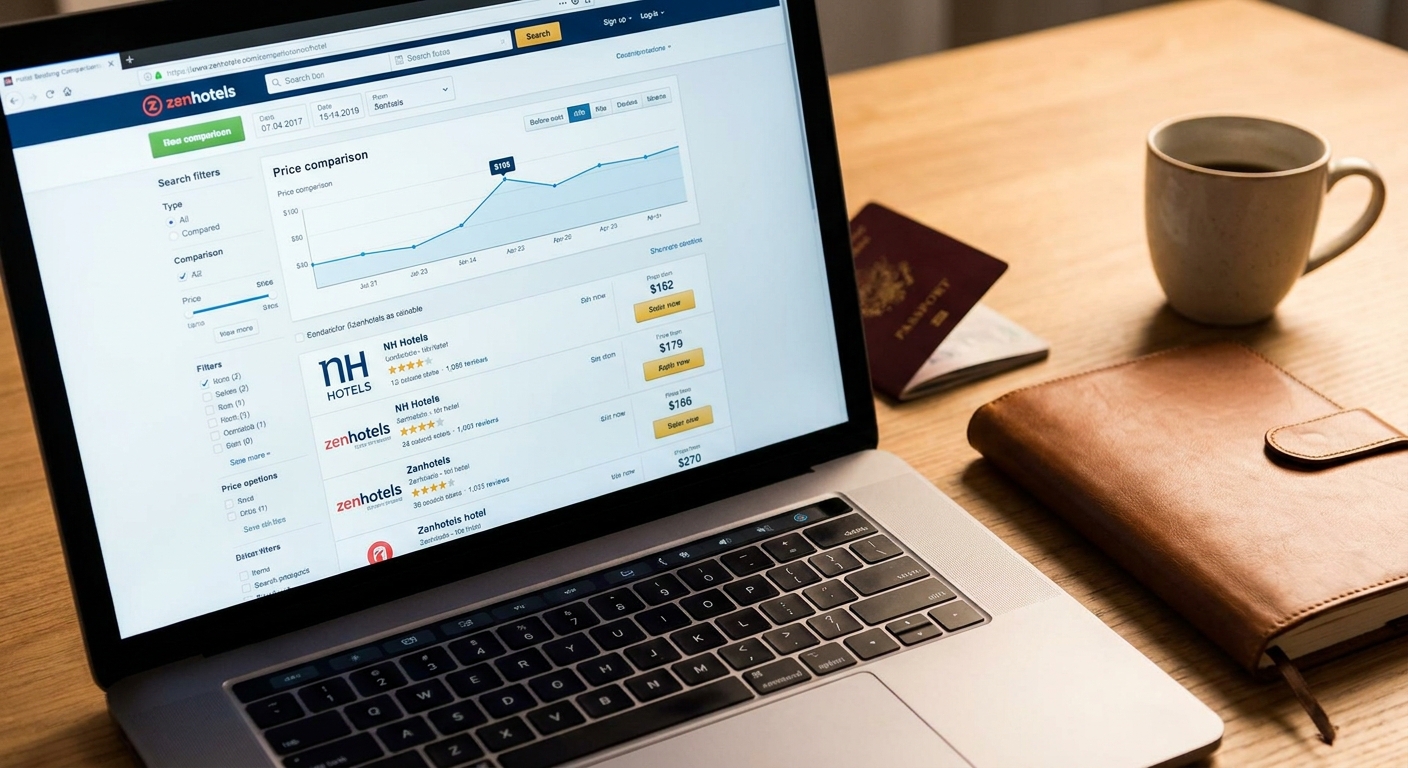
The best time to book a hotel for maximum savings depends heavily on your destination, travel dates, and risk tolerance. There is no single magic day of the week to book; however, there are clear patterns and strategies you can use to your advantage. The decision boils down to a trade-off between the security of booking in advance and the potential for deep discounts by booking last-minute.
Booking in advance, typically 1-3 months out, is generally the safest strategy for most trips, especially if you are traveling during peak season, for a major event, or have specific hotel requirements. Hotels use sophisticated revenue management systems, and as rooms fill up for a popular date, prices will invariably rise. Securing a room early with a flexible, free-cancellation policy is a powerful move. This locks in a reasonable rate while giving you the freedom to cancel and re-book if you find a better deal closer to your travel date. It's the 'have your cake and eat it too' approach to hotel booking.
On the other hand, booking last-minute - within a week or even 48 hours of your stay - can yield incredible discounts, but it comes with risks. Hotels would rather sell a room for a low price than leave it empty, so they often slash prices for unsold inventory as the date approaches. This strategy works best for travelers with flexible plans, those on a road trip, or those heading to large cities with a high density of hotels where competition is fierce. Apps like HotelTonight specialize in these last-minute deals. The major risk is that if you're traveling to a popular destination or during a busy period, you may find that all desirable hotels are sold out, leaving you with only poor or overpriced options.
Deciding Your Strategy: Advance vs. Last-Minute
To choose the right strategy, assess your trip's flexibility. Are you flying in for a wedding on a specific weekend? Book in advance with a cancellable rate. Are you on a spontaneous road trip through a region with many towns and lodging options? Embrace the last-minute approach. A hybrid strategy can also be effective. Book your crucial weekend nights in advance and leave a mid-week night open for a last-minute booking. Also, consider the day you stay, not just the day you book. Staying from Sunday to Thursday is almost always significantly cheaper than a Friday and Saturday night stay, as you avoid the weekend leisure travel rush. By understanding these dynamics, you can align your booking timeline with your travel style to secure the best possible price.
How Do Loyalty Programs Like NH Discovery Unlock Exclusive Deals?
Hotel loyalty programs are one of the most underrated tools for securing consistent value and exclusive deals, and NH Hotels' NH Discovery program is a prime example. These programs are designed to reward repeat customers, but even infrequent travelers can benefit significantly. They move beyond simple discounts, offering a suite of perks that enhance your stay and provide tangible monetary value through reward currencies and member-only rates.
The fundamental principle of a loyalty program is value exchange. In return for your loyalty, the hotel group provides benefits that are not available to the general public. For NH Discovery, the core of this value lies in its Member Rate and the accumulation of DISCOVERY Dollars (D$). The Member Rate offers an immediate discount of 5-10% on bookings made directly through the NH Hotel Group website or app. This is an instant saving you won't find on most OTAs. More importantly, members earn D$, a rewards currency where D$1 equals $1 USD. A percentage of your total spending on rooms, dining, and other hotel services is credited back to your account as D$, which you can then apply as a cash discount on future stays.
The real power of NH Discovery emerges as you move up its elite status tiers: Silver, Gold, Platinum, and Titanium. These tiers are achieved by staying a certain number of nights, spending a specific amount, or staying at multiple brands within the Global Hotel Alliance (GHA) portfolio, of which NH is a part. Each tier unlocks progressively better perks. Gold status, for example, might offer a welcome amenity and a room upgrade subject to availability. Platinum and Titanium members can enjoy guaranteed upgrades, early check-in, late check-out, and even higher D$ earning rates. These benefits can dramatically improve the quality of your stay. A free upgrade from a standard room to a junior suite can be worth hundreds of dollars, far exceeding any small discount you might find on a third-party site.
Maximizing NH Discovery: A Practical Example
Imagine you're planning a 5-night trip to Madrid and are considering the NH Collection Madrid Gran Vía. The public rate on an OTA is $250 per night. By signing up for NH Discovery for free and booking direct, you immediately get a 5% member discount, making the rate $237.50 per night - a saving of $62.50. On this $1,187.50 stay, you'll earn a percentage back in D$. As a new Silver member earning 4%, that's D$47.50 to use on your next trip. If you were a Platinum member earning 6%, you would get D$71.25 back and likely receive a room upgrade and late check-out, adding significant intangible value. By consistently booking within the ecosystem, the benefits compound, making direct loyalty booking a far superior long-term strategy than chasing minor discounts on OTAs.

What Are Zenhotels' Unique Features for Finding Budget Stays?
Zenhotels operates with a distinct model in the crowded online travel space, often providing access to hotel rates that are not publicly available on major comparison sites. Understanding its unique features, such as its B2B inventory and 'secret deal' offerings, can be a powerful strategy for travelers focused purely on securing the lowest possible price, especially when travel plans are firm.
The primary advantage of Zenhotels is its access to wholesale and B2B (business-to-business) hotel inventory. Hotels often sell blocks of rooms at deeply discounted rates to travel agents, tour operators, and other businesses. Zenhotels acts as a bridge, making some of this inventory available to individual consumers. This is why you can sometimes find a room on Zenhotels for significantly less than on the hotel's own website or major OTAs. These are not 'fake' deals; they are simply rooms sourced from a different, lower-cost distribution channel. This makes the platform particularly strong for popular destinations where hotels have extensive wholesale relationships.
Another key feature is the prevalence of non-refundable rates. To secure these lower wholesale prices, bookings made through platforms like Zenhotels are often final, with no option for cancellation or modification. This is a critical trade-off. While the savings can be substantial, the lack of flexibility means this option is best suited for travelers with 100% confirmed plans. If there is any chance your trip might change, the potential loss from a non-refundable booking could easily wipe out the initial savings. It's a high-reward, high-risk approach compared to booking a flexible rate directly with a hotel or a major OTA.
Navigating Zenhotels' Platform for Success
When using Zenhotels, it's crucial to compare the final, all-in price. Pay close attention to whether taxes and fees are included in the initial display. Also, carefully read the room description. Sometimes, these B2B rates are for the most basic room category ('run of the house'), so ensure it meets your needs. A great way to use Zenhotels is as a benchmark. Find a hotel you like on a major comparison site, then search for the same dates on Zenhotels. If you find a significantly lower non-refundable rate and your plans are set in stone, you've found a great deal. For example, a hotel in Berlin might be listed at $200 per night with free cancellation on Booking.com. On Zenhotels, you might find the same room for $160 per night, but with a strict no-cancellation policy. For a traveler certain of their dates, this represents a 20% saving that is difficult to achieve elsewhere.
Can Using a VPN Really Get You Cheaper Hotel Prices?
Yes, using a Virtual Private Network (VPN) can genuinely result in cheaper hotel prices by circumventing a practice known as dynamic pricing. This advanced technique requires a bit of tech-savviness, but the potential savings can be substantial. It works by masking your digital location, allowing you to access prices that hotels and booking sites offer to customers in other countries.
Dynamic pricing is the strategy where companies show different prices to different users based on their location, browsing history, and perceived purchasing power. A booking site's algorithm might determine that a user searching from a wealthy country like Switzerland or the United States is willing to pay more for a hotel in Thailand than a user searching from a lower-income country in the same region, like Malaysia. A VPN allows you to digitally 'teleport' your device to another country. By connecting to a VPN server in a different location, your internet traffic is routed through that server, making it appear to the hotel website that you are browsing from that country. This can unlock lower, localized price points that you wouldn't otherwise see.
The process is straightforward. First, you search for your desired hotel and dates in your regular browser to establish a baseline price. Then, you close your browser, clear your cookies, and open your VPN application. You connect to a server in a different country - it's often effective to choose a country with a lower cost of living or one closer to your destination. Once connected, open a new incognito browser window and perform the exact same search. You can cycle through a few different countries to see which one yields the lowest price. It's important to note that this doesn't always work, as some hotel chains have standardized global pricing, but for many independent hotels and certain OTAs, the price differences can be striking.
Real-World VPN Scenario: Booking in Cancún
Let's say you're in New York and looking for a 5-night stay at a resort in Cancún. The price shown on a major booking site is $400 per night. Suspecting dynamic pricing, you connect your VPN to a server in Mexico City. After clearing your cookies and searching again, the price displayed is now 6,800 MXN per night. When converted back to USD, this comes out to approximately $340 per night - a saving of $60 per night, or $300 for the entire trip. This happens because the booking engine offers a preferential rate to domestic or regional travelers. One crucial caveat: always check the hotel's terms and conditions. While the practice is generally accepted, some companies technically forbid booking from a false location. Additionally, always ensure you pay with a credit card that doesn't charge foreign transaction fees, as you may be billed in the local currency.
What Role Do Coupon Codes and Cashback Sites Play in Reducing Costs?
Combining coupon codes and cashback websites is a powerful two-step technique to layer savings on top of already negotiated hotel deals. This strategy allows you to reduce the final price you pay at the time of booking and then receive a percentage of your spending back after your stay. Mastering this combination can effectively create a discount that isn't available through any single platform.
Coupon or promo codes are specific codes that you enter at checkout to receive an instant discount. These can be for a percentage off (e.g., 15% off your stay) or a fixed amount (e.g., $20 off bookings over $200). You can find these codes through various channels. The most reliable source is often the hotel's or OTA's own newsletter, so it pays to sign up. You can also use browser extensions like Honey or Rakuten, which automatically search for and apply the best available coupon codes at checkout. A simple Google search for '[Hotel Name] promo code' or '[Booking Site] coupon 2026' can also yield results, but be sure to check the expiration dates and terms.
Cashback sites and browser extensions operate on a different model. Instead of an instant discount, they give you a rebate after your purchase is complete. Platforms like TopCashback or Rakuten have partnerships with thousands of online merchants, including major hotel chains and OTAs like NH Hotels and Zenhotels. To use them, you simply start your shopping journey by clicking through the link on the cashback portal. The portal places a cookie on your browser, tracks your purchase, and once your hotel stay is completed and confirmed, a percentage of your total spend (typically 2% to 10%) is deposited into your cashback account. This can then be withdrawn as cash or a gift card.
Stacking Savings: A Step-by-Step Example
Imagine you've found a room at an NH Hotel for a 4-night stay totaling $800 on their official website. Here's how you would stack savings:
- Find a Coupon: Through a Google search, you find a valid 10% off promo code for NH Hotels. This immediately reduces your booking cost to $720.
- Activate Cashback: Before you complete the booking, you go to a cashback portal like Rakuten, which is offering 6% cashback for NH Hotels. You click their specific link to navigate back to the NH website.
- Complete the Booking: You proceed with the checkout, ensuring the 10% coupon is still applied. You pay the $720.
- Earn Cashback: A few weeks after your stay is complete, Rakuten confirms the purchase and deposits 6% of the pre-tax price (6% of ~$720 = $43.20) into your account.
Your initial $800 hotel stay has now cost you a net total of $676.80. This layered approach requires a few extra clicks but results in a significant final discount that would have been impossible to achieve otherwise.
How Can You Negotiate a Better Hotel Rate Directly?
In an age of digital booking, the simple act of picking up the phone and speaking directly with a hotel's front desk or reservations manager can be a surprisingly effective way to secure a better rate or added perks. Hotels often pay high commission fees (15-25%) to OTAs for each booking. By contacting them directly, you give them an opportunity to acquire your business without paying that commission, and they may be willing to pass some of those savings on to you.
The key to successful negotiation is to be prepared, polite, and realistic. This strategy is most effective with independent hotels or smaller chains, but it can also work with larger brands, especially during the off-season or for longer stays. Start by doing your research. Find the best available rate for your desired dates on a comparison website. This price is your leverage. When you call the hotel, mention that you've found this rate online and ask if they can offer a better deal if you book directly with them. You can frame it as wanting to ensure the hotel receives the full payment rather than losing a cut to a third party.
Even if they can't lower the price - sometimes due to 'rate parity' agreements with OTAs that require them to offer the same price across all channels - you can negotiate for added value. This is often an easier win. You can ask for things that have a high perceived value but a low actual cost to the hotel. Examples include a free room upgrade, complimentary breakfast, waived resort fees, free parking, or a late check-out. These perks can easily add $50-$100 of value per day to your stay, making a direct booking at the same price as an OTA a much better deal.
Sample Negotiation Script and Key Phrases
When you call, be friendly and specific. Here's a sample approach:
"Hi, I'm looking to book a room from [Date] to [Date]. I see on [OTA Website] that the rate is [$XXX] per night for a [Room Type]. I was hoping to book directly with you and was wondering if you could offer a slightly better rate or any additional perks since you'd be saving on the commission fee."
If they say they cannot change the rate, pivot to value-adds:
"I understand completely. In that case, to book directly with you today at that rate, would it be possible to include complimentary breakfast for our stay? Or perhaps a potential upgrade to a room with a better view if one is available upon check-in?"
This polite and informed approach shows you've done your homework and positions you as a desirable guest. More often than not, the hotel staff will be happy to work with you to secure your direct business.
Are Package Deals (Flight + Hotel) a Good Way to Save Money?
Package deals that bundle flights and hotels together can be a fantastic way to save money, but they are not always the best option for every type of trip. These bundles, often offered by large OTAs like Expedia or directly by airlines, can provide significant savings because travel companies are able to use opaque pricing. This means they don't have to disclose the individual price of the flight or the hotel, allowing them to offer a combined price that is lower than the sum of its parts.
The primary advantage of a package deal is convenience and cost savings, particularly for mainstream destinations and standard week-long vacations. For popular tourist spots like Orlando, Las Vegas, or Cancún, the volume of inventory available to bundlers is so high that they can negotiate exceptional wholesale rates. In these scenarios, it's very common to find a flight and hotel package that costs less than booking the flight alone. The savings come from the deeply discounted hotel portion, which is subsidized by the flight purchase. This makes packages an excellent choice for travelers who are looking for a straightforward, point-A-to-point-B vacation at a major resort or city hotel.
However, package deals come with a significant downside: a lack of flexibility. These bookings are often more restrictive, with stricter cancellation policies and higher change fees than standalone reservations. They are also less suitable for complex itineraries. If you are planning a multi-city trip or want to stay in unique boutique hotels or independent rentals, a package deal is unlikely to meet your needs. You are limited to the hotels that have partnered with the bundling service. Furthermore, you lose the ability to earn hotel loyalty points and take advantage of elite status benefits, as these bookings are considered third-party reservations. For a frequent traveler loyal to a brand like NH Hotels, booking a package means forfeiting the chance to earn D$ and receive tier benefits like room upgrades.
Comparison Table: Package Deal vs. Separate Bookings
| Feature | Package Deal (Flight + Hotel) | Separate Bookings |
|---|---|---|
| Best For | Standard vacations to popular destinations (e.g., 7 days in Hawaii). | Complex, multi-city trips, or travelers seeking specific boutique hotels. |
| Potential Savings | High, especially for resorts and major city hotels. | Variable; allows for deal-hunting on each component separately. |
| Flexibility | Low. Often has strict cancellation/change policies. | High. Can book refundable hotels and flexible flights. |
| Loyalty Points | Usually not eligible for hotel points or elite status benefits. | Eligible for both airline and hotel loyalty programs when booking direct. |
| Convenience | High. One transaction for the core components of the trip. | Lower. Requires separate research and booking for flights and hotels. |
Ultimately, the decision to book a package deal should be based on your travel priorities. If your main goal is to find the absolute lowest price for a simple trip and you don't care about loyalty programs, a package is likely your best bet. If you value flexibility, want to earn points, or have a more customized itinerary, booking your flight and hotel separately is the superior strategy.
Finding the best hotel deals online is a journey, not a destination. It requires a mindset shift from simply accepting the first price you see to actively hunting for value using a multi-layered strategy. By mastering the fundamentals of flexible planning and incognito browsing, you set a strong foundation. From there, you can intelligently leverage the power of comparison sites, understand the critical timing of your booking, and capitalize on the immense long-term value of loyalty programs like NH Discovery. For those with firm plans, platforms like Zenhotels offer a high-reward path to deep, upfront discounts.
Don't be afraid to layer on more advanced techniques. Using a VPN to unearth regional pricing, stacking coupon codes with cashback portals, and even picking up the phone to negotiate directly can peel back further layers of cost, revealing the true wholesale price of a room. Each of these strategies is a tool in your arsenal, and the more tools you are comfortable using, the more you will save. Not every technique will work for every booking, but having a comprehensive checklist is essential for anyone serious about how to find the best hotel deals online. By having a comprehensive checklist, you can systematically apply them to find the best possible outcome for your specific trip.
Ultimately, the goal is not just to save money but to travel better. The savings from a well-negotiated hotel deal can be reinvested into your trip - funding a memorable dinner, an exciting tour, or simply extending your vacation by another day. By adopting these strategies, you empower yourself to take control of your travel budget, ensuring that every dollar spent is maximized for the best possible experience. So, the next time you begin planning a trip, remember these principles. Be patient, be strategic, and be persistent, and you will consistently unlock hotel deals you previously thought were out of reach.
Frequently Asked Questions
It is almost always cheaper to book a hotel online in advance rather than walking in. Hotels use dynamic pricing and prefer to have rooms filled ahead of time to manage occupancy. A walk-in customer is a captive audience and will typically be quoted the 'rack rate', which is the highest possible price. Booking online allows you to compare prices across multiple platforms, use discount codes, and take advantage of loyalty program rates. The only exception might be a very late-night arrival at a motel in a low-demand area, where you might be able to negotiate a low cash price for an unsold room.
The myth of a single 'cheapest day' to book a hotel, like Tuesday, is largely outdated. Modern dynamic pricing is far more sophisticated. However, the cheapest days to *stay* at a hotel are consistently mid-week, from Sunday night to Thursday night. Business hotels may offer lower rates on weekends, while leisure resorts are cheapest during the week. For booking, focus less on the day you click 'buy' and more on booking within the right time frame - either well in advance with a cancellable rate or at the very last minute if your plans are flexible and the destination has ample supply.
Hotel prices can go both up and down closer to the date. If a hotel is selling out for a popular event or peak season, prices will rise significantly as inventory dwindles. However, if a hotel has a lot of unsold rooms for a low-demand period, they will often slash prices in the last 24-72 hours to attract last-minute bookers and avoid an empty room. This is a gamble. The safest strategy is to book a room with a free cancellation policy in advance and then monitor prices. If you see a last-minute deal, you can cancel and re-book at the lower rate.
There are several effective ways to increase your chances of a free room upgrade. The most reliable method is to have elite status with a hotel loyalty program like NH Discovery, as upgrades are a core perk for Gold and Platinum members. For others, try the 'sandwich' trick: place a $20 bill between your ID and credit card at check-in and politely ask if any complimentary upgrades are available. Arriving later in the day (e.g., after 6 PM) can also help, as the hotel has a clearer picture of their occupancy and knows which premium rooms are empty. Finally, always be polite and friendly to the front desk staff.
Yes, 'secret deals' or opaque bookings on sites like Zenhotels and Priceline are legitimate. They are able to offer lower prices because they don't reveal the name of the hotel until after you've completed a non-refundable booking. This allows hotels to sell excess inventory at a deep discount without publicly undercutting their own rates. These deals are a great option if your plans are firm and you are flexible about the specific hotel, as long as it meets your criteria for location, star rating, and amenities. The trade-off for the lower price is the loss of flexibility and choice.