How to Choose the Best Travel eSIM for Your Next International Trip?
The thrill of an international trip - the new sights, sounds, and cultures - is often dampened by one nagging worry: staying connected without breaking the bank. For years, travelers have juggled expensive roaming charges, the hassle of finding and swapping physical SIM cards, or the insecurity of relying on spotty public Wi-Fi. But what if there was a seamless, digital solution that could keep you online from the moment you land? That solution is the travel eSIM.
Choosing the best travel eSIM involves checking your phone's compatibility, understanding the difference between local, regional, and global plans, accurately estimating your data needs, and comparing providers based on coverage, price, and customer support. It's a digital-first approach to travel connectivity that offers unparalleled convenience and cost savings once you know what to look for.
This comprehensive guide is your ultimate resource for navigating the world of travel eSIMs. We will demystify the technology, walk you through every critical decision point, and provide actionable advice to ensure you make the perfect choice for your next adventure. You will learn how to verify if your device is ready, how to pick the right data plan for a weekend trip versus a multi-country backpacking tour, and what to do if things go wrong. By the end, you'll be equipped with the knowledge to ditch roaming fees forever and embrace the future of travel connectivity.
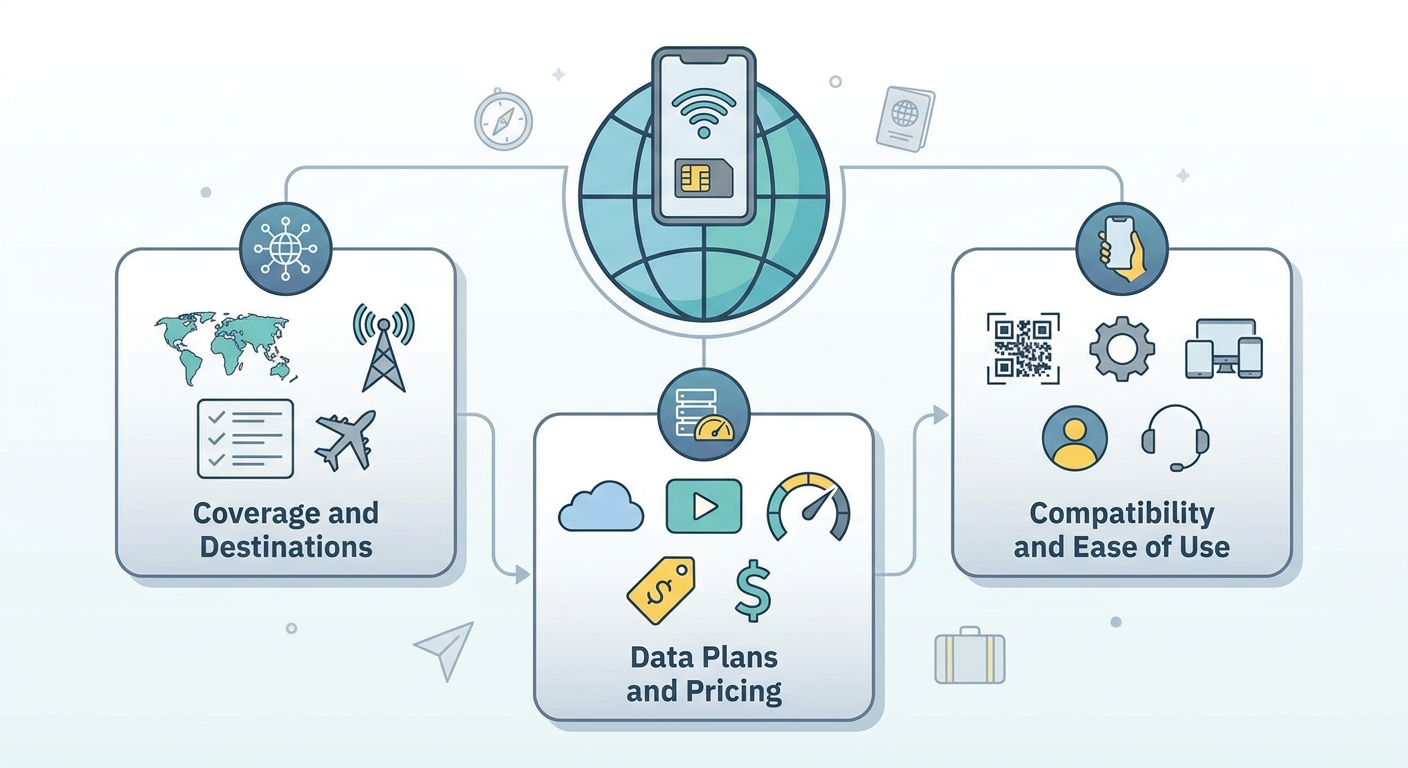
What Exactly is a Travel eSIM and How Does It Work?
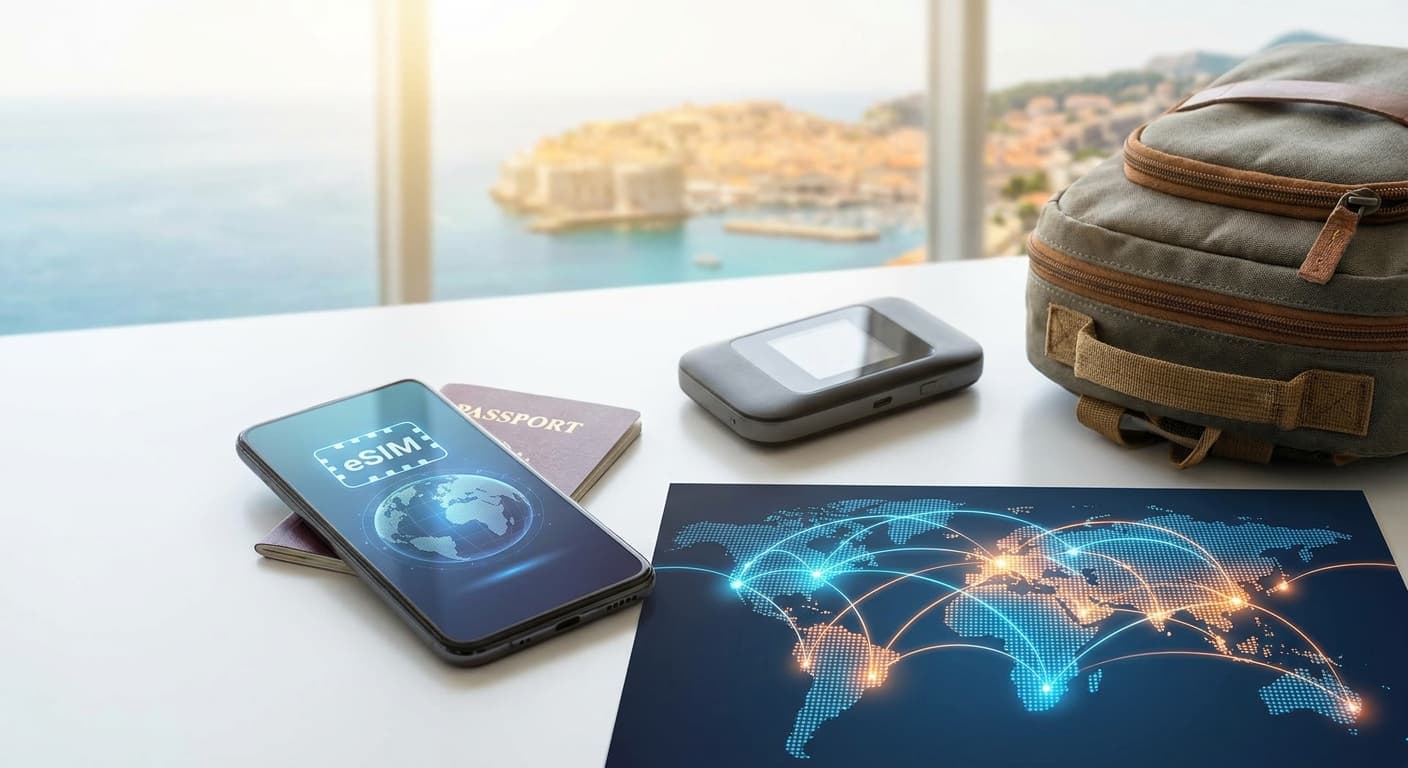
A travel eSIM, or embedded Subscriber Identity Module, is a digital SIM card that allows you to activate a cellular plan from a provider without needing a physical nano-SIM. It's a tiny chip already built into your smartphone or device that can be programmed remotely. Think of it as a virtual SIM card that you can download and install, giving you instant access to mobile data in a new country.
The process works through a simple digital transaction. Instead of visiting a physical store upon arrival, you can purchase a travel eSIM plan online from a provider like Holafly, Airalo, or Nomad before you even leave home. After purchase, you typically receive a QR code via email. By scanning this code with your phone's camera, you download a 'profile' onto the embedded chip. This profile contains all the information needed to connect to a local carrier's network in your destination country. Your phone then treats this downloaded profile as a secondary line, allowing you to switch between your home plan and your travel data plan with a few taps in your settings.
This technology fundamentally changes the traveler's experience. Imagine landing in Tokyo, and instead of searching for a SIM card vendor, you simply turn on your pre-installed eSIM line. Within moments, your phone connects to a local Japanese network like Docomo or SoftBank, and you have high-speed data to order a ride-share, navigate with Google Maps, or let your family know you've arrived safely. The eSIM provider has pre-negotiated agreements with these local carriers, essentially acting as a middleman that gives you access to their networks without you needing to be a direct customer. This seamless integration is the core benefit, eliminating the physical friction of traditional SIM cards and offering a level of convenience that feels almost magical.
The key takeaway is that an eSIM is not a service in itself, but the technology that enables the service. The 'best' eSIM experience comes from choosing the right provider and plan that leverages this technology effectively. It gives you the power to be your own telecom operator, adding and removing plans as you cross borders, all from the screen of your phone. This level of control and flexibility is why eSIMs are rapidly becoming the default choice for savvy international travelers.
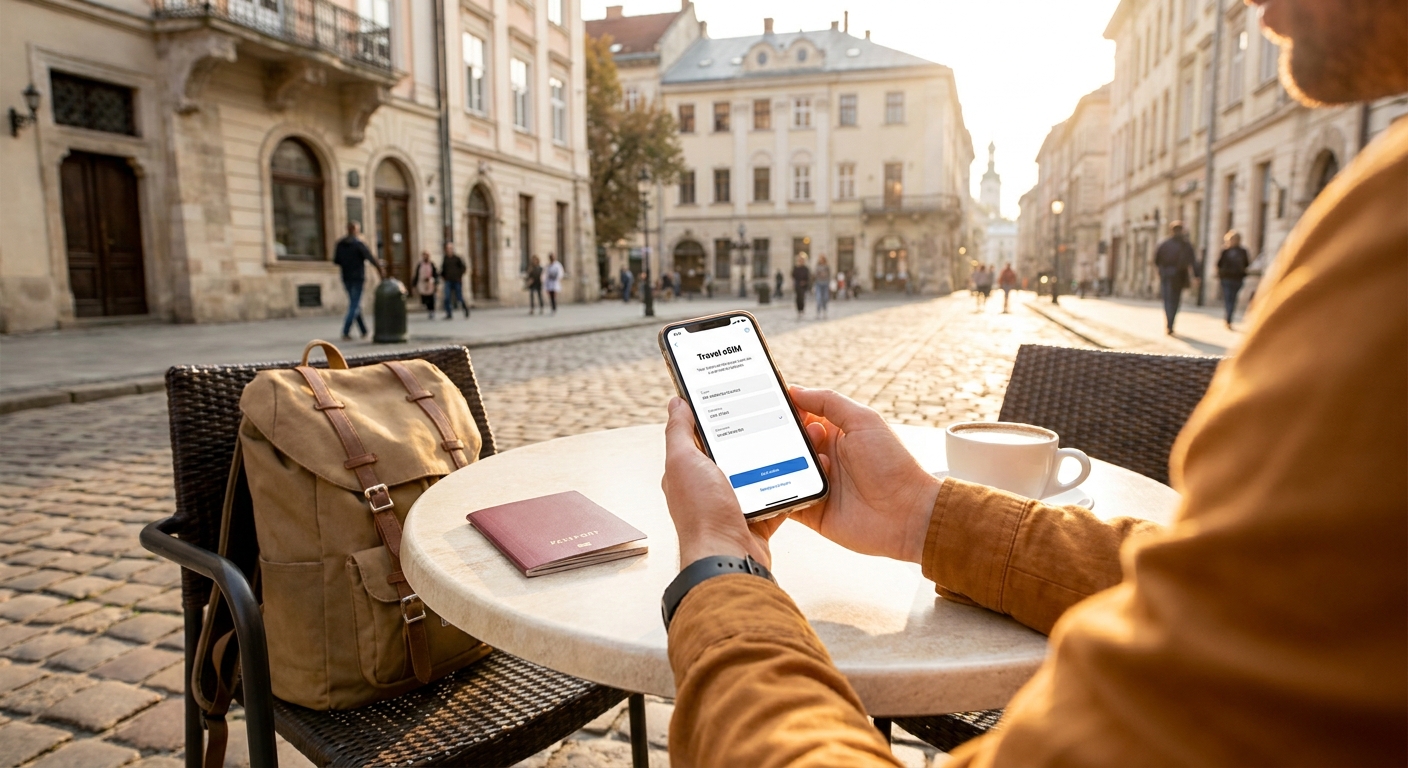
How Do I Know If My Phone is eSIM Compatible?
The easiest way to check if your phone is eSIM compatible is to look in your device's settings. For iPhone users, go to Settings > Cellular (or Mobile Data), and if you see an option like "Add eSIM" or "Add Cellular Plan," your phone is compatible. For Android users, navigate to Settings > Network & Internet > SIMs, and look for a plus sign or an "Add eSIM" option. If these options are present, your device has the necessary hardware.
Device compatibility is the first and most critical checkpoint before you can even consider using a travel eSIM. While the technology is becoming standard, it's not yet universal, especially in older or more budget-friendly phone models. Generally, most flagship smartphones released from 2018 onwards include an embedded eSIM chip. This includes Apple's iPhone XS, XR, and all subsequent models; Google's Pixel 3 and newer; and Samsung's Galaxy S20, Note 20, Fold, Flip series, and their successors. However, there can be regional variations. For example, iPhones sold in mainland China often have two physical SIM slots instead of an eSIM, so it's crucial not to make assumptions based on model name alone.
A more definitive method, beyond just checking settings, is to dial a specific code. On most phones, you can open your dialer and type in *#06#. This command displays your device's identification numbers. If you see a number labeled "EID" (Embedded Identity Document), that is the unique identifier for your phone's eSIM chip, and it confirms 100% that your device is compatible. The absence of an EID number means your phone does not have an eSIM.
Finally, it's essential to ensure your phone is "unlocked." An unlocked phone is one that is not tied to a specific carrier's network. If you bought your phone directly from the manufacturer (like Apple or Samsung), it's almost certainly unlocked. However, if you purchased it through a carrier on a payment plan, it might be locked until the contract is paid off. A locked phone will reject any eSIM from a different provider. You can confirm your phone's lock status by contacting your home carrier. Asking them to unlock your device before you travel is a crucial step if you find it's restricted. Taking a few minutes to verify both eSIM capability and unlocked status before your trip will save you from the disappointment of purchasing a plan you can't use.
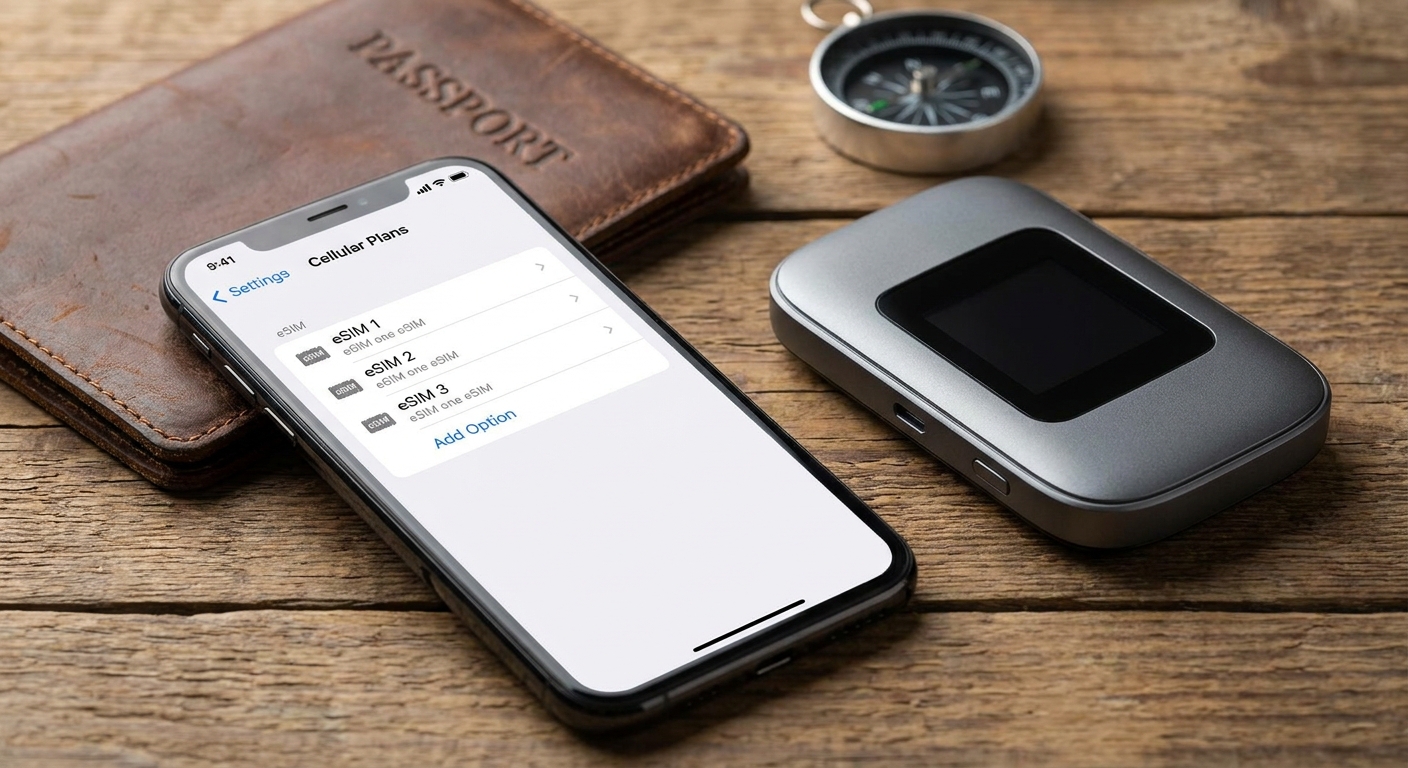
What Are the Key Differences Between an eSIM and a Physical SIM Card for Travel?
The primary difference between an eSIM and a physical SIM for travel is that an eSIM is a digital, downloadable profile, while a physical SIM is a tangible chip you must insert into your phone. This core distinction leads to significant differences in convenience, flexibility, and security. An eSIM can be purchased and installed anywhere with an internet connection, whereas a physical SIM requires you to find a store, handle a tiny piece of plastic, and potentially face language barriers.
Let's break down the practical implications. With an eSIM, you can buy your data plan for Italy while sitting in your living room in Chicago. You scan a QR code, and your phone is ready to connect the moment you land in Rome. With a physical SIM, your journey in Rome begins with a hunt for a TIM or Vodafone store at the airport, waiting in line, and using a small pin tool to eject your home SIM - which you then have to store safely to avoid losing it. This immediate, hassle-free connectivity is a massive advantage for eSIMs, especially after a long flight.
Flexibility is another area where eSIMs excel. Most eSIM-compatible phones are also Dual SIM capable, meaning you can keep your physical home SIM active for calls and texts while using the travel eSIM for affordable data. This is called Dual SIM, Dual Standby (DSDS). For example, you can receive important 2FA (two-factor authentication) texts on your home number while browsing with your cheap local data eSIM. With a single-slot physical SIM phone, you'd have to choose one or the other, or constantly swap them, which is impractical. Furthermore, if you're on a multi-country trip, you can store multiple eSIM profiles on your device and simply switch between them as you cross borders. A trip from France to Spain to Portugal could involve three different physical SIMs, but with an eSIM, it's just a few taps in your settings.
Here is a table summarizing the key differences:
| Feature | Travel eSIM | Physical Travel SIM |
|---|---|---|
| Acquisition | Instant, online purchase and download via QR code. | Requires visiting a physical store or ordering online and waiting for delivery. |
| Activation | Immediate, done from your phone's settings. | Requires physically swapping chips with an ejector tool. |
| Flexibility | Store multiple plans and switch between them easily. Keep home SIM active. | Can only use one at a time (unless you have a dual-SIM phone). |
| Security | Cannot be physically lost or stolen. More secure. | Can be lost, damaged, or stolen, potentially losing service. |
| Environmental Impact | No plastic waste or packaging. | Contributes to plastic and electronic waste. |
| Device Compatibility | Limited to newer, often more expensive, smartphones. | Works with virtually any unlocked phone. |
While the benefits are clear, the one major advantage of physical SIMs is their near-universal compatibility. Almost every unlocked phone has a SIM card slot, making it a reliable option for travelers with older or budget devices. However, as more phones are released as eSIM-only, this advantage is diminishing. For the modern traveler with a compatible device, the convenience, security, and flexibility of an eSIM make it the superior choice for international connectivity.
Which Type of eSIM Plan is Right for Your Trip: Local, Regional, or Global?
The right type of eSIM plan for your trip depends entirely on your itinerary. You should choose a local eSIM for a single-country visit, a regional eSIM for a multi-country tour within one continent (like Europe or Asia), and a global eSIM only for extensive, multi-continental world travels. Matching the plan's scope to your travel plans is the most effective way to balance cost and convenience.
Let's dive deeper into each category. A local eSIM provides coverage for one specific country. This is the most cost-effective option if your entire trip is confined to a single destination. For instance, if you're planning a 10-day vacation solely in Japan, purchasing a Japan-only eSIM will give you the best data rates and likely the best network performance, as the provider will partner with top-tier local carriers like NTT Docomo. Buying a regional or global plan for this trip would be unnecessary and more expensive, as you'd be paying for coverage in countries you aren't visiting.
A regional eSIM is the ideal solution for continent-hopping travelers. Imagine a classic European backpacking trip covering France, Spain, Germany, and Italy over three weeks. Instead of buying a new local eSIM in each country, a single 'Europe' regional eSIM would provide seamless connectivity as you cross borders. You purchase one plan, activate it once, and it automatically connects to the best partner network in each country. This saves immense time and hassle. Similarly, a Southeast Asia regional plan is perfect for a trip through Thailand, Vietnam, and Cambodia. The slight premium you pay compared to individual local plans is often well worth the convenience of not having to manage multiple purchases and installations.
Finally, a global eSIM offers coverage across a vast list of countries spanning multiple continents. These plans are designed for digital nomads, long-term world travelers, or business professionals on a multi-leg international trip. For example, a marketing executive flying from New York to London for a meeting, then to Singapore for a conference, and back via a stopover in Dubai would benefit immensely from a single global eSIM. While they are the most expensive option on a per-gigabyte basis, they offer the ultimate 'set it and forget it' convenience. For most typical vacationers, however, a global plan is overkill. The key is to realistically assess your itinerary. Don't pay for global coverage if you're only visiting two neighboring countries; a regional plan will serve you better and save you money.

How Much Data Do You Really Need for an International Trip?
To determine how much data you need, you should estimate your daily usage based on your travel style, with a general guideline being 1GB per day for a moderate user. This amount typically covers navigation, social media, light browsing, and communication. A light user might only need 3-5GB for a week, while a heavy user or remote worker could require 20GB or more. Overestimating slightly is always safer than running out of data mid-trip.
Let's break down what activities consume data. Light usage includes checking emails, using messaging apps like WhatsApp (without sending many photos/videos), and occasional web browsing. An hour of Google Maps navigation uses about 5-10MB, while an hour of streaming music on Spotify uses around 40-70MB. These activities are relatively low-impact. If your travel style involves mostly being present and using your phone for essentials, a smaller data package of 3GB for a week-long trip might suffice. This is for the traveler who connects to Wi-Fi at their hotel in the morning and evening and uses mobile data sparingly while out exploring.
Moderate usage is the most common category for travelers. This includes everything in light usage, plus actively posting photos and videos to Instagram, watching a few short YouTube videos, making video calls back home, and using your phone more freely for recommendations and translations. Uploading a high-resolution photo to Instagram can use 2-4MB, and a one-minute video can be 15-20MB. A 10-minute video call on WhatsApp can consume up to 50MB. These activities add up quickly. For this type of traveler, a plan with at least 1GB per day (e.g., a 10GB plan for a 10-day trip) provides a comfortable buffer and prevents 'data anxiety' - the fear of running out of connectivity when you need it most.
Heavy usage applies to digital nomads, content creators, or families traveling with kids who might be streaming videos. If you plan to work remotely, participate in video conferences, upload large files, or use your phone as a mobile hotspot for a laptop, your needs will be significantly higher. A one-hour Zoom call can consume over 1GB of data. In these scenarios, looking for larger packages like 30GB, 50GB, or even 'unlimited' data plans (which often have fair usage policies and speed throttling after a certain threshold) is essential. Before purchasing, it's a great practice to check your data usage statistics on your phone from a typical week at home. This will give you a personalized baseline that you can adjust for your travel habits. Always err on the side of more data; the small additional cost is worth the peace of mind.
What Key Factors Should You Compare When Choosing an eSIM Provider?
When choosing an eSIM provider, you must compare five key factors: network coverage and speed, data plan pricing and validity, activation process and ease of use, customer support quality, and any extra features like call/text inclusion or hotspotting. A provider might offer a cheap price, but it's worthless if the network is slow or support is unavailable when you need it. A holistic comparison is essential for a good experience.
First, network coverage and speed are paramount. The eSIM provider itself doesn't own the network; it partners with local carriers in your destination. You need to know which local carriers they partner with. For example, in the USA, a provider partnering with Verizon or AT&T will generally offer better coverage than one partnering with a smaller regional carrier. Look for providers that are transparent about their network partners and whether they offer 5G or are limited to 4G/LTE speeds. User reviews can be invaluable here, as they often mention real-world speed and reliability in specific locations. Don't just look at the country; if you're hiking in a remote national park, coverage will be different than in a major city.
Second, analyze the data plan pricing and validity carefully. Don't just look at the total price. Calculate the cost per gigabyte (GB) to make a fair comparison. A $20 plan with 10GB of data ($2/GB) is a better value than a $15 plan with 5GB ($3/GB). Also, check the validity period. A 30GB plan that expires in 7 days is useless for a 14-day trip. Match the validity to your trip's length. Some providers offer top-ups, allowing you to add more data to an existing plan if you run low, which is a valuable feature that adds flexibility and can be cheaper than buying a whole new plan.
Third, consider the activation process and ease of use. The best providers offer a seamless experience through a well-designed app. You should be able to purchase, manage, and monitor your data usage easily from the app. The activation should be as simple as scanning a QR code. Some newer providers even offer direct, in-app installation, which is even easier. Avoid providers with convoluted, multi-step manual setup processes that require you to configure APN settings yourself unless you are technically confident. The whole point of an eSIM is convenience, so a clunky user experience is a major red flag.
Finally, never underestimate the importance of customer support. When you're in a foreign country and your data isn't working, you need help, fast. Check if the provider offers 24/7 support. What channels do they offer? Live chat and WhatsApp are generally much more effective than email-only support with a 24-hour response time. Read reviews specifically mentioning customer support experiences. A responsive and helpful support team can turn a stressful situation into a minor inconvenience. Also, check for extra features. Does the plan allow you to use your phone as a mobile hotspot? Some data-only eSIMs restrict this. Does it come with a phone number for calls and texts, or is it data-only? Knowing these details ensures the plan you choose fully meets all your travel needs.
How Do You Purchase and Activate a Travel eSIM?
Purchasing and activating a travel eSIM is a straightforward digital process that you can complete in minutes before your trip. The process involves three main steps: choosing and buying a plan online or through an app, receiving a QR code for installation, and activating the plan in your phone's settings upon arrival at your destination. This eliminates the need to find a physical store or handle a physical SIM card.
The first step is the purchase. You'll visit the website or download the mobile app of your chosen eSIM provider (like Airalo, Holafly, or Nomad). You will then browse their offerings by searching for your destination country or region. Select the data package that best fits your needs in terms of data amount (e.g., 10GB) and validity period (e.g., 30 days). Proceed to checkout and pay using a credit card, PayPal, or another digital payment method. Immediately after the transaction is complete, the provider will send you a confirmation email containing your installation instructions and, most importantly, a unique QR code.
The second step is installation. It is highly recommended to do this while you still have a stable internet connection at home or at the airport before you depart. On your eSIM-compatible phone, go to your cellular settings. For an iPhone, this is Settings > Cellular > Add eSIM. For Android, it's typically Settings > Network & Internet > SIMs > Add eSIM. Your phone will prompt you to either scan a QR code or enter details manually. Choose the scan option and use your phone's camera to scan the QR code from your email (you can display it on a laptop screen or another device). Your phone will then download the eSIM profile. You will be asked to give the plan a label (e.g., "Europe Travel") to easily identify it. At this stage, ensure you do not activate it or set it as your primary data line yet. Keep it turned off until you arrive.
The final step is activation upon arrival. Once your plane lands at your destination, go back into your phone's cellular settings. Turn on the new eSIM line you just added. Then, navigate to your cellular data settings and select the travel eSIM as the line to be used for mobile data. Crucially, you should also make sure that "Data Roaming" is turned ON for your new travel eSIM line, as it will often need to 'roam' onto the local partner network. At the same time, ensure data roaming is turned OFF for your home SIM to avoid any accidental charges from your home carrier. Within a few moments, your phone should connect to the local network, and you will see signal bars and a 4G/5G icon appear. You are now connected and ready to explore.
What Are Some Common Problems with Travel eSIMs and How Can You Solve Them?
The most common problems with travel eSIMs are failure to connect to a network, slow data speeds, and incorrect APN settings. Most of these issues can be solved with simple troubleshooting steps, such as restarting your phone, ensuring data roaming is enabled for the eSIM, and manually selecting the correct network operator from your phone's settings.
One of the most frequent issues is the "no service" error after activating the eSIM. The first and simplest solution is to restart your device. This forces the phone to re-register on the network and often resolves the connection issue. If that doesn't work, dive into your settings. The number one culprit is forgetting to enable data roaming for the eSIM line. While it sounds counterintuitive (since the goal is to avoid roaming charges on your home plan), your travel eSIM must have data roaming turned on to connect to its partner networks in the foreign country. Go to Settings > Cellular > [Your Travel eSIM Label] and ensure the "Data Roaming" toggle is switched on.
Another common problem is slow or intermittent data. This can happen if your phone automatically connects to a weaker network partner. You can fix this by manually selecting a network. The instructions provided by your eSIM provider should list the designated partner networks for that country. In your phone's cellular settings, you can find a "Network Selection" option. Turn off the "Automatic" setting and wait for a list of available carriers to appear. Choose one of the approved carriers from your provider's list. Sometimes, simply switching from one partner network to another (e.g., from Vodafone to TIM in Italy) can dramatically improve your connection speed and stability.
Incorrect APN (Access Point Name) settings can also prevent your data from working, even if you show a signal. The APN is the gateway between your phone and the internet. While most eSIMs configure this automatically, some require a manual entry. Your provider's installation guide will specify if an APN needs to be set and what the exact details are (it's usually a single word like "internet" or "globaldata"). You can find the APN settings under your cellular data options. If the fields are blank or incorrect, fill them in precisely as instructed, save the changes, and restart your phone. If all else fails, don't hesitate to contact your eSIM provider's customer support. A good support team can walk you through these steps and check for any issues on their end, ensuring you get the service you paid for.
Can You Keep Your Home Number Active While Using a Travel eSIM?
Yes, you can absolutely keep your home number active for calls and texts while using a travel eSIM for data. This is one of the most powerful advantages of using an eSIM on a modern smartphone. The technology, known as Dual SIM, Dual Standby (DSDS), allows both your physical home SIM and your travel eSIM to be active on the network simultaneously.
Here's how it works in practice. Before you travel, you install the travel eSIM but keep your primary home SIM (either a physical card or another eSIM) as the default for voice calls and messages. When you arrive at your destination, you go into your phone's cellular settings and designate the travel eSIM as the exclusive line for mobile data. This creates a separation of duties: all your internet-based activities (apps, browsing, maps) will use the cheap, local data from your travel eSIM, while your home number remains active to receive incoming calls and traditional SMS messages. This is particularly crucial for receiving two-factor authentication (2FA) codes from your bank or other services, which are often sent via SMS and would be missed if you physically removed your home SIM.
You do need to be mindful of potential roaming charges from your home carrier. While you have disabled data roaming for your home line, receiving calls or sending texts may still incur significant fees. The best practice is to screen your calls; if you see an important call coming in on your home number, you can decide whether to answer it and accept the charge. For outgoing calls, it's far more cost-effective to use data-based services like WhatsApp Call, FaceTime Audio, or Skype, which will run over your travel eSIM's data plan. Many travelers also configure their phone's settings to prevent their home line from being used for calls unless specifically chosen, adding another layer of cost protection.
This dual-SIM functionality offers the best of both worlds: the affordability of local data and the convenience of staying connected to your essential home number. It eliminates the need to constantly inform contacts of a temporary foreign number and ensures you don't miss critical communications. For anyone who needs to remain reachable on their primary number while traveling - whether for personal or professional reasons - this feature alone makes switching to a travel eSIM a compelling proposition over traditional single-SIM solutions.
Choosing the best travel eSIM is no longer about just finding a data plan; it's about crafting a smart, hybrid connectivity strategy for your trip. By understanding how to balance your two lines, you can travel with the confidence that you are fully connected in the most efficient and cost-effective way possible. It's a travel hack that, once you use it, you'll never want to travel without again.
Conclusion
Navigating the world of international travel connectivity has been revolutionized by the advent of the eSIM. The days of exorbitant roaming bills, frantic searches for local SIM card vendors, and fumbling with tiny plastic chips are numbered. As we've explored, choosing the best travel eSIM is a methodical process that empowers you with unprecedented control, convenience, and cost savings. It transforms your smartphone into a truly global device, ready to connect you seamlessly from the moment you step off the plane.
The journey to finding your perfect travel eSIM begins with a simple but crucial compatibility check of your device. From there, it's about aligning your choice with the unique contours of your trip. A solo journey through Japan calls for a cost-effective local plan, while a multi-country European adventure is perfectly suited for a regional eSIM. By accurately estimating your data needs - being honest about whether you're a light browser or a heavy content streamer - you can avoid both the anxiety of running out of data and the waste of overpaying for a massive plan you won't use.
Ultimately, the best provider for you will be one that scores high across all key metrics: robust network partnerships for reliable coverage, transparent pricing with a good cost-per-GB, a user-friendly activation process, and responsive customer support for when you need it most. By leveraging the dual-SIM capability of your phone, you gain the ultimate travel advantage: affordable, high-speed data on your travel eSIM while keeping your home number active for essential calls and texts. This hybrid approach offers a complete, no-compromise solution for the modern traveler. Armed with this knowledge, you are now fully equipped to make an informed decision, ensuring your next international trip is defined by the experiences you have, not the connectivity challenges you face.
Frequently Asked Questions
Yes, most modern smartphones that are eSIM-compatible also support Dual SIM, Dual Standby (DSDS). This allows you to have both your physical SIM card and an eSIM active simultaneously. This is a major advantage for travelers, as you can keep your home phone number active on the physical SIM for receiving calls and important SMS messages (like bank verification codes), while using the travel eSIM for affordable mobile data. You can easily manage which line is used for voice, text, and data directly in your phone's settings, giving you the best of both worlds without needing to physically swap SIM cards.
Most travel eSIMs are data-only, meaning they provide internet access but do not come with a traditional phone number for making or receiving cellular calls and SMS texts. This is the most common and cost-effective option for travelers who primarily need data for maps, browsing, and apps like WhatsApp or FaceTime. However, some providers are beginning to offer premium eSIM packages that do include a phone number, often specific to a certain country or region. It's crucial to check the plan details carefully before purchasing if having a local phone number for traditional calls is a requirement for your trip.
When your travel eSIM data plan expires or you use up all the data, it simply stops providing an internet connection. The eSIM profile itself remains stored on your phone. It doesn't get deleted automatically. This is convenient because if you plan to return to that destination, you may be able to top up or purchase a new plan from the same provider and attach it to the existing eSIM profile through their app. If you don't plan to reuse it, you can simply leave it turned off in your settings or delete it to free up space for new eSIM profiles.
It is almost always cheaper and significantly more convenient to buy a travel eSIM before you leave for your trip. Purchasing online in advance allows you to compare different providers and plans to find the best value without the pressure of being in a new country with no connectivity. Airport SIM card vendors often have inflated prices targeting tourists. By buying your eSIM beforehand, you can install it with a stable Wi-Fi connection at home and have it ready to activate the moment you land, saving you time, money, and the hassle of finding a physical store upon arrival.
Yes, many eSIM providers allow you to top up your plan if you run out of data or if your plan is about to expire. This functionality is typically handled through the provider's mobile app or website. The ability to top up is a very convenient feature, as it's often quicker and cheaper than purchasing an entirely new eSIM plan. Before you buy your initial plan, it's a good idea to check if the provider offers easy top-ups. This provides flexibility and peace of mind, knowing you can easily add more data if your usage is higher than expected.
Travel eSIMs are generally more secure than physical SIM cards. Because the eSIM is embedded in your device, it cannot be physically removed and stolen, a practice known as SIM-swapping used by hackers to gain access to your accounts. The activation process is also secure, typically done via a unique QR code sent directly to you. This digital process reduces the risk of your SIM details being cloned or compromised compared to handling a physical card. As with any online service, it's important to use reputable eSIM providers to ensure your data and payment information are handled securely.